DD
MM
YYYY

PAGES

DD
MM
YYYY

spot_img

PAGES

Home Blog Page 1586

Nigeria’s Private Sector Grows for Third Month in a Row as March PMI Hits 52.3

0

Nigeria’s private sector is beginning to show signs of sustained momentum as fresh data from the Central Bank of Nigeria (CBN) reveals a third consecutive month of expansion in business activity.

The CBN’s Purchasing Managers’ Index (PMI) climbed to 52.3 points in March 2025, up from 51.4 in February, signaling further improvement in demand, business confidence, and employment across key segments of the economy.

In a release published by the apex bank, the March PMI report underscored an economy slowly finding its rhythm after years of volatility and economic strain. The 52.3 reading—anything above 50 indicates growth—suggests that Nigeria’s private sector is beginning to adapt more steadily to the current economic climate, with businesses responding to improved customer demand and ongoing investments in new projects.

“The composite PMI for March 2025, at 52.3 index points, indicates expansion in economic activities for the third consecutive month,” the CBN said in its report.

Broad-Based Growth Across Major Sectors

One of the more striking insights from the March PMI is the broad-based nature of the expansion. All three major sectors—Industry, Services, and Agriculture—posted positive growth. While the gains are moderate, they are consistent, and for policymakers and business leaders, that consistency may carry more weight than flashy quarterly spikes.

The Agriculture Sector led the growth pack with a PMI of 54.7 points, continuing a pattern of resilience that has often seen agribusiness emerge as a bulwark against broader economic malaise. The Services and Industry sectors both posted PMI readings of 51.5 points, a signal that demand for services and manufactured goods is holding up, albeit at a more tempered pace.

That growth is also reflected in sub-indices like output and new orders. The Output Index rose to 52.8 points, while the New Orders Index stood at 52.2, indicating a healthy pipeline of business activity. Employment levels also improved, with the Employment Index reaching 51.7—its third straight month of growth.

Sectoral Composition: Winners and Laggards

Among the 36 subsectors tracked, 24 reported growth in March, with Forestry emerging as the best-performing segment. This suggests increased activity in rural value chains, possibly driven by seasonal demand and investments in resource-based processing.

However, 12 subsectors saw declines. Nonmetallic Mineral Products suffered the steepest contraction, highlighting lingering weakness in parts of the industrial supply chain—particularly those dependent on construction and infrastructure projects, which have slowed due to high financing costs and FX volatility.

Price Pressures Still a Concern

Not all signs point to unclouded optimism. Businesses continue to grapple with rising costs, particularly in the Industry and Services sectors. The report notes that the Industry sector recorded the highest input price inflation, while Services led in output price inflation, hinting at a potential pass-through to consumer prices in the months ahead.

In contrast, the Agriculture sector managed to keep cost pressures relatively in check, recording the lowest increases in both input and output prices. That may offer some relief for food supply chains, though inflation remains a broader challenge across Nigeria’s economy.

What It Means for Business and Policy

For many Nigerian businesses, this uptick in PMI offers more than just a statistical reprieve. It signals that firms are adapting to the new realities—navigating through high interest rates, inflation, and foreign exchange constraints—with a level of determination that underscores Nigeria’s long-running entrepreneurial spirit.

Three straight months of job gains suggest that companies are not just reacting to improved demand but are also actively positioning themselves for growth. The uptick in inventory accumulation further hints at confidence in future sales, despite ongoing macroeconomic challenges.

Still, the optimism is guarded. The inflationary trend, especially in production costs, poses a threat to margins. For the Central Bank, which has spent much of the past year tightening monetary policy in an effort to rein in inflation and stabilize the naira, the March PMI will be a welcome sign that the medicine isn’t choking off growth entirely.

But the balancing act continues. Whether this trend extends into the second quarter will likely depend on how Nigeria manages energy supply disruptions, FX liquidity, and the global commodity price environment.

Economist Declares Tinubu’s $1tn Economic Agenda Unattainable, Says It Requires Over 40% Annual Growth Rate

0

The economic growth target set by President Bola Tinubu’s administration is now facing harsh scrutiny, as the Group Chief Economist at Afreximbank, Dr. Yemi Kale declared that Nigeria would require an annual growth rate of over 40% to achieve the government’s one trillion-dollar economic vision—an outcome he bluntly described as “simply unachievable” under current conditions.

Speaking at the Vanguard Economic Discourse 2025 held in Lagos on Wednesday, Kale’s remarks threw cold water on the optimism around Tinubu’s much-publicized agenda to grow Nigeria’s economy to $1 trillion before the end of his term. The ambitious target, which has been echoed repeatedly by top administration officials as a benchmark for economic transformation, now appears increasingly detached from the country’s current trajectory, given its worsening macroeconomic fundamentals.

Kale, who previously served as Nigeria’s Statistician-General, did not dismiss the idea of growth but pointed to a stark mismatch between aspiration and groundwork.

“To reach a $1 trillion economy by the end of this administration’s term, Nigeria would require annual growth rates in excess of 40%—a pace that is virtually unprecedented and, under current conditions, simply unachievable,” he said.

The comment was not just an indictment of lofty projections but a sobering reminder of the structural deficiencies that continue to limit Nigeria’s economic potential. Despite Tinubu’s rhetoric about turning Nigeria into a trillion-dollar economy by 2026, the country’s GDP growth remains slow and volatile, averaging around 2–3% annually, far below population growth and nowhere near the momentum required.

The vision, as articulated by Tinubu in his early economic roadmap, was built around plans to unlock investment, deepen industrialization, and expand Nigeria’s export base. However, persistent inflation, fiscal instability, heavy debt servicing, and a weakening currency have cast a long shadow over those ambitions.

According to Kale, unless Nigeria rapidly recalibrates its policies and makes fundamental reforms, economic resilience will remain elusive.

“The path to economic resilience, inclusive prosperity, and reducing economic hardship is neither quick nor easy, but it is clear. We know what must be done. The foundational pillars are not in question,” he said.

He outlined a roadmap hinged on macroeconomic stabilization, inflation control, fiscal and monetary credibility, and investor confidence—all of which are in deficit. More specifically, Kale urged Nigeria to diversify its economic base by unlocking the potential of agriculture, manufacturing, services, and the digital economy.

“Invest in people and institutions because sustainable growth only happens when human capital is empowered and governance systems are effective,” he added, emphasizing that long-term growth cannot be built on weak foundations and political expediency.

Rising Global Pressures, Shrinking Policy Space

Kale also warned that Nigeria’s policy space is narrowing fast in the face of global economic realignments. The U.S. tariff hike is not a one-off event, he suggested, but a signal that emerging economies like Nigeria must brace up for increasingly unpredictable global trade dynamics.

His concerns were echoed by Dele Oye, President of the Nigerian Association of Chambers of Commerce, Industry, Mines and Agriculture (NACCIMA), who urged a recalibration of Nigeria’s political and economic strategy.

“The current U.S. administration’s focus on isolationism and trade wars has led to a reevaluation of America’s long-standing alliances, leaving many nations, including Nigeria, to grapple with the complexities of a shifting world order,” Oye said.

He stressed that the country must prioritize economic sovereignty and develop a political structure that is viable, affordable, and resistant to external pressure.

“For Nigeria, these developments underscore the necessity of a shift to a homegrown democracy that prioritizes resilience,” he said.

Oye added that while Nigeria faces enormous challenges, there are also emerging opportunities—especially in the digital space, technological innovation, and youth-led entrepreneurship. But capitalizing on these prospects would require more than token policy statements.

“The balance between these challenges and opportunities will shape Nigeria’s future,” he noted.

SMEs Still Left Behind

Also speaking at the event, Dr. Femi Egbesola, President of the Association of Small Business Owners of Nigeria (ASBON), criticized the federal government for overlooking micro and nano enterprises, which make up more than 85% of the country’s SME landscape.

“How many small businesses have become the next Dangote in the last 10 years? Almost none,” he said.

Egbesola dismissed most government interventions as half-measures, adding that the real drivers of growth—small business owners—are still sidelined during the policy design and implementation phases. “We don’t need pity; we need partnership,” he said. “Policies should not be imposed but developed jointly.”

His concern is especially relevant given that the trillion-dollar vision assumes expanded domestic output and a more productive private sector—conditions that are far from being met.

The message from the 2025 Vanguard Economic Discourse underlines a belief that several experts have expressed: Nigeria’s $1 trillion economic dream, as currently formulated, is a mirage unless backed by deep, structural reforms. The required growth rate of 40% annually, as cited by Kale, is not only unrealistic—it borders on impossible given the country’s current economic structure.

And with global conditions tightening, investor confidence waning, and the government’s fiscal buffers nearly exhausted, the challenge is not just achieving growth—it is avoiding further contraction.

Trump Administration Backs Down on Nvidia GPU Ban After $1M Dinner with CEO Jensen Huang

0

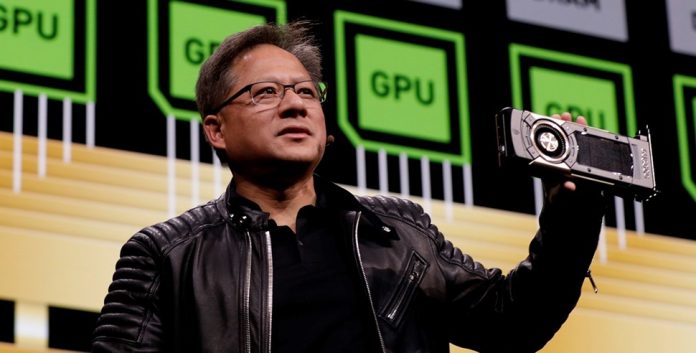
In a dramatic U-turn that underlines the complex dance between political power and corporate influence, the U.S. government has pulled back from its plan to block Nvidia’s high-performing H20 HGX GPU exports to China, following a high-level dinner between President Donald Trump and Nvidia’s CEO Jensen Huang.

The meeting, held at Trump’s Mar-a-Lago estate, came with a $1 million admission fee and is now being cited as the pivotal moment that altered the course of what was to be a new round of tech restrictions against China.

NPR, citing two sources familiar with the matter, reports that the Trump administration had been preparing for months to halt exports of the H20 GPU — Nvidia’s most powerful AI chip still legally sold to Chinese customers. That plan was expected to come into effect this week, pre-empting even the more comprehensive restrictions under the Biden-era AI Diffusion Rule, which is set to kick in on May 15.

But following the tête-à-tête over an exclusive dinner table, Nvidia reportedly committed to investing heavily in U.S.-based AI infrastructure, a gesture that appears to have swayed the administration’s position.

Trump’s $1 Trillion AI Vision Meets Nvidia’s Billion-Dollar Pivot

The sudden about-face underscores a broader political undercurrent — the Trump administration’s quest to cement the U.S. as the undisputed leader in artificial intelligence, and the role corporate giants like Nvidia play in achieving that goal. Trump may have seen an opportunity to strengthen domestic tech capacity without fully alienating industry players worried about lost Chinese revenue, by securing a pledge from Huang to pour money into American AI data centers.

Still, the optics are unmissable: a $1 million dinner with the president, followed by a policy reversal that benefits one of the world’s most powerful chipmakers.

Nvidia, which reportedly sold $16 billion worth of H20 chips to Chinese firms in the first quarter of 2025 alone, faces a significant setback if fully blocked from the Chinese market. The H20 was specifically designed to comply with existing export thresholds to China, offering a tailored solution that squeezed maximum performance under strict controls. Yet even that strategic maneuver was at risk under the proposed ban.

The company’s balancing act between adhering to national security demands at home and preserving its lucrative Chinese business has become increasingly difficult to maintain.

At the center of this geopolitical tug-of-war is the Biden administration’s AI Diffusion Rule, a sweeping regulation that will bar the sale of virtually all advanced U.S.-made AI processors to China and other high-risk nations starting May 15. The rule goes beyond the conventional metric of processing power by introducing nuanced controls that consider both volume and end-user intent.

The regulation includes exceptions under the Low Processing Performance (LPP) clause, allowing U.S. firms to sell a limited number of GPUs to countries outside the “trusted” Tier 1 circle of 18 allies. But China, being categorized as high-risk, is specifically excluded from such exceptions. All AI processor exports to China require a license, and even then, the U.S. government’s default stance is denial.

This effectively locks Chinese firms out of the American AI hardware ecosystem — at least on paper.

For Nvidia, there are multibillion-dollar monumental stakes. With $16 billion in H20 sales to China in Q1 alone, the company is caught between two political currents — one pushing for national security and tech sovereignty, the other desperate not to lose market share to Chinese startups or non-U.S. suppliers like Huawei.

The uncertainty now revolves around the fine print. It remains unclear whether the Trump administration’s decision to ease back on the export ban means Nvidia can continue H20 shipments only until May 15 or beyond that date. If the exemption is extended past mid-May, it would likely require the administration to override the AI Diffusion Rule, scrap it entirely, or carve out special licenses for Nvidia — potentially setting off another round of backlash in Washington.

The timing and setting of the policy shift have already sparked quiet criticism in diplomatic and security circles. While the Trump administration has long touted its America-first approach, critics may argue that bending the rules after a $1 million dinner dilutes the credibility of its tech crackdown on China.

For now, though, the administration is framing the move as a strategic win with rhetoric such as ‘Nvidia stays onshore, jobs are created in U.S. data centers, and the broader goal of domestic AI dominance is preserved.’ However, while the decision means that Nvidia has dodged one export bullet, another clear winner is China, which is accelerating efforts to get ahead in the AI arms race.

Approval of Options Trading on Ethereum ETFs Carries Significant Implications For Investors

0

U.S. Securities and Exchange Commission  approved options trading on multiple spot Ethereum (ETH) exchange-traded funds (ETFs). This decision allows investors to trade options on ETFs such as BlackRock’s iShares Ethereum Trust (ETHA), Bitwise Ethereum ETF (ETHW), Grayscale Ethereum Trust (ETHE), Grayscale Ethereum Mini Trust (ETH), and Fidelity Ethereum Fund (FETH). Options trading provides investors with a tool to speculate on Ethereum’s price movements or hedge their positions without directly owning the underlying asset, potentially broadening the appeal of these ETFs, especially among institutional traders.

This approval builds on the SEC’s earlier authorization of spot Ethereum ETFs, which began trading in July 2024 after initial listing approvals in May 2024. The options are physically settled with American-style exercise, meaning investors receive actual ETF shares upon exercising the contracts, and they adhere to standard exchange listing rules. To mitigate risks like market manipulation, exchanges like Nasdaq have set position and exercise limits, such as a cap of 25,000 contracts. This development reflects a growing acceptance of cryptocurrency-based financial products within regulated markets, following a similar approval for options on spot Bitcoin ETFs in late 2024.

Options trading provides a familiar and regulated tool for institutional investors to engage with Ethereum exposure. This could attract more hedge funds, asset managers, and other large players who prefer derivatives for risk management or leveraged strategies. Individual investors gain a new way to speculate on Ethereum’s price or hedge existing positions without needing to directly hold ETH or ETF shares, potentially boosting retail participation through brokerage platforms.

Options markets often deepen liquidity for the underlying asset (in this case, Ethereum ETFs). Increased trading activity could stabilize ETF prices and, indirectly, Ethereum itself, as options facilitate more efficient price discovery. The interplay between spot ETFs and their options could create tighter spreads and reduce volatility over time, mirroring patterns seen in traditional equity markets.

Investors holding spot Ethereum ETFs can use options (e.g., puts) to protect against downside risk, making these products more appealing to risk-averse participants. Call options allow traders to amplify gains with limited capital, which could drive speculative interest, especially in a volatile asset like Ethereum. However, this also heightens the potential for losses.

Broader Crypto Market Impact

Regulatory approval of Ethereum ETF options further legitimizes cryptocurrency as an asset class within traditional finance, following the precedent set by Bitcoin ETF options. This could encourage more crypto-based financial products in the future. Increased demand for ETF shares (to settle options contracts) might prop up Ethereum’s price, especially if institutional buying accelerates. Conversely, heavy shorting via options could exert downward pressure during bearish sentiment.

The SEC’s approval, paired with exchange safeguards like position limits (e.g., 25,000 contracts), signals a balanced approach to innovation and risk mitigation. This could pave the way for options on other crypto ETFs if manipulation concerns remain low. High volatility or unexpected market events tied to these options could prompt stricter regulations, especially if retail investors suffer significant losses.

Issuers like BlackRock, Grayscale, and Fidelity may compete more aggressively on fees, marketing, or additional features to capture options-driven demand, benefiting investors with better products. Success here could spur development of other Ethereum-linked derivatives (e.g., futures enhancements), further integrating crypto into mainstream finance. While options can dampen volatility long-term, their introduction might initially amplify price swings as traders adjust strategies.

Ethereum’s sensitivity to macro factors (e.g., interest rates, tech sentiment) could exaggerate this effect. This move marks a milestone in bridging crypto and traditional markets, likely boosting Ethereum’s adoption and market sophistication. However, it also introduces new dynamics—greater leverage, speculative potential, and regulatory attention—that could shape Ethereum’s trajectory in unpredictable ways. Investors should weigh these tools’ benefits against their risks, especially given crypto’s inherent volatility.

BlockDAG Readies for Mainnet with 10,000 Miners Set to Ship—XLM May Decline by 20%, AVAX Poised to Rise

0

Stellar (XLM) is at a critical point, with the chance of either a dramatic 70% rise or a worrying 20% drop due to an impending “Death Cross.” In contrast, Avalanche (AVAX) is drawing positive focus, with Standard Chartered’s optimistic long-term forecast predicting significant growth.

Amidst these varied forecasts, BlockDAG (BDAG) is rapidly advancing towards its mainnet debut, showing remarkable readiness. The latest Keynote 3 has confirmed the shipping of its X30 and X100 miners, with 10,000 units ready for delivery before the mainnet goes live. This distribution will provide the necessary infrastructure for BlockDAG to handle increased transaction demands as its adoption grows.

Stellar Price Analysis: Upcoming Breakout or 20% Drop?

Stellar (XLM) is positioned near a critical resistance level, indicating a potential sharp movement soon. After rising from $0.25 on March 31, it is currently priced at around $0.267, showing a pattern of higher highs and lows. This Stellar price analysis indicates a possible breakout, with bullish targets in the range of $0.40 to $0.46—a rise of up to 70%.

However, another aspect of Stellar price analysis points to a bearish scenario. A “Death Cross,” where the 50-day moving average falls below the 200-day, could lead to a 20% decrease to the $0.19-$0.21 range. Overall, this Stellar price analysis suggests critical upcoming days for XLM’s trajectory.

Latest Avalanche Price Forecast

Standard Chartered’s Geoff Kendrick has forecasted that Avalanche (AVAX) could reach $55 by 2025 and ascend to $250 by 2029—a potential 10x increase from its current price of $18.51. This Avalanche price forecast is supported by the platform’s interesting subnet scaling approach and the recent Etna upgrade, which has enhanced efficiency and reduced costs.

This Avalanche price forecast is reinforced by the platform’s expanding adoption and technological progress. As these improvements proceed, AVAX’s potential for substantial growth looks very promising, contributing to a bright outlook for its future value.

BlockDAG Sets to Ship 10,000 Miners as Mainnet Approaches

BlockDAG’s Keynote 3 video recently unveiled a significant step forward as CEO Antony Turner announced the imminent shipment of the X30 and X100 miners. With the beta testnet now available to the public, BlockDAG is on track to distribute 10,000 miners before the mainnet launch, aiming to ensure robust transaction processing and a solid ecosystem foundation.

This deployment of mining hardware is pivotal for BlockDAG, setting the stage for a robust infrastructure from the start. With 10,000 units lined up for delivery prior to the mainnet, these rigs will serve as a key element of the BDAG ecosystem, embodying CEO Turner’s vision that, “These miners will form the backbone of our decentralized consensus mechanism.”

The extensive rollout of BlockDAG’s mining equipment demonstrates the project’s ambition and readiness. The dispatch of almost 10,000 units solidifies the infrastructure needed for supporting BlockDAG’s high transaction throughput.

Additionally, BlockDAG’s expansion is accelerating, as evidenced by the sale of over 16,822 miners, which has generated more than $6.83 million in revenue. This success reflects strong market interest and confidence in BDAG’s future potential.

The proactive shipment of these mining rigs responds to the growing demand and expanding user base of BlockDAG. This initiative is further enhanced by BlockDAG’s impressive crypto presale results, having raised over $212.5 million with more than 19.1 billion BDAG coins sold, marking a substantial 2380% increase in value.

This strategic and timely rollout of hardware drives significant momentum towards the mainnet goals, positioning BlockDAG as a leading project actively developing its decentralized framework and establishing itself as the best crypto to mine and buy currently.

Future Outlook

Stellar (XLM) faces a critical decision point, with its future potentially swinging between a 70% increase or a 20% decline, underlining the uncertain trajectory ahead. In contrast, Avalanche (AVAX) is gaining traction, buoyed by Standard Chartered’s optimistic forecast, which sees substantial growth ahead thanks to its subnet scaling approach and recent enhancements.

Meanwhile, BlockDAG is capturing significant attention as it gears up for its mainnet debut, supported by a substantial hardware rollout and robust presale achievements. With over 16,802 miners sold and 19.1 billion coins distributed, raising $212.5 million, BDAG emerges as a leading choice as the best crypto to mine and buy, especially with the upcoming mainnet launch promising significant prospects.

Presale: https://purchase.blockdag.network

Website: https://blockdag.network

Telegram: https://t.me/blockDAGnetworkOfficial

Discord: https://discord.gg/Q7BxghMVyu