DD
MM
YYYY

PAGES

DD
MM
YYYY

spot_img

PAGES

Home Blog Page 159

Crypto on The Rise: Inside MENA’s Most Dynamic Digital Asset Boom

0

The MENA region has emerged as one of the most compelling examples of sustained cryptocurrency adoption, with transaction volumes surpassing $60 billion at their peak in December 2024.

Although 2025 has seen moderate cooling, the region continues to post strong year-over-year growth, supported by record monthly flows observed in late 2024. This resilience is particularly noteworthy given the region’s ongoing geopolitical tensions and diverse economic pressures, underscoring the staying power of digital assets within MENA’s evolving financial ecosystem.

According to Chainalysis’ 2025 geography of crypto report, while MENA’s 33% period-over-period growth trails developing markets like APAC (69%) and Latin America (63%), the region’s internal diversity reveals how cryptocurrencies can take on different roles depending on local conditions. This dynamic is most visible in Türkiye, the region’s largest crypto market, which leads the MENA crypto index and records nearly $200 billion in annual transactions, almost quadruple that of the UAE ($53 billion).

Israel follows with $22 billion, reflecting shifts in usage patterns shaped by geopolitical disruption. Iran, meanwhile, maintains significant transaction activity through a semi-isolated crypto ecosystem adapted to circumvent international sanctions.

Türkiye: A Market Defined by Necessity and Speculation

Türkiye stands out as MENA’s most complex and influential cryptocurrency case. Its soaring transaction volumes appear driven less by long-term stability and more by speculative trading and economic necessity. As the country faces persistent inflation, currency devaluation, and reduced purchasing power, many citizens and institutions have increasingly turned to crypto as an alternative store of value, hedge, or investment vehicle.

Since 2021, Türkiye has seen unparalleled growth in gross crypto inflows—reaching approximately $878 billion by mid-2025, outpacing all regional markets combined. This expansion accelerated during periods of intense volatility for the Turkish lira, suggesting that financial instability may have pushed both individuals and institutions toward digital assets. Despite severe inflation, crypto adoption has continued to rise, driven by the search for financial stability outside traditional systems.

Retail Contraction Amid Institutional Strength

A closer look at year-over-year transaction growth shows an uneven trend across user groups. While Türkiye’s overall cumulative volumes remain high, retail participation has contracted sharply. Professional traders ($10,000–$1 million) saw their growth decline from 41.6% to just 4.1%, while large retail ($1,000–$10,000) and small retail (under $1,000) segments moved into outright negative growth.

These declines stand in stark contrast to the institutional segment, where transaction sizes above $1 million showed only moderate deceleration. This divergence indicates that economic pressures reduced disposable income, affordability challenges, and increased caution, which may be limiting retail participation even as inflation should theoretically drive citizens toward crypto.

Part of this shift may also be linked to Türkiye’s regulatory reforms enacted in 2024. Measures targeting illicit finance, enhanced KYC requirements, withdrawal controls, and restrictions on margin and yield products have significantly reshaped the retail trading landscape.

Surge in Speculative Altcoin Trading

Despite the downturn in retail participation, speculative activity is booming. The 31-day moving average of crypto exchange volume shows a dramatic rise in altcoin trading, with volumes surging from around $50 million to more than $240 million by mid-2025. This marks the first time altcoin trading has eclipsed stablecoin activity, signaling a shift toward higher-risk, higher-volatility assets.

Four Distinct Narratives Across MENA

The region’s major markets highlight four unique patterns of crypto adoption:

  • Türkiye: Massive growth driven by speculative behavior and economic necessity.

  • UAE: A regulated, innovation-driven hub attracting institutional players.

  • Israel: Increased crypto usage amid national crises and uncertainty.

  • Iran: A self-contained, sanctions-resistant ecosystem enabling continued digital asset activity.

Collectively, these narratives demonstrate the flexibility of digital assets across different environments, from speculative investment to crisis hedge to structured regulatory innovation.

As the MENA region navigates economic instability, shifting regulations, and geopolitical challenges, cryptocurrency’s adaptive nature continues to shape its expanding role in the global financial landscape.

Top Cryptos to Buy Now: Cardano (ADA), Shiba Inu (SHIB), and 3 Other Coins to Add to Your Portfolio This Week

0

The market dip has once again reminded investors of a golden truth: volatility is an opportunity, not a setback. While new faces hit the panic sell button, savvy investors are buying the discount ahead of the anticipated mega rally. From proven giants like Cardano and Shiba Inu to high-upside picks like Little Pepe (LILPEPE), Cronos, and Tron, this week’s lineup highlights some of the top cryptos to buy for those looking to position early for the next leg up.

Meet Little Pepe (LILPEPE): The Meme Layer 2 Dominating Presale Charts

Among emerging tokens, Little Pepe stands out as the most exciting new entrant on the list of top cryptos to buy. The project has already raised over $27.4 million in its presale, selling more than 16.6 billion tokens. With early holders now sitting on a 120% unrealized profit, the price has moved from $0.001 to $0.0022.

What sets Little Pepe apart is its Meme Layer 2 chain, a sniper-bot-resistant, zero-tax, and near-zero-fee blockchain purpose-built for meme coin trading. It combines lightning-fast transactions with a meme-only launchpad, ensuring traders enjoy fairer and safer launches than what’s possible on congested L1s.

Key Highlights Include:

  • CertiK audit completed for security assurance
  • High-staking APY for long-term holders
  • Strict vesting schedule preventing pump-and-dump risks
  • Major CEX listings planned post-launch

With its 15 ETH Mega Giveaway, growing social traction, and a clear roadmap toward a $0.003 launch price, Little Pepe isn’t just a meme; it’s a movement. For investors eyeing the top cryptos to buy before the next bull cycle takes off, LILPEPE deserves serious attention.

The LILPEPE presale is now live at https://littlepepe.com/

Cardano Institutional Confidence is Rising Fast

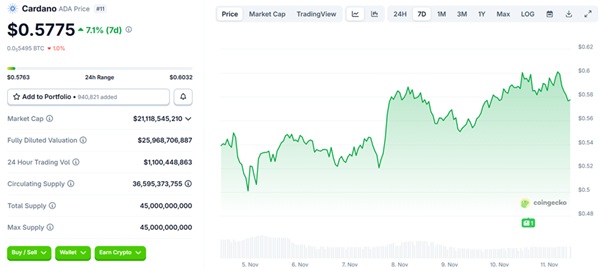
Cardano continues to assert itself as one of the top cryptos to buy, backed by growing institutional attention and ETF speculation. Futures open interest recently increased by 6% to $709.9 million, indicating that both retail and institutional traders are opening new positions rather than closing existing ones. ADA’s substantial 7% weekly price gain to $0.57 underlines the renewed momentum, coinciding with analysts calling Cardano one of the most secure and decentralized networks in the market. The blockchain has been live for over eight years without a single security breach, a record unmatched by many peers.

Analysts like Dan Gambardello and Linda X note that ADA’s ETF potential could be a central narrative for 2026. Its compliance-focused design, governance transparency, and existing exposure through Grayscale’s Digital Large Cap Fund make it a natural fit for institutional adoption. For investors seeking stability with upside, ADA remains one of the top cryptos to buy ahead of what could be a primary inflow phase from pension funds and endowments.

Shiba Inu’s 200% Rebound Potential Brewing

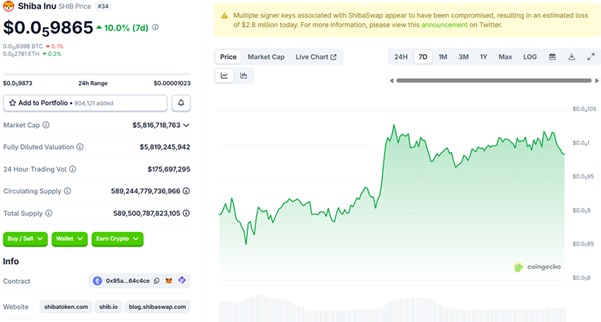
Following a recent shift from its multi-month downtrends, analysts are predicting a price surge of up to 200% for Shiba Inu. They cited bullish divergence patterns and a clear accumulation phase within the $0.0000097–$0.0000163 range.

Shiba Inu Price Chart | Source: CoinGecko

Rising open interest ($73M) and an explosive burn rate up 66,000% this week have strengthened sentiment around SHIB’s next move. It’s a classic setup, quiet accumulation before a potential breakout. While the Shibarium network’s performance has faced some hurdles, on-chain signals are turning positive. For speculative traders, SHIB remains among the top cryptos to buy for high-risk, high-reward plays this quarter.

Cronos Targets A 300% Rebound 

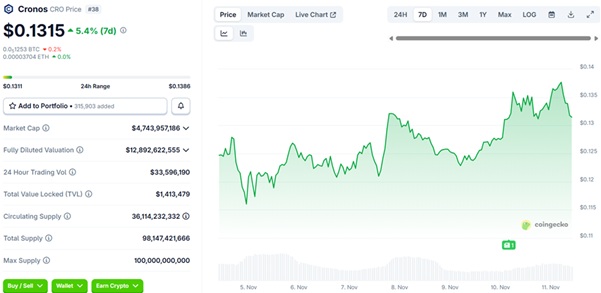
Cronos has officially entered breakout territory. After consolidating for months, CRO’s decisive upward move has analysts targeting $0.8868, a 300% upside from current levels.

Cronos Price Chart | Source: CoinGecko

Momentum is supported by renewed investor confidence and a growing DeFi ecosystem. Cronos’ total value locked (TVL) and NFT activity have both surged, attracting liquidity and spotlighting CRO as a recovery play with room to run. The Cronos chain’s expanding partnerships and new product launches are reinforcing the bullish technical setup. Traders seeking solid, utility-driven tokens with measurable upside will find CRO among the top cryptocurrencies to buy this month.

Tron Strong Fundamentals Pushing Narrative Of a Parabolic Recovery

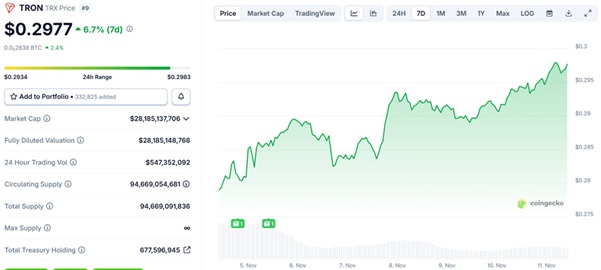
After dropping to $0.20 earlier this year, TRX has rebounded to $0.29. The token recently broke a key resistance level around $0.28, forming a strong pattern of higher highs and higher lows.

Tron Price Chart | Source: CoinGecko

While the RSI shows overbought signals, analysts believe any short-term correction will be shallow before the next push higher. Tron’s on-chain metrics, including stable TVL growth and network activity, support a continued bullish trajectory. If Bitcoin breaks higher, TRX could easily outperform, potentially retesting its $0.45 high before the end of the year. For traders seeking established large-cap exposure with technical momentum, TRX remains one of the top cryptos to buy now.

The Smart Money Is Buying the Dip

As the market recovers from Ethereum’s recent 12% correction, opportunities abound, but only a few cryptocurrencies combine strong fundamentals with the right timing and momentum. Cardano leads the institutional narrative, Shiba Inu captures retail energy, and Cronos plus Tron bring technical breakout setups. Yet, Little Pepe may be the dark horse, the one that turns the next meme wave into a significant market event. Its innovation-first approach, audited security, and fast-growing presale make it not just a meme, but a movement.

Check out the Little Pepe presale at https://littlepepe.com/ while it’s still early.


For more information about Little Pepe (LILPEPE) visit the links below:

Website: https://littlepepe.com

Whitepaper: https://littlepepe.com/whitepaper.pdf

Telegram: https://t.me/littlepepetoken

Twitter/X: https://x.com/littlepepetoken

$777k Giveaway: https://littlepepe.com/777k-giveaway/

XRP ETF Launch is A Record-Breaking Debut in 2025, as Bitcoin ETF Outflows Rise

0

Canary Capital’s spot XRP ETF (ticker: XRPC) made its highly anticipated debut on Nasdaq, marking the first U.S.-listed ETF providing direct exposure to XRP.

The launch was nothing short of explosive, shattering expectations and setting a new benchmark for ETF debuts this year. Despite a broader crypto market downturn—with Bitcoin dipping 3% and the total market cap sliding 4% to $3.2 trillion—XRPC demonstrated robust institutional and retail demand.

XRPC clocked $58.6 million in first-day trading volume, the highest for any of the over 900 ETFs launched in 2025. This narrowly edged out Bitwise’s Solana Staking ETF (BSOL), which held the previous record with $57 million on its October 28 debut.

Earlier in the day, XRPC hit $26 million in just the first 30 minutes—more than double Bloomberg analyst Eric Balchunas’s initial estimate of $17 million—before climbing to $36 million by mid-morning and $46 million by afternoon.

The ETF attracted $245 million in net inflows on day one, pushing its assets under management (AUM) to around $115 million initially. This reflects strong pent-up interest in regulated XRP products, especially after years of regulatory hurdles for Ripple.

Trading began amid a risk-off environment, with XRP falling 5.2% to $2.30 from a pre-launch high near $2.52. The dip aligns with a “sell-the-news” pattern seen in prior crypto ETF launches, but on-chain metrics show resilience: unique XRP holders grew 15% post-approval, and exchange supply has been shrinking.

XRPC’s success underscores XRP’s evolution from a regulatory battleground to a mainstream asset. Ripple’s partial 2023 court win deeming retail XRP sales non-securities paved the way under a pro-crypto U.S. administration, accelerating approvals for altcoin ETFs.

The ETF offers 100% spot XRP exposure with audited reserves, no staking, and MiCA-compliant transparency—ideal for cross-border payments via the XRP Ledger (1,500 TPS). Analysts like Nate Geraci (ETF Store) called it a “significant” exceedance of traditional finance expectations, with potential for $10–20 billion in inflows over the next year.

This could boost XRP’s utility in remittances and DeFi, targeting $500 billion in annual flows. XRPC tops the 2025 leaderboard, outpacing even Bitcoin and Ethereum spot ETF debuts in relative terms. It pressures the SEC for faster altcoin approvals (e.g., SOL, DOGE, LTC), potentially expanding the altcoin ETF market to $50 billion by 2026 and diluting Bitcoin’s dominance.

The XRP “Army” is ecstatic, with posts celebrating the narrow win over BSOL and speculating on $5–$8 targets if support at $2.30 holds. Sentiment is 2:1 bullish despite short-term bearish technicals like a potential “death cross.”

While XRP’s price faces near-term volatility key support at $2.30; resistance at $2.84, the ETF’s organic volume—without heavy seeding—signals genuine demand. If daily volumes stabilize near $50 million, analysts project a rally to $3–$5 by year-end, fueled by ETF rebalancing and global adoption.

The Canary Capital Spot XRP ETF (XRPC)’s record-shattering $58.6 million in first-day volume and $245 million in inflows—transcends mere trading metrics. It’s a seismic shift signaling XRP’s maturation from a regulatory pariah to a Wall Street staple.

This isn’t just about XRP; it’s a blueprint for altcoin legitimacy, institutional integration, and real-world utility in a $3.2 trillion crypto market grappling with post-launch volatility XRP down 5.2% to $2.30 amid broader dips.

The ETF’s explosive start reflects pent-up demand from a decade of SEC-Ripple litigation, but expect turbulence as the market digests it:Price Pressure and Supply Shock: ETF issuers must acquire underlying XRP within 24-48 hours post-launch, often via OTC desks to minimize exchange impact.

However, with 11 XRP ETFs now DTCC-listed like Franklin Templeton on November 18, 21Shares/Bitwise by November 22, competition for XRP’s ~55 billion circulating supply intensifies. Whales offloaded 90-94 million XRP pre-launch, but shrinking exchange reserves down 15% YTD and a 31% volume surge signal impending compression.

Analysts warn of a “buy-the-rumor, sell-the-news” pullback to $2.00-$2.20, followed by a rebound to $3.00 if support holds at $2.27. This isn’t just a win for XRP; it’s proof that altcoins are graduating to Wall Street’s big leagues. Stay tuned—more launches could ignite a 20% altcoin rotation.

Bitcoin ETF Outflows Jitters As Crypto Markets Turbulence Persists

U.S. spot Bitcoin ETFs experienced their second-largest single-day outflow on record, with approximately $870 million in net redemptions across the 11 funds.

This marked a sharp escalation in selling pressure, contributing to Bitcoin’s intraday dip below $97,000—the lowest since May 2025—and amplifying a broader crypto market sell-off that liquidated over $1.1 billion in positions.

Ethereum ETFs fared similarly, bleeding $260 million, pushing total crypto ETF outflows for the day to well over $1 billion and the week past $1.5 billion. Second-highest daily outflow since launch; BlackRock’s IBIT led with -$248.94M. Year-to-date inflows still +$24B.

Largest daily outflow since Oct. 13; BlackRock’s ETHA: -$135.86M. Includes minor inflows to altcoin products like Solana (+$1.49M), but dominated by BTC/ETH exits. This event extends a three-week outflow streak totaling $2.64 billion from Bitcoin ETFs alone, the third-worst weekly run since their January 2024 debut.

For context, the all-time largest single-day Bitcoin ETF outflow was over $1 billion on February 25, 2025, during a prior correction. Bitcoin hit an all-time high above $126,000 in early October, fueling a 23% pullback.

Long-term holders and institutions are cashing in gains, with on-chain data showing elevated selling from wallets dormant for 6+ months. Fading expectations for aggressive Fed rate cuts now priced at ~50% chance of extension beyond November 16 have tightened liquidity.

Crypto’s correlation with tech stocks (e.g., Nasdaq down 1.65%) is at multi-year highs, dragging BTC as a “high-beta” asset. Despite Wall Street’s ongoing crypto push (e.g., Fidelity and VanEck expanding products), ETF flows reflect a “wait-and-see” stance.

BlackRock’s IBIT, the year’s inflow leader, still holds $75.8 billion in BTC but saw heavy redemptions. $969 million in long liquidations vs. $128 million shorts created a feedback loop, with $5 billion in BTC/ETH options expiring on Deribit adding volatility.

The Crypto Fear and Greed Index plunged to 22 (“Extreme Fear”), its lowest since March 2025, echoing sentiment from past bottoms—but analysts like those at Dragonfly Capital note this dip “is nothing like 2022’s collapses.”

Altcoin Bright Spots: Solana ETFs added $1.49M, Litecoin $698K, and Hedera $5.37M. XRP’s new Canary Capital fund debuted with $245 million in inflows—the top ETF launch of 2025—hinting at rotation toward utility-focused assets.

Bitcoin ETFs: -$1.2B third-worst week; Ethereum: -$508M; Solana: +$137M since October launch. Year-to-date, Bitcoin ETFs remain net positive at $24+ billion, underscoring that this is a correction within a bull cycle, not a reversal.

JPMorgan eyes $94K as key support; a break below could signal deeper trouble, but on-chain metrics (e.g., stablecoin inflows to Binance at $7.3B in 30 days) suggest accumulation is building quietly.

This outflow wave tests Bitcoin’s resilience as “digital gold,” but history shows ETF redemptions often precede bottoms such as the eight-day outflow streaks in 2024.

With U.S. equities stabilizing post-government shutdown and potential XRP/Solana ETF launches by month-end, sentiment could flip fast. Whales are nibbling— one scooped $55 million in BTC/ETH longs post-crash—positioning for a rebound toward $100K+ if macro eases.

The massive outflows from U.S. spot Bitcoin and Ethereum ETFs on November 13, 2025—totaling over $1.13 billion—aren’t just a blip; they’re a stark signal of shifting market dynamics amid heightened volatility.

While Bitcoin’s price has plunged below $97,000 its lowest in six months, erasing much of October’s rally to $126,000, this event underscores a classic crypto correction: institutional de-risking meets macro uncertainty.

But history suggests these outflows often precede rebounds, as seen in prior eight-day streaks that marked local bottoms. For now, it’s a classic shakeout: fear sells, but conviction buys. Keep an eye on weekend flows and Monday’s open.

Ark Invest’s Latest Crypto-Focused Trades

0

Cathie Wood’s Ark Invest continues its bullish stance on crypto infrastructure amid a market dip, announcing significant purchases on November 13, 2025.

The firm allocated funds across three key exchange-traded funds (ETFs): ARK Innovation ETF (ARKK), ARK Next Generation Internet ETF (ARKW), and ARK Fintech Innovation ETF (ARKF). These moves signal growing confidence in stablecoins, blockchain mining, and digital asset exchanges despite recent price volatility.

ARKK: 52,011 shares partial; full split across ETFs not detailed. Approximately $31.7 million in these crypto-linked assets. These buys followed a strong Q3 earnings report from Circle, which saw revenue surge 66% year-over-year to $740 million, net income rise 202% to $214 million, and USDC circulation more than double to $73.7 billion.

Despite this, shares dipped on the day of purchase. The trades occurred as the broader crypto market corrected, with total market cap falling over 6% to around $3.27 trillion in the 24 hours following. Closing prices on November 13 reflected the downturn: Circle (CRCL): Down 4.59% to $82.34.

BitMine (BMNR): Down 9.86% to $36.57 a Bitcoin mining firm holding over 3.5 million ETH, valued at ~$11 billion. Bullish (BLSH): Down 9.85% to $41.02 a Peter Thiel-backed digital asset trading platform.

This “buy the dip” strategy aligns with Ark’s recent pattern. Over the prior two days, the firm added another 353,328 Circle shares worth ~$30 million, bringing its two-day Circle total to ~$46 million. Earlier in November, Ark scooped up $12 million in Bullish shares.

Meanwhile, it trimmed non-crypto holdings, selling $15.6 million in Pinterest and $8.2 million in Regeneron. Ark’s ramp-up in crypto exposure underscores Cathie Wood’s view that stablecoins like USDC are reshaping global finance, potentially capping Bitcoin’s upside she recently adjusted her 2030 BTC price target from $1.5 million to $1.2 million due to stablecoin growth.

Analysts see these moves as bets on a “winner-take-most” stablecoin market, with Circle leading alongside services like tokenization and blockchain infrastructure.

CEO of ARK Invest, has been one of Bitcoin’s most vocal advocates since 2014, viewing it as “digital gold” and a hedge against both inflation and deflation. Her predictions have evolved with market developments like ETF approvals, institutional adoption, and the rise of stablecoins.

ARK’s models emphasize Bitcoin’s finite supply 21 million coins, network effects, and penetration into global portfolios. As of November 2025, Wood remains optimistic but has tempered her long-term targets due to stablecoins capturing some expected Bitcoin use cases in emerging markets.

Spot Bitcoin ETFs unlocking trillions in capital; 50% upside from prior $1M target. On-chain metrics like hashrate and holder supply; halving cycles. Institutional allocations rising to 6.5% of portfolios; Bitcoin as a new asset class.

72% CAGR in bull case; active supply reduction and ETF inflows; stablecoin growth noted as secondary factor. Doubled down on base case despite volatility; corporate and sovereign adoption.

Down from $1.5M; stablecoins processed $15.6T in 2024 surpassing Visa/Mastercard, reducing Bitcoin’s emerging-market role but boosting its “digital gold” status. With Bitcoin trading around $102,000, Wood’s base case implies ~1,076% upside by 2030.

She highlighted this at a Cantor Fitzgerald conference, noting stablecoins’ rapid growth (e.g., USDC circulation doubling to $73.7B) has “usurped” Bitcoin’s expected medium-of-exchange role in high-inflation regions like Venezuela 269% inflation in 2025.

Despite the adjustment, ARK sees Bitcoin’s store-of-value potential “soaring” via institutional demand. Wood’s models project Bitcoin capturing market share from gold ~$15T market cap and traditional assets.

ETFs could drive 5–6.5% portfolio allocations, adding $2.5T–$5T in inflows. Firms like MicroStrategy and nations (e.g., potential U.S. reserves) hoarding BTC. Higher hashrate, long-term holders, and non-zero addresses signal maturation.

Bitcoin as a “risk-off” asset during deflation (e.g., 2023 banking crisis saw +40% BTC surge) or inflation. While capping upside, they enhance crypto infrastructure, indirectly benefiting Bitcoin. Bitcoin’s history includes 80%+ drawdowns in 2018, 2022. U.S. pro-crypto shifts under Trump help, but global crackdowns (e.g., China) persist.

Stablecoins and altcoins could fragment demand. Some call Wood’s targets “financial astrology,” citing over-reliance on adoption FOMO vs. fundamentals. Wood’s track record is mixed—ARK nailed Tesla’s rise but underperformed on broader markets—yet her Bitcoin calls have aged well post-ETF launches.

Implications of France Lifting the Travel Ban on Telegram CEO Pavel Durov

0

French authorities fully lifted the travel restrictions imposed on Pavel Durov, the CEO and founder of the encrypted messaging app Telegram.

This decision ends a year-long period of judicial supervision that had barred him from leaving the country without authorization, following his high-profile arrest in August 2024 at Paris’s Le Bourget Airport.

Durov, a French-Russian dual national, was detained on charges related to Telegram’s alleged failure to cooperate with law enforcement in combating illegal activities on the platform, including the distribution of child sexual abuse material, drug trafficking, and other crimes.

Prosecutors accused him of complicity in these offenses, with potential penalties of up to 10 years in prison and fines exceeding $500,000. Post-arrest, Durov was placed under strict judicial control, requiring him to remain in France and report regularly to police in Nice.

This effectively grounded him, limiting his ability to travel to Telegram’s headquarters in Dubai. In July, restrictions were relaxed, allowing limited stays in the United Arab Emirates up to two weeks at a time.

In November 13, 2025, courts removed all remaining measures, including the travel ban and mandatory police check-ins. Durov is now free to travel internationally without oversight. The move was confirmed by judicial sources and reported by multiple outlets, though the underlying criminal investigation into Telegram remains active.

Durov has consistently denied the allegations, framing his arrest as an attack on free speech and privacy. In statements, he argued that Telegram operates as a neutral platform compliant with EU laws and that the case damaged France’s reputation as a hub for innovation.

Supporters, particularly in crypto and privacy communities, hailed the decision as a win for digital rights, with social media buzz linking it to optimism around Telegram’s TON blockchain ecosystem.

Critics, including French prosecutors, maintain that the platform’s end-to-end encryption has hindered efforts to moderate illicit content, sparking ongoing debates about tech accountability versus user privacy in Europe.

This development could signal de-escalation in the case, but no trial date has been set, and Durov’s legal team continues to push for dismissal. Telegram, with over 900 million users, has emphasized its cooperation with authorities while prioritizing user protections.

The decision by French authorities on to fully lift judicial supervision on Pavel Durov—including the ban on leaving France and mandatory police check-ins—marks a significant de-escalation in a high-stakes legal saga.

While the underlying criminal investigation into Telegram’s alleged complicity in facilitating illegal activities such as child exploitation material, drug trafficking, and fraud remains active, this move carries broad ramifications across legal, business, technological, and geopolitical domains.

Durov, can now travel freely without restrictions or bi-weekly police reporting in Nice. This ends a 15-month ordeal that began with his August 2024 arrest at Paris-Le Bourget Airport.

Judicial sources cited his full compliance with supervision as a factor in the decision. No trial date is set, and Durov remains under formal investigation. His legal team continues pushing for dismissal or reduced charges, arguing procedural flaws and that holding CEOs personally liable for user actions sets a “dangerous precedent.”

A conviction could still mean up to 10 years in prison and €750,000+ fines, but this lift signals potential weakening of the case. During the probe, Durov acknowledged rising criminal abuse on the platform and committed to improvements.

Telegram rolled out AI-powered tools in early 2024 and blocked over 34 million groups/channels in 2025 alone—demonstrating proactive enforcement. This could help fend off further regulatory pressure, positioning Telegram as a more “responsible” privacy-focused app.

Freed from constraints, Durov can more actively lead from Dubai HQ, potentially accelerating features like mini-apps and payments. Social media reactions highlight optimism for user growth in Europe, where Telegram competes with WhatsApp amid privacy concerns.

If the probe uncovers more evidence, it could lead to asset freezes or platform-wide blocks in France/EU, echoing past U.S. pressures Durov has cited. Telegram’s native blockchain, TON, surged ~4% immediately after the news, with community hype around Durov’s renewed ability to promote projects like the decentralized AI network Cocoon.

Posts frame this as “TON season” intensifying, linking Durov’s freedom to innovation in DeFi, NFTs, and Web3 integrations. The case underscores tensions between privacy tech and regulation, potentially influencing EU crypto policies. Durov’s recent meetings suggest expanded global partnerships.

This could shape EU enforcement of the Digital Services Act (DSA), balancing end-to-end encryption with moderation demands. Critics like French prosecutors see Telegram as a “safe haven” for crime; supporters view the lift as a rebuke to overreach.

Durov has called it an attack on free speech, damaging France’s innovation image. Similar probes (e.g., in Brazil or India) may pause or adapt, signaling that compliance yields concessions. It reinforces Durov’s narrative of governments targeting “tech leaders who defend privacy.”

Durov accused Paris of censorship and weakness; the lift may mitigate backlash but highlights EU-U.S. alignment on tech ccrackdowns. This is a partial victory for Durov and Telegram—easing immediate pressures while amplifying their privacy ethos—but the open investigation keeps the stakes high.

It could catalyze Telegram’s expansion and TON’s rally, but also fuel stricter EU rules if unresolved. Watch for Durov’s next moves, like Cocoon updates, as indicators of momentum.