DD
MM
YYYY

PAGES

DD
MM
YYYY

spot_img

PAGES

Home Blog Page 1592

Implications of S&P 500 Drop in Values on USA Economic Climates

0

The S&P 500 experienced a significant decline in March, reportedly losing over $1 trillion in value. This drop on 28th March is noted as the largest single-day decline since March 10, 2025, when the index fell 2.7%, driven by economic fears and tariff-related uncertainties under the Trump administration. The March 28 drop aligns with various sentiments suggesting that renewed fears over Trump’s trade policies—specifically a proposed 25% tariff on non-U.S. cars and broader tariffs on imports from Canada, Mexico, and China—contributed to heightened market volatility. Additionally, inflation concerns, with the Core PCE rising to 2.8%, may have fueled investor unease, potentially signaling sustained higher interest rates from the Federal Reserve.

The sharp decline signals heightened uncertainty, likely eroding investor confidence. Such a massive single-day loss—potentially exceeding the 2.7% drop on March 10—suggests panic selling, possibly triggered by fears of escalating trade wars or macroeconomic instability. If this volatility persists, it could lead to a broader correction or bear market, especially if investors perceive the Federal Reserve as unable or unwilling to pivot toward looser monetary policy amid rising inflation (Core PCE at 2.8%).

The proposed 25% tariff on non-U.S. cars and blanket tariffs on imports from Canada, Mexico, and China appear to be central drivers. These policies could raise costs for U.S. companies reliant on global supply chains, squeeze profit margins, and spark retaliatory measures from trading partners.

Automotive, manufacturing, and consumer goods sectors—represented heavily in the S&P 500—could face disproportionate hits, amplifying the index’s decline. Companies like Ford or GM, already vocal on X about tariff risks, might see prolonged stock pressure. With Core PCE at 2.8%, above the Fed’s 2% target, inflationary pressures tied to tariffs and supply chain disruptions could force the central bank to maintain or even hike rates. This would increase borrowing costs, dampening corporate investment and consumer spending. A hawkish Fed stance could further depress equity valuations, as higher discount rates reduce the present value of future earnings—a key concern for growth stocks in the S&P 500.

Economic Growth Concerns

The drop may reflect fears of a broader economic slowdown. Tariffs could shrink trade volumes, while higher inflation erodes purchasing power, potentially tipping the U.S. into stagflation—a scenario some have speculated about. As the U.S. is a major economic engine, a sustained S&P decline could drag down global markets, particularly in export-reliant economies like Canada, Mexico, and the EU. If markets attribute the crash to tariff rhetoric, it could force the administration to soften its stance or accelerate negotiations to mitigate economic fallout.

Public and corporate backlash might intensify. Lawmakers could face calls to intervene, either by curbing executive trade powers or pushing stimulus measures—though political gridlock might limit action. A $1 trillion wipeout dents household wealth tied to 401(k)s and pensions, potentially curbing consumer spending—a critical GDP driver. Firms may delay capital expenditures or hiring, bracing for higher costs and weaker demand, further slowing economic momentum.

This drop caps a turbulent March 2025, with the S&P 500 already down 5% month-to-date by March 10. If Friday’s loss pushes that figure closer to 10%, it nears correction territory, amplifying these implications. The interplay of trade policy, inflation, and Fed decisions will likely dictate whether this is a one-off shock or the start of a deeper downturn. Sentiment suggests a mix of blame on Trump tariffs policies and resignation (inflation inevitability), hinting at a jittery road ahead.


Thailand Criminal Charges Against OKX Hold Significant Impacts

0

Thailand’s Securities and Exchange Commission (SEC) has targeted OKX, filing a criminal complaint against its operator, Aux Cayes FinTech Co. Ltd., and nine associated individuals for providing unlicensed cryptocurrency services in the country since October 2021. The SEC alleges that OKX has been operating a digital asset exchange without the necessary license, in violation of Thailand’s Emergency Decree on Digital Asset Businesses (2018). This law mandates that only regulated entities can offer crypto trading services within the jurisdiction.

According to the SEC, OKX began serving Thai users on October 15, 2021, through its website (www.okx.com/th), charging a 0.1% transaction fee—mimicking the operations of licensed platforms—and promoting its services via social media channels like Telegram, X, and Line OpenChat. The nine individuals named in the complaint are accused of facilitating OKX’s activities by promoting the platform, allegedly playing a direct role in its unauthorized expansion in Thailand. The case has been referred to the Economic Crime Suppression Division (ECD) for further investigation and potential legal action.

If found guilty, OKX and its promoters could face severe penalties under Thai law, including two to five years in prison, fines ranging from 200,000 to 500,000 baht (approximately $5,900 to $14,700 USD), and an additional 10,000 baht (around $295 USD) per day of non-compliance. The SEC has also issued warnings to the public about the risks of using unlicensed platforms, emphasizing the lack of legal protections and potential exposure to fraud or money laundering.

The Thailand Securities and Exchange Commission (SEC) probe into OKX, launched due to the exchange’s alleged operation without a license since October 2021, has significant implications for OKX’s operations, reputation, and the broader cryptocurrency market in Thailand. OKX, which reportedly charged a 0.1% transaction fee and promoted its services via platforms like Facebook, X, Telegram, and YouTube, now faces the possibility of severe penalties. This legal action could force OKX to halt its operations in Thailand entirely unless it secures a license, a process that might involve significant time, cost, and compliance adjustments. Given Thailand’s prior moves to block unlicensed exchanges in 2024 e.g., targeting Bybit in 2023, the government could also restrict access to OKX’s platform, further disrupting its local user base.

With 32 licensed crypto businesses already operating in Thailand, including Binance and Upbit, OKX’s failure to comply earlier may put it at a competitive disadvantage if it seeks to re-enter the market legally. The probe could dent OKX’s financial performance in the region. While OKX is a major global player—ranked fourth among cryptocurrency spot exchanges by CoinMarketCap—it’s unclear how significant its Thai market share is. However, the loss of Thai users, combined with potential fines and legal costs, could erode profits from this jurisdiction.

Globally, OKX has faced scrutiny before, notably pleading guilty to U.S. anti-money laundering violations in February 2025, resulting in a $505 million penalty. The Thai probe adds to a narrative of regulatory challenges, potentially shaking investor confidence and affecting OKX’s ability to attract capital or expand in other regulated markets. The SEC’s public warning about the risks of unlicensed platforms—highlighting fraud, money laundering, and lack of investor protection—casts OKX in a negative light in Thailand. This could damage its reputation among Thai users and deter potential customers wary of legal uncertainties.

The involvement of nine individuals accused of promoting OKX’s services amplifies the perception of a deliberate attempt to bypass regulations, which might resonate beyond Thailand as other regulators take note. OKX’s earlier cooperation in the U.S. case earned it some leniency, but repeated regulatory missteps could harden perceptions of it as a non-compliant actor, contrasting with competitors like Binance, which secured a Thai license. The probe signals Thailand’s intensifying regulatory stance on cryptocurrency, balancing its blockchain-friendly initiatives e.g., a January 2025 trial of digital assets for tourism in Phuket with strict enforcement. This could push other unlicensed exchanges to either exit or comply, potentially consolidating the market around the 32 licensed operators.

For OKX, the outcome may hinge on whether it fights the case, settles, or pivots away from Thailand—each choice carrying trade-offs in cost, time, and market access. The Thai SEC probe threatens OKX with operational shutdowns, financial penalties, and reputational harm in Thailand, while possibly influencing its global standing. The full impact will depend on the legal resolution and OKX’s strategic response, but it underscores the growing cost of operating in the crypto space without regulatory alignment.

This move aligns with Thailand’s broader regulatory efforts to crack down on unlicensed crypto operations, following similar actions against exchanges like Bybit in 2023 and plans in 2024 to block unregistered platforms entirely. It reflects a balancing act while Thailand experiments with crypto-friendly initiatives—like a 2025 trial allowing digital assets as payment in Phuket—it’s simultaneously tightening oversight to ensure compliance and investor safety, though exact details on OKX’s response remain sparse.

A Foray Into xAI’s Acquisition of X

0

Elon Musk’s xAI acquired X in an all-stock transaction. The deal values xAI at $80 billion and X at $33 billion, with the $45 billion figure representing X’s enterprise value before accounting for $12 billion in debt. This acquisition, reported on March 28, 2025, integrates the social media platform X (formerly Twitter) with Musk’s artificial intelligence company, xAI, aligning their data, models, and talent to enhance AI capabilities and expand reach. Musk has stated that this move will “unlock immense potential” by combining xAI’s AI expertise with X’s vast user base.

Combining xAI’s advanced AI capabilities with X’s platform could lead to enhanced user experiences, such as smarter content curation, real-time language translation, or more sophisticated moderation tools. This might accelerate the development of AI-driven features, potentially outpacing competitors. X’s vast dataset of user interactions, posts, and trends could supercharge xAI’s machine learning models. This could improve xAI’s ability to understand human behavior, language, and sentiment, advancing its mission to accelerate scientific discovery.

With Musk’s history of pushing boundaries e.g., Tesla, SpaceX, the merger could drive rapid innovation, possibly introducing AI tools that redefine how social platforms operate—think predictive analytics for viral content or automated fact-checking systems. The $80 billion valuation for xAI and $33 billion for X (pre-debt) signal strong investor confidence in Musk’s vision. This could attract more capital to AI and tech ventures, boosting the sector. The deal might pressure rivals like Meta, Google, or emerging AI firms to accelerate their own AI-social media integrations, potentially sparking an arms race in the tech industry.

Merging teams could lead to efficiencies but also redundancies. xAI’s focus on AI might shift X’s workforce toward more technical roles, impacting the broader tech labor market. Musk’s control over X, now amplified by xAI’s resources, could shape public discourse more directly. AI-driven content algorithms might prioritize certain narratives, raising questions about bias or influence. Integrating X’s user data with xAI’s models could heighten privacy debates. Users might worry about how their posts, likes, or follows are used to train AI, especially under Musk’s less regulated approach to data.

If xAI leverages X to promote its mission (e.g., advancing human understanding of the universe), it could shift X’s tone from a chaotic social hub to a platform with a more scientific or educational bent—though Musk’s unpredictable style might keep things eclectic. This moves fits Musk’s pattern of cross-pollinating his companies e.g., Tesla’s tech in SpaceX. X could become a testing ground for xAI’s innovations, while xAI’s insights might refine X’s ad targeting or user engagement, creating a feedback loop that strengthens both entities. The acquisition could redefine the intersection of AI and social media, amplify Musk’s influence, and spark both opportunity and controversy. Its success will hinge on execution—balancing innovation with user trust and regulatory scrutiny.

The acquisition of X by xAI could impact free speech in several ways, with potential benefits depending on how Musk and xAI choose to wield their combined capabilities. Musk has long criticized X’s pre-acquisition moderation policies as overly restrictive. With xAI’s advanced AI, content moderation could shift from broad, human-enforced bans to more nuanced, context-aware systems. This might allow more diverse opinions to persist by distinguishing between harmful content and controversial but legitimate speech. xAI’s data-crunching power could identify and boost underrepresented perspectives on X, countering algorithmic biases that sometimes bury smaller accounts. If implemented with free speech in mind, this could democratize the platform’s reach.

Musk has advocated for open discourse and less opaque moderation. xAI could develop tools to make X’s algorithms more transparent—showing users why certain content is promoted or flagged—empowering them to engage in freer, more informed debate. Instead of removing posts, xAI’s tech could tag questionable content with real-time context or counterpoints, preserving speech while addressing accuracy. This aligns with Musk’s stated preference for debate over deletion. Musk has positioned himself as a free speech absolutist, famously saying X should be a “public square” where all views are heard.

The acquisition could reinforce this by leveraging xAI to scale back what he sees as overzealous censorship, prioritizing user expression over corporate or governmental pressure. While AI could enhance free speech, it might also subtly shape narratives based on xAI’s design priorities or Musk’s views, potentially muting some voices unintentionally. A lighter moderation touch could increase noise—bots, trolls, or harassment—drowning out meaningful speech. xAI would need to balance openness with usability. If users suspect xAI’s AI favors Musk’s agenda (e.g., promoting Tesla or his political leanings), trust in X as a free speech platform could erode.

Fidelity Bank Plc Achieves Record N385.215bn Pre-Tax Profit in 2024

0

Fidelity Bank Plc has reported a stellar pre-tax profit of N385.215 billion for the 2024 financial year ended December 31, marking a remarkable 210.01% year-on-year (YoY) increase that highlights the resilience and dynamism of Nigeria’s financial sector.

Despite an N13.333 billion windfall tax levied by the government, the bank’s post-tax profit surged by 179.63% to N278.106 billion, a testament to its operational strength in the face of Nigeria’s persistent economic challenges. According to the audited financial statement, gross earnings rose by 87.72% to N1.043 trillion, with core operational income driving approximately 97% of total revenue—a performance that underscores Fidelity’s pivotal role in the country’s banking industry.

The Board of Directors has proposed a final dividend of N1.25k per share, an increase from N0.85k in 2023, payable on April 29, 2025. Combined with an interim dividend of N0.85k already disbursed, this brings the total dividend for 2024 to N2.10k per share, drawn from retained earnings.

Fidelity’s financial performance in 2024 is a microcosm of the broader growth narrative unfolding within Nigeria’s financial industry, which has demonstrated remarkable buoyancy, defying the nation’s economic headwinds.

With inflation averaging 33.5% in 2024, a naira depreciation that eroded purchasing power, and the Central Bank of Nigeria (CBN) hiking interest rates five times to a benchmark of 27.50%, banks have navigated a difficult economic terrain. Yet, Fidelity and its peers have turned these challenges into opportunities, capitalizing on high interest rates to boost loan income, reaping foreign exchange gains from currency adjustments, and leveraging digital platforms to enhance efficiency and fee-based revenue.

The bank’s gross earnings of N1.043 trillion reflect an 87.72% YoY leap, fueled primarily by a 106.85% surge in interest income to N950.588 billion. Interest expenses climbed by 76.11% to N320.818 billion, driven by a 56% rise in costs on customer deposits (N212.7 billion), yet the bank’s interest expense-to-income ratio improved to 33.8% from 39.6% in 2023, widening its interest margin.

This resulted in a net interest income of N629.770 billion, up 127.05% YoY. Credit loss expenses, a persistent concern for Nigerian banks in a risky lending environment, declined by 16.30% to N56.441 billion, with 91.47% (N51.63 billion) linked to loans and advances—73.46% of which were classified under Stage 3 Expected Credit Loss (ECL), indicating significant impairment. Nevertheless, net interest income after credit losses soared by 173.11% to N573.329 billion, bolstered by a net fees and commission income of N70.312 billion.

Fees and commission income grew by 57.97% to N78.355 billion, propelled by letters of credit commissions and fees (N9.47 billion), ATM charges (N6.4 billion), and commissions on travelers’ cheques and foreign bills (N6.9 billion).

The bank’s recent launch of ‘Fidelity Send,’ a MasterCard-powered real-time payment platform, has further enhanced its transaction-based revenue, offering secure and swift transfers while generating a steady cut for Fidelity. Fees and commission expenses, meanwhile, dropped by 31.91% to N8.043 billion, amplifying the net contribution to profits. Foreign exchange revaluation gains, however, fell sharply by 73.43% to N11.716 billion, reflecting the volatility of Nigeria’s forex market post-devaluation.

On the balance sheet, loans and advances to customers expanded by 41.87% to N4.387 trillion, while cash and cash equivalents nearly doubled, rising 94.26% to N707.450 billion. Total assets grew by 41.49% to N8.822 trillion, and customers’ deposits swelled by 47.88% to N5.937 trillion, adding N1.922 trillion in new deposits.

The bank also raised N352.567 billion in debt, reinforcing its liquidity. Shareholders’ funds doubled, surging 105.32% to N897.874 billion, driven by a 133.58% increase in share capital and premium accounts to N305.555 billion. This capital growth positions Fidelity well toward meeting the CBN’s N500 billion minimum capital requirement for commercial banks. On February 7, 2025, the bank announced the successful completion of its public offer and rights issue, with plans to return to the market signaling further ambition.

Fidelity’s earnings structure remained heavily reliant on interest income, which accounted for 91% of total revenue. Loans and advances to customers contributed 66%, though their share declined slightly, while investments in securities rose to 17.19%, with the portfolio expanding to N1.55 trillion—a N733.544 billion increase. This shift highlights Fidelity’s strategic move toward securities as a buffer against lending risks. Earnings per share rose 113.83% to N6.65, reinforcing the bank’s capacity to reward investors.

This performance is not an outlier but part of a broader trend of profitability across Nigeria’s banking sector in 2024, defying economic adversity.

Zenith Bank Plc reported a profit before tax of N1.33 trillion, a 67% YoY increase, with gross earnings up 86% to N3.97 trillion and a total dividend of N4.00 per share (excluding interim payouts). Guaranty Trust Holding Company Plc (GTCO) posted a record N1 trillion profit after tax, joining Zenith as the only bank to cross the trillion-naira threshold, driven by a 207% YoY surge in pre-tax profit to N1.003 trillion in the first half alone.

United Bank for Africa (UBA) Plc recorded a pre-tax profit of N803.7 billion, up 6% YoY, with a post-tax profit of N766.5 billion—an all-time high—on gross earnings of N3.19 trillion, a 54% YoY rise. Ecobank Transnational Incorporated (ETI) announced $2 billion in revenue and $333 million in profit after tax, equivalent to roughly N708.54 billion pre-tax profit at prevailing rates, up 170% YoY. FBN Holdings Plc declared N610.86 billion in pre-tax profit, a 128% YoY gain, while Access Holdings Plc reported N348.9 billion in the first half, a 108.2% increase.

Collectively, these results spotlight the Nigerian financial industry’s ability to thrive amid macroeconomic turbulence. The sector’s total assets crossed N100 trillion in 2023, and 2024’s growth suggests this upward trajectory persists, driven by deposit mobilization and strategic capital raises.

However, stage 3 loan impairments signal asset quality concerns and inflationary pressures could erode consumer purchasing power, dampening loan demand. The CBN’s stringent monetary stance, aimed at taming 33.5% inflation, has raised borrowing costs, potentially squeezing margins if deposit costs climb further.

SEC Terminated Investigation on Crypto.com As POTUS Granted Pardons to BitMEX Founders

0

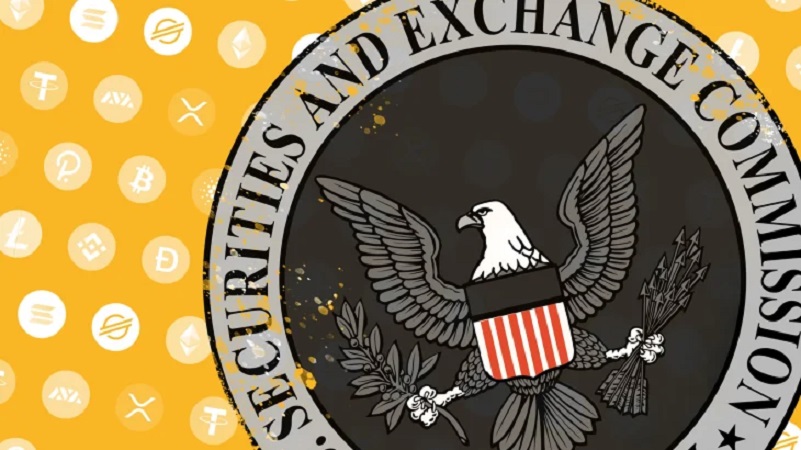
Crypto.com announced that the U.S. SEC had officially terminated its investigation into the exchange. This followed a tumultuous period for Crypto.com, which received a Wells Notice from the SEC in October 2024, signaling potential enforcement action for alleged securities law violations. Crypto.com preemptively sued the SEC, arguing that the regulator’s approach was unjust and unlawful. The company dropped its lawsuit after indications that the incoming Trump administration, which took office in January 2025, would adopt a more crypto-friendly stance, including the appointment of Paul Atkins—a known pro-crypto figure—as SEC Chair, replacing Gary Gensler.

The SEC’s decision to close the case was framed as part of a broader effort to reform its regulatory approach to the crypto industry, not as an admission that the claims lacked merit. Crypto.com’s Chief Legal Officer, Nick Lundgren, hailed this as a victory, citing the firm’s commitment to compliance and its eagerness to work with a potentially more cooperative SEC under new leadership. This resolution aligns with a wave of SEC dismissals of enforcement actions against other crypto firms like Kraken, Consensys, and Cumberland, reported around the same time. It reflects a shift in U.S. regulatory sentiment following Trump’s inauguration, which has been marked by pro-crypto gestures, including pardons and policy adjustments.

Trump Pardons BitMEX Founders

President Donald Trump granted pardons to BitMEX co-founders Arthur Hayes, Benjamin Delo, and Samuel Reed, along with former employee Gregory Dwyer and the operating entity HDR Global Trading. These individuals had pleaded guilty in 2022 to violating the Bank Secrecy Act by failing to implement adequate anti-money laundering (AML) and know-your-customer (KYC) programs at BitMEX. Their sentences—ranging from probation to home confinement—had already been served, but they faced substantial civil fines totaling $30 million from the Commodity Futures Trading Commission (CFTC), alongside a $100 million penalty imposed on BitMEX in 2021.

The pardons, reported by CNBC and confirmed by a White House official, came without a detailed public explanation but fit Trump’s pattern of crypto-friendly actions, such as pardoning Silk Road founder Ross Ulbricht shortly after his January 2025 inauguration. Hayes expressed gratitude on X with a simple “Thank you POTUS,” while Delo called the pardon a “vindication,” arguing that BitMEX and its founders were unfairly targeted under an outdated law for political reasons. The move has been interpreted as a signal of Trump’s intent to bolster the crypto industry, which he courted during his campaign with promises of lighter regulation and a U.S. cryptocurrency reserve.

While the SEC’s closure of the Crypto.com case and Trump’s pardoning of the BitMEX founders occurred around the same time (March 27-28, 2025), they are distinct events driven by different agencies and legal contexts. The SEC operates independently of presidential pardons, which apply only to federal criminal convictions, not civil or regulatory investigations like Crypto.com’s. However, both developments reflect the broader pro-crypto shift under Trump’s administration. The SEC’s retreat from enforcement actions aligns with a thawing of regulatory hostility, possibly influenced by Trump’s appointees and rhetoric, while the BitMEX pardons directly showcase his willingness to intervene in high-profile crypto cases.

For Crypto.com, the SEC’s decision removes a significant legal overhang, potentially boosting its U.S. market expansion, including partnerships like its reported deal with Trump’s Truth Media for ETFs. For BitMEX, the pardons clear the founders’ records, though the exchange’s operational challenges—like its $100 million fine and past regulatory scrutiny—persist. OKX, though not directly mentioned here, faces its own regulatory battle in Thailand (as discussed previously), unaffected by these U.S.-centric events.