DD
MM
YYYY

PAGES

DD
MM
YYYY

spot_img

PAGES

Home Blog Page 1593

Factors Fuelling ETFs Daily Trading Surge in the United States

0

Reports indicate that United States exchange-traded funds (ETFs) have set a new record, with daily trading volume surpassing $600 billion. This milestone exceeds the previous high of $484 billion from 2022, reflecting significant activity and investor engagement in the ETF market. The surge could be tied to various factors, such as heightened market volatility, shifts in investor sentiment, or reactions to economic policies. The record-breaking trading volume of U.S. ETFs surpassing $600 billion in a single day, carries several implications for investors, markets, and the broader financial landscape.

This surge in ETF trading volume suggests a significant uptick in investor activity. ETFs, known for their low costs, diversification, and flexibility, are likely attracting both retail and institutional investors. The high liquidity—evidenced by such a massive trading day—points to growing confidence or, alternatively, heightened speculation in the markets. It could reflect a rush to capitalize on perceived opportunities or to reposition portfolios amid changing economic conditions.

A trading volume this large often correlates with strong market sentiment, whether bullish or bearish. It might indicate optimism, with investors piling into equity ETFs tracking indices like the S&P 500, or it could signal uncertainty, with traders using ETFs to hedge or shift into safer assets like bonds. Historically, such spikes can precede volatility, as large inflows or outflows amplify price movements in the underlying securities. The dominance of ETFs in this record suggests a continued move away from traditional mutual funds and individual stock picking toward passive or index-based investing.

With $600 billion traded in a day, it’s clear ETFs are a preferred vehicle, possibly driven by their tax efficiency and lower fees—averaging 0.50% for ETFs versus 1.01% for mutual funds. This could pressure active managers to adapt or risk losing more market share. ETFs are designed with an arbitrage mechanism to keep their prices aligned with the net asset value of their holdings. This record volume demonstrates robust liquidity, as market makers and authorized participants efficiently handle creation and redemption of shares. However, if concentrated in a few ETFs (e.g., SPY or QQQ), it might strain liquidity in underlying stocks, especially smaller-cap names, potentially distorting price discovery.

The timing—April 2025—could tie this surge to macroeconomic factors like interest rate changes, inflation trends, or geopolitical events. For instance, a Federal Reserve pivot or a major policy shift might spur investors to reallocate via ETFs. It’s also possible this reflects a “Trump bump” or similar political catalyst, as seen in past market reactions to U.S. elections, boosting sectors like technology or energy. With ETFs now holding trillions in assets—over $10 trillion by late 2024—such high trading volumes might highlight overreliance on a handful of funds.

If investors are crowding into the same ETFs, it could amplify systemic risks, especially if a sudden reversal triggers mass outflows, echoing concerns from the Inelastic Market Hypothesis about passive flows inflating bubbles. In short, this $600 billion milestone underscores ETFs’ growing centrality in modern finance, signaling robust activity but also raising questions about sustainability, market stability, and the broader shift toward passive investing.

DOW, Nasdaq and S&P 500 Surged Following Tariffs Rollback

0

On April 9, 2025, the Dow Jones Industrial Average, Nasdaq Composite, and S&P 500 recorded their most significant single-day gains since 2008, driven by a major policy shift from President Donald Trump. After days of market turmoil following Trump’s announcement of sweeping tariffs on nearly all U.S. trading partners, he reversed course, declaring a 90-day pause on many of those tariffs. This unexpected about-face sparked a massive rally across Wall Street.

The Dow surged by 2,962.86 points, a 7.87% increase, closing at 40,608.45—its largest point gain ever and the biggest percentage jump since March 2020. The S&P 500 climbed 9.52%, or 475.65 points, to 5,456.90, marking its best day since October 2008 during the financial crisis and the third-largest percentage gain since World War II. The Nasdaq outperformed both, soaring 12.16%—a gain of 1,898.36 points—to close at 17,508.90, its biggest single-day advance since January 2001.

This rally came after a brutal four-day stretch where the S&P 500 had briefly entered bear-market territory, down over 12% from its recent highs due to tariff-related fears. The sudden relief from Trump’s pause unleashed a wave of buying, with investors interpreting it as a step toward stabilizing trade policy uncertainty. While these gains are historic in scale, they follow a volatile period, and some analysts note parallels to 2008, when sharp single-day spikes occurred amid broader market declines. The S&P 500 still ended 2008 down 38.49% despite those earlier record bounces.

The massive rally reflects a surge in investor relief following President Trump’s tariff pause. Businesses and markets had been rattled by the prospect of widespread trade disruptions, so this reprieve could stabilize supply chains, consumer prices, and corporate earnings—at least temporarily. While the gains are historic, they come on the heels of a near bear-market plunge. This whipsaw action suggests underlying uncertainty about trade policy and economic direction.

Investors may remain skittish, expecting further policy zigzags. The tariff rollback eases pressure on industries like manufacturing and tech (evident in Nasdaq’s outsized jump), but it doesn’t resolve broader questions about inflation, interest rates, or global demand. The Federal Reserve, already navigating a tricky 2025, might see this as a reason to hold steady—or adjust if inflationary pressures shift.

The market’s euphoric response hands Trump a narrative win, reinforcing his image as a decisive leader who can move markets. However, the initial tariff announcement’s fallout also exposes the risks of his unpredictable style, potentially pressuring him to clarify long-term trade goals. The 90-day pause might soften tensions with trading partners like China, the EU, and Canada, who faced steep tariffs.

Yet, it’s a temporary truce—diplomatic and economic negotiations will likely intensify as the deadline looms, testing Trump’s administration. Critics may argue the initial tariff plan was reckless, given the market chaos it triggered. This could embolden opposition in Congress or among business lobbies, complicating Trump’s agenda if he doubles down later.

Market Implications

Tech (Nasdaq’s 12% leap), industrials, and consumer discretionary stocks likely led the charge, benefiting from reduced tariff threats. Companies with heavy international exposure, like Apple or Boeing, saw outsized gains as trade war fears eased. Single-day surges of this magnitude often signal emotional trading rather than fundamentals. If Trump’s pause proves short-lived or ineffective, a correction could follow. Historical precedents—like 2008’s big bounces amid a crashing year—loom large.

The rally might lure sidelined capital back into equities, especially after weeks of outflows. However, with the S&P 500 still below its pre-turmoil peak, some hedge funds and traders could see this as a “sell the news” moment rather than a buy-in. This event underscores how tightly markets are tethered to policy in 2025. Trump’s tariff pivot turned a potential crisis into a historic win—for now. But the 90-day clock is ticking, and unresolved issues (trade deficits, geopolitical tensions, Fed policy) could temper optimism.

Investors and businesses will watch closely for signals of permanence. If the pause holds or leads to a broader deal, it could fuel a sustained rally; if it unravels, April 9 might just be a blip in a choppy year. Either way, it’s a stark reminder of how fast sentiment can shift—and how much power a single decision wields in today’s economy.

Exploring the European Union Tariffs Pause in Retrospect to Trump’s 90 Days Tariffs Pause

0

The European Union has decided to pause its planned retaliatory tariffs on U.S. goods for 90 days, aligning with President Donald Trump’s announcement on April 9, 2025, of a 90-day pause on higher “reciprocal” tariffs for most U.S. trading partners. During this period, the U.S. has set a universal tariff rate of 10% for nearly all countries, except for China. Trump simultaneously increased tariffs on Chinese goods to 125%, effective immediately, citing China’s retaliation to earlier U.S. tariffs as justification.

This escalation followed China’s imposition of an 84% tariff on U.S. imports, effective April 10, 2025, intensifying the trade conflict between the two nations. The EU’s decision to hold off on countermeasures reflects a willingness to pursue negotiations during this 90-day window, while the U.S.-China trade war continues to deepen.

The 125% tariff on Chinese goods will sharply raise the cost of imports like electronics, machinery, and consumer products, likely accelerating inflation in the U.S. American businesses reliant on Chinese supply chains—think tech firms or retailers—could face higher costs, potentially passing them onto consumers or seeing profit margins shrink.

China’s 84% retaliatory tariff will hit U.S. exporters hard, especially agriculture (soybeans, pork) and manufacturing. This tit-for-tat could further disrupt global supply chains already strained by years of tension. Reduced trade flows might push both economies toward decoupling, with China seeking self-sufficiency and the U.S. reshoring or diversifying suppliers (e.g., to Vietnam or Mexico).

EU and Global Trade Stability  

The EU’s 90-day tariff pause signals a de-escalation attempt, preserving its $500 billion-plus trade relationship with the U.S. This could stabilize markets temporarily, giving businesses breathing room to adjust inventories or negotiate contracts. However, if the U.S. resumes higher tariffs post-pause, the EU might retaliate, risking a broader trade war. Industries like European autos or American whiskey could become casualties again.

Global trade uncertainty might dampen investment, as companies hesitate to commit amid shifting policies.  In the U.S., higher Chinese tariffs mean pricier goods—think iPhones or clothing—potentially fueling inflation just as the Fed manages post-pandemic recovery. The universal 10% tariff on other nations adds another layer of cost pressure.

China might see slower export growth, hitting its GDP, while its domestic market may not absorb the slack fast enough. Currency moves—like a weaker yuan—could follow, sparking more tension. The EU benefits short-term from avoiding tariff costs but faces long-term questions about aligning with the U.S. or hedging toward China.

The tariff spike deepens the rift, signaling Trump’s intent to double down on economic confrontation. This could spill into tech rivalry (e.g., semiconductors), military posturing, or influence battles in Asia-Pacific. China might retaliate beyond tariffs—think rare earth export curbs or cyber escalation—further straining diplomacy.

EU’s Balancing Act  

The EU’s pause reflects a pragmatic play: avoid antagonizing the U.S. while keeping trade talks alive. It’s caught between supporting U.S. pressure on China and protecting its own $400 billion trade surplus with America. This could strengthen transatlantic ties if negotiations succeed, or fracture them if Trump’s “America First” stance hardens post-pause.

Smaller economies face collateral damage. Countries like South Korea or Japan, hit by the 10% U.S. tariff, might pivot toward China-led blocs like the RCEP, reshaping trade alliances. The U.S. risks isolating itself if the 90-day window doesn’t yield deals, while China could exploit the chaos to court nations wary of American unilateralism.

Markets might stabilize as the U.S. and EU negotiate, but U.S.-China trade will bleed—expect stock volatility in affected sectors (tech, retail, agriculture). Diplomacy gets a brief shot at de-escalation. If no deals emerge, expect multi-front tariff wars, supply chain chaos, and a fragmented global economy. China’s resilience and the EU’s patience will be tested.

“This Is the One” Veteran Trader Says This Altcoin Mirrors Dogecoin in 2021

0

Dogecoin has dropped further in the past few days, causing investors to seek new alternatives. Many traders have rushed to join RCO Finance, a new altcoin project that has raised over $12 million from its ongoing presale.

RCO Finance allows investors to utilize the power of artificial intelligence to increase their profit potential. Read on to see why experts say RCO Finance could become one of the top crypto coins of the year.

Dogecoin Records Shock Drop in April

Dogecoin has further sunk into the red zone after a horror drop in the first week of April. After Donald Trump announced a new wave of “reciprocal tariffs,” investors went into shock, selling off many assets. This triggered another drop for Dogecoin, continuing the recent wave of losses for investors.

Dogecoin now trades at $0.1322, following its 19.52% drop over the past week. Its 30-day chart also shows a 32.54% drop.

Many experts have changed their Dogecoin predictions following its recent price drop. Some investors say it will remain bearish, trading below $0.16 till the end of Q2 2025.

With confidence in Dogecoin fading, many traders are searching for alternatives with stronger fundamentals and real-world use cases. That’s where RCO Finance enters the spotlight—offering a data-driven lifeline to investors tired of hype and market uncertainty.

RCO Finance is a next-gen altcoin that uses AI and machine learning to give investors smarter trading tools and better market insights—something many are prioritizing in today’s volatile climate.

RCO Finance: Allowing you to Trade Less and Earn More through AI-Powered Investing

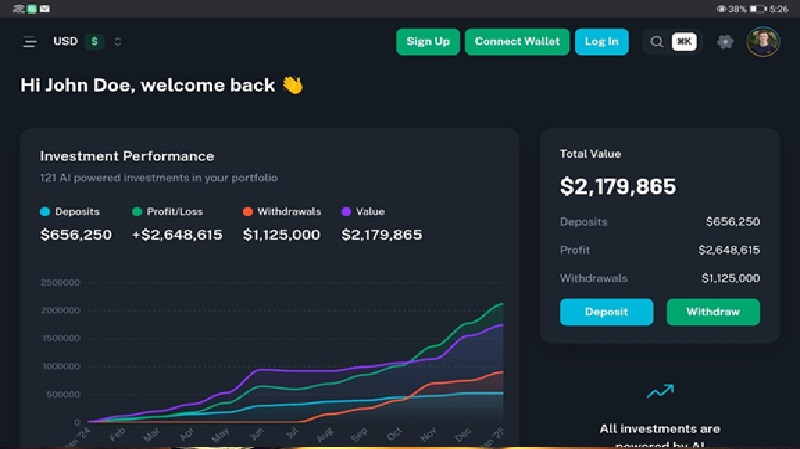
RCO Finance is a new state-of-the-art AI trading platform built for high-speed, high-intelligence investing.

This platform allows traders to say goodbye to stress, charts, and constant market watching as it equips them with AI-driven tools and strategies for earning bigger returns. RCO Finance’s ecosystem lets both new and experienced traders yield control and let AI grow their wealth with strategic precision.

The first benefit of using RCO Finance is comprehensive asset access and high leverage. Investors can trade across 12,500 financial asset classes, selecting from traditional stocks, bonds, ETFs, and futures.

They can also trade cryptocurrencies, tokenized real estate assets, and commodities. RCO Finance also equips traders with multiple options, enabling them to diversify their portfolios and hedge against market volatility.

With its 1000x leverage, your returns can skyrocket—without the usual risk, thanks to built-in AI safeguards that protect your capital in real-time.

Beyond the flexibility of being able to trade across diverse markets, RCO Finance also provides access to a high-end trading bot named Robo Advisor. This trading bot constantly scans the market, searching for investment opportunities that will allow investors to boost returns.

It also collects real-time market feeds from trusted outlets like Bloomberg and Reuters. This allows the trading bot to stay ahead of constant market changes, helping you to identify trends before your competitors.

Additionally, Robo Advisor can adjust your portfolio, making changes that align with shifting market dynamics. Thus, having Robo Advisor ensures that you can capitalize on emerging opportunities ahead of time.

Another way Robo Advisor boosts your profit potential is through automatic portfolio rebalancing.

During times of sudden market shifts such as the recent crypto market crash, Robo Advisor scans the markets, reacts to signals, and moves capital away from bearish assets. By doing so, Robo Advisor improves your adaptability to sudden market changes.

While AI trading is very profitable, RCO Finance users also enjoy yield-earning mechanisms that further amplify their returns. Users can stake their tokens, locking them for a fixed period and helping to boost liquidity for trading in the RCO Finance ecosystem.

These coin stakers will receive up to 86% APY as staking rewards. By holding RCOF tokens in their wallets, they can also earn trading fee discounts. Finally, the platform rewards active community members with extra tokens as part of cashback and loyalty programs.

RCO Finance complements its yield-earning mechanism with robust security, ensuring maximum investor safety. The network features SolidProof-verified smart contracts which guarantee speedy and smooth transactions.

Furthermore, the network features a zero KYC process, allowing investors to start trading instantly without compromising privacy.

RCO Finance Launches its Beta Platform

You can now get a head start by joining the RCO Finance beta program. Early adopters gain access to features like Robo Advisor before the public release.

Why Experts say RCO Finance Will Mirror Dogecoin’s 2021 Rally

While meme coins like Dogecoin offer community-driven hype, RCO Finance delivers utility through AI-backed financial tools. Over 10,000 investors have signed up to its ecosystem, acquiring over $12 million worth of coins from its ongoing presale.

RCOF is now in stage 5 of its presale, with one token selling at $0.100. By the next stage, this value will grow to $0.130. It will also reach the $0.4-$0.6 range before getting its official launch.

Experts are also showing excitement over predictions that RCO Finance could record a 9,000% growth in 2025 alone. This could see a $2,000 RCOF investment today grow to over $180,000 by year’s end. Sign up now and let AI grow your wealth while you live your life.

For more information about the RCO Finance (RCOF) Presale:

Visit RCO Finance Presale

Join The RCO Finance Community

Market-led and Product-led Scenarios, and Lesson on Customer Validation [video]

0

There are two main scenarios in markets and they could be classified as market-led and product-led. In a market-led scenario, everyone understands clearly that there is a need in the market to provide a product or service to fix a specific problem for customers. A good example was during the pandemic when the market was asking for a covid vaccine. Yes, the market was ripe for vaccines and the government would pay for vaccines.

In a product-led scenario, you have “products” built with no clear readily available market for them. In other words, the playbook is to introduce the “product” and then hope for the customers to come. Think of when Facebook launched VR sets, and then expected for customers to line up for them. That did not happen.

That product-led scenario is like seeing a door staged like an entrance to a restroom with companies lining up to compete to enter the door for economic liberation. Unfortunately, the door does not lead to anything because there is no market at the other side. Simply, companies are competing for a market that does not exist, wasting and destroying value along the line.

This is the reason some zen-masters will ask builders to check first before building. And that means, shake the door to know if there is really something (customers) behind before you even get to the market-door!