DD
MM
YYYY

PAGES

DD
MM
YYYY

spot_img

PAGES

Home Blog Page 16

Gold and Silver Power to Fresh Records as Trade Wars, Central Bank Buying, and Political Risk Reshape Investor Playbooks

0

Gold and silver extended their record-breaking rally on Monday, underlining how deeply investors are repositioning portfolios in response to escalating geopolitical tensions, intensifying trade disputes, and growing unease over monetary policy independence in the United States.

U.S. gold futures for February delivery rose 1.71% to $4,674.20 per ounce, while spot gold climbed 1.6% to $4,668.14. Silver surged even more aggressively. U.S. silver futures for March advanced more than 5% to a record $93.02 per ounce, with spot silver trading at $93.16, up 3.55%. Both metals had already broken prior records last week, signaling strong follow-through buying rather than a one-off spike.

At the center of the latest move is a sharp rise in geopolitical risk premia. President Donald Trump’s announcement of tariffs on goods from eight European countries, tied to U.S. demands over Greenland, has revived fears of a broader trade war between Washington and its traditional allies. Investors are also weighing the prospect of tit-for-tat retaliation from Europe, a scenario that could further disrupt global supply chains and weaken already fragile growth expectations.

Market participants say gold’s appeal goes beyond headlines. Real interest rates, a key driver of bullion prices, are expected to come under renewed pressure if political developments undermine confidence in the U.S. Federal Reserve’s independence. The Justice Department’s criminal investigation into Federal Reserve Chair Jerome Powell has unsettled markets, with investors questioning whether monetary policy decisions could increasingly be influenced by political considerations rather than inflation and employment data.

Historically, periods of perceived central bank vulnerability have favored gold, which carries no yield but also no policy risk.

George Cheveley, natural resources portfolio manager at Ninety One, said gold’s rally remains rooted in fundamentals that are still firmly in place. In the firm’s 2026 sectoral outlook, he pointed to expectations of falling real rates and sustained central bank diversification away from the U.S. dollar. Central banks, particularly in emerging markets, have been steady buyers of gold in recent years as they seek to reduce exposure to dollar-denominated assets amid rising geopolitical fragmentation.

That trend, analysts say, has provided a powerful floor under prices and reduced the likelihood of sharp sell-offs.

At current levels, Ninety One estimates gold producers’ margins could be four to five times higher than in 2024, a dynamic that may attract additional investment flows into the sector and reinforce longer-term supply discipline. With new mine supply slow to respond to price signals, higher demand is feeding directly into higher prices rather than increased output.

Silver’s rally reflects a slightly different, though complementary, set of forces. Alongside its traditional role as a safe haven, silver is benefiting from strong industrial demand linked to renewable energy, electric vehicles, and electronics. Analysts note that silver’s dual identity — as both a monetary and industrial metal — can amplify price moves during periods when economic uncertainty coincides with structural demand growth.

The metal’s ability to hold near-record levels suggests the market believes industrial consumption can absorb higher prices, at least in the near term.

Broader financial markets have shown signs of strain. European and Asia-Pacific equities mostly declined on Monday, with carmakers and luxury goods companies among the worst performers as investors assessed the potential impact of new U.S. tariffs. Trump said duties would start at 10% from February 1 and rise to 25% from June 1 if no agreement is reached. The Stoxx Europe 600 Automobiles & Parts Index fell 2.2% in early trading, while the Stoxx Europe Luxury 10 index dropped 2.9%, highlighting investor sensitivity to trade exposure.

Geopolitical risks extend well beyond Europe. The U.S. capture of Venezuela’s president earlier this month and Washington’s subsequent move to take control of the country’s oil industry have raised concerns about energy market stability. Trump’s recent comments on Iran, including suggestions of an imminent military strike before appearing to step back, have added to volatility. Meanwhile, the war in Ukraine continues with no clear resolution, and expectations are growing that reconstruction and stabilization efforts in Gaza will take years rather than months.

In contrast to gold and silver, gains in other metals have been driven more by long-term structural trends than immediate geopolitics. Copper prices edged higher, with U.S. copper futures for March last up 0.54% at $5.8625 per ounce. Cheveley described copper’s risk-reward profile as attractive, supported by rising demand from power grids, renewable energy projects, and data center infrastructure tied to artificial intelligence expansion.

Overall, the surge in precious metals suggests investors are bracing for a prolonged period of uncertainty rather than a short-lived bout of volatility. With trade tensions escalating, political risk intruding into monetary policy debates, and global conflicts unresolved, gold and silver are increasingly being treated not just as hedges but as core strategic assets.
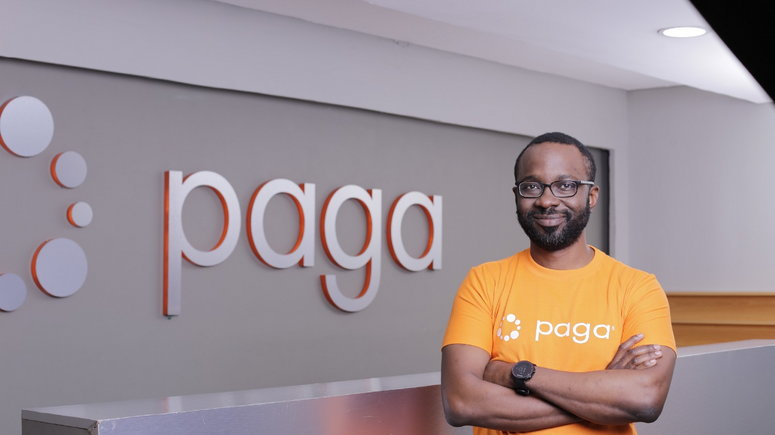
Paga Scales 17x in Four Years, Processes N17 Trillion in 2025

0

Paga, a Nigerian financial technology company that provides a mobile payment platform for sending money, paying bills, buying airtime, and enabling digital transactions, has labeled 2025 as an iconic year after hitting a major milestone.

The company announced that in 2025, it processed N17 trillion across 169 million transactions, underscoring its rapid growth and expanding influence in Africa’s digital economy.

Announcing this achievement, Paga’s CEO and Founder, Tayo Oviosu, shared his excitement via a post on LinkedIn, noting that what began as a consumer payments company has now evolved into critical economic infrastructure.

“In just four years, from 2021 to 2025, the value processed by Paga has grown 17x,” Oviosu stated. “Today, Paga Engine is the invisible force behind some of the fastest-scaling businesses in Africa, powering payments orchestration, bill payment aggregation, and Banking-as-a-Service with the reliability and scale the market demands.”

In 2021, Paga processed 35 million transactions worth N1.2 trillion. By May 2022, the company had already matched that figure across 25 million transactions. At the time, it was a clear signal of growth, though the full scale of what was to come was still uncertain. Fast forward to 2025, and the numbers tell a much bigger story. In just four years, the value of transactions processed by Paga has grown 17 times, marking a significant transformation in its operations and impact.

Paga was founded in 2009 with a mission to deliver innovative and universal access to financial services in Africa. Since its commercial launch in August 2022, the fintech has developed into a sophisticated omnichannel payments platform offering users a safe and convenient way to send and receive money and pay their bills.

Leveraging its best-in-class, multicurrency, highly scalable digital payments and financial services engine, Paga serves the ecosystem through three business lines: Paga (Consumer), Doroki (SME Merchant), and Paga Engine (Enterprise Infrastructure).

The fintech promotes income growth and financial empowerment, serving millions of customer wallets, saving Nigerians time and money. Over 29 million people have used Paga’s services, and Paga’s ecosystem has contributed to job creation at scale, with over 1,000 direct jobs and 100,000 indirect jobs created.

Through its enterprise infrastructure platform, Paga Engine, the company supports hundreds of enterprise clients. Meanwhile, its merchant platform serves merchants with over 100,000 points of presence and has impacted more than 300,000 lives who directly depend on the jobs created through the merchant network.

In 2025, Paga was ranked among the Financial Times’ fastest-growing companies in Africa list. This marks the third consecutive year Paga has earned a spot on the prestigious list, placing it in an elite group of just 18 companies to have achieved this distinction since the ranking began.

Over the past 17 years, Paga has remained committed to its mission: to make it simple for one billion people to access and use money. What began as an agency banking pioneer has evolved into a robust digital payments and financial services ecosystem. Notably, what started as millions of transactions has now become trillions in value.

Looking ahead, Paga appears well-positioned to deepen its role as a foundational layer of Africa’s digital financial ecosystem.

With the rapid adoption of digital payments, rising smartphone penetration, and increasing demand for seamless cross-border and embedded finance solutions, the company will no doubt see sustained growth across its three business lines—consumer, merchant, and enterprise infrastructure.

Dangote Group Signs $350m Deal with India’s EIL to Expand Refinery to 1.4mbpd Capacity

0

Dangote Group has signed a contract valued at over $350 million with India’s state-owned Engineers India Limited (EIL) to oversee the expansion of its flagship refinery and petrochemicals complex in the Lekki Free Zone, Lagos.

Under the agreement, EIL will serve as Project Management Consultant (PMC) and Engineering, Procurement, and Construction Management (EPCM) consultant, replicating the role it played in delivering the original 650,000 barrels-per-day refinery commissioned in 2024.

The expansion will include the addition of a second processing train and a focus on producing Euro VI–compliant fuels, meeting global low-sulfur standards. In addition, the project will substantially scale up petrochemical output. Dangote plans to increase polypropylene production from 830,000 tons per year to 2.4 million tons by revamping its existing unit, installing a 1.2 million-ton new facility, and adding a 750,000-tonne UOP Oleflex unit to boost propylene feedstock supply.

EIL stated that the renewed engagement reflects Dangote Group’s confidence in the firm’s technical and project delivery capabilities.

“Believing in EIL’s Engineering and Project Management excellence, Dangote Group has once again joined hands with EIL in this endeavor and has signed a Contract Agreement of value more than US $350 Million,” the company said. “Once completed, this expansion will position Dangote as the world’s largest petroleum refinery, strengthening fuel production within Africa, reducing reliance on imports, and supporting regional energy security.”

The Dangote Refinery and Petrochemicals Complex, one of Africa’s costliest industrial projects at an estimated $19 billion, has already achieved several milestones:

  • 2019–2020: Groundbreaking and initial construction of the refinery began at the Lekki Free Zone, Lagos.
  • May 2023: Official inauguration of the refinery after years of engineering and construction.
  • Early 2024: Commencement of diesel and aviation fuel production as part of a phased ramp-up strategy.
  • Mid-2024: Start of petrol production, marking Nigeria’s first substantial reduction in fuel import dependence despite being Africa’s largest crude oil producer.
  • October 2025: Dangote disclosed plans to double the refinery’s capacity to 1.4 million barrels per day. EIL, having served as PMC and EPCM on the initial refinery, was invited to lead the expansion.
  • December 2025: Dangote announced plans to list a 10% stake in the refinery on the Nigerian Exchange in 2026 and discussed future U.S. dollar dividend payouts to mitigate currency risk.

Expansion Plans and Regional Impact

The expansion to 1.4 million barrels per day would make Dangote Refinery the largest single-site refinery globally, surpassing India’s Jamnagar refinery. The project is expected to drastically reduce Nigeria’s dependence on imported refined products, strengthen West African energy security, and facilitate intra-African fuel trade.

Analysts note that as global fuel quality standards tighten, the refinery positions Nigeria as a key player in international energy markets.

Beyond refining, the expansion aims to bolster Nigeria’s petrochemical output. Polypropylene production will more than double, while the addition of the UOP Oleflex unit will secure sufficient propylene feedstock for downstream applications. The project also promises to generate thousands of direct and indirect jobs, providing a boost to local employment and skills development in Nigeria’s industrial sector.

Financing and Strategic Partnerships

Aliko Dangote is exploring financing options and potential partnerships with Middle Eastern investors to support the expansion. The 10% planned listing of the refinery on the Nigerian Exchange is part of broader efforts to mobilize investment while enabling access to global capital markets. Discussions are ongoing to allow future dividend payouts in U.S. dollars, providing investors with a hedge against currency volatility.

Once operational, the expanded refinery will cement Dangote Group’s leadership in Africa’s energy sector, making Nigeria a net exporter of refined petroleum products and a major supplier of petrochemicals across the continent. The combination of global engineering expertise through EIL, a phased expansion plan, and strategic financial measures underlines Dangote’s ambition to transform Africa’s energy infrastructure while creating long-term economic benefits for Nigeria and the broader region.

The Amazon’s Grand Unification in Nigeria

1

The news is in: Nigeria has issued seven-year satellite permits to Amazon’s low-Earth-orbit broadband network, Amazon LEO (formerly Project Kuiper), expanding the frontier of space-based internet competition as the nation races to close its deep digital access gap. Beginning in February, Amazon will operate alongside Elon Musk’s SpaceX Starlink, whose footprint in Nigeria has grown rapidly since its 2023 debut.

In 2020, I wrote that Amazon was laying the foundation for a new technological order: “Amazon begins a new tech wave—spending $10 billion to deliver internet from space and possibly disintermediate current telcos by bundling cloud hosting, digital commerce, and broadband. With a small device, your AWS could run through Amazon’s pipes instead of MTN or 9mobile. And Amazon Prime movies, music, etc., would be meter-free because Amazon becomes the network carrier.”

That future is now at our doorstep. As satellite broadband hits maturity, Africans will confront a new decision matrix:

Do I use Elon Musk’s Starlink, which delivers pure internet OR Amazon’s broadband, which delivers internet plus Prime Video, music, games, Champions League*, cloud hosting, and possibly more, all unmetered within Amazon’s ecosystem?

That, Good People, is the grand unification playbook: bundling connectivity, content, cloud, and commerce into one pipeline. It is Amazon’s integrated stack meeting Nigeria’s digital ambitions.

And that is why this license matters: it is not just another satellite approval; it is the beginning of a new competitive frontier where broadband becomes the gateway into an entire digital civilization. A really big gateway!

In finality, if Amazon secures broadcast rights for the Champions League, major European football, and the NBA, Elon Musk will not enjoy an automatic slam-dunk victory in Nigeria, or across Africa’s satellite broadband arena. The contest will shift from pure connectivity to connectivity plus content, and in that battleground, Amazon becomes a formidable force.

ZKP Crypto, Bitcoin, Ethereum, and Solana: Which Is the Best Crypto for Long Term Gains?

0

The largest gains in crypto often don’t come from what’s trending today, they come from early access and structural advantage. With Bitcoin hovering just below $97,000 and Ethereum and Solana holding key levels, the broader market is beginning to stir. But for long-term positioning, it’s not just price that matters, it’s access, architecture, and timing.

This list breaks down leading names that combine strong technical setups with sustainable fundamentals. From dominant platforms like Ethereum and Bitcoin to rising infrastructure plays like Solana and BNB, each has its place. But only one, Zero Knowledge Proof (ZKP), offers a live, rules-based presale with 100x to 10,000x modeled upside based purely on how and when buyers participate.

If you’re trying to determine the best crypto for long term positioning in 2026, this breakdown highlights the key opportunities, and the project that may still be flying under the radar.

Zero Knowledge Proof (ZKP): Timing-Weighted Access Could Define Future ROI

Zero Knowledge Proof (ZKP) introduces a 450-day auction format that deliberately avoids the capital concentration seen in typical token launches. Rather than letting large contributors dominate, ZKP levels the field with structural constraints:

  • Daily contribution cap of $50,000 per wallet
  • No private rounds, discounts, or early unlocks
  • Price discovery resets every 24 hours
  • Participation advantage based on entry timing, not contribution size

The result is a system where every participant has the same rules, and early buyers benefit from lower daily competition. This model rewards consistency and discipline. And because the network, infrastructure, and reward mechanics are already live, Zero Knowledge Proof (ZKP) removes the usual delay between buying and mainnet deployment.

Historically, outsized returns in crypto have come from projects that provide early access without insider distortion. Analysts reviewing long-duration auctions like ZKP’s have modeled return potential ranging from 100x to as high as 10,000x, depending on entry point, adoption, and market momentum.

ZKP isn’t trying to replicate Bitcoin or Ethereum. It’s building a system where capital discipline drives outcomes. For those seeking the best crypto for long term value, especially during presale phases, ZKP stands out as structurally unique.

Bitcoin (BTC): Macro Tailwinds Reinforce a Long-Term Store of Value

Bitcoin remains a central force in the crypto market, currently trading near $95,610 and recently touching $97,000 for the first time in two months. While its movements may seem modest compared to more volatile assets, Bitcoin’s appeal lies in its macro alignment.

Key drivers for BTC include:

  • Moderating inflation across key economies
  • Continued institutional accumulation via spot ETFs
  • Clearer U.S. policy frameworks, including the Digital Asset Market Clarity Act

Bitcoin continues to operate as a long-term hedge against macro uncertainty. As traditional financial institutions gain more access through regulated investment vehicles, BTC’s role as digital gold only strengthens.

Forecasts suggest price targets ranging between $100,000 and $200,000 during the next cycle, depending on central bank policy and ETF-driven inflows. While Bitcoin may not deliver 100x returns from current levels, it remains among the best crypto for long term portfolio inclusion due to its liquidity, security, and institutional interest.

Ethereum (ETH): A Layer-1 Powerhouse Evolving Through Layer-2 Growth

Ethereum is currently consolidating near $3,307, with technical resistance around $3,350. While short-term price movements remain steady, Ethereum’s strength lies in long-term infrastructure positioning.

Three critical trends support its growth:

  • Layer-2 solutions such as Arbitrum and Optimism are scaling transaction volume
  • ETH’s burn rate continues to reduce total supply
  • Staking adoption remains high across validators and liquid staking protocols

As the foundation for most of DeFi, NFTs, and tokenized real-world assets, Ethereum maintains a central role in blockchain infrastructure. Its ongoing upgrades aim to optimize performance while preserving decentralization.

Ethereum doesn’t have the headline velocity of newer projects, but it offers durable, real-world usage. As its scaling roadmap progresses, many analysts still see room for 10x to 50x growth over a multi-year horizon. For those focused on smart contract platforms, Ethereum remains one of the best crypto assets for long term positioning.

Solana (SOL): High-Speed Ecosystem That Rewards Volatility Exposure

Solana is holding around $143, with minor pullbacks following a strong recent run. While short-term fluctuations continue, Solana’s long-term prospects remain tied to its performance advantage.

Why Solana still matters:

  • Near-zero transaction fees
  • High-speed throughput with low latency
  • Expanding developer base across DeFi, gaming, and NFTs

Solana tends to outperform in high-volatility environments. It attracts both retail and institutional players looking for faster networks without high gas costs. As app usage and total value locked (TVL) continue to climb, its upside grows accordingly.

Among Layer-1 chains, Solana remains a higher-beta play. If capital rotation continues into risk-on segments of the market, SOL could show strong outperformance. For growth-focused buyers, it still ranks among the best crypto for long term asymmetric returns.

Binance Coin (BNB): Real Utility Drives Renewed Momentum

BNB is gaining traction again, trading volume is up, and integration across major exchanges continues to increase. With Coinbase now supporting BNB, its exposure is widening beyond the Binance ecosystem.

What supports long-term value for BNB:

  • Trading fee discounts across Binance platforms
  • Launchpad access for early-stage token offerings
  • On-chain utility across BNB Chain and DeFi projects

While BNB isn’t a base-layer smart contract platform like ETH or SOL, it leverages ecosystem synergies and centralized scale effectively. In bull cycles, that combination often leads to aggressive upside.

For those looking for long-term exposure tied to exchange growth and token utility, BNB remains one of the best crypto coins to hold. It captures value from both platform activity and broader crypto adoption.

Cardano (ADA): Long-Term Execution with Emphasis on Governance and Stability

Cardano trades at approximately $0.39 and continues to build steadily, even when market sentiment fluctuates. Its approach is rooted in slow, methodical development and peer-reviewed protocols.

Key pillars of Cardano’s future value:

  • Implementation of on-chain governance
  • Maturation of smart contract functionality
  • Growth in decentralized applications on the network

Cardano doesn’t typically lead rallies, but it remains a favorite for long-term holders due to its transparency, roadmap discipline, and expanding ecosystem. As more utility arrives through governance and dApps, its upside potential becomes more visible.

For conservative long-term buyers seeking steady exposure to a layer-1 with protocol-first principles, ADA holds its place as one of the best crypto choices for balanced growth.

Final Thought

As we look deeper into 2026, crypto is entering a new phase. Bitcoin and Ethereum continue to provide stability and foundational strength. Solana, BNB, and Cardano each offer distinct angles, from high-speed ecosystems to governance-heavy development paths.

But Zero Knowledge Proof (ZKP) stands apart due to how it rethinks access. Its 450-day auction, capped daily contributions, and live infrastructure remove typical presale risks and create a system where early, consistent participation could yield extraordinary results. It’s not just about finding the next breakout, it’s about entering before the structure tightens.

For those seeking the best crypto for long term growth, especially where architecture meets fairness, ZKP deserves attention before the market fully prices it in.