DD
MM
YYYY

PAGES

DD
MM
YYYY

spot_img

PAGES

Home Blog Page 1604

Tony Elumelu Foundation Commits $15 Million to Empower 3,000 Young African Entrepreneurs in 2025

0

The Tony Elumelu Foundation (TEF) has announced a $15 million grant to support 3,000 young entrepreneurs across 52 African countries, reinforcing its commitment to fostering economic transformation on the continent.

The announcement was made on Sunday in Abuja by Tony Elumelu, the Founder of TEF and Chairman of Heirs Holdings, Transcorp, and United Bank for Africa (UBA), during the unveiling of the 2025 cohort of the foundation’s Entrepreneurship Program.

Each selected entrepreneur will receive a non-refundable $5,000 seed grant to launch or expand their business. This initiative is part of the foundation’s broader effort to democratize access to funding and mentorship, ensuring that African youth have the necessary resources to thrive in their respective industries.

Elumelu reflected on the foundation’s journey, tracing it back to 2010 when the vision for a self-sustaining Africa was first conceived. He emphasized the importance of entrepreneurial empowerment in driving economic progress, stating that investing in young entrepreneurs was one of the most sustainable ways to create jobs and reduce poverty.

He explained that capital alone is not enough to build a successful business, highlighting the importance of business education, mentorship, and training. These additional resources, he said, play a crucial role in developing well-rounded, resilient entrepreneurs capable of navigating Africa’s complex business environment.

“We understand the challenges they face in contributing to Africa’s economic transformation.

“If empowered and encouraged, these young Africans can drive meaningful change,” he said.

The TEF Entrepreneurship Program was officially launched in 2015 with an ambitious goal to economically empower 10,000 young African entrepreneurs over a decade, providing each with a $5,000 grant, mentorship, and business training. However, over the years, the foundation has far exceeded its original target, expanding the program to reach over 21,000 entrepreneurs across all 54 African countries.

Since its launch in 2015, the foundation has lifted over two million Africans out of poverty, provided 2.5 million young Africans with access to training through TEFConnect, and disbursed more than $100 million in direct funding to thousands of African entrepreneurs, according to data from its website.

As the foundation marks its 15th anniversary, Elumelu reiterated that Africa must shift its focus from reliance on aid to investments in youth-driven economic initiatives. He stressed that Africa does not need aid but rather investment in its youth, reaffirming the foundation’s mission to equip the next generation of African entrepreneurs with the tools they need to succeed.

“In the 21st century, Africa does not need aid; what it needs is investment in its youth,” Elumelu said.

TEF CEO, Somachi Chris-Asoluka, highlighted the overwhelming demand for the program, revealing that over 200,000 applications were received for the 2025 cohort, reflecting the widespread need for financial and business support among Africa’s young entrepreneurs. Out of this highly competitive pool, 3,000 entrepreneurs from 52 African nations have been selected to receive the $5,000 non-refundable grant.

Chris-Asoluka also emphasized the broader economic impact of TEF’s entrepreneurship program, stating that it has empowered over 21,000 young African entrepreneurs, helped create more than 1.5 million enterprises, and generated $4.5 billion in revenue across supported businesses. She stressed that TEF entrepreneurs have demonstrated that ideas are the lifeblood of the African continent and that the foundation remains committed to nurturing these ideas into thriving businesses.

To ensure accountability and sustainability, the foundation has implemented a comprehensive monitoring and evaluation system to track beneficiaries’ progress. This system ensures that recipients adhere to their approved business plans, allowing TEF to assess the long-term impact of the funding and mentorship provided.

Beyond financial assistance, the TEF Entrepreneurship Program offers a robust training and mentorship structure to help entrepreneurs navigate challenges, scale their businesses, and create employment opportunities in their communities. Beneficiaries gain access to a network of experienced mentors, business leaders, and investors, equipping them with critical knowledge and insights to enhance their business acumen.

Over the years, TEF has maintained that Africa’s economic growth depends on its youth, and the foundation remains committed to nurturing the next generation of African business leaders. TEF is laying the groundwork for an Africa driven by innovation, enterprise, and financial independence by providing direct funding, mentorship, and training.

As the foundation looks toward the future, its focus remains on scaling its impact even further, ensuring that more entrepreneurs receive the necessary support to transform their ideas into thriving businesses. Through this continued investment in Africa’s youth, TEF aims to shape a continent that is not only economically self-sufficient but also positioned as a global hub for innovation and entrepreneurship.


Coreweave’s Stock Opens At $39 Below Price In Nasdaq Debut, Marking Largest Tech IPO In U.S. Since 2021

0
NASDAQ

CoreWeave Inc., the cloud-based artificial intelligence computing provider, made its public debut on the Nasdaq on Friday, marking the largest tech initial public offering (IPO) in the U.S. since 2021. However, the stock opened at $39 per share, below its $40 IPO price, reflecting a cautious investor sentiment despite the AI boom.

The AI-focused company, which specializes in renting out Nvidia-powered computing infrastructure to major technology firms, had initially targeted an IPO price range of $47 to $55 per share but was forced to lower its expectations due to market turbulence and investor caution.

The IPO raised $1.5 billion for CoreWeave, making it the biggest tech IPO in the U.S. in four years, since UiPath’s $1.57 billion debut in 2021. Originally, CoreWeave had planned to raise approximately $2.5 billion at the midpoint of its initial pricing range, but it scaled back the offering in response to investor caution and a broader downturn in the stock market.

Speaking about the company’s decision to lower its IPO price, CoreWeave CEO Michael Intrator told CNBC’s “Squawk Box” that there were significant macroeconomic headwinds, which made it necessary to adjust the size of the offering to match market interest.

CoreWeave’s arrival on the public market coincided with one of the toughest trading days for technology stocks in 2024, as the Nasdaq fell nearly 3%, heading for its worst quarterly performance since mid-2022. The tech-heavy index has been struggling under economic uncertainty and is down 10% so far this year. The broader market downturn has negatively impacted investor appetite for high-risk, high-growth technology stocks, making CoreWeave’s debut less than ideal.

Founded in 2017 and based in Livingston, New Jersey, CoreWeave has positioned itself as a major player in the AI computing space. The company specializes in renting out Nvidia-powered computing infrastructure to firms that require high-performance computing for artificial intelligence training and inference tasks. It has benefited significantly from the generative AI boom that began with OpenAI’s launch of ChatGPT in late 2022. The company is a key supplier to OpenAI, and Microsoft, which provides cloud services to OpenAI, is CoreWeave’s largest customer, accounting for 62% of the company’s $1.92 billion revenue in 2023. Other major clients include Meta, IBM, and Cohere.

CoreWeave’s rapid growth has been fueled by the increasing demand for AI infrastructure, with revenue soaring 737% in the past year. However, the company remains deeply unprofitable, reporting a net loss of $863 million in 2023. Running a cloud computing business at this scale is extremely capital-intensive, as the company must continuously invest in costly Nvidia GPUs and operate data centers. The company has raised nearly $13 billion in debt to finance its infrastructure, much of which has been allocated toward acquiring GPUs and expanding its leased data center facilities across the U.S. and abroad.

Despite strong revenue growth, the company faces significant challenges as it enters the public market. One of the biggest concerns for investors is the increasing competition from established cloud giants like Microsoft, Amazon, Google, and Oracle, all of which are expanding their own AI computing offerings. These companies have far greater financial resources and established customer bases, making it difficult for CoreWeave to maintain a competitive edge in the long term. Additionally, its high debt levels raise concerns about whether it can achieve profitability, especially if the AI sector experiences a slowdown.

The company’s performance in the coming months will be closely watched as a potential catalyst for other AI-related IPOs. If CoreWeave is able to prove its business model and gain investor confidence, it could pave the way for more AI-driven companies to go public.

Several high-profile firms are already preparing for IPOs, including Databricks, which was valued at $62 billion in December 2023, and OpenAI, which was reportedly closing in on a $260 billion funding round last month. Other companies such as Hinge Health, Klarna, StubHub, and Discord have also been making moves toward public listings.

The subdued market response to CoreWeave’s debut signals that, while investors remain interested in AI, they are wary of companies that are not yet profitable. Unlike some of its competitors in the cloud computing space, CoreWeave does not have a diversified revenue stream, as it remains heavily dependent on a small number of customers, particularly Microsoft and OpenAI. This lack of diversification presents a risk, as any shift in business strategy from these key partners could impact CoreWeave’s financial health.

Investor skepticism surrounding the IPO is also tied to broader economic factors. The tech sector has been hit hard by rising interest rates and inflation, which have reduced risk appetite and made it more difficult for companies to raise capital. The overall IPO market has remained largely shut since the end of 2021, with only a handful of venture-backed technology companies going public in recent years. Between 2022 and 2024, there were just 13 venture-backed tech IPOs in the U.S., a significant decline from the record 77 that occurred in 2021.

CoreWeave’s public listing represents a significant milestone for AI-focused companies, but it also underscores the challenges facing the sector. While the company has successfully established itself as a major player in the AI infrastructure market, its ability to navigate competitive pressures and achieve sustainable profitability remains uncertain.

The Evolution in Nigeria’s Capital Market And Opportunities Therein

0

Commercial Papers are now very common in Nigeria, and the Central Bank of Nigeria is partly the reason that is the case in the banking sector: “Nigerian banks increasingly rely on short-term commercial papers (CPs) to navigate liquidity challenges as the Central Bank of Nigeria (CBN) enforces stringent cash reserve policies, significantly driving up the cost of deposits.”

Yes, it is costing banks more to hold your deposits because of the cash reserve ratio (CRR) which the apex bank has pushed to help manage some of the monetary issues in the nation. Take a look and read what is happening here.

I used the OA Lawal textbook of economics in secondary school. I am not sure he explained CP (he did explain “promissory note” though, and CP is a subset of that). But today, I want to believe that the popularity of CP in the Nigerian financial market will make it a key section in any O’Level Econ textbook.

Good People, the market is evolving and our highly financialized economy (though not industrializing) has huge niche opportunities. I want young people to think about how to unlock value in this economy. There are huge evolutions in instruments and derivatives are coming up. It looks exciting and we’re investing also in the capital market because locally, new species of asset classes can be bred. By Q4, our goal is to hire about 50-60 people as we unveil our new company. I am bullish in Nigeria and possibly one of the most committed diasporan investors in the nation!!! Lol.

*Commercial paper is largely an unsecured, short-term debt instrument which companies issue to finance their short-term liabilities which could be payroll, accounts payable, and inventories.  It does help to handle short-term liquidity challenges.

Nigerian Banks Struggle with Liquidity Crisis, Turn to Costly Commercial Papers Amid CBN’s Tightening Policies

Online Poker vs. Traditional Casino Poker: Pros and Cons for Modern Players

0

The world of poker has dramatically evolved due to digital transformation. Players once confined to physical casinos now have options at their fingertips, with online platforms becoming particularly prevalent. Today, players regularly debate whether playing online poker, especially in regulated environments like New Jersey online poker, outweighs the traditional casino poker experience.

To provide clarity, this article objectively compares the pros and cons of online poker versus traditional casino poker, helping modern players choose the best option for their personal and financial preferences.

Online Poker: Convenience Meets Innovation

Online poker has surged globally, powered by accessible platforms, innovative gaming technologies, and widespread internet penetration.

Pros of Online Poker:

  • Convenience and Accessibility: Players engage in poker games 24/7 without traveling. Online platforms like those regulated by New Jersey’s Division of Gaming Enforcement ensure safe, legal play around the clock.
  • Variety of Games and Tournaments: Online platforms offer numerous poker variants and tournament styles, including Texas Hold’em, Omaha, and multi-table tournaments with varied buy-ins.
  • Lower Cost Barriers: Online poker tables accommodate smaller stakes, attracting beginners or those with limited budgets. Micro-stakes tables allow players to experiment without substantial financial risk.
  • Speed and Multitasking: Games move faster online, and experienced players can participate in multiple tables simultaneously, potentially maximizing earning opportunities.
  • Promotions and Bonuses: Online platforms provide regular bonuses, rakeback offers, and promotions, significantly benefiting active players.

Cons of Online Poker:

  • Reduced Social Interaction: Players miss out on face-to-face interaction. Nonverbal cues and camaraderie central to traditional poker diminish significantly online.
  • Risk of Distraction: Playing from home or on mobile devices increases distraction potential, possibly impairing gameplay effectiveness.
  • Technical Issues and Security Concerns: Internet outages, server downtime, or technical glitches can negatively impact gameplay. Cybersecurity risks, although minimal on regulated sites, remain valid concerns for players.
  • Difficulty Reading Opponents: Skilled poker players often rely on physical tells. Online poker limits this, forcing reliance solely on betting patterns and statistics.

Traditional Casino Poker: Classic Environment, Personal Interaction

Traditional casino poker maintains popularity, particularly among players seeking personal interaction and a lively gaming atmosphere.

Pros of Traditional Casino Poker:

  • Social Experience and Networking: Casinos foster personal interaction and networking opportunities, enhancing enjoyment beyond purely financial gains.
  • Enhanced Gameplay Atmosphere: Physical casinos offer excitement and energy challenging to replicate digitally. The sensory environment boosts overall player experience.
  • Ability to Read Physical Tells: Observant players leverage opponent body language and behavior, significantly enhancing strategic decision-making.
  • Immediate Access to Winnings: Players cash out instantly in person, experiencing immediate gratification without waiting for digital transfers.

Cons of Traditional Casino Poker:

  • Accessibility and Cost Constraints: Traveling to physical casinos involves time, cost, and effort, often discouraging casual play.
  • Limited Game Selection and Stakes: Casino tables generally have higher buy-ins, potentially excluding budget-conscious or novice players. Game options and tournament schedules remain restricted compared to online offerings.
  • Slower Pace of Gameplay: Physical poker games move considerably slower, limiting earning potential, especially for seasoned players accustomed to multitabling.
  • Pressure and Discomfort for New Players: Newcomers often find physical poker environments intimidating or stressful, reducing enjoyment and confidence at tables.

Comparative Analysis: Online vs. Traditional Poker

When evaluating online and traditional poker, essential considerations emerge:

  • Convenience: Online platforms distinctly outperform traditional casinos, offering unmatched flexibility and continuous accessibility.
  • Social Interaction: Traditional casinos undeniably excel, providing valuable personal connections and physical interactions impossible online.
  • Gameplay and Strategy: Traditional environments benefit observant players skilled at reading physical cues. Conversely, online poker advantages analytically minded individuals capable of handling fast-paced, multitabled gameplay.
  • Financial Commitment: Online poker offers significantly lower entry barriers, enabling broader participation compared to higher-stakes physical tables.

Online poker’s distinct advantage is its flexibility and affordability, aligning with broader digital transformation trends, as noted in technology insights shared by platforms like Tekedia.

Conversely, traditional casino poker appeals primarily to players valuing atmosphere, face-to-face interactions, and physical tells.

Industry and Player Perspectives

Experienced players consistently discuss online versus traditional poker, as evidenced by extensive community discussions on platforms like Reddit’s Poker Community. These conversations underscore how player personality, financial preferences, and gameplay style significantly influence preferred poker formats.

Prominent players emphasize the complementary nature of both poker formats rather than suggesting one outright replaces the other. Top professionals often leverage online platforms for regular practice and skill sharpening, reserving casino play for major tournaments and social experiences.

Final Verdict and Recommended Use Cases

Neither online poker nor traditional casino poker universally suits every player. Optimal choice depends on individual preferences and gaming goals:

Online Poker is Recommended for:

  • Players prioritizing convenience, accessibility, and flexibility.
  • Budget-conscious players seeking lower entry stakes and regular bonuses.
  • Analytical players comfortable multitasking and relying on data-driven decisions.

Traditional Casino Poker is Recommended for:

  • Players seeking vibrant social interactions and atmosphere.
  • Experienced players skilled at reading physical tells and behavioral cues.
  • Individuals comfortable with higher financial commitments and slower gameplay pace.

Players in regions permitting regulated online poker platforms can confidently explore these options, leveraging safe and transparent gaming experiences provided by reputable operators.

Online and traditional casino poker each provide unique advantages and distinct challenges. Evaluating personal preferences around social interaction, financial commitment, gameplay style, and convenience clarifies optimal choices for modern players.

Ultimately, strategically leveraging both poker formats provides comprehensive advantages, enabling players to maximize enjoyment, skills development, and earning potential. By thoughtfully exploring each option, players make informed choices that align closely with their lifestyle preferences and gaming goals.

For continued insights into technology, investment, and strategic gaming trends, visit our regular analysis and commentary on Tekedia.com.

Free Giveaways 2025 on JemLit: Free Mystery Boxes, Win a Cash Prize

0

Many mystery box platforms exist, but none have been able to match the high level of thrills, goodies, and convenience delivered by JemLit.

Since its debut, this leading platform has been electrifying the mystery box landscape with its immense surprises, high-quality products, and groundbreaking giveaways.

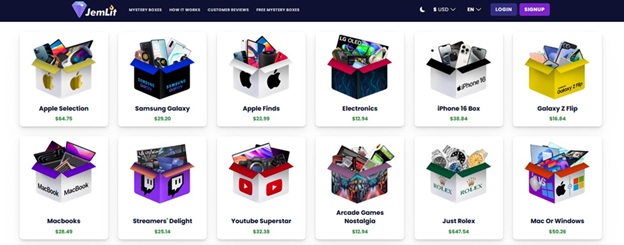
One of the major reasons JemLit is well-rated by many is the manner in which it caters to varied tastes while preserving the core thrill of the unknown. It is packed with different kinds of products spread across various categories including gaming, fashion, crypto, jewels, sports, and many more.

The added advantage of low cost gives it a higher level of accessibility, making it a go-to spot for those who enjoy the intrigue of potentially winning diverse yet mind-boggling items without having to break the bank.

And there are even plenty of free mystery box giveaways to be won daily by active users. To qualify for this exciting opportunity, all that’s needed to be done is to accumulate enough points by leveling up your mystery box game.

Win Physical & Cash Prizes With JemLit’s Free Mystery Boxes

Do you want to savor the thrill of unboxing hidden treasures and claiming tantalizing prizes? JemLit’s free giveaways are increasingly popular among freebie hunters.

The platform recently added a reward feature that blends the elements of suspense and anticipation with tangible prizes.

For anyone drawn into the evolving appeal of free mystery boxes, this promo could be the best opportunity to have a shot at scoring a wide array of high-end items, including high-end sneakers, gaming consoles, sneakers, iPhones, laptops, and a whole lot more.

To start unlocking all the aforementioned gifts, users need to make deposits into their accounts and level up their mystery box game. The more mystery boxes they purchase, the higher their level will be, and as they level up, they will be able to open free box drops each day, giving them more opportunities to unlock big real-world prizes.

One of the most interesting aspects of this reward feature is the ultimate gamification experience that it champions. As users level up and earn high-value rewards, they feel a sense of fulfillment and progress, just like a game.

The free box drop is billed to happen at 00:00 Greenwich Time each day. The thrill of anticipating the next drop adds an extra layer of excitement to the gaming experience.

Why Is JemLit Generating Significant Buzz?

The allure of mystery boxes lies in the “lottery-like” ecstasy and the potential for substantial prizes, and JemLit delivers on that perfectly.

The online platform has gained traction from those who fancy the atmosphere of mystery, suspense, and rewards. JemLit’s biggest strength? Variety. It is home to a diverse array of themed boxes, catering to varied tastes and preferences.

The categories featured are many, but the most popular ones include fashion, gaming, jewelry, lifestyle, tech, electronics, crypto, cosmetics, sports, and many more. Not only are the products engraved in each of the mystery boxes authentic, but they are also from different brands.

Take for instance the fashion category—users will find everything fashion-related from diverse designers. There is also a mystery box for phone gadgets, with different brands like Apple, Techno, Samsung, Infinix, and much more available for grabs.

The next key selling point is its transparent prize odds, powered by its provably fair system. This means users can rest assured that the outcome of every mystery box opening remains random and without bias.

How the provably fair system works is not far-fetched–the platform generates a server seed, while the player picks a client seed alongside a unique number for each mystery box unlocking to guarantee fairness. And unlike other platforms that do not reveal how their results are generated, JemLit allows users to verify each of its outcomes through the unhashed server seed.

Customer satisfaction has always been the number one priority for JemLit, and that explains why the pricing structure of its mystery boxes is inclusive and budget-friendly. With as low as $7.72, customers can purchase a box featuring gaming and electronic products that may not be found at retail stores.

The most expensive mystery boxes among them cost $772 at press time and they feature premium and gold-related products. New users are offered special discounts on their first mystery box, and the added advantage of having to make payments with either credit cards, crypto, or Paypal improves the overall experience on JemLit.

Also setting it apart from competitors is its global reach. Users from different regions worldwide, including the US, Europe, Asia, and parts of Africa can rest assured that they will receive their shipments. Customer service is generally reliable, resolving certain issues that users often face, especially during peak periods.

While most shipments take between 7 and 14 days, depending on the location, testimonials seen on the website indicate that users always get the original products that they win, further solidifying the position of JemLit as the right place to get the value for your money.

All of this, and more has helped the platform sustain the loyalty of existing customers and attract more newcomers. At the time of writing, it boasts approximately 1.4 million registered users and has opened more than 1.47 million mystery boxes.

How to Start Using JemLit

Follow the steps below to get started with JemLit and start winning mind-blowing physical prizes:

  1. Go to the official website of JemLit to create an account.
  2. Fund your account by making a deposit using any of the supported payment methods.
  3. Buy any of the mystery boxes you desire to claim physical prizes and qualify for the daily giveaways.