DD
MM
YYYY

PAGES

DD
MM
YYYY

spot_img

PAGES

Home Blog Page 1607

Market Sell-Off Deepens as Trump’s Tariff War Escalates, Analysts Fear Prolonged Stock Crisis

0

The U.S. stock market suffered another brutal sell-off on Monday, deepening a three-week downturn as investors grew increasingly anxious over the possibility of a recession—an outcome that President Donald Trump did not rule out in a weekend interview.

With Wall Street already on edge over tariff policy uncertainty, the situation took a turn for the worse as Trump imposed a 50% retaliatory tariff on Canadian steel and aluminum, escalating trade tensions with the country’s largest trading partner.

The S&P 500 plunged 2.7%, touching its lowest level since September before closing at 5,614.56. The tech-heavy Nasdaq Composite saw the steepest decline, plummeting 4%—its worst session since September 2022—to close at 17,468.32. The Dow Jones Industrial Average dropped 890.01 points, or 2.08%, finishing at 41,911.71.

The losses accelerated throughout the day before moderating slightly before the close. With Monday’s declines, the S&P 500 is now down 8.7% from its all-time high reached on February 19, while the Nasdaq Composite has lost nearly 14% from its peak, nearing official correction territory.

Trade War Escalation Raises Alarms

Investor anxiety was already running high due to ongoing uncertainty over the Trump administration’s tariff policies. However, markets were rattled further when the U.S. announced a 50% tariff on Canadian steel and aluminum imports, a move widely seen as retaliation against Canada’s 25% tariff on electricity exports to the U.S.

“Based on Ontario, Canada, placing a 25% Tariff on “Electricity” coming into the United States, I have instructed my Secretary of Commerce to add an ADDITIONAL 25% Tariff, to 50%, on all STEEL and ALUMINUM COMING INTO THE UNITED STATES FROM CANADA, ONE OF THE HIGHEST TARIFFING NATIONS ANYWHERE IN THE WORLD. This will go into effect TOMORROW MORNING, March 12th,” Trump announced on Truthsocial on Tuesday.

The tit-for-tat measures immediately raised concerns among analysts that the U.S. stock crisis is far from over. The retaliatory tariffs could push manufacturing costs higher, weigh on industrial output, and disrupt already fragile supply chains. The energy sector, which was already experiencing significant volatility, was also hit hard, with oil and gas companies among the biggest losers in Monday’s sell-off.

Tech Stocks Lead Market Collapse

The so-called “Magnificent Seven”, a group of big tech stocks that had fueled the market’s previous rally, led the decline as investors retreated to safer assets. Tesla suffered the worst blow, tumbling 15% in its worst single-day loss since 2020. Alphabet and Meta both fell more than 4%. Nvidia, a leader in artificial intelligence, slid 5%. Palantir, a favorite among retail investors, dropped 10%.

Recession Concerns Grow as Trump Shrugs Off Market Volatility

Fears of an economic downturn have been mounting over the past month, initially sparked by weak economic data that appeared to reflect business uncertainty over tariff policy. Those concerns were further fueled by comments from the Trump administration indicating that economic pain may be an inevitable consequence of its new policy direction.

Treasury Secretary Scott Bessent told CNBC on Friday that the U.S. economy may need to go through a “detox period” as the administration cuts federal government spending. Then, in an interview with Fox News on Sunday, Trump was asked directly about the possibility of a recession.

“What I have to do is build a strong country. You can’t really watch the stock market,” Trump said, suggesting that he is not prioritizing market stability.

His comments only added to market jitters, with analysts noting that uncertainty over fiscal and trade policy is weighing heavily on investor sentiment.

Adding to concerns, Goldman Sachs sharply lowered its U.S. economic growth forecast, citing the potential effects of escalating tariffs.

“We are in the throes of a manufactured correction,” said Sam Stovall, chief investment strategist at CFRA Research. “I say ‘manufactured’ because this is a direct response to the administration’s tariff programs—or at least the threat of them—and what kind of impact they will have on the economy.”

Foreign Markets Outperform as U.S. Equities Struggle

In an ironic twist, while U.S. stocks suffered, foreign markets—particularly in Europe—outperformed. Oppenheimer Asset Management noted the paradox in a client report, highlighting that despite Trump’s aggressive trade stance, foreign assets have been outperforming U.S. equities.

“Since the start of the year, global markets—particularly in Europe—have been faring better than the U.S. markets,” wrote John Stoltzfus, Oppenheimer’s chief investment strategist. “What’s ironic is that foreign companies are likely to suffer even more from the deployment of tariffs than U.S. firms.”

‘Muck-Around-and-Find-Out’ Policy Raises Red Flags

Economists are increasingly alarmed by what they see as an experimental and high-risk economic strategy from Washington. Dario Perkins, an economist at TS Lombard, was particularly blunt in his assessment. “I’m not turning bearish. I’m not even forecasting a recession,” Perkins said. “But it is odd to see U.S. policymakers talk as if they want to inflict damage on the economy, or at least do things that risk causing damage.”

He characterized the administration’s policy as a combination of aggressive tariff moves and drastic federal spending cuts, calling it a dangerous experiment. “This is something new,” he added. “It is ‘Muck-Around-and-Find-Out’ policy, to use the polite term.”

With trade tensions escalating, market volatility rising, and fiscal uncertainty mounting, Wall Street analysts believe the stock crisis is far from over. The extent of the damage will depend on whether Trump’s trade policies intensify—and whether any relief measures are introduced to stabilize investor confidence.
Exploring the Trump Administration Policies and Market Impact

0

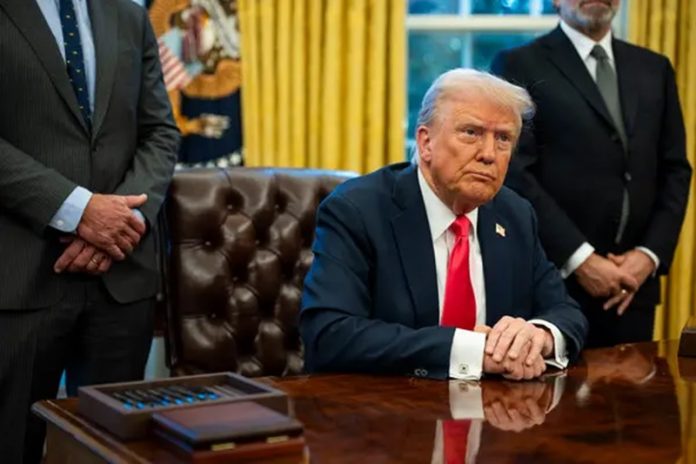
Since President Donald Trump’s inauguration on January 20, 2025, U.S. stock markets have experienced significant volatility. The S&P 500, a broad measure of U.S. equities, has declined by approximately 2.6% since inauguration, with a sharper drop of about 8.5% from its all-time high on February 19, 2025. The Nasdaq Composite has fallen over 4% in a single day, entering correction territory, and the Dow Jones Industrial Average has lost more than 1,300 points in two days by March 4, 2025. This volatility contrasts with initial market enthusiasm following Trump’s election victory on November 5, 2024, when the S&P 500 gained 2.5%.

The administration’s economic policies, particularly its aggressive tariff measures, have been cited as a primary driver of recent market declines. Trump has imposed or threatened tariffs on major trading partners, including Canada, Mexico, China, and the European Union, with actions such as a 25% tariff on imports from Canada and Mexico, reciprocal tariffs on steel and aluminum, and potential further levies on autos, lumber, and pharmaceuticals. These tariffs have raised concerns about increased inflation, supply chain disruptions, and higher consumer prices, which could dampen economic growth.

Retaliatory tariffs from affected countries, such as China’s tariffs on U.S. agricultural products and Canada’s matching levies, have further escalated fears of a global trade war. Additionally, Trump’s immigration policies, including threats of mass deportations, have been highlighted as potentially disruptive to the labor market, which could increase labor costs and contribute to inflation.

The administration’s moves to cut federal spending, halt funding for projects under laws like the CHIPS and Science Act and reduce the federal workforce—spearheaded by figures like Elon Musk—have added to economic uncertainty. The Economic Policy Uncertainty Index, a measure of policy instability, reached 234 in February 2025, its highest since December 2020, reflecting heightened business and consumer unease.

The establishment narrative, as reflected in mainstream financial media and White House statements, does not attribute market declines to an intentional strategy. Instead, it frames the volatility as a market reaction to policy uncertainty and the potential economic fallout of Trump’s aggressive trade and fiscal policies. White House officials, such as National Economic Council Director Kevin Hassett, have dismissed recession fears, arguing that any economic weakness is a “hangover” from the Biden administration and that growth will accelerate once policies like tax cuts are fully implemented.

The narrative emphasizes Trump’s goal of using tariffs as a negotiating tool to extract concessions, such as curbing fentanyl shipments, and suggests that market declines are a temporary adjustment to structural changes.

Economists from major institutions like Goldman Sachs and Morgan Stanley have downgraded U.S. growth forecasts, with Goldman Sachs raising the recession probability from 15% to 20% and Morgan Stanley cutting its 2025 GDP growth forecast from 1.9% to 1.5%.

These analyses point to tariffs and immigration controls as growth-constraining, but they do not suggest intentional market manipulation. The Federal Reserve’s reluctance to cut interest rates further, given inflation at 3% for the 12 months ending January 2025, is also cited as a factor limiting market recovery, but not as part of a deliberate crash strategy.

Intentional Market Crash Theory

The Trump administration might be intentionally crashing the market to achieve specific economic objectives. This theory suggests that by creating economic distress—through tariffs, policy uncertainty, and other disruptive measures—the administration could pressure the Federal Reserve to lower interest rates, thereby reducing borrowing costs for the U.S. government. This would facilitate refinancing approximately $7 trillion in national debt at lower rates, easing fiscal pressures, especially as the debt ceiling and federal budget negotiations loom.

Proponents of this theory argue that a cheaper U.S. dollar, potentially achieved through global economic shocks, would maintain its status as the world’s reserve currency while lowering long-term borrowing rates. Some analysts claim that tariffs are a “shock” tactic to force foreign central banks to reduce their domestic interest rates, indirectly supporting U.S. debt refinancing. Others, including economic commentators like Harry Dent, suggest that Trump’s policies could hasten a recession already anticipated due to high market valuations and prior economic stimulus, though not necessarily with malicious intent.

There is no official statement, policy document, or credible leak from the Trump administration indicating an intentional strategy to crash the market. White House dismissals of recession fear and promises of economic growth via tax cuts and deregulation contradict the notion of deliberate sabotage. Market declines are more readily explained by fundamental economic concerns—tariffs increasing costs, retaliatory measures hurting U.S. exports, and high valuations (e.g., S&P 500 P/E ratio at 30, near all-time highs)—rather than a coordinated administration plot.

The Buffett Indicator, a measure of stock market capitalization to GDP, reached a record 207% in February 2025, suggesting overvaluation independent of Trump’s actions. Trump has historically tied his political success to stock market performance, often citing rising markets as evidence of his effectiveness during his first term.  A deliberate market crash would risk undermining his public image and political capital, especially given recent polls showing 62% of U.S. adults feel he isn’t doing enough to address inflation. His reluctance to comment publicly on recent market drops, as noted in media reports, may reflect discomfort with negative coverage rather than a strategic silence.

Engineering a market crash to pressure the Federal Reserve is a high-risk strategy with uncertain outcomes. The Fed’s independence, while often challenged by political rhetoric, limits the administration’s direct influence over monetary policy. Moreover, a crash could spiral beyond control, damaging consumer confidence, corporate earnings, and global economic stability, as warned by figures like Andrew Wilson of the International Chamber of Commerce, who likened current tariff policies to 1930s trade wars.

Trump’s tariff policies are more plausibly explained by his stated goals of protecting U.S. industries, reducing trade deficits, and pressuring trading partners on issues like fentanyl trafficking, rather than a grand scheme to manipulate interest rates. His administration’s actions, such as pausing and then resuming tariffs, reflect a “brinkmanship” approach to negotiations, as noted by economists, rather than a deliberate crash strategy.

Some are endorsing the intentional crash theory, claiming Trump is “tanking markets to refi the debt at lower rates” or to “drive down inflation so the Fed can cut rates.” Others view the market declines as a natural reaction to policy chaos, with one user stating, “The Trump Administration, well on their way to destroying the US economy,” attributing the downturn to tariffs and mass firings. These posts, while indicative of public speculation, are inconclusive and lack substantiation, highlighting the risk of misinformation on social media platforms.

There is no conclusive evidence that the Trump administration is intentionally crashing the market. The establishment narrative—that market declines are a reaction to policy uncertainty, tariffs, and high valuations—is better supported by economic data and expert analysis. The alternative theory of a deliberate crash to lower interest rates and refinance debt, while plausible in a speculative sense, lacks direct evidence and is undermined by political and practical risks to the administration.

Market volatility is more likely a consequence of Trump’s aggressive policy approach and external economic conditions, such as high valuations and global trade tensions, rather than a purposeful strategy. Investors and observers should remain cautious of unverified claims, particularly from social media, and focus on fundamental economic indicators to assess market trends.

Tesla’s Stock Crash Deepens as Musk’s Controversial Politics Collide with Market Fears

0

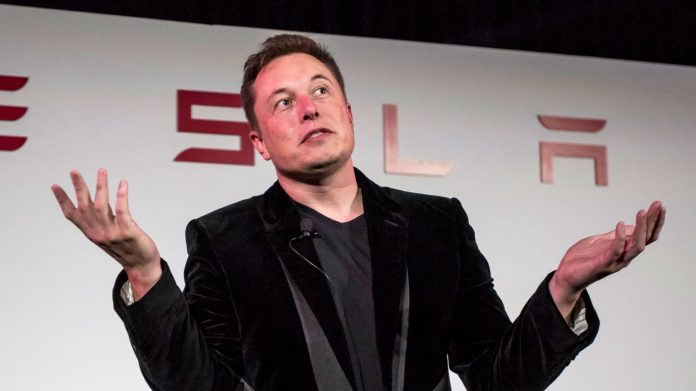
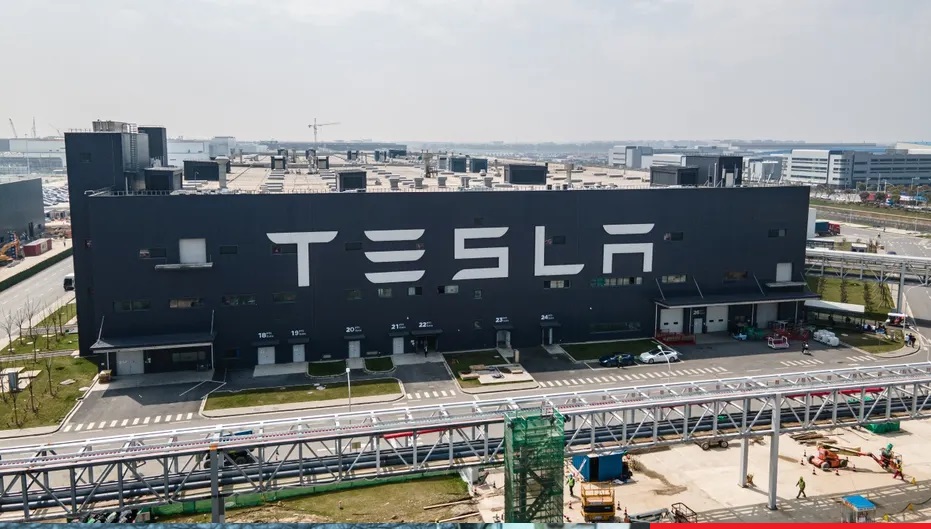
Tesla’s stock plummeted 15% on Monday, marking its worst single-day decline since September 2020, as a combination of political controversy surrounding CEO Elon Musk, a deteriorating brand image, and broader market fears continued to weigh on investor sentiment.

The electric vehicle giant has now suffered through seven consecutive weeks of losses, its longest losing streak since going public on the Nasdaq in 2010.

Since peaking at $479.86 on December 17, 2024, Tesla shares have lost more than 50% of their value, wiping out over $800 billion in market capitalization. Monday’s dramatic selloff represented the seventh worst trading day in Tesla’s history.

The stock’s collapse mirrored a broader downturn in tech-heavy equities, with the Nasdaq Composite tumbling nearly 4%, its sharpest single-day decline since 2022. But Tesla’s decline stood out, as investors increasingly viewed the company’s problems as self-inflicted, largely stemming from Musk’s erratic political entanglements and shifting brand perception.

Trade War Concerns and Trump’s Tariff Plans Send Ripples Through Tesla

Tesla’s sharp decline came amid heightened concerns over President Donald Trump’s proposed tariff increases on Canada and Mexico, two of the most important markets for automotive suppliers. Investors are growing uneasy about the potential for a full-fledged trade war, which could significantly disrupt Tesla’s supply chain and force the company to raise prices.

As an automaker that depends on battery components from China, Tesla is also vulnerable to any escalation in U.S.-China trade tensions, especially given Trump’s history of imposing steep tariffs on Chinese goods. Higher import duties could not only increase Tesla’s production costs but also make its vehicles less competitive in global markets, further dampening demand.

Tesla’s stock, which has long been propped up by investors’ faith in Musk’s vision, now faces a more skeptical Wall Street. As analyst Dan Ives of Wedbush Securities noted in a report, investors are beginning to question whether Musk’s political distractions have left Tesla without a clear strategic direction.

“A pivotal moment for Musk and Tesla.. autonomous, FSD, new cheaper EV models all coming on the horizon to drive demand…but this Musk/DOGE political firestorm needs to be contained for the Tesla brand. Investors need to see Musk lead Tesla at this key moment…the time has come,” he said.

Musk’s Political Rhetoric Pushes Tesla Toward a Branding Crisis

Beyond trade policy concerns, Tesla is grappling with an identity crisis, as Musk’s controversial political persona increasingly alienates traditional buyers. Since taking a leading role in the Trump administration’s Department of Government Efficiency, Musk has repeatedly used his platform to attack judges, amplify far-right conspiracy theories, and promote Kremlin-aligned narratives about Ukraine, drawing widespread condemnation.

Many former Tesla supporters, particularly those who embraced the brand for its climate-friendly innovation, are now distancing themselves due to Musk’s alignment with Trump, whose administration has rolled back environmental regulations and dismissed the urgency of climate change.

Musk’s increasingly combative stance on social media platform X has only worsened matters. His public clashes with critics, journalists, and even his own investors have further alienated key demographics, leading to a noticeable drop in consumer sentiment toward Tesla.

In a research note, Bank of America analysts highlighted that Tesla’s new vehicle sales in Europe plunged by 50% in January compared to the previous year, even as global electric vehicle sales grew by 21%. The sharp decline was attributed to a growing distaste for Musk’s politics, in addition to potential customers delaying purchases while awaiting the next-generation Model Y.

Despite Tesla’s struggles, the Model Y remained the best-selling battery electric vehicle globally in January, followed closely by China’s Geely Geome, which overtook the Model 3 sedan in sales. However, the trend suggests that competitors are steadily eating into Tesla’s market share as once-loyal customers explore alternatives.

Vandalism and Protests Target Tesla Facilities

As Musk leans further into politics, the backlash against Tesla is becoming more tangible. Across the United States and Europe, Tesla facilities have been targeted by protests, vandalism, and even arson attempts, underscoring the deepening divide between Musk and sections of the public.

In Loveland, Colorado, a Tesla service center has been attacked multiple times, with the latest incident occurring on March 7. Authorities have yet to identify the perpetrators, but the pattern of incidents suggests growing hostility toward the brand.

Speaking to CNBC, Ben Kallo, an analyst at Baird, warned that the rise in vandalism incidents could hurt Tesla’s bottom line, as customers may think twice about purchasing a vehicle that could be targeted in politically charged attacks.

“When people are worried that their Tesla might get vandalized or set on fire, even those who were previously indifferent to Musk’s politics might hesitate before buying one,” Kallo explained.

Musk’s Insouciance Isn’t Fading as Investors Prepare to Step In

For months, Musk has brushed off criticism, seemingly unfazed by Tesla’s stock decline and growing brand troubles. His nonchalant attitude has frustrated investors, many of whom have urged him to refocus on Tesla’s core business rather than engaging in politically charged battles.

However, as Tesla’s market cap continues to shrink, the pressure is building for investors to step in and demand changes. Institutional shareholders, including large investment funds and pension funds, have started raising concerns about Musk’s leadership and the direction of the company.

In a sign of growing tensions, Tesla board members have reportedly been in discussions about whether Musk should scale back his involvement in political affairs and devote more attention to stabilizing Tesla’s plummeting stock price. However, Musk has so far given no indication that he plans to change course.

Trump’s Public Show of Support for Tesla

Against the backdrop of Tesla’s stock freefall, President Trump sought to show solidarity with Musk on Tuesday, publicly stating that he planned to purchase a Tesla vehicle to demonstrate his support for the company.

While Trump’s backing could shore up support among conservative consumers, it may further alienate progressive and environmentally conscious buyers, deepening Tesla’s branding crisis. Political polarization has rarely benefited consumer brands, and analysts warn that Musk’s refusal to distance himself from Trump’s administration could ultimately cost Tesla more than it gains.

African Startups Secure $119M in February 2025, Bringing Year-to-Date Funding to $408M

0

According to a report by Africa: The Big Deal, in February 2025, African startups collectively raised $119 million in disclosed funding, reflecting a decline compared to previous years.

The number of $100k+ deals announced (38), was lower than the average of the past 12 months and previous February’s since 2021. Similarly, the total amount raised in February fell below the average of the last year and previous February’s since 2019.

However, a broader perspective highlights a more positive trend. Year-to-date funding in 2025 has reached $408 million, surpassing the $302 million recorded during the same period in 2024 and slightly exceeding the $400 million raised in 2021.

While the total number of $100k+ deals announced this year lags behind previous years, the number of $1M+ deals, 42 in total, aligns closely with 2023 (42) and 2024 (43) and remains significantly higher than the pre-heatwave levels recorded between 2019 and 2021 (20-31 deals).

The fintech and logistics sectors dominated February’s funding landscape, accounting for the seven largest deals, which collectively represented 80% of the total amount raised. This trend is consistent with 2024 funding patterns. The majority of these major deals took place in Africa’s “Big Four” markets which include Nigeria, Egypt, South Africa, and Kenya.

The largest funding round in February came from Gozem, a Togo-based ride-hailing startup, which secured $30 million through a combination of $15 million in equity and $15 million in debt financing. The company disclosed plans to use the funds to bolster its vehicle financing service and foray into new markets.

Other notable transactions included Egypt’s fintech startup Khazna raising $16 million. The company announced that the investment will support its expansion plans as it prepares to apply for a digital banking license in Egypt and expand into Saudi Arabia.

Also, Hakki Africa, a mobility fintech providing microfinance solutions for taxi drivers in Kenya, secured approximately $13 million in a fintech-mobility deal. The investment follows a Series B funding round in 2023, during which Hakki secured 1.58 billion yen (approximately $10.6 million). The company’s financing model seeks to address a longstanding challenge faced by taxi drivers in Africa?, which is access to affordable vehicle ownership.

Nigeria’s Raenest closed $11 Million Series A Funding Round Led by QED Investors. The funding round aims to expand Raenest’s operations in both local and international markets.

Additionally, Nigerian fintech firm Tether raised $3 million in a seed round alongside $7 million in debt financing, while Ghana’s Affinity secured $8 million. Egypt’s Taager, operating in logistics and transport, raised approximately $7 million in a pre-Series B round.

Recall that African startups raised $289M in January 2025 across 40 deals, reflecting a strong start to the year with a 240% increase over January 2024’s $85M. The $119M funds raised in February could suggest a dip from January but still a solid performance, consistent with growing investor confidence in African tech ecosystems.

Despite some declines in specific funding metrics, the broader outlook for African startup funding in 2025 remains strong, with continued investments in the fintech and logistics sector.

Looking Ahead

At $408M through two months, 2025 could hit $2.4B to $3B annually if the pace holds, surpassing 2024 but not 2022’s peak. The strong start contrasts with 2024’s cautious environment, where global venture capital tightened due to high interest rates and economic uncertainty.

Investors appear to be regaining confidence in African startups, possibly buoyed by proven resilience (e.g., $1 billion+ raised in 2024’s first seven months despite headwinds) and standout exits or unicorn births like Moniepoint and Tyme Group in 2024.

The Presidential Buy and Scoring an Own Goal for Tesla

0

First, I only buy stocks in the US during recessions and I know the sector I focus on. That sector is the first to be “bailed out” as the government relaxes all known rules to make the industry profitable, so that other sectors will come along. You can never go wrong, as for more than 50 years, all US governments have used one tool to fight recession, and that sector has always benefitted.

In Dec 2024, I sold all my positions after Trump returned. I am a Democrat and always think Reublications will find ways to crash the economy with a recession, natural luck, big tax cuts and the typical. So, as I write, I have zero US stocks. I hope we do not have a recession, but if it does happen, I will be greedy to bounce.

But as everything happens in this young Trump 2.0 Presidency, one person I do not understand anymore is Elon Musk. He sells a product named Tesla which mainly the liberals in America and Europe buy. But he goes after them daily. Does he think anyone in Alabama, West Virginia, etc cares to drive a Tesla? Without CA, MA, NY, MD, etc there may not be Tesla today. How? Those states offer generous tax rebates for EV cars and they fueled Tesla ascension as the only major EV producer in the US. California offered EV tax credits before the US government. In other words, CA gave Tesla “free” cash as it shaped buying decisions.

But Musk seems to always fight with these customers and their leaders. Get me right: when I see an own-goal, I know one even before the referee calls.  You see, what does this village boy know when billionaires are playing their games? You are correct: I do not understand how a man who owns Tesla will always fight with blue states. Sure, Trump wants to buy a new Tesla as the company’s valuation takes a heat: “President Donald Trump has pledged to buy a new Tesla vehicle to show his support for Elon Musk, as the electric carmaker struggles with a stock market crash, declining sales, and intensifying protests.”. A presidential buy could do the magic. Good luck, Elon.

After soaring for years, Tesla’s stock has tumbled over 50% from its recent highs, breaking away from the so-called “Musk trade” that’s lifted the billionaire’s other companies. While investors appear to be buying Elon Musk’s vision of robotaxis and artificial intelligence, analysts say Tesla shareholders are concerned about Musk “being spread too thin,” given his focus on cutting government spending, along with growing stigma around the brand. Tesla’s profits have plunged in several countries amid increased competition, particularly in China.