DD
MM
YYYY

PAGES

DD
MM
YYYY

spot_img

PAGES

Home Blog Page 1608

Trump Backs Musk, Promises to Buy Tesla Amid Stock Slump and Protests, But Critics Say The President’s Policies Hurt EVs

0

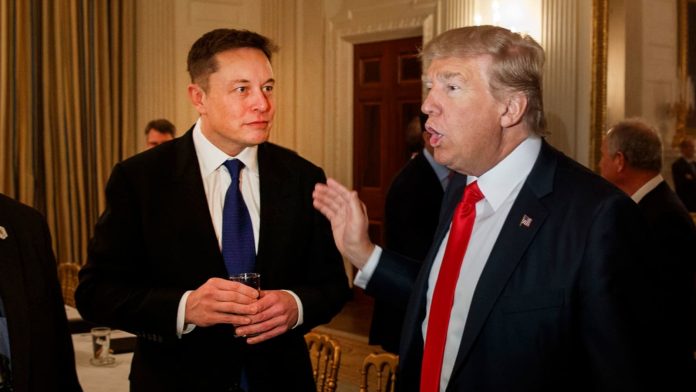
President Donald Trump has pledged to buy a new Tesla vehicle to show his support for Elon Musk, as the electric carmaker struggles with a stock market crash, declining sales, and intensifying protests.

“To Republicans, Conservatives, and all great Americans, Elon Musk is “putting it on the line” in order to help our Nation, and he is doing a FANTASTIC JOB! But the Radical Left Lunatics, as they often do, are trying to illegally and collusively boycott Tesla, one of the World’s great automakers, and Elon’s “baby,” in order to attack and do harm to Elon, and everything he stands for,” Trump said.

He added that “they tried to do it to me at the 2024 Presidential Ballot Box.”

“In any event, I’m going to buy a brand new Tesla tomorrow morning as a show of confidence and support for Elon Musk, a truly great American. Why should he be punished for putting his tremendous skills to work in order to help MAKE AMERICA GREAT AGAIN???”

The announcement, made on Trump’s Truth Social platform on Tuesday, came amid what his allies have termed the “Tesla Takedown”, a reference to the growing demonstrations against Musk’s role in implementing massive cuts to the federal workforce under the Trump administration.

Trump’s endorsement of Tesla appeared to provide a temporary lift to the company’s stock, which rebounded 5% in premarket trading after suffering its worst single-day decline in over four years on Monday.

However, industry experts argue that while Trump’s symbolic gesture may help bolster Musk’s public image among conservative supporters, it does little to address the real challenges Tesla is facing. Many have pointed out that if Trump truly wanted to help Tesla and the broader electric vehicle (EV) industry, he would need to reverse his administration’s aggressive rollback of pro-green energy policies, which had been boosting EV sales under the previous administration.

Tesla, once a dominant force in the EV market, is experiencing an unprecedented period of turmoil, with its stock price, sales, and brand reputation all taking major hits. Musk’s increasingly controversial political activity, particularly his leadership of the Trump administration’s Department of Government Efficiency (DOGE), has alienated large portions of Tesla’s customer base and sparked a wave of anti-Tesla protests across the U.S.

Last week, 350 demonstrators gathered outside a Tesla showroom in Portland, Oregon, condemning Musk’s role in eliminating thousands of government jobs. Earlier this month, a Tesla dealership in New York City was the site of another demonstration, where nine people were arrested after tensions escalated. Protesters argue that Musk’s deep involvement in Trump’s efforts to dismantle federal agencies and reduce public sector employment is a direct betrayal of Tesla’s original image as a forward-thinking, progressive company.

The backlash has translated into declining consumer interest in Tesla, particularly in states and countries that have traditionally favored green energy policies. According to a report from Bank of America, Tesla’s vehicle sales in Europe plunged by 50% in January compared to the previous year. The report attributed the drop in part to growing unease over Musk’s politics, as well as delays in the release of a redesigned Model Y.

Trump defended Musk, saying the billionaire was “putting it on the line” to help the country and was doing a “fantastic” job. Musk responded on his own platform, X, thanking Trump for his endorsement.

Trump’s EV Policies Contradict His Support for Tesla

While Trump’s public embrace of Tesla and Musk has been celebrated by many of his supporters, it is believed that his administration’s aggressive rollback of pro-EV policies is actively harming the industry, including Tesla itself.

Since taking office in January 2025, Trump has dismantled nearly all of the Biden-era policies that were fueling EV adoption in the U.S.

Among the most damaging reversals are:

  • Eliminating federal EV tax credits: Under Biden, consumers could receive up to $7,500 in tax credits for purchasing an electric vehicle. These incentives helped drive demand for Tesla and other EV brands. Trump’s decision to terminate these credits has made EVs less affordable, discouraging buyers.
  • Defunding EV charging infrastructure: The Biden administration had earmarked billions of dollars to expand the national EV charging network, making it easier for Americans to transition from gas-powered cars. Trump slashed this funding, significantly stunting infrastructure growth.
  • Rolling back emissions standards: Biden had imposed strict emission reduction targets that pushed automakers to prioritize EV production. Trump has reversed these regulations, allowing companies to slow down EV development and extend the lifespan of gasoline-powered vehicles.
  • Removing federal fleet EV mandates: The previous administration had committed to converting the entire federal vehicle fleet to electric cars, a move that would have resulted in major contracts for Tesla and other EV makers. Trump scrapped the plan, eliminating what could have been a lucrative revenue stream for the industry.

Industry analysts argue that while Trump’s symbolic support for Tesla may boost Musk’s morale, it cannot compensate for the material damage his policies are causing to the electric vehicle market.

Tesla’s stock has suffered a dramatic collapse since reaching its all-time high of $1.5 trillion in market capitalization on December 17, 2024. The company has now lost more than 50% of its value, erasing most of the gains it made following Musk-backed Trump’s electoral victory in November.

The decline has been fueled by a combination of falling sales, growing brand toxicity, and investor concerns that Musk’s political distractions are preventing him from properly managing Tesla.

On Monday, Tesla shares experienced their biggest single-day drop since September 2020, dragging the Nasdaq down nearly 4%, its worst decline in years. Analysts warn that unless Tesla can stabilize its business and repair its reputation, the company’s downward spiral may continue.

Nigerian Govt., NNPCL Dismiss Reports of Terminating Naira-Based Crude Supply Agreement with Dangote Refinery

0

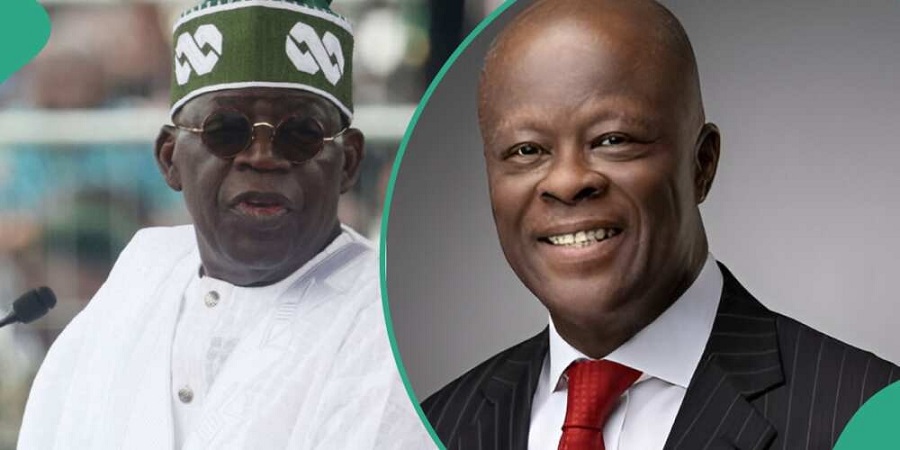
The Nigerian National Petroleum Company Limited (NNPCL) has moved to dispel widespread speculation regarding the alleged termination of its naira-for-crude agreement with the Dangote Refinery and other local refineries.

The state-run oil company clarified that the deal was originally structured as a six-month agreement, subject to renewal and availability, and is set to expire at the end of March 2025.

The controversy arose following reports suggesting that NNPCL had abruptly ended the naira-based crude supply arrangement, effectively forcing Dangote Refinery and other local refiners to purchase crude in US dollars. The reports triggered concern among industry stakeholders and the public, given the potential impact on fuel prices and the already struggling naira.

In a statement issued on Monday, NNPCL’s Chief Corporate Communications Officer, Olufemi Soneye, addressed the matter, stating that discussions are ongoing to finalize a new supply agreement after the current one lapses. He reiterated that NNPCL remains committed to supporting domestic refining operations and that there has been no policy shift terminating local crude supply in naira.

“NNPCL has made over 48 million barrels of crude oil available to Dangote Refinery since October 2024 under this arrangement. In total, over 84 million barrels of crude oil have been supplied since the refinery commenced operations in 2023,” Soneye said.

He reaffirmed that NNPCL is fully committed to ensuring the supply of crude oil for local refining, based on mutually agreed terms and conditions, dismissing reports of a sudden disruption.

Federal Government Backs Naira-Based Crude Supply Policy

Amid the concerns raised by reports of the deal’s alleged termination, the Federal Government also reaffirmed its commitment to the naira-for-crude policy, clarifying that it has not been scrapped or reviewed for discontinuation.

In a separate statement on Monday, Zacch Adedeji, Chairman of the Federal Inland Revenue Service (FIRS) and head of the Technical Sub-Committee on Domestic Crude Supply addressed the controversy, stating that the policy remains intact.

According to Adedeji: “The policy framework enabling the sale of crude oil in naira for domestic refining remains in force. There has been no decision at the policy level to discontinue this approach, nor is it being considered. After implementing the policy for some months, evidence abounds that it is the right way to go, and it will continue to help the economy.”

He also emphasized that local refineries have not been excluded from the domestic crude supply, adding that the Nigerian Upstream Petroleum Regulatory Commission (NUPRC) is ensuring full compliance with the Domestic Crude Oil Obligations (DCO) provisions of the Petroleum Industry Act (PIA).

Adedeji explained that the engagement process for crude allocation to local refineries remains in place and is governed by structured agreements that take into account factors such as availability, demand, and market conditions.

“There is no exclusion of local refineries from access to domestic crude. The Federal Government remains committed to ensuring the efficient execution of this initiative in line with its core objectives—enhancing local refining, reducing foreign exchange exposure, and stabilizing the domestic fuel supply,” he said.

Background of the Naira-for-Crude Policy

The naira-for-crude initiative was introduced in July 2024, when the Federal Executive Council (FEC) directed NNPCL to sell crude oil to Dangote Refinery and other local refiners in naira instead of US dollars.

This policy was introduced as part of broader efforts to:

  • Reduce Nigeria’s reliance on foreign exchange for crude purchases, thereby easing pressure on the country’s foreign reserves.
  • Stabilize domestic fuel prices, as the pricing of crude in naira would help shield Nigeria from the volatility of the international oil market.
  • Promote domestic refining capacity, ensuring that local refineries have priority access to crude without the constraints of forex shortages.

The initiative was seen as a bold move to strengthen Nigeria’s refining sector, particularly at a time when import dependence and foreign exchange scarcity were putting immense strain on the economy. The expectation was that by removing the need for local refiners to source dollars, the government could ease pressure on the naira while ensuring that refined petroleum products remain affordable for Nigerians.

The speculation that the policy had been scrapped sparked widespread alarm because of the potential economic fallout. If NNPCL were to suddenly halt crude sales to local refineries in naira, it would mean that refineries like Dangote would have to buy all crude on the international market in dollars. This would have severe consequences for fuel pricing and the already fragile naira exchange rate.

Removing the naira-based crude arrangement would increase pressure on Nigeria’s forex reserves, as refineries would require billions of dollars to purchase crude, further weakening the naira against the US dollar.

Analysts warn that if local refineries were forced to buy crude in dollars, they would have to pass the cost onto consumers, potentially leading to a sharp increase in the prices of petrol, diesel, and other refined products. Given the current economic challenges, such an outcome could further worsen inflation and worsen the cost-of-living crisis in Nigeria.

Nigeria’s Finance Minister Targets 7% GDP Growth Amid Unabating Economic Downturn

0

Nigeria’s Minister of Finance and Coordinating Minister of the Economy, Wale Edun, has stated that the government is aiming for a 7% annual GDP growth rate, significantly higher than the 4.6% projection for 2025.

The ambitious target, according to Edun, is necessary to reduce poverty and drive economic transformation, a goal the administration believes is essential for long-term stability and prosperity.

Speaking at the Arise/KPMG Budget Day on Monday, Edun expressed optimism about Nigeria’s economic trajectory, citing anticipated declines in inflation, improved macroeconomic stability, and a more favorable business environment as factors that will support economic expansion. However, the minister’s optimism comes at a time when Nigeria’s economic realities paint a more troubling picture, as businesses struggle with high inflation, rising costs, and foreign exchange volatility, all of which threaten economic growth prospects.

Edun acknowledged that while a 4.6% GDP growth rate is expected in 2025, the government’s focus is on pushing it closer to 7% per annum, as only at that level can economic growth meaningfully lift millions of Nigerians out of poverty.

“We projected growth at 4.6%, but I think that is not our ambition. Our ambition is to, as soon as possible, get to about 7% per annum GDP growth, because it is at that level that you begin to really lift people out of poverty,” Edun remarked.

However, this projection is coming at a time when the Nigerian Economic Summit Group (NESG) has reported that over 7 million micro, small, and medium-sized enterprises (MSMEs) shut down between 2023 and 2024 due to Nigeria’s deteriorating business environment.

The NESG report noted that MSMEs serve as the backbone of Nigeria’s economy, contributing nearly 50% of the GDP and employing over 80% of the workforce. Their mass closure over the past two years has heightened concerns about rising unemployment, reduced productivity, and worsening economic hardship. Analysts have warned that if current conditions persist, even more businesses will collapse in 2025, which could further destabilize the economy and make the government’s growth targets highly unrealistic.

Government’s Strategy for Economic Growth

Despite the grim realities on the ground, Edun insists that several key factors will drive economic growth. He pointed to a stronger revenue performance, which he believes will boost government finances, as well as increased oil production as outlined in the 2024 and 2025 budget estimates.

The minister also emphasized that savings from the removal of fuel subsidies will help fund critical projects and stabilize government finances. But many analysts argue that the impact of subsidy removal has largely been negative for the average Nigerian, as it has led to skyrocketing fuel prices, increased transportation costs, and higher inflation across all sectors.

Edun stressed that creating a conducive environment for private-sector investment remains a priority. The government, he said, recognizes that Nigeria’s $100 billion annual infrastructure deficit cannot be addressed through public funds alone and must involve private capital. He highlighted recent Federal Executive Council (FEC) decisions, which he said had removed bureaucratic bottlenecks to allow private sector-led projects, such as the construction and management of the Benin-Asaba Highway and the Lagos-Abeokuta Road under public-private partnerships (PPPs).

These projects, he claimed, would lead to a 75% reduction in travel time, improving productivity and economic efficiency.

However, many business owners remain skeptical about the government’s reliance on the private sector to drive economic recovery when millions of businesses are shutting down due to unbearable operational costs, foreign exchange instability, and declining consumer purchasing power. The manufacturing sector, in particular, has been heavily affected by forex volatility, with many companies unable to import raw materials due to the Naira’s depreciation and dollar scarcity.

But Edun pointed to several positive macroeconomic indicators, including a stable exchange rate, a trade surplus equivalent to 13% of GDP, and foreign reserves exceeding $40 billion. He attributed these improvements to the Central Bank of Nigeria’s efforts to stabilize the foreign exchange market and enhance fiscal transparency.

He also revealed that the government has adjusted its budget funding structure, shifting away from 80% domestic financing to a more balanced mix of 40% domestic, 40% foreign, and 20% from other sources. This approach, he explained, would free up domestic credit markets, allowing the private sector greater access to funding, which could encourage more investments.

While Edun speaks of a stable exchange rate, the Naira continues to weaken, hovering above N1,500 per dollar, making imports more expensive and pushing inflation higher. The cost of diesel and electricity tariffs has surged, further increasing production costs for businesses already struggling to stay afloat.

Against this backdrop, many believe that the reality for Nigerian businesses does not align with the government’s optimistic projections. The NESG report on 7 million MSME closures in 2023 and 2024 underscores the harsh economic climate that businesses are facing.

MSMEs are particularly vulnerable because they rely heavily on local markets, informal lending, and domestic supply chains, all of which have been severely impacted by the government’s economic policies. With high interest rates, businesses are unable to access loans, and with rising production costs, many cannot break even, forcing them to close down or downsize their workforce.

Can Policy Reforms Reverse the Decline?

In January 2024, Edun claimed that the government’s economic reforms had stabilized Nigeria’s economy, reclaiming 5% of GDP lost to inefficiencies within government agencies. Speaking to Bloomberg at the World Economic Forum (WEF) in Davos, he cited the removal of wasteful subsidies, market-driven pricing for petroleum products and foreign exchange, and fiscal transparency as major achievements.

To achieve meaningful growth, the government has been advised to go beyond macroeconomic projections and address key structural challenges, including the high cost of doing business, forex instability, and inflationary pressures. Experts have warned that without addressing these structural challenges, Nigeria may find itself heading toward an even deeper economic crisis in 2025, rather than the transformational growth that Edun envisions.

Trump Administration Reduces USAID Operations By 83%

0

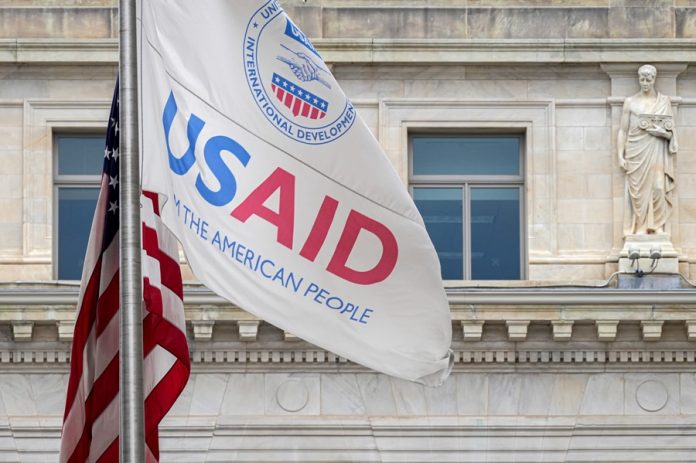
The Trump administration has completed its unprecedented purge of the U.S. Agency for International Development (USAID), dismantling over 5,200 of the agency’s 6,200 programs. The sweeping reform, led by Secretary of State Marco Rubio and Elon Musk’s Department of Government Efficiency (DOGE), has reduced USAID’s operations by 83%, marking a dramatic shift in U.S. foreign aid policy.

Rubio announced the move on Monday via a post on X, confirming that only 18% of USAID programs would continue under the State Department’s control. He praised the “hardworking staff” who executed what he called an “overdue and historic reform” in foreign aid.

However, critics of this decision, especially Democrats, have argued that this drastic cut will have far-reaching consequences, particularly for developing countries that rely heavily on U.S. aid for healthcare, humanitarian assistance, and development projects.

The Impact on Developing Countries

The suspension of USAID programs is expected to create a humanitarian vacuum, especially in countries where the U.S. had been a primary provider of aid. USAID has historically funded life-saving programs, including emergency nutrition for malnourished children, clean drinking water in refugee camps, and epidemic control measures in vulnerable regions.

With the axing of 83% of its programs, critical support structures in nations like Sudan, Yemen, Afghanistan, and parts of sub-Saharan Africa are in jeopardy. Health programs that provide vaccines, maternal care, and treatment for diseases like HIV/AIDS, tuberculosis, and malaria face abrupt termination. The sudden halt to clean water initiatives and food distribution networks could worsen crises in war-torn and disaster-hit regions, leading to a rise in mortality rates, malnutrition, and waterborne diseases.

China’s Opportunity to Expand Influence

The end of USAID’s widespread humanitarian operations opens the door for China to expand its influence. Beijing has increasingly positioned itself as an alternative to Western aid through its Belt and Road Initiative and other development programs. While Chinese aid often comes with economic and political strings attached, many countries may have no choice but to accept Beijing’s assistance to fill the void left by the U.S.

Legal and Political Fallout in the U.S.

Back home, the Trump administration’s actions have sparked a flurry of legal challenges. Many lawmakers and aid organizations argue that shutting down congressionally-funded programs without approval is illegal. The sudden termination of contracts has left thousands of U.S. and international workers stranded, awaiting back payments and travel expenses.

Democratic lawmakers have criticized the administration’s approach as reckless and short-sighted. “Foreign aid is not just about helping others—it is about promoting stability and security for the United States,” said Senator Chris Coons, a prominent advocate for international development.

The Biden administration had significantly bolstered USAID’s role in addressing global issues such as climate change, food security, and democratic governance. The sudden reversal of this policy direction has created confusion and uncertainty among aid groups and international partners.

What Survived? Lack of Transparency Fuels Confusion

Despite the widespread cuts, the administration has provided few details on which programs survived. The rapid pace of the shutdown, including mass emails to terminate thousands of contracts, has left aid organizations struggling to determine which services can continue.

Rubio’s statement that 18% of programs remain contradicts earlier claims by the State Department that over 90% of initiatives were being scrapped, highlighting inconsistencies in communication. Some lawsuits against the State Department allege that even life-saving programs that were promised immunity received termination notices, deepening mistrust between the government and aid groups.

A Dangerous Precedent for U.S. Diplomacy

The dismantling of USAID marks a stark departure from the U.S. tradition of using soft power to promote its values and interests abroad. For decades, American aid has been a cornerstone of global development strategies, not only saving lives but also fostering goodwill and stability. The abrupt shift toward a more isolationist stance risks alienating allies and undermining the U.S.’s global standing.

Republicans now believe that USAID has outlived its purpose, with some accusing Democrats of using the agency to force regime changes abroad, among other ills.

Against this backdrop, Republican leaders have indicated they want foreign assistance to focus narrowly on what they define as core national interests. However, Democrats warn that abandoning humanitarian aid could backfire by destabilizing regions and creating conditions for extremism and conflict.

Elon Musk X Faces Major Outage Amid Alleged Cyberattack, Urged to Crack Down on Bots

0

Elon Musk’s social media platform X, was inaccessible to thousands of users on Monday morning, over alleged cyberattack.

A CNBC report revealed that nearly 40,000 users reported problems with the platform around 10 a.m. ET, according to the analytics platform Downdetector which gathers data from users who spot glitches and report them to the service.

When X resumed operations, Musk disclosed that the platform had suffered a massive cyberattack, noting that it was done with a lot of resources.

He wrote,

“There was (still is) a massive cyberattack against X. We get attacked every day, but this was done with a lot of resources. Either a large, coordinated group and/or a country is involved. Tracing.”

Despite Musk’s claims, no independent evidence has emerged to confirm the cyberattack. However, given X’s size and Musk’s growing prominence, especially under President Donald Trump’s second administration, it’s plausible that the platform could be a target.

Musk alluded to this after he responded to an X user who wrote “They want to silence you and this platform”. He responded with “Yes”.

This is not the first time X has suffered a major outage. The platform has experienced several large-scale outages since Musk’s takeover. Users reported problems with the platform in December  2022 and with the site’s desktop app in July 2023.

Musk Urged to Crack Down on Bots

Following the outages suffered by X, Binance co-founder Changpeng Zhao (CZ) has urged Elon Musk to ban all bots on the platform, noting that he only wants to interact with humans.

He wrote,

“I think X should ban all bots. I only want to interact with humans here (not “Automated”). If someone uses Grok/GPT/DeepSeek to generate a tweet and copy and paste it here, fine. But API posting should be disabled.”

In a separate comment, the Binance founder noted that automated comments are annoying. “If I want to chat with bots, I got Grok in a private window here”, he added.

It is no news that X has a massive Bot problem that won’t just go away. Recall that in 2022, Musk threatened to walk away from his $44 billion bid to buy Twitter (Now X), accusing the company of refusing to give him information about its spam bot and fake accounts.

Lawyers for the Tesla and SpaceX CEO made the threat in a letter to Twitter that the company disclosed in a filing with the U.S. Securities and Exchange Commission.

The lawyers wrote that Musk has repeatedly asked for the information since May 9, about a month after his offer to buy the company, so he could evaluate how many of the company’s 229 million accounts are fake.

Twitter’s former CEO Parag Agrawal said that Twitter has consistently estimated that fewer than 5% of its accounts are spam. But Musk disputed that, contending in a tweet, without providing evidence, that 20% or more are bogus.

Musk, who said “We will defeat the spam bots or die trying” before he purchased Twitter in 2022, disclosed in 2024 that a “system purge” of bots and trolls was underway and X Corp. would trace the people responsible for such accounts and bring “the full force of the law to bear upon them.”

Notably, Musk has floated several solutions, including requiring new users to register a credit card with a small fee to deter mass bot creation. As X continues to battle outages, cyber threats, and bot-related fraud, the effectiveness of Musk’s proposed countermeasures remains to be seen.