DD
MM
YYYY

PAGES

DD
MM
YYYY

spot_img

PAGES

Home Blog Page 1616

The Implications of Africa’s Breaking Trajectory

0

Historically, the African continent has been shaped by cycles of extraction, conflict, and dependency, from colonial resource grabs to post-independence struggles with governance and debt. These aren’t just relics; they still echo in 2025. Look at the economic data: sub-Saharan Africa’s GDP growth has hovered around 3-4% annually in recent years, per World Bank estimates, but population growth often outpaces it, keeping per capita gains slim. Poverty rates have dropped—down from 54% in 1990 to about 40% now—but that’s still hundreds of millions of people. The old anchors, like reliance on raw commodity exports (oil, minerals, cocoa), haven’t fully loosened; price volatility still rattles places like Nigeria or Zambia.

There’s a shift if you squint at the edges. Urbanization’s accelerating—Lagos, Nairobi, and Accra are swelling, with over 50% of Africans expected to live in cities by 2035. That’s driving a tech pulse: mobile penetrations near 90%, and fintech like M-Pesa in Kenya or Flutterwave across West Africa is leapfrogging traditional banking. Startups pulled in $5 billion in venture capital in 2024 alone, per Partech Africa. Renewable energy’s creeping up too—solar projects in Morocco and wind farms in South Africa signal a break from the fossil fuel trap. Politically, it’s messier: coups in the Sahel (Mali, Burkina Faso) show fragility, but the African Continental Free Trade Area, now in its fifth year, is nudging intra-regional trade past 20% of total commerce, up from 15% a decade ago.

Structural hurdles—corruption, infrastructure gaps, education deficits—don’t bend easily. Foreign influence hasn’t vanished either; China’s Belt and Road loans and Western aid still tug at sovereignty. Climate change is the wildcard: droughts in the Horn of Africa and floods in the Sahel are testing resilience, with adaptation lagging. So, has the trajectory truly shifted? It’s bending, not breaking—old patterns persist, but new ones are carving space. The question is whether the momentum can outrun the weight.

The implications of Africa’s bending-but-not-breaking trajectory ripple across economics, geopolitics, and human lives. Economically, the slow shift from commodity dependence to tech and trade diversification could mean more stable growth—if it scales. That 3-4% GDP uptick might climb closer to 6% with better infrastructure and education, the kind East Asia rode to prosperity. Fintech and urban booms could shrink the informal economy (still 80% of jobs in many places), boosting tax bases and public investment. But if corruption or debt traps—like the $100 billion owed to China—choke momentum, stagnation lingers, and that 40% poverty rate barely budges.

Geopolitically, a more self-reliant Africa alters the game. The Free Trade Area’s push for internal markets could weaken the leverage of external powers, from Western donors to Beijing’s checkbook diplomacy. Yet instability—like those Sahel coups—invites meddling; Russia’s Wagner Group and French troops haven’t packed up. A stronger African Union might counter that, but it’s underfunded. Climate stress amplifies this: drought- or flood-driven migration could spark border conflicts or strain Europe’s southern flank, already twitchy about refugee flows.

For people, the stakes are raw. Urban tech hubs promise jobs—Nigeria’s youth could turn from unrest to coding—but without rural power grids or schools, half the continent risks being left behind. Health’s a bellwether: vaccine production in Rwanda and Senegal hints at self-sufficiency, but climate shocks could undo gains in food security (maize yields are already down 20% in parts). If the trajectory holds, millions might climb into a middle class; if it falters, inequality festers, and unrest brews. The hinge is execution. Africa’s not locked in old patterns but breaking them demands more than sparks—it needs sustained fire.


Dog-Friendly Eucalyptus Practices Every Owner Should Try

0

Caring for a dog is an exciting and fulfilling experience, presenting new opportunities to enhance your pet’s life each day. As a pet owner, many natural remedies and plants are available to improve your dog’s environment and well-being. Among these, eucalyptus is a popular plant known for its therapeutic properties. However, is this plant safe for dogs?

Eucalyptus is often praised for its relaxing properties and ability to clear airways, but some pet owners may wonder, “Is eucalyptus safe for dogs?” This article addresses that question and explores safe, pet-friendly ways to incorporate eucalyptus into your routine without compromising your dog’s well-being. Additionally, it will address natural alternatives, such as CBD, which can complement eucalyptus for overall pet health.

Recognizing the Potential Dangers of This Plant

Eucalyptus oil, in particular, poses risks to dogs due to its potency. The essential oils in the leaves are highly concentrated and can cause toxicity if ingested. Symptoms may include excessive drooling, nausea, or even more serious health complications. It’s crucial to prevent dogs from chewing on the plant or accessing oils directly. Always keep the oil in areas that are out of your pet’s reach to avoid accidental ingestion.

Best Practices for Using Eucalyptus Around Dogs

When incorporating this aromatic plant into your home, there are safe methods to ensure your dog’s health is not compromised. For example, avoid applying eucalyptus oil directly on your dog’s skin, and do not allow them to consume the leaves. If using oil for its aroma, diffusing it in rooms where your dog does not go is a smart option. Ensure the oil is diluted correctly, as concentrated forms can be harmful.

Natural Aromatherapy for Dogs

Aromatherapy can benefit dogs and their owners. Eucalyptus has a strong aroma that is calming for humans, but it’s important to use it carefully in a pet-friendly environment. When diffusing this ingredient, do so in moderation and only in spaces that are off-limits to your dog. This helps create a relaxing atmosphere without posing any risk to your pet. Always monitor your dog’s reaction when introducing any new scents or oils, as each pet may respond differently.

Effective Insect Repellent for Pet-Friendly Environments

Many pet owners seek natural ways to ward off pests like fleas and mosquitoes. This plant has an effective scent that repels insects, which can be particularly useful in outdoor spaces where dogs spend time. However, to ensure safety, eucalyptus-based repellents should be placed where dogs can’t reach them, and oils should never be applied directly to a dog’s coat. Here are some ways to safely use this in your pet-friendly space:

  • Place these plants’ leaves in areas where insects are prevalent
  • Use diluted oil in a diffuser for an insect-free environment
  • Avoid spraying oils directly on your dog’s body

Combining CBD and Eucalyptus for Holistic Pet Care

For pet owners exploring natural solutions, combining CBD and eucalyptus can provide a holistic approach to improving your dog’s well-being. While CBD helps manage stress, anxiety, and inflammation, eucalyptus can be used cautiously for its aromatic benefits and insect-repelling properties. Always prioritize safety by ensuring proper dosage for CBD and careful use of eucalyptus to avoid any adverse effects. Consulting with holistic pet care experts can help you craft a balanced routine that supports your dog’s health naturally and effectively.

Incorporating eucalyptus into your dog-friendly practices can be beneficial when handled responsibly. For those wondering, “Is eucalyptus safe for dogs?” the answer is yes, but it requires caution. Always limit your dog’s access to this aromatic plant and consult a veterinarian before introducing it into their routine. With the right precautions, this aromatic plant can become a safe and enjoyable addition to your shared environment.

Shoptreo Unveils The Treo Shoe Brand [video]

0

Join me to congratulate the Shoptreo team for launching their shoe brand, Treo, with a new manufacturing plant in Aba. To support the team, I ordered 100 pairs for pupils in Ovim Community School, my proud primary school alma mater. They travelled to Ovim and delivered the shoes yesterday.

Tekedia Capital is proud to be an investor in Shoptreo as it expands into Canada with a great distribution partnership. There is something unique about wearing a shoe made in Nigeria: you walk and run better. Shop locally!

Bitcoin’s Market Fluctuations Suggest RCO Finance Could Be the Next Big Winner

0

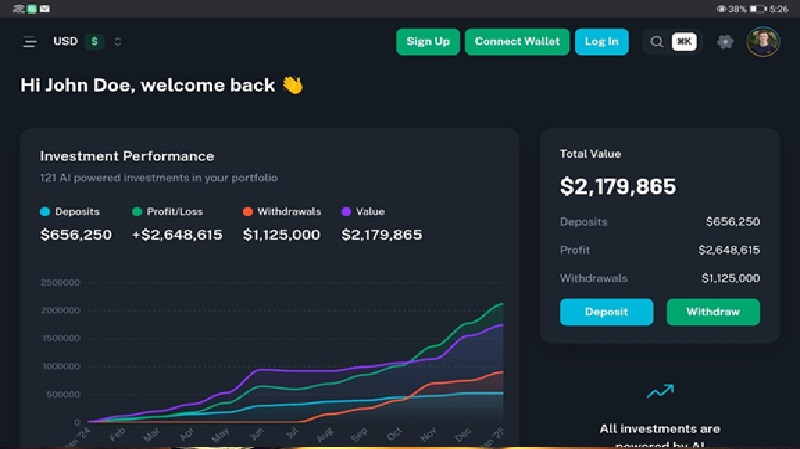
Investors have seen Bitcoin (BTC) fluctuate between $81K and $87K over the past week as its momentum fades despite ETF inflows. This has increased the interest in RCO Finance (RCOF) as traders eye the undervalued presale token for massive gains.

RCO Finance has already raised over $13 million in five rounds of its presale, with more capital still to be raised. The project is attracting smart money and retail traders as it promises to be the best altcoin to invest in.

Bitcoin Struggles to Build Momentum

Bitcoin (BTC) is up 2% in the past week as it trades in a defined range. The leading digital asset by market cap rose above $87K this week due to optimism from the Federal Reserve’s dovish stance. However, Bitcoin has fallen to $84,700 as it trades between $81K and $87K.

Analysts noted that rising institutional demand helped Bitcoin surge from its March low of $76,642 but still lacks the fuel to cross the $100K mark again.

This has investors worried as they believe capital is rotating from major assets like Bitcoin to emerging presale projects. An analyst warned that Bitcoin could fall to $70K before it charges above $110K this year.

Hidden Gem RCO Finance Set to Outperform

Crypto investors are turning to RCO Finance, a token that has been flying under the radar but has performed well during its ongoing token presale.

Analysts believe it is the next big crypto winner with the potential to skyrocket by 50,000% in Q2. At only $0.1, RCOF is undervalued and presents a good entry point for early investors before the rest of the market catches on.

RCO Finance has set itself apart from the competition thanks to its innovative Robo Advisor, a tool for tailored investment and trading strategies.

The Robo Advisor uses machine learning to monitor portfolios and adjust asset allocations for individual traders. It achieves this by monitoring reputable news sources such as Bloomberg to help traders make smarter decisions in real-time.

Users of the Robo Advisor would have been recommended to buy Snow Leopard (SNL) before it exploded 4,322% in 24 hours. Additionally, the Robo Advisor will pick the optimum selling price so that traders don’t round-trip their profits.

The project launched its beta platform for public testing. It immediately attracted over 10,000 users. The team is also adding further enhancements to the Robo Advisor and the beta platform ahead of the official rollout of the alpha version.

In another exciting move, the project has introduced a debit card to enable users to spend their crypto in the real world to pay for goods and services.

As a true DeFi trading platform, RCO Finance puts privacy and anonymity first by offering a KYC-free ecosystem.

Furthermore, users have access to over 120,000 assets, opening up diversification opportunities for traders.

RCOF Takes Smart Contract Security Seriously

RCO Finance (RCOF) has prioritized security by undergoing a thorough smart contract audit from SolidProof, a trusted name in Web3 security.

The clean audit underscores the project’s commitment to military-grade security as it ensures that the platform’s smart contracts are free from exploitable vulnerabilities.

Apart from the security audit, the project has incorporated several revenue streams to secure its long-term sustainability. The revenue streams include trading fees, buy and sell tax, and debit card usage fees.

Invest in RCOF, Crypto’s Next Big Winner

With Bitcoin ranging, analysts say RCOF offers a clear pathway to 50,000% gains by Q2. Investors are flocking to be early and buy each RCOF token for only $0.1 in the fifth round of the ongoing token presale.

RCO Finance’s development team is adding key developments to the beta platform and the Robo Advisor.

With a high leverage of up to 1,000X, the platform is set to grow bigger and multiply the over 10,000 users it currently has. Smart money and retail investors have already joined the show as RCOF raises over $13 million.

Join RCO Finance’s presale to turn $1K into half a million.


For more information about the RCO Finance Presale: 

Visit RCO Finance Presale

Join the RCO Finance Community

Labor Unions Threaten Nationwide Strike Over Rivers State Emergency, but Nigerians Laugh It Off

0

The Organized Labor has strongly condemned the Federal Government’s declaration of a state of emergency in Rivers State, warning that it may embark on a nationwide industrial action if the decision is not reversed within a reasonable timeframe.

The unions argue that the suspension of Governor Siminalayi Fubara, his deputy Ngozi Odu, and members of the state’s House of Assembly is unconstitutional and detrimental to both democracy and economic stability. The warning was contained in a joint statement by the Rivers State Chairpersons of the Nigeria Labour Congress (NLC), Alex Agwanwor; Trade Union Congress (TUC), Ikechukwu Onyefuru; and Joint Negotiation Council (JNC), Chuku Emecheta.

However, the statement, which was intended as a threat to the federal government, has been met with skepticism and ridicule by many Nigerians who believe labor unions have lost their influence and credibility.

Labor leaders insist that the state of emergency is baseless and politically motivated, arguing that it undermines the will of Rivers residents who freely elected the suspended officials. They stress that any attempt to remove elected leaders outside constitutional processes erodes democratic principles.

“The people of Rivers State exercised their democratic right in electing their leaders, and any attempt to remove them through unconstitutional means is an attack on democracy,” the statement read.

Beyond concerns about democratic integrity, the unions warn that the decision has immediate economic consequences for workers and businesses in the state.

Labor leaders highlight that local government workers in Rivers have already begun feeling the effects of the state of emergency, with many reporting delays in salary payments. The statement decried the suffering this has caused workers, especially in the face of rising inflation and high living costs.

“Withholding salaries in the middle of an economic crisis is not just unfair but also inhumane. Many families depend on these wages for survival, and any disruption will only increase hardship,” the statement continued.

Furthermore, they warn that the political turmoil has created uncertainty that is scaring away investors, jeopardizing the state’s internally generated revenue (IGR). Given Rivers State’s strategic importance to Nigeria’s economy—particularly as a major oil-producing region—such instability could have ripple effects on national economic performance.

Organized Labor argues that disrupting activities in Rivers State could have severe economic consequences, especially with Nigeria already struggling with record inflation, naira depreciation, high unemployment, and a worsening cost-of-living crisis.

They emphasize that the instability risks escalating tensions across the Niger Delta, a region that has historically experienced volatility due to economic and political grievances. Any unrest could disrupt oil production, which remains the backbone of Nigeria’s economy.

“At a time when the country is battling economic hardship, ill-advised political decisions should not be allowed to create further instability. Rivers State is crucial to Nigeria’s revenue, and anything that threatens its stability will have national implications,” the union leaders said.

Public Reaction: “Labor Has Been Sold Off”

Despite the strong stance taken by Organized Labor, many Nigerians have laughed off the threat of a nationwide disruption, dismissing it as yet another move that will yield no positive result.

On social media, several Nigerians expressed disbelief that the unions could force the government to reverse its decision, given their history of calling off industrial actions without achieving their objectives.

“All bark and no bite. Sometimes, I feel Labour is a part of the larger Nigerian conspiracy. They come in when people dey vex (are angry), calm people down like they have something sincere to do. Everybody calms down, and business continues,” a social media commenter, Morola Oyedele, wrote.

Others pointed out that in the past, the NLC and TUC had threatened mass action over the removal of fuel subsidies, only to back down after meetings with government officials. Similarly, in the battle for a higher minimum wage, labor unions embarked on strikes that ended without tangible improvements for Nigerian workers.

In 2023, for instance, the NLC and TUC declared a nationwide strike after President Bola Tinubu removed the fuel subsidy, leading to a sharp increase in petrol prices. However, the strike was abruptly called off after a few meetings, leaving many Nigerians to deal with the hardship that followed.

Similarly, labor unions had, for years, pushed for an increase in the minimum wage, which currently stands at N30,000 ($20) in many states. In 2024, following days of strike, labor unions and the government reached an agreement on minimum wage. However, several months after, many state governments are yet to implement the agreed N70,000 ($45) per month wage amid the rising cost of living.

Nigerians Lower Expectations from Labor

Given this history, many Nigerians believe the latest threat by Organized Labor is unlikely to materialize. Some see the unions as compromised, often holding protests that do little more than provide a temporary outlet for public frustration before ending in vague promises.

Even those who support the unions’ concerns about the Rivers crisis doubt that a strike will happen, much less force a reversal of the state of emergency.

“Labor in Nigeria is a joke. If Tinubu calls them for a meeting tomorrow, they will cancel everything and tell us they have ‘reached an understanding,’” a user commented on X.

Call for Immediate Reversal and Dialogue

However, Organized Labor maintains that it will not back down. The unions called for meaningful dialogue between the federal government and relevant stakeholders, urging the government to prioritize citizens’ welfare over political maneuvers.

While encouraging workers in Rivers State to remain calm, Organized Labor warned that failure to reverse the emergency declaration within a reasonable timeframe could force them to take decisive action that would disrupt economic activities across Nigeria.

“If our demands are not met, we will be left with no choice but to take strategic union actions that could significantly affect national economic activities,” they stated.