DD
MM
YYYY

PAGES

DD
MM
YYYY

spot_img

PAGES

Home Blog Page 1628

Anthropic, Salesforce & OpenAI Quietly Backtrack on Biden-Era AI and DEI Commitments, Following Trump’s Executive Orders

0

In a subtle but significant shift, several major technology companies, including Anthropic, OpenAI, and Salesforce, have scaled back their commitments to artificial intelligence (AI) safety and diversity, equity, and inclusion (DEI) initiatives.

These moves come in the wake of President Donald Trump’s new executive orders, which promote a markedly different approach to AI governance and workplace diversity compared to the previous Biden administration.

Anthropic Withdraws AI Safety Pledges

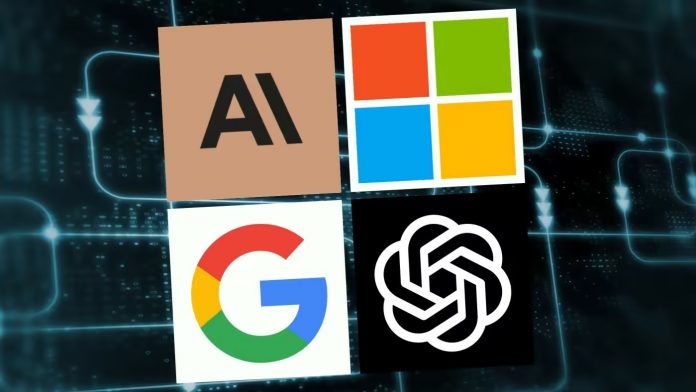
Anthropic, a leading AI company, has quietly removed several voluntary commitments from its website that were made in conjunction with the Biden administration in 2023. These commitments aimed to promote safe and “trustworthy” AI, including pledges to share information on managing AI risks and conducting research on AI bias and discrimination.

The deletions were flagged by AI watchdog group The Midas Project, which noted that while some Biden-era commitments, such as those addressing AI-generated image-based sexual abuse, remain, others tied to transparency and bias research were removed without notice.

Anthropic did not initially respond to requests for comment but later stated: “We remain committed to the voluntary AI commitments established under the Biden Administration. This progress and specific actions continue to be reflected in [our] transparency center within the content. To prevent further confusion, we will add a section directly citing where our progress aligns.”

The Biden administration’s AI safety commitments, announced in July 2023, involved industry heavyweights including OpenAI, Google, Microsoft, Meta, and Inflection. The companies had agreed to conduct internal and external security tests of AI systems, enhance cybersecurity measures, and develop methods for watermarking AI-generated content.

These voluntary commitments were not legally binding but were intended to set a standard for AI safety and ethical development. They also served as a precursor to Biden’s more formal AI Executive Order, which required federal agencies and AI developers to take significant steps to mitigate AI-related risks, particularly concerning bias and misinformation.

Trump’s Repeal of AI Safeguards

On Thursday, Trump repealed Biden’s AI Executive Order, marking a drastic shift in AI policy. The repealed order had instructed the National Institute of Standards and Technology (NIST) to create guidance for identifying and correcting biases in AI models. However, Trump’s new directive focuses on promoting AI development “free from ideological bias,” emphasizing “human flourishing, economic competitiveness, and national security.”

Trump’s order makes no mention of combating AI discrimination, a critical aspect of Biden’s initiative. Critics of Biden’s policies, many of whom are close allies of Trump, argued that the previous administration’s requirements were too burdensome and potentially forced companies to reveal trade secrets.

Marc Andreessen, David Sacks, and Elon Musk, some of Trump’s prominent Silicon Valley advisors, have accused companies like Google and OpenAI of AI censorship, alleging that their systems suppressed certain viewpoints. While OpenAI and others have denied any political influence on their policy changes, the recent rollbacks suggest a shift towards a more laissez-faire approach to AI development.

OpenAI and the End of ‘Ideological Bias’

OpenAI has also made changes to its public policies, removing references to diversity, equity, and inclusion (DEI) from its website. The company announced it would support “intellectual freedom … no matter how challenging or controversial a topic may be,” signaling a departure from previous commitments to mitigate AI bias and promote equitable outcomes.

This shift aligns with the Trump administration’s push against DEI programs, which it argues promote divisive “woke” ideologies. This is despite the belief that removing DEI frameworks from AI development could exacerbate the risk of discriminatory outcomes, particularly for marginalized communities.

Both OpenAI and Anthropic are actively pursuing government contracts, making their policy adjustments particularly relevant as they align more closely with the Trump administration’s priorities.

Salesforce Joins the Retreat from DEI Initiatives

In addition to changes in AI governance, companies are also backing away from DEI initiatives. Salesforce, a San Francisco-based customer relationship management giant, has removed language that once described diversity and inclusion as a “core value” in its latest financial disclosure.

The company’s move follows a series of executive orders from Trump aimed at eliminating DEI initiatives across both government and private sectors. Salesforce’s latest filing also omits previous language that tied executive compensation to employee diversity metrics.

“While we are not specifying representation goals, we remain committed to our core value of equality,” a Salesforce spokesperson told Bloomberg.

Salesforce CEO Marc Benioff, known for his vocal support of social issues, has yet to comment publicly on the rollback. The company’s decision mirrors similar actions by other tech giants, including Google, Meta, Amazon, Walmart, and Deloitte, which have all scaled back DEI programs since Trump took office.

A Turning Point for Tech Policy

The dismantling of Biden-era commitments to AI safety and DEI initiatives underlines a broader ideological shift in Silicon Valley. Under Biden, tech companies were encouraged to develop AI systems with robust safeguards against bias and to maintain inclusive hiring practices. Now, under Trump, the emphasis has shifted to promoting innovation and “ideological neutrality,” with less regulatory oversight.

The Midas Project pointed out that nothing in the Biden-era commitments suggested that the promises were time-bound or contingent on the sitting president’s party affiliation. This raises concerns about the stability of corporate commitments to ethical AI development and workplace equality.

AI ethics experts warn that these rollbacks could undermine trust in AI systems, particularly among communities that have historically been marginalized by biased technologies. The removal of DEI initiatives could also affect workplace diversity, potentially stalling progress on representation and inclusion.

However, many believe that Trump’s executive orders reflect a deregulatory stance aimed at reducing what his administration calls “onerous” requirements on tech companies.

The impact of these changes is expected to become clearer in the coming months, as companies adjust their policies and as the White House drafts its forthcoming AI action plan. This plan, expected within 180 days of Trump’s January executive order, will set the tone for the administration’s approach to AI innovation and public safety.


From Job Plan to Career Plan, Understand Multinational Careers

0

Join me today at Africa’s largest business school for mastering the fundamental mechanics of entrepreneurial capitalism and personal economy as we discuss how to plan a multinational career. Rule #1: compound how much you make an hour, and not work all the hours. If you focus on improving how much they pay you an hour, you will win your career future. 

Also, never neglect the power of getting a PhD because PhD is one of the greatest career insurance policies if you are in the technical field. That degree pays, from teaching in a local community school to global events, there is someone always open to pay you money. And getting a PhD is one of the highest paid jobs in the world: most great schools will pay you $4,000 per month and cover your tuition of $67,000 per year for 4-6 years! 

Have a career plan, not just a job plan. Working minimum wage flipping burgers in McDonald’s for years is bad. But starting in McDonald’s while taking a course in a local community college on something that leads to a state certificate will increase your pay by 2X within 9 months. A 6-month certificate on medical coding will increase your wage from $15/hour to $31/hour.

In this class, as part of the Tekedia Personal Economy series where I focus on your economy, not your company or your country, I will explain how we can win that multinational career future.

Sat, March 8 | 7pm-8.30pm WAT | Planning a Multinational Career  – Ndubuisi Ekekwe | Zoom link 

Solana Price Update: Why Investors Are Turning Toward Rollblock

0

The Solana price prediction for this bull run has been shifting, with fading meme coin activity, declining network activity, and upcoming token unlocks creating uncertainty among investors.

Meanwhile, Rollblock is carving out its place as a rising star in blockchain gaming. Backed by a sustainable play-to-earn model and strategic tokenomics, the platform has drawn in over 50,000 users and secured $10.8 million in funding. With momentum building, Rollblock is positioning itself as one of the biggest potential winners in this cycle. Read on to learn more.

Here’s Why Investors Are Turning To Rollblock In Droves

Investors are turning to Rollblock because it is revolutionizing the iGaming industry with its cutting-edge play-to-earn ecosystem, enhanced security measures, and rapidly expanding community. With over 50,000 members and $10.8 million raised so far, Rollblock is primed for exponential growth, offering early investors the potential for 50-100x returns in 2025.

Boasting a library of more than 7,000 games, Rollblock caters to both traditional casino players and blockchain gaming enthusiasts. The recent addition of sports betting has significantly broadened its market appeal, creating an all-in-one blockchain entertainment hub that continues to attract new users on a daily basis

Security remains a top priority for Rollblock, with AI-driven fraud detection and advanced encryption ensuring a safe gaming experience. SolidProof audits and an Anjouan Gaming license further reinforce its credibility, distinguishing it in a sector where trust and compliance are paramount.

Rollblock’s deflationary tokenomics model enhances long-term value, allocating 30% of platform revenue to RBLK buybacks. Of these, 60% of tokens are permanently burned to reduce supply, while 40% are distributed as staking rewards, fostering a sustainable economy that benefits both players and investors.

Plus investors can now earn a 30% referral bonus for inviting friends and a 20% purchase bonus on all new buys. These can be stacked for a 50% total bonus, further boosting demand and presale participation.

Assessing Factors Surrounding The Solana Price Prediction In March

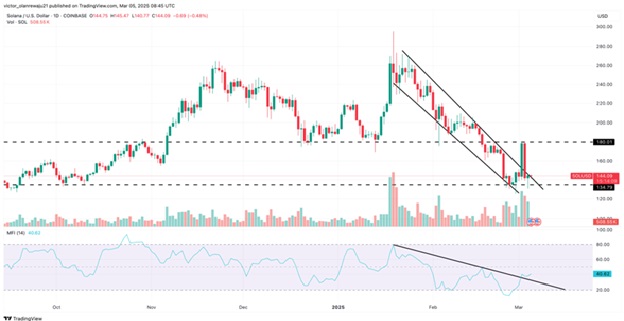
Solana’s price has fluctuated in recent weeks, weighed down by large-scale sell-offs and increasing volatility. The latest drop came after FTX unstaked and transferred 3.03 million Solana, worth over 432 million dollars, contributing to a slight decline of 5.3% in just twenty-four hours. Adding to the uncertainty, a massive profit-taking event followed Solana’s rally to one hundred eighty dollars after Trump’s strategic crypto reserve announcement.

Despite these setbacks, key technical indicators suggest a potential recovery on the horizon. Solana has broken out of its descending channel, with the Money Flow Index rising from oversold levels. The emergence of a golden cross and a buy signal from the Parabolic SAR further reinforce a bullish outlook, with analysts eyeing a return to one hundred eighty dollars if momentum holds.

Institutional demand remains a critical factor in Solana’s potential resurgence. The launch of Solana futures by CME Group signals growing interest from mainstream financial players, while speculation surrounding a potential spot Solana ETF continues to build. However, uncertainty around Trump’s trade tariffs and broader market conditions have kept sentiment cautious, limiting immediate upside.

As retail investors re-enter the market and meme coin activity regains traction, Solana could see renewed demand, pushing prices higher. While some analysts warn that breaking below $125 dollars could trigger a drop to $80, others argue that Solana’s historical resilience and inclusion in the US crypto reserve position it for a strong rebound in the coming months, potentially catapulting it above $145 by the end of the month.

Secure A Position In RBLK Today!

Priced at $0.061 in its tenth presale phase, RBLK is positioning itself as a major force in blockchain gaming for 2025. Market analysts foresee a 10x rise in the near future, with projections indicating 50x-100x long-term potential as Rollblock establishes itself at the forefront of the iGaming revolution. Secure a position in RBLK today and get in before the next price increase in 19 hours!

Discover the Exciting Opportunities of the Rollblock (RBLK) Presale Today!


Website: https://presale.rollblock.io/

Socials: https://linktr.ee/rollblockcasino

Is $SPY the Next Big Thing in Crypto? Exploring SpacePay’s Token Presale and Future Prospects

0

Despite crypto’s growing popularity as an investment, using digital currencies for everyday purchases remains frustratingly difficult. That’s where SpacePay comes in with a solution that might actually work in the real world.

This London-based startup has created a payment platform featuring a tiny 0.5% transaction fee, compatibility with over 325 crypto wallets, and instant cash settlements for merchants.

SpacePay has already pulled in nearly $1 million during its ongoing presale, with the $SPY token currently sitting at $0.003126.

Bridging the Gap Between Crypto and Everyday Commerce

Ask any cafe owner about accepting crypto, and you’ll probably get an eye roll because crypto’s reputation for wild price swings makes most merchants nervous about their bottom line. Plus, nobody wants to invest thousands in new equipment just to accept digital money.

SpacePay tackles these problems with a clever approach. Instead of requiring fancy new hardware, their system works with the Android card terminals businesses already have. It’s like upgrading your existing smartphone with a powerful new app – same device, new capabilities.

The real game-changer might be how SpacePay handles crypto’s notorious volatility. When a customer pays with Bitcoin or any other cryptocurrency, the merchant gets their money in local currency – instantly.

If a boutique owner sells a $200 designer jacket using SpacePay, they receive exactly $200 in their account, regardless of whether Bitcoin drops 15% an hour later. This protection removes the biggest roadblock that’s kept many businesses from jumping into crypto payments.

The Technology Behind SpacePay’s Magic

So how does SpacePay pull off these lightning-fast, protected transactions? Most payment systems check things one at a time – like standing in a single security line at the airport.

SpacePay runs multiple security checks simultaneously, like having several security gates operating in parallel. While your traditional payment processor is still checking your account balance, SpacePay has already verified your wallet, confirmed the merchant’s details, and locked in the exchange rate.

When a customer scans a payment QR code, SpacePay creates a brief moment where the exchange rate stays fixed. Even if crypto markets go crazy during the payment, the merchant receives exactly what they charged. The whole system runs on a distributed network rather than a central server, making it tougher to hack while keeping those fees remarkably low.

Understanding the $SPY Token Ecosystem

The $SPY token isn’t just another crypto coin to add to your collection – it actually does stuff. Token holders get monthly rewards dropped into their wallets based on how active the platform is. They also get to vote on important platform decisions, kind of like being a mini board member helping steer the ship.

From the total supply of 34 billion tokens, regular folks can grab 20% during the public presale. Another 17% is earmarked for user rewards and loyalty programs. Strategic partnerships and ecosystem growth each get 18%, ensuring there’s fuel in the tank for expansion.

The development team gets 10%, and there’s a 12% reserve fund for future challenges. The founding team’s 5% stake suggests they’re more interested in building something lasting than making a quick buck.

Beyond just holding the token, $SPY owners get early access to new features and quarterly webinars with the leadership team. The revenue-sharing model means token holders earn a slice of those transaction fees, creating a passive income stream that grows with the platform.

Fee Structure That Breaks Industry Norms

Credit card companies have been gouging merchants for years with fees ranging from 2.5% to 3.5% on every transaction. SpacePay is challenging the status quo with its minimal 0.5% fee that could seriously disrupt the payment industry.

A thriving neighborhood retail shop doing $60,000 in monthly sales would save around $1,800 every single month by switching to SpacePay. That’s sufficient funds to refresh their storefront, expand their inventory selection, or simply boost their quarterly profit margins.

These dramatic savings come from SpacePay’s blockchain architecture that cuts out expensive middlemen while maintaining bank-grade security.

SpacePay’s Vision for the Future

SpacePay isn’t thinking small. They’re gearing up to roll out their technology across 4.5 million devices in nine countries – potentially creating a massive payment network that works for both crypto enthusiasts and regular businesses.

Looking ahead, SpacePay plans to introduce staking options for passive income and a referral program to reward community members who help bring new merchants on board.

What’s particularly encouraging is SpacePay’s attention to regulatory compliance. They’ve designed their system to operate legally across unsanctioned nations, creating a solid foundation for global expansion.

With each new merchant that joins, the network becomes more valuable for everyone involved. It’s that network effect that could potentially turn SpacePay from an interesting crypto project into a major player in the global payment ecosystem.

How to Join SpacePay Presale

Joining SpacePay’s presale is actually pretty simple, even if you’re not a crypto wizard.

  • Visit SpacePay’s official website to begin the process.
  • Connect your preferred cryptocurrency wallet (MetaMask, Coinbase Wallet, or other compatible options).
  • Select your payment method – choose from USDT, AVAX, ETH, BNB, MATIC, BASE, or traditional bank cards.
  • Enter the amount of $SPY tokens you wish to purchase at the current price of $0.003126.
  • Confirm your transaction and complete the payment.
  • Store your tokens securely in your connected wallet until the presale concludes.


JOIN THE SPACEPAY ($SPY) PRESALE NOW

Website    |    (X) Twitter    |  Telegram

Trump Signs An Executive Order, Revoking Key AI Policies Established Under Biden

0

In a move aimed at reshaping the United States’ approach to artificial intelligence (AI), President Donald Trump signed a new executive order on Thursday, revoking key AI policies established under former President Joe Biden.

The order, which promises to eliminate “barriers to American AI innovation,” has sparked a debate about balancing rapid technological development with ethical safeguards and public safety.

A New Vision for AI: Promoting Innovation Without ‘Ideological Bias’

The executive order lays out an ambitious plan to maintain global leadership in AI technology by developing systems that are “free from ideological bias or engineered social agendas.” The language of the order appears to address longstanding criticisms from Trump and his allies, including tech mogul Elon Musk, who have argued that previous AI policies reflected “woke” liberal biases.

Trump’s order emphasizes that AI initiatives should “promote human flourishing, economic competitiveness, and national security.” It mandates a comprehensive review of all policies, regulations, and directives tied to Biden’s 2023 executive order, with the potential to suspend any initiatives that do not align with this new direction.

Unwinding Biden’s AI Safeguards

Biden’s 2023 executive order introduced stringent requirements for AI systems, particularly those used by federal agencies. It mandated that agencies prove their AI tools were not harming the public or suspend their use, a move aimed at preventing discriminatory outcomes and misinformation. The Biden administration had also required tech companies building advanced AI models to share critical details with the government before releasing their systems to the public.

These measures were part of a broader effort, led by then-Vice President Kamala Harris, to curb potential harms from AI technologies. The Biden administration’s AI policies targeted risks associated with tools such as medical diagnosis chatbots, which could spread false information, and facial recognition systems that had been linked to wrongful arrests, particularly of Black men.

However, Trump’s new order casts these safeguards as obstacles to innovation. The administration argues that Biden’s AI policies imposed “unnecessarily burdensome requirements” on developers, potentially stifling the private sector’s ability to compete internationally.

The New AI Action Plan

The executive order directs the White House to draft an AI action plan within 180 days, underlining a pivot to a more business-friendly regulatory environment. This plan will be developed by a select group of White House technology and science officials, including newly appointed Special Advisor for AI and Crypto, David Sacks. Sacks, a venture capitalist and former PayPal executive, is expected to bring a market-oriented approach to the administration’s AI strategy.

The action plan is expected to focus on enhancing U.S. economic competitiveness through AI while reducing regulatory hurdles. However, the lack of specific guidelines on how to manage ethical concerns related to bias and safety has raised red flags among civil rights groups and AI ethics experts.

Concerns Over Bias and Public Safety

The Trump administration’s move to prioritize innovation over regulation has drawn criticism from those who believe that unchecked AI development could lead to real-world harm. Alondra Nelson, former acting director of the White House Office of Science and Technology Policy under Biden, described the new order as “backward-looking.” She warned that the policy shift might unravel existing initiatives that protect the public from harmful AI applications.

“Trump’s order signals a shift away from a balanced approach that both encourages innovation and safeguards public rights and safety,” Nelson said. “In 60 days, we’ll know which Americans’ rights and safety the Trump Administration believes deserve to be protected in the age of AI, and if there will be a level playing field for every technologist, developer, and innovator or just the tech billionaires.”

The Biden administration’s policies had set in motion a series of studies on AI’s impact across sectors, from cybersecurity to public benefits, with a focus on ensuring that AI tools did not contribute to social inequities. Critics say that by repealing these policies, Trump risks erasing much of this groundwork.

Business groups and tech advocates have largely welcomed Trump’s order, viewing it as a chance to boost American innovation in a competitive global market. Americans for Responsible Innovation, a nonprofit organization, praised Trump’s focus on “out-innovating the rest of the world.”

“Today’s executive order is a placeholder until the administration has a chance to develop a full strategy for executing that vision,” said Eric Gastfriend, the organization’s executive director. He noted that many federal agencies had already frozen AI policy work after Trump repealed Biden’s executive order earlier this week.

However, experts warn that prioritizing innovation without robust ethical guidelines could lead to unintended consequences. The lack of clear protections against biased algorithms and misinformation could particularly impact vulnerable populations, critics argue.

Impact on Federal Agencies and AI Developers

Under Biden’s policies, federal agencies had been instructed to scrutinize AI tools and ensure they did not perpetuate biases or misinformation. This included reviewing AI models used in healthcare, law enforcement, and public services. Trump’s order not only halts these reviews but also requires agencies to revise their acquisition and deployment strategies for AI tools.

For AI developers, the new order could reduce compliance costs and accelerate the deployment of new technologies. However, it also creates uncertainty about what standards, if any, they will need to meet regarding ethical considerations and public safety.

The focus on “human flourishing” and economic competitiveness aligns with Trump’s broader agenda of reducing regulations to stimulate business growth. His administration has argued that previous policies under Biden created a compliance-heavy environment that discouraged innovation and allowed foreign competitors to gain ground.

Trump’s approach also mirrors sentiments expressed by Musk, who believes there should be a form of “neutral” AI that avoids politically charged content moderation and ideological leanings.