DD
MM
YYYY

PAGES

DD
MM
YYYY

spot_img

PAGES

Home Blog Page 163

Mono Protocol’s Black Friday Rush Highlights Rising Demand for Revenue-Sharing Infrastructure Tokens

0

Mono Protocol has entered one of its most active phases of the year as Black Friday Week drives a surge of interest across the token sale. The project has now raised $3.52 million, nearing the $3.60 million target for Stage 18, with the presale price holding at $0.0525. The team maintains a planned token launch value of $0.500, offering an estimated ~852% potential profit based on current presale pricing.

The strong inflows align with a broader shift in user attention toward infrastructure-focused crypto presale projects, particularly those offering clear utility, revenue pathways, and transparent token economics. Mono Protocol fits this trend by positioning itself not only as a chain-abstraction platform but also as a system that allows developers to earn predictable revenue from cross-chain executions.

100% Black Friday Bonus Boosts Allocation Ahead of Next Stage

The project’s 100% Black Friday bonus, active from November 24 to 30, remains a key driver behind the latest rise in participation. Every presale purchase instantly doubles the MONO allocation, offering a boosted entry while Stage 18 closes in on capacity. This structure has encouraged users to secure additional tokens ahead of the transition to the next pricing tier.

Black Friday historically generates heightened activity in seasonal crypto presale markets, particularly when incentives align with transparent pricing. Mono Protocol’s straightforward bonus mechanic—no codes, no additional forms, no conditions—has helped widen participation among buyers scanning the best presale crypto 2025 selections.

Mono Protocol Introduces a Revenue Model for Developers

A defining pillar of Mono Protocol is its focus on enabling developers and applications to earn revenue on every transaction routed through the platform. By using Mono’s chain-abstraction layer, apps can configure their own transaction fees and collect predictable revenue across chains. This model transforms routing infrastructure into a monetization opportunity, which is rare among early-stage cryptocurrency presales.

The protocol’s unified execution system removes the need to manage isolated networks and native gas requirements. Instead, applications rely on a single routing layer powered by the MONO universal gas token, which handles quoting, execution, and settlement regardless of the underlying chain.

This revenue-centered structure has become a key theme among participants researching which crypto presale projects carry practical utility beyond the promotional period.

Execution Reliability Strengthens Mono’s Position in the Presale Market

Mono Protocol’s infrastructure is built around guaranteed execution using its Resource Locks model. This system prevents failed transactions and unexpected reversions, two issues that frequently affect users interacting with cross-chain systems. In a period like Black Friday Week—where networks experience heavier usage—these guarantees carry added relevance.

The routing engine is designed to perform significantly faster than conventional cross-chain paths while maintaining MEV-resistant protections. By eliminating frontrunning exposure and value leakage, Mono aims to provide consistent performance for applications routing volume across multiple blockchains.

These execution guarantees have made the project increasingly visible on several updated crypto presale lists, particularly those focused on infrastructure tokens.

MONO Serves as the Core Asset for Gas, Staking, and Security

The MONO token anchors key functions within the ecosystem. It operates as the universal gas asset, pays routing fees, and secures the network through staking by bundlers, messaging nodes, and the orchestrator. Solvers and routers post MONO-based execution bonds to ensure settlement integrity.

With Stage 18 approaching completion at $3.52M raised, the network’s multi-tier utility model continues to appeal to users comparing long-term infrastructure-based assets during the best presale crypto 2025 cycle.

Black Friday Week Continues to Lift Presale Momentum

As the Stage 18 cap of $3.60 million approaches, Mono Protocol is positioned for sustained visibility throughout Black Friday Week. The combination of a revenue-oriented infrastructure model, transparent pricing, and a 100% bonus has helped the project maintain momentum during one of the most competitive periods for crypto presale activity.

With the current price locked at $0.0525, the remaining Black Friday window offers a limited opportunity to secure a doubled MONO allocation before the next stage begins.


Learn More about Mono Protocol

Website: https://www.monoprotocol.com/

X: https://x.com/mono_protocol

Telegram: https://t.me/monoprotocol_official

LinkedIn: https://www.linkedin.com/company/monoprotocol/

U.S. Bancorp Sets Up Digital Assets and Money Movement Unit as Stablecoin Adoption Sweeps Global Finance

0

U.S. Bancorp has created a Digital Assets and Money Movement unit, marking one of the clearest signs yet that traditional American banking is being pulled into a new era shaped by tokenization, blockchain rails, and the rapid rise of stablecoins.

Announced in mid-October 2025, the new division places the bank squarely inside a global shift that has financial institutions scrambling to modernize their infrastructure before the next generation of money movement leaves them behind.

Stable-coin adoption is sweeping across the world, transforming from a niche experiment into a financial utility. U.S. lenders, in particular, are racing to build internal capabilities. The momentum is being fueled by the popularity of dollar-backed digital tokens, which are now settling everything from cross-border remittances to corporate treasury transfers. Even conservative institutions that once kept blockchain at arm’s length are rolling out pilots or forming internal teams to prepare for widespread use of tokenized deposits, programmable payments, and instant settlement systems.

U.S. Bancorp’s move fits neatly into this new reality. With more than six hundred billion dollars in assets, the bank cannot afford to fall behind rivals that are already deploying blockchain systems. JPMorgan runs its own tokenization network. Citigroup has built tokenized cash settlement tools. Global institutions from Europe to Asia are rolling out similar initiatives.

The result is an industry-wide rush to ensure that banks—not fintech startups—control the pipes that will carry the next evolution of digital money.

The new division at U.S. Bancorp will be led by payments veteran Jamie Walker, who currently heads Merchant Payment Services. He will remain in that role until a successor is named, after which he will step into his new position under Chief Digital Officer Dominic Venturo.

Venturo said the bank’s customers, especially corporates and institutions, increasingly want to understand how digital assets can help them move money safely, store value efficiently, and interact with tokenized instruments in a regulated environment. The new structure is designed to meet that demand with a long-term focus rather than piecemeal experimentation.

The organization intends to develop blockchain-based tools that support stablecoin activity, tokenized assets, and advanced digital payment rails. That includes research into issuing or integrating stablecoins, exploring tokenized real-world assets that settle instantly, and constructing on-chain money-movement infrastructure capable of supporting both domestic and cross-border flows.

The unit will also oversee custody and settlement services for cryptocurrencies, enabling U.S. Bancorp to serve institutional clients seeking compliant exposure to digital assets. Internally, it will coordinate innovation efforts across the bank to ensure all blockchain projects meet regulatory and risk-management standards.

The establishment of this division sends a message to the wider market. While crypto markets have weathered cycles of hype and collapse, the technology underneath—especially the rails powering stablecoins—has only grown more entrenched. Dollar-backed tokens now settle hundreds of billions of dollars in monthly transactions globally.

Large corporations have begun experimenting with on-chain treasury operations. Payment companies are integrating stablecoins directly into their products. And financial regulators in major economies, including the U.S., are edging toward more structured frameworks that would allow banks to issue or custody tokenized dollars.

This shift explains why financial institutions are moving quickly. Stablecoins offer faster settlement, lower transaction costs, and programmable features that traditional payment systems cannot match. As adoption widens, banks risk losing relevance if they fail to own the infrastructure powering the new digital-money ecosystem.

Bancorp joining the fray, setting up a division dedicated to digital assets, signals that tokenized markets, stablecoins, and digital-money rails are expected to become permanent financial instruments rather than speculative experiments. For a bank of its size, the new unit is not just a response to competition—it is a bet that the next major transformation in global finance will happen on distributed ledgers, and that institutions prepared today will have the advantage tomorrow.

Meta’s AI Chips Talks With Google Jolt the Market as Nvidia Shares Drop, Signaling Threat to Its Dominance

0
????????????????????????????????????????????????????????

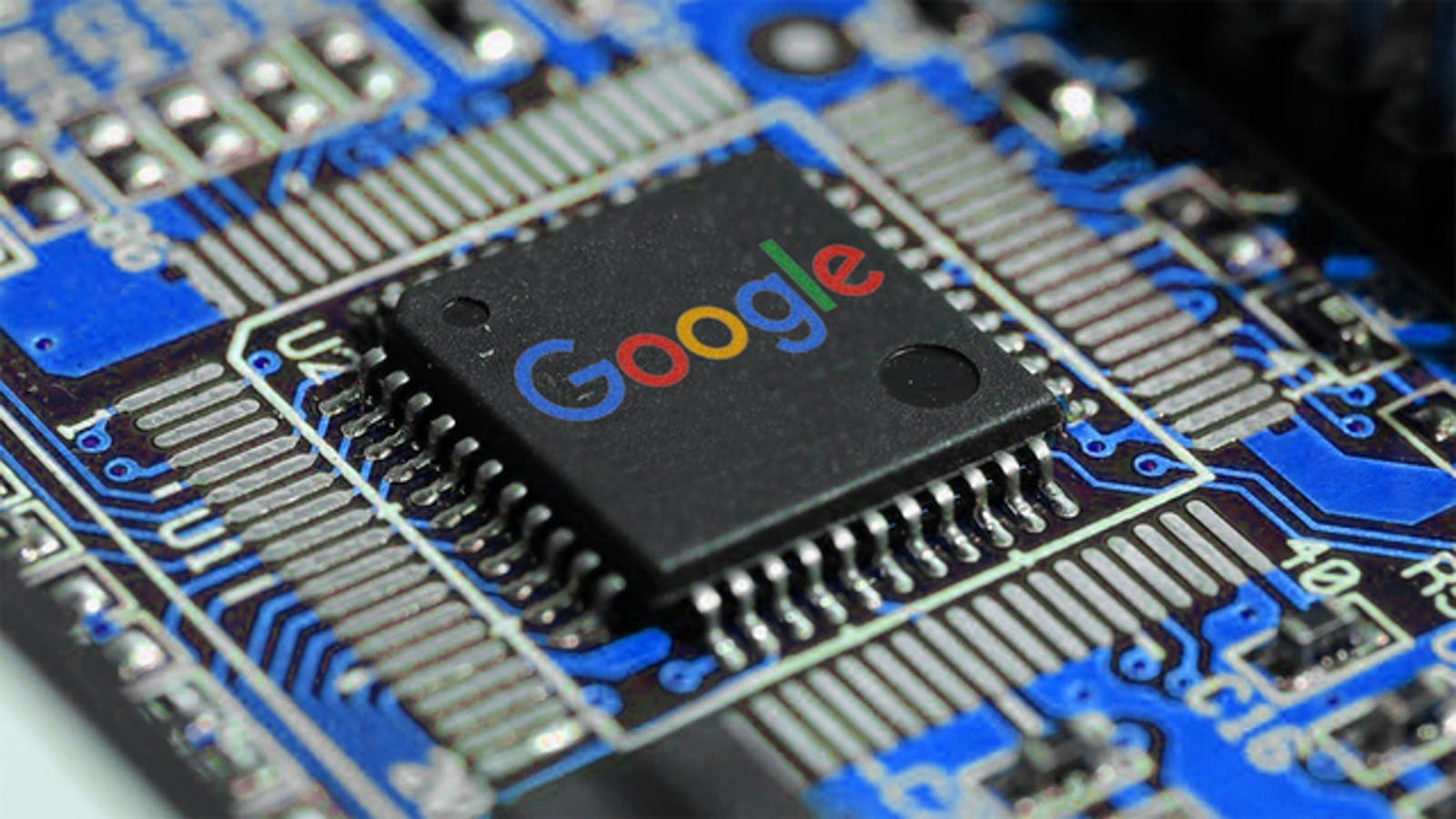
The AI chip wars tightened on Tuesday after The Information reported that Meta Platforms is in talks to buy billions of dollars’ worth of Google-designed processors for its data centers starting in 2027 — a move that would break Meta’s heavy dependence on Nvidia and thrust Google into the center of the global semiconductor contest.

The report triggered immediate ripples across financial markets. Nvidia shares fell about 4% in premarket trading on Tuesday, extending pressure from the day before as investors digested the prospect of a giant customer like Meta diversifying away from its GPUs. Alphabet rose 4.2% in early trade, adding to a more than 6% rally on Monday, as investors cheered the possibility that Google’s tensor processing units (TPUs) could finally break into the mainstream hardware market beyond Google’s own fleet. Broadcom, which helps Google design its TPUs, gained more than 2% after an 11% surge the prior day.

A Google spokesperson told CNBC: “Google Cloud is experiencing accelerating demand for both our custom TPUs and NVIDIA GPUs; we are committed to supporting both, as we have for years.”

Google launched its first-generation TPU back in 2018, originally built for its own internal cloud computing needs. Since then, the company has rolled out increasingly advanced generations of the chip, each tailored to handle larger and more complex AI workloads. TPUs are fully customized AI processors — a design choice that experts say gives Google an efficiency advantage when training or deploying models.

If Meta adopts TPUs at scale, it would amount to a major endorsement of Google’s technology and instantly place Google as a serious challenger to Nvidia’s supremacy.

The talks, according to The Information, include Meta potentially renting Google’s chips through Google Cloud as early as next year. That arrangement would allow Meta to begin shifting some workloads long before the 2027 hardware rollout.

The negotiations also fall under Google’s broader strategy to sell or lease TPUs directly to customers for use in their own data centers — a departure from the company’s earlier approach of keeping TPUs exclusive to Google facilities.

Winning Meta would be one of Google’s biggest coups yet. Meta is one of Nvidia’s largest customers and is planning between $70 billion and $72 billion in capital spending this year alone, much of it dedicated to AI infrastructure. A carve-out of that budget for TPUs would open a vast new commercial pipeline for Google’s chips.

The implications for Nvidia, though not immediately existential, are significant. Nvidia remains the undisputed market leader in AI hardware, with its graphics processing units powering the generative AI boom. Its ecosystem is entrenched: more than 4 million developers rely on Nvidia’s CUDA software platform, which has made its GPUs the default foundation for training and running advanced AI models. Analysts say that dominance will not be overturned soon.

But the surge in global demand for compute — coupled with tight supplies and rising costs — has pushed companies to hunt for alternative suppliers. Google’s TPUs, Anthropic’s move to use up to one million Google chips, Amazon’s custom Trainium and Inferentia processors, and the resurgence of AMD have together begun chipping away at Nvidia’s previously unchallenged position.

Meta’s potential pivot shows how aggressively firms are trying to diversify their supply, both to cut costs and to reduce exposure to one hardware vendor. A Meta–Google deal would send a strong signal through the industry that custom silicon is becoming a central part of long-term AI strategy.

Alphabet’s market surge on Tuesday also reflects broader enthusiasm around Google Cloud, which has gained momentum from strong customer demand, recent high-profile partnerships, and positive early reviews for Google’s new Gemini 3 model. The cloud unit has also drawn heavyweight backing from Warren Buffett’s Berkshire Hathaway and has started turning a once-marginal division into an engine of profitability.

The share-price moves unfolded amid an ongoing debate over whether the AI boom is showing signs of a bubble. Nvidia sits at the center of that conversation. The company reported a stronger-than-expected sales forecast last week, yet tech stocks broadly slipped afterward as traders questioned how long current valuations can hold.

Still, for now, any sign that a top-tier AI player like Meta is exploring hardware alternatives is enough to shift markets. This points to how fluid the competition has become in an industry where companies are spending hundreds of billions of dollars on compute.

Tekedia Capital Welcomes Partcl, A Microprocessor Tooling Company

0

Before AI can advance, microprocessors must advance first. Before an evolution in software can unfold, chips must evolve. In other words, for software to eat the world, hardware must first cook the meal. The entire promise of the AI era rests on faster, more capable microprocessors. Microprocessors are foundational, catalytic, and indispensable in modern technology.

Tekedia Capital is excited to announce our investment in US-based Partcl, a company building breakthrough tools that dramatically accelerate chip design by reducing compile times from weeks to minutes.

Today, the chip design cycle still takes 18–24 months, forcing hardware engineers to chase rapidly evolving AI models with outdated tooling. Partcl is changing that. Their GPU-accelerated system uses physics-based simulations that run 700× faster than traditional Electronic Design Automation (EDA) software. They also generate synthetic datasets to train AI models capable of producing superior chip designs.

The outcome is profound: faster design cycles, higher-quality chips, and a significantly shorter time to market. Partcl sits at the core of the future where advanced chips unlock advanced AI. Partcl, welcome.

$SPY Nears Final Launch: Could This Quiet Presale Be the Next Big Crypto Winner?

0

SpacePay’s ($SPY) launch is finally getting closer. The project, created to tackle many of the major issues that crypto users have been struggling with, is now in its final testing phase.

Based on the information given by the developers, the focus for November will include testing withdrawals, carrying out gasless transactions, and final integrations.

The token has been growing quietly in its presale, with more than $1.4 million raised so far. Early investors are getting in at the current low price of $0.004210 before the final launch. One could easily see it as one of the best cryptos to buy at this time because of its offerings.

What Makes SpacePay Stand Out?

SpacePay is a London-based fintech solution that seeks to make crypto payments as easy as using cash. The platform is integrating features that can encourage more people to adopt crypto since they can use it just like the systems they are accustomed to.

SpacePay works with more than 325 crypto wallets, meaning many users can use almost any wallet they have. The platform also integrates with current point-of-sale payment machines. Stores only need to incorporate it, and they can start receiving crypto.

Many People Do Not Want to Receive Crypto Payments, but That Could Be Changing

Various factors discourage people from making or accepting crypto payments. These range from high fees to volatility. Many people also do not understand how it works, as it typically requires learning a new payment model.

SpacePay developers understand these problems and aim to improve them. According to their whitepaper, they are creating a volatility protection mechanism, ensuring that when a customer pays with crypto, the merchant can receive the funds in fiat currency of their choice. So, if a customer pays with BTC, the seller can receive the funds in USD.

The entire process is also designed to be fast. In fact, the white paper describes it as instant, with zero waiting time. This is tailored to fit various types of businesses, so users don’t have to wait long hours to access their funds.

SpacePay also charges very low fees. The system is designed to charge a 0.5% merchant fee per transaction, which is lower than the industry standard for payments.

SpacePay has a Global Vision: Why $SPY Could Be the Best Altcoin to Buy Right Now

There is also concern about crypto regulation, as many are wary of the rules governing the use of crypto in their locations. SpacePay developers state that they will be operating in all unsanctioned countries worldwide. They are interested in operating based on what is permitted within each region.

The platform is not controlled by a central authority. This gives users complete control over their funds. It could also protect against unauthorized access by a third party.

With the increasing popularity of crypto, a system that simplifies its use for everyone could see rapid adoption. The goal is worldwide use, and if SpacePay achieves this, its $SPY token could experience massive adoption in a short time. This may position it as a viable altcoin to buy now.

The Testnet Is Live, and Final Integrations Are Expected This November

The SpacePay One testnet is already live, available on the Base Sepolia and Ethereum Sepolia networks. This allows various developers and users to test how everything works before the final launch.

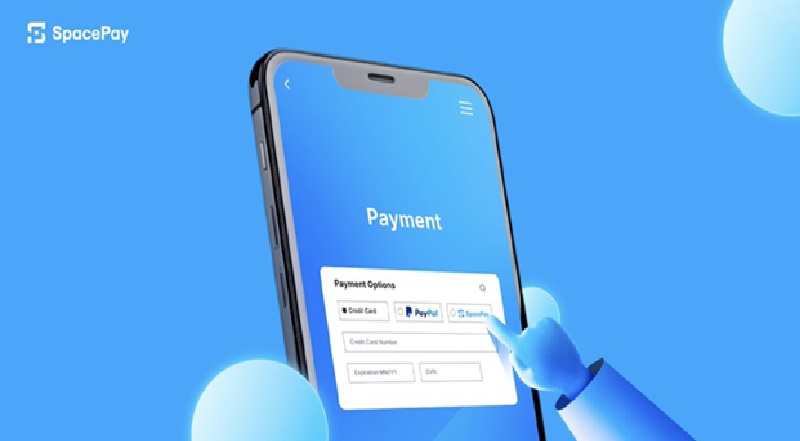
This testnet features a functional payment widget and a seamless user experience flow for checkout. The multi-chain capabilities enhance its reach and leverage more tools. The foundation needed for fiat integration will also be tested in this version.

The developers advise using only desktop devices for now. They are fixing a few bugs that may arise when using the mobile version. Feedback received from this first public preview will be used to make the platform better.

$SPY Could See a Spike in Value Once Adoption Begins

The $SPY token could be the biggest beneficiary of the project’s maturation. It is tied to various uses within the ecosystem, potentially increasing its value over time. If SpacePay begins to see global adoption as it hopes, tokens like $SPY could experience more holding.

Apart from being used for transactions within the platform, the token offers additional benefits to its holders. This includes monthly loyalty airdrops, which reward the most active users of the platform as a token of appreciation.

There are also revenue-sharing models that allow users to enjoy passive income from the platform’s revenue. $SPY holders will also be involved in the platform’s governance and its growth over time, gaining access to new features before the general public. Moreover, they will participate in charitable initiatives through the platform.

The Platform is Getting Recognized Already: Here’s How to Buy $SPY in the Crypto Presale

The platform is already gaining attention; despite still being in the crypto presale stage, it received an award for ‘New Payment Platform of the Year’ at the CorporateLiveWire awards 2022/23. Some investors who believe in its vision have also invested around $750,000 into the platform.

Here is how to secure the token: get a decentralized wallet, fund it with a supported token, which includes ETH, USDT, BNB, SOL, and various other options. Connect the wallet to the presale website.

After this, the investor can click on the option to buy the token and fill in the required information. The $SPY tokens will be secured after the transaction has been confirmed.

Discover the future of crypto payments with SpacePay


Presale: https://presale.spacepay.co.uk/
Website: https://spacepay.co.uk/
X: https://x.com/spacepayltd
Telegram: https://t.me/SpacePayTG