DD
MM
YYYY

PAGES

DD
MM
YYYY

spot_img

PAGES

Home Blog Page 1637

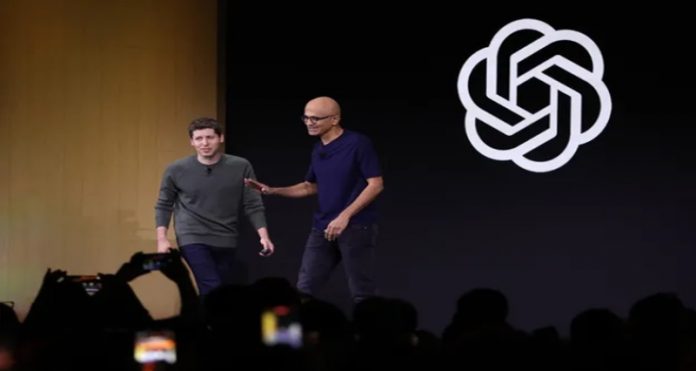
CMA Clears Microsoft-OpenAI Partnership, Says It Doesn’t Meet Investigation Criteria

0

In a significant decision on Wednesday, the United Kingdom’s Competition and Markets Authority (CMA) concluded that Microsoft’s partnership with OpenAI does not meet the criteria for investigation under the U.K.’s Enterprise Act 2002, the law governing anticompetitive practices.

The announcement effectively steers the tech giant clear of potential regulatory hurdles as it deepens its involvement in the booming artificial intelligence (AI) sector.

The CMA, which began its probe in December 2023, had initially raised concerns about Microsoft’s role as a dominant investor in OpenAI. Since 2019, Microsoft has infused nearly $14 billion into the AI startup, solidifying a deep collaborative relationship. The tech behemoth not only integrates OpenAI’s technologies into its Azure OpenAI Service but also works closely with the startup to develop products such as the Copilot chatbot and GitHub Copilot AI coding assistant.

Despite these ties, the CMA found that while Microsoft exerts a “high level of material influence” over OpenAI’s commercial policy, it does not control it.

“Overall, taking into account all of the available evidence […] the CMA does not believe that Microsoft currently controls OpenAI’s commercial policy,” the regulatory body stated. “In other words, there is no change of control giving rise to a relevant merger situation.”

At the heart of the investigation were worries that Microsoft’s growing influence over OpenAI could lead to a “substantial lessening” of competition in the U.K. The CMA feared that Microsoft might leverage its position to restrict competitors’ access to OpenAI’s leading AI models, especially in markets where foundational models play a critical role. The concern extended to the market for accelerated computing, with OpenAI positioned as a significant potential customer.

The situation became more complex following Microsoft’s role in securing OpenAI CEO Sam Altman’s re-appointment in November 2023, a move seen as indicative of its sway over the startup’s strategic direction. The CMA’s scrutiny aimed to determine whether these actions crossed the line into undue control that could distort market dynamics.

Crucially, recent developments have softened Microsoft’s grip on OpenAI. In January, Microsoft announced a renegotiation of its cloud computing agreement with OpenAI, adopting a model where it maintains a “first right of refusal” for specific AI workloads. Additionally, Microsoft granted waivers enabling OpenAI to build extra computing capacity, including a substantial $500 billion data center deal with investor SoftBank.

These adjustments were seen as reducing Microsoft’s potential to monopolize access to OpenAI’s technologies. The deal addressed regulatory concerns about competition and influence by allowing OpenAI to diversify its infrastructure options. This shift was likely pivotal in the CMA’s decision to forgo a formal investigation.

What This Means for the Market

The CMA’s decision not to investigate removes a potential obstacle for Microsoft as it continues to position itself at the forefront of generative AI development. The partnership with OpenAI has already boosted Microsoft’s competitiveness against rivals like Google and Amazon in the AI race. The regulatory green light in the U.K. could accelerate Microsoft’s growth in AI, enabling it to further integrate OpenAI’s models into its cloud services and software products without fear of antitrust backlash.

For OpenAI, this development offers a degree of operational independence and the freedom to pursue new partnerships without regulatory impediments. The decision underscores the broader industry dynamics, where tech giants are increasingly scrutinized for potential monopolistic behavior, particularly in fast-evolving sectors like AI.

While the CMA’s decision highlights that Microsoft’s influence over OpenAI has not crossed into outright control, it also sets a precedent for how regulatory bodies might assess influence in technology partnerships moving forward.
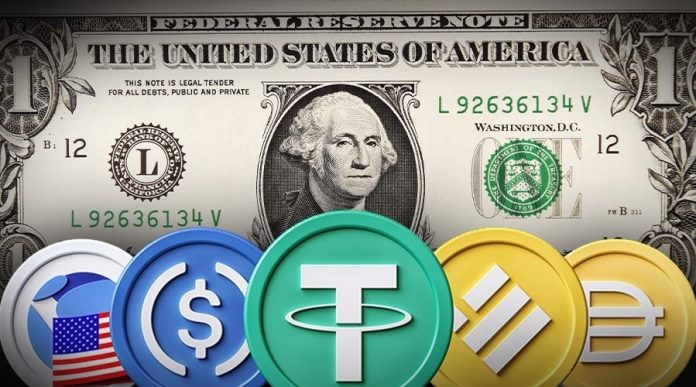
Goldman Sachs has Filed for Token Share Class with the SEC

0

Goldman Sachs has filed with the SEC to introduce a “Token Share Class” for one of its money market funds, specifically the Goldman Sachs Financial Square Treasury Solutions Fund. This move aligns with the firm’s ongoing exploration of blockchain technology and tokenization, though the details suggest a nuanced approach rather than a fully on-chain implementation. The Goldman Sachs Financial Square Treasury Solutions Fund is a money market fund designed to maintain a stable net asset value (NAV) of $1.00 per share, investing in high-quality, short-term Treasury securities. The filing introduces a new “Token Share Class” for this fund.

Contrary to initial assumptions, the shares themselves are not directly issued or recorded on a blockchain. Instead, the prospectus states that “Token Shares are expected to be purchased and held primarily through intermediaries that intend to use blockchain technology to maintain a record or a mirror record of share ownership for their customers.” This implies a hybrid model where intermediaries leverage blockchain for custody or tracking, while the fund’s core operations remain off-chain.

The Token Share Class has a minimum initial investment of $10 million, targeting institutional investors. Fees and ticker symbols are still to be announced, with an effective date listed as May 5, 2025, pending SEC approval. This aligns with Goldman Sachs’ broader push into tokenization, aiming to enhance efficiency, transparency, or settlement processes for institutional clients, though it stops short of fully tokenizing the fund on a public or private blockchain.

Goldman Sachs has been active in blockchain and digital assets for years:
Prior Tokenization Efforts: In 2024, Mathew McDermott, Goldman’s global head of digital assets, announced plans for three tokenization projects by year-end, including a U.S.-focused fund complex initiative. The Token Share Class could be an evolution of this, following Goldman’s work with the European Investment Bank (2022 bond issuance) and Hong Kong Monetary Authority (2023 green bond) on its Goldman Sachs Digital Asset Platform (GS DAP).

Unlike BlackRock’s BUIDL (a tokenized Treasury fund on Ethereum targeting retail and crypto natives), Goldman emphasizes private, permissioned blockchains for institutional clients, citing regulatory compliance and control. This filing reflects that cautious, intermediary-driven approach.

If intermediaries adopt blockchain effectively, it could streamline ownership tracking and reduce settlement times, potentially influencing money market fund operations broadly. Still, the $10 million entry point limits immediate retail impact. With recession odds at 39% for 2025 (per your prior question), tokenized financial products could offer stability or liquidity options for institutions, though this fund’s scale and scope are too narrow to shift macroeconomic trends.

Tariff Synergy: Amid Trump’s tariffs (25% on Canada/Mexico, 10% on China as of March 2025), a tokenized money market fund might appeal to investors seeking safe-haven assets amid trade disruptions, though its Treasury focus already aligns with such strategies. While the filing signals Goldman’s commitment to blockchain, it’s not a revolutionary leap. The shares aren’t natively tokenized on a blockchain like Ethereum, distinguishing this from fully decentralized offerings (e.g., BlackRock’s BUIDL, which hit $500 million in 2024).

Instead, it’s a pragmatic step—using blockchain indirectly via intermediaries—possibly to test infrastructure or meet client demand without regulatory overreach. Skeptics might argue this dilutes the “blockchain narrative,” as it lacks the transparency or immutability of public ledgers, while optimists see it as a bridge to wider adoption.

Goldman Sachs’ filing for a Token Share Class in its Treasury Solutions Fund, effective May 5, 2025, marks a calculated foray into blockchain-adjacent innovation. It’s not a direct on-chain tokenization but a hybrid model leveraging intermediaries, fitting Goldman’s institutional, compliance-focused strategy.

Impacts on markets and the economy will likely be incremental—enhancing operational efficiency rather than driving a crypto boom or averting recession risks tied to tariffs. Tomorrow’s White House Crypto Summit (March 7) might clarify how these fits into Trump’s Bitcoin reserve vision, but for now, it’s a measured step, not a game-changer.

Tether USDT Operations is Not Explicitly Prohibited Under MiCA Rule in Europe Says ESMA

0

The European Securities and Markets Authority (ESMA) has clarified that custody and transfers of Tether’s (USDT) are “not explicitly prohibited” under the Markets in Crypto-Assets Regulation (MiCA), the EU’s framework for regulating crypto-assets. This statement came on March 3, 2025, amid ongoing discussions about stablecoin compliance in Europe. While MiCA, fully effective as of December 30, 2024, sets strict rules for stablecoin issuers, ESMA noted that providing custody and transfer services for non-MiCA-compliant stablecoins like USDT doesn’t violate the regulation outrightly.

The MiCA is the European Union’s comprehensive framework for regulating crypto assets, finalized in June 2023 and fully applicable as of December 30, 2024. It aims to protect consumers, ensure financial stability, and foster innovation while bringing crypto under a unified EU regulatory umbrella. MiCA compliance details vary depending on the type of crypto-asset or service, with specific rules for stablecoins, crypto-asset service providers (CASPs), and issuers

However, there’s a nuance. ESMA encourages crypto-asset service providers (CASPs) to “prioritize restricting services that facilitate the acquisition” of such non-compliant stablecoins, referencing guidance from January 17, 2025. This means while holding or moving USDT is allowed, CASPs are urged to limit activities that promote buying it—like trading pairs—until March 31, 2025, after which stricter enforcement may kick in. For example, Binance plans to delist nine non-compliant stablecoins, including USDT, for trading in the European Economic Area (EEA) by March 31 but will still support deposits and withdrawals.

This reflects a transitional phase in MiCA’s rollout. Stablecoins must meet specific reserve, transparency, and governance standards to be fully compliant, and Tether has not yet been approved under these rules (unlike 10 other issuers). ESMA’s stance aims to balance market stability with user access while regulators and firms adapt.

E-Money Tokens (EMTs): Stablecoins tied to a single fiat currency (e.g., USD or EUR), functioning like electronic money. Require full backing by fiat reserves. Other Crypto-Assets: Includes utility tokens, cryptocurrencies like Bitcoin, and non-stablecoin tokens, with lighter requirements focused on transparency. Issuers of ARTs or EMTs must be authorized by an EU national competent authority (e.g., France’s AMF or Germany’s BaFin) and operate as a legal entity in the EU.

ARTs need a 1:1 reserve of assets, regularly audited, held in custody by a third party. EMTs must be fully backed by fiat, with funds segregated and redeemable at par value on demand. Issuers must publish a detailed white paper (approved by regulators for ARTs/EMTs) outlining risks, governance, and reserve details. Minimum own funds (e.g., €350,000 for significant ARTs/EMTs) to ensure solvency.

Tether operates out of the British Virgin Islands, not the EU. MiCA demands audited, segregated reserves; Tether’s attestations have historically been less rigorous than required. Tether hasn’t sought or received EU approval as an EMT issuer. ESMA’s March 3, 2025, clarification reflects this: custody and transfers of USDT aren’t banned, but CASPs are nudged to restrict acquisition services (e.g., trading pairs) until March 31, 2025. Post-deadline, non-compliant stablecoins could face full exclusion from EEA markets unless they align with MiCA.

The ambiguity—custody and transfers are fine, but acquisition should be curbed—has sparked debate, with some in the crypto community seeing it as a temporary reprieve for USDT, while others note the looming deadline could still force changes if Tether doesn’t align with MiCA. Adapting to reserve rules and setting up EU operations is costly and complex. Only 10 stablecoins (e.g., Circle’s EURC) are MiCA-approved so far.

Tekedia New Products Include WinGPT with Business Education and Coaching Features

0

Your business education and broad career development at Tekedia Institute will see evolutions in new tools.  Our product – WinGPT – is on the way. Pick a course at Tekedia Institute here.

WinGPT is a personal business educator which will guide learners on business education, using Tekedia libraries and universal libraries which learners can select based on interest. For the Tekedia libraries,  we have trained the AI system with our courseware. For example, if you want to understand how the One Oasis Strategy can help you win in Uyo, WinGPT will provide guidance. WinGPT has a coaching feature.

The coaching feature is designed to prepare people for job interviews, promotion exams, project lead interviews, etc. You will upload your resume and experiences along with what you would be interviewing for (e.g. promotion to GM Technology and Operations in Bank A with expected responsibilities). WinGPT will then launch a video and prepare you, using its understanding of your capabilities, expected tasks and knowledge of the company or industry.

To universities and polytechnics, our technologies are here to support you.  Become a Tekedia University Partner and advance your mission. Our technologies will help you improve impacts on your students.

New Products from Tekedia: WinGPT, CoachGPT, etc

TSMC’s Chips Are Down in the Trump Era!

0

Taiwan is suddenly worried and now wants to review the planned $100 billion investment in the US semiconductor industry: “Taiwan will initiate a formal review of Taiwan Semiconductor Manufacturing Company’s (TSMC) investment in the United States, a move that has stirred global attention and raised concerns over its potential impact on the landmark $100 billion investment it has earlier pledged.”

No matter how you look at it, in this era of America-First and America-Only, Taiwan through this investment may not have an industry it has dominated for years. Simply, who would ever place an order in Taiwan when it has operations in the US via this $100 billion deal?

Of course, under Biden, there could be a sense of modulation for the rise of all. But in this Trump era, they can do this $100 billion deal and still get zero love. Yet, Taiwan has no alternative than to go ahead with the investment since the weapon of tariff remains.

TSMC: for this investment call. your chips are really down right now!

Taiwan Puts TSMC’s $100 Billion, Other U.S. Investments, Under Review