DD
MM
YYYY

PAGES

DD
MM
YYYY

spot_img

PAGES

Home Blog Page 1637

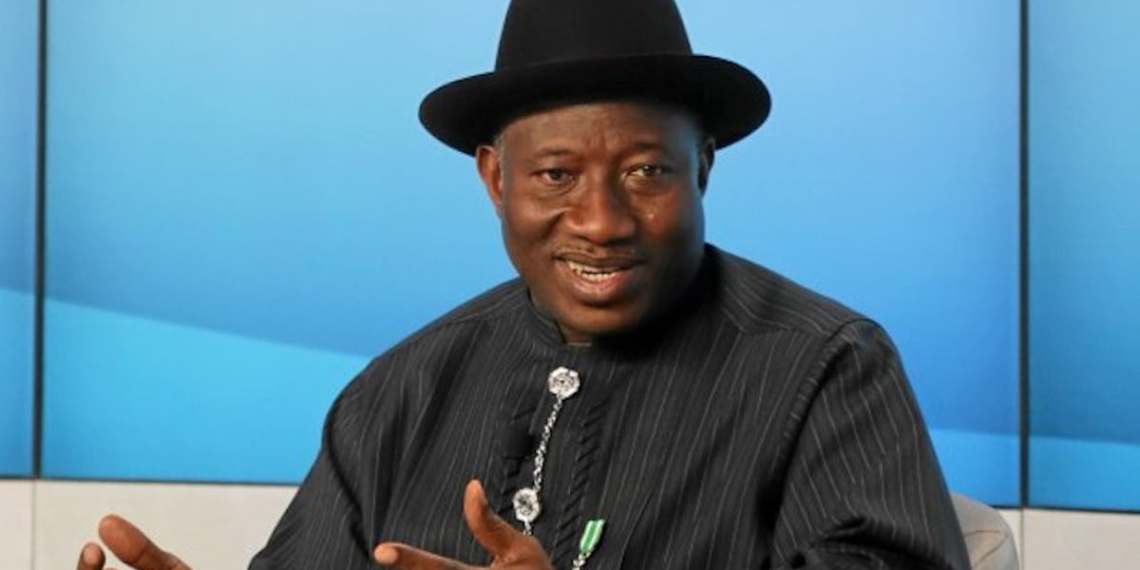
Rivers Crisis: Former Pres. Jonathan Slams Abuse of Power, Warns Judicial Compromise Will Deter Investment in Nigeria

0

Former President Goodluck Jonathan has strongly condemned Nigeria’s political leadership, accusing key figures across the executive, legislature, and judiciary of engaging in rampant abuse of power capable of spooking investors.

His remarks come amid the ongoing political turmoil in Rivers State, where President Bola Tinubu recently declared a six-month state of emergency, suspending Governor Siminalayi Fubara, his deputy, and the Rivers State House of Assembly.

Jonathan, speaking at the annual colloquium of the Haske Satumari Foundation in Abuja on Saturday, lamented that public officials, despite knowing the right course of action, were deliberately ignoring it. While he did not directly mention Tinubu, his remarks underscored his concerns over governance failures and institutional decay.

Background: Rivers State Crisis and Tinubu’s Emergency Declaration

The crisis in Rivers State began as a political standoff between Governor Siminalayi Fubara and his predecessor, now Minister of the Federal Capital Territory (FCT), Nyesom Wike. The conflict intensified over control of the state’s political structure, leading to a deepening rift between factions loyal to both politicians.

In late 2023, the situation escalated when 27 members of the Rivers State House of Assembly defected from the Peoples Democratic Party (PDP) to the All Progressives Congress (APC), a move widely seen as orchestrated by Wike to weaken Fubara’s grip on power. The defection sparked constitutional questions, as legal experts debated whether the lawmakers had lost their seats, as stipulated by Nigerian law.

The assembly has remained non-functional for 14 months, effectively shutting down legislative governance in the state.

Attempts to mediate the crisis failed, including interventions by well-meaning Nigerians and stakeholders. On February 28, 2025, the Supreme Court ruled that the governor had acted unconstitutionally by rendering the legislature powerless, stating that “a government cannot be said to exist without one of the three arms that make up the government of a state.”

The court upheld that the 27 defected lawmakers were still valid members of the House of Assembly, dismissing any attempt to exclude them. However, the ruling failed to restore order as the political gridlock persisted.

By early 2024, the political impasse had led to violence threats. In recent days, attacks on oil infrastructure stirred further concern, with multiple oil pipelines being vandalized between Monday and Tuesday, prompting an urgent response from the federal government.

Against the backdrop of growing insecurity, President Tinubu stepped in. In a nationwide broadcast on Tuesday, Tinubu declared a state of emergency, citing threats to public order and governance breakdown in the state.

The emergency measures included:

  • The suspension of Governor Siminalayi Fubara and Deputy Governor Prof. Ngozi Nma Odu.
  • The dissolution of the Rivers State House of Assembly.
  • The appointment of Vice Admiral Ibok-Ete Ibas (rtd) as the state’s interim administrator.
  • Increased security presence to curb unrest.

The decision has been met with criticism, with legal experts questioning its constitutionality. Many argue that the Nigerian Constitution does not grant the President the power to unilaterally suspend an elected governor or dissolve a state legislature without approval from the National Assembly.

Against this backdrop, Jonathan expressed dismay over the erosion of democratic institutions in Nigeria. He compared the situation to an Indian proverb, stating: “The situation in Rivers State reminds me of an Indian proverb: If somebody is truly asleep, you can wake them up easily. But if they are only pretending to sleep, waking them up becomes impossible.

He suggested that Nigeria’s leaders were intentionally ignoring their constitutional responsibilities.

“The key actors in Nigeria—the executives, the legislature, and the judiciary—know the right thing to do, but they are refusing to do it. They are pretending to sleep. Waking such people is extremely difficult, but they know the right thing,” Jonathan said.

He went further to accuse government officials of engaging in “clear abuse of offices, clear abuse of power, and clear abuse of privileges” across all three arms of government.

Jonathan also lamented the state of Nigeria’s judiciary, warning that its compromised integrity was scaring away investors and damaging the country’s international reputation.

“No businessman can bring his money to invest in a country where the judiciary is compromised, where a government functionary can dictate to judges what judgment they will give. No man brings his money to invest in that economy because we are taking a big risk. So whatever we do affects everybody,” he warned.

Concerns Over Nigeria’s Global Standing

The former president pointed out that Nigeria’s poor governance has resulted in the country losing respect on the international stage.

“I have been a President before, and even after leaving office, people approach me with concerns. They ask: ‘Why is our passport not valued as much? Why are Nigerians not given the kind of treatment we deserve at international airports?’”

According to Jonathan, these issues stem from the perception that Nigeria is not governed by the rule of law, making foreign governments and investors wary of dealing with the country.

He emphasized that sustainable progress requires a collective commitment from all government officials—executive, legislative, and judicial—to act with integrity and fairness.

“If we want to build a nation where our children and our grandchildren, no matter how painful it is, we must strive to do what is right. It may cost us, but we must endeavor and pay the price to insist on doing what is right,” he said.

Jonathan urged government officials to prioritize national interest over personal gain.

“Whether you are holding an executive office as a president, a minister, governor, or special advisor, whether you are holding an office in the parliament, senate, or rep, whether you are a judicial officer in high courts or appellate courts, we must strive to do what is right. If we want to build a nation that our children will be proud of,” he said.

Haske Satumari Foundation’s Stand on Governance Failures

The Haske Satumari Foundation, which organized the colloquium, highlighted systemic inequalities and the urgent need for inclusive governance. The foundation’s founder, Kudla Satumari, stressed that the demand for equity was not about entitlement but about ensuring fairness in governance.

“Our agitation for equity is not to give to people to feel that they are entitled, but we want people that deserve to be heard and included in the processes so that we have a fair, equitable, and just society,” Satumari said.

Other speakers at the event emphasized that when public officials fail to uphold democratic principles consistently, the nation’s institutions and future prosperity are put at risk.


NGX Lifts Trading Suspension on Mutual Benefits Assurance Plc After Financial Filings

0

The Nigerian Exchange Limited (NGX) has officially lifted the trading suspension placed on Mutual Benefits Assurance Plc, allowing the company’s shares to resume trading on the stock market from Thursday, March 20, 2025.

The decision comes nearly eight months after the insurance firm was suspended for failing to meet its financial reporting obligations.

The suspension, which took effect on July 8, 2024, was imposed under the NGX’s Rule 3.1 on the Filing of Accounts and Treatment of Default Filing. The rule states that any publicly listed company that fails to submit its financial statements within the stipulated deadline will receive a Second Filing Deficiency Notification from the Exchange. If the company does not comply within the cure period, the Exchange is required to suspend trading on its securities and notify the Securities and Exchange Commission (SEC) and the general public within 24 hours.

The NGX recalled this action in a statement, emphasizing the regulatory reasons behind the decision. The statement read, “We refer to our Market Bulletin dated 8 July 2024 with Reference Number: NGXREG/IRD/MB35/24/07/08, wherein we notified Trading License Holders and the investing public of the suspension in the trading on the securities of Mutual Benefits Assurance Plc.”

Mutual Benefits Assurance Plc was penalized for not filing its audited financial statements for the year ending December 31, 2023, within the prescribed timeframe. The company also failed to submit its unaudited financial statements for 2024, raising concerns about transparency and compliance.

After months of inactivity on the Exchange, Mutual Benefits Assurance Plc has now submitted its audited financial statements for the 2023 fiscal year, as well as all outstanding unaudited financial reports for 2024. The NGX confirmed that the company had met all necessary requirements and was now in full compliance with the Exchange’s regulations.

Providing an update, the NGX stated, “In view of the company’s submission of its 2023 AFS, and pursuant to Rule 3.3 of the Default Filing Rules, which states that, ‘The suspension of trading in the issuer’s securities shall be lifted upon submission of the relevant accounts,’ the Exchange is satisfied that the accounts comply with all applicable rules of The Exchange.”

The lifting of the suspension means that shareholders and investors who had been unable to trade Mutual Benefits Assurance Plc’s shares since July 2024 can now freely buy and sell the company’s stock on the NGX platform. The resumption of trading is expected to generate heightened market activity, as investors react to the company’s return to compliance.

Market analysts believe that the company’s stock could experience volatility in the short term, with some investors eager to offload their shares while others see an opportunity to acquire the stock at potentially undervalued prices. The company’s ability to rebuild investor confidence will depend on its financial health and future corporate governance practices.

NGX Group’s Record Financial Performance

In a related development, the Nigerian Exchange Group Plc has announced record-breaking financial results for the fiscal year ending December 31, 2024. The company posted a profit before tax of N13.6 billion, representing a significant 157.3 percent increase compared to the previous year. The NGX Group attributed this impressive performance to robust revenue expansion, effective cost management, and increased market participation.

Gross earnings soared to N24.0 billion, more than double the N11.8 billion recorded in 2023. The strong financial performance prompted the company’s Board of Directors to approve a final dividend payout of N4.4 billion, translating to N2.00 per share. This represents the highest dividend in the history of the NGX Group, further demonstrating its commitment to delivering shareholder value while maintaining a strong capital position.

The performance of the NGX Group underscores the resilience of the Nigerian capital market, despite ongoing economic challenges. Analysts believe that the record-breaking profit signals increased confidence in the Exchange and could attract further investment into the market.

For Mutual Benefits Assurance Plc, the return to active trading presents an opportunity to rebuild trust among investors and strengthen its financial standing. The company’s ability to maintain regulatory compliance and implement sound corporate governance practices will be key to its long-term stability in the stock market.

With the NGX continuing to enforce strict compliance measures, publicly listed companies are expected to be more diligent in meeting financial reporting deadlines. This regulatory vigilance is aimed at enhancing transparency, protecting investors, and fostering confidence in the Nigerian capital market.

The “War on Crypto Mixers”

0

Cryptocurrency mixers, like Tornado Cash, have faced intense scrutiny from governments worldwide, particularly the United States, as part of a broader crackdown on money laundering, sanctions evasion, and illicit financing. Tornado Cash is a decentralized, open-source cryptocurrency mixer built on Ethereum that has become a flashpoint in the global debate over privacy, regulation, and illicit finance. Crypto mixers are tools that pool and shuffle users’ digital assets to enhance privacy, making it harder to trace transactions on public blockchains like Ethereum. While they have legitimate uses (e.g., protecting personal financial data), they’re also exploited by hackers, ransomware groups, and sanctioned entities—like North Korean hackers —to launder funds.

Tornado Cash was launched in 2019 by a team including Roman Semenov, Roman Storm, and Alexey Pertsev, aiming to enhance privacy on Ethereum’s transparent blockchain. It’s not a company but a set of smart contracts—self-executing code—allowing users to pool and anonymize their Ether (ETH) or ERC-20 tokens. Users deposit crypto into a Tornado Cash pool, receiving a private “note” (a cryptographic key). After a delay, they can withdraw the same amount to a new address using this note, breaking the transaction link. Zero-knowledge proofs (zk-SNARKs) ensure the process is trustless and verifiable without revealing identities. Designed for privacy-conscious users—like activists in oppressive regimes or individuals shielding financial data—it obscures transaction histories, making blockchain analysis harder.

The U.S. Treasury’s Office of Foreign Assets Control (OFAC) and other global regulators view mixers as a threat when used to obscure illegal activities. This has sparked what some call a “war on mixers,” pitting privacy advocates against law enforcement. In August 2022, OFAC sanctioned Tornado Cash, a popular Ethereum mixer, alleging it laundered over $7 billion, including funds tied to North Korea’s Lazarus Group. In 2023, U.S. courts upheld the ban, and developer Alexey Pertsev was sentenced to 64 months in prison in the Netherlands for facilitating money laundering. As of 2025, his case remains a rallying point for crypto privacy debates.

By March 2025, the U.S. has expanded sanctions to other mixers, like Blender.io and Sinbad.io, linked to illicit flows. The EU’s 12th sanctions package (late 2024) also targets mixer-related entities supporting Russia’s war efforts in Ukraine, reflecting a global trend. The U.S. Congress is debating the Crypto Asset National Security Enhancement Act (introduced in 2024), which could mandate stricter Know Your Customer (KYC) and Anti-Money Laundering (AML) rules for mixers. Germany and other EU states are aligning with similar frameworks under MiCA (Markets in Crypto-Assets regulation).

A few mixers comply with KYC/AML laws, operating as regulated financial services. These face less heat but must sacrifice full anonymity. Nine or more mixers, including Tornado Cash, have been hit hard. Developers face jail time, and users risk penalties—e.g., OFAC fined a U.S. citizen $50,000 in January 2025 for using a sanctioned mixer, per Treasury reports. Privacy advocates argue this “war” stifles innovation and infringes on rights, while regulators say it’s about stopping crime (e.g., $1.5 billion in ransomware proceeds laundered via mixers in 2024, per Chainalysis).

The “war on mixers” is escalating. The U.S. and allies are using AI-driven blockchain analytics to track mixer use, while crypto hubs like Dubai and Singapore tighten rules. Meanwhile, decentralized mixer protocols evolve, staying one step ahead—though at greater legal risk to operators. By 2022, Tornado Cash had processed over $7 billion in crypto, per U.S. Treasury estimates. It became popular for its simplicity and decentralized nature—no central operator meant no KYC (Know Your Customer) requirements.

Examples include dissidents hiding donations or businesses protecting trade secrets. A 2021 study by Elliptic found roughly 80% of early use was non-illicit. Its anonymity attracted bad actors. Chainalysis tied it to $1 billion+ in laundered funds by 2022, including $455 million stolen by North Korea’s Lazarus Group in the Harmony Bridge hack. Ransomware gangs and dark pool traders also flocked to it. On August 8, 2022, the U.S. Treasury’s Office of Foreign Assets Control (OFAC) sanctioned Tornado Cash, adding its smart contract addresses to the Specially Designated Nationals (SDN) list. The Treasury alleged it facilitated money laundering for “rogue actors” like North Korea, Russia, and Iran. This was unprecedented—sanctioning code, not just people.

The Accelerated Society: A New Era of Disruption and Integration

0

Whether you believe it or not, I posit that more than 80% of digital companies in Africa will expire by 2028 if they fail to reinvent themselves in the AI age. From edtech to HR-tech, AI will create a new basis of competition which will disintermediate many current players. Good People, the Accelerated Society: A New Era of Disruption and Integration, is here.

In the grand tapestry of human progress, we stand at a pivotal juncture. Not merely a continuation of what came before, but a radical shift, a transmutation as I like to call it. We are moving from the familiar shores of the Innovation Society into the uncharted waters of the Accelerated Society.

Let’s rewind. Before the 1780s, we existed in the Invention Society. A time of brilliant minds, laying the bedrock of natural philosophy. Think of the foundational elements of physics and chemistry, the very language of science. They invented writing, the printing press, tools that shaped our world. Yet, their genius was often confined to the laboratory, their discoveries struggling to translate into widespread services. This resulted in stagnant GDPs and generational poverty. Imagine, unlocking the secrets of elements but dying from preventable diseases like polio.

Then, the Innovation Society emerged, post-1780s, accelerating around the 1980s. This was the era of mechanization, mass production, and data systems. Ideas from the Invention Society were transformed into tangible products and services, driving exponential economic growth. The flat GDP curves began their ascent. However, this era also created a divide: developed, developing, and least developed nations.

Now, we stand at the threshold of the Accelerated Society. A new wave, driven by AI systems and autonomous machines, is upon us. This is not just about faster computers or smarter phones. It’s about a fundamental restructuring of how we live, work, and interact.

Consider the seamless integration of our lives. You can send money to your mother in Lagos in seconds, a feat unimaginable a generation ago. We hop into Ubers driven by strangers, sleep in Airbnb homes owned by people we’ve never met. This level of interconnectedness, facilitated by robust verification systems, is dismantling the friction of fear and the unknown.

This is the era of acceleration. Technologies are rewriting the very ordinances of our existence. We are becoming entwined, integrated, and, yes, accelerated. This new reality demands agility, adaptability, and a willingness to embrace the unprecedented.

The Accelerated Society is not just a concept; it’s a reality. Are we ready for the speed of change, the depth of integration, and the sheer magnitude of disruption? Only time will tell, but one thing is certain: the world as we know it is changing, rapidly. And we must evolve with it.

Culled from Special Notes on Africa’s Abundance in AI Era, by Ndubuisi Ekekwe, to go live at Blucera with Tekedia Mini-MBA ed17 (Jun 9- Sept 6 2025)

Google Report Highlights Significant Rise in AI Adoption, With 74% Integrating it Into Their Work Lives

0

A recent study conducted by Google and Ipsos, covering 21,000 interviews across 21 countries, reveals a notable increase in artificial intelligence (Al) usage.

Findings in the report reveal that generative Al usage has surged over the past year, with nearly half of the global population (48%) reporting usage within this period. The highest levels of Al adoption have been observed in emerging markets, where both overall usage and year-over-year growth from 2023 to 2024 have been most pronounced.

The study highlights that Al usage extends beyond mere experimentation, with individuals integrating the technology into various aspects of daily life, including work, personal projects, and education. Notably, the Asia-Pacific region and emerging markets lead in Al adoption across diverse applications.

A key insight from the report underscores that direct experience with Al fosters a more positive outlook. As individuals engage with Al, their enthusiasm for its potential outweighs initial concerns. This trend has become even more evident in 2024, with 57% expressing excitement about Al’s potential compared to 43% who remain concerned about an increase from the previous year’s balanced 50% split.

The study also sheds light on the public’s stance regarding Al regulation. Across nearly every country surveyed, a majority (59%) prioritize fostering Al-driven innovations in science and medicine over stringent regulations designed to protect impacted industries (41%). Even in traditionally more skeptical regions, such as the United States (53% innovation vs. 44% regulation) and Europe (58% innovation vs. 43% regulation), there is a clear preference for supporting technological advancements.

Al’s real-world impact is already evident across various fields, particularly in healthcare. The technology is assisting medical professionals in diagnosing critical conditions faster by analyzing brain scans, enhancing screenings for diseases like breast cancer and tuberculosis, and contributing to groundbreaking medical discoveries such as protein structure prediction. Looking ahead, seven out of ten respondents anticipate Al will have a positive impact on science (72%) and medicine (71%). Other promising applications include agriculture (60%) and cybersecurity (57%).

The belief that Al will personally benefit individuals remains consistent with previous findings. Globally, 59% of respondents believe Al will have a positive impact on people like them, with this sentiment being particularly strong in emerging markets and the Asia-Pacific region. Certain demographic groups-such as Generation Z (70%), parents (70%), and white-collar workers (64%) are more likely to express confidence in Al’s benefits.

On a personal level, many respondents’ express enthusiasm for Al’s role in everyday tasks. The majority welcome Al’s assistance in finding information online (72%), serving as a digital personal assistant for shopping, scheduling, and travel planning (65%), and acting as a tutor or homework helper (63%).

Additionally, people recognize Al’s societal benefits, with 81% highlighting its importance in writing and summarizing content and 86% emphasizing its value in translation services. In the professional sphere, Al is perceived as more than just a productivity tool. Respondents value Al’s ability to simplify complex data and systems (84%) and enhance business problem-solving (82%). Moreover, more individuals believe Al will enable workers to focus on more fulfilling tasks (57%) rather than increasing workloads (43%).

Interest in Al learning opportunities remains high, even among non-users. Half (49%) of those who have not yet adopted Al express interest in understanding how it could support their careers or businesses. Among individuals who have used Al recreationally but not for work, 85% are keen to explore its workplace applications.

Currently, 74% of Al users incorporate the technology into their professional lives. Workplace Al users tend to be younger and more affluent, with 46% under the age of 35 and 60% belonging to higher income brackets. However, Al adoption is not limited to specific demographics, as it is used by blue-collar (67%) and white-collar (77%) workers alike, as well as by older professionals (68% aged 50-74).

Despite these broad adoption trends, a gender gap persists, with only 41% of workplace Al users being female, reflecting an even wider disparity than the overall Al user base (45% female, 55% male).

Workplace Al applications extend far beyond simple tasks such as drafting emails or cover letters. The majority of workplace Al users employ the technology for writing assistance (80%), problem-solving (79%), and brainstorming (75%). Additionally, Al plays a crucial role in digesting long documents (73%) and simplifying complex information (72%).

As AI becomes increasingly prominent in our daily lives, its impact on the personal and professional sphere is set to expand, particularly in emerging markets.