DD
MM
YYYY

PAGES

DD
MM
YYYY

spot_img

PAGES

Home Blog Page 1644

Samsung to Launch Project Moohan XR Headset, Taking on Apple’s Vision Pro

0

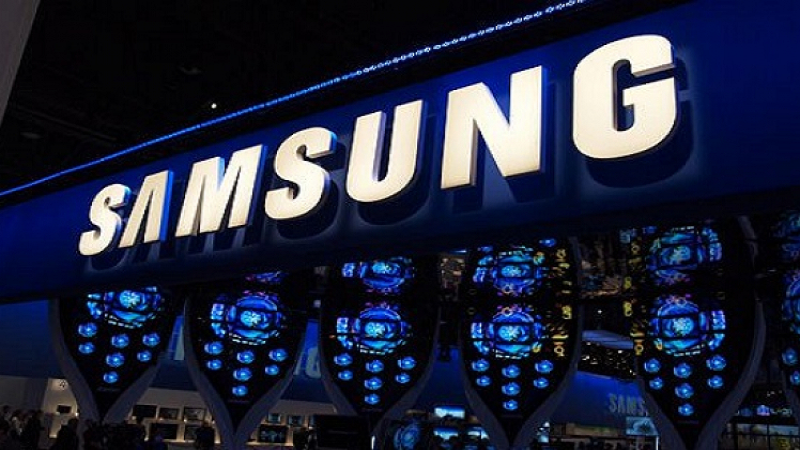
Samsung is set to launch its highly anticipated extended reality (XR) headset, known as Project Moohan, later this year, according to a company spokesperson who spoke to CNBC on Tuesday.

The device marks Samsung’s ambitious entry into the evolving XR market, directly challenging Apple’s $3,500 Vision Pro, which launched last year.

Samsung first teased the Project Moohan headset last year but unveiled it publicly for the first time at the Mobile World Congress (MWC) in Barcelona this year. The XR device aims to merge the digital and physical worlds, offering an immersive experience through advanced visual and interactive technology.

Innovative Features and Design

While Samsung has not disclosed full specifications, the physical device features four cameras on the front lens and what appears to be touch controls on its side. The company collaborated with tech giants Qualcomm and Google to develop the Android XR platform, a new operating system designed for XR devices.

The headset will also integrate Google Gemini, providing a “conversational user interface” allowing users to interact with Google’s AI assistant, potentially enhancing navigation through apps and tasks. The presence of multiple cameras suggests the device could support gesture controls similar to those on Apple’s Vision Pro.

Patrick Chomet, Executive Vice President of Samsung’s Mobile Division, emphasized the role of intelligence in the device’s functionality.

“To me, the breakthrough technology is a combination of advanced vision capability with intelligence that understands user intention. I think without the intelligence part, it’s a defective product,” Chomet told CNBC.

His statement reflects the broader vision of the tech industry, where AI-powered digital assistants play a critical role in delivering a seamless user experience.

A Fresh Attempt at XR After Early VR Ventures

Samsung was one of the early entrants into the virtual reality (VR) space, having launched its Gear VR headset in partnership with Oculus in 2015. However, the VR market did not expand as rapidly as expected, leading to a quiet retreat from that segment.

With advancements in display and processing technologies, the XR market is gaining renewed interest from major tech players. Samsung is hoping that its new XR headset, coupled with sophisticated AI and gesture control, will capture the growing market for mixed and extended reality devices.

Competing with Apple and the Future of XR

Apple’s Vision Pro, which debuted at $3,500, has set a high bar in the XR space, offering advanced hand tracking, eye control, and immersive displays. Samsung’s Project Moohan will likely be closely compared to the Vision Pro, particularly in functionality, user interface, and price point.

During a presentation in January, Samsung hinted at a broader product roadmap, including a trifold smartphone and potential smart glasses. These smart glasses could represent a future direction for the XR lineup, offering similar experiences to a headset but in a more compact and wearable form factor.

Industry analysts believe Samsung’s entry into the XR market could invigorate competition and potentially lower prices for consumers.

“Samsung’s partnership with Qualcomm and Google gives it a strong foundation in hardware and software integration, which could be critical for the success of Project Moohan,” said Jitesh Ubrani, a research manager at IDC.

“The XR market is still in its infancy, and while Apple has positioned itself as a premium leader, Samsung’s strategy might focus on accessibility and integration with its broader ecosystem of devices,” Ubrani added.

Despite the hype, XR devices still face challenges in mainstream adoption. Price, comfort, battery life, and the breadth of applications are critical factors that could determine the success of Project Moohan. Samsung’s focus on combining advanced vision technology with intelligent interfaces could offer a unique value proposition.

As the tech world awaits the official launch and pricing details of Project Moohan, the XR market appears poised for a new wave of competition that could accelerate the development of augmented and mixed reality technologies, pushing them closer to everyday use for consumers.
New Products from Tekedia: WinGPT With Business Education and Coaching Features

0

Good People, Tekedia Institute will be unveiling new products in June, in sync with Tekedia Mini-MBA edition 17. When you register for our Annual Tekedia Mini-MBA Package or Tekedia CEO/Director Program, you will have access to an eVault to store your digital files (MOUs, certificates, contracts, etc), business tools (inventory management, bookkeeping, invoicing, etc) to organize whatever you do, courses on different topics (libraries of Tekedia), and an AI solution that will do the following:

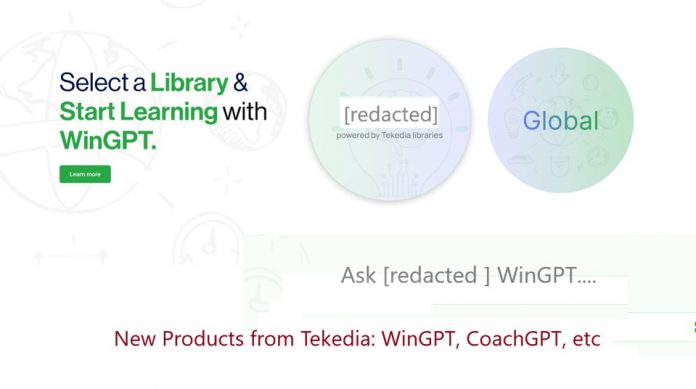
WinGPT is a personal business educator which will guide learners on business education, using Tekedia libraries and universal libraries which learners can select based on interest. For the Tekedia libraries,  we have trained the AI system with our courseware. For example, if you want to understand how the One Oasis Strategy can help you win in Uyo, WinGPT will provide guidance. WinGPT has a coaching feature.

The coaching feature is designed to prepare people for job interviews, promotion exams, project lead interviews, etc. You will upload your resume and experiences along with what you would be interviewing for (e.g. promotion to GM Technology and Operations in Bank A with expected responsibilities). WinGPT will then launch a video and prepare you, using its understanding of your capabilities, expected tasks and knowledge of the company or industry.

A lot of great things are coming. I have been doing a lot of coding here, refining models because I want an AI system that understands the foundational DNAs of Tekedia Institute. Please if you have business cases on African companies you own rights, and want to support our Institute with, we will be happy to add your work as we train our models on the nuances of the African business sphere; connect here.

WinGPT:  Business Education Tool

  • It’s a personalized business education tool.
  • It uses AI to guide learners through business concepts.
  • It draws from Tekedia’s course materials and other selected libraries.
  • It can provide specific guidance based on real-world scenarios.
  • Everything is baked with the nuances of doing business in Africa.

WinGPT: Personal Interview Coach

  • It’s an AI-powered interview and career preparation tool.
  • It analyzes resumes and experience to tailor coaching.
  • It simulates interview scenarios through video.
  • It leverages knowledge of specific companies and industries.

Tekedia Institute AI Strategy

We recently finalized the Tekedia Institute AI Strategy. The Strategy emphasizes the value of proprietary, localized data in the age of large language models like ChatGPT and Gemini. These AI models are trained on vast datasets, making data that is unique and inaccessible to them highly valuable.

By leveraging localized and proprietary data and insights, Tekedia Institute will continue to differentiate itself and offer high quality business management and leadership programs. Yes, in a world of abundance, scarce resources become overly strategic, making them monetizable!

This strategy is driving our new products including WinGPT with Business Education and Coaching Features. AI will offer a golden era for educational institutions because AI will help personalize learning, and accelerate the effectiveness of faculty. If you are a university with a business school in Africa, our technology can support your mission.

Tekedia brings AI into our programs with WinGPT baked with the nuances of African business.

Amazon Expands AI Ambitions With Plans to Launch Its Advanced Reasoning Model, Forms New Agentic AI Group

0

E-commerce giant Amazon is reportedly developing an advanced AI model with sophisticated reasoning capabilities, positioning itself alongside industry leaders like OpenAl’s o3-mini and DeepSeek’s R1.

According to Business Insider, the new model is expected to launch under Amazon’s Nova brand as early as June. This development follows Amazon Web Services (AWS) unveiling of the Nova family of multimodal generative Al models at its re: Invent conference in December 2024.

The lineup includes four text-based models, Lite, Pro, and Premier-as well as an image-generation model (Nova Canvas) and a video-generation model (Nova Reel). While Micro, Lite, and Pro became available to AWS customers immediately, Premier is slated for release in early 2025.

Amazon’s upcoming AI reasoning model is expected to incorporate a hybrid reasoning architecture, similar to Claude 3.7 Sonnet by Anthropic. This approach enables the model to deliver quick responses for simple queries while also handling more complex reason I g tasks with the same system. Such advancements are particularly valuable in fields like mathematics and scientific research, where step-by-step logical progression is crucial.

One of Amazon’s key objectives is to make its reasoning model more cost-efficient than its competitors, which it has to take on the pricing of the Chinese AI model Deepseek, which offers pricing to users. While costs vary depending on usage tiers, it is understood that deep seek r1 pricing is generally lower than many competing models, making it accessible to individuals and small businesses.

Amazon Bets Big on AI Agents

Alongside the launch of its AI reasoning model, Amazon is betting big on AI agents as it reportedly forms a new agentic AI group. According to a report by Reuters, the new group is with AWS, dedicated to creating AI agent systems that help people automate part of their lives.

In an email to staff seen by Reuters, AWS CEO CEO Matt Garman said agentic Al has the potential to be “the next multi-billion business for AWS.” A longtime AWS executive who previously led the company’s Al and data teams, Swami Sivasubramanian, will reportedly lead the new agentic Al group.

Amazon is the latest company to join the tech industry’s shift toward Al agents. Notably, the e-commerce giant has already begun showcasing agentic capabilities with Alexa+, an enhanced version of its voice assistant. Alexa+ demonstrated its ability to book rides, navigate websites, and complete tasks autonomously, highlighting Amazon’s ambition to integrate Al into everyday life.

Beyond consumer applications, AWS is expected to explore enterprise Al agents, positioning itself against competitors like Microsoft and Salesforce in automating business operations.

Amazon AI Push: What This Means For The AI Industry

Amazon’s bold move in the Al space with the development of an advanced Al reasoning model and Al-powered agents signals its intent to compete with major players like OpenAl, Google DeepMind, and Anthropic.

The company’s Al push could significantly impact the competitive landscape in the following ways:

• Challenge Top Players: With its advanced reasoning capabilities, Amazon’s Al models could compete directly with OpenAI GPT-4o, Claude 3.7, and Google’s Gemini 1.5, as it looks to displace their dominance.

•Enterprise Al Disruption: By integrating Al agents into AWS, Amazon could challenge Microsoft Copilot, Salesforce Einstein, and other business-focused Al solutions.

• Cost Leadership: Amazon reportedly aims to make its reasoning models more affordable than competitors, potentially pressuring Al model providers like OpenAl and Anthropic to lower prices.

With these advancements, Amazon is solidifying its position in the Al-driven future, expanding beyond cloud computing into cutting-edge artificial intelligence that enhances both consumer and enterprise experiences.

Also, Al innovation accelerates, the giant tech company’s entry into reasoning models, and Al agents could reshape how businesses and consumers interact with artificial intelligence, setting the stage for a new era of automation and efficiency.

Nigeria’s Power Sector Hits New Peak Generation of 5,713.6MW, Sets Record for Daily Energy Transmission

0

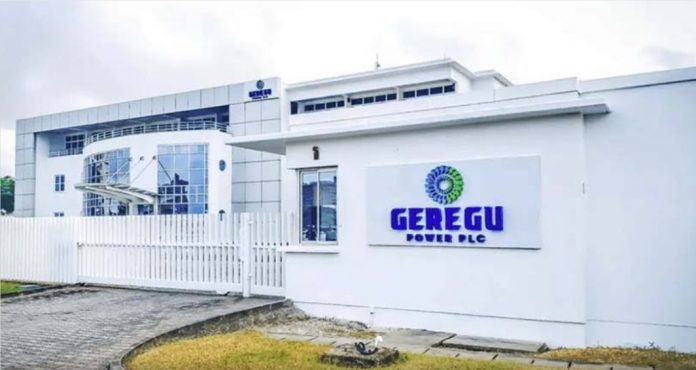
The Transmission Company of Nigeria (TCN) has announced a new milestone in the country’s power sector, achieving a peak generation of 5,713.6 megawatts (MW) on March 2, 2025. The power was successfully transmitted across the national grid, marking a 170MW increase from the previous peak of 5,543.20MW recorded on February 14, 2025.

However, the new peak generation still falls short of Nigeria’s all-time maximum peak of 5,801.60MW, reached on March 1, 2021. The record-setting event occurred at 21:30 hours on Tuesday, highlighting TCN’s continued efforts to enhance the country’s power generation and transmission capacity.

In addition to the peak generation milestone, Nigeria’s electricity industry also set a new record for daily energy transmission, achieving 125,542.06 megawatt-hours (MWh) on March 2, 2025. This surpassed the previous record of 125,159.48MWh set on February 14, 2025, by 382.58MWh. TCN noted in its statement that this achievement represents the highest daily energy transmission ever recorded in Nigeria’s electricity industry.

Implications for Nigeria’s Power Sector

The new milestone is seen as a positive step towards improving Nigeria’s electricity supply, which has long been plagued by inadequate generation, transmission, and distribution infrastructure. While this achievement underscores TCN’s enhanced capacity to manage power loads across the national grid, industry analysts caution that the gains may not translate into improved electricity access for households and businesses unless distribution bottlenecks are addressed.

Nigeria’s power sector is notorious for its inability to efficiently deliver electricity from generation companies (GenCos) through transmission (TCN) to distribution companies (DisCos), ultimately reaching end users. The transmission potential of 8,100 MW that TCN boasts of remains largely underutilized due to constraints within the distribution network, including outdated infrastructure, poor maintenance, and limited grid capacity.

Experts warn that unless these challenges are addressed, increased power generation will not significantly alleviate the power supply issues faced by Nigerians. They recommend targeted investments in distribution infrastructure and regulatory reforms that encourage efficiency and competition in the power sector.

The recent achievement is part of a series of record-breaking performances by TCN in recent years. In February 2025, TCN announced a peak generation of 5,543.20MW, which had surpassed the previous high of 5,478.73MW. The Maximum Daily Energy of 125,159.48MWh achieved then was also a record, exceeding the earlier milestone of 121,674.88MWh set on February 7, 2025, by 3,484.60MWh.

Further back, on January 8, 2021, TCN reported a peak transmission of 5,552.80MW, demonstrating a consistent but slow upward trend in generation capacity. At that time, the peak transmission at a frequency of 50.08Hz had surpassed the October 30, 2020, record of 5,520.40MW.

However, while TCN celebrates this milestone, Nigerians remain unimpressed, with many arguing that the achievement is far from meeting the country’s actual needs. Experts have pointed out that Nigeria requires an estimated 30,000MW for a stable and reliable power supply, making the latest peak generation a modest gain in a sector long plagued by inefficiencies.

Challenges and the Way Forward

Nigeria’s power sector continues to grapple with significant challenges. Distribution companies often struggle with capacity limitations, leading to frequent load shedding and blackouts. The sector is also burdened by liquidity issues, with many DisCos struggling to recover costs due to poor metering systems and billing inefficiencies.

This power generation gap has forced many industries to either scale down operations or shut down entirely, leading to job losses and compounding the unemployment crisis in the country. The power situation has also discouraged foreign investment, as many investors cite the unreliable electricity supply as a significant obstacle to doing business in Nigeria.

Analysts believe that for Nigeria to fully realize the benefits of increased power generation, comprehensive reforms are needed. These include enhancing grid infrastructure, implementing effective metering systems, and promoting investments in renewable energy sources to diversify the energy mix. Additionally, clear policies that support privatization and liberalization of the power market could help attract investments and drive efficiency.

LoftyInc Capital Secures $43M First Close of Its New Pan-African Seed Fund

0
Fund, money cash dollar

LoftyInc Capital, a pan-African VC firm, has announced that it has secured $43 million in the first close of its third fund, LoftyInc Alpha.

The fund marks a strategic shift from pre-seed and seed investments to focusing on late-seed and Series A startups across Nigeria, Egypt, Kenya, and Francophone Africa.

Operating out of Nigeria, Egypt, and Kenya, LoftyInc is one of the African VC ecosystem’s earliest and most successful investors, with early investments in prominent startups such as Flutterwave, Andela, Wave Mobile Money, RelianceHealth, Thndr, OmniRetail, and Moove.

With over a decade of venture capital experience, LoftyInc has consistently delivered strong returns to its investors while advancing Africa’s position as a growing hub for tech innovation. The Alpha Fund is designed to build on insights from previous funds. It will focus on seed investments that enable entrepreneurs to build resilient companies and achieve scalable growth.

The Fund will prioritize sectors such as financial services, retail enablement, logistics, healthcare, climate tech, and artificial intelligence, reflecting the diverse opportunities across the African continent.

The first close of the Alpha Fund attracted a diverse and strategic investor base, including commitments from Middle Eastern and African sovereign wealth funds such as Egypt’s Micro, Small, and Medium Enterprises Development Agency (MSMEDA), Tunisia’s Anava Fund of Funds, and others.

Development Financial Institutions (DFI) investors include FMO (the Dutch Entrepreneurial Development Bank), the Dutch Good Growth Fund (DGGF), Proparco with FISEA, and AfricaGrow, a Fund of Funds managed by Allianz Global Investors and advised by DEG Impact GmbH, as well as the International Finance Corporation (IFC).

LoftyInc’s team brings decades of operational and investing expertise and regional insights to the Fund.

Commenting on the recent funds raised, LoftyInc Managing Partner Idris Ayodeji Bello said,

“Our previous funds were backed primarily by African professionals and experienced entrepreneurs who not only provided capital but also leveraged their networks and industry expertise to help startups thrive establishing the foundation for institutionalizing our investment approach. In an exceptionally challenging fundraising climate, we are thrilled to have surpassed our first-close target, attracting new institutional investors while reaffirming the commitment of our existing backers. This latest raise positions us to scale our vision: empowering Afropreneurs who build transformative, tech-driven solutions for Africa’s everyday economy.”

FMO’s Marieke Roestenberg adds, “The Loftylnc team has demonstrated deep local expertise, a track record, and networks across Africa. We are glad to support its effort to institutionalize its VC platform alongside other investors and further promote tech entrepreneurship in the region.”

“This investment will provide seed-stage equity financing to tech startups across Africa, including nascent markets such as Francophone Africa,” said Farid Fezoua, Global Director for Disruptive Technologies, Services, and Funds at IFC. “The Alpha Fund will help develop the venture capital ecosystem across Africa and create a pipeline of investment projects that can attract later-stage investors to the region, which is underserved by global venture capital. The project is part of the IFC Startup Catalyst program, which supports early-stage entrepreneurs, and the ScaleX program, which supports female founders.”

First Close Partners commented: “We at First Close Partners were drawn to invest in Lofty because of its pioneering ecosystem cultivation efforts in Africa, its network of best-in-class local founders, and its diverse Partnership. Our fund-of-funds invests in VC firms around the globe, and we feel that Lofty is uniquely positioned to take advantage of the African continent’s vibrant entrepreneurial ecosystem, high growth potential, and attractive valuations.”

LoftyInc runs three funds simultaneously, the second fund, which is its first formal VC fund, is largely focused on Nigeria. On the other hand, this third fund follows the thesis of LoftyInc’s first fund; investing in startups across different markets and sectors in Africa and the diaspora.

According to a TechCrunch report, from 2017-2020, LoftyInc wrote cheques worth more than $1.2 million in rounds to six Nigerian startups, which include Printivo, RelianceHMO, Epump, YouVerify, Shyft Power Solutions and Flutterwave.

By 2021, the firm expanded its reach with a second fund, closing at $14.2 million and taking a pan-African approach. This expansion led to investments in key markets like Egypt, South Africa, and Francophone Africa. Notably, Loftylnc’s second fund also received investment from Meta’s NPE team, marking the tech giant’s only known investment in an African VC firm.

With over 200 investments and 14 successful exits, Loftylne continues to refine its strategy to meet the changing needs of African startups. Its latest fund, Loftylnc Alpha, is set to play a crucial role in helping startups transition from early traction to scalable growth, ensuring that more African companies successfully reach Series A and beyond.