DD
MM
YYYY

PAGES

DD
MM
YYYY

spot_img

PAGES

Home Blog Page 1648

OpenAI Launches $50m NextGenAI Consortium to Boost AI Research at Top Universities Amid U.S. Funding Turmoil

0

OpenAI announced on Monday the launch of a new consortium called NextGenAI, aimed at bolstering AI-assisted research at leading academic institutions. The initiative, which includes 15 founding partners such as Harvard, the University of Oxford, and MIT, will be supported by $50 million in research grants, compute funding, and API access from OpenAI.

The new initiative comes at a critical moment for U.S. AI research, as the Trump administration has reportedly dismissed several National Science Foundation (NSF) employees selected for their AI expertise. The shakeup threatens the NSF’s ability to maintain crucial AI projects, leaving a gap that NextGenAI may partially fill.

Through NextGenAI, OpenAI intends to provide financial and technical support to students, educators, and researchers, with awards set to be distributed in the coming months. The company highlighted the initiative’s mission to fuel the next wave of discoveries and equip emerging talent to shape AI’s trajectory.

“This initiative is built not only to fuel the next generation of discoveries, but also to prepare the next generation to shape AI’s future,” OpenAI wrote in a blog post. “NextGenAI is designed to support the scientist searching for a cure, the scholar uncovering new insights, and the student mastering AI for the world ahead […] As we learn from this initiative, we’ll explore opportunities to expand its reach and impact.”

The consortium is being positioned as an extension of OpenAI’s educational outreach, following the launch of its ChatGPT Edu product for universities last May. By partnering with elite institutions, OpenAI aims to establish a strong presence in academic research, potentially shaping the educational and research sectors with its AI technologies.

A Strategic Move in a Competitive AI Industry

While the funding boost is a welcome relief for many in the academic community, OpenAI’s motives may not be entirely altruistic. By embedding its tools into academic research, the company could cultivate a generation of researchers and scholars who are more familiar with and reliant on its products. This approach could create a strategic advantage over rivals, including open-source AI initiatives that offer alternative tools.

Filling a Void as Federal Support Wanes

The timing of OpenAI’s announcement is also noteworthy. The reported dismissals at the NSF have raised concerns about the U.S. government’s commitment to supporting critical AI research. The NSF has traditionally been a major source of funding and support for emerging technologies, and any disruption could leave researchers scrambling for alternatives.

With NextGenAI, OpenAI could help bridge this funding gap, especially if federal grants and resources become scarcer. However, the initiative also underscores a broader trend where private companies increasingly step into roles traditionally filled by public institutions.

The consortium’s creation comes with intricacies. For universities, the funding and resources provided by OpenAI could accelerate research and provide students with valuable experience. However, it also introduces potential biases, as researchers might feel pressured to use OpenAI’s tools over competitors, which could stifle innovation and reduce the diversity of approaches in the field.

OpenAI indicated that as it learns from the NextGenAI initiative, it may consider expanding its reach and impact. This could lead to more partnerships, greater funding, and potentially broader educational programs.
Presidential Election Sparks Debate Over Crypto Policies

0

The 2028 presidential election is in full swing, and crypto policies have emerged as a key talking point among various campaigns and political platforms. As Americans evaluate their options, the conversation increasingly focuses on how future leaders might shape the nation’s approach to digital assets. Some candidates echo Trump’s crypto policies of prior administrations, advocating a hands-off approach to innovation, while others lean toward stricter frameworks akin to Biden crypto policies. The underlying tension rests on how best to balance crypto regulations with economic growth and consumer protection. This heightened political attention suggests that crypto policies will factor significantly in the outcome of November’s vote — and beyond.

Key Players and Their Views on Crypto

On the Republican side, traditionalists and moderates debate what are Trump’s crypto policies should Donald Trump return to the political scene, whereas more progressive voices highlight Kamala crypto policies if the Democratic ticket secures another term. Even within single parties, stances on crypto policies differ drastically — from permissive attitudes to calls for sweeping regulation. When voters ask how to check crypto policies before choosing a candidate, many turn to official campaign websites or consult third-party trackers that summarize each politician’s statements. Understanding these varied viewpoints is crucial for investors, entrepreneurs, and everyday citizens wondering which policy framework will best serve the fast-growing digital economy.

The Role of AML and Accounting in Shaping Policy

Debates over crypto AML policy (Anti-Money Laundering) have heightened amid concerns about illicit fund flows through crypto exchanges. Politicians referencing Trump’s crypto policies often argue that a robust AML framework helps maintain America’s edge in fighting financial crime. Meanwhile, crypto accounting policy sparks discussions about tax obligations and how transactions should be reported. These issues came to a head during the last administration, which navigated between fostering innovation and keeping track of digital asset transactions. Today, analysts see the synergy of crypto AML policy and crypto accounting policy as essential components of comprehensive crypto policies that can withstand the scrutiny of regulators and global partners alike.

China’s Policy and the Global Context

While American politicians wrangle over crypto policies, it’s impossible to ignore China’s policy on cryptocurrency and its ripple effects worldwide. China’s restrictive stance has contributed to miners and startups relocating elsewhere, shaping the geography of crypto development. As campaigns shift focus to foreign policy, the success or failure of China’s approach can influence proposals on crypto policies at home. Additionally, advocates for a freer market highlight how overregulation could mirror China’s clampdowns, stifling domestic blockchain innovations. This tension underscores why many observers want balanced bitcoin monetary policy in the U.S., ensuring global competitiveness without sacrificing the core advantages of decentralized finance.

Monetary Policy: From Bitcoin to Ethereum

The 2028 election is also spotlighting crypto monetary policy, which covers decisions on token supply, interest mechanisms, and potential pegging strategies. While Bitcoin monetary policy is largely decentralized — predetermined halving events that control the emission rate — other platforms like Ethereum monetary policy evolve with community consensus. Consequently, crypto policies proposed by candidates often hinge on whether they view digital assets as akin to fiat currencies or more like commodities. Legislators who misunderstand these differences risk pushing laws that hamper U.S. leadership in cutting-edge fields like decentralized applications, NFTs, or Layer 2 protocols.

Trading Frameworks and Tax Considerations

A related concern is the formulation of a coherent crypto trading policy. How transactions are regulated can drastically affect liquidity, market sentiment, and investor confidence. Additionally, debates around cryptocurrency tax policy continue to surface, with some candidates favoring structured guidelines that bring clarity and others pushing for more lenient treatments to spur growth. Observers note that past Trump crypto policies had notable gaps in specifying tax details, a reality that still resonates today. Whichever administration takes office must craft crypto policies that address these longstanding uncertainties, ensuring both fairness and competitiveness for U.S. markets.

Summits, Strategies, and the Wider Ecosystem

Events like the blockchain policy summit highlight the intersection of private sector innovation and public sector oversight. Technologists and policymakers converge to discuss best practices, forging frameworks that shape crypto trading strategies and beyond. Amid the swirl of conference talks, the policy conversation frequently touches on the crypto policies needed to support compliance while encouraging entrepreneurship. If you’re looking for in-depth coverage of how government actions impact the crypto sector, resources like CoinDesk offer expert news and analysis. Meanwhile, some in the community look to entertainment platforms featuring 777 fun to unwind — revealing how digital tokens serve not just monetary but also recreational roles.

Accounting Nuances and AML Revisited

Beyond grandstanding and speeches, meaningful policy depends on the nitty-gritty details — like whether crypto accounting policy measures sufficiently capture capital gains and potential tax liabilities. Similarly, a cohesive approach to crypto AML policy must balance user privacy with law enforcement needs. As top stablecoins vie for market share, debates expand to stablecoin guidelines — some compare USDT and USDC, referencing insights like the thorough review available in Which Stablecoin is Better to Use in 2025?

Although stablecoins differ from mainstream cryptocurrencies in certain respects, they still fall under the umbrella of evolving crypto policies that aim to ensure consumer protection and global stability.

America’s Crypto Policies Future

Whether you side with progressive voices, moderate centrists, or hold a preference for Trump crypto policies, there’s no denying that the 2028 presidential race places crypto policies front and center. America’s approach will have far-reaching effects, from supply-chain optimization in farmland to global capital flows and cross-border remittances. The question for voters is how — and whether — each candidate can deliver a clear plan that addresses AML, taxation, and accountability, while nurturing the innovation that sets the crypto world apart. In many ways, the debate unfolds as a litmus test for policymakers who must strike a delicate balance: shaping a regulatory environment that fosters growth while safeguarding public interests in an ever-evolving digital landscape. The result could redefine America’s position in the global race for blockchain leadership and shape the crypto policies future for decades to come.

Ukraine in Crisis: U.S. Halts Military Aid Amid Trump-Zelenskyy Fallout, EU Races to Fill the Gap

0

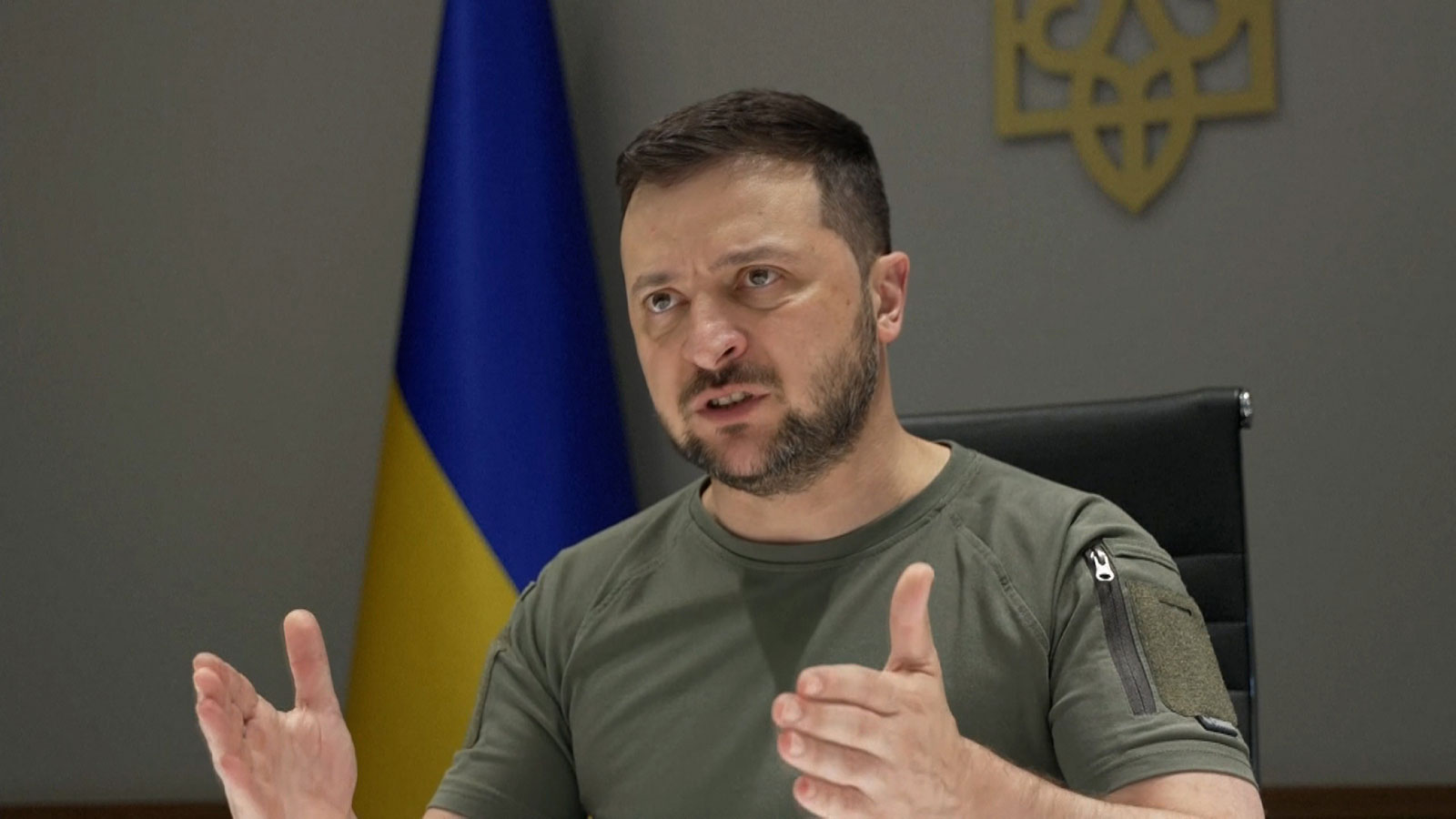
In a move that has placed Ukraine in its most precarious situation since the war with Russia began, the United States has halted military aid to Kyiv following a dramatic fallout between President Donald Trump and Ukrainian President Volodymyr Zelenskyy.

The unexpected development has left Ukraine, which has been heavily reliant on U.S. military support to sustain its defense against Russian aggression, scrambling for alternatives as its war effort faces new uncertainties.

An anonymous White House official and a U.S. official confirmed to CNBC’s partner network NBC News on Monday that military support had been paused while the situation is assessed.

“The president has been clear that he is focused on peace. We need our partners to be committed to that goal as well. We are pausing and reviewing our aid to ensure that it is contributing to a solution,” the officials stated.

While the White House has not publicly commented, Ukraine’s Prime Minister Denys Shmyhal expressed Kyiv’s resolve to continue diplomatic efforts to secure support.

“Regardless of the discussions about the possibility of stopping [military aid] — we will absolutely calmly continue to work with the U.S., Congress, with the Trump administration and with him personally through all available diplomatic channels so that Ukraine and the U.S. continue our struggle for a just, lasting, stable peace in Ukraine, on the European continent,” Shmyhal said on Tuesday.

The decision to pause aid, if confirmed, would mark an unprecedented shift in U.S. policy, particularly in light of the critical role American military assistance has played in bolstering Ukraine’s defense. The fallout follows a contentious meeting at the White House on Friday, where President Zelenskyy abruptly left without signing a multi-billion-dollar critical minerals deal — a moment seen by many as a diplomatic disaster.

A Huge Setback for Ukraine

For Ukraine, the pause in U.S. military aid could not come at a worse time. With over three years of war with Russia, Kyiv requires a steady supply of weapons and munitions to maintain its front lines. Defense analysts warn that a prolonged cessation of U.S. support could lead to severe consequences on the battlefield.

“This decision is not about economics. It is driven fundamentally by Trump’s view that Russia is willing to do a peace deal, and only Ukraine is the obstacle,” said Malcolm Chalmers, deputy director-general at defense think tank RUSI. “But there is no evidence that Russia would be prepared to accept a deal, and what that would be. Indeed this decision will encourage Putin to ask for more — including Ukrainian demilitarization and neutrality.”

The Kremlin, seizing on the situation, indicated it hoped the move would push Ukraine toward a peace deal. “If this is true, then this decision could indeed push the Kyiv regime toward the peace process,” Kremlin Press Secretary Dmitry Peskov told reporters, according to an NBC News translation.

Is Ukraine Now Doomed?

Defense strategists at the Center for Strategic and International Studies (CSIS) described the prospects for Ukraine as “bleak.” Analysts Mark F. Cancian and Chris H. Park explained that while equipment from previously announced commitments may still be delivered, there is a risk that the Trump administration could halt these shipments.

“The bottom line: Prospects for Ukraine are bleak. In the best case, U.S. and European aid continues, which is enough for Ukraine to stabilize the front lines, blunt Russian attacks, and buy time for a negotiated settlement,” they noted. “In the worst case, the United States cuts off shipments of equipment. What Ukraine receives from the Europeans, other global sources, and its own industry will keep its forces in the field but with declining capabilities. Russian attacks will gain more and more territory; at some point, Ukrainian lines will break. Ukraine will have to accept an unfavorable, even draconian peace.”

The Kiel Institute for the World Economy, a respected source tracking Ukraine aid, estimated that Europe had already overtaken the U.S. in total support, allocating 70 billion euros ($73.6 billion) in financial and humanitarian aid and 62 billion euros in military aid. Comparatively, the U.S. has provided 64 billion euros in military aid and 50 billion euros in financial and humanitarian allocations.

Europe’s $840 Billion Defense Plan As A Lifeline

With the U.S. stepping back, Ukraine’s hopes now rest on the European Union, which is preparing a massive urgent defense funding initiative that could raise up to 800 billion euros ($840 billion). Part of this fund is expected to support Ukraine, but analysts caution that the country’s ability to continue fighting will heavily depend on how quickly the EU can mobilize this funding.

European Commission President Ursula von der Leyen announced on Tuesday the EU’s intention to boost defense spending, emphasizing both immediate support for Ukraine and the long-term goal of enhancing European security.

“Europe is ready to massively boost its defense spending. Both to respond to the short-term urgency to act and to support Ukraine but also to address the long-term need to take on much more responsibility for our own European security,” she said.

However, despite these ambitious plans, there is concern that bureaucratic delays and the deteriorated state of Europe’s defense industry could hinder rapid assistance to Ukraine. The CSIS strategists warned, “The bad news is that the Europeans are already supplying as much as they can. Further, if the United States ceases aid, many European countries will also likely scale back.”

Can Europe Step Up?

As the situation unfolds, the EU faces mounting pressure to step into the gap left by the U.S. The CSIS notes that Europe has been a significant contributor to Ukraine’s defense, supplying roughly $1.8 billion per month in military aid. European aid was particularly crucial during late 2023 and early 2024 when U.S. funds were exhausted amid congressional debates.

The EU has also approved the use of frozen Russian sovereign assets to support Ukraine’s military needs, a move that demonstrates its commitment to Kyiv’s defense. However, the extent to which Europe can fill the void left by the U.S. remains uncertain.

European leaders have already convened emergency meetings to discuss their role in Ukraine’s defense and the broader implications of a potential U.S.-Russia peace deal that could sideline Kyiv and Europe altogether. For now, the question remains whether Europe can act swiftly enough to prevent Ukraine from being forced into a disadvantageous settlement.

Former Intel CEO Craig Barrett Opposes Splitting Company, Criticizes Board Over Gelsinger’s Exit

2

Former Intel CEO Craig Barrett has voiced strong opposition to splitting Intel’s business into two separate entities, arguing that such a move would be counterproductive, particularly as the company is on the cusp of a technological breakthrough that could help it catch up with Taiwan Semiconductor Manufacturing Company (TSMC).

In his opinion piece published in Fortune, Barrett rebuffed calls from a group of former Intel directors who suggested dividing the chip giant as a defensive measure against a potential TSMC takeover. Instead, he emphasized the need for Intel to double down on its 18A process technology, which is expected to rival TSMC’s N2 process node.

Focus on Technology, Not Distraction

Barrett argued that Intel’s foundry business struggles in recent years were not due to customer trust issues but rather because it lacked the necessary technology to compete effectively with TSMC. The former CEO highlighted that Intel’s newfound success with its 18A process technology demonstrates the company’s potential to reclaim its leadership in the semiconductor industry.

“Splitting off the foundry will only serve as a distraction and introduce complications,” Barrett wrote. Instead, he advised Intel to prioritize the 18A node while ensuring good customer service, fair pricing, guaranteed capacity, and a clear separation of chip designers from their foundry customers.

A Swipe at the Board and the Push for Gelsinger’s Return

Beyond advocating for a unified Intel, Barrett did not hold back his criticism of the company’s board, accusing it of being responsible for Intel’s struggles over the last decade. He suggested that the board’s actions, including the ouster of Pat Gelsinger as CEO in December, were misguided.

“In my opinion, a far better move might be to fire the Intel board and rehire Pat Gelsinger to finish the job he has aptly handled over the past few years,” Barrett said.

The former CEO noted that while the board members who suggested splitting Intel may have good intentions, they lacked experience in managing a semiconductor business. He characterized them as academics and former government bureaucrats, suggesting they were out of their depth in making strategic decisions for Intel.

Pat Gelsinger’s tenure as CEO was marked by significant strides in technology development, particularly with the 18A process node. Under his leadership, Intel made progress in catching up with its competitors, especially TSMC, which has dominated the industry with its advanced chip manufacturing technologies.

Developing new chip technologies and setting up production is a process that takes years, and Gelsinger has been laying the groundwork for Intel’s recovery. Barrett’s remarks underscore a growing sentiment among industry insiders that Gelsinger’s exit was premature and that his vision could have steered Intel toward sustained success.

Industry analysts have also echoed Barrett’s concerns, with many believing that a split could hinder Intel’s recovery strategy. Splitting the foundry business from the chip design unit might lead to a loss of synergy, weakening the company’s position against competitors like TSMC and Samsung.

Barrett’s comments come at a critical time when Intel needs stability and visionary leadership.

Intel’s efforts to rebound from a decade-long slump have so far failed to produce tangible results. His call to rehire Gelsinger is a bold proposal, denoting a lack of confidence in the company’s current direction.

The company’s foundry business, which was expected to provide a competitive edge, has not yet made significant strides against industry leader TSMC. Despite recent advancements in 18A process technology, which were meant to put Intel on par with TSMC’s N2 process node, the board’s impatience with slow progress led to the sacking of CEO Pat Gelsinger in December.

Barrett’s statements underline a growing concern about the lack of a clear strategy to revive Intel’s fortunes. The company, once a market leader, now appears rudderless, with no well-defined plan to reclaim its position. Analysts note that while the 18A process technology is promising, Intel still faces significant challenges in production scaling, customer acquisition, and market competitiveness.

Celebrating African Female Artists in Afrobeats and Amapiano on International Women’s Day

0

International Women’s Day is a moment to recognise and honour the contributions of women across various spheres of life. In the world of music, African female artists have broken barriers, challenged norms, and reshaped the landscape of Afrobeats and Amapiano. These dynamic women continue to push boundaries, ensuring that their voices are heard on the global stage while inspiring future generations of female musicians, especially in Africa or of African roots.

Trailblazers of Afrobeats

Afrobeats, a genre that has taken the world by storm, has seen the rise of incredibly talented female artists who have cemented their place in an industry often dominated by men. Icons like Tiwa SavageYemi Alade, and Tems have not only delivered chart-topping hits but have also used their platforms to advocate for gender equality and social change. Their success has paved the way for emerging artists such as Ayra StarrFave, and Bloody Civilian, who are redefining the sound of contemporary African music.

Tiwa Savage, often referred to as the “Queen of Afrobeats,” has consistently delivered groundbreaking performances, from collaborating with international stars to performing on global stages like the MTV Europe Music Awards. Meanwhile, Tems’ soulful voice and unique artistry have earned her a Grammy, marking a significant milestone for African women in music. In 2025, Ayra Starr won Best African Music Act and Best International Act at the MOBO Awards, further solidifying her place among the industry’s elite (The Guardian).

Queens of Amapiano

Amapiano, the South African-born genre, has gained immense popularity worldwide, and female artists have played a crucial role in its success. From Sha Sha, the first woman to win a BET Award for Best New International Act, to DBN Gogo, who has dominated DJ booths and festival lineups, women are ensuring that their influence in the genre is undeniable.

Artists such as Uncle Waffles have also gained international recognition, turning the DJing scene on its head with her electrifying performances and viral social media presence. South African sensation Tyla made history at the 2024 MTV Europe Music Awards (EMAs), winning Best Afrobeats Artist, Best African Act, and Best R&B Artist, surpassing established names like Burna Boy, Asake, and Ayra Starr (Medium).

Breaking Barriers and Shaping the Future

Despite the challenges of navigating a male-dominated industry, African female artists in Afrobeats and Amapiano continue to challenge stereotypes and redefine success. They have built loyal fanbases, headlined international tours, and collaborated with some of the biggest names in global music.

British-Nigerian rapper and singer Darkoo (born Oluwafisayo Isa), who gained prominence with her hit single Gangsta, continues to soar. At the 2025 MOBO Awards, she won Best Female Act and Song of the Year for Favourite Girl, a track that has accumulated millions of streams globally, including a remix featuring Rema (The Guardian).

Meanwhile, Grammy Award-winning artist Tems continues to expand her influence beyond music. She recently joined the ownership group of San Diego FC, a major move that showcases the growing intersection of music, sports, and entertainment (Goal).

On this International Women’s Day, we celebrate these extraordinary women who continue to innovate, inspire, and uplift African music. Their resilience, creativity, and undeniable talent serve as a beacon of hope for aspiring female musicians across the continent and beyond.

Here’s to African women in music—bold, brilliant, and unstoppable!

Read more: https://www.tekedia.com/pop-culture-africa-a-narrative-on-afrobeat-afrobeats-and-highlife/