DD
MM
YYYY

PAGES

DD
MM
YYYY

spot_img

PAGES

Home Blog Page 1652

Staying Competitive on Amazon: Price and Stock Tracking

0

The Amazon market is a huge and active platform where tons of sellers compete to gain attention among customers, and the use of an Amazon scraper is very relevant. It is vital to remain one step ahead in the extremely competitive environment to succeed. Effective price and stock tracking are among the most important things when trying to maintain that competitive advantage on Amazon.

Monitoring these factors enables the sellers to make well-informed decisions concerning their pricing strategies, inventory management, and entire business operations. This article will discuss the importance of price and stock tracking on Amazon with the help of a data scraper.

Understanding the Amazon Marketplace

In the Amazon marketplace, the fast-changing situation allows prices and stocks to turn themselves rapidly with about any consideration. Competitors may change their prices, launch new products, or create any kind of distraction for Amazon’s stakeholders. Conversely, demand can be influenced by factors like seasonality, trends, or economic conditions.

Unexpected events like disruptions in supply chains or decisions taken down by a view of the world are other factors totally beyond sellers’ control, influencing their chances of success in competing with the numerous attractions. Sellers must arm themselves with an exhaustive knowledge of key factors influencing customer behavior.

There’s certainly price consideration since customers are trying to get as much for their dollar. But the price is not the only one. The item’s quality often speaks as much to many of these customers as the price. Customers expect to get an item that works; any defect or shortcoming in the quality cuts immensely against that expectational matrix. Shipping options, such as fast and free delivery, are also usually influential in this sense.

Customer reviews serve as another important parameter of influence, building up some social proof and backdoor machinery for insight into the experiences of fellow buyers. Meanwhile, most customers will look at sellers’ reputations in terms of seller reliability and good customer service. Therefore, the sellers must keep tracking and working on these factors for optimal success in Amazon.

In this regard, customer reviews are particularly valuable, especially in the Amazon marketplace. They are informative for prospective buyers about many things, including the quality and functioning of the product, as well as the customers’ overall experience. Sales can increase tremendously because of trustworthiness and credibility in case of positive reviews or can be a deterrent for customers and damage the name of a product in case of negative reviews.

Thus, tracking customer reviews would be imperative for sellers. This will help bring about the necessary changes from customer feedback, address their needs, and improve the overall experience with the customer. In such a mode, sellers may ensure a good status on the platform on which they have been selling and help make the business substantially sustainable in the long run.

Strategies for Tracking Prices

Sellers have several ways of tracking Amazon prices. Some engage in manual monitoring, which involves checking the prices of competing products regularly and adjusting their prices accordingly. Although this method works fine for sellers dealing with a handful of products, it becomes tedious and inefficient in large catalogs.

Seller Central provides sellers with various reports for tracking prices and sales data. Reports may offer insight into some market trends or competitor activities. They may not provide the level of granularity that some sellers may require, as reports are not real-time updates.

Amazon Scraper for Price Tracking

An Amazon scraper is a powerful tool that uses web scraping technology to help them extract valuable information from Amazon product pages. Such information can comprise anything from the product’s current price to details regarding the sellers, customer reviews and ratings, sales rankings, and even historical price trends. With an Amazon scraper diligently monitoring and collecting this data through continuous scraping, sellers are given timely information on price changes and a complete analysis of their competitors.

Having this real-time information would allow Amazon sellers to make very informed decisions regarding the pricing of their products so that they are competing well within the unreliable Amazon pricing spectrum. Also, whatever insights sellers obtain from the analysis of competitors may help them identify market trends, finally helping optimize the product listing and, thus, new growth avenues.

An Amazon scraper facilitates a seller’s success by providing data-driven insights into the behavior of the Amazon platform, almost giving the seller an upper hand. Thus, the seller remains truly guarded regarding real-time market trends and competitor activities and can take proactive measures aimed at enhanced sales and high profitability.

Monitoring Inventory Levels

Maintaining good inventory levels is critical for a seller to succeed on Amazon. Stockouts mean lost sales and reputation damage while overstocking can tie up capital and charge storage fees. It is, therefore, important that the seller strategically implements good inventory control.

Several tools and software help sellers track inventory levels and forecast demand. These can offer automation for some tasks involved in inventory management, such as reordering products and setting reorder points. They include real-time updates for inventory and demand forecasts, thus enabling a seller to protect himself against stockouts and overstocking.

Customer Review Analysis

Customer reviews are an asset for seller feedback on Amazon. By tracking and analyzing customer reviews, sellers can understand customer satisfaction levels, identify areas of improvement, and respond to negative feedback in the shortest time possible. Several tools and software help sellers track and analyze customer reviews. These tools could automate collecting and analyzing reviews, giving sellers insights into customers’ thoughts.

Making Smarter Business Decisions

Data on prices, stock levels, and customer reviews can help sellers make business decisions that are more informed and potentially better for their sales and profits. Price adjustments could be made according to market conditions; inventory levels could be optimized for demand; customer service may be improved with the help of review analysis.

Keep Track of Your Amazon Inventory

Remaining ahead of Amazon’s competition requires constant vigilance and adjustment. Tracking prices and stocks has become one of the most integral components of any successful Amazon selling strategy. To gain an advantage over their competitors, the sellers who keep an eye on these things will be able to use these tools and resources for informed decision-making and achieving the longevity of their businesses on the platform.

Unilever Nigeria Posts N10.7bn Pre-Tax Profit in Q1 2025, Signaling Turnaround from Previous Years of Turbulence

0

Unilever Nigeria Plc has reported a pre-tax profit of N10.7 billion for the first quarter ended March 31, 2025, a remarkable 146.67% surge compared to N4.3 billion in the same period last year.

The performance signals a potential turning point for the consumer goods manufacturer, which has faced years of revenue volatility, restructuring, and operational challenges in a harsh Nigerian economic climate.

The company’s Q1 2025 revenue rose sharply to N46.9 billion, up 45.37% from N32.3 billion in Q1 2024. The result was driven by stronger sales across all three of its business categories: Food Products, Personal Care, and Beauty & Wellbeing. However, Food Products remained the backbone of the portfolio, contributing N27.5 billion, while Personal Care raked in N15.1 billion and Beauty & Wellbeing added N4.3 billion.

Unilever’s ability to grow revenue at such a scale despite inflationary pressures, rising energy costs, and foreign exchange headwinds, marks a notable reversal from the challenges of previous quarters. Between 2021 and 2023, the company battled falling margins, FX losses, shrinking consumer purchasing power, and rising competition. At one point, it announced an exit from certain categories, including homecare, as part of a strategic reset.

That reset appears to be bearing fruit. Although the cost of sales increased by 49.47% year-on-year to N28.1 billion due to high material and logistics costs, gross profit still climbed to N18.8 billion from N13.5 billion — a 39.64% improvement. The margin expansion suggests improved supply chain efficiency and stronger pricing power.

Administrative and marketing expenses rose by a modest 9.67% to N9 billion, up from N8.2 billion in Q1 2024. However, this cost discipline, coupled with stronger sales, pushed operating profit to N8.2 billion — a 115.18% jump from N3.8 billion last year.

What notably boosted the bottom line this quarter was the significant reduction in finance costs. Unilever slashed finance costs to just N172 million from N1.4 billion in Q1 2024 — an 87.71% drop. This was complemented by a 32.80% increase in finance income to N2.6 billion, reflecting improved interest earnings from call deposits and bank balances, likely aided by the high interest rate environment.

The company’s asset base also improved, rising 9.50% year-on-year to N155.09 billion, while retained earnings jumped 21.84% to N30.9 billion. These indicators underline a healthier balance sheet and stronger liquidity compared to previous years.

Unilever Nigeria’s share price closed at N43.00 on March 28, 2025, delivering a year-to-date return of 30.50%. Investors appear to be responding positively to the improved fundamentals, as confidence slowly returns to the stock after a prolonged period of underperformance.

However, uncertainties remain. Nigeria’s inflation is still in double digits, currency volatility continues to pose risks for import-heavy firms, and competition in the fast-moving consumer goods (FMCG) sector is intensifying. Analysts say Unilever’s ability to sustain its current earnings trajectory in subsequent quarters will depend on its ability to manage costs, deepen market penetration, and adapt to a still-evolving economic landscape.

However, this strong start to 2025 suggests the company is regaining its footing and could be on the path to sustained recovery.

China Quietly Waives 125% Tariff on U.S. Ethane Imports — A Strategic Retreat?

0

China has quietly waived the 125% tariff it imposed on U.S. ethane imports earlier this month, two sources familiar with the matter told Reuters on Tuesday, offering unexpected relief to petrochemical firms that rely heavily on the feedstock.

The exemption, which has yet to be officially announced by Chinese authorities, comes amid growing concerns over the economic strain of Beijing’s ongoing trade war with Washington.

The waiver was granted in recent days, according to the sources, who requested anonymity due to the sensitivity of the issue. China’s Ministry of Commerce and customs authorities did not respond to requests for comment after business hours.

While no official confirmation has been made, the development is already being interpreted as a tactical retreat by Beijing, a quiet concession aimed at shielding its industrial base from a retaliatory tariff that risked hurting domestic companies more than their U.S. counterparts.

The tariff had been imposed earlier this month after China raised levies on various U.S. goods, including ethane, in response to a renewed escalation in tariffs by U.S. President Donald Trump. The move raised China’s import duty on U.S. ethane to 125%, making purchases financially unviable for Chinese importers and threatening to disrupt supply chains in a key sector of the country’s manufacturing economy.

But the economic blowback appears to have prompted a reassessment.

The tariff waiver now allows major Chinese ethane importers — including Satellite Chemical, SP Chemicals, Sinopec, Sanjiang Fine Chemical, and Wanhua Chemical Group — to resume purchasing from the United States without the added financial burden. These firms use ethane as a key raw material to produce ethylene, which in turn feeds into the manufacture of plastics, textiles, packaging, and other petrochemical derivatives.

U.S. exporters such as Enterprise Products Partners and Energy Transfer, which operate ethane export terminals along the Gulf Coast, also benefit from the reversal. Their shipment volumes to China had come under threat following the tariff hike, despite rising global demand for ethane.

The United States exported a record 492,000 barrels per day of ethane in 2024, according to the U.S. Energy Information Administration (EIA), with nearly half of that volume destined for China. The EIA projects U.S. ethane exports to increase further to 530,000 bpd in 2025 and 630,000 bpd in 2026, underscoring China’s importance as a growth market.

The waiver has raised questions about whether Beijing is softening its stance under pressure, a sign that tariffs, particularly those targeting energy and industrial feedstocks, could have unintended consequences for its own economy.

Still, the broader implications for the U.S.-China trade war remain unclear. The waiver appears to be narrowly focused and driven more by industrial self-interest than by a broader policy shift. It follows similar exemptions granted last week for select pharmaceutical, semiconductor, and aerospace-related products — sectors considered strategically vital for China’s domestic ambitions.

Beijing appears to be insulating key industries from escalating costs without signaling an end to the overall trade dispute by removing tariffs selectively.  The gesture does little to resolve the deeper disagreements between the two countries, including technology transfer, supply chain security, and market access.

However, some have warned that this should not be misread as a de-escalation, noting that the ethane tariff waiver is more about avoiding self-inflicted damage than seeking reconciliation.

While the tariff rollback provides short-term certainty for buyers and sellers in the ethane market, it does not eliminate the volatility introduced by the broader geopolitical context. Market participants remain cautious, especially given the opaque nature of China’s policy decisions and the absence of formal communication from the Ministry of Commerce.

For now, the waiver removes an immediate obstacle for Chinese firms reliant on U.S. ethane, but it leaves unanswered whether Beijing intends to reimpose the tariff at a later date or extend similar relief to other energy commodities caught in the trade war.

However, China’s reversal on ethane has stoked interest across the board, not just of petrochemical executives, but of global market leaders looking for clues about how far Beijing is willing to go to shield its economy from the costs of confrontation.

Cardano Price Prediction: Your $840 Today Could Grow Into $840,000 by 2030, But This ADA Competitor Offers a Faster Route to Get There by Next Year

0

Cardano (ADA) has historically been considered a potential blockchain candidate. Price projections, which provide an overview of ADA forecasts, suggest considerable growth in the long term. Although investing $840 today could see a return of $840,000 by 2030, those seeking quicker returns may have better prospects elsewhere. This rising competitor offers real-world asset tokenization, advanced decentralized applications (DApps), and a highly successful presale nearing completion. Unlike ADA, which requires patience for long-term appreciation, RXS is positioned for a rapid market debut with high-growth potential. As investors evaluate the best route to maximize returns, Rexas Finance emerges as a compelling alternative to traditional blockchain giants.

Why Rexas Finance Could Outperform ADA in the Short-Term

Even though Cardano is one of the long-term contenders in the blockchain world, it faces stiff competition from other developments in the field because of its slow strides. Rexas Finance is booming into the market with a bang, focusing on real-world asset (RWA) tokenization and a fully functioning ecosystem. RXS allows for fractional ownership, simplifying owning tangible properties like real estate, art, and commodities. However, ADA focuses heavily on the efficiency of the blockchain and smart contracts. This fundamental difference gives RXS an edge in the short term, as it offers immediate utility and adoption. Another factor favoring RXS is its presale momentum. With over $47.8 million raised and more than 91% of tokens sold, investor enthusiasm is evident. This strong presale performance suggests a significant price surge upon launch, offering a faster route to substantial gains than ADA’s slower, long-term growth strategy.

RXS Tokenomics and Market Positioning

Rexas Finance has carefully structured its tokenomics to ensure long-term sustainability and investor confidence. The RXS supply is allocated to sustain liquidity and support staking rewards and treasury reserves while preventing over-token concentration among early investors. This allows for a balanced market dynamic after the launch while reducing the chances of large sell-off risks. A key differentiator between RXS and ADA is the initial price entry point.  Currently, RXS is sitting at $0.20 for its final presale stage with a launching price of $0.25. Considering the strong presale demand and the market anticipation, early investors are bound to make gains once the exchange listing goes live. In contrast, ADA is expected to grow slower, which means holding on to the currency for the long term will provide returns.   Aside from those benefits, RXS utilizes a multi-chain system, which improves its interoperability within different blockchain networks. This puts it in a favorable position in the market as cross-chain compatibility becomes more critical. While ADA continues building its infrastructure, Rexas Finance is already tapping into a broader investor base through its flexible, multi-chain model.

CertiK Audit and RXS Security Advantages

Intrusions and smart contract loopholes have become crucial worries for almost every investor today. Rexas Finance counterstrikes this concern by acquiring CertiK’s cybersecurity audit, which fortifies smart contracts and diminishes threats. While Cardano prioritizes stability through extensive peer reviews, this can slow innovation. Rexas Finance, however, balances security with agility, enabling faster growth without compromising safety.  With CertiK’s endorsement, investor confidence is optimally raised, validating RXS’s credibility. Now that security concerns have been sufficiently addressed, investors can pay attention to its practical uses and expansion opportunities, positioning RXS as a more attractive option than ADA for investors who look for significant gains with lower risk exposure.

Presale Success and RXS Growth Potential

The success of a crypto project’s presale often serves as a strong indicator of future performance. Rexas Finance has demonstrated impressive demand, with over 91.88% of tokens sold and nearly $48 million raised. This overwhelming investor interest highlights the confidence in RXS as a high-growth opportunity. In comparison, ADA’s early investors endured years of slow price movement before seeing substantial gains.  Although its risks remain, several investors seeking rapid returns would find RXS engaging. With a listing price of $0.25, RXS has strong potential for a market debut due to solid fundamentals and well-structured tokenomics. Also, the forthcoming RXS giveaway worth $1 million will further propel adoption within the community, ensuring wide distribution of the tokens and creating an active ecosystem from the very beginning. Rexas Finance could see exponential growth sooner than ADA by capitalizing on strong presale momentum and aggressive market strategies.

Conclusion

While Cardano remains a promising blockchain for long-term gains, Rexas Finance offers a more immediate opportunity for high returns. RXS is bound to grow at an accelerated speed, owing to real-world asset tokenization, impressive presale stats, and a CertiK-audited security framework. Strategic tokenomics and an anticipated listing on an exchange offer an opportunity for higher immediate profits, which is appealing to early investors.  The project is bound to garner widespread attention, with the added $1 million giveaway boosting interest even further. Those wishing to make short-term investments in cryptocurrency are advised to invest in Rexas Finance instead of ADA, as it is forecasted to grow substantially in the next year.


For more information about Rexas Finance (RXS) visit the links below:

Website: https://rexas.com

Win $1 Million Giveaway: https://bit.ly/Rexas1M

Whitepaper: https://rexas.com/rexas-whitepaper.pdf

Twitter/X: https://x.com/rexasfinance

Telegram: https://t.me/rexasfinance

Price Analysis For Dogecoin, Solana And The New Viral Altcoin Being Likened To XRP

0

Dogecoin and Solana remain key players in the crypto space, each with their own growth narratives. Dogecoin relies heavily on community momentum, while Solana continues to gain traction through its fast and scalable blockchain infrastructure. However, a new viral altcoin—Lightchain AI—is entering the conversation and being compared to XRP for its transformative potential.

Priced at just $0.007 during its presale, Lightchain AI has already raised $18.3 million, highlighting investor belief in its AI-integrated blockchain model. With a focus on transparency, governance, and decentralized scalability, Lightchain AI is drawing attention as the next major altcoin to watch going into 2025.

DOGE & SOL Price Check

On March 24, 2025, the cryptocurrency market underwent very dramatic tendencies with the movement in Dogecoin (DOGE) and Solana (SOL).?

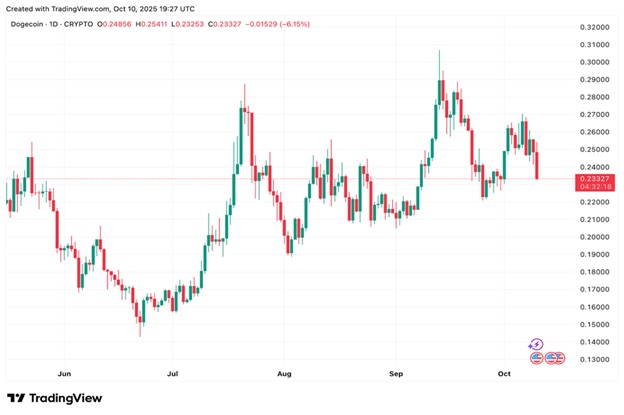
Dogecoin (DOGE)– On March 24, 2025, the opening price of DOGE was $0.172274, and the closing price was $0.176340. There was a day high and a day low of $0.177193 and $0.171011, respectively. This means that DOGE has increased in value of a very small amount.?

Solana (SOL)– On the same date, SOL opened with the price at $132.63 and ended the day at $143.17 with the highest of $144.81 and the lowest of $132.18. This implies a significant price increase in SOL.?

The two cryptos have held firm, with DOGE keeping its slow rise while SOL has edged up to a higher price point.

Lightchain AI Gains XRP Comparisons

?Lightchain AI (LCAI) is garnering attention in the cryptocurrency community, drawing comparisons to Ripple’s XRP due to its innovative approach and growth potential. While XRP has established itself in the cross-border payments sector, Lightchain AI distinguishes itself by integrating artificial intelligence with blockchain technology, enabling decentralized AI-driven computations.

This unique combination positions Lightchain AI to potentially revolutionize industries such as healthcare, finance, and logistics. The project’s successful presale, raising over $18 million at a price of $0.007 per token, reflects strong investor confidence. As AI continues to gain prominence, Lightchain AI’s fusion of AI and blockchain could offer significant advantages over traditional cryptocurrencies like XRP. ?

Why Lightchain AI is Next Big Thing in Crypto

Dogecoin and Solana have already shaken up the crypto world, but there’s a new contender you need to watch; Lightchain AI. This altcoin is making waves with its innovative approach and skyrocketing demand during its presale.

Positioned as a rising star in the competitive crypto space, Lightchain AI offers massive growth potential for investors hungry for high returns. If you’re looking for the next big opportunity, Lightchain AI is one to keep on your radar. The future is bright—don’t miss your chance to get in early!

https://lightchain.ai

https://lightchain.ai/lightchain-whitepaper.pdf

https://x.com/LightchainAI

https://t.me/LightchainProtocol