DD
MM
YYYY

PAGES

DD
MM
YYYY

spot_img

PAGES

Home Blog Page 1654

Elon Musk’s DOGE and Big Consulting Firms

0

A few days ago, I wrote that big consulting companies could be in trouble if Elon Musk’s DOGE (department of government efficiency) continues its acceleration in the public sector America: “I wonder how some of these firms will thrive, especially those tethered to the public sector, if this Musk-Trump playbook continues. DOGE is providing a case study that may hurt the prospects of these companies for years. Yes, if DOGE does this and it works, a template is born, and if you dig deeper, the public sector has disintermediated the works of big play consulting firms.”

Now, the business prophecy is here: ‘Executives at 10 of the largest U.S. consulting firms, including Ernst & Young and Booz Allen, are scrambling to arrange meetings with White House officials to justify their contracts…The meetings come ahead of this Friday’s deadline to cut the General Services Administration’s budget and has prompted firms to “defend the spend” by presenting detailed assessments of their projects. The firms are seeking to preserve lucrative revenue streams amid the growing push to eliminate non-essential government contracts.’

Good People, Trump is crashing all the parties.

Now, can we have DOGE in Nigeria?

Wirex Pay is Pioneering Stablecoin Payment that Bridges Blockchain Innovations and Real World Usability

0

Wirex Pay’s indeed a trailblazer in the stablecoin payment space, aiming to make blockchain practical for the average person. It’s not just hype—it’s got a solid foundation. Built by Wirex, a fintech player with a decade in the game and a user base of 6 million+, it leverages stablecoins to dodge crypto’s wild price swings while keeping transactions fast and cheap. The Zero Knowledge (ZK) tech under the hood is a big deal—think private, scalable blockchain ops that don’t choke under pressure.

The real-world hook is those non-custodial Visa cards. You’re holding your own keys, spending stablecoins at 80 million+ merchants globally—coffee shops, online stores, wherever Visa’s greenlit. Their U.S. push in February 2025 with Bridge integration sweetened the deal, adding seamless fiat ramps and bank connectivity.

Zero Knowledge (ZK) technology, at its core, is a cryptographic method that lets one party prove something is true to another party without revealing any extra details beyond the fact itself. Think of it like proving you know a secret password to unlock a door without ever saying the password out loud. In the blockchain world, where Wirex Pay uses it, ZK tech is a game-changer for privacy, efficiency, and scalability.

For Wirex Pay, ZK tech means a few big wins. First, privacy: transactions can be validated without exposing user details like wallet balances or payment specifics. Second, scalability: ZK rollups—where Wirex Pay likely leans—bundle hundreds of off-chain transactions into one succinct proof, then settle it on the blockchain (like Ethereum or their own Wirex Pay Chain).

This slashes costs and speeds things up compared to clogging the main network. Third, security: the math ensures no one can fake a proof without the right inputs, keeping the system tight. Picture it in action: you swipe your Wirex Pay Visa card at a store. ZK tech verifies you’ve got the stablecoin funds and the transaction’s legit, all without broadcasting your financial life to the world—or even to Wirex.

Wirex Pay’s impact on liquidity in decentralized finance (DeFi) hinges on its ability to integrate stablecoin payments with traditional finance, leveraging its blockchain-based infrastructure to enhance efficiency, accessibility, and user participation.

First, Wirex Pay’s gasless, on-chain transactions—powered by Polygon’s Zero Knowledge (ZK) technology—lower the cost of entry for users. Traditional DeFi platforms often suffer from high gas fees, especially on Ethereum, which can deter smaller players from providing liquidity. By eliminating these fees, Wirex Pay makes it cheaper to move stablecoins in and out of liquidity pools, potentially drawing in more liquidity providers (LPs). More LPs mean deeper pools, which can reduce slippage and stabilize prices during trades—key for DeFi’s usability.

Second, the non-custodial Visa card infrastructure is a bridge between DeFi and real-world spending. Users can spend stablecoins at over 80 million merchants globally, creating a practical use case that could drive demand for stablecoins held in DeFi protocols. Increased demand might incentivize users to lock more assets into liquidity pools to earn yield, boosting overall liquidity. For example, if you’re staking stablecoins in a Wirex Pay-compatible pool and spending them seamlessly, you’re more likely to keep funds in the ecosystem rather than cashing out to fiat.

Third, Wirex Pay’s node system and decentralized governance via the WPAY token could amplify liquidity indirectly. Node operators validate transactions and secure the network, earning rewards from a 20% chunk of the WPAY supply (2 billion tokens). This incentivizes participation, and as the network grows, so does its capacity to handle larger transaction volumes.

On the flip side, Wirex Pay’s impact isn’t guaranteed to be a net positive. DeFi liquidity often faces risks like impermanent loss, where LPs lose value if token prices shift dramatically. Wirex Pay’s stablecoin focus mitigates this somewhat, but if its integration with traditional finance pulls funds out of DeFi pools into merchant spending, liquidity could thin out instead. Plus, the platform’s reliance on Polygon’s ZK rollups, while efficient, ties its scalability to that ecosystem’s adoption—any hiccups there could stall growth.

Data from Wirex’s broader ecosystem offers clues: with 6 million users and a decade of bridging crypto and fiat, it’s got the reach to onboard new DeFi participants. If even a fraction of those users start supplying liquidity—say, through dual staking options pairing WPAY with ETH or BTC—total value locked (TVL) in DeFi could climb. For context, DeFi’s TVL hovered around $24 billion in 2023; a player like Wirex Pay, with its U.S. expansion in early 2025, could nudge that higher by making stablecoin liquidity more practical.

Ultimately, Wirex Pay could juice DeFi liquidity by slashing costs, linking crypto to real-world use, and incentivizing network participation. But it’s a double-edged sword—success depends on balancing DeFi retention with its fiat offramps, and the jury’s still out on how that plays out long-term. What do you think—will it flood DeFi with cash or siphon it off?

Concerns Over FAAC Remittance As NNPC Slashes Petrol Price to N860 Per Liter, Intensifying Competition With Dangote Refinery

0

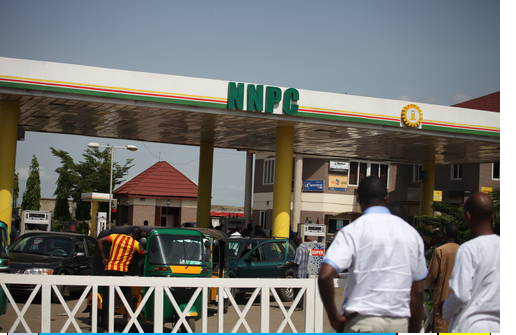
In a fresh move that has intensified Nigeria’s petrol price war, the Nigerian National Petroleum Company Limited (NNPC) has reduced the pump price of Premium Motor Spirit (PMS) to N860 per liter.

The new price, effective Monday, marks a significant drop from the previous average of N920 per liter, bringing some relief to millions of Nigerians grappling with the high cost of living.

The price cut by NNPC, the nation’s largest fuel supplier, follows a similar move by Dangote Petroleum Refinery and Petrochemicals Limited, which slashed its ex-depot price of petrol from N890 per liter to N825 last week. This marked Dangote’s second price reduction in February, sparking a wave of competitive pricing among private marketers.

Dangote, in a public notice, listed its partner off-takers prices at select filling stations in Lagos, with MRS selling petrol at N860 per liter, and AP and Heyden at N865 per liter. These moves have not only intensified competition but also pressured the NNPC to adjust its pricing strategy to maintain its market share.

However, as Nigerians express excitement over the lower prices, analysts are raising concerns over potential repercussions, particularly concerning the NNPC’s financial obligations to the Federation Account Allocation Committee (FAAC).

“The issue with this format is that NNPC will withhold some money that they are supposed to pay into the federation account. They cannot justify this reduction since most of their products are being imported and landing cost remain N927,” Johnson Kio said.

Before now, economists have expressed concerns that the NNPC’s price reduction could negatively impact its remittance to FAAC, where the company has reportedly struggled with consistency. This apprehension stems from the fact that the rehabilitated Port Harcourt Refinery has not yet fully started operations, meaning the NNPC still depends heavily on fuel importation to meet domestic demand.

Data from the January 2025 motor tanker vessel report highlights this reliance, showing that the NNPC imported 212,870,340 liters of petrol to Calabar and Lagos ports. With the landing cost of petrol products peaking at N927 per liter just weeks ago, analysts are questioning the economic viability of the NNPC’s latest price cut.

The NNPC’s FAAC remittance is critical to Nigeria’s fiscal stability, as federal, state, and local governments rely on these funds for budgetary allocations. Any shortfall could lead to disruptions in public sector funding, including salaries and infrastructure projects.

Is the Price Cut Sustainable?

While the price reduction has been welcomed by many, skepticism remains high. Many Nigerians recall past experiences where temporary price cuts were quickly followed by sharp hikes, often with minimal explanation.

The NNPC’s aggressive price cut appears to be a strategic response to maintain its dominance in the downstream market. However, given its reliance on imports and the high landing costs, the move may have financial implications for the state-owned company.

Energy experts have argued that the current price reduction might deepen this inconsistency, especially if the company continues to sell petrol at a loss.

Many believe that the sustainability of this price cut will depend on how quickly the Port Harcourt Refinery can come online and reduce import dependence. Without local refining capacity, the NNPC might find itself in a precarious financial situation.

For Nigerians, any reduction in petrol prices has a direct impact on the cost of transportation and goods. However, if the NNPC’s price cut is not economically sustainable, it could lead to a fresh cycle of market instability.

Market observers also warn that the price cut could lead to fuel shortages if the NNPC is unable to maintain import volumes at the current pricing level.

“”Under recovery”, “foregone margin”, “energy security cost”, and other grammars will soon start,” Dr. F. O. Ehiagwina noted.

Plinko Slot Indonesia: Is It a Game of Luck, or Is There a Strategy?

0

Slot games have become one of the main attractions in the world of online casinos, offering various themes and exciting mechanics. One game that has been gaining popularity in Indonesia is Plinko Slot. Inspired by the classic game often seen on TV shows, Plinko Slot combines elements of luck and potential strategies to maximize winnings.

However, the key question remains: Is plinko slot Indonesia purely a game of luck, or are there strategies that can improve your chances of winning? This article will explore how Plinko Slot works, the odds of winning, and tips for playing smarter.

What is Plinko Slot?

Plinko Slot is a randomized game where a ball falls through a triangular board filled with pegs that act as obstacles. Players place a bet before dropping the ball, and as it bounces off the pegs, it eventually lands in one of the prize slots at the bottom of the board.

How Plinko Slot Works

1. Players Select Their Bet

  • Before starting, players determine the amount they want to wager.

2.  Choosing the Risk Level

  • Many versions of Plinko Slot offer low, medium, and high-risk modes.
  • Higher risk levels come with larger potential winnings but also increase the chances of losing.

3. Dropping the Ball

  • After placing the bet, the ball is released from the top of the board and bounces off various pegs randomly.

4. Ball Lands in a Prize Slot

  • Each prize slot has a payout multiplier that determines how much the player wins based on their initial bet.

Payout & Winning Potential

– The center slots usually have lower multipliers, as the ball falls into these areas more frequently.
– The edge slots (far left and right) offer higher multipliers, but reaching these slots is much harder.
– Some versions of Plinko Slot also feature progressive jackpots, which can deliver massive payouts if the ball lands in specific slots.

Plinko Slot: A Game of Luck or a Playable Strategy?

Although Plinko Slot is fundamentally a game of luck, several factors can help players minimize risk and optimize winnings.

1. Understanding the Game Patterns

Plinko operates with a Random Number Generator (RNG), ensuring unpredictable results. However, some players attempt to analyze ball distribution and probability based on the number of pegs and the position of the prize slots.

2. Choosing the Right Risk Level

– For safer play – Choose the low-risk mode, where payouts are smaller but more frequent.
– For bigger wins – Opt for high-risk mode, which offers higher payouts but lower chances of success.

3. Managing Your Bankroll Wisely

– Set a betting limit for each session.
– Use the Martingale strategy carefully (increasing bets after a loss).
– Don’t chase losses—take a break if you experience consecutive losses.

4. Utilizing Bonuses and Promotions

Many online casinos in Indonesia offer welcome bonuses, cashback, and free spins for Plinko Slot. Taking advantage of these promotions can extend gameplay time without a major financial risk.

5. Playing at Casinos with a “Provably Fair” System

Some platforms use Provably Fair technology, which allows players to verify that the game outcomes are genuinely random and not manipulated by the casino.

Can Plinko Slot Be Manipulated?

A common question among new players is: Can Plinko Slot be manipulated or exploited?

– The answer: No.
Plinko Slot operates on RNG technology, meaning every outcome is completely random and cannot be predicted. Reputable online casinos are regulated to ensure fair play.

However, unlicensed casinos may potentially manipulate results, so players must be cautious when choosing where to play.

How to Choose a Safe Online Casino for Plinko Slot

To ensure a safe and rewarding gaming experience, make sure to choose an online casino that offers the following:

– An official license from regulators such as PAGCOR, Curacao, or Malta Gaming Authority.
– Secure payment options, including e-wallets, bank transfers, or cryptocurrency.
– Attractive bonuses and promotions to boost winning potential.
– Positive player reviews that indicate fairness and credibility.
– 24/7 customer support to assist with technical or transaction-related issues.

Plinko Slot vs. Traditional Slot Machines: Which Is More Profitable?

Feature Plinko Slot Traditional Slot Machines
Luck vs. Strategy Mostly luck, but with some risk management options Entirely RNG-based, no control over outcomes
Player Control Can choose risk levels and adjust betting patterns No control—outcomes are purely random
Jackpot Potential Some versions have progressive jackpots Most slots feature fixed or progressive jackpots
Game Variety Simple gameplay with a few betting options Wide variety of themes and bonus features
Excitement & Interaction Highly interactive as players watch the ball bounce Limited interaction—just spinning reels

From the comparison above, Plinko Slot is ideal for players who enjoy simple yet interactive gameplay and can adjust risk levels.

Conclusion: Should You Play Plinko Slot?

Plinko Slot offers entertainment, exciting winning opportunities, and a higher interaction level than traditional slot machines. While it is primarily luck-based, players can apply risk management and bankroll strategies to improve their chances of winning.

– If you’re looking for a game that is easy to play, allows betting adjustments, and offers a unique experience, Plinko Slot is an excellent choice.
– However, traditional slot machines might be better for you if you prefer games with more complex bonus features and deeper betting mechanics.

Recommendations for Indonesian Players:

– Start with small bets to understand the game patterns.
– Choose a licensed online casino that uses Provably Fair technology.
– Take advantage of bonuses and cashback to enhance your chances of winning.
– Play responsibly and never bet more than you can afford to lose.

By understanding how Plinko Slot works and applying the right strategies, you can enhance your enjoyment and winning potential in this exciting game!

Binance Exchange to Delist Non-MiCA Compliance Stablecoins by 31st March

0

Binance has announced that it will delist trading pairs involving stablecoins that don’t comply with the European Union’s Markets in Crypto-Assets (MiCA) framework for users in the European Economic Area (EEA) effective March 31, 2025. This move, detailed in a March 3, 2025, update from Binance, targets popular stablecoins like USDT, FDUSD, TUSD, USDP, DAI, AEUR, UST, USTC, and PAXG, which currently lack MiCA-compliant status.

The Markets in Crypto-Assets (MiCA) framework is the European Union’s ambitious attempt to regulate the Wild West of cryptocurrency, bringing clarity, consumer protection, and financial stability to the space. Passed in June 2023 after years of drafts and debates, MiCA is a comprehensive rulebook targeting crypto assets, issuers, and service providers within the 27-nation EU bloc (plus the broader European Economic Area, EEA).

It’s set to fully kick in by December 30, 2024, though some provisions, like stablecoin rules, started phasing in earlier—June 30, 2024, to be exact—which is why Binance is scrambling now in March 2025. The decision aligns with the EU’s push for stricter crypto regulations, requiring stablecoin issuers to meet standards like holding 1:1 liquid reserve, partnering with European banks, and passing regular audits—standards many existing stablecoins haven’t yet met.

For EEA users, this means spot and margin trading pairs with these non-compliant stablecoins will vanish by March 31, 2025, at 23:59 UTC. Binance isn’t banning custody outright—users can still hold, deposit, or withdraw these assets post-deadline—but trading functionality will be gutted. Leverage trading pairs will get the axe even earlier, on March 27, 2025, at 15:00 Beijing time, with automatic conversions to USDT and order cancellations to follow. Binance is nudging users toward MiCA-compliant alternatives like USDC or EURI, or even fiat EUR, via its Convert feature.

This isn’t Binance going rogue—it’s a reaction to MiCA’s phased rollout, with stablecoin rules tightening since June 2024. The framework’s endgame is full enforcement by December 2024, but exchanges like Binance, OKX (which ditched USDT pairs in 2024), and Uphold (delisting six stablecoins by July 2024) are preempting the March 31 cliff. MiCA’s core idea is to tame the crypto market without choking innovation. It splits crypto assets into three buckets: e-money tokens (EMTs, like stablecoins pegged to fiat), asset-referenced tokens (ARTs, stablecoins tied to broader assets), and everything else (think Bitcoin, Ethereum).

Stablecoins—EMTs and ARTs—face the toughest scrutiny because they’re marketed as steady value stores, and regulators fear a collapse (a? la TerraUSD in 2022) could ripple into traditional finance. Issuers of these “significant” stablecoins—think USDT or USDC if they hit scale—must hold 1:1 liquid reserve, partner with EU banks for custody, and submit to regular audits by the European Banking Authority (EBA).

Issuers need EU authorization as a crypto-asset service provider (CASP), not just an e-money license, and must be EU-based. Reserves: Full backing is required, but the mix can include cash, securities, or other assets—still liquid and audited. No fractional reserves allowed. Issuers must publish a whitepaper detailing the peg mechanism, risks, and governance, approved by regulators.

If an EMT or ART gets big—say, €5 billion in value, 10% of EU transactions, or systemic impact—it’s labeled “significant” by the EBA. Rules get tougher:
Higher capital requirements (up to 10% of reserves). Enhanced reporting to the EBA and European Securities and Markets Authority (ESMA). Caps on issuance or (trading) volume if regulators smell trouble—think TerraUSD’s 2022 crash as the nightmare they’re avoiding.

Liquidity could take a hit in the EEA if heavyweights like USDT fade, potentially spiking volatility or shifting volume to compliant coins. Non-EEA users? Untouched for now—business as usual. The real question is whether Tether and others scramble to comply or let Europe slip away. MiCA’s stablecoin rules aim to prevent runs (like Terra’s $40 billion wipeout), curb money laundering, and protect the euro’s turf. The EU handles €150 billion in stablecoin trades yearly—mostly USDT—and regulators worry unchecked growth could erode fiat sovereignty