DD
MM
YYYY

PAGES

DD
MM
YYYY

spot_img

PAGES

Home Blog Page 1663

How AI is Revolutionizing VIN Checks for Used Car Buyers

0

The Importance of VIN Checks in Used Car Buying

It is always advisable to take a closer look at the vehicle’s history whenever purchasing a used car in order not to have bad surprises. A VIN check tells you a little about its past, like its accident record, ownership history, and possible title problems. While it conventionally depends on static databases, the process for conducting a VIN check has begun to change with AI, becoming much faster, more accurate, and more accessible.

AI and Big Data: A Game-Changer for VIN Checks

Artificial intelligence now powers VIN lookups in real-time by drawing on a vast range of vehicle data. Rather than simply fetching records from a single database, these AI-driven systems cross-reference details from multiple sources, uncover inconsistencies, and identify potential fraud. For instance, they can flag suspicious odometer readings if discrepancies arise across different reports. Using tools like VinInspect, buyers can be confident that they have accurate, up-to-date information about a vehicle’s history before making a purchase. Learn more about decoding the VIN.

How AI Detects Hidden Vehicle History Issues

AI-powered VIN check systems go beyond basic record retrieval. They use predictive analytics and pattern recognition to detect issues that might go unnoticed in traditional reports. Here’s how:

  • Fraud Detection: AI can flag cases of VIN cloning, a scam where stolen cars are given false identities.
  • Accident Analysis: Machine learning models analyze accident reports and repair records to estimate the severity of past damage.
  • Title Verification: AI scans multiple databases to verify if a car has a salvage, rebuilt, or lemon title—even if a seller tries to hide it.

By leveraging these technologies, AI makes VIN checks more precise and comprehensive, helping buyers make informed decisions.

AI-Powered Mobile VIN Checks

And nowadays, with the rise of the AI-driven mobile application, scanning has become a no-brainer. Instead of manually typing that 17-character code, buying agents can simply run their smartphone camera lines to run the VIN barcode. AI draws it all out, instantly analyzes car history, and in real time renders a risk assessment in probability.

This immediate access to vehicle information lets buyers make swift yet informed decisions, even when physically inspecting a car.

The Role of AI in Predicting Future Vehicle Issues

AI doesn’t just analyze a car’s past but also predicts the potential future mechanical issues. By evaluating service records, mileage trends, and past accidents, AI can estimate:

  • The likelihood of engine or transmission failure
  • Potential safety risks based on recall data
  • Expected maintenance costs over time

This forward-looking approach helps buyers avoid unreliable vehicles and choose options that are likely to remain trouble-free.

Why AI-Enhanced VIN Checks Matter for Used Car Buyers

AI-driven VIN checks offer numerous advantages for car buyers:

  • Greater Accuracy – AI minimizes human errors in data processing.
  • Fraud Prevention – Detects suspicious activity that manual checks might miss.
  • Time Efficiency – AI-powered tools provide instant results, cutting down research time.
  • Cost Savings – Avoiding cars with hidden problems helps buyers save thousands in repairs.

The Future of AI in VIN Checks

As AI technology keeps on rising, even smarter features have to greet VIN checks. Some of their possible future aspects might include the following:

  • Integration with blockchain for tamper-proof vehicle history reports
  • AI-driven vehicle inspections using augmented reality (AR)
  • Voice-activated VIN lookups for hands-free car history searches

A combination of AI with VIN decoding is going to make buying a used car safer, smarter, and more transparent.

Final Thoughts

AI has revolutionized the VIN checks with much more confidence and security regarding the purchase of used cars. On the other hand, buyers using systems powered by AI, such as those from Vingurus, would be able to identify the possibility of odometer fraud, know the accident history, and rest assured that it’s really what it looks like with only a few clicks.

As the technology of AI evolves, so may expectations for even more innovative ways that we can conduct or have vehicle history checks assessed and verified. If buying a used car, embracing AI-powered VIN checks is a step toward smarter and safer buying decisions.


How to Improve Accuracy with Geocoding API

0

In today’s location-driven world, businesses and developers rely on precise geolocation data to enhance mapping services, optimize logistics, and deliver targeted content. Utilizing a robust geocode api can significantly improve the accuracy of converting addresses into geographic coordinates. In this blog post, we explore various strategies to improve accuracy when using a geocoding API. We will discuss the importance of reliable data sources, best practices for structuring address queries, methods for handling ambiguous or incomplete location data, and ways to refine results with additional parameters.

Understanding the Role of Data Sources in Geocoding API

The accuracy of geocoding largely depends on the quality and diversity of the underlying data sources. Reliable data sources ensure that the geocoding API can correctly interpret and translate address information into accurate coordinates. Here are some key aspects to consider:

  • Comprehensive Databases:
    The best geocoding APIs integrate data from extensive and up-to-date geographic databases. These databases include official postal records, mapping datasets, and even crowd-sourced contributions that improve coverage in less-documented areas.
  • Data Validation:
    Effective geocoding systems cross-reference multiple data sources to validate the accuracy of an address. This layered approach helps in reducing errors caused by outdated or inaccurate records.
  • Regional Specificity:
    Some databases offer more detailed information for specific regions. Selecting a geocoding service that emphasizes data quality for your target region can result in better performance and higher accuracy.
  • Regular Updates:
    Geographic data is constantly evolving with new developments, changes in street names, or modifications in postal codes. Services that frequently update their data repositories are better equipped to deliver precise results.

By understanding the role and quality of data sources, developers can select and configure geocoding APIs that provide reliable and accurate location data.

Best Practices for Structuring Address Queries Correctly

The way address queries are structured plays a crucial role in the effectiveness of a geocoding API. Clear and well-formatted queries reduce ambiguity and enhance the likelihood of accurate matches. Consider the following best practices:

  • Standardize Address Formats:
    Use a consistent format when submitting address queries. For example, include street names, numbers, cities, postal codes, and countries in a structured manner.

    • Example Format: “123 Main Street, Springfield, IL, 62704, USA”
  • Avoid Abbreviations:
    Unless widely recognized (like “USA” for the United States), avoid abbreviations that could lead to misinterpretation. Spelling out terms fully can enhance accuracy.
  • Utilize Known Data Fields:
    Where possible, structure queries using distinct fields for each component (street, city, state, etc.). This can be achieved through APIs that support multi-field inputs or by pre-processing addresses into individual components.
  • Input Validation:
    Implement validation checks in your application to catch common formatting errors before they are sent to the API. This helps in reducing errors and improving the quality of the data submitted.

Following these practices ensures that the geocoding API receives clear and precise queries, which significantly increases the chances of obtaining accurate geographic coordinates.

How to Handle Ambiguous or Incomplete Location Data

Not all address queries are created equal—ambiguous or incomplete data can pose challenges for geocoding systems. Here are several strategies to manage such situations:

  • Fallback Mechanisms:
    If an address query is ambiguous, consider implementing a fallback process that asks the user for additional details. This can be done through interactive forms or prompt dialogs that guide the user to provide missing information.
  • Confidence Scores:
    Many geocoding APIs return a confidence score along with the result, indicating how certain the system is about the match. Use these scores to determine if further verification is needed before using the data.
  • Partial Matches:
    When faced with incomplete data, the API might return multiple potential matches. Present these options to the user so they can select the correct one, or use additional heuristics to choose the most likely match automatically.
  • Error Handling:
    Design your application to handle cases where no match is found gracefully. Provide clear feedback and, if appropriate, suggestions on how to refine the input.
  • Data Enrichment:
    Enhance incomplete addresses by leveraging external databases or services that can fill in missing details. This might include consulting postal code directories or local administrative data sources.

Implementing these strategies ensures that even when the initial input is less than perfect, the geocoding process remains robust and user-friendly.

Using Additional Parameters to Refine Geocoding API Results

To further improve the precision of geocoding results, many APIs offer additional parameters that allow for more granular control over the query process. Here are some common parameters and how to use them effectively:

  • Bounding Boxes:
    Specify a geographic area (bounding box) within which the address is expected to lie. This is particularly useful when the same street name exists in multiple regions.
  • Language Settings:
    Set the preferred language for the returned results, which can be crucial for international applications. This ensures that the address components are returned in a format that is familiar to the user.
  • Region Biasing:
    Bias the search towards a specific region or country to avoid irrelevant matches. This can be particularly useful in countries with many similar address patterns.
  • Result Limits:
    Define the maximum number of results returned for ambiguous queries. This helps in managing the volume of data and ensuring that only the most relevant matches are processed.
  • Custom Filters:
    Some APIs allow custom filtering based on data attributes such as the type of location (residential, commercial, etc.) or the presence of specific landmarks. Using these filters can further narrow down the results to the most accurate match.

By leveraging these additional parameters, you can fine-tune your geocoding requests to meet the specific needs of your application, resulting in faster and more accurate outcomes.

In conclusion, improving accuracy with a geocoding API requires a combination of quality data sources, well-structured address queries, effective handling of ambiguous or incomplete data, and the use of additional parameters to refine results. By understanding and applying these best practices, developers can significantly enhance the reliability and performance of location-based services in their applications. Whether you’re developing a mapping tool, enhancing logistics operations, or building a location-aware mobile app, these strategies provide a solid foundation for accurate and efficient geocoding. More about “advanced geocoding techniques” you can read here and follow the recommended guidelines to keep your application running at peak performance in today’s data-centric environment.

How to Get Started with Instagram API Documentation

0

Embarking on your journey into the world of Instagram API can seem daunting at first, but with the right guidance and resources, it becomes a manageable and rewarding endeavor. Whether you’re a developer looking to integrate Instagram features into your application or a marketer aiming to harness social data, a well-documented API is your key to success. For a comprehensive overview of the Instagram API, you might find resources like https://data365.co/instagram useful. This resource provides a gateway to understanding the essentials without implying any affiliation with the tool itself. In this post, we’ll take a deep dive into the basics of Instagram API documentation, discuss how to set up a developer account, clarify the concepts behind API keys and authentication methods, explore basic endpoints for data retrieval, and highlight best practices for making API requests.

Setting Up Your Developer Account for Instagram API

Before you can interact with the Instagram API, you need to set up a developer account. This initial step ensures that you have the proper credentials and access to Instagram’s developer tools. Here’s a general overview of what you need to do:

  • Registration:
    Sign up for an account on the Instagram developer platform. This usually involves verifying your email and providing some basic information about yourself or your application.
  • Application Setup:
    Once registered, create a new application within the developer dashboard. This is where you’ll manage your API usage, set permissions, and access keys.
  • Review Policies:
    Familiarize yourself with Instagram’s developer policies and guidelines. These documents ensure that your usage complies with best practices and legal requirements.
  • Sandbox Mode:
    Many platforms offer a sandbox mode where you can test your application without affecting real users or live data. Utilize this feature to experiment and understand the API’s behavior before going live.

By following these steps, you lay the foundation for a secure and effective integration with Instagram. Each platform may have slight variations in their registration process, so it’s important to consult the latest documentation for any updates or additional requirements.

Understanding API Keys and Authentication Methods

API keys and authentication methods are the backbone of secure API interactions. They ensure that only authorized applications can access and modify data. Here’s an overview of the key concepts:

  • API Keys:
    An API key is a unique identifier that allows you to make requests to the Instagram API. It’s typically included in your HTTP headers or as a query parameter in your requests. Think of it as a digital pass that verifies your application’s identity.
  • Authentication Protocols:
    Instagram typically uses OAuth 2.0, a robust authentication framework that provides secure authorization without exposing user credentials. OAuth 2.0 involves:

    • Authorization Code Flow:
      This is a multi-step process where users grant permission to your application, which then exchanges an authorization code for an access token.
    • Access Tokens:
      Once authenticated, the API issues an access token, which must be sent with every request to verify that you have the necessary permissions.
  • Permission Scopes:
    When setting up authentication, you specify what kind of data your application can access. This is controlled by permission scopes, which may include access to user profiles, media, insights, and more.
  • Security Considerations:
    Ensure that you store your API keys securely. Avoid hardcoding them into your applications and use environment variables or secure vaults to manage sensitive credentials.

Understanding these elements not only secures your application but also enhances its reliability when interacting with Instagram’s services.

Exploring Basic Endpoints for Data Retrieval

Once you’ve set up your developer account and familiarized yourself with authentication, the next step is to explore the API endpoints available for data retrieval. Endpoints are the URLs where you send your API requests, and they provide access to specific data types. Some commonly used endpoints include:

  • User Information:
    Retrieve basic profile data, such as username, profile picture, and bio.
  • Media Endpoints:
    Access posts, images, videos, and associated metadata. This can include comments, likes, and timestamps.
  • Insights:
    For business accounts, endpoints provide detailed analytics on reach, impressions, and engagement rates.
  • Hashtags and Mentions:
    Fetch data related to specific hashtags or mentions, which can be useful for tracking trends and audience engagement.

By experimenting with these endpoints, you can build applications that pull in the exact data you need. For example, creating a dashboard that displays real-time social media metrics or a tool that automates content curation based on user interactions. The versatility of these endpoints allows you to tailor your application to meet a variety of needs.

Best Practices for Making API Requests

Making API requests efficiently and securely is crucial for the stability and performance of your application. Here are some best practices to consider:

  • Rate Limiting Awareness:
    Many APIs impose rate limits to prevent abuse. Always monitor your request counts and design your application to handle scenarios where you might hit these limits. Consider implementing exponential backoff strategies for retrying requests.
  • Error Handling:
    Develop a robust error-handling mechanism. This should include checking for common error codes such as 400 (bad request), 401 (unauthorized), and 429 (too many requests). Handling these errors gracefully can significantly improve the user experience.
  • Caching Responses:
    To reduce the number of API calls and improve performance, cache responses where appropriate. This not only saves on request quotas but also speeds up data retrieval for end-users.
  • Optimizing Requests:
    Only request the data you need by using query parameters and filtering options. This minimizes the payload size and enhances response times.
  • Logging and Monitoring:
    Keep logs of your API requests and responses. This helps in debugging issues and tracking down potential problems quickly.

More about “API request optimization” you can read here and follow the recommended guidelines for a smoother integration process.

In conclusion, getting started with Instagram API documentation involves a series of well-defined steps—from setting up your developer account and understanding API keys and authentication to exploring basic endpoints for data retrieval and implementing best practices for making API requests. By taking the time to understand these fundamental aspects, you not only secure your application but also unlock the full potential of Instagram’s rich data and functionality. Whether you’re building a new app or integrating social media features into an existing platform, these guidelines provide a solid foundation to ensure that your journey into API integration is both successful and secure. Embrace the learning process, experiment with different endpoints, and continuously refine your implementation strategies to stay ahead in the ever-evolving landscape of digital development.

Forget Dogecoin and Shiba Inu, This Is The Coin To Make New Millionaires In 2025

0

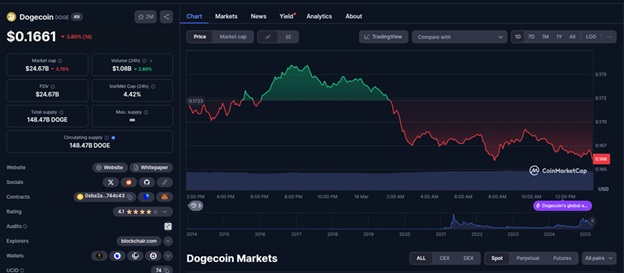
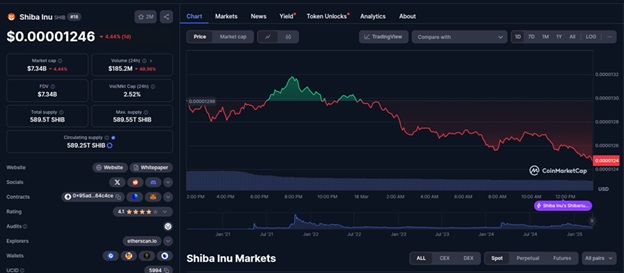
Due to Dogecoin (DOGE) and Shiba Inu (SHIB), meme coins are now significant players in the cryptocurrency landscape. This demonstrates how internet culture combined with supportive communities can transform joke projects into billion-dollar ventures. A surge of crypto millionaires emerged from their ascent, yet approaching 2025, investors are doubtful that meme coins will sustain their substantial returns.

Remittix (RTX) has gained attention in the evolving utility-driven market as a presale coin called the ‘New XRP’ because it focuses on solving real-world financial problems through blockchain technology unlike speculative assets like DOGE and SHIB. The meme coin era persists but shows signs of change as RTX emerges as the potential next altcoin to generate a wealth of crypto millionaires.

Dogecoin (DOGE): The Original Meme Coin That Keeps Fighting

The inception of Dogecoin as a comedic cryptocurrency project evolved into a remarkable achievement. Elon Musk’s backing enabled DOGE to achieve enormous gains in value because passionate community belief combined with enthusiasm can create significant financial outcomes. Dogecoin emerged as a prominent meme coin because it survived long due to its strong branding, market-oriented features, and user-friendly entry point.

Dogecoin faces a core issue because it lacks real-world functional value. It continues to gain merchant payment acceptance and customer engagement in Twitter payment-related topics. Later blockchain projects provide superior technical advantages than Dogecoin does. The future value of Dogecoin as a wealth-building asset for 2025 depends on major ecological enhancements to its system.

Shiba Inu (SHIB): More Than a Meme, But Can It Sustain Growth?

Shiba Inu emerged as the self-declared ‘Dogecoin killer’ by riding the meme-driven excitement to reach remarkable success. SHIB has broken away from meme status by establishing Shibarium to lower gas fees and enhance transaction speed through its layer-2 scaling solution. The Shiba Inu digital currency has entered both the NFT and DeFi sectors, establishing a more distinct ecosystem than Dogecoin.

Despite its evolution, SHIB faces challenges. The combination of SHIB’s ample circulating supply and recent sluggish price movement causes investors to doubt its ability to achieve another rapid growth phase. Investors are focusing on new projects with better fundamentals even though the SHIB Army continues to show strong support. Can SHIB continue its upward trajectory, or has its period of dominance as a leading altcoin reached its pinnacle?

Remittix: The ‘New XRP’ That’s Changing the Game

Remittix (RTX) is becoming significant in crypto payments while DOGE and SHIB fight for meme coin supremacy. Remittix is designed for efficient cross-border transactions, providing a quick and economical scalable solution beyond traditional financial systems, unlike meme coins that depend on hype.

Through Remittix’s blockchain system, users can transfer money worldwide without incurring the high fees that banks charge and their usual delays. This project’s real-world implementation renders it an exceptional selection for long-term investors seeking enduring investment opportunities. Unlike meme coins that struggle to maintain a sustainable presence, Remittix targets a real-world financial issue to secure its position for widespread use.

The presale numbers speak for themselves. The RTX project has secured almost $14 million in funding with 61.08% of its tokens sold which shows investors trust its goals. Remittix stands out from short-lived speculative coins because it is engineered for sustained success making it a top investment choice in 2025.

With a current price of $0.0734, Remittix positions itself as a major player in the trillion-dollar remittance market through its capability to merge crypto with fiat currencies. RTX has the potential to serve as the essential connection between conventional financial systems and the evolving world of cryptocurrency during financial institutions’ blockchain adoption phase.

Conclusion: Which Crypto Will Lead the Next Bull Run?

Meme coins like Dogecoin and Shiba Inu have shown massive profit potential, yet investors are now seeking sustainable value beyond mere hype as 2025 approaches. DOGE and SHIB still attract interest, but the future coins that will create millionaires will probably have real-world applications.

Remittix demonstrates fundamental strength as a project that has achieved impressive presale momentum. RTX combines innovative blockchain payment solutions with institutional-grade security and a strategic vision to position itself as a leading asset for future performance.

RTX may emerge as the defining cryptocurrency for the next financial surge. Can early investors turn their crypto investments into generational wealth? Remittix demonstrates potential beyond mere presale excitement as attention turns to high-utility projects, and it emerges as a leading candidate in digital finance. Will you be part of it?

Join the Remittix (RTX) presale and community:

Join Remittix (RTX) Presale

Join the Remittix (RTX) Community

Top 4 Altcoins with the Highest Upside in 2025: Rexas Finance Could Replicate Solana’s 3000% Rally from Its 2022 Dip

0

The crypto market is constantly changing, and new opportunities exist for investors looking for outsized returns. Solana’s recovery from its lows in 2022, when it surged over 3000%, proves that undervalued projects can still provide massive returns. Many altcoins show strength with the start of 2025, but one seems to be the possible Solana successor. Rexas Finance is still in the last stage of its presale but has positioned itself for exceptional growth due to its innovative asset tokenization model. Ideally, XRP, Cardano, and Dogecoin fight for supremacy, and looking ahead, they all have good reasons to increase their value in the forthcoming months.

Rexas Finance: The Next Solana?

Rexas Finance has emerged as one of the most promising 2025 altcoins. In the real-world asset tokenization process, Rexas is a leader in a rapidly growing industry. Users on the platform can help themselves by investing in tokenized real estate, artwork, gold, and silver, among other things, and opening new channels for investment and liquidity. Rexas Finance allows for fractional ownership, making wealth creation easier than most traditional finance and erecting high entry barriers. This approach is similar to the adoption phase of Solana, which drew a lot of value during its initial phases due to its ability to facilitate high-speed transactions. In the last round of presale, which is priced at $0.20, Rexas Finance has sold almost $47 million worth of tokens, about 90.90% of the total.

There is rising anticipation in the market for the scheduled launch on June 19, 2025 as Rexas Finance is expected to list at $0.25. The platform stands out from the competition by combining DeFi, AI tools, and a decentralized launchpad, establishing it as a leader in the new wave of blockchain adoption. Rexas Finance has the potential to ignite a Solana-like rally when it goes live, especially with the growing demand from institutional investors looking for blockchain-based financial solutions. With the increased adoption of tokenized digital assets, Rexas Finance will likely experience increased demand. The company’s infrastructure is decentralized and transparent, guaranteeing security and operational efficiency—key attributes for investors. As demand for early-mover advantage increases with the completion of the RXS presale, investors could experience a substantial upside once RXS is publicly traded. Should this momentum be sustained, Rexas Finance might outperform Solana’s 3000% surge and establish itself as a dominant player in blockchain-based asset management.

XRP: Regulatory Clarity Could Trigger a Major Rally

XRP is sitting at $2.59, with a 0.33% increase over the past day and 2.07% over the past week. Its market cap of $149 billion indicates good institutional interest, especially with XRP’s -8.48% and -16.13% drop over the last 2 months and 6 months, respectively. With the SEC lawsuit approaching resolution, a favorable outcome has the potential to spark a breakout and renewal in demand from banks and financial institutions. Historically, clarity in regulation has driven the price, and with Ripple’s potential victory, XRP’s price has the chance to exceed $3 by 2025, leveraged by the adoption of the currency in cross-border payments and increasing global usage.

Cardano: Smart Contract Expansion Could Drive Growth

Cardano (ADA) is currently priced at $0.77. Over the past week, it is up by 1.62%. It has nonetheless reduced by 3.67% in the past month and 20.09% within the previous 6 months. Cardano (ADA) currently has a market cap of $29.11 billion, which is a considerable amount. However, ADA is still far behind its all-time high of $3.1 in 2021. Despite this, the stability may signal accumulation before a breakout. Cardano’s layer-2 scaling solution, Hydra, improves the efficiency of transactions, making it more appealing to DeFi and smart contracts. If there is an increase in developer activity in 2025, ADA’s price can increase to the $1.50-$2 range. The market conditions would determine if the asset will attain its previous highs.

Dogecoin: The Meme Coin with Real Utility

Currently, Dogecoin (DOGE) is priced at $0.24, registering increases of 0.56% within 24 hrs as well as 0.71% within the week, though suffering losses of -13.93% over the past 30 days and -30.73% over the past 6 months. However, the asset still maintains a $35.97 billion market cap. In the past, DOGE reached its all-time high of $0.73 in 2021 due to social media hype and endorsements from Elon Musk. If retail investor sentiment returns alongside increased adoption of cryptocurrency by the general masses and payment systems in 2025, Dogecoin price may rise to $0.50, and if the market’s bullish momentum continues, it can go beyond previous all-time highs.

Conclusion: A Transformative Year for Altcoins

In 2025, investors can consider these four altcoins for investment diversification. Rexas Finance is most likely to capture Solana’s 3000% rally due to its strong tokenization of assets alongside an impressive presale. XRP appears ready to break out on bullish sentiment with clear regulations, Cardano could support a price recovery with network upgrades, and Dogecoin’s historical price swings make it a wild card but with strong upside potential. If the market conditions turn positive, these cryptocurrencies can have a lot of returns, which cements why they are the most desirable altcoins.


For more information about Rexas Finance (RXS) visit the links below:

Website: https://rexas.com

Win $1 Million Giveaway: https://bit.ly/Rexas1M

Whitepaper: https://rexas.com/rexas-whitepaper.pdf

Twitter/X: https://x.com/rexasfinance

Telegram: https://t.me/rexasfinance