DD
MM
YYYY

PAGES

DD
MM
YYYY

spot_img

PAGES

Home Blog Page 1664

The New Era in Decentralized Finance

0

Decentralized Finance (DeFi) is on the cusp of a transformative shift, often described as a new era in the financial landscape. This evolution is driven by advancements in blockchain technology, innovative protocols, and a growing recognition of DeFi’s potential to reshape how we interact with money and financial services. The DeFi ecosystem continues to mature, moving beyond its early experimental phase into a more robust, efficient, and inclusive system.

At its core, DeFi leverages decentralized networks—primarily built on platforms like Ethereum—to offer financial services without traditional intermediaries such as banks or brokers. This includes lending, borrowing, trading, and earning yields, all facilitated by smart contracts that execute automatically based on predefined rules. The promise of this new era lies in its ability to democratize access, reduce costs, and enhance transparency, appealing to both individual users and, increasingly, institutional players.

Recent developments suggest that DeFi is shedding its reliance on vanity metrics like Total Value Locked (TVL) as the sole indicator of success. Instead, the focus is shifting toward productive liquidity—capital that’s actively utilized in lending, staking, or other value-generating activities—and alignment with user commitment. Protocols are innovating to make capital more efficient, ensuring that DeFi isn’t just a speculative playground but a functional alternative to centralized finance.

Another hallmark of this new era is the integration of real-world assets (RWAs) and traditional finance elements into DeFi frameworks. Tokenized assets, such as stocks or real estate, are beginning to flow into decentralized platforms, potentially unlocking billions in liquidity. This convergence could bridge the gap between traditional markets and DeFi, making it a more mainstream option. Imagine a world where your stock portfolio earns yield on a DeFi lending platform while you borrow stablecoins for everyday use—this vision is inching closer to reality.

The process starts with an asset being digitized. For example, a $1 million property could be tokenized into 1 million tokens, each worth $1. Ownership is recorded on a blockchain, ensuring transparency and immutability. Smart contracts govern the tokens’ behavior—defining rights, transferability, or revenue distribution (like rental income in the case of real estate).

Once tokenized, these assets can flow into DeFi ecosystems, where they might be staked for yield, used to secure loans, or traded on decentralized exchanges (DEXs). Blockchains like Ethereum, Polygon, or Binance Smart Chain are commonly used due to their robust smart contract capabilities. Stablecoins often play a role too, pegging token values to fiat currencies to reduce volatility, making tokenized assets more practical for everyday use.

The rise of Layer 2 solutions, like rollups, is addressing scalability challenges, reducing transaction costs, and speeding up processes, which broadens DeFi’s appeal. Meanwhile, emerging sectors like “DeFAI” (Decentralized Finance with AI) are gaining traction, blending artificial intelligence with DeFi to create smarter, more adaptive financial tools. These innovations signal a future where DeFi is not only more accessible but also more intelligent and responsive to user needs.

However, this new era isn’t without hurdles. Security remains a concern, with smart contract vulnerabilities and hacks still posing risks. Regulatory uncertainty looms large as governments grapple with how to oversee a system designed to operate beyond centralized control. Despite these challenges, the momentum is clear: DeFi is evolving into a competitive, sustainable ecosystem that could redefine finance for the long term. This new era for DeFi is about practicality, inclusivity, and integration. It’s a shift from hype to utility, where the technology matures to meet real-world demands, potentially heralding a renaissance in how we manage and grow wealth.

Apple Faces Stricter Oversight in Germany After Court Rulings

0

Germany’s Federal Court of Justice (BGH) ruled that Apple holds significant influence across multiple markets and is appropriately subject to heightened monitoring due to competition concerns. This decision upholds a 2023 assessment by the German Federal Cartel Office, which designated Apple as a “company of paramount cross-market significance for competition.” As a result, Apple now faces stricter oversight from German authorities, aligning it with other tech giants like Alphabet (Google’s parent company) and Meta (Facebook’s parent) under Germany’s regulatory framework aimed at curbing market dominance.

The ruling stems from Apple’s powerful economic position and its vertically integrated ecosystem, including the App Store, which acts as a gatekeeper influencing the visibility and success of third-party apps. This designation allows the Cartel Office to potentially prohibit practices deemed anti-competitive, such as favoring Apple’s own services over competitors or tying the use of one Apple product to another.

Apple contested the decision, arguing that it faces robust competition in Germany and that its business model prioritizes user privacy and security—values it believes the court overlooked. However, the BGH rejected Apple’s appeal and declined its request to escalate the case to the European Court of Justice, solidifying the German regulator’s stance.

Apple will now face proactive scrutiny from the German Federal Cartel Office under Section 19a of the German Competition Act (GWB). This means the regulator can intervene earlier and more decisively to prevent anti-competitive behavior, rather than just reacting to violations after they occur. Practices like self-preferencing (e.g., promoting Apple’s own apps over rivals in the App Store) or restrictive App Store policies could be challenged or banned outright.

Apple may need to adjust its ecosystem strategies in Germany, such as loosening control over app distribution, payment systems, or data usage. For instance, rules mandating the use of Apple’s in-app payment system (with its 30% commission) could be deemed anti-competitive, forcing Apple to allow alternatives. This could erode some of its revenue streams and weaken the “walled garden” model that ties users to its services.

While this ruling is specific to Germany, it aligns with broader European Union efforts, like the Digital Markets Act (DMA), which also targets “gatekeeper” firms like Apple. The German decision could embolden other EU regulators to take similar actions, creating a ripple effect across the single market. It might also influence jurisdictions outside Europe, as regulators globally watch how major tech firms are handled.

Smaller app developers and competitors could benefit if Apple is forced to level the playing field. For example, opening up sideloading (installing apps outside the App Store) or allowing third-party payment options could reduce costs and barriers for developers, fostering innovation and diversity in the app market. Users might see more choices and potentially lower prices if competition increases, but there’s a flip side.

Apple argues its closed ecosystem ensures privacy and security—values that could be diluted if it’s compelled to open up. Consumers might face a trade-off between variety and the seamless, secure experience Apple touts. Apple’s failed appeal—and the rejection of its bid to escalate to the European Court of Justice—signals that its legal challenges to such regulations may struggle. This could lead to costly compliance efforts and fines if violations are found, impacting its bottom line in a key market.

The ruling reinforces a growing global trend of reining in Big Tech. With Alphabet and Meta already under similar scrutiny in Germany, this decision underscores that no tech giant is immune, potentially accelerating antitrust actions worldwide. In short, Apple’s designation as a company of “paramount cross-market significance” in Germany could reshape how it operates, challenge its profitable ecosystem, and set a tone for how tech dominance is tackled in the years ahead.

The Future of Digital Billing: Trends to Watch in 2025  

0

You are witnessing a significant transformation in digital billing, with artificial intelligence playing a more significant role than ever before. AI-driven billing systems allow businesses to automate complex invoicing, detect errors, and personalize pricing strategies. 

Instead of relying on manual processes, companies can use AI to predict customer behavior, adjust pricing models, and offer tailored billing solutions.  

For businesses using subscription-based models, AI ensures real-time billing adjustments. If a customer upgrades or downgrades their service, AI processes the changes instantly, eliminating the delays that traditional invoicing systems create. 

This shift toward automation allows businesses to manage billing more accurately while reducing the risk of disputes.  

AI also improves fraud detection by analyzing billing data for unusual patterns. If a transaction appears suspicious, AI can flag it before a financial loss occurs. As digital billing evolves, AI-driven solutions will continue streamlining operations and protecting revenue.  

Subscription Flexibility and Custom Pricing Models  

Customers expect more control over their billing options, which means businesses must offer flexible subscription models. 

In 2025, you will see a more significant shift toward customized billing structures that adapt to user needs. Instead of rigid pricing tiers, businesses will offer dynamic pricing, pay-as-you-go models, and hybrid subscription plans.  

For software providers, this means adjusting enterprise pricing for SaaS. Companies are moving away from fixed subscription rates and toward usage-based pricing, where customers pay for precisely what they use. 

This model makes SaaS platforms more accessible to businesses of all sizes, as smaller companies can start with lower costs and scale their spending as their needs grow.  

Enterprise pricing for SaaS is also becoming more predictive. AI and data analytics allow businesses to anticipate customer demand and adjust prices accordingly. 

Instead of setting static prices, SaaS providers are beginning to implement demand-based pricing that reflects real-time market conditions.  

Blockchain for Secure and Transparent Transactions  

Billing transparency is becoming a top priority, and blockchain technology is leading the way. With blockchain-based billing, every transaction is securely recorded in an immutable ledger, reducing the risk of fraud or billing errors. 

For businesses, this means greater security and trust in financial transactions. Customers will have access to verifiable billing records, making resolving disputes easier. 

Smart contracts automatically execute billing agreements and streamline payments by ensuring that transactions are processed without manual intervention.  

As regulatory requirements for digital billing continue to evolve, blockchain will play a key role in ensuring compliance. Businesses that adopt blockchain-based billing early will gain a competitive edge by offering customers secure and tamper-proof transaction records.  

The Growth of Embedded Payments  

You are also seeing a rise in embedded payment solutions, which allow businesses to integrate billing directly into their digital platforms. Instead of redirecting customers to third-party payment processors, embedded payments enable seamless transactions within applications and websites.  

This trend is significant for SaaS companies that want to simplify billing and reduce payment friction. When enterprise pricing for SaaS is integrated with embedded payments, customers can easily manage their subscriptions without leaving the platform.  

Embedded payments also support real-time billing, where customers are charged instantly based on usage. This is particularly valuable for businesses that offer on-demand services, allowing them to monetize their products more effectively.  

Conclusion: Adapting to the Future of Digital Billing  

Digital billing is evolving rapidly, and you must keep up with the latest trends to remain competitive. AI-driven billing, flexible subscription models, blockchain security, and embedded payments are shaping the future of transactions.  

Enterprise pricing for SaaS is moving toward dynamic and predictive models, ensuring that businesses only pay for what they use. Adopting these new strategies can improve customer satisfaction, streamline billing operations, and increase revenue.  

As 2025 approaches, businesses that adopts these trends will gain an advantage in a digital-first economy. If you invest in advanced billing solutions now, you will be prepared for the future of financial transactions.  

Kenyan Logistics Startup Leta Secures $5M to Enhance Logistics Efficiency Across Africa

0

Leta, a Kenyan supply chain and logistics software-as-a-service (SaaS) provider has secured $5 million in seed funding to scale its AI-driven platform designed to help businesses transport goods.

The funding round was led by European Venture Capital firm Speedinvest, one of Europe’s most active early-stage investors, with backing from Google’s Africa Investment Fund and Equator, an Africa-focused climate tech fund.

According to the African Development Bank (AfDB), African businesses face significantly higher transportation costs, paying up to four times the global average, impacting prices for essential goods and contributing to a 75% increase in product costs due to logistics.

Leta wants to change this narrative with its AI-powered platform, by reducing costs and enhancing efficiency for businesses across Africa. The startup’s cloud-based logistics solution is designed to help businesses cut transportation costs and optimize delivery operations. By integrating directly with Enterprise Resource Planning (ERP), Point-of-Sale (POS), and Order Management Systems (OMS), the platform processes live order data including product details, pricing, and stock-keeping units (SKUs)-to determine the most efficient dispatch strategy.

The Al-driven system streamlines fleet management by assigning deliveries to the nearest available vehicles while choosing the most suitable loading method either First-In, First-Out (FIFO) or Last-In, First-Out (LIFO). This eliminates reliance on manual logistics planning, ensuring businesses maximize vehicle capacity while reducing waste and inefficiencies.

Leta also enhances real-time route optimization, automatically identifying problematic roads due to construction, congestion, or security concerns. “Our Al continuously updates route data based on real-time challenges, ensuring that deliveries are both timely and cost-effective,” said founder and CEO Nick Joshi.

The logistics startup also helps businesses reduce fleet sizes without cutting deliveries, lowering fuel consumption and emissions, which explains Equator’s backing. “A company with 70 trucks saves about $30,000 monthly using Leta,” Joshi Claims. “We haven’t started tracking carbon emissions yet, but it is a key goal for this year.

In one of its success stories, Leta helped to improve efficient delivery service for one of the largest bakeries in Kenya, Kenafric Bakery. Before partnering with Leta, Kenafric Bakery faced numerous challenges in its delivery services in Kenya. Today, thanks to Leta’s innovative solutions, they save up to $20,000 in delivery costs every month.

Kenafric Bakery operates a large fleet of over 75 delivery trucks. Previously, these trucks were underutilized due to static delivery routes, often sending trucks out only 40% full. This inefficiency resulted in high delivery costs and reduced profit margins.

With Leta’s technology, Kenafric Bakery now optimizes delivery routes based on customer locations and truck capacities. This has led to reduced delivery times and allowed them to take six trucks off the road, significantly lowering operational costs.

Notably, Leta provides Kenafric Bakery with valuable insights into sales trends through our analytics dashboard. This enables them to forecast future demand effectively. The customer heatmap feature highlights areas with fewer customers, allowing targeted sales efforts and better inventory management.

While Kenafric Bakery previously had tracking devices on its trucks, it lacked comprehensive visibility across its fleet. With Let’s technology, they can now track deliveries in real time and review past routes taken by drivers.

This improved oversight helps monitor driver performance, prevent fuel wastage, and reduce misbehavior. By measuring actual kilometers traveled against expected distances, they can identify inefficiencies and optimize routes further.

The Nairobi-based startup currently powers over 35 major businesses, which includes brands like KFC and Diageo, and local giants like EABL and Gilani, optimizing 10,000+ daily trips across its five markets. Also, it is trusted by Africa’s leading companies such as Kingsmil, Liquor Shack, Shawarma Street Shopzetu, QuickMart, pizza Inn, Nando’s, Chupa Chap, Chicken Inn, Galito’s, Super Cosmetics, and Work It, amongst others.

Since securing its $3 million pre-seed round in 2022, Leta has expanded its presence in Kenya, Nigeria, Uganda, Zambia, and Zimbabwe. Over this period, the company’s deliveries have surged from 500,000 to 4.5 million, while cargo volume has increased from 20,000 tons to 150,000.

The number of vehicles managed on the platform has also risen from 2,000 to 7,400, resulting in a fivefold revenue increase. With fresh capital, Leta plans to further scale its technology and operations, reinforcing its mission to make logistics more cost-effective and sustainable across Africa.

Veteran Investor Who Sold BTC At $109K and Is Now Stocking Up on This Crypto – Hint It’s Not XRP

0

Expert cryptocurrency traders face continuous unpredictability in these markets. A professional market trader made news when he sold Bitcoin at $109K during an all-time high moment while specific trading platforms experienced low market activity. The unpredictable nature of markets allows an opportunity to profit massively through precise investments made at perfect times. Despite XRP’s past success, Remittix (RTX) is set to be the next big boom.

XRP’s Legal Hurdles and Price Momentum

The continuous adoption of XRP occurs despite its legal battle with the Securities and Exchange Commission (SEC) as it keeps its position among the top ten cryptos by market capitalization. The fact this investor favors Remittix over established high-profile alternatives indicates value in unknown yet promising projects that possess distinctive use cases and secure financing channels.

Ripple cannot dismiss the complicated SEC lawsuit which has pursued the company for multiple years. Top cryptocurrency exchanges considered delisting XRP due to the Ripple legal proceedings that contaminated its market potential.

The win of Donald Trump in the 2024 U.S. presidential election received positive crypto reactions from the public although the legal battle with Ripple remains unresolved. Mark Uyeda took over as SEC chair and this resulted in three high-profile lawsuits getting dismissed including a suit against Coinbase but the SEC continues to pursue Ripple legally.

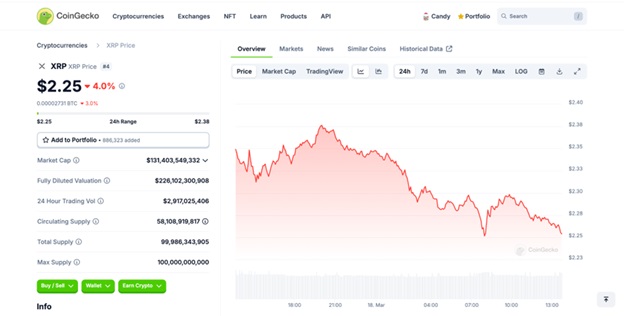
Despite the ongoing regulatory situation XRP continues to progress forward. Currently trading at $2.25,  XRP gained 5.64% throughout the recent week. Fundamental institutional validation arises from major asset management firm Franklin Templeton’s bid to seek regulatory approval for XRP exchange-traded funds (ETFs) because they view opportunities beyond existing challenges.

source: coingecko.com

Seven million XRP addresses have been achieved signifying increased interest from retail users. The market shows signs of bullish sentiment as analysts predict XRP can reach $15 beside major events like whale investment growth and indications about approval for spot XRP ETFs. A substantial whale transaction occurring on Bitfinex demonstrates the increasing interest of whales within the XRP market.

XRP shows potential for market expansion with a positive lawsuit outcome for Ripple but the experienced investor takes into account how ongoing legal challenges might cool the crypto’s price growth. Future XRP growth seems at risk because of delayed litigation processes or unsupportive court decisions.

Remittix Emerges as the Investor’s Crypto of Choice

Experienced market investors choose Remittix (RTX) instead of betting on a token currently involved in legal disputes. Remittix has collected close to $14 million in financial contributions from the sale of 520 million tokens at the token price of $0.0734.

The main focus of XRP lies in international payments whereas Remittix works to optimize and broaden worldwide remittance service operations. Using blockchain technology Remittix operates as a money transfer system which provides expedited service while showing complete transparency at affordable rates.

Remittix presents opportunities in the vast global remittance market which remains difficult to serve adequately according to traditional financial providers. Residents of this profitable yet underserved market segment encourage investment believing Remittix has potential to increase its value through its penetration into the trillion-dollar remittance sector. Hearings from the ongoing token sale indicate broader investor interest beyond this main supporter because multiple parties show readiness to support Remittix growth strategies.

The Potential for Remittix

Similar to XRP, Remittix functions as a payment-focused token which benefits from its new operational structure and reduced regulatory challenges. The present condition of remittance operations creates opportunities for innovative solutions because high fees aside from slow payment processing pervade the system. Remittix’s ability to link with major payment gateways and secure vital business relationships will drive RTX token valuation directly proportional to their actual market deployment.

The rising expectation of XRP-based ETF regulatory approvals indicates how institutional investors seek crypto assets that resolve practical problems. The company’s concentration on remittances as an established economic sector enables Remittix to bypass legal challenges allowing both retail speculators and institutional investors to approach the platform.

Remittix Is The future

A cryptocurrency will establish its success when it successfully transforms outdated financial systems while earning broader market adoption. During the peak of speculative madness in BTC the well-established investor demonstrated his ability to identify actual asset value along with market direction forecasting skills. The shift to Remittix (RTX) represents his conviction that the upcoming market boost will emerge from solving real-world problems instead of remaining trapped in legal uncertainties.

Discover PayFi with Remittix by checking out their presale here:

Website: https://remittix.io/

Socials: https://linktr.ee/remittix

Giveaway: https://gleam.io/FHtn5/250000-remittix-giveaway