DD
MM
YYYY

PAGES

DD
MM
YYYY

spot_img

PAGES

Home Blog Page 1666

Nvidia CEO Acknowledges Huawei As A Rising Threat Despite U.S. Sanctions

0

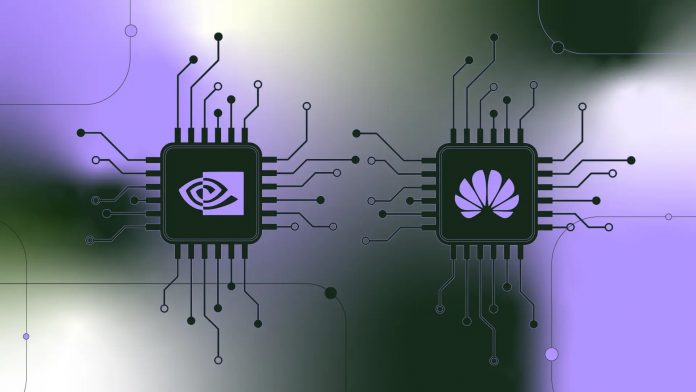
Chip giant Nvidia has formally acknowledged growing competition from Huawei, even as the Chinese telecommunications and technology company continues to operate under strict U.S. sanctions.

In its latest annual filing on Wednesday, Nvidia explicitly listed Huawei as a key competitor for the second consecutive year. This development marks a significant shift in the tech industry, as Huawei had not appeared in Nvidia’s competitor list for at least three years prior.

The move underscores Huawei’s rapid resurgence despite U.S. efforts to cripple its technological advancement.

Nvidia’s report highlights Huawei’s growing presence across critical sectors, including semiconductor chips, cloud services, computing processing, and networking products.

Speaking on the competitive landscape, Nvidia’s CEO Jensen Huang acknowledged the increasing challenge posed by Chinese firms, particularly Huawei. In an interview with CNBC’s Jon Fortt on Wednesday, Huang described Huawei as “vigorous and very, very competitive,” emphasizing that China’s domestic tech industry has remained resilient despite external pressures.

“There’s a fair amount of competition in China.

“Huawei, other companies, are … quite vigorous and very, very competitive,” Huang said.

U.S. Sanctions and Huawei’s Remarkable Defiance

Huawei’s continued growth is particularly striking given the heavy sanctions imposed by the United States since 2019. The U.S. government blacklisted Huawei over alleged national security concerns, accusing the company of having close ties to the Chinese government and military. These sanctions effectively cut Huawei off from critical American technology, including advanced semiconductor chips, software, and essential hardware components.

The restrictions severely disrupted Huawei’s operations, especially its lead role in the 5G rollout and once-dominant smartphone division, which relied heavily on U.S.-made processors and Google’s Android operating system. By 2021, Huawei’s revenue had plummeted by nearly 29%, and it was widely believed that the company’s days as a global tech powerhouse were numbered.

However, Huawei has stunned the world by finding ways to circumvent these restrictions and rebuild its technological capabilities. The company poured billions into domestic research and development, accelerating efforts to create homegrown alternatives to Western technology. Its most significant breakthrough came in semiconductor chip design, a sector long dominated by U.S. firms like Nvidia, Qualcomm, and Intel.

Despite being banned from acquiring advanced chips from American suppliers, Huawei, through its chip-design arm HiSilicon, managed to develop its own cutting-edge processors. The company’s Mate 60 Pro smartphone, released in 2023, featured a breakthrough semiconductor chip that enabled 5G-like speeds, shocking industry analysts who believed Huawei lacked the capacity to manufacture such advanced chips without U.S. technology.

Huawei’s comeback was not limited to hardware alone. The company recognized the need to develop its own software ecosystem after being banned from using Google’s Android operating system. In response, Huawei accelerated the development of HarmonyOS, a proprietary operating system initially designed for smart devices. By early 2025, Huawei unveiled HarmonyOS NEXT, its first fully self-developed operating system, marking a major milestone in China’s push for technological independence.

With HarmonyOS NEXT, Huawei effectively eliminated its reliance on U.S. software, a move that further strengthened its position in the global tech market. The operating system’s integration into the newly launched Mate 70 series signified a new era for Huawei’s smartphone division, proving that the company could not only survive but also compete head-on with industry giants like Apple and Samsung.

The fact that Nvidia, the world’s leading AI chip manufacturer, has formally recognized Huawei as a major competitor suggests that Huawei’s influence in semiconductors and AI computing is growing at an unprecedented pace.

While Nvidia still dominates the market for AI-focused chips, Huawei has aggressively expanded its own AI computing capabilities, investing heavily in data centers, AI-driven cloud services, and networking infrastructure. This expansion is particularly concerning for U.S. policymakers, as it signals that China is rapidly closing the gap in areas where the U.S. previously held an undisputed technological advantage.

Nvidia’s concerns also reflect the wider battle for technological supremacy between the U.S. and China. The Biden administration tightened export controls, restricting American companies from selling AI chips and advanced semiconductor manufacturing tools to China. However, Huawei’s ability to navigate these restrictions and continue its rise underlines that U.S. sanctions are losing their effectiveness.

The rivalry between Huawei and Nvidia is expected to escalate in the coming years, particularly in the fields of AI computing, cloud services, and semiconductor innovation.

Solana vs Remittix vs Ethereum: What Crypto Should You Be Investing In For A Solid Return This Cycle?

0

Investors frequently debate which altcoins can deliver a reliable payoff during uncertain market conditions. Three names repeatedly come up, Solana (SOL), Remittix (RTX) and Ethereum (ETH). Each offers distinct advantages and pitfalls that can shape their performance this cycle. Solana touts rapid, low-cost transactions, Ethereum remains the go-to DeFi and NFT heavyweight and Remittix has soared in presale for focusing on bridging crypto and real-world money transfers. Below, we examine each in turn before concluding where many see the most practical path to stable gains.

Solana – Speed and dApp Potential

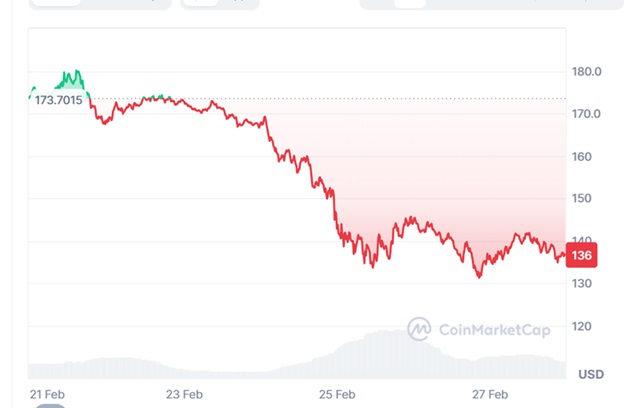
Solana trades near $137 with about $3.75 billion in 24-hour volume, according to aggregator data. Its rapid transaction speeds and minimal fees once powered a flourishing DeFi and NFT ecosystem.

SOL’s last week chart: coinmarketcap

However, intermittent network slowdowns and performance hiccups have cooled some early enthusiasm. Bulls argue these issues can be resolved and highlight the chain’s active developer base, which continues rolling out dApps for DeFi, gaming and beyond.

If Solana finalizes improvements that ensure reliability, renewed user adoption could propel SOL higher. Yet skeptics point out that lingering doubts about stability may hinder large-scale expansions. The coin’s success likely hinges on capturing more mainstream dApp traffic a feat some watchers say is possible, provided Solana resolves its network woes in time.

Ethereum – DeFi Mainstay With High Fees

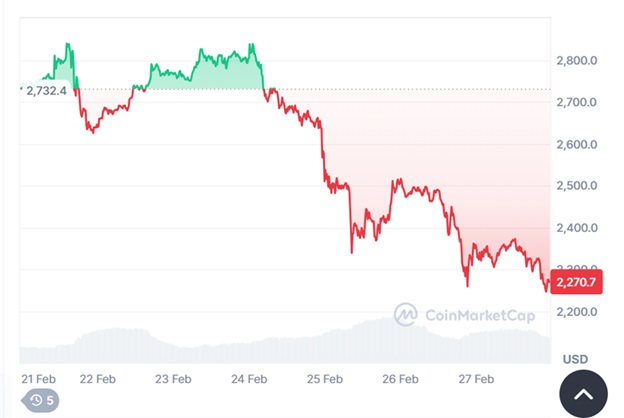
Ethereum remains the bedrock of decentralized finance and NFT projects, trading near $2,270 and logging around $24 billion in daily volume, aggregator data shows. Its massive developer community drives an ever-expanding portfolio of dApps, from lending protocols to NFT marketplaces.

ETH’s last week chart: Coinmarketcap

Despite this, ongoing complaints about high gas fees and slower upgrades can deter new entrants. Enthusiasts remain bullish, believing that forthcoming layer-2 solutions will slash transaction costs and reignite user adoption. However, if aggregator data continues revealing slower DeFi inflows, Ethereum’s near-term upside might be capped.

Long-range supporters argue the chain’s institutional backing and developer strength will prevail over short-term concerns, but potential growth could be more measured compared to smaller alts that solve immediate user problems at lower costs.

Remittix, PayFi Emphasis and $13 Million Presale

Remittix (RTX) offers a different angle, targeting the $190 trillion global remittance market rather than incremental chain or comedic marketing. By simplifying crypto-to-fiat swaps, Remittix aims to let freelancers, migrant workers and unbanked populations bypass 5–10% wire fees.

This practical approach resonates well beyond traditional DeFi circles, evident in Remittix’s robust presale haul of $13 million at a token price of $0.0694. Observers note that bridging local currency can attract a much wider base of everyday users than incremental chain updates. The team also locks liquidity for three years and renounces the contract post-presale, aiming to address rug-pull fears.

Critics acknowledge the need for licensing, agent networks and user-friendly mobile apps. Yet bridging day-to-day finances often resonates more than advanced yield strategies or partial expansions. Interested investors can find presale details at Remittix, with official news and community links at Linktree.

Charting A Path For This Cycle’s Gains

Solana vs Remittix vs Ethereum each showcases a different blueprint for winning over users. Solana banks on low fees and speed but must assure reliability to bring skeptics back, especially after past network slowdowns. Ethereum commands a deep pool of liquidity, but high gas costs and a delayed upgrade path could curb short-term upside.

Remittix (RTX) leans on a PayFi narrative that addresses a massive remittance sector roughly $190 trillion representing a universal need that comedic or purely incremental tokens often ignore. This direct user benefit underpins its $13 million presale success. While no coin escapes risk, bridging everyday money flows can yield more consistent adoption than comedic or incremental expansions alone.

If speed and cheap transactions appeal to you, Solana might be a decent bet once it stabilizes. If you believe DeFi’s foundation will outlast short-term fee complaints, Ethereum remains a solid choice. However, if bridging local currency resonates more than either chain-based approach, Remittix stands poised to deliver a real-world solution that can garner mainstream traction.

Discover the future of PayFi with Remittix by checking out their presale here:

Website: https://remittix.io/

Socials: https://linktr.ee/remittix

Businesses on Stripe Generated $1.4 Trillion in Total Payment Volume in 2024

0

Stripe, an online and in-person payment processing and financial solution for businesses of all sizes, has announced that businesses on its platform generated $1.4 trillion in total payment volume in 2024, up 38% from the prior year, and reaching a scale equivalent to around 1.3% of global GDP.

The company attributed part of last year’s rapid growth to its long-standing investments in building machine learning and artificial intelligence into its products.

This bet seems to be paying off, after the company disclosed that it has continued to increase revenue for existing customers, encouraging more businesses to switch to Stripe, and helping new companies reach significant scale unprecedentedly quickly.

Stripe anticipates that future growth rates will fluctuate and is as enthusiastic as ever about the long-term trends in the internet economy.

Announcing this feat in its annual newsletter, the company wrote,

Stripe was profitable in 2024, and we expect to be so in 2025 and beyond. Durable profitability allows us to plow back much of our operating earnings into research and development. In each of the last six years, Stripe has reinvested a much higher proportion of our earnings in R&D than any comparable company. We believe this ability will prove particularly important in the coming years, as stablecoins, Al, and other forces reshape the landscape. Stripe’s growth to date is evidence of the intense market demand for programmable financial services. The associated transformation is still early.

Stripe Billing is an example of such an investment bearing fruit. Over the last year, Billing was designated as a market leader in its own right by both Forrester and Gartner, recognizing its power and maturity. As we forecast in our 2023 letter, Stripe’s Revenue and Finance Automation Suite, with Billing at its core, has now passed a $500 million revenue run rate. Billing is being used by more than 300,000 companies, manages nearly 200 million active subscriptions, and is emerging as the revenue engine of the AI era.”

Stripe serves a diverse range of businesses across the economic spectrum, from leading corporations. It is worth noting that half of the Fortune 100 rely on its services to rapidly expanding companies, including 80% of the Forbes Cloud 100 and 78% of the Forbes AI 50.

Additionally, Stripe plays a crucial role in supporting new ventures, with one in six newly formed Delaware corporations incorporated through Stripe Atlas. Regardless of their size, Stripe’s customers share a common trait, exceptional growth. Collectively, the revenue processed by businesses on Stripe is increasing at a rate seven times faster than that of all companies in the S&P 500.

In many cases, companies are using Stripe to reinvent their business models. In others, they’re simply looking to increase their revenue from existing activities with striking results. More so, ecosystems like Stripe support cash PDF invoice receipt template which simplify documentations and reconciliations.

Some examples  include:

Hertz moved its payments to Stripe in 2024. The company has since seen a 4% increase in authorization rates for its online payments.

Turo, the world’s largest car-sharing marketplace, used Stripe Optimized Checkout Suite and saw a 4.7% increase in recaptured revenue—equivalent to an additional $114 million each year.

Intercom increased conversion by 2.1% and saved countless developer hours after moving to Stripe Billing.

Forbes switched to Stripe to manage its subscription payments, and it has seen a 23% uplift in revenue in the past 6 months alone.

News Corp Australia, the parent company of Sky News Australia, has seen a 5% increase in authorization rates. It has also retained more than 10,000 readers that would have otherwise inadvertently churned.

Looking Ahead

Stripe has expressed readiness to be well-positioned, to serve the next chapter of the economy. The company noted that more than 700 AI agent startups launched on its platform last year, a figure that it expects will be substantially eclipsed by the total in 2025.

Nvidia Drops Out of the $3tn Club as Shares Slide, Leaving Only Apple With That Valuation

0
Nvidia chip

Nvidia has lost its place in the exclusive $3 trillion market cap club, leaving Apple as the only publicly traded company still holding that valuation.

The decline comes as Nvidia’s stock tumbled in the wake of its latest earnings report, sparking renewed concerns over whether the chipmaker’s dominance in the AI industry is beginning to face real challenges.

After Nvidia’s shares dropped 8.5% on Thursday, the company saw its market capitalization shrink to $2.94 trillion, wiping out an estimated $273 billion in value in just one day. Although the stock rebounded slightly on Friday, gaining about 1%, it was not enough to restore Nvidia’s previous position above the $3 trillion mark.

This steep decline highlights that Nvidia is not yet free from the lingering effects of DeepSeek’s emergence, a development that has sent ripples through the semiconductor industry and significantly impacted Nvidia’s stock in recent months.

The growing influence of DeepSeek, an AI research and semiconductor company backed by China’s leading tech giants, has raised concerns over Nvidia’s long-term dominance in the AI chip sector.

DeepSeek, which made headlines late last year, has been aggressively developing high-performance AI chips that are being positioned as direct competitors to Nvidia’s GPUs. The company, reportedly supported by Alibaba, Tencent, and other Chinese investors, aims to create advanced AI processing units that bypass U.S. sanctions on semiconductor exports to China.

As a result, the emergence of DeepSeek has been viewed as a potential game-changer in the AI and semiconductor industries, as it introduces a powerful new competitor into a market that Nvidia has long dominated. Investors reacted swiftly when news of DeepSeek’s advancements began circulating in late 2024, leading to a brief tech stock sell-off that affected major U.S. chipmakers, including Nvidia and AMD.

For Nvidia, this was particularly alarming given that China accounts for a significant portion of its AI chip sales. The company has been struggling with export restrictions imposed by the U.S. government, limiting its ability to sell its most advanced GPUs to Chinese firms. DeepSeek’s rapid progress presents an additional challenge, as it reduces China’s dependence on Nvidia’s products altogether.

The fear that DeepSeek could capture a sizable market share in China has weighed heavily on Nvidia’s stock, contributing to its recent volatility. Analysts have pointed out that while Nvidia still leads in terms of AI chip performance, the geopolitical landscape and increasing competition from Chinese firms could threaten its long-term growth prospects.

Even before the DeepSeek threat materialized, Nvidia had been facing mounting concerns from investors over several key issues, including:

  1. The potential for stricter U.S. export controls on AI chips, which could further limit Nvidia’s ability to sell to key international markets.
  2. Growing fears that AI models are becoming more efficient, reducing the need for the most powerful GPUs that Nvidia specializes in producing.
  3. Worries about a slowdown in AI infrastructure investment, particularly from large cloud service providers like Microsoft, Google, and Amazon, which account for a significant chunk of Nvidia’s revenue.

These concerns have led to increased profit-taking among investors, as many seek to lock in gains after Nvidia’s historic stock surge in 2023 and 2024. The latest earnings report, while strong, failed to fully ease worries about the company’s future growth trajectory.

Despite the stock decline, Nvidia’s latest earnings report was solid, with the company delivering results that exceeded analyst expectations.

Revenue for the most recent quarter came in at $39.33 billion, marking a 78% increase from the previous year. Nvidia’s data center revenue alone surged 93%, reaching nearly $36 billion, a reflection of the continued demand for its AI chips.

CEO Jensen Huang reassured investors that the company’s outlook remains strong, particularly as next-generation AI models require even more processing power. He explained that AI models are evolving to think and reason step by step, a process that demands significantly higher computational capabilities.

“The amount of computation necessary to do that reasoning process is 100 times more than what we used to do,Huang told CNBC in an interview.

Additionally, Nvidia confirmed that production issues for its upcoming Blackwell chip have largely been resolved, setting the stage for a strong start to fiscal 2026. However, even with these reassurances, the stock continued to slide, underscoring the broader concerns hanging over the semiconductor industry.

Semiconductor Challenges and AMD’s Struggles

Nvidia’s struggles are not occurring in isolation. The broader semiconductor sector has been under pressure, with other major chipmakers also experiencing significant stock declines.

AMD, one of Nvidia’s biggest competitors, has been particularly hard hit. The company’s stock has dropped over 10% this week and is now down more than 13% since early February. The sell-off was triggered by a disappointing fourth-quarter earnings report, which showed that AMD’s data center revenue fell short of expectations.

The weaker-than-expected results have fueled speculation that AMD is struggling to compete with Nvidia in the AI chip market, further reinforcing Nvidia’s dominance in the sector. However, given the rapid developments in AI and the emergence of new competitors like DeepSeek, Nvidia’s position at the top is no longer as secure as it once was.

However, Nvidia’s stock is still worth five times more than it was two years ago, at the start of the generative AI boom.

While the short-term sell-off reflects concerns about competition, geopolitical risks, and slowing AI investment, many analysts believe that Nvidia remains well-positioned to capitalize on the continued expansion of AI technologies.

Still, the question remains: Can Nvidia quickly bounce back and reclaim its $3 trillion valuation, or is this the beginning of a more prolonged correction?

Meta Plans to Launch Standalone AI App to Compete With OpenAI, Google

0

Tech giant Meta is reportedly planning to launch a standalone AI app in the second quarter (Q2) of 2025, to compete with OpenAI’s ChatGPT and Google’s Gemini.

According to CNBC, the new app could launch as early as the company’s next fiscal quarter (April–June).

Currently, Meta AI is integrated into the company’s platforms, including Facebook and WhatsApp, as well as accessible via a website. The move to a dedicated app signals Meta’s broader ambitions in the AI space. This comes as the company prepares to invest a staggering $200 billion in a new data center for its AI initiatives.

In addition to the standalone app, Meta is planning to test a paid subscription service for Meta AI, which will offer users unspecified premium features. However, pricing details for this service remain unknown.

With over 700 million monthly active users, Meta AI is a key part of the company’s AI strategy. Meta has also been investing heavily in open-source AI models like Llama, aiming to build an ecosystem that could rival OpenAI. The company is set to host its first AI-focused developer conference, LlamaCon, in late April, and will hold a dedicated AI event on April 29th.

“This is going to be the year when a highly intelligent and personalized AI assistant reaches more than 1 billion people, and I expect Meta AI to be that leading AI assistant,” CEO Mark Zuckerberg told analysts during the company’s fourth-quarter earnings call in January.

In response to Meta’s launch of a standalone AI App, OpenAI CEO Sam Altman jokingly remarked, “ok fine maybe we’ll do a social app.” Unlike rival generative AI tools, Meta AI is currently available to users via a website and the company’s apps such as Facebook and WhatsApp.

The company’s finance chief Susan Li told analysts in January that while the company’s AI efforts are focused on “building a great consumer experience,” there are “pretty clear monetization opportunities here over time, including paid recommendations and including a premium offering.”

Notably, Meta’s plan to roll out a standalone AI chatbot follows similar efforts by Google and Elon Musk’s xAI. The two recently released individual apps for their respective digital assistants Gemini and Grok.

In February 2025, reports revealed that Google pulled its AI assistant Gemini from the main Google app for iOS devices, a move to encourage users to download the standalone app instead. This move would allow Google to more directly compete with other consumer-facing AI chatbots like ChatGPT, Claude, or Perplexity.  The tech giant alerted customers to the change via an email that warned “Gemini is no longer available in the Google app.”

On the other hand, Elon Musk-owned xAI debuted an official Grok iOS app along with a dedicated website, expanding the digital assistant beyond Musk’s social media service, X.

Meta’s AI Expansion: What It Means for the Chatbot Space

Meta’s move to launch a standalone AI app and test a paid subscription service signals a significant shift in the chatbot space.

Here’s what it could mean:

Increased Competition Among AI Chatbots

By introducing a dedicated Meta AI app, Meta is positioning itself as a direct competitor to OpenAI’s ChatGPT and Google’s Gemini. This move could intensify the race to dominate the AI assistant market, forcing competitors to innovate faster and enhance their offerings.

Monetization of AI Assistants

The planned paid subscription service suggests that Meta sees a viable revenue model in premium AI features. This could push other AI companies to explore similar monetization strategies, possibly leading to a new wave of AI-powered paid services.

Looking Ahead

Meta’s aggressive push into AI signifies a major transformation in how chatbots are positioned in the market.

Overall, the company’s expansion into standalone AI signals a more competitive, monetized, and ecosystem-driven chatbot space, likely reshaping how AI assistants are used and commercialized.