DD
MM
YYYY

PAGES

DD
MM
YYYY

spot_img

PAGES

Home Blog Page 17

Scale AI Sues U.S. Department of Defense Over $708m AI Data Contract

0

Meta-backed artificial intelligence training firm Scale AI is suing the U.S. Department of Defense in a case that could involve classified information, according to court filings.

The complaint, filed on January 30 in the U.S. Court of Federal Claims, is largely under seal. One of the few publicly available documents indicates that materials in the case are expected to include information classified at the “secret/no foreign” level. The United States is the only named defendant.

Another AI company, Enabled Intelligence, has joined the case as an intervenor defendant, a third party that voluntarily enters litigation to protect its interests.

Scale declined to comment directly on the litigation, saying only that it “relates to a recent procurement decision.”

“Scale AI stands firmly with Secretary Hegseth and the Department of War in their mission to get frontier AI capabilities into the hands of warfighters. We are committed to ensuring the procurement process reflects the high standards required for our nation’s most critical AI initiatives,” a spokesperson said.

Attorneys for Enabled Intelligence and the Defense Department did not respond to requests for comment.

Disputed $708 Million Contract

The lawsuit follows Scale’s unsuccessful bid for a contract worth up to $708 million from the National Geospatial-Intelligence Agency, a DoD component. The contract, awarded to Enabled Intelligence, could span up to seven years and represents the agency’s largest data-training agreement to date.

The award includes work supporting Maven, the Pentagon’s flagship AI initiative aimed at improving analysis of imagery and geospatial intelligence.

Scale filed a bid protest with the Government Accountability Office in late December, challenging the procurement decision. The GAO dismissed the protest in late January, two days before Scale filed its lawsuit in federal court. The GAO typically does not publish detailed information about routine dismissals.

In 2024, Scale had secured a separate $24 million, one-year contract from the same agency for data labeling services tied to Maven. The loss of the larger follow-on contract appears to have triggered the dispute.

Because most filings remain sealed, it is unclear whether Scale is seeking to overturn the contract award, obtain monetary damages, or compel a new procurement review.

Scale’s Expanding Defense Footprint

Scale has signed multiple multimillion-dollar agreements with the Defense Department since 2020, positioning itself as a key supplier of AI training data and related services.

In March, the company announced a collaboration with defense technology firm Anduril Industries and Microsoft to deploy AI agents within the U.S. military under a DoD initiative known as “Thunderforge.” In August, Scale disclosed a $99 million Army contract to develop AI tools.

The company built its reputation through data labeling services that train large language models and computer vision systems, supporting technology firms such as Google and Meta Platforms.

In June, Meta invested $14.3 billion in Scale in exchange for a 49% stake, marking one of the largest single investments in an AI infrastructure provider.

Scale’s former chief executive, Alexandr Wang, wrote an open letter to President Donald Trump after his second inauguration outlining policy recommendations to accelerate U.S. AI development. In the letter, Wang urged greater federal spending on data and computing infrastructure and highlighted Scale’s defense work.

Wang later left Scale to join Meta’s Superintelligence Labs as chief AI officer and attended the president’s AI-focused dinner at the White House in September.

The lawsuit places Scale in a delicate position. The company is both a contractor seeking expanded defense work and a litigant challenging a procurement decision tied to a highly sensitive national security program.

The dispute comes at a time of transition for Scale. Since Meta’s investment, the company has laid off approximately 200 employees, or about 14% of its workforce. It has also lost major clients, including Google and xAI, while facing intensified competition from newer AI data providers seeking to capture market share.

The outcome of the case could carry implications beyond the companies directly involved. Defense-related AI contracts are increasingly lucrative and strategically important as the Pentagon accelerates deployment of machine learning systems in intelligence analysis, logistics, and battlefield operations.

A court ruling that scrutinizes the procurement process for high-value AI contracts could shape how future awards are evaluated, particularly in programs involving classified capabilities.

For now, key details remain sealed, leaving unanswered questions about the legal arguments at the center of the dispute and the potential impact on one of the Pentagon’s largest AI data initiatives.


A Look at Spartans Casino: How Logic and Math Replaced Complicated Betting Prizes

0

Internet sites spent years making people believe in high value. Signup gifts show big totals. Ad banners show short deals. Loyalty plans promise many huge prizes.

Under the news the truth is different. Bet rules make gifts hard to cash out. Deals end before use. Top ranks take months to give real wins. The value players want rarely matches what they get.

Spartans was made to fix this gap.

CashRake: Rewards as a System Not a Promotion

In the middle of Spartans sits CashRake. This system views gifts as clear math instead of just lucky deals.

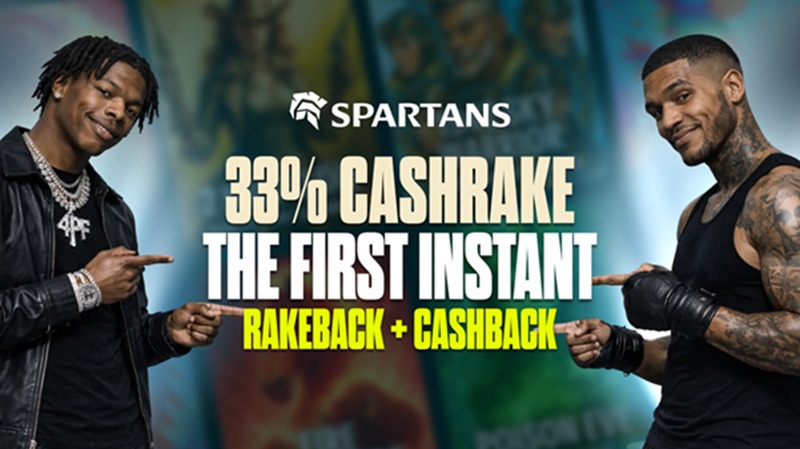
The way it works is very easy. Users get back up to 33 percent of their full deposits through two paths. First, lost bets make up to 3 percent fast cashback given right away with no betting rules. Next, some of the house edge comes back as rakeback, growing with every bet no matter the result.

Both paths go into one cap set at 33 percent of all deposits. Put in $100 and the cap is $33. Put in $200 more and the cap is $99. This limit grows with play.

Each part is clear to see. One status bar shows the total earned and the amount left. There are no secret rules. No end dates. No tiny text ruins the deal.

How Clear Views Change the Game

Normal casino gifts rely on being hard to see. If players know less about how prize values are found, it becomes easier to look kind without spending much money.

Spartans flips this around. By showing every part of the CashRake plan, the site gets rid of the doubt found in other deals. Players do not have to guess if they are being tricked. The proof is right on the display.

This open style also changes how players act. When prizes are steady, people use the site in a new way. They do not hunt for a gift that might vanish. They work toward a set goal with easy progress signs. In 2026, as officials watch for tricky ads and ask for clear facts, this path is more than just nice for players. It is a smart move for business.

A Big Reach That Fits the Plan

CashRake would not matter much if it only worked for a few small games. Spartans makes sure it covers everything.

The site provides over 5,900 games from more than 43 makers. Slots, live tables, crash games, and board games all count for CashRake. A total sports book for football, basketball, tennis, UFC, and esports adds to the same cap.

Money moves through crypto. BTC, ETH, USDT, USDC, and AVAX work with very fast deposits and cash outs. Players get their money when they need it, not when waiting for slow banks allows.

Fame stars like Lil Baby and Conor Benn add a big feel. Rare gifts like the Mansory Koenigsegg Jesko make special times that go beyond basic ads. These parts help the main idea without taking its place.

What Makes This Place Stand Out

Most internet casinos try to win by making big claims. Spartans wins by showing the numbers.

The site does not ask players to hope that value will show up later. It shows them right where they are, how much they won, and how much is left to get. Every bet moves the mark. Every deposit lifts the limit.

In a world made of small print and hidden rules, that clear view is the main thing. Spartans has made a site where prizes work the way people always wanted them to.

Easy. Open. True.


Find Out More About Spartans:

Website: https://spartans.com/

Instagram: https://www.instagram.com/spartans/

Twitter/X: https://x.com/SpartansBet

YouTube: https://www.youtube.com/@SpartansBet

Top Cryptos of 2026: Zero Knowledge Proof (ZKP) Leads List Over LiquidChain, Maxi Doge, & BMIC!

0

Uncertain market conditions often drive investors to explore entry points beyond established tokens, focusing instead on early-stage presales that promise fresh opportunities. These presales allow careful assessment of supply structures, incentive designs, and long-term sustainability well before tokens face broader market pressures.

This review of top cryptos of 2026 prioritizes value formation mechanics over hype or visibility. It examines diverse presale approaches to token distribution, utility focus, and execution models, revealing how each shapes participation dynamics in a cautious environment. Starting with Zero Knowledge Proof (ZKP), and its Stage 2 auctions are ending soon!

1. Zero Knowledge Proof (ZKP): Deflationary Auction Redefining Presales

ZKP crypto redefines modern presales by centering price discovery through a continuous auction model that shrinks token supply progressively. Rather than a single listing dump, it rolls out over 450 days with daily allocations forcing organic valuation via real participant demand. Phase 1 released 200 million tokens daily and raised $1.7 million swiftly, confirming strong initial momentum. Now in Phase 2, daily supply drops to 190 million tokens, accelerating scarcity right away and ranking Zero Knowledge Proof (ZKP) among the top cryptos of 2026 for structured growth.

Supply contraction intensifies across phases. Phase 3 limits issuance to 180 million tokens per day, with later stages tightening further down to 40 million in the finale. Unsold tokens from any phase get burned permanently, locking in deflation without resets or inflation risks. This disciplined mechanism eliminates sudden liquidity shocks common in launches.

By extending discovery over 450 days with relentless supply reduction, ZKP swaps hype chaos for predictable value emergence. Participants watch prices climb as allocations vanish daily, creating measurable floors. Among token launches, this mechanics-driven approach positions ZKP as the standout presale, earning gains through enforced scarcity rather than empty promises.

2. LiquidChain: Seamless Multi-Chain Coordination

LiquidChain tackles key interoperability hurdles by enabling smooth application interactions across diverse blockchain networks. It minimizes reliance on conventional bridge transfers that often bring extra complexity and security vulnerabilities. The project emphasizes foundational infrastructure to deliver robust cross-chain capabilities, prioritizing developer tools over user-facing applications. This approach positions LiquidChain as one of the top cryptos of 2026 for advancing network efficiency.

As interest in multi-chain ecosystems grows, LiquidChain gains traction among projects solving long-term coordination needs. Its design supports scalable communication between blockchains without compromising speed or safety. Experts highlight its potential to streamline decentralized operations, making it a strong contender in evolving Web3 landscapes.

3. Maxi Doge: Viral Community Momentum

Maxi Doge thrives in the meme coin space through strong cultural appeal and active community involvement. The token features a straightforward structure that avoids intricate technical layers, focusing instead on ease of access and user excitement. This simplicity fosters widespread participation without requiring deep technical knowledge. Such qualities make Maxi Doge a standout among the top cryptos of 2026 in the high-energy meme sector.

Success for Maxi Doge hinges on market sentiment, social buzz, and collective enthusiasm rather than groundbreaking utility. Community events and viral campaigns drive its visibility during bullish cycles. While volatile, its engaging model keeps holders invested through hype and shared narratives. As crypto trends shift toward inclusive tokens, Maxi Doge remains poised for spikes tied to broader enthusiasm.

4. BMIC: Future-Proof Crypto Security

BMIC advances digital protection by developing decentralized methods to safeguard data and assets from emerging computational threats. It prioritizes proactive strategies and theoretical frameworks over quick marketplace rollout. The initiative explores how encryption must evolve alongside advancing hardware power. This forward-thinking stance marks BMIC as one of the top cryptos of 2026 for cryptographic innovation.

In the realm of presale projects, BMIC appeals to those eyeing sustained tech progress in security. Its work anticipates shifts in quantum computing and beyond, ensuring resilience for blockchain ecosystems. While not focused on instant utility, its research lays the groundwork for unbreakable defenses. As threats grow more sophisticated, BMIC’s emphasis on adaptive cryptography positions it for critical long-term value.

Points to Remember

While LiquidChain builds interoperability infrastructure, Maxi Doge harnesses community token dynamics, and BMIC prioritizes cryptographic security, these projects typically defer price formation to post-launch markets. Each strategy targets distinct needs, yet they share reliance on future trading or sentiment for valuation among the top cryptos of 2026.

While LiquidChain builds interoperability infrastructure, Maxi Doge harnesses community token dynamics, and BMIC prioritizes cryptographic security, these projects typically defer price formation to post-launch markets. Each strategy targets distinct needs, yet they share reliance on future trading or sentiment for valuation among the top cryptos of 2026.

BlockDAG Mainnet Shatters Records with 500x Faster Speed Than Ethereum While Hyperliquid & Cardano Hold Steady

0

Market participants are currently focusing their attention on significant movers such as Cardano and Hyperliquid, searching for specific patterns that might indicate the next big price jump. Cardano is holding its ground with very consistent blockchain utility, while Hyperliquid is being closely watched for its specific liquidity movements.

However, as the broader sector moves forward at a rapid pace, BlockDAG stands out as a complete game-changer for the industry, providing speed and scaling power that few others can match. The BlockDAG (BDAG) Mainnet has officially gone live, reaching a massive 5000 TPS. This is 500 times faster than what Ethereum offers, and it sets a brand-new high bar for how a blockchain should perform in the modern era.

Right now, the private sale phase gives a rare opening to get BDAG at a price of only $0.00025. There are only 3 days left before the official exchange listings begin, and the available spots are being taken very quickly. People joining early are grabbing the best spots, getting their hands on special Core Bundles and faster bonus plans. This puts them in a great place before the market sees a massive jump in activity. When looking at Cardano price prediction and Hyperliquid data, BDAG clearly looks like the best crypto to buy for the upcoming growth cycle.

Cardano Price Prediction Shows Specific Trading Ranges

The Cardano price prediction is a reflection of how ADA is currently doing in the market, with the coin staying in a bracket between $0.25 and $0.27. Throughout the last year, ADA has mostly stayed within a wider horizontal range, showing times where the price stays flat or moves slightly compared to its highest point of $3.10 seen back in late 2021. People who study the market suggest that future moves will be driven by new tech updates to the network, how many people are staking their coins, and the general use of decentralized apps. These factors have always changed how the coin trades over time.

The foundation of the Cardano network is a system called Ouroboros, which is a proof-of-stake method that focuses on giving power to the community and saving energy. By looking at these technical parts of the network along with how the price moved in the past, it becomes easier to see where the trends might go next.

In short, the Cardano price prediction shows that the coin has a history of moving up and down quite a bit. It gives a clear view of where ADA sits in the current market today without telling anyone exactly which way the price will go or giving financial tips. It remains a steady name for those looking for the best crypto to buy in the long term.

Hyperliquid Price Trends Show Limited Movement

The Hyperliquid price shows how the market has reacted in different ways since it first came out. The price range over the last 52 weeks has gone from a low of about $3.90 to a record high of more than $59 in the month of September 2025. Right now, the trading price is much lower than that all-time high, which matches what is happening in the rest of the crypto market. The total value of all HYPE coins is still worth billions of dollars, and the number of coins moving around is just a part of the total supply listed on tracking websites.

Hyperliquid functions as a system for decentralized trading that uses an on-chain book for orders and a Layer-1 setup that helps run markets that never close. Watching the Hyperliquid price and its old movements helps people understand how much the price swings without guessing the future. The latest data for the coin shows that there is a lot of change in how much people are trading and how they feel about the project. For many, tracking these moves is key to finding the best crypto to buy among newer platforms.

BlockDAG Mainnet Goes Live with 5000 TPS to Change Speed Standards

The BlockDAG Mainnet has officially started its operations, and it is now handling 5,000 transactions every single second. This speed is 500 times greater than the speed of Ethereum, which completely changes the expectations for how fast a blockchain can be. Even though the Mainnet is running, BDAG coins are still being offered at the low price of $0.00025 during this final private sale period. This is a very short and rare window to get in early, and it is closing fast because there are only 3 days remaining until the coins hit the exchanges on February 16th.

To help people get ready for the big start, the team has put out Core Bundles. These give early members special help and a better way to manage their coins. The Launch Essentials bundle is $999 and gives you Priority Access, a spot in the Insider Room, and a way to claim the early airdrop. The Elite Trader Pack is $2,999 and adds Elite Access plus a special 9-month plan to unlock bonuses faster.

The biggest option is the Genesis Max Pack for $4,999. This one has everything: Elite Access, the Insider Room, the early airdrop, a quick 6-month unlock time, Genesis Protection, and help with priority claims. If you want something smaller, you can get Priority Access for $199 or Elite Access for $249. These tools are built to help people handle the high activity, crowded networks, and liquidity shifts that happen on the first day of a big launch.

The earlier sale sold out very fast. Getting in now means you get your bonuses sooner, can start trading earlier, and get tips from insiders for life. Because it has speed and tools that no one else has, BDAG is a top pick for anyone looking for the best crypto to buy. This is a big chance to get a strong head start just as the Mainnet begins its journey. Time is running out, and people are moving into position very quickly. Joining now is the only way to get the full power of BDAG’s transactions and the best perks at the start.

Final Say

Cardano is still showing that its network is very dependable. The Cardano price prediction points toward a slow and steady climb that is backed by new tech updates and a very safe proof-of-stake system. Meanwhile, Hyperliquid is still a coin that focuses on trading flow, with the Hyperliquid price showing a steady amount of trading and use in the active markets.

Even with those big names around, BDAG provides a very different and exciting path. Its Mainnet can do 5,000 transactions per second, making it 500 times faster than Ethereum. The people who joined early used Core Bundles to get a better position. These tools give them a real edge when the coin starts trading. For anyone searching for the best crypto to buy, BDAG is a rare find because it was made for high speed and lets people get in before everyone else. The time to act is almost over, so being quick is the only way to catch the big moves in this new chapter of the market.

Private sale: https://purchase.blockdag.network

Website: https://blockdag.network

Telegram: https://t.me/blockDAGnetworkOfficial

Discord: https://discord.gg/Q7BxghMVyu


A Look At Trump’s 35-Member Innovation Advisory Committee 

0

The Trump administration, through the Commodity Futures Trading Commission (CFTC) under Chairman Michael Selig, announced the formation and full membership of the Innovation Advisory Committee (IAC).

This 35-member committee brings together top executives from crypto, decentralized finance (DeFi), traditional finance, prediction markets, sports betting, and major exchanges. The goal is to advise the CFTC on regulating emerging technologies like blockchain, AI, crypto derivatives, tokenized assets, and prediction markets—helping “future-proof” U.S. financial markets and establish clear rules for what Selig called the “Golden Age of American Financial Markets.”

This reflects the administration’s pro-innovation, pro-crypto stance, aiming to position the U.S. as the “crypto capital of the world” by integrating industry leaders into regulatory discussions rather than adversarial enforcement.

Crypto and DeFi Leaders: Includes CEOs from major centralized and decentralized platforms. Notable inclusion of platforms like Polymarket and Kalshi, signaling potential mainstreaming and clearer oversight for event contracts. Heavy representation from exchanges and clearinghouses. Venture capital like a16z crypto, Paradigm and sports betting (FanDuel, DraftKings).

Notable Members include; Brian Armstrong — CEO, Coinbase, Brad Garlinghouse — CEO, Ripple, Hayden Adams — CEO, Uniswap Labs, Anatoly Yakovenko — CEO, Solana Labs Sergey Nazarov — CEO, Chainlink Labs, Vlad Tenev — CEO, Robinhood, Tyler Winklevoss — CEO, Gemini, Arjun Sethi — Co-CEO, Kraken, Shayne Coplan — CEO, Polymarket, Tarek Mansour — CEO, Kalshi, Chris Dixon — Managing Partner, a16z crypto, Adena Friedman — Chair & CEO, Nasdaq, Terry Duffy — Chair & CEO, CME Group, Jeff Sprecher — CEO, Intercontinental Exchange, Jason Robins — CEO, DraftKings, Christian Genetski — President, FanDuel.

This move builds on earlier Trump-era efforts to clarify crypto regulations and reduce fragmentation between agencies like the CFTC and SEC. It’s seen as a major step toward institutional integration and regulatory clarity for the sector.

This 35-member panel—packed with industry heavyweights—signals the Trump administration’s intent to foster innovation through collaboration rather than enforcement-heavy tactics. The committee’s mandate focuses on advising the CFTC on blockchain, AI, tokenized assets, derivatives, and market infrastructure.

This directly supports goals like establishing a clear crypto asset taxonomy, reducing jurisdictional overlaps with the SEC, and minimizing duplicative compliance burdens. Expect accelerated guidance on tokenized real-world assets (RWAs), perpetual futures, and decentralized platforms, potentially unlocking broader institutional adoption and positioning the U.S. as the “crypto capital of the world.”

Unlike prior administrations’ “regulation by enforcement,” this move emphasizes industry input before rulemaking. It aligns with broader Trump-era policies ending “Operation Chokepoint 2.0”-style restrictions and advancing legislation like the GENIUS Act or market structure bills.

The result could be lighter-touch rules, exemptions for certain DeFi activities, and support for onchain markets—boosting liquidity, volume, and investment in sectors like Bitcoin and ETH derivatives. Platforms like Polymarket (Shayne Coplan) and Kalshi (Tarek Mansour) are prominently featured, alongside sports betting leaders. This indicates the CFTC views event contracts as legitimate financial instruments rather than gambling.

Imminent rulemaking on prediction markets is expected, potentially withdrawing restrictive 2024 proposals and enabling mainstream growth in political, sports, and other event-based derivatives. This could drive explosive volume in platforms offering bets on elections, economic outcomes, or real-world events—while integrating them under federal oversight for greater legitimacy and investor protection.

Heavy representation from Nasdaq (Adena Friedman), CME Group (Terry Duffy), Intercontinental Exchange (Jeff Sprecher), and others bridges crypto with traditional finance. This could accelerate tokenized assets, cross-chain infrastructure via Chainlink’s Sergey Nazarov, and hybrid products—enhancing U.S. competitiveness against global rivals like China.

Some observers from public interest groups note the committee’s heavy industry tilt, questioning balance with consumer protection or academia. Rapid changes might spark short-term volatility or legal challenges, but the overall direction prioritizes “clear rules of the road” for a “Golden Age of American Financial Markets.”

Building on prior initiatives like the CEO Innovation Council and joint CFTC-SEC efforts, this committee could influence near-term rules, with market structure legislation potentially reaching the President’s desk soon.

This isn’t just an advisory group—it’s a deliberate step toward embedding crypto and DeFi leaders in policymaking, signaling regulatory embrace over resistance. It could catalyze a surge in innovation, liquidity, and U.S. dominance in digital finance, though execution will depend on balancing industry input with public safeguards.