DD
MM
YYYY

PAGES

DD
MM
YYYY

spot_img

PAGES

Home Blog Page 1727

Crypto Insiders Say This Altcoin Could Be the Next Big Winner in 2025

1

Crypto insiders are buzzing with excitement as the cryptocurrency market experiences a whirlwind of volatility in early 2025. Major coins are bleeding value, while select altcoins show signs of explosive potential.

Amid this turbulence, a new contender, RCO Finance (RCOF), has caught the attention of savvy traders and analysts. With its innovative features and a presale that’s already delivering massive gains, RCOF is being tipped as the altcoin to watch this year, potentially eclipsing even the most established tokens.

A Shifting Market Fuels Altcoin Fever

The crypto market has been a rollercoaster lately, with Bitcoin (BTC) and Ethereum (ETH) facing significant corrections that have left investors searching for greener pastures.

Crypto insiders argue that this volatility is precisely why emerging altcoins with strong fundamentals and unique value propositions are stealing the spotlight. Unlike established coins burdened by market saturation, altcoins like RCO Finance (RCOF) offer untapped growth opportunities.

The recent surge of the lesser-known altcoins like the “Bluzelle (BLZ)” coin, which has delivered 100x returns for early adopters, is a testament to the potential lying dormant in emerging altcoins.

Similarly, RCO Finance (RCOF), currently in its fifth presale stage, has already seen its price climb 684% from $0.01275 to $0.10, signaling robust growth. With the next stage pushing the price to $0.13 and the final presale targeting $0.2142, crypto insiders predict a listing price between $0.4 and $0.6 on major exchanges.

Post-listing, analysts are even more bullish, forecasting that RCOF could soar past $1 as its platform gains traction, making it a prime candidate for the next big win.

The RCO Finance team isn’t resting on its laurels either. They’ve already launched a beta version of their platform, which attracted over 10,000 sign-ups eager to test its capabilities. Now, they’re putting the finishing touches on the alpha version, slated for release soon.

This rapid development pace underscores their commitment to delivering a game-changing financial ecosystem, further fueling optimism among crypto insiders about RCOF’s trajectory.

RCO Finance’s Standout Features Drive Hype

What sets RCO Finance (RCOF) apart in the crowded altcoin space is its cutting-edge technology and user-centric design. At the heart of the platform is its AI-powered Robo Advisor, a tool that’s revolutionizing how investors approach the market.

By analyzing vast datasets in real time, the Robo Advisor crafts personalized investment strategies tailored to each user’s goals and risk tolerance.
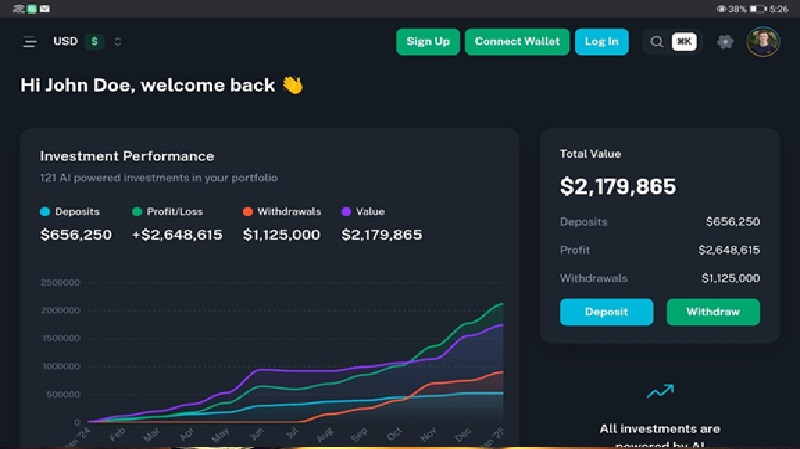
Whether it’s pinpointing the perfect entry for Bitcoin or catching a trending altcoin early, the Robo Advisor empowers novices and experts alike to maximize returns with minimal effort. Notably, crypto insiders have praised its ability to remove indecision and mitigate losses, noting that it’s like having an institutional-grade analyst in your pocket.

Another key draw is RCO Finance’s KYC-free ecosystem, a rarity in today’s heavily regulated financial landscape. This approach prioritizes privacy, allowing users to dive into decentralized finance (DeFi) without cumbersome identity checks.

Coupled with access to over 120,000 assets across 12,500 classes—from stocks and ETFs to tokenized real-world assets (RWAs) and cryptocurrencies—this breadth ensures that users can diversify like never before.

The platform’s smart contract, audited by SolidProof, adds an extra layer of trust, assuring investors that their funds are secure.

The Post-Launch RCOF Boom: A $5 Horizon?

The real fireworks are expected once the alpha version of the RCO Finance platform launches. Crypto insiders are predicting an explosive price surge for RCOF, with some estimating it could climb above $5 within months of the rollout.

This optimism stems from the platform’s ability to deliver on its promises—seamless automation, unparalleled asset access, and AI-driven insights—all of which are poised to attract a flood of new users.

The RCOF presale’s deflationary model, where unsold tokens are burned, further tightens supply, potentially driving value higher as demand spikes. Early investors could see their $1,000 turn into $30,000 at listing, but the post-launch momentum might push those gains even further.

Community governance via RCOF tokens also adds a democratic flair, letting holders shape the platform’s future while staking rewards and trading fee discounts to incentivize long-term engagement.

Crypto insiders see this blend of utility and innovation as a recipe for sustained growth, drawing parallels to early altcoin giants like Binance Coin.

For more information about the RCO Finance Presale:

Visit RCO Finance Presale
Join The RCO Finance Community

Microsoft Expands AI Ambitions by Developing AI Models, as xAI Scales up Data Center Infrastructure

0

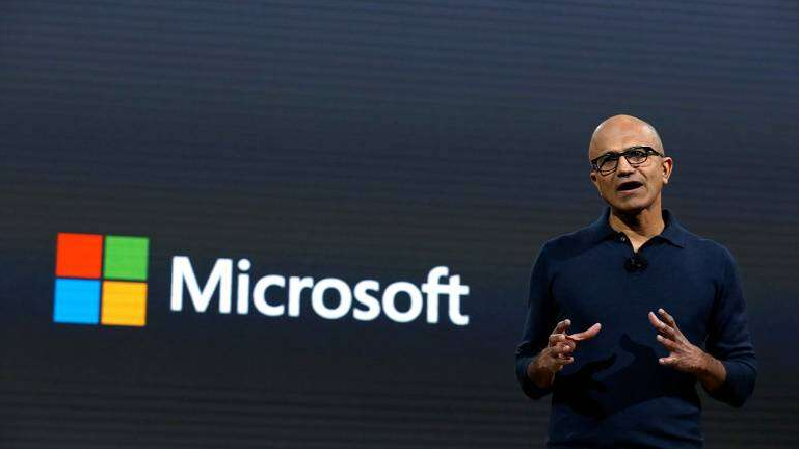
Tech giant Microsoft is accelerating its efforts to compete with OpenAI, its longtime collaborator by developing its own advanced AI models and exploring alternative technologies to power its AI-driven products like copilot.

Reports reveal that Microsoft has built its own AI reasoning models comparable to OpenAI’s o1 and o3-mini. Microsoft was once the exclusive provider of data center infrastructure for OpenAI to train and run its AI models, but not any longer. Tensions between both companies escalated after OpenAI reportedly denied Microsoft’s request for technical details about how o1 operates.

OpenAI on the other hand blamed a lack of available compute for delaying its products, and compute capacity that became a source of tension between the AI company and Microsoft, its close collaborator and major investor.

However, in a blog post, Microsoft reiterated that “key elements” of its long-standing partnership with OpenAI remain in place through 2030, including its access to OpenAI’s IP, revenue-sharing arrangements, and exclusivity on OpenAI’s APIs.

To reduce its dependence on OpenAI, Microsoft is also testing AI models from xAI, Meta and Anthropic, and DeepSeek as potential replacements for OpenAI’s technology in Copilot. The tech giant which has invested approximately $14 billion in OpenAI, has taken further steps to diversify its AI strategy by hiring DeepMind and Inflection co-founder Mustafa Suleman to lead its AI initiatives.

Elon Musk-Owned xAI Scales up Data Center Infrastructure

Amidst Microsoft efforts to develop its own advanced AI model, Elon Musk-owned AI company, xAI, is making aggressive move to expand its data center infrastructure. The company has reportedly acquired a 1 million-square foot property in Southwest Memphis to bolster its AI data center infrastructure.

This new facility will complement xAI’s existing Memphis data center, reinforcing the city’s position as key AI hub.

XAl’s acquisition of this property ensures we’ll remain at the forefront of Al innovation, right here in Memphis,” said xAl senior site manager Brent Mayo.

It remains unclear whether this expansion is tied to a previously announced lease on a 522-acre site in Memphis. However, xAl is demonstrating a clear appetite for Al hardware. The company recently built a second data center in Atlanta, investing $700 million in chips and other infrastructure. Additionally, it has struck a $5 billion deal with Dell to purchase GPU-packed servers.

XAl’s data centers are critical for training and running its Al model family, Grok. The company has ambitious plans to upgrade its primary Memphis-based facility, known as Colossus, to house 1 million Nvidia GPUs this year-up from 100,000 in 2024.

However, Al’s rapid expansion in Memphis has sparked concerns among local residents, who argue that the growing data center footprint could strain th energy grid and negatively impact air quality. In response, xAl has sought to mitigate these concerns by supplying the local utility with discounted Tesla-manufactured batteries and building a water recycling plant.

The AI Power Shift

The developments at Microsoft and xAl signal significant shifts in the Al industry, with broad implications for competition, innovation, and infrastructure growth.

With all these developments, the Al industry is no-doubt entering a new phase where reliance on a single provider is diminishing, and competition is driving rapid technological advancements. The power struggle between Microsoft, OpenAl, and xAl will shape the future of Al, influencing everything from infrastructure development to the accessibility of Al-powered solutions for businesses and consumers:

With Microsoft, xAl, and other players building their own Al models, businesses will have access to a wider range of Al solutions. This could result in:

  • More customizable Al applications tailored to specific industry needs.
  • Potential price competition, making Al services more affordable.
  • Faster innovation cycles as companies seek to outperform competitors.

Looking Ahead

These recent developments signal a major shift in the Al landscape, with Al firms intensifying efforts to maintain market dominance.

As competition intensifies, the industry is set for rapid innovation, increased investment, and potential shifts in Al leadership. However, concerns over resource consumption and environmental impact may prompt regulatory scrutiny and push companies to adopt more sustainable practices.

Odds of a U.S. Recession Climbing between 39%-43% in 2025 are Consistent on Kalshi

0

Recent sentiment indicates that Kalshi, a prediction market platform, has raised the odds of a U.S. recession in 2025 to 43% as of early March 2025 from 39% showing a consistent increasing prediction odd. While Kalshi currently indicates a heightened perceived risk of a U.S. recession in 2025, with odds recently climbing to around 40%, these figures should be viewed as speculative and not conclusive. Economic conditions can change rapidly, and such platforms may amplify short-term sentiment rather than provide a reliable long-term forecast. This reflects a sharp uptick from earlier estimates, possibly influenced by recent economic data and policy uncertainty.

The Federal Reserve Bank of New York’s recession probability model, based on the yield spread between 10-year Treasury bonds and three-month bills, estimated a 29% chance of a recession by December 2025 as of early January 2025. This model has historically been a reliable indicator, though its probability has declined from a peak of 70% in mid-2023, indicating a shifting outlook that could now be climbing again toward 39% with new data.

In August 2024, J.P. Morgan raised its recession probability to 35% by the end of 2024 and maintained a 45% chance by the end of 2025. If updated with March 2025 economic signals (e.g., softening labor markets or tariff impacts), a 39% figure could fit within their evolving forecast. Goldman Sachs analysts increased their 2025 recession odds to 25% from 15% in August 2024, citing limited risk but acknowledging rising concerns. A jump to 39% could reflect more recent pessimism, though their latest public stance remains lower.

Bankrate Economist Survey: In January 2025, top economists pegged recession odds at 26% by year-end 2025, a series low. However, this optimism predates potential March 2025 developments, and a climb to 39% could indicate a reaction to newer risks.

Factors Driving the Increase

The unemployment rate rose to 4.2% by late 2024, with job growth slowing to 190,000 per month. If March data shows further deterioration (e.g., unemployment nearing 4.4% or job losses), recession fears would escalate, supporting a 39% probability.

With Trump’s inauguration in January 2025, proposed tariffs (e.g., 10-20% on all imports, 60% on Chinese goods) and immigration restrictions could disrupt trade and raise inflation. The Atlanta Fed’s GDPNow estimate reportedly dropped from a projected 2-3% growth for 2025 to a Q1 decline of 2.8% by early March, per X posts, reflecting tariff-related pessimism.

Consumer Sentiment: The University of Michigan’s Consumer Sentiment Index fell 10% in February 2025, signaling caution that could curb spending, a key driver of GDP. This aligns with a potential uptick in recession odds.

Yield Curve and Fed Policy: The yield curve, previously inverted, normalized by late 2024, reducing some recession signals. However, if the Fed cuts rates too slowly (projected at two cuts in 2025) amid rising inflation from tariffs, economic growth could stall, pushing odds toward 39%.

A 39% probability sits between the more optimistic forecasts (e.g., Bankrate’s 26%, Goldman’s 25%) and the higher-end estimates (e.g., J.P. Morgan’s 45%, Kalshi’s 43% with consistent odd seating at 39%). It suggests a growing but not yet dominant concern, likely reflecting perhaps from a financial institution or market model adjusting for Q1 GDP declines or labor market softening. Betting markets like Kalshi, which react quickly to news, could have nudged odds from 23% post-election (November 2024) to 39-43% as tariff and growth fears mounted.

Recession odds fluctuate with new data. In 2023, some predicted near-100% odds for 2024, yet growth hit 3%. A 39% chance means a recession is possible but not certain. It aligns closely with Kalshi’s 43% and could reflect a conservative midpoint. The odds of a U.S. recession climbing to 39% in 2025 are consistent with a cautious shift in economic outlook. Driven by potential policy shocks (tariffs, immigration), softening fundamentals, and market reactions, this figure suggests heightened risk but not inevitability.

Tesla Shares Tumble for Seventh Straight Week Amid Fallout from Musk’s Politics and Market Challenges

0

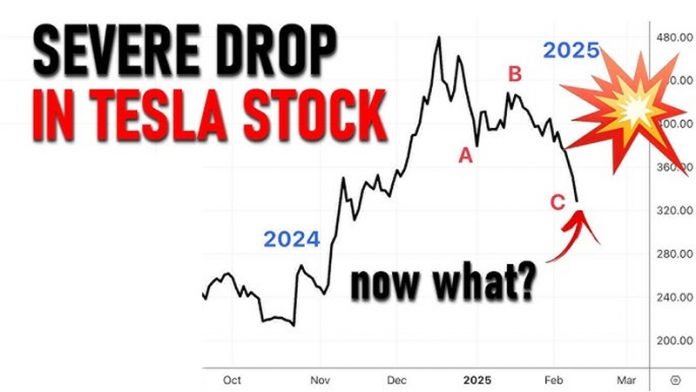
Tesla shares ended their seventh consecutive week of declines, closing the week 10% lower as the electric vehicle (EV) maker grapples with mounting challenges both on Wall Street and in its key markets.

The stock closed Friday at $262.67, a far cry from its record high of $479.86 on December 17, marking a nearly 50% drop and wiping out almost all its post-election gains.

The decline in Tesla’s stock price is largely tied to the controversial politics of its CEO, Elon Musk, whose vocal support for President Donald Trump and alignment with far-right ideologies have sparked backlash, particularly in Europe. The situation is further compounded by slowing sales in China, fierce competition from local EV manufacturers, and broader market uncertainties surrounding tariffs and economic policy under the Trump administration.

Political Backlash in Europe: Tesla’s Reputation Takes a Hit

Europe, traditionally one of Tesla’s largest markets, has seen a noticeable decline in brand sentiment as Musk’s political affiliations alienate potential buyers. Musk’s public endorsement of Trump and the broader far-right has not sat well with the largely liberal and progressive European consumer base.

In recent months, the narrative surrounding Musk in Europe has grown increasingly hostile, with critics labeling him a “Nazi” and associating Tesla with extreme right-wing ideologies. Social media platforms and public discourse have amplified this sentiment, contributing to declining registrations and sales across the continent.

The backlash is not only social but also economic. Consumers in key markets like Germany, France, and the UK are reportedly choosing alternatives over Tesla, leading to a significant dip in the company’s market share. European automakers such as Volkswagen and BMW, which offer competitive EV models, are capitalizing on Tesla’s reputational hit.

Chinese Market Offers No Respite Amid Fierce Competition

In China, which could have offered a much-needed buffer, Tesla is struggling to maintain its competitive edge. The EV market in China is dominated by strong local players such as BYD, NIO, and Xpeng, whose products are not only competitive in terms of technology but also more affordable.

BYD, in particular, has emerged as a formidable rival, outpacing Tesla in sales volumes. The Chinese government’s support for homegrown automakers through subsidies and favorable policies further enhances the challenge for Tesla.

Moreover, geopolitical tensions between the US and China are creating additional headwinds. The Trump administration’s aggressive trade policies and tariffs have added uncertainty to the market, potentially limiting Tesla’s ability to grow its sales in the world’s largest automotive market.

Musk’s Role in Trump’s Government Compounds Investor Anxiety

Musk’s recent appointment to the Trump administration’s Department of Government Efficiency has introduced new complexities. His push for austerity and spending cuts in government programs aligns with Trump’s fiscal policies but has also raised questions about potential conflicts of interest.

Tesla’s brand, which was once synonymous with innovation and environmentalism, is now struggling to reconcile its image with Musk’s role in a government that critics argue has undermined climate initiatives and progressive values.

The juxtaposition of Musk’s corporate goals with his political role is contributing to a broader narrative of distrust. Environmental activists, a core demographic for Tesla, are increasingly wary of supporting a company whose CEO is associated with policies perceived as regressive.

Tariff Woes Add to Market Jitters

Compounding Tesla’s troubles are recent tariffs imposed by Trump on Canada and Mexico. Although the administration later announced delays, the potential impact on supply chains and production costs remains a concern.

Bank of America analysts have warned that these tariffs could “pose significant risk” to North American automakers, including Tesla. The EV maker relies on a complex global supply chain, and increased costs could erode its already thin profit margins.

No Signs of Reprieve As Prolonged Downturn Looms

The situation does not appear to be improving. Market analysts predict that Tesla’s stock could continue to struggle as long as Musk remains in the political spotlight, particularly under a divisive administration. The political climate in the US, coupled with declining sales in key markets and intensifying competition, suggests that the company’s challenges are far from over.

In Europe, Musk’s association with far-right politics could lead to even greater sales losses if anti-Tesla sentiment continues to grow. In China, unless Tesla can navigate geopolitical challenges and stave off competition from rapidly advancing local brands, its market share could shrink further.

With Tesla’s stock price on a prolonged downward trend and no clear strategy to address the mounting challenges, the company faces an uphill battle to regain investor confidence and market stability.

Coinbase is Exploring Tokenization of COIN Stocks

0

Coinbase INC is exploring the possibility of tokenizing its own stock, COIN, as part of a broader push to integrate traditional financial assets with blockchain technology. This initiative involves converting shares of COIN into digital tokens on a blockchain, specifically on Coinbase’s Ethereum layer-2 network, Base. The idea is to enable trading of these tokenized shares directly on the Base network, potentially increasing accessibility, enabling fractional ownership, and facilitating global trading.

As of early 2025, Coinbase has been in an exploratory phase, with Base developer Jesse Pollak indicating in January that the company is considering making tokenized COIN shares available to U.S. users on Base. Currently, tokenized versions of COIN are already accessible to non-U.S. users through platforms like Backed, a tokenized real-world assets (RWA) protocol. However, extending this to U.S. users hinges on regulatory clarity, as U.S. securities laws present significant hurdles. Pollak has emphasized the need for “regulatory clarity and improvements that embrace onchain as an open platform” to move forward safely and compliantly.

More recently, in March 2025, reports suggest Coinbase is renewing efforts initially considered in 2020 to tokenize COIN and bring security tokens to the U.S. market. This shift is partly driven by a perceived change in the regulatory environment, including the establishment of a new SEC crypto task force and a more crypto-friendly stance under the incoming Trump administration. Coinbase’s Chief Financial Officer, Alesia Haas, has expressed optimism about these developments, noting that the company originally intended to go public with a security token but faced regulatory barriers at the time.

The potential benefits of tokenizing COIN include 24/7 trading, improved transaction efficiency, and broader investor access through fractional ownership. However, no concrete plans have been finalized, and the success of this initiative depends heavily on navigating the complex U.S. regulatory landscape. If realized, this could position Coinbase as a leader in merging traditional finance with decentralized systems, potentially influencing other companies to tokenize their assets as well.

The regulatory hurdles Coinbase faces in tokenizing its COIN stock stem primarily from the complex and evolving framework of U.S. securities laws, administered by the Securities and Exchange Commission (SEC), as well as other financial regulations. Tokenizing traditional stocks like COIN involves converting them into digital assets (security tokens) on a blockchain, which introduces unique challenges in ensuring compliance with existing rules designed for conventional financial instruments.

In the U.S., any asset that represents ownership in a company and an expectation of profit—like tokenized COIN—would likely be classified as a “security” under the Howey Test (a legal standard from a 1946 Supreme Court case). This test determines whether an investment involves (1) an investment of money, (2) in a common enterprise, (3) with an expectation of profits, (4) derived from the efforts of others. Tokenized COIN would meet these criteria, subjecting it to SEC oversight.

Security tokens must comply with registration requirements under the Securities Act of 1933 unless they qualify for an exemption (e.g., Regulation D for private offerings or Regulation A for smaller public offerings). Registering tokens is a costly and time-consuming process involving detailed disclosures about the company, its finances, and risks.

Platforms facilitating the trading of tokenized COIN would need to register as broker-dealers or alternative trading systems (ATS) with the SEC and the Financial Industry Regulatory Authority (FINRA). Coinbase already operates as a registered entity for its traditional exchange, but extending this to a blockchain-based system like Base might require additional approvals or modifications to its existing licenses.

U.S. securities laws impose strict custody requirements to protect investors, typically requiring qualified custodians (like banks or registered broker-dealers) to hold assets. Tokenized assets on a blockchain raise questions about how custody is handled—whether through smart contracts, multisignature wallets, or other mechanisms—and whether these meet SEC standards. Transfer agents, who manage the issuance and transfer of securities, also play a role in traditional markets. Tokenization could automate this via blockchain, but the SEC has not fully clarified how such automation aligns with existing rules.