DD
MM
YYYY

PAGES

DD
MM
YYYY

spot_img

PAGES

Home Blog Page 1738

Amtrak CEO Resigns To Ensure That The Company Continues To Enjoy The Full Faith And Confidence Of Trump Administration

0

The Trump administration’s pursuit of a leaner, more privatized federal government has claimed another target—this time, Amtrak’s CEO, Stephen Gardner. Gardner, who had been in the role since 2022, abruptly announced his resignation on Wednesday as the administration and Elon Musk set their sights on potentially privatizing the government-owned passenger rail service.

In his resignation statement, Gardner said, “I am stepping down as CEO to ensure that Amtrak continues to enjoy the full faith and confidence of this administration.”

His departure comes as no surprise given the mounting pressure on Amtrak to align with the Trump administration’s demands, including budget cuts, the elimination of diversity programs, and a shift toward private investment in national rail infrastructure.

A Long Career Derailed by Politics

Gardner had been with Amtrak for over a decade before assuming the CEO position. He previously served as the company’s chief operating and commercial officer starting in 2009, later becoming president in 2020. Beyond his corporate leadership, he is a lifelong rail enthusiast, having worked as a train conductor and operations manager early in his career. His passion for rail even extended to his personal life—he once founded a punk band named Chessie, inspired by the defunct Chesapeake and Ohio Railway.

Despite Gardner’s deep ties to the industry, his position at Amtrak became increasingly untenable under the new administration. Trump’s long-standing hostility toward Amtrak is well-documented; during his first term, he attempted to slash federal funding for the company by half. Now, with his second term well underway, his administration has doubled down on efforts to reduce Amtrak’s reliance on public funds and steer it toward privatization.

Earlier this year, billions of dollars earmarked for Amtrak’s expansion efforts became collateral damage in Trump’s federal spending freeze. The administration has been particularly critical of the company’s spending practices, with Transportation Secretary Sean Duffy pressuring Amtrak to abandon diversity, equity, and inclusion (DEI) initiatives and enforce return-to-office mandates. The message has been clear: comply with the administration’s agenda or lose federal support.

Adding to Amtrak’s troubles, Musk has also waded into the debate, publicly mocking the company and calling for its privatization. Speaking at a recent conference, Musk described Amtrak as “kind of embarrassing”, advising foreign visitors, “If you’re coming from another country, please don’t use our national rail. It can leave you with a very bad impression of America.” He also suggested that both Amtrak and the U.S. Postal Service should be privatized, reinforcing Trump’s broader push to dismantle government-run services deemed inefficient.

The Reality of Amtrak’s Performance

Ironically, Amtrak is coming off a record year of ridership, bolstered by an ongoing expansion plan aimed at bringing rail service to an additional 40 million people in the coming years. The company has been steadily adding new routes and improving service in an effort to modernize U.S. passenger rail.

Privatization, however, remains a highly controversial proposal. While some argue that private investment could accelerate modernization efforts, others fear it could lead to higher fares, reduced service, and a focus on only the most profitable routes—leaving rural and less-populated areas without viable rail options.

Others also point to Musk’s own track record in transportation as evidence that privatization may not be the magic solution Trump envisions. Musk’s Boring Company, which promised to revolutionize underground mass transit, has struggled to deliver on its grand ambitions. Over the past seven years, it has completed just 2.4 miles of a proposed 68-mile tunnel network in Las Vegas, a project that has been plagued by delays, cost overruns, and a lack of regulatory oversight. Other Boring Company projects have been abandoned altogether due to financial and logistical challenges.

By comparison, Amtrak’s federally backed operations don’t seem so ineffective after all. While the company is far from perfect, it has at least managed to expand services and maintain reliability, something many of Musk’s ambitious transportation ventures have failed to do.

Amtrak’s future now looks uncertain. The Trump administration has relied heavily on executive orders to dismantle or liquidate government institutions it deems wasteful, but many of these moves have faced legal challenges. For now, Amtrak is leaderless, and its employees face uncertainty about the company’s future. Whether Trump and Musk succeed in reshaping the national rail system—or whether Amtrak survives as a public entity—will likely depend on political and legal battles still to come.

Dogecoin and Shiba Inu Lose Steam While This Meme Coin Surges Past $10M+ in Investments

0

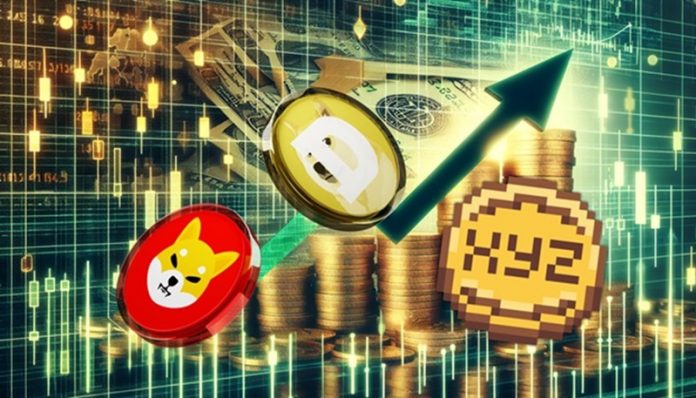
As well-known meme cryptocurrencies begin to fade, a surprising newcomer is capturing the spotlight. This fresh digital coin has amassed over $10 million from investors, defying expectations. What is driving this sudden surge of interest? Uncover the factors behind its rapid ascent and how it is shaking up the crypto landscape.

Demand for $XYZ Surges As Its Capitalization Approaches the $15M Milestone

The XYZVerse ($XYZ) project, which merges the worlds of sports and crypto, has attracted significant investor interest. Unlike typical memecoins, XYZVerse positions itself as a long-term initiative with a clear roadmap and an engaged community. The project was recently recognized as Best NEW Meme Project, further solidifying its appeal.

Price Dynamics and Listing Plans

During its presale phase, the $XYZ token has shown steady growth. Since its launch, the price has increased from $0.0001 to $0.003333, with the next stage set to push it further to $0.005. The final presale price is $0.02, after which the token will be listed on major centralized and decentralized exchanges.

The projected listing price of $0.10 could generate up to 1,000x returns for early investors, provided the project secures the necessary market capitalization.

So far, more than $10 million has been raised, and the presale is approaching another significant milestone of $15 million. This fast progress is signaling strong demand from both retail and institutional investors.

Champions Get Rewarded

In XYZVerse, the community calls the plays. Active contributors aren’t just spectators—they’re rewarded with airdropped XYZ tokens for their dedication. It’s a game where the most passionate players win big. 

The Road to Victory

With solid tokenomics, strategic CEX and DEX listings, and consistent token burns, $XYZ is built for a championship run. Every play is designed to push it further, to strengthen its price, and to rally a community of believers who believe this is the start of something legendary.

Airdrops, Rewards, and More – Join XYZVerse to Unlock All the Benefits

Dogecoin (DOGE)

Dogecoin (DOGE) has experienced mixed performance lately. In the past week, its price edged up by 0.81%. Over the past month, however, it saw a significant drop of 32.50%. Looking at the last six months, DOGE’s price has increased by 65.44%, indicating strong growth over a longer period.

Currently, DOGE is trading between $0.147 and $0.185. The nearest resistance level is at $0.2015, and the nearest support level is at $0.1263. If the price moves above the resistance, the next target could be $0.2391. Falling below the support might lead to a drop toward the second support at $0.0887. The 10-day Simple Moving Average is $0.1755, slightly above the 100-day average of $0.1706.

Technical indicators show a Relative Strength Index (RSI) of 54.60, suggesting neutral market momentum. The Stochastic value is 37.12, also pointing to neutral conditions. The MACD level is positive at 0.0013, hinting at a potential upward trend. Based on this data, DOGE could see a rise if it breaks the resistance level, aiming for an increase of about 9%. If it fails to hold above support, it might face a decrease of around 14%.

Shiba Inu (SHIB)

Shiba Inu (SHIB) has experienced significant price changes recently. In the past week, its price increased by 4.95%. However, over the last month, it dropped by 17.89%. Looking at the past six months, the price has decreased by 10.08%. These shifts show that SHIB’s price has been quite volatile.

Currently, SHIB is trading between $0.00001134 and $0.00001434. The nearest resistance level is at $0.00001558. If the price moves above this point, it could reach the second resistance at $0.00001858. On the downside, the nearest support level is at $0.00000958, with a second support at $0.00000658. Traders are watching these levels closely.

Technical indicators offer mixed signals. The Relative Strength Index (RSI) is at 58.53, suggesting the coin is neither overbought nor oversold. The 10-day and 100-day simple moving averages are close, at $0.00001288 and $0.00001284. The Stochastic is at 67.31, and the MACD level is 0.00006136. Based on this data, SHIB’s price might rise if it breaks through the resistance levels. If it doesn’t, the price could fall back to the support levels.

Conclusion

While DOGE, SHIB, PEPE, and MOG have been strong, XYZVerse (XYZ) emerges as a pioneering memecoin uniting sports fans, aiming for significant growth and community-driven success.

You can find more information about XYZVerse (XYZ) here:

Site, Telegram, X

Best Crypto Presales to Invest in Today: Unlocking the Next Big Potential

0

The cryptocurrency landscape is evolving at a breakneck pace, with new projects emerging every day, each promising unique features and cutting-edge solutions. With the rise of various innovative technologies, particularly in artificial intelligence, certain presales stand out for their potential to provide substantial returns for investors. Today, we’ll explore the best crypto presales to invest in, showcasing leading projects like Nexchain.ai, MIND of Pepe, Meme Index, and Solaxy—each carving its niche in this dynamic market.

Nexchain: The Top Contender

Kicking off our list is Nexchain.ai, a game-changer in the blockchain ecosystem. As the demand for decentralized solutions grows, Nexchain has positioned itself at the forefront with a sustainable, energy-efficient blockchain model that utilizes a Proof of Stake (PoS) consensus mechanism. 

Why Nexchain Stands Out

  1. Sustainability First: With increasing scrutiny on the environmental impact of cryptocurrencies, Nexchain’s commitment to sustainability resonates strongly with eco-conscious investors. By leveraging energy-efficient algorithms, Nexchain reduces energy consumption significantly compared to traditional proof-of-work models, attracting a growing base of environmentally-conscious users and investors. 
  2. Robust Infrastructure: Nexchain combines cutting-edge technology with a user-friendly interface, enabling seamless transactions and smart contract functionality. By prioritizing speed, security, and scalability, Nexchain has positioned itself as a go-to platform for developers and businesses alike, thus enhancing its growth potential.
  3. Community-Centric Approach: With an emphasis on community involvement, Nexchain fosters a collaborative environment where feedback drives development, making it a highly adaptable and responsive blockchain solution. This focus on community creates trust and loyalty among users—an essential element for long-term growth.

As of now, Nexchain has gained significant traction, with its presale attracting widespread attention from investors eager to be part of a project that prioritizes both profitability and sustainability. With its forward-thinking approach, Nexchain is undoubtedly one of the best presales to consider for long-term investment.

MIND of Pepe: The AI-Powered Meme Revolution

Next on our list is MIND of Pepe, an intriguing project that combines the playful world of meme coins with cutting-edge artificial intelligence. With over $7.4 million raised in its presale, MIND of Pepe has rapidly gained prominence among crypto enthusiasts, particularly those enthusiastic about the capabilities of AI.

  1. Innovative Technology: MIND of Pepe introduces an AI-driven self-learning agent that enhances user engagement and adaptability rarely seen in the meme coin sector. This technology allows the coin to evolve based on community interactions, trends, and market sentiments, presenting a unique opportunity for users to engage dynamically with their investments.
  2. Authentic Community Building: The project aims to foster a tight-knit community around the beloved meme character, Pepe. The self-learning AI agent can generate content, create challenges, and facilitate community-building activities, making it more than just a token—it’s an ecosystem where users can interact, collaborate, and thrive.
  3. Meme Culture Meets AI: As the demand for innovative and entertaining meme coins rises, MIND of Pepe stands out by integrating an AI twist. This appeals not only to meme enthusiasts but also to tech-savvy investors intrigued by the application of artificial intelligence in the crypto space.

As MIND of Pepe continues to attract attention, especially among AI enthusiasts, the project demonstrates promising growth potential. Its unique premise of combining meme culture with cutting-edge technology positions it as a noteworthy presale opportunity.

Meme Index: A Diversified Approach to Meme Coins

With the inherent risks of investing in individual meme coins, the Meme Index offers a structured approach that mitigates risk while still allowing investors to tap into the meme coin phenomenon.

  1. Index Fund Approach: Instead of putting all your chips on a single meme coin, Meme Index allows investors to gain exposure to a curated selection of top-performing meme tokens. This diversified strategy reduces the risk associated with individual projects that can fluctuate wildly.
  2. Streamlined Investing: By using an index fund model, investors can capitalize on trends within the meme coin market without the burden of extensive research or prediction. This convenience appeals to those looking to dip their toes into meme coins but are hesitant about navigating the complexities of the sector.
  3. Growth Potential: With the meme coin market showing consistent interest and activity, Meme Index taps into this momentum by allowing investors to share in the success of multiple tokens. As popular meme coins fluctuate in value, the index model provides a way to balance those changes with a diversified portfolio, enhancing the potential for profit.

The Meme Index simplifies the often chaotic and unpredictable world of meme investing, making it a compelling option for beginners or those looking to manage their exposure through diversification.

Solaxy: Streamlining Blockchain Transactions

Lastly, we have Solaxy, a project that addresses a pressing issue in the current blockchain landscape: network congestion. As decentralized networks like Solana and Ethereum struggle with high transaction volumes, Solaxy is positioned as a Layer 2 upgrade, aiming to streamline transactions without sacrificing security or decentralization.

  1. Enhanced Scalability: Solaxy aims to improve scalability within Ethereum and Solana by implementing layer 2 solutions that enhance transaction speeds and capacity—key challenges that have hindered wider adoption of blockchain technology.
  2. Cost Efficiency: By alleviating network congestion, Solaxy aims to reduce transaction fees, making it more affordable for users to conduct transactions. Reduced costs can pave the way for more individuals and businesses to participate in the blockchain ecosystem. 
  3. Security and Decentralization: Solaxy’s Layer 2 solutions prioritize maintaining the core values of security and decentralization inherent in blockchain networks, appealing to those who prioritize the integrity of their transactions.

With rising demand for efficient and cost-effective solutions in the blockchain space, Solaxy is well-positioned to attract investors interested in the scalability of existing blockchain networks. Its potential for sustainable growth makes it a presale worth considering.

Conclusion: The Future of Crypto Investments

As the crypto market evolves, it continues to present myriad opportunities for investors looking to capitalize on emerging technologies and trends. With Nexchain.ai, MIND of Pepe, Meme Index, and Solaxy leading the charge, there’s no shortage of promising projects to explore.

Investing in presales, however, requires thorough research and careful consideration. Each of these projects stands out in its unique way, appealing to various investor preferences, from eco-conscious ideals to innovative technology and diversification strategies.

In an unprecedented era of digital finance and technology, identifying projects with solid fundamentals, innovative designs, and community engagement is crucial for long-term success. As the crypto landscape grows more competitive, investing in projects that address real-world issues and deliver tangible value is likely to yield the most significant rewards. As always, remember to exercise caution and conduct due diligence before making any investment choices. 

M-Pesa Faces Fifth Consecutive Market Share Decline as Airtel Money Continues to Grow

0

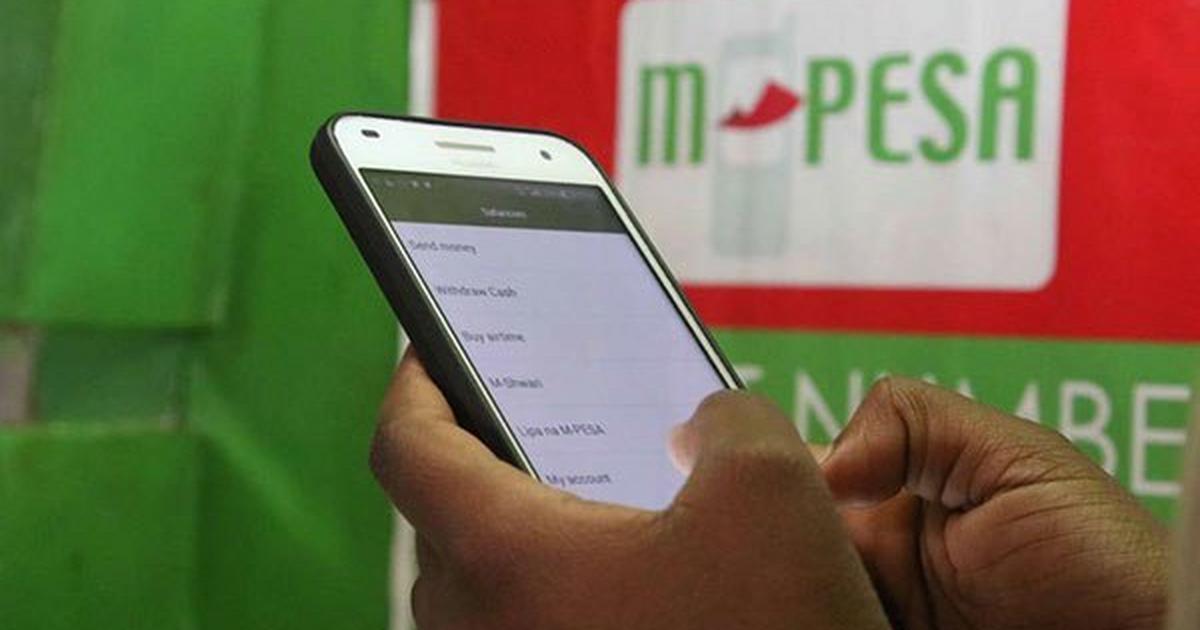
M-PESA, Safaricom’s mobile phone-based money transfer and payments service in Kenya, has recorded its fifth consecutive quarter of market decline as of the fourth quarter (Q4) 2024.

According to a report from the Communication Authority of Kenya (CA), M-Pesa’s market share dropped to 91% in Q4 2024, marking a 2.3 percentage point decline from the previous quarter.

Meanwhile, Airtel Money, a mobile money service offered by Airtel Africa has significantly increased its share from 7.6% to 8.9%, signaling a gradual but steady shift in the mobile money landscape.

This shift reflects a changing competitive landscape in Kenya’s mobile money ecosystem, driven by several factors. Reports reveal that Airtel Money has capitalized on aggressive promotions, such as reimbursing transaction fees with airtime through its ‘Smarta Bundles’ launched in February 2025, alongside offering lower transaction costs.

For instance, sending KES 1,000 ($7.7) via Airtel Money costs KES 11 ($0.085), making it a more affordable option compared to M-Pesa. Also, customers receive a 100% refund of transaction fees as airtime for bank-to-Airtel Money wallet transfers, cash withdrawals, and bill payments. This refund also applies to cash withdrawals at Airtel Money agents and payments made via paybills across all networks.

Additionally, increased interoperability since 2022 has made it easier for users to switch providers, further eroding M-Pesa’s once-unshakable dominance. Airtel Money remains a more cost-effective option for transactions, a key factor in its growing appeal. To ensure that customers enjoy the improved network, the company has been on an innovation spree, developing products and services that provide value for money, convenience, and flexibility.

Similarly, withdrawing the same amount on Airtel Money is KES 2 cheaper. Additionally, Airtel has expanded its agent network by partnering with major retailers like Naivas to enhance customer accessibility. However, M-PESA maintains an extensive footprint with over 160,000 agents nationwide, reinforcing its dominance despite the growing competition.

Despite this decline, M-Pesa remains the leading platform, as almost every single household in Kenya uses it. The mobile money platform has extended financial services to the unbanked and underbanked population, providing a low-cost and accessible platform for financial transactions. Notably, M-Pesa currently serves over 34 million customers and handles transactions worth KES 40 trillion ($308.8 billion) annually.

While Airtel Money, with an estimated eight million registered users, is still a smaller player in the East African country, it is however growing rapidly through strategic initiatives like network expansion and partnerships with retailers.

The recent info from the Communication Authority of Kenya (CA), suggests Airtel Money is successfully chipping away at M-Pesa’s lead, though M-Pesa’s extensive agent network (over 160,000 agents) and entrenched user base keep it far ahead for now. The upcoming rollout of the Central Bank of Kenya’s Fast Payment System (FPS) could further intensify competition by enabling instant transactions across all financial platforms.

In recent years, Kenya has experienced significant growth in mobile money uptake, largely supported by the government’s efforts to drive financial inclusion. The total mobile money subscriber base in Kenya has continued to surge as subscribers on mobile money platforms grew to 38.7 million, indicating a penetration rate of 75%.

In 2023, the country’s mobile money market grossed KES 17.2 billion ($133.2 million), with M-Pesa leading the industry with a dominant 96.5% market share. Fast forward to the fourth quarter (Q4) of 2024, mobile money subscribers reached 42.3 million in Q4 2024, up 4.1% from the previous quarter, showing that the market itself is expanding even as shares shift.

Kraken to Acquire NinjaTrader for $1.5 Billions

0

Kraken, a major cryptocurrency exchange, announced its agreement to acquire NinjaTrader, a leading U.S.-based retail futures trading platform, for $1.5 billion. This deal, subject to certain purchase price adjustments, marks a significant move for Kraken to expand its offerings beyond cryptocurrencies into traditional futures trading, leveraging NinjaTrader’s status as a Futures Commission Merchant (FCM) registered with the U.S. Commodity Futures Trading Commission (CFTC).

This acquisition enables Kraken to offer crypto futures and derivatives trading to its U.S. customers for the first time while also supporting its broader strategy to become a multi-asset trading platform, with plans that include equities trading and payments. NinjaTrader, founded in 2003, serves nearly 2 million traders with its advanced futures trading tools and will continue to operate as a standalone platform under Kraken’s umbrella.

The deal is expected to close in the first half of 2025, pending customary closing conditions. This move not only strengthens Kraken’s position in the U.S. market but also aligns with its global expansion goals, as it plans to use its regulatory licenses in the UK, Europe, and Australia to grow NinjaTrader’s presence internationally. The acquisition is seen as a landmark convergence of traditional finance and cryptocurrency, potentially setting the stage for further integration of these ecosystems.

By acquiring NinjaTrader, a CFTC-registered Futures Commission Merchant, Kraken gains the regulatory framework to offer crypto futures and derivatives trading to U.S. customers, a market it previously couldn’t fully tap due to stringent regulations. This could significantly boost its U.S. user base and revenue. Kraken positions itself as a stronger competitor against platforms like Coinbase, Binance.US, and others in the U.S., especially in the growing derivatives market, which often sees higher trading volumes than spot markets.

Kraken’s ambition to become a one-stop shop for trading cryptocurrencies, futures, equities, and even payments signal a broader trend of crypto exchanges diversifying into traditional financial products. This could accelerate the mainstream adoption of crypto by blending it with familiar TradFi offerings. NinjaTrader’s nearly 2 million traders, accustomed to futures in commodities, indices, and forex, may now gain easier exposure to crypto markets, fostering greater integration between these historically separate domains.

Kraken plans to use its existing regulatory approvals in the UK, Europe, and Australia to expand NinjaTrader’s futures trading services internationally. This could challenge established futures platforms globally and diversify NinjaTrader’s predominantly U.S.-focused user base. With Kraken’s technological infrastructure and NinjaTrader’s advanced trading tools, the combined entity could attract institutional and retail traders worldwide, enhancing liquidity and market reach.

Acquiring a regulated entity like NinjaTrader gives Kraken a foothold in the heavily regulated U.S. derivatives market, potentially shielding it from some of the regulatory uncertainties crypto-native firms face. This move could be a blueprint for other crypto exchanges navigating compliance. As U.S. regulators like the SEC and CFTC tighten oversight on crypto derivatives, Kraken’s acquisition positions it ahead of potential crackdowns, aligning with a more compliant, TradFi-friendly model.

NinjaTrader’s sophisticated trading platform, known for its charting and automation capabilities, paired with Kraken’s crypto expertise, could offer retail traders a more robust, seamless experience across asset classes. Depending on how Kraken integrates pricing and access, this could either democratize futures and crypto trading for smaller retail players or, conversely, raise costs if premium features are prioritized.

This deal might spark a wave of mergers and acquisitions as other crypto exchanges seek to diversify or acquire regulated entities to bolster their offerings, especially in the U.S. Rivals may need to accelerate their own plans for futures, equities, or multi-asset platforms to keep pace, potentially leading to innovation or consolidation in the sector. Merging NinjaTrader’s operations with Kraken’s crypto-focused ecosystem could face technical, cultural, or regulatory challenges, delaying the realization of synergies.

The $1.5 billion deal may attract attention from U.S. regulators, especially if it’s perceived as a workaround to crypto-specific restrictions, potentially complicating the 2025 closure timeline. This acquisition positions Kraken as a pioneer in blending crypto and traditional finance, with potential to reshape retail trading and challenge competitors. However, its success hinges on seamless integration, regulatory navigation, and market conditions in the coming years.