DD
MM
YYYY

PAGES

DD
MM
YYYY

spot_img

PAGES

Home Blog Page 174

U.S. Accuses Alibaba of Aiding Chinese Military Operations as Long-Running Distrust of Chinese Tech Deepens

0

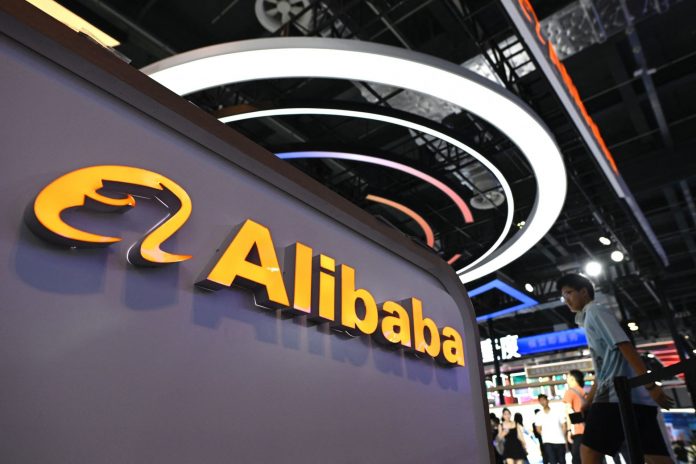
Washington has accused online marketplace giant Alibaba of providing technological support for Chinese military operations targeting the United States, according to a White House national security memo cited by the Financial Times on Friday.

The memo, which contains declassified top-secret intelligence, outlines how the company allegedly supplied capabilities to the People’s Liberation Army that the White House believes pose risks to U.S. national security.

The FT report did not specify which capabilities were involved, which military activities they allegedly supported, or whether the U.S. government is preparing a direct response. Even with those gaps, the disclosure was enough to rattle investors. Alibaba’s shares traded in the United States dropped 4.2% after the news.

Alibaba firmly rejected the allegations. “The assertions and innuendos in the article are completely false,” the company said in a statement. It added: “We question the motivation behind the anonymous leak, which the FT admits that they cannot verify. This malicious PR operation clearly came from a rogue voice looking to undermine President Trump’s recent trade deal with China.”

China’s embassy in Washington echoed that position. Embassy spokesperson Liu Pengyu said China “opposes and cracks down on all forms of cyberattacks in accordance with law,” and condemned the U.S. move.

“Without valid evidence, the US jumped to an unwarranted conclusion and made groundless accusations against China. It is extremely irresponsible and is a complete distortion of facts. China firmly opposes this,” Liu said.

A trust deficit despite fresh U.S.–China negotiations

While Beijing and Washington have recently engaged in talks aimed at easing trade tensions and stabilizing relations, the political backdrop remains fraught. The accusations against Alibaba underscore what officials in both countries quietly acknowledge: there is still a deep trust deficit. In Washington, suspicion toward Chinese technology companies has hardened into a structural, bipartisan stance, with concerns that firms could be leveraged—voluntarily or otherwise—for intelligence or military purposes.

That unease has shaped U.S. policy for years, long before this latest allegation.

How it escalated: From Huawei to TikTok — and now Alibaba

The distrust first surfaced prominently with Huawei, which Washington accused of posing national security risks due to its telecommunications equipment. The U.S. placed Huawei on its export blacklist in 2019, restricted access to American technology, and pressed allies to block the company from their 5G networks. China denied the allegations, but Huawei effectively became the first major casualty of the U.S. crackdown on Chinese tech.

The concerns later expanded to TikTok, owned by ByteDance, with U.S. intelligence agencies warning that the app could give Beijing access to American user data. Lawmakers pushed for restrictions and even forced divestiture, arguing that the social platform could be exploited for influence operations. ByteDance repeatedly denied the claims, yet the pressure persisted, marking TikTok as the second major target in Washington’s growing list of concerns.

Now, the spotlight has shifted to Alibaba.

The accusation that the company enabled Chinese military operations—an allegation Alibaba flatly denies—follows the same security logic that drove actions against Huawei and TikTok. Even as negotiations between Beijing and Washington reopen channels for cooperation, U.S. policymakers continue to act from a position that Chinese tech companies cannot be fully trusted due to their ties to, or obligations under, Chinese law.

A new front in a long-running rivalry

Though the White House memo reportedly contains declassified intelligence, the absence of public evidence leaves much unexplained. U.S. officials have not commented, and the FT report did not indicate whether further details will be released. Still, the timing is notable. The suggestion from Alibaba that the leak was intended to “undermine President Trump’s recent trade deal with China” shows how deeply geopolitical currents run beneath the accusation.

Beijing sees the allegation as another example of what it sees as Washington’s weaponizing of national security to contain China’s rise. For Washington, it is part of a broader strategy to secure its technological edge and prevent potential adversaries from acquiring or exploiting advanced capabilities.

Whether or not the U.S. pursues follow-up action, Alibaba has already found itself pulled into the same fault line that engulfed Huawei and TikTok. And with the U.S.–China tech rivalry accelerating, the company may not be the last.


Oracle Bonds Under Pressure as Plans for Additional $38bn in Debt Stir Investor Concerns

0

Oracle’s bond market turbulence deepened this week after fresh concerns surfaced over the company’s plan to take on another $38 billion in debt to fund its cloud and artificial-intelligence buildout.

The unease followed reporting by CNBC that the company intends to load significantly more leverage onto an already heavy debt stack, prompting renewed scrutiny from analysts and fixed-income investors.

Oracle has committed billions of dollars this year to expand its cloud and AI infrastructure. That effort has already pushed its outstanding debt to about $104 billion, including $18 billion in bonds, leaving the company spending more than it generates from operations as it chases long-term profit through major capacity contracts with firms such as OpenAI.

The market reaction has been immediate. Prices for Oracle’s 2033 bonds, carrying a 4.9% coupon, have slipped, lifting yields by more than three basis points over the last two weeks. Newer 2032 bonds with a 4.8% coupon have also seen yields climb by nearly two basis points in a week, according to traders monitoring the action.

The added pressure comes at a moment when several big tech names are leaning on debt markets to maintain their capital-spending and stock-buyback plans. Lisa Shalett, chief investment officer at Morgan Stanley Wealth Management, said the pattern has become clear across the industry.

“Most of the major tech companies are trying to sustain their buyback programs at the same time that they’re spending on capex currently and to do that, they’re actually borrowing and so they’re using debt,” she said.

According to Reuters, some of the concerns playing out in Oracle’s bonds have been echoed by credit analysts. Stu Novick of Gimme Credit said activity in the past few sessions indicates rising caution.

“There’s definitely some selling pressure,” he said. “The numbers are enormous and a lot of people are asking, ‘how are they actually making money on this stuff?’”

Even so, others argue the reaction is more of a stress ripple than a sign of deeper trouble. Tim Horan, chief investment officer for fixed income at Chilton Trust, downplayed the idea that the dip in Oracle’s bonds signals structural risk.

“I’m viewing this more as a bump in the road,” he said. “I don’t think what Oracle is experiencing is symptomatic of a popping of some kind of bond market expensive bubble.”

He added that the company still has levers to pull before it would need to touch dividends.

Beyond the bond moves, heavy spending from major players in the AI race has triggered a broader conversation about whether investors are underestimating the real cost of maintaining these massive infrastructure engines. Michael Burry — known for his prescient bet against the U.S. housing market before the 2008 financial crisis — recently argued that tech giants investing heavily in AI, including Oracle, Microsoft, and Google, have been extending depreciation schedules in ways that smooth reported earnings at a time when their capital outlays are surging. Burry estimated that between 2026 and 2028, those accounting choices could understate depreciation by roughly $176 billion across the sector, artificially lifting profit figures.

The durability of data-center investments has also entered the discussion. Michael Field, chief equity strategist at Morningstar in the Netherlands, said assigning a precise economic life to data-center infrastructure is increasingly difficult.

“It’s decreasing all the time and it could be single, low single-digit years very shortly,” he said. “It could be three to four years and then something’s obsolete, and you have to make a hell of a lot of money in that particular time to pay off the infrastructure that went into that site in the first place.”

That tension, massive upfront spending, short technology cycles, and increasingly careful investors, is now hanging over Oracle’s expansion drive. The company is wagering that long-term AI demand will justify its rising debt. Bond markets, for the moment, are signaling that buyers want more clarity before taking that on faith.

No Liquidation: Saylor Says Microstrategy Can Weather Any Bitcoin Storm

0

American entrepreneur and Billionaire business executive Michael Saylor has disclosed that his company, MicroStrategy is structurally prepared to survive any massive Bitcoin downturn.

Speaking in an interview with Grant Cardone, Saylor outlined the stress limits of MicroStrategy’s balance sheet and emphasized that a collapse in BTC would not force the firm to liquidate its holdings.

He explained that, with roughly $8 billion in debt and tens of billions in equity tied to Bitcoin, the company could withstand a decline of up to 90% before its collateral levels become tight. Even in such a severe scenario, he noted that the firm would turn to equity dilution before selling its Bitcoin. “The equity is going to be a loser,” he said, underscoring that shareholders, not BTC reserves, would absorb the blow.

He insisted that liquidation is not an option in any realistic downturn. When asked if MicroStrategy could ever be compelled to unwind its Bitcoin position, Saylor said, “We’re not going to liquidate.” Only if Bitcoin collapsed to zero, a total and permanent disappearance of value would bondholders face default risk”. As he summarized, “If Bitcoin fell to zero tomorrow forever, then the bonds would default.

Peter Schiff, a prominent gold advocate and Bitcoin critic, has recently criticised Strategy’s model, highlighting the risks in it. Schiff believes that MSTR’s entire business model is a fraud and has also challenged Saylor to debate him on this claim.

In a post on X, he wrote,

“MSTR’s entire business model is a fraud. Saylor and I will both be speaking at Binance Blockchain Week in Dubai in early December. I challenge @saylor to debate this proposition with me. Regardless of what happens to Bitcoin, I believe $MSTR will eventually go bankrupt. Let’s go!”.

Regardless of Bitcoin’s future, Schiff is convinced that Strategy will end up bankrupt. This comes as Bitcoin continues its dip below the $100,000 mark, currently trading at $95,749 at the time of writing this report. It is down 10% over the past week. Strategy’s stock also continues to face volatility amidst the recent downturn. It is currently trading at $199.75, down over 50% in the past 6 months.

US spot Bitcoin exchange-traded funds (ETFs) closed a third straight week in the red, deepening concerns that one of Bitcoin’s biggest institutional demand engines is stalling. Spot Bitcoin ETFs saw $1.1 billion in net negative outflows during the past trading week, marking their fourth-largest week of outflows on record, according to Farside Investors data. The ETF outflows occurred during a significant correction, as Bitcoin’s price fell by over 9.9% during the past week, to trade at $95,740 at the time of writing.

Amidst Bitcoin’s recent downward price action, Saylor has hinted in a recent post on X that the company has a “big week” ahead, suggesting that more Bitcoin purchases may be on the way. In a recent interview with CNBC, he said that the announcement would be “pleasantly” surprising. The Virginia-headquartered business intelligence firm remains the largest corporate Bitcoin holder by a huge margin, with a total of 684,412 BTC.

As bulls scan the horizon for signs of Bitcoin price direction, Saylor has predicted that the asset will end the year on a high note. The billionaire entrepreneur eyes $150,000 price by the end of 2025. 

China to Strengthen Fiscal Policy Over Next Five Years, Prioritize Strategic Growth, Innovation, and Social Support

0

China will intensify its fiscal policy over the next five years, Finance Minister Lan Foan said on Saturday in an interview with Xinhua News Agency, signaling a more proactive approach to supporting economic stability, domestic demand, and social development amid a volatile global environment.

Lan highlighted plans to strengthen both counter-cyclical and cross-cyclical regulation, adjusting the deficit-to-GDP ratio and the scale of government borrowing to respond to evolving economic conditions.

“We will adjust the deficit-to-GDP ratio and the scale of government borrowing to suit evolving conditions,” he said, reflecting a flexible approach designed to stabilize growth through fiscal measures.

The minister outlined the full range of fiscal tools China intends to use, including budgetary allocations, taxation, government bonds, and transfer payments, aimed at sustaining both economic and social development. These tools, Lan said, will help ensure fiscal policy contributes meaningfully to economic growth while addressing the social needs of citizens.

Acknowledging global challenges, Lan described the international environment as “volatile and unstable” and noted that competition among major economies is “becoming more intricate and intense,” without referencing specific countries or China’s ongoing trade disputes with the United States.

Domestically, the government plans to focus fiscal support on strategic sectors, including the modern industrial system, science and technology, education, and social security. Fiscal subsidies will also be deployed to stimulate the consumption of goods and services, signaling a clear policy shift toward boosting domestic demand as a driver of growth.

Lan also emphasized coordinated use of local government special-purpose bonds and ultra-long special treasury bonds, while optimizing the allocation of government investment. He said government spending will be targeted for efficiency and effectiveness, promoting both immediate economic activity and longer-term structural improvements.

Shift in Fiscal Priorities Compared to the Previous Five-Year Plans

China’s fiscal approach in the next five years marks a notable shift from earlier five-year plans. Historically, China’s fiscal policy was heavily focused on infrastructure investment and export-oriented growth, emphasizing large-scale construction projects and industrial expansion. While these measures supported rapid GDP growth, they also contributed to rising local government debt and overcapacity in certain sectors.

In contrast, Lan’s remarks indicate a pivot toward a more diversified and innovation-driven fiscal strategy. The emphasis on science and technology, modern industrial systems, and social security reflects lessons learned from previous cycles, where overreliance on infrastructure and exports left the economy vulnerable to external shocks. Additionally, fiscal support for domestic consumption and targeted subsidies highlights a move toward rebalancing growth, addressing inequality, and strengthening social welfare.

This proactive fiscal stance also indicates an effort to integrate government investment with strategic industrial policy, using tools such as special-purpose and ultra-long treasury bonds to direct resources efficiently. Compared with prior plans, there is a stronger focus on coordinated, evidence-based allocation of public funds, aiming to enhance both short-term economic resilience and long-term structural competitiveness.

The upcoming five-year fiscal strategy signals that Beijing intends to maintain a proactive, flexible approach to economic management, balancing immediate stimulus with long-term structural reforms. It is prioritizing innovation, social security, and domestic consumption alongside traditional investment channels, with the aim of sustaining growth momentum.

What Makes Live Dealer Casino Games the Hardest Space for Providers?

0

Sometimes, the best innovations come from the simplest of ideas. In the world of online casino gaming, for example, some bright spark wondered if they could utilize technological advancements in internet speeds and mobile devices to create a realistic casino experience in peoples’ homes. And so live dealer games were born.

Today, a small handful of slots providers have diversified into the live casino realm, producing games like blackjack and roulette that are enhanced by the presence of professional dealers and croupiers. The action is recorded live in a studio environment, and streamed immediately to the player’s device. Not only can you see the cards being dealt, and the wheel being spun, in front of your very eyes, you can also place bets and even chat with the dealer – creating a ‘home from home’ casino atmosphere.

These live dealer games have been one of the key innovations in the online casino space over the past decade or so, and yet so few software providers have diversified into producing these unique offerings. For the most part, if you play a live dealer game at an online casino, there’s a very strong chance that it will have been produced by one of two specialists: Evolution or Pragmatic Play. So why have so few firms moved into this ever popular niche of casino gaming?

Size Matters

When a developer of casino software designs a static game, let’s say a slot, it becomes a ‘cash cow’ product from the moment it’s finished.

The ongoing costs are minimal; once the game has been designed, developed, tested, and approved, it can be shared with partner casinos and remain in place on their site indefinitely. And then, the developer moves onto the next title in their release schedule.

Compare and contrast that to live casino games, which come with a catalog of ongoing costs and overheads to pay for. Most are filmed in a purpose-built studio, which have initial build and set-up costs, as well as ongoing maintenance fees – professional lighting, heating, rent etc. The dealers, croupiers and support staff, such as the floor manager and/or producer, also need to be paid!

And then there’s the technical infrastructure, which ensures that the stream is as smooth as possible for players. Investment in a robust server is essential, and there may be additional costs paid to storage and hosting providers. Besides that, companies also need the right licenses to run live-dealer games, and these often come with stricter rules and regular compliance checks.

The website and/or app on which the live dealer games are located also incur costs, such as hosting, security certificates, marketing, and ongoing maintenance. So creating live dealer games is an expensive exercise, which perhaps explains why there are so few newcomers to the sector.

Developing and publishing a static online casino game, such as slots or blackjack, can be expensive, but once completed the ongoing fees are minimal. But not so in the live casino environment, which racks up costs on a daily basis.

Best of the Best

There’s another reason why there are so few new entrants to the live casino space: Evolution and Pragmatic Play are just so good at what they do.

Evolution was founded way back in 2006, which enabled them to establish the ‘first mover advantage’ which can be so vital in any emerging industry or sector.

By 2013, they were celebrating the creation of their 100th live game, with studios located across Europe – in Riga, Malta and Spain, principally – that enable Evolution to localize their content for different audiences and languages.

They have since expanded into North America, while securing the licenses that allow them to create branded content – the Monopoly and Deal or No Deal live games are some of the most popular to this day.

Such was Evolution’s growth that they were able to acquire other key players in online casino gaming, like NetEnt and Red Tiger, to create an industry behemoth – today, their annual revenue exceeds $2 billion.

Pragmatic Play also has the scale and resources to produce high quality live dealer games in great quantity, and have been doing so for more than a decade. Their titles are featured at thousands of live casinos around the globe.

It would be very difficult for a new startup to enter this space, given the dominance of Evolution and Pragmatic Play, not to mention the initial, and ongoing, costs of delivering live dealer content that players return to time after time.