DD
MM
YYYY

PAGES

DD
MM
YYYY

spot_img

PAGES

Home Blog Page 1769

Social Media Ads: The Power of Pictures, Text, and Platforms

0

While it’s no secret that visuals often outperform plain text in online spaces, the tricks behind this trend deserve a closer look. Are social media posts with pictures always more popular? And why do some pictures spark more interest than others?

Our latest research at Infoprations, drawing on 2025 data from 128 national and foreign brands, reveals compelling insights about content formats and how they perform across major platforms. Our focus is to help content creators, brand managers, and communication specialists craft smarter, platform-specific strategies.

The analysis shows that while pure image-based content performs better than plain text in general, text-over-image formats consistently outperform both when it comes to likes, comments, and shares. This points to an essential principle in digital communication: people want to understand, connect, and relate quickly.

In a world overwhelmed with visuals, those that offer some cognitive or emotional value, such as a quick fact, a headline, or a short story, stand out.

Exhibit 1: Average engagement patterns per form of ads

Source: Social media handles of brands, 2025; Infoprations Analysis, 2025

The Visual Advantage – But Not Always

It’s widely acknowledged that image-based ads tend to attract higher engagement than those relying solely on text. Visual content (photos, infographics, videos) has an edge because it instantly captures attention and often conveys emotion or information more quickly than words alone. These types of posts are more likely to be liked, commented on, and shared, contributing to greater organic reach and message recall.

However, not all visual content performs equally. Interestingly, posts that combine text with visuals, such as overlaying short captions or insights on an image, tend to outperform image-only posts. In this regard, our analyst notes that audiences value context, clarity, or storytelling that goes beyond visual appeal. Particularly on platforms like Facebook and LinkedIn, users respond well to content that balances aesthetic appeal with meaningful communication.

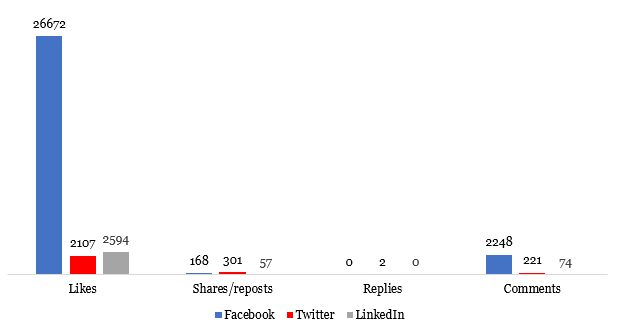
Exhibit 2: Average engagement patterns per platform
Source: Social media handles of brands, 2025; Infoprations Analysis, 2025

In our analysis, we found that Facebook remains the king of broad engagement. It’s ideal for building emotional connections and communal awareness, making it a go-to for campaigns that seek to mobilize public sentiment or tell human-centered stories.

Twitter thrives on virality and topicality. Posts here should be concise, punchy, and often tied to trending discussions. It’s the best place for issue amplification, influencer engagement, and sparking real-time conversation. LinkedIn, on the other hand, leans into professional validation. While it has relatively lower engagement depth in terms of likes and shares, it’s a powerful platform for credibility, networking, and thought leadership, especially for niche or technical content.

Strategic Insights

So, what does this mean for your social media strategy? It means you shouldn’t just follow general rules, you need a platform-specific approach. Don’t rely on standalone visuals or long-form text alone. Instead, aim for a hybrid approach: Use strong imagery with text overlays to deliver concise, compelling messages. Save long-form text posts for insights or storytelling that require context.

Harnessing each platform’s strengths is important. For instance, use Facebook for broad reach and emotional storytelling. It’s the platform for engaging everyday users and mobilizing collective sentiment.

Twitter is good for amplifying issues, tagging influencers, and joining trending conversations. This will ultimately lead to sparkling reactions and shareability. Use LinkedIn to position yourself or your organization as a thought leader. Prioritize professional tone and informative content that demonstrates expertise.

Infoprations’ Understanding Digital Integrated Marketing Communications Team includes Abdulazeez Sikiru Zikirullah, Moshood Sodiq Opeyemi, and Bello Opeyemi Zakariyha


Level up your paperwork game with an online notary

0

In the fast-moving world of esports and competitive gaming, the last thing you want is to be slowed down by clunky paperwork. Whether you’re finalizing a sponsorship, signing a team contract, or claiming a prize payout, using an online notary can keep your momentum going strong. With platforms likehttps://onenotary.us/, you can verify your documents quickly and securely, no matter where you’re queuing from, your desk, your couch, or the tournament floor. Fast-track your legal documents the same way you fast-track ranked matches, no lag, no delays, and no unnecessary pauses on your way to victory.

Sponsorship deals shouldn’t lag

So, you just landed a sponsor. Maybe it’s an energy drink brand, a streaming gear company, or even a custom keyboard maker. Nice. But before you slap their logo on your hoodie or shout them out on stream, there’s a contract to sign. And let’s be honest, you don’t want to be chasing down a notary in the middle of a scrim or during tournament prep. That’s where an online notary saves the day.

You get everything sorted fast, with a professional verifying your identity and witnessing your signature, all over video call. It’s legally solid, fast, and totally gamer-friendly. What do you think is the coolest thing? You don’t have to pause your grind or step away from your setup. Just think of it as your ultimate support tool, always ready, always reliable, and never throwing mid-match.

Team contracts that won’t tilt you

Managing or joining an esports team is exciting, but it also comes with paperwork. Player agreements, revenue shares, travel commitments, those details need to be clear and properly signed. Too often, though, those documents sit in someone’s inbox unsigned or end up buried in a Discord thread. Not great.

You can clean all that up with a simple online notarization session. You and your teammates can each jump on individually from anywhere in the world, verify your IDs, and sign on the digital dotted line. Done and done. It takes the pressure off the team manager and brings some well-deserved structure to your squad.

  • Here’s what makes it even better for players and teams:
  • No travel needed to get documents legally signed.
  • Valid anywhere and instantly downloadable after signing.
  • Keeps everyone accountable with clear digital records.

When things are notarized correctly, there’s no confusion later. Everyone knows the deal and can focus on what matters, winning. Less time on admin, more time grinding the leaderboard.

Prize money without the paperwork maze

You won the tournament. You popped off. Now comes the prize check. But first, the event organizer needs your tax form, ID verification, and signature on a payout release. And the deadline is tight. Sound familiar?

Instead of stressing about finding a notary last minute, just use an online notary. You hop on a quick call, sign everything with official verification, and send it right back. It keeps you on track and ensures you don’t miss out on your winnings because of missing paperwork.

Online notarization is like the support role of the esports world, always behind the scenes, keeping the play going. Whether you’re sealing a deal, locking in a contract, or collecting your hard-earned prize, it keeps everything smooth, fast, and secure. And yes, you can still do it in your favorite hoodie with your cat sitting next to you. Because modern notarization was built for your lifestyle, not the other way around. So go ahead, stream, sign, win, repeat. This time, you’ve got your legal game as polished as your reflexes.

Trucking Tech – How Indiana Fleets Are Going Digital

0

If you run a trucking company in Indiana, you’ve probably noticed that things are changing fast.

What used to be a business built on paper logs, muscle memory, and a good sense of direction is now moving toward apps, sensors, and automation. Customers expect real-time updates. Drivers rely on routing software. Compliance rules are piling up. And technology isn’t just helpful anymore, it’s becoming part of the job.

Some companies are ahead of the curve. Others are still trying to figure out where to start. But whether you’ve got 5 trucks or 500, adapting to digital tools is no longer optional.

Let’s see how Indiana fleets are going digital, what tools are being used, what legal responsibilities come with them, and how both large and small companies are keeping up.

Smarter Trucks, Smarter Roads

More Than Just a Map

Most people are familiar with GPS as a tool to get from point A to point B. But modern GPS systems in the trucking world are more than just digital maps. They help dispatchers and drivers avoid road closures, construction zones, traffic jams, and tight delivery windows. They’re connected to weather alerts and can reroute trucks on the fly.

Planning Every Stop the Smart Way

Route optimization takes things further. It doesn’t just plan the fastest route, but it also analyzes multiple stops, fuel costs, vehicle weight, traffic conditions, and even loading dock availability to make sure a driver is following the most efficient plan possible. Less idling and less time stuck in traffic means better fuel economy and faster turnaround times.

Knowing Where Everything Is—Right Now

Real-time tracking tools let fleet managers know where every truck is at any given moment. If a shipment is delayed, they can find out why. If a truck breaks down, they can dispatch help immediately. These tools also provide better visibility for customers, who are increasingly expecting shipment tracking similar to what they get from online retailers.

It’s not just about speed or convenience. It’s about control and knowing what’s happening, when, and where.

Legal Matters and Staying Ahead of the Curve

Regulations Are Changing the Game

One major shift in the last few years was the federal requirement for ELDs, or electronic logging devices. These systems replaced paper logbooks and automatically record a driver’s hours of service. The rule was meant to improve road safety and reduce overwork, but it also brought new compliance standards, especially for smaller fleets that hadn’t previously invested in fleet technology.

As more tech is introduced into trucking, the legal expectations are getting more complex. Companies are handling larger volumes of data, everything from GPS logs and driver behavior to maintenance records and cargo tracking. That data is helpful, but it’s also sensitive, and how it’s handled matters.

Accidents and Accountability

If a truck is involved in an accident, whether it’s a minor fender bender or a major highway crash, data from tracking and logging systems will often be the first thing investigators look at. That data can help clear up what happened. But it can also be used against a company in court.

That’s why more fleet operators are keeping a lawyer on standby.

Having a truck accident lawyer from Indiana, one who’s familiar with commercial transportation law, insurance claims, and federal safety regulations, can make all the difference. They understand how telematics data is interpreted in investigations. They know how to protect a company’s interests if something goes wrong. And they can advise on how policies and technology should be set up in the first place—before an accident ever happens.

Proactive Legal Help, Not Just Damage Control

Some companies wait until they need legal help. But the ones thinking long-term are bringing lawyers into the conversation early, reviewing driver policies, helping draft safety protocols, and making sure the data being collected is actually helping the business, not exposing it to extra risk.

This kind of preparation doesn’t just save time and money. It builds confidence for managers, drivers, and customers.

Small Fleets, Smart Moves

Doing More With Less

You might assume that only large logistics companies can afford to go digital. They have bigger budgets, tech teams, and access to enterprise-level platforms. But that’s not the full picture.

Across Indiana, smaller and mid-size fleets are finding smart ways to adopt tech on their own terms. Many of the tools used today, like GPS apps, mobile tracking software, and driver safety platforms, are available on subscription models that scale based on fleet size. You don’t need to overhaul your entire operation overnight. You can start with one truck, one route, or one feature at a time.

Starting Small, Seeing Results

For example, one regional carrier added basic GPS tracking to their fleet of 12 trucks. It wasn’t a massive investment, but it solved a huge headache: dispatchers no longer had to call drivers for location updates, and the company gained better visibility into delivery times. After six months, they upgraded to route optimization software to plan stops more efficiently and saw fuel costs drop noticeably.

These companies aren’t trying to match the biggest logistics firms in tech spending. They’re focusing on what moves the needle for their business. Whether that’s reducing idle time, improving delivery accuracy, or staying ahead of safety audits.

What’s Next for Indiana Fleets?

Smarter Trucks, Safer Roads

Driver-assist systems like lane-keeping alerts and adaptive cruise control are already showing up on new trucks, helping reduce fatigue and prevent accidents. Predictive maintenance tools are using real-time engine data to flag mechanical issues before breakdowns happen. These upgrades improve safety and reduce downtime without requiring a full tech overhaul.

Indiana’s Role in the Future of Freight

Indiana’s central location, strong highway network, and dense logistics infrastructure make it a strong candidate for early adoption of future trucking tech, including possible autonomous freight corridors or automated warehouse integration. While fully self-driving trucks aren’t here yet, the state is positioned to be part of that future when it arrives.

Final Takeaway

Tech is changing how freight moves across Indiana. From GPS and route planning to legal readiness and compliance tools, fleets are stepping into a more digital, connected world.

It doesn’t have to be overwhelming. Companies are proving that you can start small, stay compliant, and still run a tight, modern operation without blowing the budget.

The trucks are still moving. The freight is still being delivered. But now, more than ever, the difference between staying competitive and falling behind comes down to who’s using the right tools and who’s ready for what’s next.

World Liberty Financial Airdroping USD1 Could Solidify Its Stablecoin Adoption 

0

World Liberty Financial (WLFI) proposed a test airdrop of its USD1 stablecoin to all WLFI token holders to validate its on-chain airdrop system, reward early supporters, and boost USD1 visibility before a broader launch. The airdrop, planned for Ethereum Mainnet, will distribute a fixed amount of USD1 per eligible wallet, with the exact amount and timing still under review based on the number of wallets and budget. The proposal requires community feedback and a governance vote to proceed, but WLFI reserves the right to modify or cancel it even if approved. The USD1 stablecoin, launched in March 2025, is pegged to the US dollar, backed by US Treasuries, dollar deposits, and cash equivalents, and managed by custodian BitGo.

USD1 is fully collateralized by a reserve of high-quality, low-risk assets, including US Treasuries, US dollar deposits, and cash equivalents. These assets are held in segregated accounts to ensure transparency and security. BitGo, a reputable digital asset custody provider, manages the storage of USD1’s reserve assets, adding a layer of trust and accountability.

USD1 tokens are issued only when corresponding fiat or equivalent assets are deposited into the reserve. Token holders can redeem USD1 for US dollars at a 1:1 ratio, subject to standard compliance checks (e.g., KYC/AML), ensuring the peg is maintained through direct convertibility. WLFI commits to regular audits and attestations of the reserve assets by third-party firms to verify that the circulating supply of USD1 is fully backed. These reports will be publicly accessible to maintain trust.

The WLFI community, through its governance framework, can propose and vote on adjustments to USD1’s operations, such as reserve management or redemption policies, to adapt to market conditions while prioritizing stability. WLFI employs arbitrage incentives to keep USD1’s market price aligned with its $1 peg. If USD1 trades below $1, traders can buy it at a discount and redeem it for $1, profiting from the difference. If it trades above $1, new tokens can be issued against deposited collateral, increasing supply to correct the price.

WLFI monitors macroeconomic factors like interest rate changes or Treasury yield fluctuations that could affect reserve assets. The diversified reserve composition aims to mitigate risks from any single asset class. While WLFI emphasizes robust stability measures, external risks like regulatory changes, market volatility, or operational issues could pose challenges. The governance proposal for the USD1 airdrop does not directly impact these stability mechanisms but aims to increase adoption, which could enhance liquidity and price stability through broader market participation.

Distributing USD1 via airdrop could boost its circulating supply and market presence, potentially improving liquidity. Higher liquidity typically supports price stability by reducing volatility and tightening the peg to $1 through active trading and arbitrage. The airdrop will test WLFI’s on-chain distribution system and BitGo’s custodial operations. Any technical hiccups (e.g., delays, wallet errors) could undermine confidence in USD1’s operational reliability, indirectly affecting perceptions of its stability.

If a significant number of airdrop recipients redeem USD1 for fiat, it could strain WLFI’s reserve management. However, the fixed airdrop amount per wallet and compliance checks (KYC/AML) should limit mass redemptions, preserving reserve integrity. Successful execution of the airdrop could reinforce trust in USD1’s 1:1 peg, audited reserves, and governance model. Conversely, any mismanagement or deviation from the promised peg could trigger market skepticism, potentially destabilizing USD1’s price.

The airdrop rewards early supporters, potentially increasing WLFI token demand as new investors seek eligibility. This could drive WLFI token price appreciation, though speculative spikes may introduce volatility. The proposal’s reliance on community feedback and voting empowers token holders, reinforcing WLFI’s decentralized ethos. Active participation could shape USD1’s future policies, including stability measures.

Holders receiving USD1 inherit risks tied to stablecoin adoption, such as regulatory scrutiny or market fluctuations. If USD1 faces stability issues post-airdrop, it could indirectly affect WLFI token sentiment. USD1’s airdrop aims to capture market share in a crowded stablecoin space (e.g., USDT, USDC). Increased visibility could position USD1 as a viable alternative, but failure to maintain stability could cede ground to competitors.

A high-profile airdrop may attract regulators, especially given USD1’s fiat-backed model and cross-border distribution. Tighter regulations could complicate USD1’s operations or reserve management, impacting stability. If USD1 gains traction post-airdrop, it could integrate into DeFi protocols, payment systems, or remittance channels, enhancing utility. However, widespread adoption hinges on consistent stability and trust in WLFI’s governance.

An overly generous airdrop could inflate USD1’s supply beyond reserve capacity, though WLFI’s fixed-amount approach mitigates this. Recipients may sell USD1 immediately, pressuring its market price below $1. Arbitrage mechanisms should counter this, but rapid sell-offs could test the peg. While community input strengthens decentralization, conflicting voter priorities could delay or derail stability-focused decisions.

Solana’s Dev Activity Drops as Traders Turn to RCO Finance for Momentum

0

Trends in cryptocurrency can change in short periods, and as traders look for new opportunities, an investment that was once favored may swiftly lose favor. One such change is currently taking place as cryptocurrency traders focus more on RCO Finance (RCOF) than Solana.

Due to a sharp decline in recent weeks, many traders are already doubting Solana’s long-term sustainability. RCOF is busy making a name for itself in the DeFi sector as utility-driven initiatives become more prevalent.

Read on to find out more about why Solana traders are moving over to the RCOF presale to secure their spots.

The Solana (SOL) Ecosystem Experiences Reduced Activities As Whales Unstake Investments

A huge Solana [SOL] whale has prompted new speculation after unstaking and depositing 71,448 SOL—worth around $8.54 million—on Binance.

This decision comes amid rising fears about heightened sell pressure from major holdings within the Solana network.

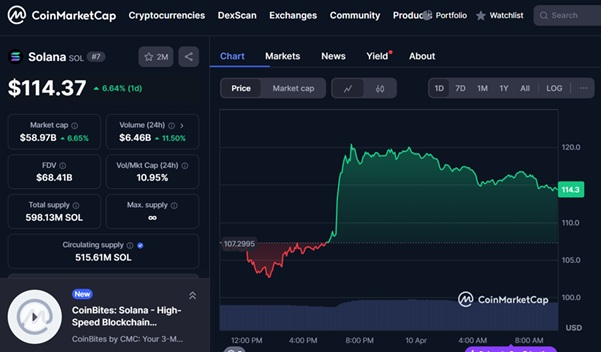
Currently, SOL is trading at about $114.38, up 6.64% in the past 24 hours. In addition to this transaction, other major investors have offloaded more than 149,000 SOL in the last 24 hours, with sales ranging from $102 to $108.

Interestingly, despite this big withdrawal, the same whale still has 568,000 SOL in staking contracts, worth around $68 million.

These on-chain transactions have revived speculation over whether Solana is headed for a short-term fall or if whales are merely reallocating ahead of the next round of market activity.

RCO Finance (RCOF): The New AI Crypto Project Drawing in Solana Traders

One of the things that draws Solana traders to the RCOF project is its comparatively modest market capitalization. Historically, low-cap cryptocurrencies with excellent fundamentals have the potential for explosive growth.

RCO Finance includes traditional financial assets in its ecosystem. Traders can use RCOF to buy stocks, bonds, real estate, and other investments without having to convert their cryptocurrency to cash. This bridges the gap between traditional and decentralized finance, providing new levels of investment freedom.

RCO Finance uses a decentralized governance architecture, which gives token holders a role in critical platform decisions. Users can vote on protocol modifications and ecosystem updates with RCOF tokens, guaranteeing that the project evolves in response to community requirements.

This democratic framework instills a sense of ownership in investors, thereby increasing long-term engagement.

RCOF runs on an Automated Market Maker (AMM) concept, which allows users to contribute liquidity while earning passive income. Unlike traditional order book trading, AMM maintains continual liquidity while reducing price slippage.

Crypto traders can stake their assets in liquidity pools and collect incentives, making RCOF a potentially profitable investment for those looking for a steady income.

One of RCOF’s standout features is its AI-powered Robo Advisor, which is intended to help cryptocurrency traders make smart investing decisions. This AI analyzes the market, detects profitable trading opportunities, and notifies users in real time.

For example, if a lesser-known cryptocurrency like Ethernity Chain skyrocketed by 67% in 24 hours, the Robo Advisor would have warned crypto traders of its quick price movement prior to the boom, allowing them to generate enormous ROI.

RCOF also provides access to over 120,000 assets across several investment classes, including traditional equities, ETFs, and tokenized real-world assets. This huge assortment offers crypto traders unique diversification choices, lowering risk and increasing returns.

Unlike many financial systems that require intrusive identity verification, RCO Finance uses a KYC-free model. This makes it an appealing option for privacy-conscious crypto traders who want to stay anonymous while using decentralized financial products.

RCOF was one of the first DeFi initiatives to release a beta platform during the presale process. This approach enables early users to try AI-powered trading tools, provide comments, and improve the platform prior to its full-scale deployment.

Over 10,000 users have already joined the beta, indicating a strong market interest in RCOF’s ecosystem.

This proactive approach to development guarantees that the end product meets user expectations. The beta launch not only fosters trust but also gives early investors an advantage in mastering RCOF’s advanced trading tools prior to wider market acceptance.

Join the RCOF Public Presale and Be the Next Crypto Millionaire

RCO Finance, which is currently in its 5th presale phase, has already gathered more than $14.45 million, indicating strong investor demand.

The RCOF crypto token is now priced at $0.100000, with analysts predicting an over  50,000% increase by mid-2025. This is another strong reason traders can’t seem to get enough of this new AI crypto coin.

The RCOF crypto project has undergone a thorough assessment by SolidProof, confirming its security and authenticity. RCOF is especially appealing to experienced traders wanting to maximize their gains during the next bull market.

RCO Finance is gradually emerging as a major player in the Crypto sector. As crypto traders shift away from speculative assets, RCOF’s AI-powered trading tools and passive income potential offer an appealing alternative.

Buy the RCOF token now and your portfolio will thank you!

For more information about the RCO Finance (RCOF) Presale:

Visit RCO Finance Presale

Join The RCO Finance Community