DD
MM
YYYY

PAGES

DD
MM
YYYY

spot_img

PAGES

Home Blog Page 1790

Dominance of Volkswagen (VW) in the German EV Market and Tesla’s Declining Sales Carry Significant Implications

0

Recent trends in the German electric vehicle (EV) market show Volkswagen (VW) taking a strong lead while Tesla experiences a decline in sales. In the first quarter of 2025, Volkswagen has emerged as the top-selling electric car brand in Germany, with its vehicles dominating new registration figures. Data from Germany’s Federal Motor Transport Authority (KBA) indicates that VW registered 25,393 purely electric cars between January and March 2025, far outpacing Tesla, which recorded only 4,935 new registrations in the same period—a significant drop that places Tesla in eighth place among EV manufacturers in Germany.

This shift highlights VW’s firm grip on the market, bolstered by its diverse lineup of electric models from brands like VW, Skoda, Audi, and Seat, which collectively hold a substantial share of new EV registrations. Tesla’s sales in Germany have seen a sharp decline, with a reported 62.2% drop in the first quarter of 2025 compared to the same period in 2024. This downturn contrasts with an overall increase of 38.9% in new electric vehicle registrations in Germany during the same timeframe, suggesting that the broader EV market remains robust despite Tesla’s struggles.

Several factors may be contributing to Tesla’s decline, including an aging model lineup, increased competition from German automakers like VW and BMW (which registered 10,315 EVs in Q1 2025), and potential backlash against Tesla CEO Elon Musk’s political activities, such as his support for Germany’s far-right Alternative fu?r Deutschland (AfD) party. Meanwhile, Volkswagen’s strong performance underscores its ability to capitalize on local market preferences and stricter CO2 emissions targets, solidifying its dominance in the German EV landscape as of early 2025.

VW’s lead strengthens Germany’s position as a powerhouse in the automotive sector, particularly in the transition to electric mobility. This could translate into sustained job growth in manufacturing, R&D, and supply chains, especially in regions like Lower Saxony, where VW is headquartered. It also reinforces confidence in German engineering amid global competition. Tesla’s sales drop in Germany, a key European market, may force the company to rethink its pricing, production, and marketing strategies. With its Berlin Gigafactory operational, Tesla’s declining market share could lead to underutilized capacity, impacting profitability and potentially prompting cost-cutting measures or shifts in focus to other regions.

The shift suggests German consumers may prefer locally produced EVs, possibly due to brand loyalty, better alignment with local needs (e.g., smaller, more affordable models), or incentives favoring domestic manufacturers. This could influence other European markets, where VW also has a strong presence. VW’s success, alongside BMW’s solid performance, intensifies competition in the EV sector. This could accelerate innovation as Tesla, once a market leader, faces pressure to refresh its aging lineup (e.g., Model 3 and Model Y) and counter offerings like VW’s ID. series or BMW’s i4 and iX. Smaller players or new entrants may struggle to keep pace.

VW’s dominance may reflect a more robust supply chain strategy, leveraging local suppliers and avoiding the disruptions Tesla has faced globally (e.g., shipping delays or semiconductor shortages). This could push other automakers to localize production further, reshaping global EV supply networks. VW’s investment in battery technology and software (e.g., through its PowerCo subsidiary and partnerships) might be paying off, giving it an edge over Tesla’s reliance on its established but less diversified tech ecosystem. This could set a precedent for integrated, scalable EV platforms.

VW’s rise aligns with the European Union’s push for self-sufficiency in critical technologies like EVs and batteries, reducing reliance on foreign firms like Tesla or Chinese manufacturers e.g., BYD, which is also gaining traction. This could bolster EU subsidies and regulations favoring European automakers, amplifying VW’s advantage. Tesla’s sales decline may partly stem from Elon Musk’s vocal support for Germany’s AfD party, which has alienated some consumers and drawn scrutiny from German regulators. This highlights how corporate leadership’s political stances can impact market performance, especially in politically sensitive regions.

If Tesla’s European foothold weakens, it could cede ground to European and Chinese competitors in the global EV race. Germany’s market trends might signal a broader shift, with implications for Tesla’s dominance in the U.S. and its ambitions in Asia, where VW and others are also expanding. VW’s dominance could stabilize Germany’s EV adoption trajectory, supporting the country’s 2035 goal to phase out combustion engines. However, Tesla’s decline might dent its brand prestige, prompting a response—perhaps a price war or new model launches—that could disrupt the market again.

UK MARKET: How Personal Values Shape Our Views on Fast Fashion and Sustainability

0

Clothing oneself is as essential as food for sustaining the body and prolonging life. However, clothing production is typically divided into two categories: fast fashion and sustainable fashion. Fast fashion involves the use of materials that are not environmentally friendly, along with consumers’ irresponsible use and disposal of clothing. In contrast, sustainable fashion prioritizes eco-friendly materials and processes. Every step in sustainable fashion is designed to minimize harm to the environment and ensure that the needs of future generations are not compromised.

Several reports have highlighted the global growth of fast fashion in contrast to sustainable fashion. One such report indicates that the international fast fashion market was valued at over USD 60 billion in 2022 and is expected to surpass USD 170 billion by 2030. According to a recent McKinsey report, 40% of U.S. and 26% of U.K. consumers shopped at fast fashion giants Shein or Temu in 2023.

Climate activists and other stakeholders have consistently argued that the fast fashion industry is responsible for a significant amount of global waste. This has created a tension between the fast fashion and sustainable fashion industries, with consumers caught in the middle. As our analysis of the views expressed by interviewed UK consumers indicates, there is a clear tension between affordability and ethical consumption, as well as concern for the environment.

For many of us, our personal beliefs and values not only influence how we think about fast fashion brands and their sustainability initiatives, but also shape how we interact with the clothes we wear.

The Skepticism Behind the Hype

A prevailing sentiment among conscious consumers is one of deep skepticism. We’ve seen brands release “green” collections and issue sustainability reports, but when their core business model thrives on overproduction, low-wage labor, and resource-intensive supply chains, these efforts often feel disingenuous. “Greenwashing” is no longer a fringe accusation—it’s a widely acknowledged marketing strategy.

For those of us who prioritize sustainability and fairness, it’s not enough to slap a recycled label on a t-shirt. We’re demanding transparency, genuine reform, and a shift in priorities. As one respondent put it, “True sustainability means addressing the root issues, overproduction, worker exploitation, and waste, and making meaningful, transparent changes.”

Ethics Over Excess

Personal values like fairness, responsibility, and environmental stewardship play a critical role in how we evaluate fast fashion. For many, these aren’t abstract ideals—they’re guiding principles. “I believe that businesses have a duty not just to make a profit, but to do so ethically,” said one person, reflecting a broader view that profit should not come at the cost of human rights or ecological damage.

This ethical stance often translates into intentional consumer behaviour. While some are committed to reducing their fast fashion purchases or avoiding them altogether, others are choosing quality over quantity. “I will always support quality over quantity,” one response read, a philosophy that not only promotes longevity in clothing but inherently resists the fast fashion cycle of disposability.

The Affordability Dilemma

However, values don’t exist in a vacuum, and ethical intent often collides with economic reality. Sustainable clothing can be prohibitively expensive. Many consumers are torn between wanting to do the right thing and being able to afford it. “I wish I could partake sustainably, but I can’t afford it,” one person admitted. Others echoed similar frustrations, revealing a painful awareness of the ethical compromise they feel forced to make.

It’s a reminder that the sustainability conversation must also address accessibility. If sustainable fashion is only available to those with disposable income, it will never become a widespread solution. Fast fashion’s appeal lies in its affordability and convenience; unless sustainable alternatives can offer comparable benefits, ethical shopping will remain a privilege, not a norm.

Not Everyone Is Thinking About It

Interestingly, not all consumers are driven by values when it comes to fashion choices. Some admit they’ve never thought about the sustainability of the brands they buy from. Others prioritize comfort, style, or price, with little regard for ethical concerns. “I’m not that big on sustainability. I buy based on fashion appeal,” one respondent said bluntly. For these individuals, fast fashion serves a functional or stylistic purpose that outweighs moral considerations.

This spectrum of awareness and concern is a crucial insight. While some are deeply influenced by environmental ethics or labor practices, others are either disengaged or unaware. There’s still a gap in education and outreach, and brands have a role to play in helping close it, not through performative marketing, but through genuine engagement and transparency.

The Emotional Tug-of-War

Even among those who are aware, fast fashion can trigger a conflicted emotional response. Guilt and frustration are common. “I feel guilt over purchasing fast fashion, but not enough to completely stop,” one person shared. This emotional tug-of-war illustrates just how complex the issue is. Values may guide intention, but budget, convenience, and habit often guide action.

Still, there’s hope in incremental change. Many consumers are making conscious efforts to reduce their purchases, buy secondhand, or support local artisans. Some are simply buying less. These actions may seem small, but collectively they send a powerful message: consumers are watching, thinking, and acting.

Toward a More Responsible Fashion Future

Fast fashion isn’t going away tomorrow, but our collective mindset is shifting. The way people talk about their clothing choices today (with self-awareness, critique, and a desire for change) signals a growing demand for a better system.

For brands, this means the bar is rising. A sustainability initiative can no longer be a footnote in a CSR report. It needs to be embedded in the entire business model. Transparency, fairness, quality, and long-term environmental impact must be at the core, not just for show, but for real.

Exploring the European Union’s Zero-For-Zero Tariffs Offers to the U.S.

0

The European Union, led by European Commission President Ursula von der Leyen, offered the United States a “zero-for-zero” tariff deal on industrial goods. This proposal aims to eliminate tariffs on items like cars, chemicals, pharmaceuticals, rubber, plastic machinery, and other industrial products, mirroring agreements the EU has successfully implemented with other trading partners. The offer comes as a proactive move to avert a potential trade war, with U.S. President Donald Trump set to impose new tariffs starting April 9, 2025—including a 20% tariff on EU imports and a separate 25% rate on steel, aluminum, and cars.

These U.S. tariffs, described as “reciprocal” by Washington but dismissed as unjustified by Brussels, threaten over €380 billion in EU exports. Von der Leyen emphasized Europe’s readiness for a “good deal” while also signaling preparedness to retaliate if negotiations fail, reflecting a dual strategy of cooperation and defense amid escalating trade tensions. The EU’s offer of a “zero-for-zero” tariff deal on industrial goods with the US, set against the backdrop of looming US tariffs, carries significant implications across economic, political, and global trade dimensions.

If accepted, the deal could enhance transatlantic trade by removing tariffs on industrial goods, benefiting industries like automotive, pharmaceuticals, and machinery. EU exports to the US, valued at over €380 billion annually, would avoid the 20% tariff (plus 25% on steel, aluminum, and cars), preserving competitiveness. Rejection, however, would raise costs for EU exporters, potentially reducing US market share and hitting economies like Germany, a major car exporter. Zero tariffs could lower prices for industrial goods in both regions, benefiting consumers and manufacturers reliant on imported components.

Conversely, US tariffs would likely increase prices, fueling inflation—already a concern given recent US economic policy shift. The EU’s signaled readiness to retaliate (e.g., targeting US exports like agriculture or tech) could escalate costs for American firms, disrupt supply chains, and hurt sectors unprepared for tit-for-tat measures. Acceptance could signal a thaw in US-EU tensions, strained by Trump’s “America First” stance. Rejection might deepen mistrust, framing the EU as a trade adversary alongside China, which faces even steeper US tariffs (60%+). This could weaken NATO cohesion or climate cooperation, where unity is already fragile.

The proposal tests the EU’s ability to present a united front. Smaller member states reliant on US markets might push for compromise, while larger economies like France or Germany could favor a harder line if talks falter, exposing internal divisions. Trump’s tariff threats play to his base, promising manufacturing jobs, but industries dependent on EU imports (e.g., auto parts) might lobby against escalation, creating a tug-of-war within his administration. Unilateral US tariffs flout World Trade Organization norms, potentially weakening the global trade framework.

A successful EU-US deal could reinforce bilateralism as a workaround, but failure might accelerate a shift toward protectionism worldwide. Other nations (e.g., Canada, Japan) with similar EU trade pacts might seek US deals, or face exclusion as supply chains realign. China, already targeted by US policy, could exploit EU-US friction to expand its influence in Europe. The EU’s proactive offer sets a template for preemptive diplomacy against tariff threats. Success could embolden others to negotiate rather than retaliate, while failure might normalize tariff wars as a default.

With the US tariffs kicking in tomorrow (April 9, 2025), timing is critical. The EU’s move reflects urgency to de-escalate, but Trump’s track record suggests he may double down, viewing concessions as weakness. The outcome hinges on whether economic pragmatism trumps political posturing—and whether both sides can navigate domestic pressures to find common ground. If talks collapse, expect a messy, multi-front trade conflict with long-term scars on both economies.

Plunge of Hong Kong’s Hang Seng Index Marks A Turning-Point on Tariff Tussles

0

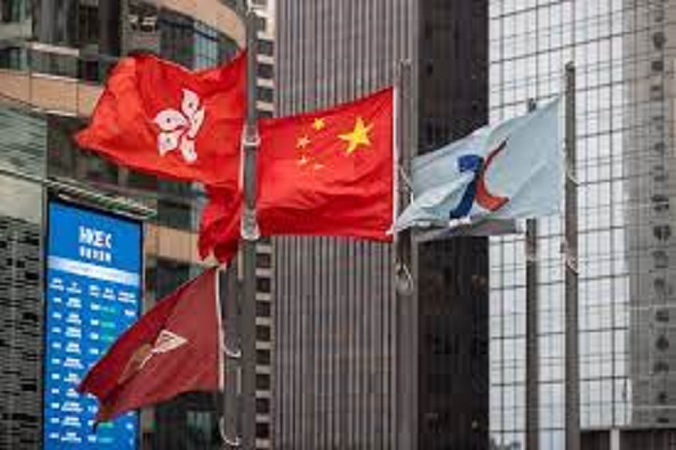
Hong Kong’s Hang Seng Index plummeted by 13.2% on April 7, 2025, marking its worst single day drop since the 1997 Asian financial crisis. The index closed at 19,828.30, shedding 3,021.51 points, as a wave of panic selling gripped the market. This steep decline erased significant market capitalization and reflected a broader collapse in investor confidence, driven by escalating global trade tensions and recession fears. The crash was triggered by China’s retaliatory tariffs against U.S. levies, intensifying a trade war between the world’s two largest economies. Beijing imposed 34% duties on all U.S. goods, effective April 10, in response to sweeping U.S. tariffs announced earlier.

This tit-for-tat escalation rattled markets, with Hong Kong—a free port heavily tied to global trade—bearing the brunt. All 83 stocks in the Hang Seng Index declined, with tech giants like Alibaba (down 18%) and JD.com (down 15.5%), alongside banks like HSBC (down 15%), leading the losses. The Hang Seng Tech Index fared even worse, dropping 17%—its largest single-day fall on record. Globally, the fallout was swift. Mainland China’s CSI300 Index fell 7%, despite state-backed intervention from Central Huijin, while Japan’s Nikkei 225 slid 7.8% and Taiwan’s market tanked 9.7%.

Commodity prices, including oil and iron ore, also tumbled as fears of a global slowdown mounted. The Hang Seng Volatility Index surged to its highest level since March 2022, signaling heightened uncertainty. Historically, the Hang Seng has seen sharp drops before—most notably in October 1997, when it fell over 10% amid the Asian financial crisis and Hong Kong’s handover to China. That year, it ended at 10,722 after peaking at 16,673. recent declines, however, stands out for its speed and scale, pushing the index to its lowest since January 23, 2025. Unlike 1997, when currency pressures and regional contagion dominated, this plunge is tied to trade war dynamics and China’s faltering economic momentum—exacerbated by deflation, a property crisis, and no major stimulus in sight.

The immediate trigger may have been tariffs, but underlying vulnerabilities in Hong Kong’s market, long leveraged to China’s growth, amplified the rout. With the index down 27% in a month, erasing gains from earlier in the year, questions loom about whether this is a short-term panic or the start of a deeper bear market. For now, the financial hub faces a critical test of resilience as global eyes turn to Beijing’s next move.

Hong Kong’s economy, already strained by years of political unrest and a post-COVID slowdown, faces a severe hit. The crash slashes corporate valuations, tightens liquidity, and threatens the city’s status as a global financial hub. Small and medium enterprises, reliant on stock market sentiment for funding, could see investment dry up. Retail investors, a significant force in Hong Kong’s market, suffer massive wealth losses. This could curb consumer spending, deepening deflationary pressures and slowing recovery in sectors like retail and real estate, where prices were already softening.

Major banks like HSBC and Standard Chartered, which saw double-digit drops, may face increased loan defaults and reduced profitability. Their exposure to mainland China and global trade amplifies the risk, potentially necessitating tighter lending standards. The crash heightens scrutiny on Hong Kong’s government and its Beijing-backed leadership. With economic woes compounding social tensions, calls for policy intervention—beyond reliance on mainland support—could grow, though autonomy remains limited.

Regional Implications

The Hang Seng’s collapse mirrors and magnifies mainland China’s CSI300 drop of 7%. As a barometer of Chinese economic health, Hong Kong’s rout signals deeper trouble in Beijing’s orbit—property woes, deflation, and trade war fallout—potentially forcing more aggressive state intervention. The contagion has already spread, with Japan’s Nikkei falling 7.8% and Taiwan’s market down 9.7%. Export-dependent economies in Southeast Asia, like Singapore and South Korea, could see reduced demand from China and heightened volatility in their own indices.

China’s retaliatory 34% tariffs on U.S. goods, sparking this crash, risk entrenching a broader regional trade conflict. Asian supply chains, heavily integrated with both powers, face disruption, particularly in tech and manufacturing hubs like Taiwan and Vietnam. The Hang Seng’s plunge has triggered a global sell-off, with U.S. futures, European indices, and emerging markets all sliding. Investors may shift to safe-haven assets like gold or U.S. Treasuries, driving up their yields and further pressuring equities. Declines in oil, iron ore, and other commodities reflect fears of a China-led global slowdown. Resource-rich nations—Australia, Canada, Russia—face export revenue losses, while energy markets brace for oversupply if demand falters further.

Multinational firms with heavy exposure to China and Hong Kong, from luxury brands (e.g., LVMH) to tech giants (e.g., Apple), could see revenue hits. Supply chain delays and weaker consumer demand may force profit downgrades. The U.S.-China trade war, now a central driver of this crash, risks escalating beyond tariffs into broader economic decoupling. This could reshape global alliances, with nations forced to pick sides or navigate heightened uncertainty. A sustained downturn could erode Hong Kong’s edge over rivals like Singapore as Asia’s premier financial center. Capital flight and talent exodus, already concerns since 2019’s protests, might accelerate if confidence doesn’t rebound.

Beijing may rethink its approach—balancing trade retaliation with domestic stabilization. A weaker Hong Kong could push more focus on Shanghai or Shenzhen, though neither yet matches the city’s international clout. If this crash signals a tipping point for China’s economy, it could drag the world into recession. The IMF and World Bank may revise growth forecasts downward, with central banks like the Federal Reserve facing pressure to adjust rates despite inflation concerns. Markets remain on edge, with the Hang Seng Volatility Index at a three-year high. The next few days hinge on China’s response—whether through tariff rollback, stimulus, or market support—and U.S. countermeasures.

U.S. Slams Nigeria’s Import Ban After 14% Tariff: Says It Creates Trade Barrier, Revenue Loss for U.S. Businesses

0

Nigeria’s long-standing import ban on 25 product categories has drawn fresh criticism from the United States, which accuses Africa’s largest economy of erecting unfair barriers that hurt American exporters.

The U.S. Trade Representative (USTR), in its latest annual report on foreign trade barriers, listed Nigeria among the top ten nations whose trade practices are costing U.S. companies billions in potential export revenue.

The ban, which covers a wide range of items including beef, poultry, pharmaceuticals, fruit juices, and alcoholic beverages, has been flagged by Washington as a major impediment to market access.

“Nigeria’s import ban on 25 different product categories impacts U.S. exporters, particularly in agriculture, pharmaceuticals, beverages, and consumer goods,” the USTR said in a statement shared on X.

The agency warned that these policies are cutting off key American products from the Nigerian market and hampering business growth.

“Restrictions on items like beef, pork, poultry, fruit juices, medicaments, and spirits limit U.S. market access and reduce export opportunities. These policies create significant trade barriers that lead to lost revenue for U.S. businesses looking to expand in the Nigerian market,” it said.

The criticism is part of a broader push by the U.S. to confront what it sees as anti-competitive or discriminatory trade practices globally, especially under President Donald Trump’s renewed “America First” doctrine that aims to shield domestic industries and boost American exports.

The criticism is understood to be a justification for the 14% tariff the U.S. has already placed on select Nigerian exports, except oil.

For Nigeria, this latest rebuke from Washington places added pressure on a government already grappling with a weak currency, high inflation, and a growing dependency on imports amid dwindling foreign exchange reserves. While the import bans were originally designed to encourage local production, boost forex conservation, and protect infant industries, they have also created an underground market for restricted items and led to persistent smuggling across the country’s porous borders.

Indeed, the U.S. is not alone in raising concerns. European Union officials and the World Trade Organization have repeatedly flagged Nigeria’s import restrictions as inconsistent with global trade norms.

A Wider List of Offenders

Nigeria is part of a growing list of countries singled out by the USTR for policies Washington believes harm U.S. farmers and manufacturers. India and Thailand were called out for blocking American ethanol exports, while Kenya was criticized for its 50% tariff on U.S. corn and burdensome regulatory hurdles that effectively kept the market closed.

The USTR noted that Kenya’s feed corn market is currently worth $50 million, with the potential to grow by 30% by 2027.

“Securing market access for American farmers will ensure they can compete on a level playing field,” the report said.

China was also named, particularly for undercutting American flag manufacturers, with losses estimated at $2 million in monthly sales due to cheaper Chinese imports.

Rising Tensions Amid Trump’s Trade Revival

The report underscores growing friction as the United States under Trump’s leadership returns to a protectionist posture reminiscent of his first term. Trade analysts suggest that Washington may soon begin to explore retaliatory measures if perceived trade barriers are not addressed diplomatically.

This poses a significant risk for Nigeria, especially at a time when it is trying to attract foreign direct investment and stabilize its external accounts. Trade relations with the U.S. remain vital, not only because the U.S. is a major destination for Nigerian crude oil exports, but also because American companies play a large role in the country’s energy, pharmaceuticals, and fast-moving consumer goods sectors.

Some in Abuja see the ban as a necessary protection for domestic industries still struggling to recover from years of underinvestment and an influx of cheaper imported goods. But others believe that the policy has outlived its usefulness, with little evidence that it has spurred sustainable local production.

Economic Fallout Looms

The U.S. criticism comes amid Nigeria’s economic downturn. Inflation has remained in double digits for over half a decade, and the naira has lost significant value since the forex unification policy was introduced, deepening the cost of living crisis.

Against this backdrop, the Nigerian government is facing a reckoning as American pressure mounts, leading many to conclude that it may have to revisit its protectionist trade stance. Some analysts have warned that if the U.S. moves to review existing trade concessions, such as Nigeria’s eligibility for preferential access under programs like the African Growth and Opportunity Act (AGOA), the consequences could be far-reaching.

While no official response has yet come from Nigeria’s trade or foreign ministries, pressure is likely to build in the coming weeks for the Tinubu administration to review the controversial ban. Whether it holds firm or begins to roll back restrictions could shape the next phase of U.S.-Nigeria trade relations.