DD
MM
YYYY

PAGES

DD
MM
YYYY

spot_img

PAGES

Home Blog Page 18

BlockDAG Mainnet Shatters Records with 500x Faster Speed Than Ethereum While Hyperliquid & Cardano Hold Steady

0

Market participants are currently focusing their attention on significant movers such as Cardano and Hyperliquid, searching for specific patterns that might indicate the next big price jump. Cardano is holding its ground with very consistent blockchain utility, while Hyperliquid is being closely watched for its specific liquidity movements.

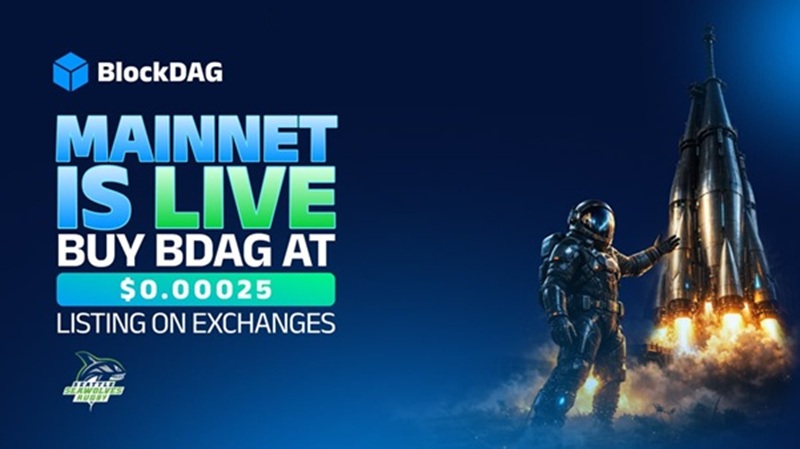
However, as the broader sector moves forward at a rapid pace, BlockDAG stands out as a complete game-changer for the industry, providing speed and scaling power that few others can match. The BlockDAG (BDAG) Mainnet has officially gone live, reaching a massive 5000 TPS. This is 500 times faster than what Ethereum offers, and it sets a brand-new high bar for how a blockchain should perform in the modern era.

Right now, the private sale phase gives a rare opening to get BDAG at a price of only $0.00025. There are only 3 days left before the official exchange listings begin, and the available spots are being taken very quickly. People joining early are grabbing the best spots, getting their hands on special Core Bundles and faster bonus plans. This puts them in a great place before the market sees a massive jump in activity. When looking at Cardano price prediction and Hyperliquid data, BDAG clearly looks like the best crypto to buy for the upcoming growth cycle.
Cardano Price Prediction Shows Specific Trading Ranges

The Cardano price prediction is a reflection of how ADA is currently doing in the market, with the coin staying in a bracket between $0.25 and $0.27. Throughout the last year, ADA has mostly stayed within a wider horizontal range, showing times where the price stays flat or moves slightly compared to its highest point of $3.10 seen back in late 2021. People who study the market suggest that future moves will be driven by new tech updates to the network, how many people are staking their coins, and the general use of decentralized apps. These factors have always changed how the coin trades over time.

The foundation of the Cardano network is a system called Ouroboros, which is a proof-of-stake method that focuses on giving power to the community and saving energy. By looking at these technical parts of the network along with how the price moved in the past, it becomes easier to see where the trends might go next.

In short, the Cardano price prediction shows that the coin has a history of moving up and down quite a bit. It gives a clear view of where ADA sits in the current market today without telling anyone exactly which way the price will go or giving financial tips. It remains a steady name for those looking for the best crypto to buy in the long term.

Hyperliquid Price Trends Show Limited Movement

The Hyperliquid price shows how the market has reacted in different ways since it first came out. The price range over the last 52 weeks has gone from a low of about $3.90 to a record high of more than $59 in the month of September 2025. Right now, the trading price is much lower than that all-time high, which matches what is happening in the rest of the crypto market. The total value of all HYPE coins is still worth billions of dollars, and the number of coins moving around is just a part of the total supply listed on tracking websites.

Hyperliquid functions as a system for decentralized trading that uses an on-chain book for orders and a Layer-1 setup that helps run markets that never close. Watching the Hyperliquid price and its old movements helps people understand how much the price swings without guessing the future. The latest data for the coin shows that there is a lot of change in how much people are trading and how they feel about the project. For many, tracking these moves is key to finding the best crypto to buy among newer platforms.

BlockDAG Mainnet Goes Live with 5000 TPS to Change Speed Standards

The BlockDAG Mainnet has officially started its operations, and it is now handling 5,000 transactions every single second. This speed is 500 times greater than the speed of Ethereum, which completely changes the expectations for how fast a blockchain can be. Even though the Mainnet is running, BDAG coins are still being offered at the low price of $0.00025 during this final private sale period. This is a very short and rare window to get in early, and it is closing fast because there are only 3 days remaining until the coins hit the exchanges on February 16th.

To help people get ready for the big start, the team has put out Core Bundles. These give early members special help and a better way to manage their coins. The Launch Essentials bundle is $999 and gives you Priority Access, a spot in the Insider Room, and a way to claim the early airdrop. The Elite Trader Pack is $2,999 and adds Elite Access plus a special 9-month plan to unlock bonuses faster.

The biggest option is the Genesis Max Pack for $4,999. This one has everything: Elite Access, the Insider Room, the early airdrop, a quick 6-month unlock time, Genesis Protection, and help with priority claims. If you want something smaller, you can get Priority Access for $199 or Elite Access for $249. These tools are built to help people handle the high activity, crowded networks, and liquidity shifts that happen on the first day of a big launch.

The earlier sale sold out very fast. Getting in now means you get your bonuses sooner, can start trading earlier, and get tips from insiders for life. Because it has speed and tools that no one else has, BDAG is a top pick for anyone looking for the best crypto to buy. This is a big chance to get a strong head start just as the Mainnet begins its journey. Time is running out, and people are moving into position very quickly. Joining now is the only way to get the full power of BDAG’s transactions and the best perks at the start.
Final Say

Cardano is still showing that its network is very dependable. The Cardano price prediction points toward a slow and steady climb that is backed by new tech updates and a very safe proof-of-stake system. Meanwhile, Hyperliquid is still a coin that focuses on trading flow, with the Hyperliquid price showing a steady amount of trading and use in the active markets.

Even with those big names around, BDAG provides a very different and exciting path. Its Mainnet can do 5,000 transactions per second, making it 500 times faster than Ethereum. The people who joined early used Core Bundles to get a better position. These tools give them a real edge when the coin starts trading. For anyone searching for the best crypto to buy, BDAG is a rare find because it was made for high speed and lets people get in before everyone else. The time to act is almost over, so being quick is the only way to catch the big moves in this new chapter of the market.

Private sale: https://purchase.blockdag.network

Website: https://blockdag.network

Telegram: https://t.me/blockDAGnetworkOfficial

Discord: https://discord.gg/Q7BxghMVyu
 

A Look At Trump’s 35-Member Innovation Advisory Committee 

0

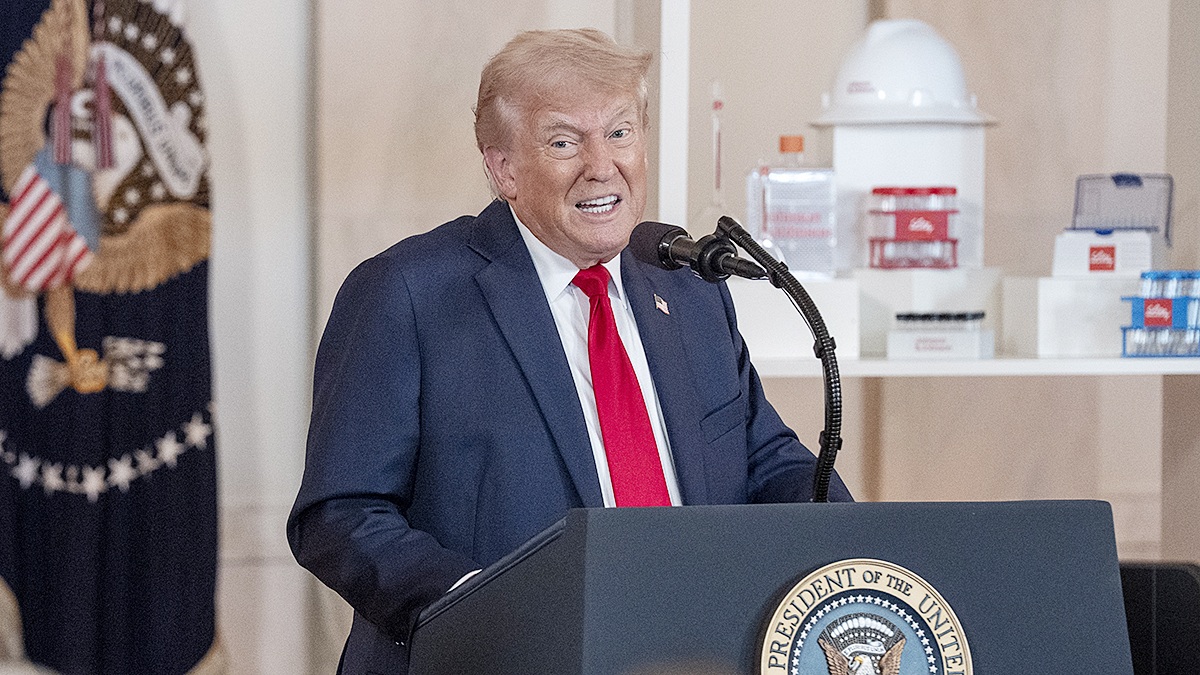
The Trump administration, through the Commodity Futures Trading Commission (CFTC) under Chairman Michael Selig, announced the formation and full membership of the Innovation Advisory Committee (IAC).

This 35-member committee brings together top executives from crypto, decentralized finance (DeFi), traditional finance, prediction markets, sports betting, and major exchanges. The goal is to advise the CFTC on regulating emerging technologies like blockchain, AI, crypto derivatives, tokenized assets, and prediction markets—helping “future-proof” U.S. financial markets and establish clear rules for what Selig called the “Golden Age of American Financial Markets.”

This reflects the administration’s pro-innovation, pro-crypto stance, aiming to position the U.S. as the “crypto capital of the world” by integrating industry leaders into regulatory discussions rather than adversarial enforcement.

Crypto and DeFi Leaders: Includes CEOs from major centralized and decentralized platforms. Notable inclusion of platforms like Polymarket and Kalshi, signaling potential mainstreaming and clearer oversight for event contracts. Heavy representation from exchanges and clearinghouses. Venture capital like a16z crypto, Paradigm and sports betting (FanDuel, DraftKings).

Notable Members include; Brian Armstrong — CEO, Coinbase, Brad Garlinghouse — CEO, Ripple, Hayden Adams — CEO, Uniswap Labs, Anatoly Yakovenko — CEO, Solana Labs Sergey Nazarov — CEO, Chainlink Labs, Vlad Tenev — CEO, Robinhood, Tyler Winklevoss — CEO, Gemini, Arjun Sethi — Co-CEO, Kraken, Shayne Coplan — CEO, Polymarket, Tarek Mansour — CEO, Kalshi, Chris Dixon — Managing Partner, a16z crypto, Adena Friedman — Chair & CEO, Nasdaq, Terry Duffy — Chair & CEO, CME Group, Jeff Sprecher — CEO, Intercontinental Exchange, Jason Robins — CEO, DraftKings, Christian Genetski — President, FanDuel.

This move builds on earlier Trump-era efforts to clarify crypto regulations and reduce fragmentation between agencies like the CFTC and SEC. It’s seen as a major step toward institutional integration and regulatory clarity for the sector.

This 35-member panel—packed with industry heavyweights—signals the Trump administration’s intent to foster innovation through collaboration rather than enforcement-heavy tactics. The committee’s mandate focuses on advising the CFTC on blockchain, AI, tokenized assets, derivatives, and market infrastructure.

This directly supports goals like establishing a clear crypto asset taxonomy, reducing jurisdictional overlaps with the SEC, and minimizing duplicative compliance burdens. Expect accelerated guidance on tokenized real-world assets (RWAs), perpetual futures, and decentralized platforms, potentially unlocking broader institutional adoption and positioning the U.S. as the “crypto capital of the world.”

Unlike prior administrations’ “regulation by enforcement,” this move emphasizes industry input before rulemaking. It aligns with broader Trump-era policies ending “Operation Chokepoint 2.0”-style restrictions and advancing legislation like the GENIUS Act or market structure bills.

The result could be lighter-touch rules, exemptions for certain DeFi activities, and support for onchain markets—boosting liquidity, volume, and investment in sectors like Bitcoin and ETH derivatives. Platforms like Polymarket (Shayne Coplan) and Kalshi (Tarek Mansour) are prominently featured, alongside sports betting leaders. This indicates the CFTC views event contracts as legitimate financial instruments rather than gambling.

Imminent rulemaking on prediction markets is expected, potentially withdrawing restrictive 2024 proposals and enabling mainstream growth in political, sports, and other event-based derivatives. This could drive explosive volume in platforms offering bets on elections, economic outcomes, or real-world events—while integrating them under federal oversight for greater legitimacy and investor protection.

Heavy representation from Nasdaq (Adena Friedman), CME Group (Terry Duffy), Intercontinental Exchange (Jeff Sprecher), and others bridges crypto with traditional finance. This could accelerate tokenized assets, cross-chain infrastructure via Chainlink’s Sergey Nazarov, and hybrid products—enhancing U.S. competitiveness against global rivals like China.

Some observers from public interest groups note the committee’s heavy industry tilt, questioning balance with consumer protection or academia. Rapid changes might spark short-term volatility or legal challenges, but the overall direction prioritizes “clear rules of the road” for a “Golden Age of American Financial Markets.”

Building on prior initiatives like the CEO Innovation Council and joint CFTC-SEC efforts, this committee could influence near-term rules, with market structure legislation potentially reaching the President’s desk soon.

This isn’t just an advisory group—it’s a deliberate step toward embedding crypto and DeFi leaders in policymaking, signaling regulatory embrace over resistance. It could catalyze a surge in innovation, liquidity, and U.S. dominance in digital finance, though execution will depend on balancing industry input with public safeguards.

Okomu Oil Palm Company Plc Posts N87.3bn Pre-Tax Profit as Palm Oil Boom Lifts Earnings

0

Okomu Oil Palm Company Plc reported a pre-tax profit of N87.3 billion for the year ended 31 December 2025, marking a 63.64% increase from N53.3 billion in 2024, according to its unaudited financial statements.

The performance was underpinned by strong revenue growth across its oil palm and rubber segments, although fourth-quarter pre-tax profit declined to N3.2 billion from N12.5 billion in the same period of 2024, suggesting a softer close to the year.

Turnover rose 52.35% year-on-year to N198.1 billion, reflecting both volume expansion and favorable pricing conditions in Nigeria’s palm oil market. Earnings per share climbed to N66.60 from N41.89, reinforcing improved shareholder returns.

Revenue Surge Mirrors Sector-Wide Expansion

A closer look at the numbers shows that local sales drove the bulk of the increase. Revenue from domestic palm oil and rubber sales jumped 60.53% to N172.6 billion, while export revenue rose modestly to N25.5 billion from N22.5 billion.

The strong topline expansion mirrors broader developments in Nigeria’s palm oil sector, which recorded significant growth in 2025. Industry participants benefited from elevated domestic prices, improved plantation yields, and tighter import conditions that supported local producers.

Nigeria remains one of Africa’s largest consumers of palm oil, with demand driven by food processing, consumer goods manufacturing, and industrial applications. Import substitution policies, currency pressures, and rising global edible oil prices have encouraged greater reliance on domestic production, creating favorable conditions for established operators like Okomu.

Analysts expect the sector’s momentum to carry into 2026, supported by sustained domestic demand, continued capital investment in plantation expansion, and ongoing efforts to boost agricultural productivity. Improved pricing discipline and relatively stable input costs are also projected to underpin margins.

Margin Expansion and Operational Leverage

Cost of sales increased to N58.5 billion from N48.4 billion, but the pace of cost growth lagged revenue expansion, enabling gross profit to rise 71.09% to N139.5 billion. The widening gross margin indicates improved operating leverage and stronger pricing power.

Operating profit advanced 81.77% to N90.03 billion after operating expenses of N49.5 billion were accounted for. The company maintained cost discipline even as revenue scaled sharply.

Finance income stood at N11.07 billion, while finance costs rose to N13.7 billion. After net finance charges, pre-tax profit reached N87.3 billion. A tax charge of N23.7 billion resulted in profit after tax of N63.5 billion, representing a 59% increase year-on-year.

The drop in fourth-quarter profit may reflect seasonal production cycles, inventory timing, or commodity price moderation toward year-end. Investors are likely to monitor first-quarter 2026 results to assess whether this was temporary or indicative of a trend.

Strengthened Asset Base and Capital Position

On the balance sheet, fixed assets rose 20.34% to N81.5 billion, signaling ongoing capital expenditure in plantation development, milling capacity, and operational infrastructure.

Current assets increased slightly to N41.6 billion, supported by cash holdings of N12.9 billion and inventory valued at N20.7 billion. The inventory position may reflect anticipation of continued strong demand in early 2026.

Total equity stood at N56 billion, marginally above N55.4 billion in 2024, with revenue reserves accounting for 97.3% of shareholders’ funds. Revenue reserves rose to N54.5 billion, reflecting retained earnings accumulation.

The modest rise in total equity relative to profit growth suggests dividend distributions or reinvestment decisions could shape shareholder returns going forward.

The Market’s Outlook

As of mid-day trading on 13 February 2026, Okomu’s share price stood at N1,327, up 9.99% on the day. The stock has delivered a year-to-date return of 21%, indicating strong investor appetite.

The company’s performance aligns with renewed investor interest in agribusiness stocks, particularly those benefiting from structural shifts toward domestic production and food security initiatives.

Looking ahead, sustaining momentum will depend on several factors: plantation yield performance, global edible oil price trends, exchange rate stability, input cost management, and weather conditions. However, with Nigeria’s palm oil sector experiencing strong structural tailwinds and analysts projecting continued expansion in 2026, Okomu appears positioned to consolidate its gains.

The 2025 results not only reflect company-level execution but also underscore the broader transformation underway in Nigeria’s palm oil industry, where rising domestic demand and strategic investment are reshaping the sector’s growth trajectory.

Cohere Hits $240m ARR in 2025, Outpacing Target and Signaling Resilience in Competitive Enterprise AI Market

0

Artificial intelligence startup Cohere has delivered strong momentum in the enterprise segment, reporting approximately $240 million in annual recurring revenue (ARR) for 2025 — comfortably surpassing its internal $200 million target — according to a February 2026 investor memo obtained by CNBC.

The company achieved quarter-over-quarter revenue growth of more than 50% throughout the year, demonstrating consistent execution in a highly competitive market where larger rivals are aggressively expanding their enterprise footprints.

“Our thesis is clearly resonating in the market,” Cohere wrote in the memo. “Our sales pipeline continues to grow as global organizations across regulated sectors choose Cohere as their trusted partner for secure AI adoption at scale.”

Founded in Toronto in 2019 by former Google Brain researchers Aidan Gomez, Ivan Zhang, and Nick Frosst, Cohere has carved out a distinct niche developing large language models and software tools tailored for business use cases. The company is backed by high-profile investors, including Nvidia and Salesforce Ventures, and its valuation has grown to roughly $7 billion in recent private rounds, reflecting sustained confidence from strategic and financial backers.

Cohere’s performance comes at a pivotal moment for the generative AI industry. While consumer-facing chatbots like ChatGPT and Claude have dominated headlines, enterprise adoption is now the primary battleground. OpenAI reported in November 2025 that more than 1 million businesses worldwide were using its technology, while Anthropic disclosed in September that it serves over 300,000 businesses.

These sizable customer bases present significant scale challenges for emerging players like Cohere.

Yet Cohere has differentiated itself through a capital-efficient business model that emphasizes flexibility and security. The company primarily generates revenue from software licenses and services, allowing customers to run its models either through managed cloud services or directly on their own hardware. This approach avoids the massive infrastructure costs incurred by full-stack competitors that build and operate their own data centers, enabling Cohere to invest more aggressively in customer acquisition, product development, and research.

As a result, Cohere’s gross margins averaged around 70% in 2025, expanding by 25 basis points year-over-year.

“By scaling compute resources proportionally to customer demand, we remain insulated from the speculative excesses surrounding the broader AI market, positioning Cohere for more sustainable growth,” the company told investors.

This efficiency has been particularly attractive to regulated industries — financial services, healthcare, government, and legal — where data privacy, auditability, and on-premises deployment are non-negotiable requirements. Cohere has leaned into these sectors, offering models that can be fine-tuned and deployed in secure environments without sending sensitive data to third-party clouds. CEO Aidan Gomez has been vocal about the company’s growth ambitions.

In October 2025, he told Bloomberg that Cohere hopes to make its public market debut “soon,” suggesting investors would welcome a “pure play AI investment opportunity” focused on enterprise use cases. The strong 2025 results and clear 2026 roadmap appear to lay the groundwork for that potential IPO. For 2026, Cohere outlined plans to accelerate European expansion — a region with stringent data protection regulations that favor privacy-first AI providers — and to further develop its AI agent platform, North.

The company told investors it anticipates another year of “rapid growth,” supported by deepening enterprise penetration and continued model improvements. The results stand in contrast to the broader AI funding and valuation environment, where some high-profile startups have faced scrutiny over high burn rates and uncertain paths to profitability. Cohere’s emphasis on capital efficiency and recurring revenue from enterprise software positions it as a more measured player in a market often criticized for speculative excess.

However, OpenAI and Anthropic have continued to expand aggressively in the enterprise space, leveraging their frontier model capabilities and vast resources. Cohere must continue proving that its specialized focus on security, customization, and deployment flexibility can win and retain large accounts against bigger, better-funded rivals.

The strong 2025 performance and clear enterprise momentum suggest Cohere is executing well on its strategy of building a sustainable, high-margin AI business. As the generative AI market matures and shifts from hype to practical deployment, companies that can deliver secure, efficient, and enterprise-ready solutions are likely to garner increasing attention from both customers and public market investors. Cohere’s progress in 2025 puts it in line as a serious contender in that evolving landscape.

Nigerian Breweries Plc Returns to Profit with N161bn Pre-Tax Gain as Revenue Jumps 35%

0

Nigerian Breweries Plc posted a pre-tax profit of N161.06 billion for the 2025 financial year, reversing a N182.9 billion loss recorded in 2024, as revenue surged and finance costs eased.

Full-year revenue rose 35.32% year-on-year to N1.467 trillion from N1.08 trillion, with Nigerian sales accounting for 99.83% of total volume. The strong domestic contribution underpinned the brewer’s top-line recovery in a year marked by relative currency stability and operational recalibration.

The return to profitability was supported by a sharp reduction in foreign exchange losses and lower expected credit losses on financial assets, strengthening the company’s earnings profile. Earnings per share improved to N3.19 from a negative N1.21 in 2024.

Margin Expansion and Cost Dynamics Drive Turnaround

Gross profit climbed 76.67% to N565.1 billion from N319.9 billion in 2024, after cost of sales settled at N902.2 billion. The expansion in gross margin indicates improved pricing power, product mix optimization, and tighter cost management compared to the prior year, when foreign exchange volatility and input cost pressures weighed heavily on margins.

Local sales of brewed products accounted for N1.464 trillion of total revenue, while export sales contributed N2.4 billion, highlighting the company’s continued reliance on the domestic market.

Other income stood at N4.1 billion, largely from scrap sales and gains on disposal of property, plant, and equipment.

Operating expenses rose in nominal terms. Selling and distribution costs increased 37.24% to N278.9 billion, reflecting higher logistics and marketing spend in a competitive consumer goods environment. Administrative expenses climbed 77.21% to N82.8 billion.

Expected credit losses declined to N2.3 billion from N4.05 billion in 2024, easing pressure on operating performance. Operating profit consequently rose 194% to N205.1 billion from N69.89 billion.

Finance income came in at N1.7 billion, while finance costs dropped significantly to N45.9 billion, largely due to lower foreign exchange losses. The moderation in FX-related charges marks a critical shift from 2024, when currency devaluation materially impacted the company’s bottom line.

After accounting for N61.9 billion in income tax, profit after tax reached N99.1 billion, compared with a N144.8 billion loss in the previous year.

Stronger Balance Sheet and Reduced Leverage

Total assets stood at N1.06 trillion, with property, plant, and equipment accounting for N585.3 billion, reflecting the capital-intensive nature of brewing operations.

Total equity rose 21% year-on-year to N560.22 billion from N463.9 billion, while the accumulated deficit narrowed to N72.1 billion from N169.7 billion, indicating gradual balance sheet repair.

Total liabilities declined to N505.8 billion from N674.3 billion, driven largely by a reduction in loans and borrowings to N59.71 billion from N169 billion in 2024. The significant deleveraging reduces interest burden and improves financial flexibility, positioning the company for more stable operations in 2026.

The improvement in equity and lower debt levels suggests enhanced solvency metrics and reduced refinancing risk, particularly important in Nigeria’s high-interest-rate environment.

Market Reaction and Outlook

As of mid-trading on 13 February 2026, the market had yet to fully react to the results, with the stock down 0.43% on the day. Month-to-date, shares were up more than 2% on the Nigerian Exchange, trading at N80, while year-to-date gains exceeded 7%.

The muted immediate response may reflect broader market conditions rather than company-specific fundamentals. However, analysts are likely to focus on the sustainability of margin gains, the trajectory of input costs, and the stability of the naira in assessing forward earnings.

The 2025 performance signals a structural recovery from the FX-driven losses of 2024. If cost controls hold and domestic demand remains resilient, analysts expect Nigerian Breweries to consolidate its profitability and rebuild shareholder value in the current fiscal year.