DD
MM
YYYY

PAGES

DD
MM
YYYY

spot_img

PAGES

Home Blog Page 18

SEC’s Capital Overhaul Wins Industry Backing as Operators See Stronger Market, Not a Shakeout

0
SEC Nigeria

Nigeria’s capital market operators have largely thrown their weight behind the Securities and Exchange Commission’s sweeping decision to raise minimum capital requirements across the industry, describing the move as overdue, well-telegraphed and central to restoring confidence in a market expected to play a critical role in President Bola Tinubu’s push for a $1 trillion economy.

The new framework, released by the SEC on January 16, 2026, replaces the 2015 capital regime and gives operators until June 30, 2027, to comply. It affects virtually every segment of the market, including brokers, dealers, fund managers, issuing houses, market infrastructure providers, and, for the first time in a comprehensive way, digital asset operators.

Rather than triggering panic, the announcement has been met with a sense of inevitability among operators, many of whom say the regulator merely followed through on a process that had been openly discussed for months, according to NairaMetrics.

For Aruna Kebira, chief executive of Globalview Capital Limited, the timing itself reinforced the SEC’s credibility. He said the regulator had circulated a clear roadmap to the market and delivered exactly when it said it would.

“They brought us a calendar, and if you look at that calendar, January 16 was the date,” Kebira said. “They promised January 16, and they delivered. That tells you this wasn’t arbitrary.”

According to him, recapitalization had been a standing agenda item at Capital Market Committee meetings, with trade bodies such as the Association of Securities Dealing Houses of Nigeria and the Nigerian Exchange Group actively involved in consultations. In that sense, the new rules reflect a consensus-building process rather than a sudden regulatory shock.

Still, support has not been entirely unqualified. Kebira pointed to what he described as a technical inconsistency in how broker-dealer licenses were treated. Under the old logic, broker-dealer capital requirements were essentially a combination of broker and dealer thresholds. Maintaining that approach, he argued, would have implied a figure closer to N1.6 billion, rather than the new N2 billion requirement.

“That’s perhaps the only area where SEC could have handled it differently,” he said, while stressing that the clarity of the new figures removes long-standing ambiguity and allows firms to plan with certainty.

A recurring question since the announcement has been whether higher capital thresholds will force smaller firms out of the market. On this, operators are largely dismissive of doomsday scenarios. Kebira noted that the 18-month compliance window gives firms enough breathing space to raise capital, restructure, or adjust their license categories.

“June 2027 is enough time for any serious business to recapitalize,” he said. “There may be downgrading — broker-dealers becoming brokers, dealers becoming sub-brokers — but that’s orderly restructuring, not collapse.”

He also pointed out that many stockbroking firms are entering this phase with stronger balance sheets than in previous recapitalization cycles, partly due to proceeds from the Nigerian Exchange Group’s demutualization.

Concerns that recapitalization could lead to higher fees for investors have also been played down. Kebira said the last major recapitalization exercise did not result in higher commissions and argued that this one is unlikely to be different.

“Fees are regulated,” he said. “What this really does is give firms more capacity to do business and inject more liquidity into the market.”

That view is shared by other operators, including a senior market participant who requested anonymity. He said the SEC’s intention to strengthen the market’s capital base had been exhaustively discussed at last year’s Capital Market Committee meeting in Lagos.

“This will weed out the very small players,” he said, predicting mergers and acquisitions across the industry. “But clients won’t lose their money. Some firms will merge, others will move clients to bigger houses, and some will downgrade their licenses. That’s how markets evolve.”

Dr. David Ogogo, pioneer registrar and former president of the Institute of Capital Market Registrars, framed the reforms as part of a much longer conversation. He said operators had years of notice and ample opportunity to make representations to the regulator.

“The conversation has been on for years,” Ogogo said. “Those who were uncomfortable should have made representations, and I know some did. SEC must have considered these before arriving at the final figures.”

Ogogo acknowledged that the timing could have been shifted slightly later in the year, but said the June 2027 deadline provides adequate adjustment room. He also urged operators to view the new capital levels in a global context, noting that when converted to dollar terms, they are not out of line with what similar institutions hold in other markets.

Beyond capital figures, operators are now calling for clarity on implementation details, particularly what qualifies as acceptable capital. Questions remain around the balance between fixed and liquid assets, and how capital adequacy will be monitored in practice. There is also a strong push for more investor education to prevent misinterpretation of recapitalization as a sign of distress.

“There is no need for panic,” one operator said. “SEC needs to reassure investors that assets are held by custodians and that recapitalization does not mean firms are failing.”

Under the new rules, brokers must now hold N600 million in capital, dealers N1 billion, and broker-dealers N2 billion, reflecting their broader risk exposure. Fund managers move to a tiered structure, with large firms required to hold up to N5 billion, alongside a new rule mandating firms managing more than N100 billion to hold at least 10% of assets as capital. Digital asset operators, long operating in a grey zone, are now fully brought under regulation, with exchanges and custodians required to hold N2 billion.

The prevailing sentiment across the market is one of cautious support rather than resistance. While questions remain around structure and execution, most operators see the recapitalization drive as a necessary step toward deeper liquidity, stronger governance, and a capital market capable of supporting Nigeria’s larger economic ambitions.

What Is Zero Knowledge Proof: A Deep Dive Into ZKP’s Hybrid Storage Model for Data-Heavy Blockchains

0

Decentralized AI systems face a challenge that has nothing to do with cryptography or consensus. The real obstacle is data volume. AI applications rely on large datasets, trained models, and complex files that traditional blockchains were never designed to manage efficiently.

Zero Knowledge Proof approaches this limitation with an infrastructure-led mindset. Instead of forcing all information onto the blockchain, it distributes responsibility across specialized systems. Verification remains on-chain, while large datasets are handled off-chain.

For students and engineers examining how a top presale crypto is engineered beneath the surface, this separation reveals how real-world decentralized systems are structured to scale.

Why On-Chain Storage Breaks at Scale

Blockchains become inefficient when they are asked to store large files. If a single 1GB AI model were written directly to a ledger, every node would need to download and retain that file. This would dramatically increase storage requirements, slow synchronization, and push transaction fees higher across the network. This limitation is commonly referred to as the blockchain storage bottleneck.

The Zero Knowledge Proof network avoids this problem by redefining what the blockchain is responsible for. The ledger acts as a coordination and verification layer, not a data warehouse.

Heavy datasets are excluded from the chain entirely. For decentralized applications to scale and for any top presale crypto to remain usable long term, this distinction is essential.

How IPFS Changes the Way Data Is Located

To handle large files efficiently, the ecosystem relies on the InterPlanetary File System, or IPFS. Traditional internet systems retrieve files based on location, such as a specific server or directory. If that server becomes unavailable, the file is no longer accessible.

IPFS removes this dependency by using content-based addressing. Each file is assigned a cryptographic hash that uniquely represents its contents. Requests are made for the data itself, not the place it is stored.

For Zero Knowledge Proof, this allows files to exist across many nodes at once, improving redundancy and resilience. This approach introduces students to modern distributed storage concepts increasingly adopted by top presale crypto infrastructure.

Ensuring Long-Term Storage With Filecoin and PoSp

While IPFS enables decentralized distribution, it does not guarantee that files will remain available over time. This is where Filecoin and the Proof of Space (PoSp) mechanism become critical. Zero Knowledge Proof integrates these tools to add accountability and economic incentives to storage.

  • Proof of Space: Confirms that nodes allocate genuine physical storage
  • Token Incentives: Storage providers are rewarded for reliability
  • Retention Commitments: Contracts discourage premature deletion
  • Ongoing Audits: The network verifies that stored data remains intact

This model transforms unused disk space into an active resource. By aligning incentives with reliability, the ecosystem strengthens its infrastructure and reinforces its positioning as a top presale crypto built for sustained operation.

How the Hybrid Storage Architecture Operates

Data movement within this system follows a clear and efficient sequence. A user begins by uploading a large file to the IPFS network. IPFS processes the file and generates a Content Identifier, or CID, which acts as a fingerprint for the entire dataset.

Instead of storing the file itself, the Zero Knowledge Proof blockchain records only the CID. This reference is placed inside a Patricia Trie, allowing fast lookups and cryptographic verification.


When the file is later requested, the blockchain supplies the CID, and the data is retrieved directly from IPFS. This design keeps the chain lightweight and responsive, a key requirement for any top presale crypto aiming for real-world AI workloads.

In Summary

Zero Knowledge Proof demonstrates that scalable decentralized systems rely on coordination between specialized layers rather than forcing everything onto a single chain. By combining IPFS and Filecoin, it addresses one of blockchain’s most persistent infrastructure constraints.

For IT and network engineering students, this hybrid model offers a clear example of how large datasets can remain off-chain while verification remains secure and transparent. The result is a network capable of supporting data-heavy AI use cases without sacrificing performance.

As decentralized infrastructure continues to evolve, storage frameworks like this will underpin future applications, reinforcing why many consider this project a top presale crypto worth technical attention.

Find Out More about Zero Knowledge Proof:

Website: https://zkp.com/

Auction: https://auction.zkp.com/

X: https://x.com/ZKPofficial

Telegram: https://t.me/ZKPofficial

Italy Turns Spotlight on Mobile Gaming Tactics as Regulators Probe Microsoft’s Activision Blizzard

0

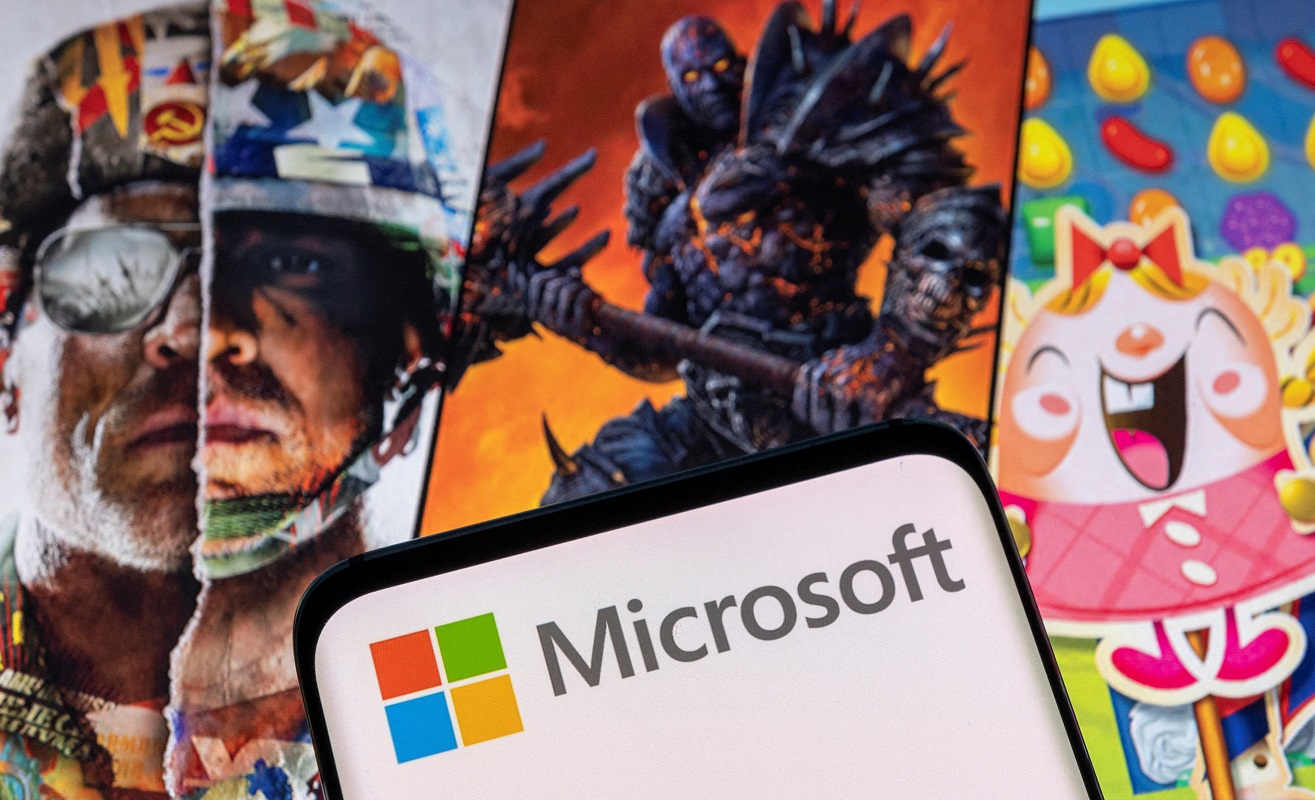
Italy has opened a fresh front in Europe’s widening scrutiny of mobile gaming, launching two investigations into Microsoft-owned Activision Blizzard over the design and monetisation of its hit smartphone titles Diablo Immortal and Call of Duty Mobile.

The probes, announced by Italy’s competition watchdog, the Autorità Garante della Concorrenza e del Mercato (AGCM), accuse the company of deploying “misleading and aggressive” sales practices that may nudge players — especially children — into excessive playtime and repeated in-game spending without a clear understanding of the real cost.

At the heart of the investigation is not whether the games are popular, but how that popularity is monetized. The regulator says certain design elements are engineered to create urgency and fear of missing out, pushing users to stay online longer and to make purchases to avoid losing rewards or falling behind other players. According to the AGCM, these mechanics may distort consumer behaviour, particularly among minors who are less able to assess financial consequences.

The authority is also focusing on the way the games present their virtual currencies. By selling in-game currency in bundles and separating it from real-world prices, the regulator argues that players may lose track of how much money they are actually spending. This, it said, can result in users paying far more than is strictly necessary to progress in the game, sometimes without being fully aware of the total outlay.

Both titles are marketed as free-to-play, a business model that dominates mobile gaming globally. While downloading the games costs nothing, players are offered a steady stream of optional purchases ranging from cosmetic upgrades to items that speed up progress or unlock additional content. In Diablo Immortal, some bundles and progression-boosting items can cost as much as $200, and regular players often make multiple purchases over time.

The AGCM acknowledged that such monetization models are common across the industry. However, it stressed that scale and vulnerability matter. Diablo Immortal and Call of Duty Mobile each have hundreds of thousands of active players, including younger users, making the potential consumer impact significant.

A key strand of the investigation centers on parental controls and child protection. The regulator said the default settings in both games allow minors to make in-game purchases, play for extended periods without restrictions, and interact freely with other players via in-game chat. In the authority’s view, placing the burden on parents to actively change settings — rather than making protections the default — may fall short of the level of care expected in products accessible to children.

Privacy is also under scrutiny. The AGCM said it is examining whether the games’ sign-up flows encourage users to grant broad consent for data collection by steering them toward accepting all options at once. Regulators will assess whether Activision Blizzard’s consent mechanisms for collecting and using personal data meet Italy’s consumer protection and data transparency standards.

“In the Authority’s view, the company may be acting in breach of consumer protection rules and, in particular, the duty of professional diligence required in a sector that is particularly sensitive to the risks of gaming-related addiction,” the AGCM said.

The investigations add to a growing regulatory push across Europe and beyond to rein in so-called “dark patterns” in digital products — design choices that subtly influence users’ decisions in ways that benefit companies financially. Mobile games, with their blend of psychology, rewards, and microtransactions, have increasingly become a focal point of that debate.

The probes come at an awkward moment for Microsoft. The tech giant completed its acquisition of Activision Blizzard to strengthen its gaming portfolio and expand its reach in mobile and cloud gaming. While the Italian investigations do not imply guilt at this stage, they raise questions about how far regulators are willing to go in challenging the foundations of free-to-play monetization.

Depending on the outcome, the cases could force changes to how in-game purchases are presented, how minors are protected by default, and how consent for data use is obtained. More broadly, they may signal a tougher regulatory climate for mobile gaming companies operating in Europe, where consumer protection authorities are increasingly willing to test the line between engagement and exploitation.

Spartans.com Is Giving Away a One-of-a-Kind Hypercar; The MANSORY Jesko Spartans Edition Draw Is Now Open

0

A hypercar most collectors will never lay eyes on is now the grand prize in a crypto casino giveaway. And unless you’re watching closely, your shot at it could pass you by. Spartans.com has launched an unprecedented promotion featuring the MANSORY Jesko Spartans Edition, a hypercar that exists as a single unit globally. Not for sale. Not at auction. Not in a showroom. This vehicle is the result of MANSORY’s high-spec transformation of an already rare Koenigsegg Jesko, and it will be awarded to one verified entrant in a transparent, blockchain-tracked draw.

No staking. No token purchases. No complex requirements. Just a deposit and a chance at something completely unattainable, until now.

Why This Car Is a Bigger Deal Than It First Seems

Each year, Koenigsegg manufactures roughly 50 cars. The Jesko is one of its most exclusive models, with limited availability and a waitlist that often spans years. Vehicles of this caliber are rarely modified, and when they are, the results are usually kept in private garages out of public view.

But MANSORY, known for its luxury automotive transformations, took a Jesko and pushed its limits. It reengineered the body using forged carbon fiber, updated the interior with custom hand-finished detailing, and refined its aerodynamics for peak efficiency and design.

The result is the MANSORY Jesko Spartans Edition, a build that was never intended to be public. It exists as a single vehicle with no duplicates.

Now, thanks to Spartans.com, that vehicle is available through one simple action: a deposit.

How the Entry Process Has Been Built for Transparency

There’s nothing complex about how this works.

Make a deposit on Spartans.com. That alone gets you entered. Play games on the platform and gain more entries as you go. When the campaign wraps up, a winner will be selected via a provably fair random number generator, fully tracked on the blockchain and audited by independent legal advisors.

Every participant has the same chance. No boosts for whales. No bonuses for high-volume players. No hidden algorithms adjusting the odds behind the scenes.

This kind of transparency is rare in crypto gaming. But Spartans.com has kept it clean by design.

No Tokens. No Bonuses. Just Math That Works in Your Favor

Most crypto casinos rely on native tokens, flashy airdrops, and bonus schemes that tend to overpromise and underdeliver. Spartans.com decided to go a different way.

The platform uses a system called CashRake. It provides up to 3% cashback on losses immediately and returns up to 33% of the house edge over time. There’s nothing to opt into, no expiry date, and no wagering hoops to jump through.

The Jesko giveaway is structured using the same principles. Clear eligibility. Transparent mechanics. Results anyone can verify.

No confusion. No friction.

Time’s Running Out. The Chance Won’t Come Back.

Entries are still open, but the deadline is quickly approaching. Interest in the giveaway has grown steadily, with more users recognizing the rarity and scale of what Spartans.com is offering. As word spreads, competition is rising, and the window to take part in this campaign is narrowing by the day.

Spartans.com has pulled off something few platforms have ever managed to achieve. It has taken a hypercar that isn’t just rare, it’s essentially unattainable, and placed it within reach of everyday users through a transparent, provably fair draw. This is not a promotional stunt with a catch or a prize wrapped in fine print. It’s a one-of-a-kind vehicle, custom-built by MANSORY, that will go to one verified winner.

There are no reruns. No second chances. Once the draw is complete, the opportunity will be gone forever.

One individual will walk away with the keys to the MANSORY Jesko Spartans Edition, a car that was never supposed to be available to the public.

Everyone else will be left wondering why they didn’t act when they had the chance.


Find Out More About Spartans:

Website: https://spartans.com/

Instagram: https://www.instagram.com/spartans/

Twitter/X: https://x.com/SpartansBet

YouTube: https://www.youtube.com/@SpartansBet

Next Crypto to Explode: BNB & ZEC Price Climbs in Q1 While BlockDAG Eyes A $1 Breakout As Presale Ends

0

The crypto market is showing contrasting momentum this week. Binance Coin price today has climbed from $787 to $911, breaking a bearish pattern and moving above key technical levels ahead of the Fermi hard fork, which cuts block times to 0.45 seconds and strengthens BSC’s network speed.

Meanwhile, Zcash news highlights a 9% surge as whales reduce sell-side pressure and leveraged longs build on confidence in a breakout above $408. Both movements reflect active trading and technical catalysts, but BlockDAG tells a different story.

BlockDAG is not reacting to speculation, it is building a structural advantage. With a presale price at $0.001, current batch at $0.005, and confirmed listing at $0.05, adoption is already widespread through 3.5 million+ X1 mobile users and 312,000 wallets. Unlike BNB and ZEC, BDAG combines real network readiness with mathematically backed upside, making it the next crypto to explode.

Binance Coin Price Today Rises Ahead of BSC’s Fermi Hard Fork

Binance Coin price today has shown steady gains, rising from $787 in late November to around $911. The recent move breaks a bearish pennant pattern and pushes BNB above its 50-day moving average and the Supertrend indicator, signaling renewed momentum.

The Binance Smart Chain will activate the Fermi hard fork on January 14, cutting block times from 0.75 to 0.45 seconds. This upgrade aims to improve transaction speed and network stability, strengthening BSC’s position against competitors like Solana and Ethereum.

Investors are also eyeing a potential BNB ETF filing by Grayscale and a scheduled 1.3 million token burn, which could reduce circulating supply and create upward pressure on price. Binance Coin price today suggests a bullish outlook and a possible move toward $1,000 as the network upgrades unfold.

Zcash News: ZEC Jumps 9% as Whales and Traders Signal Bullish Momentum

Zcash is seeing strong buying activity, pushing ZEC up about 9%. Large holders have withdrawn thousands of ZEC from exchanges, reducing immediate sell pressure, while some traders have taken leveraged long positions, showing confidence in further gains.

Price is consolidating within a multi-month triangle, holding support near $371 and facing resistance around $408. This tight pattern suggests rising tension and a likely breakout once buyers or sellers take control.

Open Interest has increased, reflecting more positions building ahead of a potential move. Top traders remain mostly long, with a 61% bias, indicating optimism despite current consolidation. Zcash news points to conditions favoring continued upside. With whale accumulation, rising derivatives exposure, and a stable support zone, ZEC could see further gains if participation and momentum persist.

From $0.001 to $1: Why BlockDAG Could Be the Next 50× Crypto

BlockDAG (BDAG) is in its final presale phase, and the numbers tell the story. Right now, the presale price is just $0.001, and the current batch sits at $0.005. When BDAG lists on exchanges on February 16 at a confirmed $0.05, that’s already a guaranteed 50× from today’s entry. That kind of built-in upside is rare in crypto, especially for a Layer-1 network that’s fully live and operational before listing.

What makes BlockDAG more than just a quick flip opportunity is its structure. Millions of users are already active through the X1 mobile app, and more than 312,000 wallets hold BDAG. Mining hardware sales are closed, so the token supply is shrinking while demand grows. Analysts see the $1 mark as achievable, not as wishful thinking, but as a result of real adoption trends. Every new user, developer, and application added to the network strengthens this trajectory.

This isn’t hype, it’s math. From $0.001 to $0.05, the presale offers immediate potential. From $0.05 to $1, sustained adoption could push BDAG into a rare Layer-1 breakout. With only a few days left before the presale ends on January 26, every moment counts. Missing this window means watching the price move without access to the fixed early-stage entry.

Final Observation

Looking across these three assets, short-term moves for Binance Coin price today and Zcash reflect trading-driven momentum and upcoming catalysts like network upgrades and whale accumulation. Both show interesting technical setups, but neither offers the early-entry structural advantage that BlockDAG provides.

BDAG’s final presale phase at $0.001 and listing at $0.05 creates a guaranteed 50× base return. The network is fully operational, smart contracts are live on testnet, and millions of users are already active. Analysts see $1 as achievable through continued adoption, a trajectory rooted in real usage rather than hype.

For investors scanning for the next crypto to explode, BDAG stands apart. The countdown to January 26 defines urgency, offering a rare window to secure early-stage exposure before the market sets the price, positioning BlockDAG as the standout opportunity among the three.

Presale: https://purchase.blockdag.network

Website: https://blockdag.network

Telegram: https://t.me/blockDAGnetworkOfficial

Discord: https://discord.gg/Q7BxghMVyu