DD
MM
YYYY

PAGES

DD
MM
YYYY

spot_img

PAGES

Home Blog Page 18

Syria to Begin Replacing Assad-Era Banknotes in 2026 as New Government Tries to Stabilize Currency

0

Syria will begin swapping old banknotes for newly issued ones from January 1, 2026, in a major currency overhaul aimed at stabilizing the Syrian pound and signaling a clean break from the Assad era, Central Bank Governor Abdelkader Husrieh said on Thursday.

The move is part of a broader effort by Syria’s new government, led by President Ahmed al-Sharaa, to overhaul state institutions and chart a new economic course after more than a decade of war, sanctions, and international isolation left the country’s finances in deep distress.

“The central bank has been given authority to decide the deadline for the swap and its locations,” Husrieh said, adding that the bank would issue detailed instructions to guide the public through the process.

People familiar with the plan told Reuters in August that Syria intends to introduce redesigned banknotes that remove two zeros from the currency, a redenomination aimed at restoring confidence in a pound that has been severely devalued. The currency has been weakened by years of conflict, the collapse of domestic production, shrinking foreign reserves, and tight sanctions imposed during Bashar al-Assad’s rule.

The redesign would also carry strong symbolic weight. Assad fled Syria in December 2024 for Russia after rebel forces seized Damascus in an eight-day offensive, ending six decades of his family’s rule. His downfall came more than 13 years after an uprising spiraled into a devastating civil war that fractured the country and crippled its economy.

Since then, Syria’s new leadership has sought to distance itself from the political and economic legacy of the Assad era. Officials have spoken openly about reshaping governance, restoring credibility to public institutions, and pursuing policies meant to stabilize prices and revive trade.

Earlier this month, Syrians marked the first anniversary of Assad’s overthrow with celebrations in major cities, reflecting cautious optimism that the country may finally be turning a page after years of hardship.

The currency swap is unfolding alongside diplomatic efforts to reposition Syria internationally. The new government has moved to rekindle ties with the United States after years of hostility, viewing improved relations with Washington as critical to easing sanctions, attracting investment, and reconnecting Syria to the global financial system. While sanctions relief remains limited and conditional, officials see institutional reforms, including changes to the monetary system, as necessary steps toward rebuilding trust abroad.

The central bank governor said concerns raised by some bankers and economists about the potential inflationary impact of issuing new notes were being taken seriously. Critics have warned that redenomination, if poorly executed, could worsen inflation and further erode purchasing power for Syrians already struggling with high prices and low wages.

Husrieh said the operation would be carried out in a “smooth and orderly” manner, stressing that it is designed as a technical exchange rather than a devaluation. He said a press conference will be held on December 27 to “explain all the details of the replacement process and deadlines,” in an effort to avoid confusion or panic.

Syria’s pound has lost most of its value over the past decade, forcing daily transactions to be conducted with large volumes of low-denomination notes and undermining confidence in the currency. Removing zeros would simplify accounting and cash transactions, but economists say the long-term impact will depend on whether the government can address deeper structural problems, such as weak output, scarce foreign currency, and limited access to international markets.

Replacing Assad-era banknotes is both an economic measure and a political statement for the new government in power. It underscores an attempt to redefine Syria’s leadership and economic trajectory while aligning domestic reforms with a cautious reopening to the outside world, including the United States.

U.S. Launches Strikes on Terrorists in Northwest Nigeria, Trump Says

0

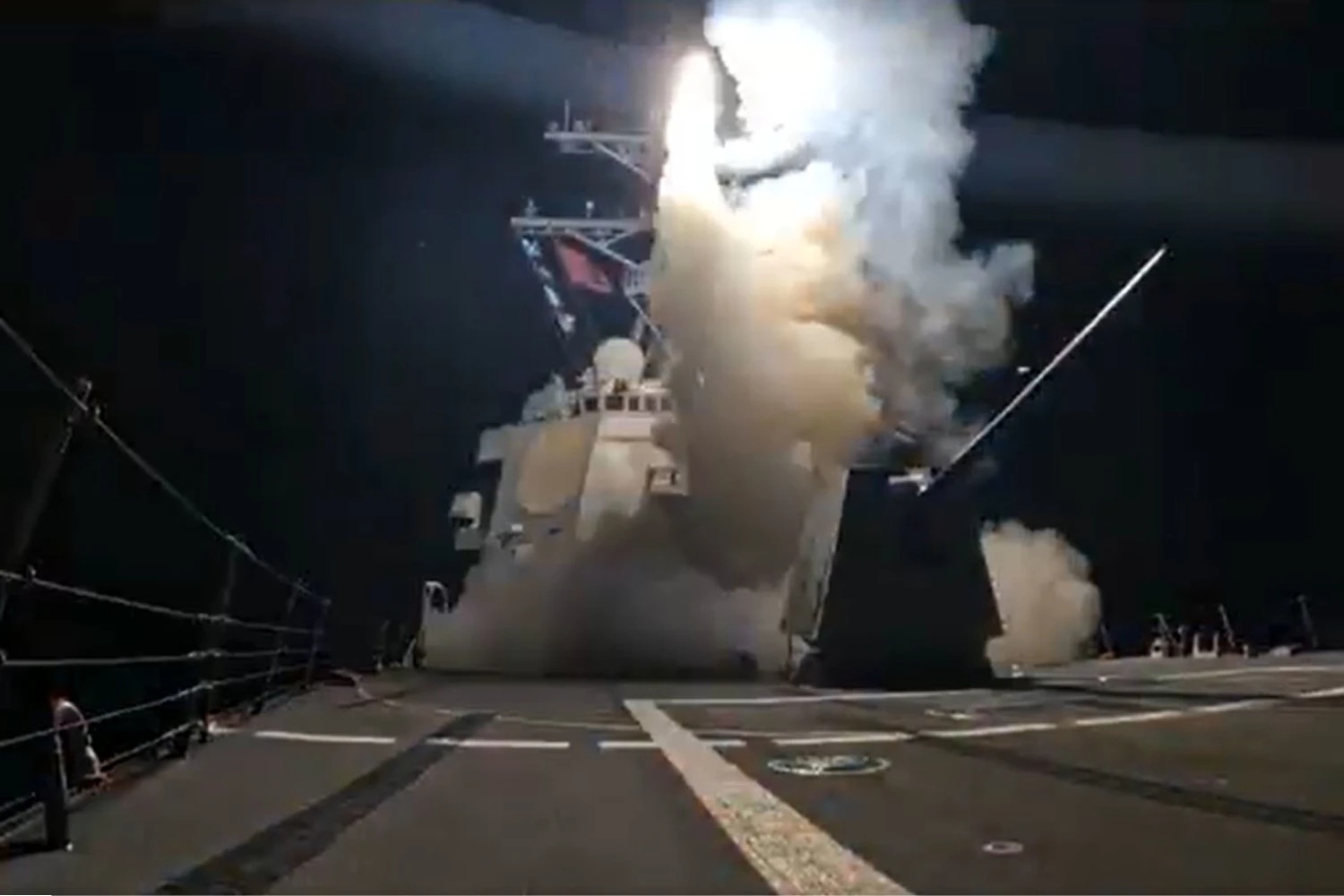
The United States has carried out a military strike targeting Islamic terrorists in northwest Nigeria, President Donald Trump said on Thursday, marking a rare publicly acknowledged U.S. military action in that part of the country and sharpening Washington’s focus on Nigeria’s security crisis.

“Tonight, at my direction as Commander in Chief, the United States launched a powerful and deadly strike against ISIS Terrorist Scum in Northwest Nigeria,” Trump said in a post on his Truth Social platform.

He said the fighters had “targeted and viciously” killed civilians, adding that the victims were “primarily, innocent Christians,” and claimed the scale of the killings had not been seen “for many years, and even Centuries!”

Trump framed the strike as a response to earlier warnings he said he had issued to the group.

“I have previously warned these Terrorists that if they did not stop the slaughtering of Christians, there would be hell to pay, and tonight, there was,” he said.

The U.S. military’s Africa Command (AFRICOM), which oversees American operations on the continent, confirmed the strike in a separate statement on X. AFRICOM said the operation was carried out at the request of Nigerian authorities and resulted in the deaths of “multiple ISIS terrorists.” It did not provide further details on the exact location, the number of casualties, or the assets used in the strike.

The operation follows comments made by Trump weeks earlier, when he said he had ordered the Pentagon to begin planning for possible military action in Nigeria. Those remarks were linked to his administration’s public emphasis on alleged persecution of Christians in parts of the country, an issue Trump has repeatedly highlighted in statements and online posts.

In Washington, the issue of violence against Christians in Nigeria has been the subject of sustained discussion on Capitol Hill. Over the past months, U.S. lawmakers have held hearings and briefings examining reports of mass killings in central and northern Nigeria. This has led to the U.S. designating Nigeria as a “country of particular concern.”

Lawmakers have cited repeated attacks in rural communities, particularly in Plateau and Benue states, where armed groups have carried out raids that local leaders and church officials say have disproportionately affected Christian farming communities.

Nigeria’s government has pushed back against that framing, saying violence across the country is driven by a complex mix of insurgency, banditry and communal conflict, and that armed groups attack both Muslim and Christian communities. Nigerian officials have also said U.S. assertions focusing narrowly on Christian persecution overlook ongoing efforts by security forces to restore stability and protect freedom of worship in affected regions.

The U.S. strike also comes amid a tougher diplomatic posture from Washington. The U.S. State Department recently announced visa restrictions on Nigerians, adding to earlier restrictions imposed on those found to be involved in mass killings or violence against Christians, a move that underscored the administration’s willingness to pair security cooperation with targeted sanctions.

While U.S. forces have long supported Nigeria through intelligence sharing, training and limited counterterrorism assistance, direct American strikes inside the country are uncommon and politically sensitive. AFRICOM’s statement that the operation was conducted at Nigeria’s request suggests close coordination between the two governments, even as public narratives around the causes of violence continue to diverge.

The Nigeria government says President Bola Tinubu approved the US strikes. Foreign Affairs Minister, Yusuf Tuggar, said on Friday on Channels Television’s Sunrise Daily, that it was Nigeria that provided intelligence for the US.

“We spoke with US Secretary of State Marco Rubio twice: once 19 minutes before the strike and another time 5 minutes before it went on,” he said.

He explained that as a multi-religious country, Nigeria is working with partners like the US to fight terrorism and safeguard the lives and properties of Nigerians.

“Now that the US is cooperating, we would do it jointly, and we would ensure, just as the President emphasized yesterday before he gave the go-ahead, that it must be made clear that it is a joint operation, and it is not targeting any religion nor simply in the name of one religion or the other,” the minister added.

However, the U.S. strike has sparked debate over sovereignty. Some Nigerians have sounded alarm about the precedent set by foreign military action on Nigerian soil, even when carried out with Abuja’s consent. But others have countered that Nigeria itself has recently taken similar cross-border security actions. Early this month, Nigeria launched air strikes in neighboring Benin Republic, targeting coup plotters who attempted to take over government.

Foxtron Launches Bria EV in Taiwan, Marking Island’s First Globally Exported Electric Model

0

Foxtron Vehicle Technologies, the electric vehicle joint venture between iPhone assembler Hon Hai Precision Industry (Foxconn) and Taiwanese automaker Yulon Motor, officially unveiled its Bria electric crossover on Thursday, positioning it as Taiwan’s first domestically produced EV designed for global export.

The launch event in Taipei highlighted the model’s role in elevating Taiwan’s automotive industry on the world stage, leveraging the island’s strengths in electronics and manufacturing to challenge established players in the booming EV market. The Bria, a rebranded and refined version of Foxtron’s earlier Model B concept, will launch with three variants priced between NT$938,000 ($28,600) and NT$1.198 million ($36,540), targeting the compact SUV segment dominated by models like the Tesla Model Y and Hyundai Ioniq 5.

All three models utilize a 57.7-kilowatt-hour lithium iron phosphate battery pack, offering a maximum range of up to 516 kilometers under the Worldwide Harmonized Light Vehicles Test Procedure (WLTP). Deliveries in Taiwan are scheduled to begin in the first half of 2026, with export markets—including Southeast Asia, Europe, and select emerging regions—to follow pending regulatory homologation and certification processes. The Bria features a modern, aerodynamic design with a closed grille, slim LED headlights, and a sleek profile optimized for efficiency.

Built on Foxtron’s proprietary MIH (Mobility in Harmony) open-source platform, a modular EV architecture developed since 2021, the vehicle incorporates advanced driver assistance systems, fast charging capabilities (supporting 30-80% in about 30 minutes via DC fast chargers), and integrated infotainment drawing from Foxconn’s electronics expertise. Interior highlights include a spacious cabin for five passengers, a 15-inch central touchscreen, and customizable ambient lighting, with emphasis on premium materials and user-centric tech like over-the-air updates.

The launch coincides with Foxtron’s acquisition of Yulon Motor’s struggling Luxgen passenger-car brand for NT$787.6 million ($24.95 million), announced last week. The deal transfers 100% ownership of Luxgen, encompassing its five sales subsidiaries, a nationwide network of over 100 dealerships, service centers, and associated employees, totaling around 1,200 staff. Foxtron will integrate Luxgen’s infrastructure to establish a comprehensive EV ecosystem in Taiwan, covering research and development, manufacturing at its Kaohsiung facility, sales channels, and after-sales services, including warranty and parts distribution.

Foxtron aims to build a more complete electric vehicle value chain in Taiwan, the company stated in a press release, emphasizing vertical integration to accelerate local EV adoption and support export ambitions.

The acquisition also provides Foxtron with Luxgen’s established brand recognition in Taiwan, where it has sold over 500,000 vehicles since 2009, despite recent sales declines due to competition from imports.

Foxconn holds a 45.6% stake in Foxtron, Yulon 43.8%, with the remainder distributed among minority investors like Foxconn affiliates and strategic partners. The venture operates a contract manufacturing model under the MIH platform, designing and producing EVs for third-party brands while developing proprietary models.

Beyond Bria, Foxtron’s lineup includes the Model C (seven-seater SUV), Model T (electric bus, already deployed in Taiwan’s public transit), and Model E (luxury sedan prototype). The company has secured contracts with international clients, including a paused deal with Fisker and prior work with Lordstown Motors, but Bria marks its first consumer-branded push into global markets.

Foxtron’s strategy aligns with Taiwan’s national goals to become an EV hub, supported by government incentives like the NT$7,000-9,000 per kWh battery subsidies and targets for 100% EV sales by 2040. The island’s semiconductor prowess—home to TSMC—positions it for strengths in EV chips and batteries, with Foxtron collaborating on solid-state battery tech.

Market Context

Taiwan’s EV market remains nascent, with penetration at around 3-4% in 2025 (up from 1% in 2023), dominated by imports from Tesla, market leader with ~40% share, BMW, Mercedes, and emerging Chinese brands like BYD. Domestic production has been limited, with Luxgen’s earlier EVs like the n7 struggling due to range anxiety and charging infrastructure gaps. There are only about 5,000 public stations nationwide.

Bria’s launch, backed by Luxgen’s dealerships and Foxconn’s supply chain, which sources batteries from CATL and components globally, aims to boost local adoption while targeting exports to markets like Thailand, Indonesia, and the EU, where demand for affordable, tech-laden EVs is surging. The move comes amid global EV transitions, with Taiwan exporting $1.2 billion in auto parts in 2025 but minimal complete vehicles.

Analysts project Bria sales of 10,000-15,000 units in its debut year, potentially expanding to 50,000 annually by 2028 with overseas assembly partnerships.

Shares in Foxtron rose 2.1% on the announcement, closing at NT$45.60, while Foxconn gained 1.4% to NT$188 and Yulon 0.8% to NT$72.50 in Taipei trading. The acquisition and launch are seen as catalysts for Foxconn’s diversification beyond Apple, which accounts for 50% of revenue, targeting 10% of global EV contract manufacturing by 2030 amid slowing smartphone growth.

China Accuses U.S. of Distorting Its Defense Policy, Warns Against Linking Border Easing With India to Washington’s Strategic Goals

0

China on Thursday accused the United States of distorting Beijing’s defense policy in a bid to obstruct improving relations between China and India, pushing back against a recent Pentagon assessment that linked easing border tensions to broader U.S.-India strategic competition.

Foreign ministry spokesperson Lin Jian made the remarks at a regular press briefing in Beijing after being asked whether China might seek to exploit a recent reduction in tensions with India over disputed border areas to prevent closer ties between Washington and New Delhi.

Lin rejected the suggestion, saying China views its relationship with India from a “strategic and long-term perspective,” and stressed that the long-running border dispute is strictly a bilateral issue.

“The border issue is a matter between China and India, and we object to any country passing judgment about this issue,” Lin said, adding that China opposes external interference or attempts to frame the issue through the lens of great-power rivalry.

His comments were aimed squarely at a U.S. Department of Defense report released on Tuesday, which said China “probably seeks to capitalize on decreased tension” along the disputed border to stabilize relations with India and prevent the deepening of U.S.-India ties.

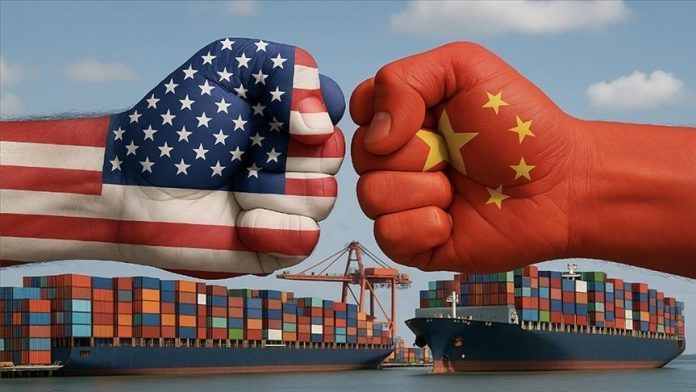
The Pentagon’s assessment reflects Washington’s broader concerns about China’s regional strategy at a time when the United States has been intensifying its political, economic, and defense engagement with India. That push has gathered pace since the second wave of President Donald Trump’s tariff war with Beijing, which has sharply escalated economic tensions between the world’s two largest economies.

As tariffs on Chinese goods widened and hardened, Washington has increasingly looked to India as both a strategic counterweight to China and a potential alternative hub in global supply chains. U.S. officials have stepped up diplomatic outreach to New Delhi, while American companies have accelerated efforts to diversify manufacturing away from China.

Major U.S. technology firms have been at the center of that shift. Apple, in particular, has repeatedly highlighted India as a key manufacturing destination, expanding iPhone assembly there and working with suppliers to deepen local production. Other U.S. tech companies have followed suit, promoting India as a long-term base for electronics manufacturing, software development, and supply-chain resilience as trade frictions with China persist.

Against that backdrop, Washington has also strengthened defense and security cooperation with India, expanding joint military exercises, deepening intelligence sharing, and advancing defense technology partnerships as part of its broader Indo-Pacific strategy. Beijing has consistently viewed these moves as an attempt to draw India more firmly into the U.S. strategic orbit.

China, for its part, has argued that recent progress in easing border tensions should not be politicized or linked to third-party relationships. China and India, Asia’s two most populous nations, have been working to stabilize ties after a deadly clash in the Himalayas in 2020 sent relations to their lowest point in decades. Since then, military commanders and diplomats from both sides have held multiple rounds of talks aimed at disengagement and confidence-building along the disputed frontier.

Lin said those efforts are driven by the interests of China and India alone and should not be mischaracterized by outside powers. He accused Washington of selectively interpreting China’s defense posture to sow distrust between Beijing and New Delhi.

India has been caught in the U.S.’ fights with its archenemies. Earlier this year, Trump threatened to impose 50% tariff on India for buying oil from Russia, which is under U.S. sanctions. Recent developments indicate that the U.S. expects India to be wary of China as much as Russia.

“Prepare For A Historic Economic Collapse”, Peter Schiff Says as Gold Threatens Dollar Supremacy

0

Peter Schiff, a prominent gold advocate and critic of fiat money, warns of the US dollar’s impending loss of reserve status to gold.

According to Schiff, the reign of the dollar as the world’s primary reserve currency is coming to an end, as he forecast a crash against other currencies and a resulting economic collapse that ends America’s global financial privileges.

In a post on X, he wrote,

“King dollar’s reign is coming to an end. Gold will take the throne as the primary central bank reserve asset. That means the U.S. dollar will crash against other fiat currencies, and America’s free ride on the global gravy train will end. Prepare for a historic economic collapse.”

Schiff’s warning comes amid rising inflation, growing national debt, and increased volatility in global currencies, signaling a potential turning point in the balance of economic power.

Supporting trends include central banks’ record 2025 gold purchases, such as 53 tonnes in October amid prices exceeding $4,000/oz, alongside a slight decline in the dollar’s IMF-reported reserve share to 56.92% in Q3, signaling gradual diversification away from USD dominance.

In an earlier post, Schiff had pointed to a dramatic rally in precious metals with gold jumping nearly $50 to just under $4,530 and silver soaring by $3 to trade near $75 as a clear signal that inflationary pressures are far from over.

According to Schiff, such a powerful and record-breaking rally does not occur in an environment where inflation is genuinely cooling and heading back toward the 2% target widely cited by central banks. Instead, he argues, the price action in gold and silver reflects deeper economic stresses that markets are already beginning to price in.

He wrote,

“Gold and silver are ripping. Gold spiked $50, almost hitting $4,530. Silver rocketed $3.00, trading 10 cents below $75. If you think this record-breaking precious metals rally is taking place in a world where inflation is headed back down to 2%, you are in for a rude awakening.”

Schiff has long maintained that gold and silver serve as a referendum on fiat currencies, particularly the U.S. dollar. The sharp rise in their prices, he argues, signals declining confidence in paper money amid rising debt levels, persistent deficits, and years of loose monetary policy.

By warning of a “rude awakening,” he implies that the purchasing power of fiat currencies is eroding more rapidly than many investors realize. In this context, gold and silver are not merely speculative trades, but defensive assets against long-term currency debasement.

Also, Jurrien Timmer, a prominent market analyst specializing in asset allocation and global macro strategy, has stated that Gold is firmly in a bull market, up roughly 65% year to date, outperforming global money supply growth. He adds that during the recent correction, gold has held onto most of its gains, which he views as characteristic behavior of a bull market.

US President Donald Trump’s aggressive moves to reshape global trade as well as his threats to the Fed’s independence added fuel to the bull run earlier this year. Recent reports reveal that Gold which has continued to surge, is already up 70% in 2025.

“The dominant drivers for both gold and silver right now are the combination of sustained physical demand and renewed sensitivity to macro risk,” said John Feeney, business development manager at Guardian Vaults, a Sydney-based bullion dealer. “We’re seeing momentum reinforced rather than capped, which suggests underlying conviction rather than purely speculative froth.”

Notably, hopes for further Fed rate cuts are pushing investors toward non-yielding assets like Gold and Silver. A weaker US dollar and softer treasury yields are giving Gold a fresh lift, making it cheaper and more attractive for buyers.

Meanwhile, global markets are betting heavily on the Fed to continue its rate-cutting cycle into 2026 to ease the borrowing costs further. 

According to investors, Gold recent surge to a historic, has reaffirmed its status as a safe-haven asset at a time of mounting global uncertainty, while Bitcoin continues to struggle to regain bullish momentum.

The divergence between the two assets has reignited the long-running debate over Bitcoin’s role as “digital gold,” with longtime crypto critic Peter Schiff seizing the moment to declare that the Bitcoin bull run is over.

As investors reassess risk amid tightening financial conditions and volatile markets, many argue that capital is flowing back to traditional stores of value leaving Bitcoin lagging in gold’s shadow.