DD
MM
YYYY

PAGES

DD
MM
YYYY

spot_img

PAGES

Home Blog Page 18

Why Smart Founders Build Legal Relationships Before They Need Them

0

Want to protect your business before disaster strikes?

Most founders wait until they’re knee-deep in a lawsuit to think about legal assistance. By that point, it’s already too late. The money’s been lost, clients are filing lawsuits, and stress levels are high.

But here’s the thing…

70% of all businesses will face some form of a lawsuit at one point or another. Not if, but when. And most founders that weather the storm do so because they built their legal relationships well before they actually needed them.

Building strong relationships with personal injury attorneys and business lawyers before you’re faced with a crisis is what sets the most successful founders apart. When you work with experienced injury attorneys before things go wrong, you’ll save time, money, and learn how to avoid major panic if/when the situation actually happens.

Let me explain…

Table of Contents

  1. Why Proactive Legal Relationships Are Important
  2. The Real Expense of Waiting
  3. How To Build Your Legal Network Correctly
  4. When Do Founders Need Injury Attorneys?
  5. How To Create a Legal Safety Net

Why Proactive Legal Relationships Are Important

Think of building legal relationships as you would insurance. Nobody wants to pay for insurance until they need it. But having the proper coverage beforehand can save your business if/when disaster strikes.

The stats:

About 45% of small businesses are involved in litigation at any given time. That means nearly HALF of ALL small businesses have some kind of lawsuit going on right now. And those that are better equipped to handle these situations? They have their attorneys on call.

When you build a relationship with a lawyer beforehand, you get three benefits:

  • Faster response time (your attorney will prioritize you over new clients)
  • More knowledgeable about your business
  • Typically lower cost

If an employee gets injured on the job or someone files a claim against your company, those that have existing legal relationships will be able to react much faster. They won’t have to waste precious time googling “best employment lawyer near me” or making awkward initial phone calls.

Getting sued is bad enough. Dealing with it alone is what truly hurts most founders.

The Real Expense of Waiting

The mistake most entrepreneurs make is that they think they’re saving money by not using attorneys.

Think again.

Workplace injuries alone cost $167 billion in 2022. That’s BILLION with a “B”. And if you don’t have the correct legal relationships in place, your business will pay more in legal fees, settlements, penalties, and lost work hours.

Here’s what happens when you wait too long:

It’s Monday and you just got sued.

You spend Tuesday researching for lawyers. Wednesday and Thursday you meet with attorneys to discuss your options. By Friday your attorney is still trying to gather information while your lawsuit has Monday deadlines.

Had you built a legal relationship beforehand, your attorney could have been notified within hours, not days.

When it comes to legal matters, time is often of the essence.

How To Build Your Legal Network Correctly

You may be wondering…

How do I build these “legal relationships”

First you need to understand what types of lawyers you should build relationships with. While every business is different, there are three types of lawyers every firm should consider connecting with:

  • Business/Corporate Lawyers – For contracts, partnerships, company structure, etc
  • Employment Lawyers – For hiring/firing employees, any workplace disputes, etc
  • Personal Injury Lawyers – If there are any accidents on your business’s property

Once you have identified the types of legal help your business relationships should have, it’s time to start building those relationships before you NEED them.

Set up consultations. Learn about their process. What’s their response time? How much do they charge? Most importantly, get to know them.

You’re not trying to spend money you don’t have.

You’re trying to build relationships so you have those people on speed dial when you do need them.

When Do Founders Need Injury Attorneys?

Here’s another fun fact…

Workplace injuries happen more frequently than you might think. In 2023, Employers reported 2.6 million workplace injuries and illnesses. That’s MILLION with an “M”.

Specific instances where you will need an injury attorney:

  • An employee gets hurt at work
  • Customer slips and falls on your business’s property
  • A product of your business injures someone
  • Someone is involved in a vehicle accident on behalf of your company
  • You’re faced with third-party liability questions

These situations require specialized skill sets that not all lawyers offer. Make sure you have a general business lawyer and dig deeper when you know you need injury-specific legal help.

Personal injuries can also happen to the founders themselves. If something happens to you that affects your ability to run your company, you’ll want to already have a relationship with an injury lawyer.

Business accidents don’t solely affect employees and customers.

Founders can get hurt too.

How To Create a Legal Safety Net

Building your legal safety net takes time. But building it isn’t as difficult as you think.

Start by creating a list. What areas of your business could potentially need legal help? Write them down.

Next, research attorneys that specialize in those fields. Find qualified candidates that have the experience and knowledge to back up their service.

Reach out to their offices and set up consultations. A lot of attorneys will offer free half-hour consultations to potential clients.

Store their contact information somewhere you can easily access. When the time comes, you’ll want to be able to quickly get in touch with them.

Send them updates about your business. Stay fresh in their minds so they remember you when you actually need their service.

It won’t happen overnight, but if you start building these relationships today, you’ll be set up for success down the road.

The best time to start building these relationships was yesterday. The next best time is right now.

The Bottom Line

Building your legal safety net won’t solve all of your business problems and prevent future issues from occurring. But having the right people on your side can give you an advantage when you’re faced with a disaster.

When you take the time to build these relationships today, you’ll thank yourself later.

It allows you to:

  • Respond faster to lawsuits and incidents
  • Have someone that already knows your business
  • Create strategies to help you WIN
  • Remain calm during stressful situations

Business isn’t about never facing problems.

It’s about being prepared when they come your way.
Vaping in 2025 and the Quiet Shift Toward Comfort, Routine, and Nicotine Salts

0

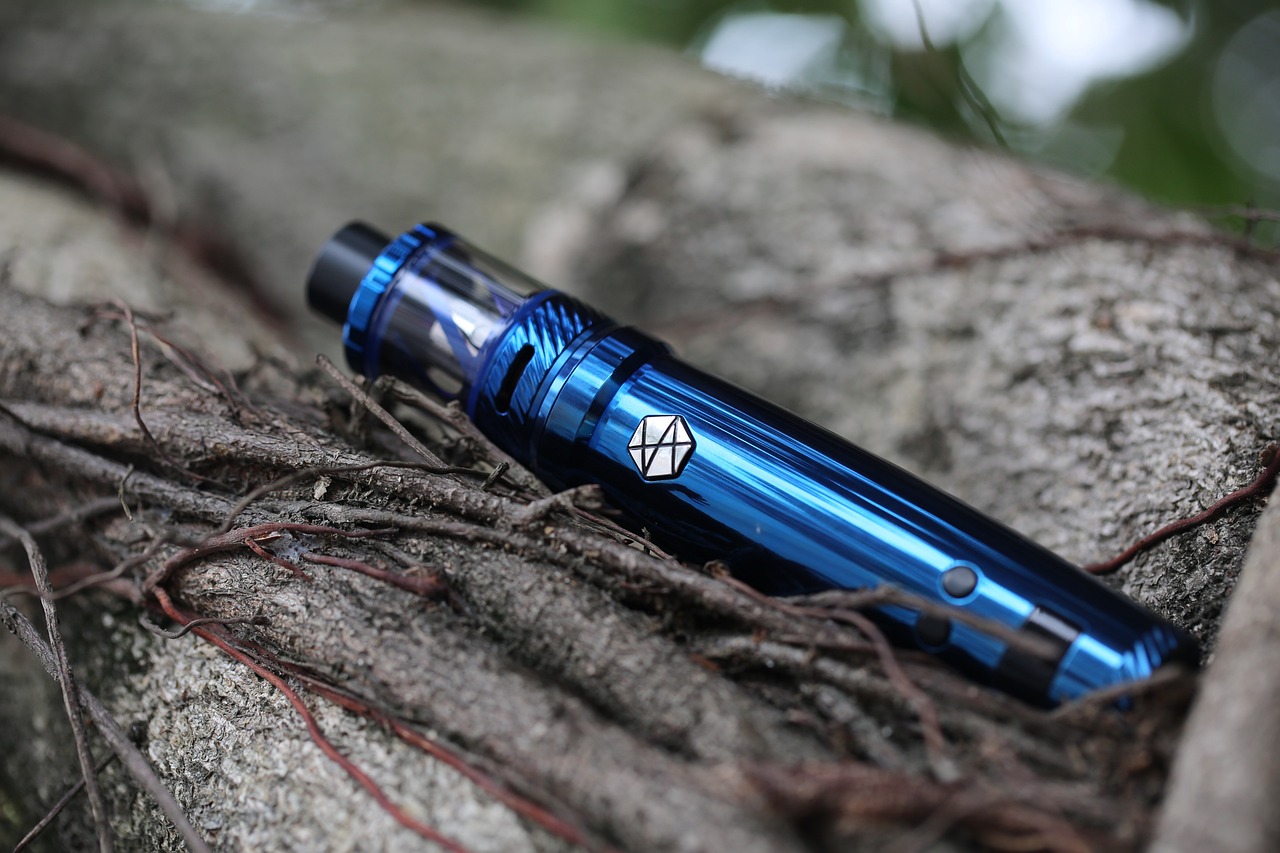
Vaping in 2025 has shifted from being a bold statement to a source of comfort in daily life. Many adults now see it not as a hobby or an experiment but as a regular and reliable part of their routine. What was once new and ever-changing has transformed into a calmer practice, focusing on consistency, comfort, and products that work without demanding too much attention or effort.

This change especially shows in how people fit vaping into their day. They often pick moments that feel natural and relaxed, like a quick pause in the morning, a peaceful break during work, or a quiet moment in the evening when the day slows down. Here, the aim is not to seek intensity or distraction but to find balance. This goal affects the devices people choose and the liquids they use. Compact pod systems have gained popularity due to their discreetness, familiarity, and ease of use. They keep the experience smooth and predictable no matter how the day unfolds. Nicotine salts have greatly influenced this lifestyle approach to vaping. Their smoother delivery and efficient absorption help users feel satisfied without harshness or overstimulation, making them ideal for shorter, quieter sessions that fit easily into modern routines. Instead of requiring frequent or heavy use, nicotine salts promote a more balanced experience that aligns with the desire for calm and control. For those curious about this formulation and its wide acceptance, more information is available about nicotine salts.

Along with how people vape, shopping for vaping products has changed too. Many adults now apply the same careful thought to vaping as they would to other personal choices like skincare, nutrition, or coffee. Consumers read reviews carefully, look for trusted retailers, and seek clear information about ingredients and manufacturing standards. When something becomes part of a daily ritual, trust is crucial. This shift has encouraged greater transparency in the industry, moving the focus from impulse buying to long-term satisfaction. Flavor choices also reflect a more mature mindset. Many users now prefer profiles that seem balanced and refined rather than intense or overly sweet. They choose flavors that can be enjoyed multiple times without becoming overwhelming. Mild fruit blends, soft herbal hints, and smooth tobacco-inspired options have gained traction, especially since nicotine salts help maintain these flavors clearly and consistently, even at lower power levels. This creates an experience that feels clean and composed from beginning to end.

Technology continues to improve quietly in the background, enhancing this lifestyle without demanding attention. Modern devices automatically regulate power, protect coils, and provide steady performance throughout the day. Batteries last longer, charge faster, and require less thought from users, making vaping an effortless part of daily life rather than a technical task that needs constant management. Social attitudes towards vaping have also softened. Many adults opt for low vapor output that feels discreet and respectful in shared spaces. This allows them to enjoy their moment without bothering others or attracting unnecessary attention. This understated approach fits well with the broader desire for moderation and mindfulness that many lifestyle choices reflect in 2025.

Sustainability has emerged as another subtle influence. More users now opt for refillable systems and longer-lasting devices to reduce waste and align their habits with a growing sense of environmental responsibility. Brands have responded by simplifying packaging and improving material choices, supporting the idea that vaping can be both comfortable and environmentally conscious. In 2025, vaping feels less like a trend and more like a personal rhythm that supports moments of pause throughout the day. The rise of nicotine salts, alongside thoughtful device design and more intentional consumer habits, shows how the experience has matured into something steady, refined, and deeply connected to how adults choose to live their everyday lives.

Here’s Why Zero Knowledge Proof (ZKP) Is Being Labeled a 600x Crypto Presale for 2026

0

The digital asset market has hosted thousands of token launches, yet identifying the best crypto presale requires moving past social media hype to scrutinize the underlying technology, the team’s commitment, and the real-world problems being solved. In January 2026, one project is successfully meeting every metric used to define a top-tier opportunity: Zero Knowledge Proof (ZKP).

ZKP distinguishes itself not through promises, but through execution. The founding team self-funded over $100 million to construct a complete infrastructure before offering a single token to the public. The blockchain is fully operational, the testnet is active, and physical Proof Pods are shipping to global users. High-profile entities, including the Miami Dolphins, are already utilizing the network to perform privacy-preserving analytics.

With researchers estimating that ZKP could raise $1.7 billion, potentially the largest in industry history, and generate 600x returns for early buyers, the primary question is whether you will secure a position before daily presale auction dynamics increase the entry cost. Here is an analytical look at why ZKP is labeled the best crypto presale of 2026 and how it compares to standard launches.

Defining the Best Crypto Presale: An Analytical Framework

To understand why ZKP is a leader, we must apply a rigorous evaluation framework to the current market.

The 7 Success Metrics for a Top Presale:

  1. Operational Tech: Does the project have a working product or just a whitepaper? ZKP’s live testnet allows developers to build today.
  2. Equity in Distribution: Are there hidden VC deals? ZKP uses a transparent auction that puts retail and institutional buyers on the same level.
  3. Tangible Utility: Does the tech solve a billion-dollar problem? ZKP enables private AI computation, a necessity for modern enterprise.
  4. Founder Commitment: Did the team invest their own capital? A $100M self-funding round proves “skin in the game.”
  5. Market Scale: Is the project entering a massive industry? ZKP targets the intersecting fields of AI, healthcare, and finance.
  6. Economic Clarity: Are the tokenomics transparent? ZKP features clear on-chain distribution with no hidden inflation.
  7. Unique Innovation: Does it improve on existing chains? ZKP’s four-layer privacy architecture offers features that transparent chains cannot match.

Because ZKP satisfies all seven of these criteria, it has become the consensus pick for the best crypto presale among analysts reviewing 2026’s landscape.

Projecting Growth: Understanding the 600x Analysis

Predictions of 600x returns are based on a “top-down” analysis of the markets ZKP is designed to dominate:

Market Valuation by 2030:

  • AI Privacy Sector: Forecasted at $15+ billion.
  • Enterprise Blockchain: Estimated at $67+ billion.
  • Healthcare AI: A potential $188 billion industry.
  • Financial Privacy Tech: Projected at $46 billion.

ZKP is currently the only blockchain capable of private AI computation at a global scale. If the project captures just 5% of these combined markets over five years, a $1.7 billion starting valuation could logically scale toward a 600x return for those entering at early auction stages. While these remain projections, they are anchored in the demand for functional infrastructure rather than simple speculation.

Investor Profile: Is ZKP the Best Crypto Presale for Your Portfolio?

Evaluating a project requires matching it to your personal investment strategy. ZKP is likely a fit for those who:

  • Seek asymmetric upside while accepting the inherent risks of the crypto market.
  • Recognize that AI privacy is a fundamental, trillion-dollar challenge.
  • Prefer investing in established infrastructure over “vaporware” promises.
  • Value a fair distribution model that excludes venture capital manipulation.
  • Are prepared for a 1-3 year horizon as the network achieves full mainnet adoption.

Participation Guide for the ZKP Presale Auction

If you identify ZKP as the best crypto presale for your needs, the entry process is designed for transparency:

  1. Prepare a Wallet: Use MetaMask, Coinbase Wallet, or Trust Wallet loaded with supported assets like ETH, USDT, USDC, BNB, or SOL.
  2. Access the Platform: Navigate to the official auction site and monitor the current 24-hour countdown.
  3. Contribute: Connect your wallet and select an amount between $20 and $50,000. Your estimated allocation will update in real-time based on the pool size.
  4. Secure Tokens: Once the window closes, tokens are instantly claimable through your personal dashboard.

Pro Strategy: Successful participants often distribute their entries across multiple daily auctions to average their cost, especially as pool sizes fluctuate.

The Urgency of Daily Price Discovery

The reason ZKP is frequently called the best crypto presale to enter immediately is the mathematical reality of its auction:

  • Yesterday: A $1.5M pool meant a $20,000 contribution secured 1.33% of the daily release (2.67 million tokens).
  • Today: If the pool grows to $2M, that same $20,000 only secures 1% of the release (2 million tokens).

As global awareness expands, your dollar buys fewer tokens every day. Waiting even 30 days could result in receiving 50% less value for the same investment.

Key Highlights

By every measurable standard, technology, team, and market fit, Zero Knowledge Proof is the best crypto presale of 2026. The project has removed the “development risk” that plagues most startups by building the network before asking for funding.

The Summary Case:

  • $100M pre-built infrastructure (Unprecedented in crypto).
  • Live testnet and physical hardware already shipping globally.
  • Verified enterprise use through the Miami Dolphins partnership.
  • Radical fairness with no VC discounts or private rounds.

The daily presale auction is active now. Every 24-hour window that closes represents an entry point that will never be available at these levels again.

Explore Zero Knowledge Proof:

Auction: https://auction.zkp.com/

Website: https://zkp.com/

X: https://x.com/ZKPofficial

Telegram: https://t.me/ZKPofficial

Dogecoin’s Meme Era Is Slowing Down, Yet Zero Knowledge Proof’s Presale Auction Begins to Heat Up!

0

Dogecoin saw movement again during the week. The price climbed close to 5.4%, moving from around $0.077 to nearly $0.081 after renewed social chatter online. At the same time, Bitcoin and Ethereum remained mostly unchanged, and overall trading activity followed a familiar cycle. Interest rose fast, then cooled just as quickly. This behavior has become typical for Dogecoin, where brief attention sparks price action before interest fades again.

This cycle helps explain why Dogecoin often appears as a top trending crypto. It responds well to short bursts of focus. However, it rarely builds lasting pressure over time. Zero Knowledge Proof (ZKP) operates at the opposite end of this range. Instead of waiting for attention, it relies on structure. That structure is not theoretical. It is live and active today, placing Zero Knowledge Proof (ZKP) among discussions of top trending crypto based on operation rather than headlines.

Dogecoin Shows How Attention Drives Price, Not Network Growth

Dogecoin remains simple to use and simple to trade. That ease helped it gain worldwide recognition. Yet under the surface, progress has been limited. The network does not support smart contracts. It does not create ongoing demand. It also does not connect usage with value growth.

The strongest rally in Dogecoin’s history already passed. In early 2021, DOGE climbed from fractions of a cent to nearly $0.74, pushed mainly by social momentum. Since that period, price action has spent much of its time under $0.10, reacting to sentiment rather than clear development steps. Each move relies on renewed attention, not on expanding utility or steady usage.

This does not remove Dogecoin from relevance. Instead, it makes behavior easier to anticipate. Price shifts tend to mirror attention cycles. When attention fades, momentum slows. That is why DOGE often trends as a top trending crypto but struggles to sustain compounding movement.

Zero Knowledge Proof (ZKP) Runs a Live Network With Ongoing Demand

Unlike many early-stage projects, Zero Knowledge Proof (ZKP) is already operating. Its presale auction is live, with coins released daily through a fixed and visible process. Supply enters the market every day under clear rules. Demand can be seen directly, and price discovery happens gradually instead of through sudden jumps.

There are no venture funding rounds, no private access tiers, and no delayed unlocks scheduled later. The full system was built before launch and funded with $100 million by the founding team. This removes many pressure points that often distort early price behavior and makes Zero Knowledge Proof (ZKP) stand out as a top trending crypto based on transparency.

The design connects rewards with active participation. Demand from the presale auction feeds straight into network activity. This creates a steady buildup rather than sharp bursts. For early participants, this structure introduces asymmetry. At current levels, some market watchers describe future potential in multiples instead of small percentage gains, with long-range scenarios discussing 2000× ROI if usage expands over time.

This discussion is not driven by hype. It focuses on the entry position in relation to structure and timing. The infrastructure is live, the network is live, the presale auction is live, and proof pods are already delivering and shipping, reinforcing Zero Knowledge Proof (ZKP) as a top trending crypto supported by real operations.

Chart Comparison Highlights Spikes Versus Gradual Accumulation

A visual comparison makes the contrast clear.

  • Dogecoin charts often display sharp upward moves followed by extended flat periods.
  • Zero Knowledge Proof (ZKP) presale auction charts reflect steady daily input, rising averages, and narrowing ranges.

One reacts quickly. The other builds gradually.

Past market cycles tend to reward systems that create demand through mechanics. Assets driven mainly by attention often peak early. Structured systems usually move more slowly at first, then accelerate as participation grows. This pattern continues to place Zero Knowledge Proof (ZKP) among the top trending crypto discussions rooted in long-term behavior.

Final Say

Market conditions are shifting. Participants are becoming more selective and are watching where demand originates instead of only following price jumps. Within this setting, Zero Knowledge Proof (ZKP) stands out as a top trending crypto not because of loud messaging, but because of consistent operation.

Dogecoin is likely to trend again. History suggests it often does. Yet past cycles also show that attention alone rarely supports lasting value. Systems with structure tend to endure.

Zero Knowledge Proof (ZKP) is not waiting for momentum to appear. It is creating momentum daily through its live infra, active network, and ongoing presale auction.

That difference explains why many now view it as a top trending crypto with long-range potential rooted in mechanics rather than short-term excitement.

Find Out More about Zero Knowledge Proof:

Auction: https://auction.zkp.com/

Website: https://zkp.com/

X: https://x.com/ZKPofficial

Telegram: https://t.me/ZKPofficial

Brazil Antitrust Watchdog Moves Against WhatsApp Over AI Chatbot Ban, Raising Fresh Pressure on Meta

0

Brazil’s competition authority has ordered WhatsApp to suspend a controversial policy that prevents third-party artificial intelligence companies from offering chatbots on the messaging platform, opening a new front in a growing global regulatory challenge to Meta’s AI strategy.

The order, issued by the Conselho Administrativo de Defesa Econômica (CADE), also launches a formal investigation into whether the policy violates competition rules by shutting out rivals and tilting the market in favor of Meta’s own AI products. At the center of the probe is Meta AI, the company’s in-house chatbot that is integrated directly into WhatsApp.

In a statement, CADE said preliminary findings point to “possible anti-competitive conduct of an exclusive nature” stemming from the new WhatsApp Business Solution Terms imposed by Meta. According to the agency, those terms may restrict access by independent AI providers and unfairly privilege Meta’s own technology within one of the world’s most widely used messaging platforms.

The policy in question was announced in October, when Meta revised the rules governing access to the WhatsApp Business API. Under the new terms, third-party AI companies are barred from using the API to deliver chatbots to users. OpenAI, Perplexity, and Microsoft soon warned developers that their chatbots would no longer function on WhatsApp once the policy takes effect on January 15.

At the same time, Meta carved out an important exception. Businesses are still allowed to deploy their own chatbots, whether AI-powered or rule-based, to communicate with customers on WhatsApp. That distinction has drawn scrutiny from regulators, who are questioning whether Meta is selectively restricting competition at the platform level while preserving room for its own AI ambitions.

CADE said its investigation will examine whether the new rules are exclusionary in practice and whether they amount to preferential treatment for Meta AI. The watchdog’s decision forces WhatsApp to pause enforcement of the policy in Brazil while the review is underway, a move that could have immediate implications for developers and enterprises operating in the country.

The European Union has already opened an antitrust investigation into the same policy, and Italian authorities have taken similar steps. Under EU competition law, a finding against Meta could result in fines of up to 10% of the company’s global revenue, a penalty large enough to reshape how the firm rolls out AI features across its platforms.

Meta has already shown some flexibility under regulatory pressure. According to a notice seen by TechCrunch, the company told AI developers that they may continue offering chatbots on WhatsApp in Italy even after the January 15 deadline. That carve-out suggests Meta is willing to apply its rules unevenly by jurisdiction, depending on the legal risks involved. A comparable adjustment in Brazil is now a realistic possibility following CADE’s order.

For Meta, the dispute sits at the intersection of infrastructure limits, platform control, and competitive strategy. The company has argued that third-party AI chatbots place heavy demands on systems originally built for customer support and transactional messaging, not conversational AI at scale. From Meta’s perspective, restricting API access is a technical and operational necessity rather than a competitive maneuver.

“The purpose of the WhatsApp Business API is to help businesses provide customer support and send relevant updates,” a Meta spokesperson said when the changes were announced in October. “Our focus is on supporting the tens of thousands of businesses who are building these experiences on WhatsApp.”

Meta has also pointed out that users who want access to a variety of AI chatbots can do so outside WhatsApp, a position that aligns with its broader claim that it is not obligated to host every AI service within its ecosystem.

Regulators, however, appear unconvinced that technical strain alone explains the policy. WhatsApp’s scale in markets like Brazil gives it enormous gatekeeping power. With hundreds of millions of users, exclusion from the platform can sharply limit the reach of rival AI services, particularly in countries where WhatsApp functions as a primary digital interface for communication, commerce, and customer service.

The investigation raises broader questions about how dominant platforms integrate AI while maintaining open markets. As messaging apps evolve into hubs for payments, shopping, and automated assistance, control over APIs increasingly determines who can compete and who cannot. CADE’s move signals concern that Meta may be using its control over WhatsApp to shape the AI landscape before clear regulatory rules are in place.

The outcome in Brazil could influence regulatory thinking elsewhere, particularly in emerging markets where WhatsApp plays a central economic role. It also places Meta in a familiar position of defending platform decisions that regulators see as potentially anti-competitive, at a time when governments are paying closer attention to how AI power is concentrated and deployed.