DD
MM
YYYY

PAGES

DD
MM
YYYY

spot_img

PAGES

Home Blog Page 18

Expiration of ~28B in Crypto Option Contracts Create Room for Fragmented Liquidity

0

A record-breaking ~$28 billion in crypto options primarily Bitcoin and Ethereum expired yesterday, often called the “Boxing Day” expiry, due to the holiday. Mostly on Deribit, the leading crypto options exchange.

Bitcoin: ~$23.6–$23.7 billion notional value around 267,000–268,000 contracts. Ethereum: ~$3.7–$3.8 billion around 1.28 million contracts. BTC put/call ratio: ~0.35–0.38 bullish skew, more calls than puts. BTC max pain point: ~$95,000–$96,000 the price where most options expire worthless. ETH max pain: ~$3,100.

This was the largest crypto options expiry ever by notional value, combining monthly, quarterly, and annual settlements. The event contributed to choppy, range-bound trading in December— BTC mostly stuck between $85,000–$90,000 due to gamma hedging by market makers.

Post-expiry, hedging pressures have eased, which could allow for greater volatility or a breakout in the coming days/weeks—though holiday-thin liquidity has kept moves muted so far. Bitcoin is trading around $88,000–$89,000, with the broader market relatively quiet amid year-end conditions.

Large expiries like this often act as volatility catalysts, but the market absorbed it without extreme swings yesterday. Traders are now watching for potential relief rallies or further downside into 2026.

The record ~$28 billion crypto options expiry primarily on Deribit has now passed, and the market absorbed it relatively calmly. Bitcoin settled the day around $87,500–$88,500, well below the pre-expiry max pain point of ~$95,000–$96,000, the strike where the most options expire worthless, maximizing pain for buyers.

Gamma hedging relief: Leading up to expiry, heavy dealer gamma exposure pinned BTC in a tight $85,000–$90,000 range. Market makers hedged aggressively buying dips near $85K, selling rallies near $90K, suppressing volatility.

With over 50% of Deribit’s open interest cleared, this “price trap” or “lid” has lifted ? expect increased volatility in the coming days/weeks as mechanical hedging pressures ease.

No major spike on expiry day: Holiday-thin liquidity and orderly settlement prevented extreme moves. BTC briefly touched $89,100 intraday but closed lower, reflecting short-covering and caution rather than a breakout.

Large expiries like this often act as volatility catalysts once passed, removing artificial anchors and allowing underlying demand/supply to drive price. Potential upside bias: Pre-expiry positioning was bullish— put/call ratio ~0.38, heavy calls at $100K+ strikes. Many traders likely rolled positions into 2026 contracts rather than letting them expire.

If institutional/ETF inflows resume post-holidays, this could fuel a relief rally toward $90,000–$95,000 or higher some analysts eye $100K–$110K. BTC failed to reach max pain, meaning more calls expired worthless bearish signal for option buyers.

Combined with recent spot Bitcoin ETF outflows ~$175M on Dec 24 and Q4 2025 underperformance, a test of $85,000 support remains possible if sentiment sours. Implied volumes on Deribit’s DVOL dropped to ~45% pre-expiry, signaling low expected turbulence. Post-expiry “gamma flush” could reverse this ? sharper moves ahead, especially as trading volume normalizes in January.

Ethereum max pain $3,100 also settled lower between $2,950–$3,000, with similar dynamics. Altcoins may follow BTC’s lead, but thin liquidity amplifies risks. A sustained move above $90,000 could trigger FOMO and rapid upside. Below $85,000 risks liquidations.

Low liquidity into New Year’s could keep moves muted short-term, but fresh capital inflows in Q1 2026 are a common pattern. Past large expiries like in Q3/Q4 2025 led to post-event trends driven by fundamentals (ETFs, macro) rather than options mechanics.

Overall, the expiry cleared significant overhang without drama, setting the stage for a potential regime shift—likely more volatile and directionally decisive—heading into 2026. Bullish skew suggests upside probability, but caution rules in thin markets.
How Nations Manufacture Success: Lessons from Amazon, Tesla, and China

0

Before Amazon became a household name in America, it needed a push. And that push came quietly, through policy. For years, the U.S. government allowed online retailers not to collect sales tax. That single exemption tilted the market. Buying online suddenly made sense.

Back then, students would walk into bookstores, flip through recommended texts, note the editions, and then go home to order from Amazon, saving roughly 10% in tax. As shopping carts expanded on total value, so did the savings. On a $1,000 item with a 10% sales tax, that was $100 kept in your pocket. And with Amazon often offering free delivery, even if it took days, the value proposition was clear.

Americans got the message. They moved online. Foot traffic in physical stores thinned. And one after another, retail giants fell, from Circuit City to J.C. Penney and many in between. Amazon did not just win because of technology; it won because policy created space for it to scale.

At the same time, Tesla was building electric cars that were far too expensive for most people. Again, policy stepped in. The U.S. government and many states introduced tax credits and deductions that allowed buyers to subtract part of the cost of those cars when filing taxes. Suddenly, a Tesla became more affordable. Without those assists, the Tesla we celebrate today might never have taken its current shape.

Yes, that is not pure, textbook capitalism. But governments are not blind. When they see new markets forming, they lean in.

China does the same, only more visibly. While the U.S. nudges through incentives and exemptions, China often builds and invests in plain sight. Today, we read of a $21 billion, state-backed venture initiative: three massive funds aimed at “hard technology”, the kind of deep, foundational innovations that shape long-term competitiveness and national security. These funds will target early-stage startups, spreading capital across hundreds of young firms rather than concentrating on a few late-stage champions. It is ecosystem thinking, at scale.

Good People, every system can work provided three things are present: merit, honesty, and pragmatism. The American system works. The Chinese system works. The Russian system works. And the African system can also work, if we allow those three attributes to lead.

In ancestral Africa, communities built together. They pooled labor, shared risk, and raised institutions collectively. That system sustained societies for generations. It was not broken.

So, the real question is not whether to copy America or imitate China. The real task is to strengthen merit, insist on honesty, and act with pragmatism. When those are in place, most development frameworks will deliver. And that means our leaders must not depend on World Bank or IMF for new lectures before they can fix our lands because most systems, anchored on those three attributes, will work!

China Launches $21 Billion Venture Capital Push to Accelerate ‘Hard Tech’ Self-Reliance

China Launches $21 Billion Venture Capital Push to Accelerate ‘Hard Tech’ Self-Reliance

0

China has taken another decisive step to deepen its push for technological self-reliance, launching three massive state-backed venture capital funds aimed squarely at “hard technology” sectors seen as critical to long-term economic and national security goals.

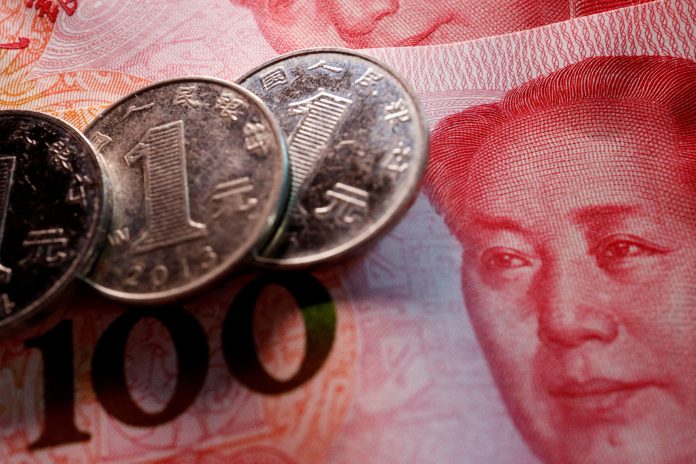
State broadcaster CCTV reported on Friday that the capital contribution plans for the funds have been finalized, with each fund sized at more than 50 billion yuan ($7.14 billion), bringing the combined war chest to over 150 billion yuan ($21 billion). The scale alone makes the initiative one of the largest coordinated public venture capital efforts China has rolled out in recent years.

According to an official cited in the report, the funds will focus on early-stage startups, particularly companies valued at less than 500 million yuan. Individual investments will be capped at 50 million yuan, a structure designed to spread capital across a wide pool of firms and nurture an ecosystem of emerging technologies rather than concentrating funding in a few late-stage champions.

The targeted sectors point to Beijing’s self-reliance priorities. Investment will flow into integrated circuits and semiconductor manufacturing, quantum technologies, biomedicine, brain–computer interface development, aerospace, and other advanced industrial and scientific fields. These areas are widely viewed by Chinese policymakers as bottlenecks where the country remains vulnerable to external pressure. By contrast, so-called “soft” technologies such as consumer internet platforms and online services are excluded, reflecting a deliberate pivot away from the platform-driven growth model that dominated the previous decade.

The launch comes against the backdrop of intensifying geopolitical and technological friction, particularly with the United States. Export controls on advanced chips, chipmaking equipment, and related technologies have sharpened Beijing’s resolve to build domestic alternatives and reduce reliance on foreign suppliers. Hard technology, in this context, is seen not just as an economic growth engine but as a strategic necessity.

Beyond geopolitics, the funds also address structural weaknesses in China’s venture capital market. Deep-tech startups typically face long development timelines, heavy capital requirements, and uncertain commercial outcomes. In recent years, private venture capital has increasingly favored quicker returns, leaving many hard-tech firms underfunded or overly dependent on government subsidies. By injecting large pools of patient capital, authorities aim to stabilize funding conditions, support sustained research and development, and help promising firms survive the so-called “valley of death” between laboratory breakthroughs and commercial viability.

The emphasis on early-stage investment suggests policymakers want to influence innovation at its roots, shaping technology trajectories before companies become large or strategically constrained. Officials have previously said similar state-backed funds would be run on more market-oriented principles, balancing commercial discipline with national strategic objectives, though details on governance, fund managers, and expected investment horizons have not yet been disclosed.

The initiative also fits into a broader recalibration of China’s economic model. As the property sector downturn weighs on growth and traditional investment engines lose momentum, Beijing has repeatedly framed advanced manufacturing and frontier technologies as the foundation of “high-quality development.” Large-scale funds such as these are intended to crowd in private capital, signal long-term policy commitment, and anchor innovation-led growth.

While questions remain about execution, returns, and the risk of misallocation, analysts say the sheer size and focus of the funds send a clear message: China is doubling down on hard technology as a central pillar of its future economy. If effectively deployed, the capital could accelerate breakthroughs in core technologies, especially semiconductor, reshape the country’s startup landscape, and deepen the state’s role as a long-term venture investor in strategically vital industries.

Silver breaks $76 As Precious Metals Supercycle Gathers Pace on Fed Pivot Bets, Supply Stress and Geopolitical Risk

0

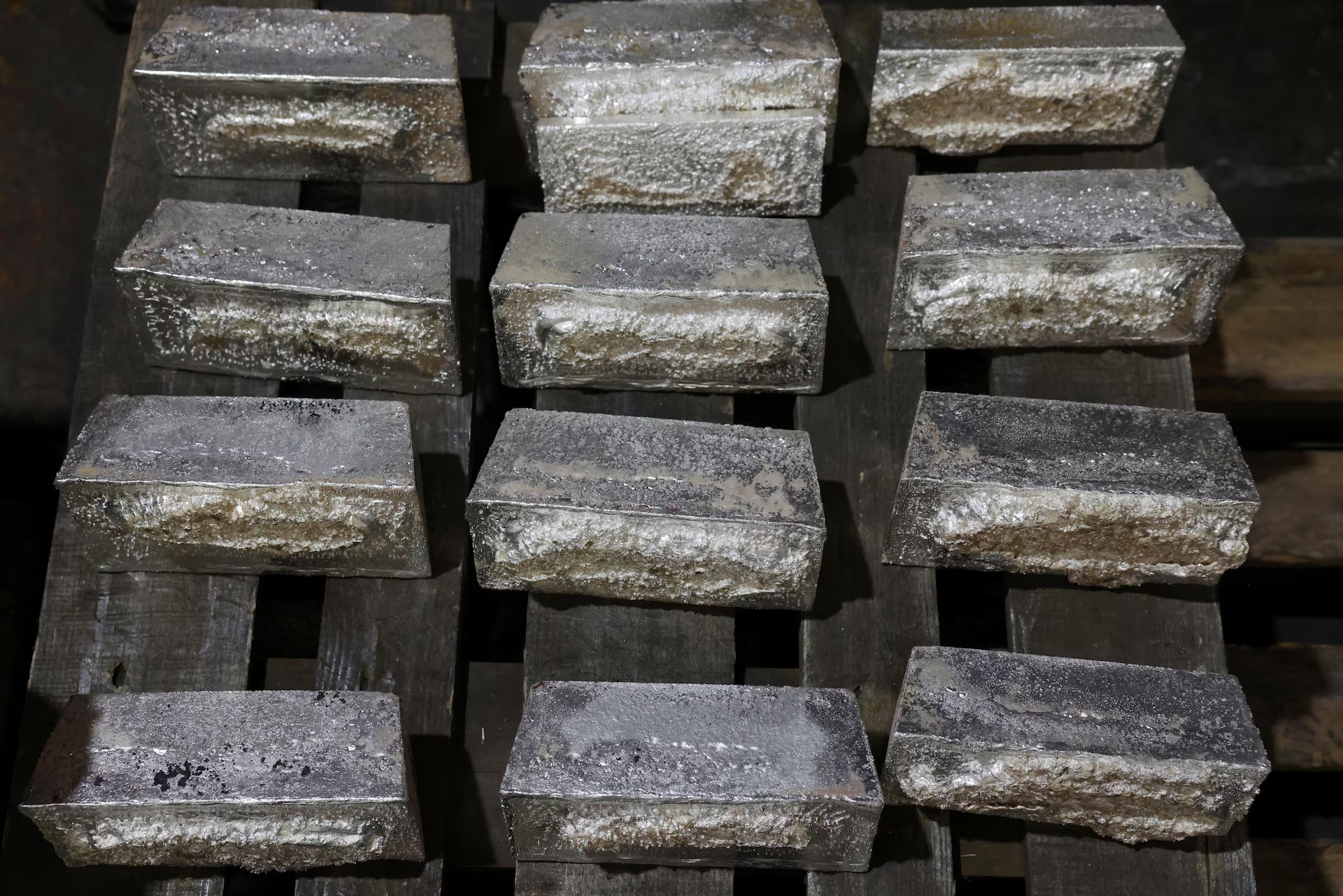
Silver’s surge past $76 an ounce on Friday marked a decisive escalation in what analysts increasingly describe as a broad-based precious metals supercycle, with gold, platinum and palladium all hitting record or multi-year highs as investors positioned for easier U.S. monetary policy, a weaker dollar and sustained geopolitical uncertainty.

Spot silver jumped 6% to $76.24 per ounce by midday in New York, after touching an intraday peak of $76.46. The move extended silver’s extraordinary rally to about 164% so far this year, far outpacing most asset classes. Unlike earlier silver rallies that were driven largely by speculative flows, this surge is being underwritten by structural supply constraints and a sharp expansion in industrial demand tied to energy transition technologies.

Silver inventories have been drawn down steadily as mine supply struggles to keep pace with consumption from solar panel manufacturing, electronics and advanced batteries. Industry data show several consecutive years of market deficits, while new mining projects have lagged due to underinvestment, permitting delays and declining ore grades.

Silver’s designation as a U.S. critical mineral earlier this year has further elevated its strategic importance, drawing interest from institutional investors and sovereign buyers who previously focused almost exclusively on gold.

Gold, meanwhile, reinforced its role as the anchor of the precious metals complex. Spot prices rose 1.2% to $4,533.43 per ounce after earlier hitting a fresh record of $4,549.71, while February U.S. futures climbed to $4,566.50. The metal is now poised for its strongest annual gain since 1979, a year defined by runaway inflation and deep economic uncertainty.

The current rally is being fueled by a different, but equally powerful, mix of forces. Expectations that the Federal Reserve will begin cutting interest rates again in 2026 have gained traction, with futures markets pricing in two reductions, potentially starting around mid-year. That outlook has been amplified by speculation that President Donald Trump could appoint a more dovish Federal Reserve chair, a move investors believe would reinforce a shift toward looser financial conditions.

“Expectations for further Fed easing in 2026, a weak dollar and heightened geopolitical tensions are driving volatility in thin markets,” said Peter Grant, vice president and senior metals strategist at Zaner Metals.

He added that while some year-end profit-taking is possible, momentum remains firmly to the upside. Grant said silver could test $77 and even $80 an ounce before the end of the year, while gold’s next technical target sits near $4,686, with $5,000 increasingly seen as achievable in the first half of next year.

The U.S. dollar index is on track for a weekly decline, a key tailwind for precious metals. A softer dollar lowers the cost of gold and silver for non-U.S. buyers and typically encourages reserve diversification by central banks. Official sector purchases remain a crucial pillar of support for gold, with emerging market central banks continuing to add to reserves as part of a longer-term effort to reduce exposure to dollar-denominated assets.

Geopolitical risks have added another layer of demand. Ongoing conflicts, trade tensions and uncertainty around global supply chains have reinforced gold’s appeal as a hedge against political and economic shocks. Investors have also increased allocations through exchange-traded funds, reversing periods of outflows seen earlier in the tightening cycle.

In physical markets, the rapid price appreciation is beginning to reshape buying behavior. In India, the world’s second-largest gold consumer, local dealers reported discounts widening to the highest levels in more than six months as retail buyers pulled back in the face of record prices. In China, however, discounts narrowed sharply from last week’s five-year highs, suggesting bargain-hunting and restocking by wholesalers as prices stabilized at elevated levels.

Platinum delivered one of the most dramatic moves of the session, surging nearly 10% to $2,438.92 per ounce after earlier setting a record at $2,454.12. Palladium climbed more than 13% to $1,910.13. Both metals have benefited from tightening supply expectations, particularly in South Africa and Russia, as well as renewed investor interest after years of underperformance relative to gold.

All major precious metals are headed for solid weekly gains, with platinum posting its strongest weekly rise on record. Analysts caution that thin year-end liquidity could exaggerate price swings in the near term. Still, the underlying narrative of constrained supply, easing monetary policy and persistent geopolitical risk suggests that the rally is being driven by more than seasonal factors.

Currently, precious metals are increasingly being treated not just as defensive hedges, but as core assets positioned at the intersection of macroeconomic uncertainty, industrial transformation and shifting global power dynamics. The perception is expected to extend to 2026.

Nigeria Sees 11.78% Drop in Formal Remittance Inflows to $2.07bn in H1 2025, Despite CBN Reforms

0

Nigeria experienced an 11.78% decline in remittance inflows through International Money Transfer Operators in the first half of 2025, with total receipts falling to $2.07 billion from $2.34 billion in the same period of 2024—a shortfall of $275.93 million.

The figures, drawn from the Central Bank of Nigeria’s latest Quarterly Statistical Bulletin released on December 24, highlight persistent challenges in channeling diaspora funds through formal channels, even as remittances remain a vital lifeline for household consumption and foreign exchange liquidity.

The drop comes despite aggressive CBN reforms aimed at boosting inflows, including removing exchange rate caps for IMTOs in January 2024, revising operational guidelines to enhance competition, and establishing a Collaborative Task Force—reporting directly to Governor Olayemi Cardoso—to double remittance volumes. These measures had propelled a 44.5% surge to $4.76 billion in full-year 2024 inflows, but momentum has not carried into 2025.

Quarterly and Monthly Breakdown: Q1 2025 (Jan-Mar): $888.39 million, down 17.9% ($193.14 million) from $1.08 billion in Q1 2024—the sharpest quarterly fall.

  • January: $281.97 million (-27.8% from $390.86 million).
  • February: $288.82 million (-11.6% from $326.91 million).
  • March: $317.60 million (-12.7% from $363.76 million).
  • Q2 2025 (Apr-Jun): $1.18 billion, down a milder 6.6% from $1.26 billion in Q2 2024, cushioned by an April spike.
  • April: $597.44 million (+28.2% from $466.11 million)—the only month with growth.
  • May: $288.17 million (-28.8% from $404.75 million).
  • June: $292.25 million (-25.0% from $389.79 million).

The April surge softened the overall half-year decline but proved anomalous, with inflows weakening again in May and June amid seasonal and economic factors.

Diaspora remittances rank as Nigeria’s second-largest foreign exchange source after oil exports, contributing roughly 5-6% to GDP and supporting millions of households amid inflation averaging 30%+ in 2025.

Formal IMTO channels (Western Union, MoneyGram, Ria, etc.) captured the bulk, but informal transfers—via hand-carried cash or unregistered networks—likely offset some decline, though harder to quantify. The World Bank estimates total remittances (formal and informal) at $20-25 billion annually, underscoring their role in poverty alleviation and economic stability.

Reasons for the Decline

Industry stakeholders attribute the slowdown to a mix of domestic and global headwinds, such as inflationary pressures in advanced economies, such as the US, UK, EU, tighter labor markets, tougher migration policies, and potential shifts to informal channels due to naira volatility.

The World Bank notes that while global remittances to low- and middle-income countries grew 1.5% to $690 billion in 2025, Sub-Saharan Africa saw subdued flows due to economic slowdowns in host nations.

Broader Implications

As Nigeria’s external reserves hover around $40-46 billion, weaker remittances pressure the balance of payments at a time of high debt service of $2.32 billion, as of H1 2025, and import dependence.

A 10% increase in remittances correlates with 2% GDP growth (World Bank estimates), fueling sectors like fintech, e-commerce, and edtech.

While Nigeria’s H1 formal inflows declined, full-year projections remain optimistic at $23 billion—up from $19.5 billion in 2023 and representing 35% of Sub-Saharan Africa’s total, driven by diaspora engagement and digital platforms.

Globally, remittances to low- and middle-income countries grew 1.5% to $690 billion in 2025. Africa saw inflows surge to $95 billion in 2024.

Latin America bucked the trend with 10.9% growth in Q1 2025, highlighting Nigeria’s underperformance relative to peers.