DD
MM
YYYY

PAGES

DD
MM
YYYY

spot_img

PAGES

Home Blog Page 182

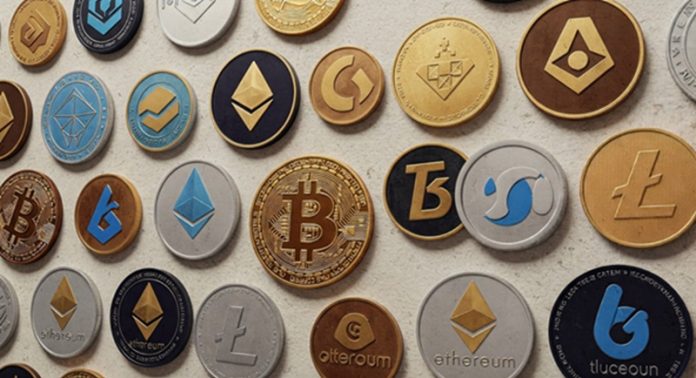
Analysis of Crypto Projects with >$100M Market Cap: 2021 vs. 2025

0

Based on historical data from CoinMarketCap snapshots and current market trackers, this claim is true. The crypto market in 2021 was characterized by a broader distribution of value across many projects during the bull run, leading to more mid-tier assets crossing the $100M threshold.

By November 2025, despite a similar total market cap (~$3.45T), value has concentrated in fewer top assets (e.g., Bitcoin dominance at ~59%), with stricter regulations, project failures, and market maturation weeding out weaker ones.

During the 2021 bull market peak, hype around DeFi, NFTs, and altcoins led to explosive growth. The historical snapshot for November 14, 2021, shows ~350 projects above $100M, including many speculative tokens that surged temporarily. Total tracked assets were around 11,000, with broad participation inflating the count.

As of November 13, 2025, CoinMarketCap ranks ~120 projects above $100M, based on the league table of highest market caps all top 120 exceed this threshold, while lower ranks fall below. This reflects ~50% of projects launched since 2021 failing due to low utility, scams, or bear market pressures.

The market now prioritizes established ecosystems (e.g., Solana, TON) over quantity, with oversaturation (37M+ total tokens created) but fewer sustainable ones. Post-2022 crashes (e.g., FTX), regulatory scrutiny (e.g., SEC actions), and maturation have eliminated ~7,500 projects from the 2020-2021 boom.

Surviving ones are more robust, but the tail-end diversification has shrunk. This trend suggests a healthier, less speculative market in 2025, though it reduces opportunities for “long-tail” investments.

DeFi (Decentralized Finance) and NFTs (Non-Fungible Tokens) both exploded during the 2021 bull market, driving widespread adoption, innovation, and speculation in crypto. However, their impacts diverged post-2022 crash.

DeFi has solidified as a foundational financial infrastructure with sustained growth in utility and institutional integration, while NFTs shifted from hype-driven collectibles to niche, utility-focused applications. This evolution ties into the broader market maturation, where fewer but stronger projects survive, emphasizing real-world value over speculation.

By 2025, DeFi’s Total Value Locked (TVL) has rebounded strongly, reflecting deeper liquidity and cross-chain advancements, while NFT trading volumes remain volatile but show signs of revival through gaming and RWAs (Real-World Assets). DeFi’s scale now dwarfs NFTs, highlighting its role as crypto’s “backbone.”

NFT “market cap” is less standardized than DeFi TVL, often measured by sales volume due to unique asset nature.Economic and Market ImpactDeFi’s Dominance (2021-2025): In 2021, DeFi democratized finance with yield farming and lending, peaking TVL amid low rates and hype—contributing ~20% to crypto’s total cap growth.

By 2025, it powers 28% of on-chain activity, integrating RWAs (e.g., tokenized real estate/bonds, projected $10T+ by 2030) and omnichain bridges for seamless liquidity. This has reduced fragmentation, attracted institutions and generated $61M+ in stablecoin revenues alone.

Stabilizes crypto as “programmable money,” with $3B+ in hacks underscoring security needs but also innovation in privacy tech. The 2021 boom ($25B volume) tokenized art/gaming, drawing mainstream (e.g., CryptoKitties, Beeple sales), but crashed 90%+ by 2023 due to speculation.

In 2025, NFTs focus on utility—gaming (e.g., Axie Infinity clones), IP rights, and DeFi hybrids—with Bitcoin NFTs (Ordinals) adding $633 avg. price (896% rise from 2023). Secondary markets now drive 52% of sales, fostering liquidity. Enhances digital ownership in metaverses/entertainment, but remains niche 12% multiregional projects; diversification benefits in portfolios during volatility.

Overall, DeFi’s impact is systemic (e.g., enabling cross-chain DeFi-NFT lending), while NFTs add cultural flair—together, they’ve grown non-BTC assets to $1.59T cap, surpassing 2021 peaks. DeFi evolved with AI integration, restaking (e.g., EigenLayer), and L2s (Ethereum 100k TPS target), reducing fees 90%+ and enabling microtransactions.

NFTs advanced via dynamic tokens evolving based on real events and BRC-20 on Bitcoin, blending with DeFi for staking/governance. Hybrids like NFT-DeFi 6% BNB Chain share for collateralized assets.

DeFi’s complexity yielded to user-friendly apps (e.g., 6.7M Base NFT sales), drawing 26.7M daily wallets. NFTs excel in engagement, appealing to Gen Z via collectibles/gaming. Institutions favor DeFi over NFTs, but both benefit from regs like MiCA. 140+ Singapore blockchain startups in NFTs; DeFi’s 2100% revenue growth from 2021.

High hacks ($159M lost Aug 2025, +20% MoM); centralization risks in L2s. NFTs: Speculation persists 77% volume drop Q2 2021-2022; environmental concerns eased by PoS shifts.

Studies show NFTs offer diversification from DeFi volatility (e.g., lower spillovers in extremes), but both correlate with BTC/ETH prices. DeFi is poised to hit $100B+ TVL again via RWAs and ETFs, becoming “DeFi 2.0.” NFTs may “overtake” in cultural buzz but lag economically—expect $20B+ volume if metaverse rebounds.

Convergence (e.g., NFT staking in DeFi) could amplify impacts, fostering a $10T tokenized economy. In a maturing market with fewer $100M+ projects, both prioritize utility over hype, promising equitable systems beyond speculation.
Jumia Embraces AI, Cuts Workforce as It Targets Profitability by 2027

0

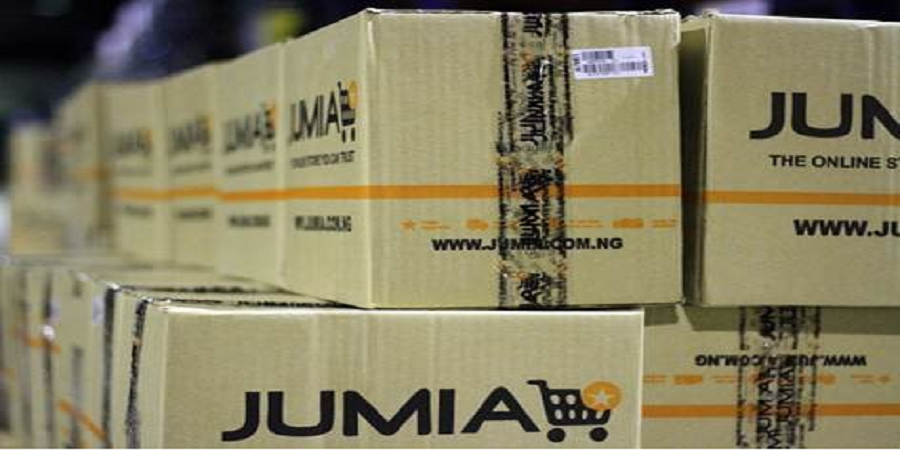
Jumia, one of Africa’s most prominent e-commerce businesses, has slashed its workforce to just over 2,000 employees, tied to the company’s push to integrate artificial intelligence (AI) across its operations.

The e-commerce platform noted that the total headcount has declined by 7% since December 31, 2024, with just over 2,010 employees on payroll as of September 30, 2025.

In its third quarter 2025 results, Jumia delivered 25% revenue growth and 21% GMV growth. Revenue for Q3 was $45.6 million compared to $36.4 million in the third quarter of 2024. GMV was $197.2 million compared to $162.9 million in the third quarter of 2024.

Speaking on the Q3 result, Jumia’s CEO, Francis Dufay, noted that the result marked a significant growth for the company, expressing optimism for profitability in 2027.

In his words,

This quarter marks a significant acceleration in customer demand and order growth, driven by strong execution across the markets and growing consumer trust in the Jumia brand. We believe Jumia has reached an inflection point as our compelling value proposition and improved operational discipline position us for sustainable, profitable growth.

We continue to strengthen our cost structure and sharpen operational discipline, reinforcing our path toward profitability. Our focus remains on execution and customer engagement as we build a more efficient business. We believe that we are on track to reach breakeven on a loss before income tax basis in Q4 2026 and achieve full-year profitability in 2027, positioning Jumia for long-term growth and value creation”.

Like many companies, Jumia has recognized the benefits of integrating AI into its ecosystem to boost efficiency, increase automation, and explore new, smarter ways of working. The decision to leverage Artificial Intelligence (AI) across its operations marks a pivotal step in its long-term strategy to achieve profitability and operational efficiency. The company has emphasized that AI is no longer just a supporting tool but a central driver of transformation across multiple departments.

The company’s journey towards the integration of AI across its operations began in 2024, with an initial focus on fast adoption of plug-and-play AI tools. These allowed it to achieve quick wins, low-cost, high-ROI MVPs that optimized multiple departments by automating repetitive, time-consuming tasks, allowing humans to focus on creative and innovative needs, exploring new capabilities for systems, business, and processes.

Of course, the journey required more than just experimentation. Governance became a key pillar after the initial R&D phase. The company established policies for data, access, and responsible AI usage. The next phase was all about embedding AI directly into Jumia’s platforms. It moved from isolated tools to either automation scripts or native integrations across its business and operating lines, covering use cases in Engineering, Logistics, Marketing, Finance, Compliance, Commercial, HR, and more.

In its bid to achieve profitability, the e-commerce disclosed plans to leverage AI across key functions to enhance productivity and reduce operating expenses. It noted that AI-driven workflows, in customer service, marketing, and technology operations, are improving efficiency, streamlining processes, and supporting a leaner cost structure. According to the company, these initiatives are contributing to ongoing reductions in total operating expenses and improved scalability.

Looking ahead, Jumia’s continued investment in artificial intelligence is expected to redefine how the company operates, competes, and scales across Africa’s rapidly evolving digital economy. The integration of AI across its core functions positions the e-commerce giant to achieve not only profitability but also long-term sustainability.

Overall, Jumia’s AI-driven transformation suggests a promising future, one where Africa’s leading e-commerce player evolves into a technology-driven powerhouse capable of setting new benchmarks for efficiency, scalability, and profitability across the continent’s digital marketplace.

Aerodrome and Velodrome Merge to A Unified DEX Called Aero

0

Dromos Labs—the team behind both decentralized exchanges (DEXs)—announced the merger of Aerodrome on Base and Velodrome on Optimism’s Superchain into a single, next-generation protocol named Aero.

This move aims to consolidate liquidity, streamline governance, and expand across the Ethereum ecosystem, positioning Aero as a “unified trading platform for the entire onchain economy.”

The announcement has generated significant buzz in DeFi circles, with discussions highlighting its potential to rival giants like Uniswap by capturing fragmented liquidity in a more efficient, cross-chain setup.

Aero is slated for a full rollout in Q2 2026, initially deploying on Ethereum Mainnet and Circle’s new Layer 1 blockchain, Arc currently in testnet. It will also support existing chains like Base, Optimism, and the OP Superchain, with plans for further expansions.

The existing AERO (Aerodrome) and VELO (Velodrome) tokens will merge into a single AERO token, with no new minting or dilution. Allocation is based on each protocol’s revenue share:~94.5% to current AERO holders.

~5.5% to current VELO holders. The new AERO will represent a share of Aero’s overall revenue and growth, including fees from trading, liquidity provision, and new features. Aerodrome and Velodrome will remain functional temporarily but will no longer receive support after Aero’s launch, encouraging users to migrate seamlessly.

Aero introduces an advanced architecture called MetaDEX 03, which enhances efficiency and revenue capture: Slipstream V3: An improved automated market maker (AMM) with internal MEV auctions to reduce losses from arbitrage bots and generate extra revenue.

MetaSwaps: A cross-chain aggregator for seamless trading across EVM-compatible chains without bridges or wrapped tokens.

REV and AER Engines: REV captures diverse revenue streams (e.g., aggregator fees, bridging, token launches), while AER algorithmically optimizes LP rewards in real-time, potentially boosting value creation by 2.8x for token holders through lower emissions and higher yields.

Additional features include institutional-grade tools like fee rebates, KYC-verified pools, and an “Autopilot” for automated voting/compounding. Aero enters the market with strong fundamentals from its predecessors:Metric

Data from DeFiLlama shows Aerodrome as Base’s top DEX by volume and TVL 4th overall on Base, while Velodrome ranks 3rd on OP Mainnet. The merger addresses DeFi’s fragmentation by creating a single liquidity layer, with backtested projections estimating up to $294M in net value for AERO holders via mechanisms like the “Momentum Fund”.

Many view this as a “banger” upgrade, praising the focus on onchain composability, institutional adoption, and tokenomics without VC dilution. Posts highlight Aero’s potential to dominate Ethereum’s liquidity hubs, with easy token launches and organic reward systems.

Some Aerodrome community members expressed bearish views on the token allocation, leading to a ~16% dip in AERO price shortly after the announcement. VELO holders, however, benefit from integration into a much larger ecosystem.

The news coincides with Uniswap’s “UNIfication” proposal to activate its fee switch and burn UNI tokens, intensifying DEX competition. Aero’s cross-chain ambitions, including Arc’s permissioned features, could appeal to institutions seeking compliant onchain trading.

This merger marks a pivotal evolution for Dromos Labs’ “MetaDEX” vision, blending Aerodrome’s dominance on Base with Velodrome’s Superchain roots into a scalable, revenue-optimized powerhouse. If you’re holding AERO or VELO, monitor official migration guides as Q2 2026 approaches.

Floot.com To Support Tekedia AI Lab Vibe Coding Module

0

We launched Tekedia AI Technical Lab to teach code-based development of AI agents using largely open-source models like Google Gemma 3, DeepSeek, etc. But from the feedback of our co-learners in our last edition, there is a need to also teach vibe coding. So, upon that feedback, Tekedia AI Technical Lab: from Design to Deployment will include a vibe coding module.

Recently, our sister company, Tekedia Capital, invested in a Silicon Valley-based vibe coding company called Floot. We reached out to them, and they will be supporting Tekedia Institute for the vibe coding module. To learn more about Floot, visit floot.com.

Here are the updated modules for the 4-week program:

  • Understanding AI and AI Agents [lecture], and Deploying Agents in Tekedia server [Lab]
  • Deploying Agents in Local Machines (e.g. laptops and PCs) [Lab]
  • Vibe coding and Building Agents with Prompts [Lab]
  • Deployment in Custom domain and Personal VPS server [Lab]

We will begin on Saturday, November 15; pick your seat here


*Vibe coding is an AI-assisted software development practice where developers describe what they want in natural language, and an AI model generates the code to build it. It allows for rapid prototyping by focusing on high-level concepts and using iterative prompts to refine the AI’s output, rather than writing and debugging every line of code manually.


How to Register and Play on Nagad88 in Bangladesh

0

Nagad88 is a website that combines a betting service and an online casino, focusing primarily on players from Bangladesh. To use all sections of Nagad88, from sports betting to live casino, you will need your own account. Without registration, some features remain unavailable, so before making a deposit or selecting an event, it is worth figuring out how to create a profile.

How to Create an Account on Nagad88

Registration on Nagad88 is simple, even for those who have never created a profile on betting sites before. The whole procedure takes a few minutes, after which you will have access to all sections – betting, casino, bonuses and payment methods. To register, you need to follow a general algorithm of actions:

  1. Go to the official Nagad88 website via your browser or mobile device. The home page will immediately prompt you to create an account.
  2. Open the registration form. It is usually located at the top of the screen and consists of several short fields.
  3. Enter your phone number or email address – in Bangladesh, mobile numbers are more commonly used because confirmation is received more quickly.
  4. Create a password. It is best to choose one that is not used on other websites.
  5. Confirm your details. The website may send you a code that you need to enter in a special field.

After confirmation, you will automatically be taken to your personal account. Once your account has been created, after logging in to Nagad88, you can proceed to the next steps – verification and payment method setup.

Account Verification and Security

Data verification on Nagad88 is necessary to ensure that the profile is used by the person who created it. Usually, you will be asked to provide a document showing your name and age, or to confirm your phone number. This is done once, without repeated requests. The process is quick and easy: send what the system requires, wait for the verification notification, and then all functions become available without restrictions.

The operator uses standard security measures: it encrypts data, monitors operations and blocks actions that look suspicious. The user does not notice this during the game, but it is precisely these things that create the feeling that everything is in order with personal information and that no outsider will be able to use it.

Ways to Top up Your Account at Nagad88 Bangladesh Before You Start Playing

Depositing funds on the Nagad88 website is easy, as it uses payment services that are familiar to Bangladeshis. Most players choose mobile wallets – transactions are fast and the process does not require additional confirmation. The website also offers:

  • Nagad – convenient for those who are used to instant transfers;
  • bKash – a service used by millions of people in the country every day;
  • Rocket – an alternative for those who prefer mobile banking;
  • bank cards – suitable for those who want to top up their balance in the traditional way.

Once the money is in your account, you can start playing right away. In the betting section, simply select an event and specify the amount, and in the casino, open the slot or table game you like. Nagad88 does not add any extra steps, so it takes very little time from replenishment to the first bet.

How to Start Betting And Playing at Nagad88 Casino

After replenishing their account, users can choose either of two main sections: sports betting or online casino. Both sections are organised in their own way, so it is more convenient to consider them separately.

How to Start Placing Sports Bets

The sports events section is designed so that you can quickly find the match you want. First, select a sport – cricket, football or another. Then a list of tournaments and specific games will open. Once you have found the match, you can view the available markets: main outcome, totals, individual indicators and other options.

To place a bet, just follow a few simple steps:

  • Open the event and select the desired market;
  • Enter the amount in the coupon that appears on the side;
  • Double-check your selection and confirm your bet.

When placing a bet in live mode, the markets are updated quickly, so you can react to changes in the match almost immediately.

How to Start Playing at an Online Casino

Nagad88 Casino is built on a different principle – here it is important to choose the type of entertainment first, and then the specific game. On the main page of the Nagad88 casino section, you can see several categories: slots, live tables, crash games and table games.

Slots are suitable for those who like a calm pace and different thematic genres. Live tables give the feeling of a real casino because there is a live dealer at the table. Crash modes are designed for short rounds and are suitable for those who prefer dynamics.

Nagad88 is suitable for Bangladeshi users who are looking for a simple and straightforward way to place bets or play at an online casino without wasting time on complicated menus and long downloads. It all comes down to the player being able to quickly register, both on the website and in the Nagad 88 app, make a deposit and use the section they want – sports or games. The online platform provides convenient tools for users from Bangladesh, supports local payment methods and always works stably.