DD
MM
YYYY

PAGES

DD
MM
YYYY

spot_img

PAGES

Home Blog Page 184

The Inevitable Collision: Uber, Autonomy, and the AI Resilience Score

0

Good People, let us dissect the imminent future. Uber, the global ride-hailing leviathan, is seeing the writing on the wall. They understand the profound disruptive enzyme that self-driving technology represents, a force ready to utterly disintermediate their core service model. Why? Because the very function they aggregate, the driver, is destined for obsolescence.

I project that the arrival of full autonomy is not a distant aspiration but a fast-approaching business equilibrium. By 2028, I expect to see advanced, fully driverless car capabilities scaling rapidly across the Chinese tech ecosystem, and by 2030, the United States market will embrace this new paradigm at full scale. Simply put, autonomous capability will no longer be an add-on; it will be a non-negotiable, embedded core component of every vehicle manufactured. When this happens, the aggregated network effect, Uber’s historical competitive moat built on matching human drivers to human riders, will collapse at scale.

To survive this seismic shift, Uber is not standing still; it is charting a bold, new trajectory. CEO Dara Khosrowshahi has declared a strategic transformation: Uber is evolving far beyond mere rides and deliveries into a global “platform for work.” This is their defense mechanism. They are now focused on connecting their millions of users with digital tasks, including jobs training and the burgeoning demands of the Artificial Intelligence ecosystem, a strategic pivot designed to diversify income and remain viable in the age of automation.

Uber Technologies is broadening its scope far beyond rides and deliveries, with CEO Dara Khosrowshahi declaring that the company is transforming into a global “platform for work.”

The company’s newest ambition is to connect its millions of app users with digital tasks — including jobs training, and artificial intelligence — as part of a strategic shift toward diversifying income opportunities in an era of automation.

This is the crux, Good People: Numerous established business models are marked for extinction as AI permeates the heart of global economies. From the learning-content models of platforms like Chegg to the aggregation models of Uber, the status quo is under existential threat.

Therefore, the critical question for every enterprise leader is this: What is your company’s AI Resilience Score? Are you proactively evaluating the viability of your business model against the relentless march of intelligent automation?

The most profound utility of AI is not its deployment as a mere operational tool for efficiency gains. No! AI’s true, transformative power lies in its capacity to re-engineer and fundamentally transform the business model itself. If AI does not force you to reimagine your value proposition and your economic structure, you are not deploying it right.

Uber is strategically planning for its post-driver future. You must do the same for your mission. Here at Tekedia Institute, we understand this principle intimately. We have noted that the sheer Supply of Knowledge is rapidly being disintermediated by Large Language Models and AI platforms. Anyone can now curate any basic lecture note. Consequently, our value has shifted. We are doing more live, interactive sessions because the value today resides not in the content itself, but in the contextualization, the filtering, and the interpretation of that knowledge, removing the friction that too much abundance creates.

I ask you again, leader: What is your business’ AI Resilience Score as disruption picks up across markets and geographies? Failure to plan is a plan to fail.

Renault Ends Rare-Earth-Free Motor Partnership with Valeo, Turns to China for Cheaper Components

0

French automaker Renault has quietly ended its joint project with supplier Valeo to develop a new rare-earth-free electric vehicle (EV) motor, opting instead to bring the work largely in-house while exploring cheaper component sourcing from China, according to two sources familiar with the matter who spoke to Reuters.

The move marks a significant shift for Renault, which had publicly framed the motor as an “innovation made in France” when it announced the collaboration in late 2023. The project, known internally as the E7A engine, was meant to symbolize Europe’s effort to reduce dependence on China for rare earth materials used in EV magnets — a crucial but politically sensitive part of the supply chain.

Instead, Renault is now preparing to buy the stator — the fixed part of the motor housing the rotor — from a Chinese supplier, the sources told Reuters.

“The E7A engine project is no longer being done with Valeo,” one of them said. “It will be done entirely in-house across the entire value chain, except for the stator which could be bought from a Chinese supplier.”

A spokesperson for Ampere, Renault’s EV subsidiary, confirmed that a Chinese partnership was under consideration but said no final decision had been made.

“The process is still ongoing,” the spokesperson said, adding that Renault was also “studying the possibility of locating the stator in France.” Valeo declined to comment.

The decision to end Valeo’s involvement was driven primarily by cost reduction pressures, the sources said. As competition intensifies in the global EV market, automakers are under increasing strain to bring down production costs while maintaining margins. Chinese suppliers, with their economies of scale and state-backed efficiency in EV component manufacturing, reportedly offered far more competitive pricing than their European counterparts.

Renault’s pivot underscores a broader irony in the European auto industry, where even as governments and manufacturers push for supply chain independence from China, the country’s low-cost and advanced EV ecosystem remains indispensable.

Rare-earth dependence and China’s dominance

The development comes against the backdrop of growing tension over China’s control of global rare earths, critical materials for high-performance EV motors. Beijing currently accounts for 70% of global rare earths mining and 85% of refining capacity, giving it enormous leverage over industries dependent on the minerals.

In recent years, China has tightened export curbs on rare earth materials, prompting carmakers and suppliers in Europe, the U.S., and Japan to invest heavily in rare-earth-free technologies. Renault, General Motors, BMW, ZF, BorgWarner, and Valeo have all been developing motors that use alternative designs to eliminate the need for magnets made from rare earths such as neodymium and dysprosium.

Renault, for its part, has been using rare-earth-free motors since 2012, while Valeo’s contribution to the E7A project was focused on a new copper wire stator technology designed to boost efficiency and reduce energy loss.

“Made in France” — with a Chinese twist

Despite the potential Chinese sourcing, Renault says its “Made in France” commitment remains intact. The E7A motor will still be assembled at the company’s Cléon plant in northern France, using silicon carbide modules provided by Franco-Italian semiconductor manufacturer STMicroelectronics for the inverter — another key EV component.

The E7A motor is expected to deliver 200 kilowatts (kW) of power, roughly 25% more than current-generation Renault EVs such as the Scenic, and support an 800-volt charging system — twice the voltage of its current models. The new powertrain will feature prominently in Renault’s next generation of compact EVs, due to launch around 2028, forming part of a strategic roadmap to be unveiled in March by CEO Francois Provost.

While Renault pursues a Chinese-sourced stator, Valeo has continued developing its own magnet-free motor in partnership with German supplier Mahle. The “iBEE” motor, also due around 2028, is designed to deliver up to 350 kW of power and represents one of Europe’s most ambitious efforts to develop rare-earth-free propulsion systems at scale.

Europe’s EV balancing act

Renault’s shift highlights the broader challenge facing Europe’s automotive industry — the need to balance technological sovereignty with economic pragmatism. European automakers have vowed to reduce dependency on China for critical materials, yet China’s EV ecosystem remains both the most cost-efficient and most technologically advanced in key areas such as batteries, motors, and power electronics.

Renault’s collaboration with Chinese engineers on the new electric Twingo, developed in just two years, already demonstrated how dependent European firms have become on Chinese expertise in EV design and production speed.

The company’s latest move suggests that while Europe’s rhetoric champions self-reliance, its industrial strategy continues to rely on Chinese cost advantages to stay competitive in an increasingly crowded EV market.

By 2028, when the E7A motor is expected to power Renault’s next wave of compact models, the French automaker will likely stand as a case study in Europe’s uneasy compromise.

Nvidia’s Jensen Huang Asks TSMC for More Chip Supply as AI Demand Surges Worldwide

0

Nvidia Corp. Chief Executive Officer Jensen Huang has urged Taiwan Semiconductor Manufacturing Co. (TSMC) to increase chip supply, as global demand for artificial intelligence hardware shows no signs of slowing.

The move, first reported by Bloomberg, comes at a time when the semiconductor supply chain remains tight, and competitors are struggling to secure enough production capacity from the world’s largest contract chipmaker.

Speaking to reporters on Saturday in Hsinchu, Taiwan, where he attended TSMC’s annual sports day, Huang described Nvidia’s business as “very strong,” adding that it continues to expand rapidly.

“The business is very strong, and it’s growing month by month, stronger and stronger,” he said, underscoring that Nvidia’s AI chip orders are surging as companies across the globe race to build the computational infrastructure needed for next-generation AI models.

According to Huang, Nvidia’s three major AI memory suppliers — SK Hynix, Samsung Electronics, and Micron Technology — have all scaled up their production “tremendously” to meet rising orders. These suppliers provide the high-bandwidth memory (HBM) chips critical for Nvidia’s flagship H100 and H200 processors, which power the world’s largest AI systems, including those used by OpenAI, Microsoft, and Amazon Web Services.

Huang’s appeal for more capacity came during a private dinner with TSMC CEO C.C. Wei on Friday, followed by public comments the next day. Wei confirmed that Huang requested more wafers and added that TSMC expects to “continue breaking sales records every year” as demand for high-performance chips intensifies.

The timing of Huang’s visit notably came just as Wall Street turned cautious on the AI rally. Nvidia’s shares slid earlier in the week after reports surfaced that OpenAI’s infrastructure spending and funding commitments might be under review, and hedge fund Scion Asset Management, led by investor Michael Burry, disclosed bearish bets against Nvidia. The broader technology sector, including Apple and Microsoft, also saw declines amid investor fears of overheating valuations.

Still, Nvidia remains the world’s most valuable company, ahead of both Apple and Microsoft, with a market capitalization of about $5 trillion. Its chips dominate roughly 80% of the global market for AI accelerators, used in training and deploying generative AI systems such as ChatGPT, Gemini, and Claude.

Huang credited TSMC for its central role in Nvidia’s rise, calling the company indispensable to the global AI ecosystem. “No TSMC, no Nvidia,” he said, highlighting the deep dependence of U.S. chip design firms on Taiwanese manufacturing. Nvidia relies heavily on TSMC’s 4-nanometer and 3-nanometer processes, which are among the most advanced in the world, to produce its cutting-edge GPUs.

His optimism about AI’s trajectory mirrors that of Qualcomm CEO Cristiano Amon, who told Bloomberg TV earlier in the week that “the world is underestimating how big AI will become.” Amon said demand for AI processing chips is “the strongest technology wave since the smartphone era,” with potential to reshape computing, telecommunications, and industrial automation.

TSMC, meanwhile, faces an ongoing challenge in balancing surging demand from multiple tech giants, including Apple, AMD, Broadcom, and Intel, all of which compete for its limited advanced fabrication capacity. Wei said in October that the company’s capacity remains very tight, and that it is “working hard to narrow the gap between demand and supply.”

The global AI race has created one of the most intense supply crunches in semiconductor history. Data centers worldwide are competing for Nvidia’s GPUs, and companies are now prepaying billions of dollars to secure future deliveries. In the United States and Europe, governments are also racing to build domestic chip plants to reduce dependence on Asia, though Taiwan continues to hold the world’s most critical semiconductor production capabilities.

Analysts say Huang’s visit to Taiwan underscores both Nvidia’s influence and its vulnerability. Without access to sufficient wafer supply from TSMC, Nvidia risks losing ground to rivals like AMD, Intel, and Qualcomm, which are all developing AI chips to capture a slice of the expanding market.

For now, Nvidia’s demand remains unmatched. The company’s planned Blackwell architecture, expected to begin shipping soon, has already drawn huge interest from hyperscalers and sovereign AI projects. TSMC is set to be the exclusive manufacturer of the new chips.

As the AI boom accelerates, both companies are likely to see their fates remain intertwined. Maintaining access to TSMC’s cutting-edge capacity is crucial to sustaining Nvidia’s dominance. On the other hand, Nvidia’s insatiable demand is not just a business win — it’s a signal that the world’s next computing revolution still runs through Taiwan’s foundries.

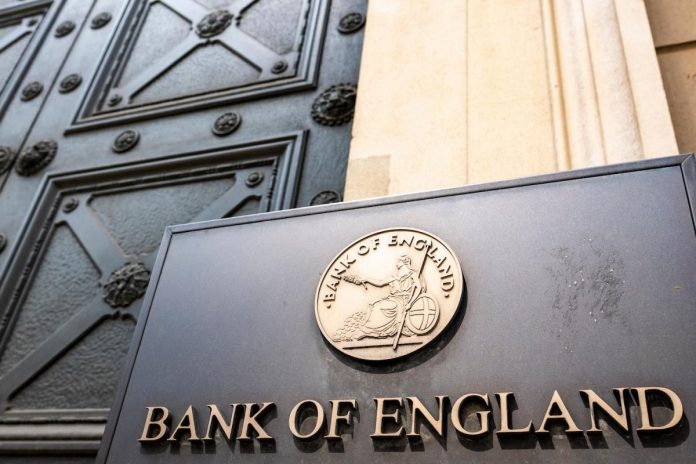
Bank of England Sets Out New Regulatory Framework for Sterling-Denominated Stablecoins

0

The Bank of England (BoE) has released detailed proposals for regulating sterling-denominated stablecoins, marking a significant step toward integrating digital money into the UK’s broader financial system.

The proposals were published on November 10, 2025, in a consultation paper titled “Proposed regulatory regime for sterling-denominated systemic stablecoins.” The paper outlines how stablecoins will operate as part of a future “multi-money” landscape alongside commercial bank deposits, tokenized bank money, and central bank money, which remains at the core of financial stability.

Governor of Bank of England, Andrew Bailey stated that the proposals are the result of extensive industry engagement since the Bank’s earlier discussion paper in 2023. He noted that the goal is to enable innovation while maintaining confidence in the financial system. According to Bailey, the framework is designed to allow systemic stablecoin issuers to build viable business models, including holding part of their reserve backing in short-term UK government debt and accessing a deposit account at the Bank.

Part of his statement reads,

“Our focus is on possible future use in real world payments and settlements, not their current use to buy and sell cryptoassets. Use of regulated stablecoins could lead to faster, cheaper retail and wholesale payments, with greater functionality, both at home and across borders. We want to support such a role for stablecoins as part of a ‘multi-money’ system alongside commercial bank money (including tokenised bank deposits), all underpinned by the continued role of central bank money at the heart of the financial system.”

Under the proposed framework, the Bank would regulate sterling-denominated systemic stablecoins, those widely used for retail or corporate payments or with significant cross-border usage. HM Treasury (HMT) will determine which stablecoin arrangements are classified as systemic and therefore come under the Bank’s oversight. Once designated, these issuers will be subject to the Bank’s powers under the Banking Act 2009, which include rule-setting, supervision, and enforcement.

Different stablecoin use cases will fall under varying regulatory oversight. Systemic stablecoins used for everyday consumer and business payments will be jointly supervised by the BoE and the Financial Conduct Authority (FCA). Stablecoins used in non-systemic contexts, including those mainly serving crypto trading markets, will remain under the FCA’s remit alone. Stablecoins are not yet permitted for core wholesale settlement but may be tested in the Bank’s Digital Securities Sandbox.

The Bank’s consultation proposes that systemic stablecoin issuers must back their coins with highly liquid and low-risk assets, at least 40% of reserves held as unremunerated central bank deposits, and up to 60% in short-term UK government debt. Temporary deviations would be allowed to manage unexpected redemption surges. Issuers may lend securities via repurchase agreements to generate liquidity but would not be allowed to borrow assets using repo agreements.

A “step-up” regime is also proposed for stablecoin issuers that are systemic at launch, initially allowing up to 95% of backing assets to be held in government securities before transitioning to the standard 60% threshold once the stablecoin reaches scale. The Bank argues that this structure ensures issuers can meet large redemption requests even in periods of market stress. This is intended to prevent loss of confidence and preserve the stablecoin’s value at par.

Finally, the Bank and the FCA are exploring how regulated stablecoins could support on-chain settlement for tokenised assets within the Digital Securities Sandbox, potentially expanding their role in wholesale financial markets without displacing central bank money as the primary settlement asset. Feedback from this consultation will inform the final rules, expected to be completed in 2026.

5 Meme Coins Gaining Attention with Strong Growth Potential Right Now

0

The meme currency sector has once again caught the attention of investors. This shows that originality and long-term potential can coexist with humor and stories that come from the community. In 2025, the conversation changes from whether or not meme currencies are relevant to which ones can keep growing, build real ecosystems, and make more money than expected. Among the most discussed projects today are Little Pepe ($LILPEPE), SPX6900, Dogwifhat, Fartcoin, and Pudgy. Each is rising for different reasons, but one name, Little Pepe, stands out as the clear frontrunner, reshaping what meme coins can achieve.

Little Pepe ($LILPEPE): A Meme Coin with Real Utility and Market-Ready Infrastructure

Little Pepe is not just another meme coin chasing viral moments; it’s an ambitious blockchain project aiming to redefine the meme economy.  Little Pepe, which is based on its own Ethereum Layer 2 network, offers quicker, less expensive, and more scalable transactions by combining real blockchain solutions with meme culture. Additionally, it facilitates staking, NFTs, and DAO governance, enabling token holders to have real control over the project’s course. At $0.0022, approximately 782 million tokens remain before the price increases to $0.0023, after more than 16.6 billion have been sold. By lowering the possibility of vulnerabilities and rug pulls, this verification reassures investors that Little Pepe’s codebase is secure. According to analysts, $LILPEPE may rise by 700–900% after listing, with a long-term goal of growing by 1000 times as the Layer-2 ecosystem develops.

SPX6900 (SPX): Gaming Meets Meme Culture

Trading around $0.677, SPX6900 is quickly becoming a cultural phenomenon. It appeals to Gen Z traders, who dominate cryptocurrency social spaces, by combining gaming elements with humor based on popular memes.  To keep users engaged, the project utilizes gamified staking and NFT connectors. If its gaming program goes as planned, analysts predict that SPX6900 might hit $1.50 by mid-2026, a possible 120% increase from present values.

Dogwifhat(WIF): The Resilient Classic

Dogwifhat remains one of the most resilient meme coins, trading at $0.000062. It thrives on its community, a loyal army of holders that keeps it trending across platforms like X (formerly Twitter).  The token’s simplicity and strong emotional appeal continue to drive trading volume. Experts project Dogwifhat could reach $0.0002 in the next bull run, representing over 220% growth, assuming market sentiment remains positive.

Fartcoin (FARTCOIN): Humor That’s Paying Off

Fartcoin started out as a joke but has since grown into a surprisingly serious competitor in the meme market. With its unabashedly funny branding and participatory contests, it has amassed a sizable online following for a price of $0.282. The developers are expanding their utility through NFT collections and meme-based events, ensuring that engagement remains high. With continued traction, Fartcoin could rise to around $0.80 by early 2026, nearly a 3x increase from today’s levels.

Pudgy Penguins (PENGU): A Feel-Good Meme with NFT Backbone

Pudgy, which is now worth $0.015, supports a new, neighborhood-based approach to meme currencies. It is based on the popular Pudgy Penguins NFT collection and focuses on fun, variety, and digital collectibility.  NFT fans enjoy it, and it has a strong emotional pull because it is linked to one of Web3’s most successful enterprises. Because it has a family-friendly image and is part of digital collectibles, it is different from other tokens that are just about hype.

Conclusion

Meme currencies have come a long way since they were just jokes on the market. They are now genuine investment choices with strong communities and new ideas. SPX6900, Dogwifhat, Fartcoin, and Pudgy all have their own merits and can stand out in a competitive market. But Little Pepe ($LILPEPE) is on a whole new level, with proven security, blockchain utility, and a huge presale. With its CertiK audit, Layer-2 technology. Little Pepe demonstrates that meme coins can evolve into credible assets with real use cases. Its balance of entertainment and utility makes it the most compelling project among this new wave of tokens. As 2026 approaches, investors seeking exponential growth would do well to keep an eye on Little Pepe, the meme coin that’s building an entire ecosystem, not just a trend.

For more information about Little Pepe (LILPEPE) visit the links below:

Website: https://littlepepe.com


Whitepaper: https://littlepepe.com/whitepaper.pdf

Telegram: https://t.me/littlepepetoken

Twitter/X: https://x.com/littlepepetoken

$777k Giveaway: https://littlepepe.com/777k-giveaway/