DD
MM
YYYY

PAGES

DD
MM
YYYY

spot_img

PAGES

Home Blog Page 19

Decade’s Biggest Hypercar Giveaway: Spartans x MANSORY’s One-of-One Koenigsegg Jesko Is Up for Grabs

0

Spartans.com has unveiled what could be one of the boldest giveaways seen in crypto gaming to date. Working alongside luxury car builder MANSORY, the site is offering a fully customized, one-of-one Koenigsegg Jesko. The vehicle is real, the build is exclusive, and the entry rule is direct: a deposit is needed to take part in the giveaway.

This campaign is not built around confusing rewards or short-lived offers. Instead, it places a rare, high-value car alongside a platform that has spent the past year focusing on balance and clarity rather than flashy tricks.

A Single Jesko Built to Exist Once

The Koenigsegg Jesko already sits among the rarest hypercars ever made. Spartans takes that rarity further. The version tied to this giveaway has been completely rebuilt by MANSORY, the German automotive house known for crafting one-off cars for elite collectors. With carbon-fiber exterior changes and a fully custom interior, this Jesko is designed to exist only once. No duplicate will ever be produced.

This is not branded gear framed as a prize. It is a genuine asset, presented without layered conditions or playful mechanics. Spartans has laid out the entry terms clearly, with no hidden codes or rotating offers placed in the background.
Spartans Focuses on Identity, Not Noise

Many gaming platforms rely on short bursts of attention to fuel activity. Spartans.com has chosen a different path. Its earlier release of CashRake, a permanent system offering 3% instant cashback on losses and 33% rakeback on house edge, showed a long-term shift in how the platform operates.

CashRake was not launched as a limited-time push. It carried no deadline. It was added to reduce pressure from the house edge and bring outcomes closer to balance.

The Jesko giveaway follows the same logic. Instead of reshaping the platform around a bonus ladder, Spartans introduces one standout reward while leaving its structure untouched. The giveaway sits on top of an already clear system, rather than acting as cover for something uneven.

Joining the giveaway does require a deposit, and Spartans has been open about that from the start. Unlike many platforms, this requirement is not buried under extra steps or extended targets. It is direct and easy to understand.

There are no layered multipliers. No usage thresholds. No unclear definitions around activity. You enter, you qualify, and that is all.

In a space where offers often feel like riddles, this approach stands out for its simplicity and openness.

Why MANSORY Fits the Spartans Vision

The collaboration with MANSORY was chosen with purpose. Spartans aims to reach users who see crypto gaming as more than a quick spin experience. In the same way MANSORY transforms rare cars into singular builds, Spartans has spent months refining how its platform works behind the scenes.

This shared focus on careful design over mass output makes the Jesko giveaway feel natural rather than staged. Spartans is not leaning on MANSORY for surface-level appeal. It is aligning with a partner that reflects the standards it already follows.

Only one participant will take home the car. There are no secondary prizes and no runner-up rewards. The Jesko will be awarded to a single verified entrant before the campaign closes.

That level of certainty is important. Many platforms extend giveaways to keep users locked into repeated cycles. Spartans avoid that pattern. This is a one-time moment tied to a platform built for the long run, not a rotating trap.

Final Thoughts

Spartans.com continues to define itself through structure rather than hype, and that stance is becoming harder to overlook.

CashRake operates without timers or pressure tactics. The platform avoids stacking bonuses to inflate activity. With the Jesko giveaway, Spartans show that openness and high-value engagement can exist side by side. When the core offering holds weight, there is no need to force urgency.

The deposit rule is clear. The car cannot be replaced. And the system supporting both remains the same. For those interested in crypto gaming without chasing confusing reward paths, Spartans appears focused on building something steady, not just loud.

Find Out More About Spartans:

Website: https://spartans.com/

Instagram: https://www.instagram.com/spartans/

Twitter/X: https://x.com/SpartansBet

YouTube: https://www.youtube.com/@SpartansBet
 

Bitcoin Holds $95,400, Ethereum Triggers $700M Liquidations, While ZKP Targets 250x–5,000x

0

As crypto momentum rebuilds, investors are splitting into two camps: those rotating into stability and those hunting the next asymmetric move.

Bitcoin (BTC) is holding firm near $95,400, benefiting from regulatory optimism but offering limited upside at its size. Ethereum (ETH) sits around $3,288 after triggering over $700M in liquidations, signaling renewed strength but measured returns.

At the same time, Zero Knowledge Proof (ZKP) is quietly pulling attention away from the majors. With $17M in Proof Pods, a live presale auction, and a projected $1.7B raise, ZKP presents a rare early-stage setup where timing, protection, and ROI potential between 250x and 5,000x collide.

Bitcoin (BTC): Institutional Demand Meets Regulatory Tailwind

Bitcoin is trading around $95,400, holding firm despite broader market hesitation. Analysts have noted that BTC is showing price stability as traders wait for clarity on macroeconomic data out of the U.S. and legislative movement on crypto regulations. The proposed Digital Asset Market Clarity Act has revived optimism across institutional desks, with Bitcoin viewed as a direct beneficiary if regulatory frameworks offer cleaner onboarding for funds and custodians.

While BTC remains a top performing crypto by market cap and liquidity, short-term upside appears moderate. Most institutional buyers are positioning defensively, focusing on hedging macro risk rather than speculative upside. That doesn’t mean Bitcoin is off the table; it still acts as the base layer for broader crypto market sentiment but in terms of pure ROI potential, its size and maturity mean triple-digit returns are unlikely in this cycle. Instead, BTC is stabilizing as a capital rotation anchor for funds reallocating from riskier altcoins.

Ethereum (ETH): $700M Liquidation Signals Momentum Shift

Ethereum is currently trading at $3,288, down slightly from recent highs, but recent activity suggests a stronger floor may be forming. Over $700 million in short positions were liquidated as ETH broke key resistance levels earlier this week. This triggered a rush of forced buys, which analysts say could signal renewed upside if DeFi volumes and staking participation remain strong into Q1.

ETH continues to benefit from its broad utility in smart contracts, staking, and ecosystem development. The ongoing narrative around Layer 2 scaling and zk-rollups keeps Ethereum in the conversation as a top performing crypto this year. However, Ethereum still faces scalability limits and relatively high entry prices for new participants, making it more appealing for those seeking consistency rather than early-stage upside.

Investors who bought ETH under $2,000 last year have already seen strong returns. From here, upside may be steady but likely not explosive. Traders watching for the next 5x or 10x are now scanning smaller cap or early-phase ecosystems with stronger risk-to-reward asymmetry.

Zero Knowledge Proof (ZKP): $17M Proof Pods Add Structural ROI Advantage

Zero Knowledge Proof (ZKP) isn’t live on exchanges yet, but its presale auction is underway and drawing interest for one unique feature: Proof Pods, a $17 million safety mechanism pre-funded before the token even hits secondary markets.

Here’s what makes ZKP different. Most crypto projects expect early buyers to carry the full risk of failure. If the system breaks, if the devs vanish, or if adoption stalls, it’s the early participants who absorb the loss. ZKP flips that model. With Proof Pods, ZKP introduces a protocol-level fallback system designed to inject liquidity and support recovery in the event of system disruptions. There are no external bailouts. No new token printing. No dilution. It’s all pre-funded, from Day 1.

This changes the early-stage risk profile entirely. Investors aren’t just betting on potential—they’re backed by a protective layer that absorbs systemic shocks before retail holders take the hit. For institutional buyers and large-scale allocators, this opens the door to participate in presale phases with downside safeguards rarely seen in crypto.

The ZKP presale also avoids traditional VC structures. There’s a $50,000 per-day limit per wallet, which prevents whales from front-running price discovery. Price adjusts daily based on demand, and early buyers are directly rewarded for conviction not access.

With market analysts projecting a $1.7 billion raise for the ZKP auction and infrastructure already in place, early participants could see ROI between 250x and 5,000x, depending on usage, protocol growth, and how Proof Pods evolve post-mainnet.

For those searching for the top performing crypto to invest in 2026, ZKP stands out not just for its mechanics but for how it protects capital before it even enters the system.

Utility, Protection, and Timing Define 2026 Winners

Bitcoin offers stability. Ethereum offers scale. But Zero Knowledge Proof (ZKP) offers something different: structural protection built into the token’s foundation. The Proof Pods mechanism isn’t just a feature. It’s a financial shield that could define a new category of crypto investing where early-stage exposure doesn’t come with all the risk.

As regulatory frameworks advance and institutional capital returns, projects like ZKP, designed for protection, not just speculation, may reshape how capital flows into crypto. For those focused on ROI, timing matters. And while BTC and ETH hold their place, ZKP’s early presale pricing, backed by $17M in fail-safes, could make it one of the most top performing crypto projects heading into 2026.

Find Out More about Zero Knowledge Proof:

Website: https://zkp.com/

Auction: https://auction.zkp.com/

X: https://x.com/ZKPofficial

Telegram: https://t.me/ZKPofficial

Focus On Where You Stand When You Decree

0

This is Sunday, and I share these profound words from Job 22:28: “You will also declare a thing, and it will be established for you; so light will shine on your ways.”

In simple terms: what you decree becomes your reality. Others will make it happen.

This is one of the most powerful affirmations in Scripture, teaching that when we make firm, intentional, and faith-aligned declarations, heaven ratifies them and the earth organizes itself to manifest them. A decree is not a wish; it is a spiritually grounded decision backed by conviction. And when spoken in alignment with divine purpose, it becomes light with clarity, direction, and success, upon your path. It is the movement from spiritual potential to natural manifestation. Yes, turning faith into physics!

But here is the deeper revelation: decrees do not thrive in isolation. Even in the Bible, declarations were backed by communities, ecosystems, and capabilities. Moses had Aaron. David had mighty men. Paul had his apostolic network. Christ had the disciples.

Meaning: you cannot decree in an empty room and expect the world to shift. You cannot decree to pass an exam without burning the candles. You cannot expect a harvest while ignoring the planting season. Simply, the translation from WORDS to WORK often requires the right people, right relationships, right prerequisites, and right platforms, even as you seek grace.

So, as we step into this new week, focus not only on what you decree, but where you STAND when you decree. That STAND is what you bring in grace to qualify the decree.

Position yourself in the right company, the right networks, the right ecosystems, because when the alignment is right, your decrees gain executors. Men and women, systems and structures, will rise to establish what your spirit has declared. That is the promise!

Happy Sunday.

Ndubuisi | ex-unit cell lead, Scripture Union Nigeria, Secondary Technical School Ovim, Abia State

From Basement Rigs to Backbone Infrastructure: How Runpod Quietly Built a Profitable Lane in the AI cloud race

0

Runpod’s rise from a pair of repurposed cryptocurrency mining rigs in New Jersey basements to a global AI app hosting platform reads like a case study in timing, technical intuition, and stubborn bootstrapping.

The startup’s trajectory cuts against much of the prevailing narrative around the AI boom, where scale is often bought with vast amounts of venture capital long before revenues materialize. In just four years, the AI app hosting platform has grown to a $120 million annual revenue run rate, largely by solving a problem developers themselves were complaining about, staying disciplined on costs, and arriving just early enough to benefit from the generative AI explosion that followed.

Founded by Zhen Lu and Pardeep Singh, two former Comcast developers, Runpod did not begin as a grand vision to challenge the hyperscalers. It emerged instead from a failed crypto-mining experiment and a practical need to salvage expensive hardware sitting idle in their homes.

In late 2021, Lu and Singh had built Ethereum mining rigs in their New Jersey basements, investing roughly $50,000 between them. The returns were modest, the work quickly became repetitive, and the looming Ethereum “Merge” meant mining would soon end altogether. More pressing was the domestic reality: they had convinced their wives to support the investment and needed to show it was not money wasted.

Both founders had experience working on machine learning projects in their day jobs, so they decided to repurpose the GPUs for AI workloads. That decision exposed a deeper frustration. Lu recalled that the software stack for running and developing on GPUs was clumsy, brittle, and unfriendly to developers. Configuration was time-consuming, tooling was fragmented, and getting from idea to deployment was far harder than it needed to be.

That frustration became the seed for Runpod. The founders set out to build a platform that prioritized developer experience, offering fast access to GPUs, flexible configurations, and tools that developers already understood. By early 2022, they had assembled a working product with APIs, command-line interfaces, and integrations such as Jupyter notebooks, alongside a serverless option that automated much of the underlying setup.

What they lacked was visibility. As first-time founders, they had no marketing playbook and no sales team. Lu turned to Reddit, posting in AI-focused subreddits with a straightforward pitch: free access to GPU servers in exchange for feedback. The response validated their instincts. Developers signed up, tested the platform, and began paying for it. Within nine months, Runpod had crossed $1 million in revenue, enough for Lu and Singh to leave their jobs.

But growth brought new complications, as early customers were hobbyists and researchers, but businesses soon followed, and they were unwilling to run production workloads on servers hosted in private homes. Rather than immediately raising venture capital, the founders pursued revenue-sharing agreements with data centers to scale capacity. The approach allowed them to grow without dilution, but it required constant vigilance.

Singh said capacity was existential. If developers logged in and found no GPUs available, they would simply move on. The risk intensified after the launch of ChatGPT, which triggered a surge in demand for AI infrastructure and pushed Runpod’s Reddit and Discord communities into rapid expansion.

For nearly two years, Runpod operated without external funding. It never offered a free tier and refused to take on debt, even as other AI cloud providers subsidized growth. Every workload had to pay its way. Lu said that constraint forced discipline early and shaped how the company thought about pricing, reliability, and trust.

Venture capital eventually found them anyway. Radhika Malik, a partner at Dell Technologies Capital, noticed Runpod through Reddit discussions and reached out. Lu admitted he had little understanding of how investors evaluated startups. Malik, he said, helped demystify the process while continuing to monitor the company’s progress.

By May 2024, with AI app development accelerating and Runpod serving around 100,000 developers, the company raised a $20 million seed round co-led by Dell Technologies Capital and Intel Capital. The round included high-profile angels such as Nat Friedman and Hugging Face co-founder Julien Chaumond, who had independently discovered Runpod as a user and contacted the team through customer support.

Since then, Runpod has continued to scale without raising additional capital. The platform now counts roughly 500,000 developers as customers, ranging from individual builders to Fortune 500 enterprises with multimillion-dollar annual contracts. Its infrastructure spans 31 regions globally, and its customer list includes names such as Replit, Cursor, OpenAI, Perplexity, Wix, and Zillow.

The competitive environment is crowded and unforgiving. Hyperscalers like Amazon Web Services, Microsoft, and Google dominate the cloud market, while specialized providers such as CoreWeave and Core Scientific focus heavily on AI workloads. Runpod’s founders do not frame their ambition as replacing those players. Instead, they position the company as a developer-first layer, built by people who felt ignored by existing tools.

Lu argues that software development itself is changing. Rather than disappearing, programmers are becoming operators of AI agents and systems, orchestrating models rather than writing every line of code by hand. Runpod, he said, wants to be the environment that those developers learn from and trust as their needs evolve.

With a $120 million annual revenue run rate, a large global footprint, and a product shaped by years of direct engagement with developers, Runpod is now preparing for a Series A raise from a position few AI infrastructure startups can claim: profitability-driven growth rather than promise-led expansion.

South Korea Plays Down Immediate Fallout from U.S. Chip Tariffs, But Warns Risks Still Loom

0

South Korea is projecting calm in the immediate aftermath of the United States’ decision to impose a 25% tariff on certain advanced artificial intelligence chips, but beneath the reassurance lies a deeper unease about where Washington’s semiconductor policy is heading and what it could ultimately mean for Asia’s chip powerhouses.

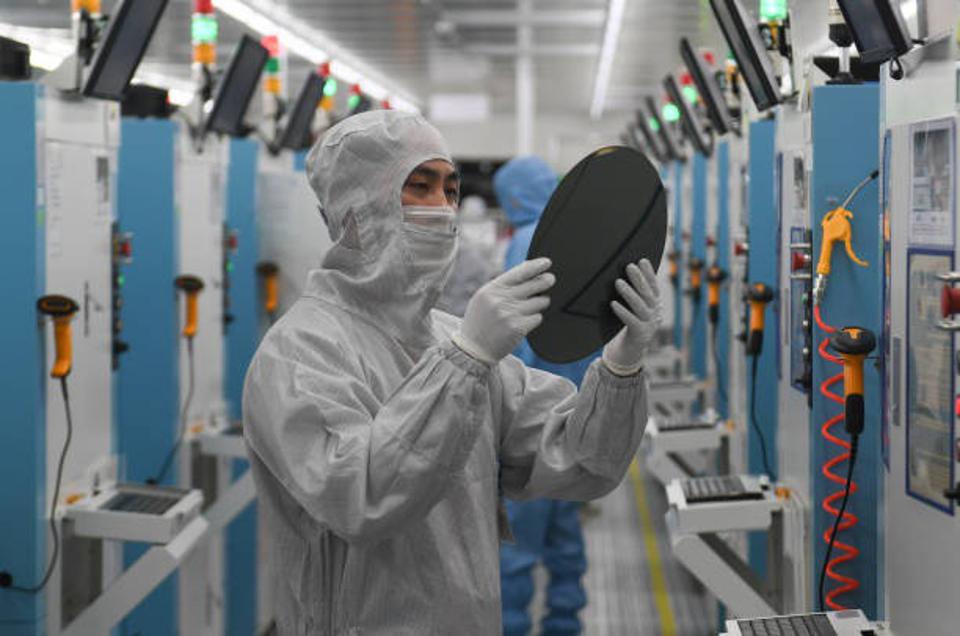
Trade Minister Yeo Han-koo said on Saturday that the first phase of the U.S. measures would have only a limited impact on South Korean companies, largely because the tariffs target high-end AI processors produced by firms such as Nvidia and AMD, rather than the memory chips that dominate South Korea’s export profile. Samsung Electronics and SK Hynix, the world’s two largest memory chipmakers, derive the bulk of their semiconductor revenue from DRAM and NAND products, which remain outside the scope of the proclamation for now.

Yet Yeo’s remarks were careful not to sound complacent. He warned that it was “not yet time to be reassured,” underlining uncertainty over how quickly and how broadly the United States might expand the measures. The government, he said, would continue close consultations with industry to prepare for potential escalation and to safeguard South Korean interests.

The tariffs stem from a proclamation signed by President Donald Trump on Wednesday following a nine-month investigation under Section 232 of the Trade Expansion Act of 1962, which allows the U.S. to restrict imports deemed a threat to national security. The initial action applies a 25% duty to selected advanced AI chips that meet specific performance benchmarks, including Nvidia’s H200 processor and AMD’s MI325X, both critical components in cutting-edge AI training systems.

The White House has sought to reassure markets by stressing that the tariffs are narrowly tailored. According to an accompanying fact sheet, the duties will not apply to chips and derivative devices imported for U.S. data centers, startups, non-data-center consumer electronics, civil industrial uses, or public sector applications. That carve-out is significant, given that hyperscale data centers account for a substantial share of global demand for AI hardware and remain a key end market for memory chips supplied by South Korean firms.

However, the administration has also been explicit that broader action could follow. The fact sheet said the United States may, in the near future, impose wider tariffs on semiconductors and related products to incentivize domestic manufacturing. That warning was sharpened on Friday by Commerce Secretary Howard Lutnick, who said South Korean and Taiwanese chipmakers that do not invest more heavily in U.S. production could face tariffs of up to 100%.

Lutnick’s comments, delivered at a groundbreaking ceremony for Micron’s new semiconductor plant in upstate New York, underscored the strategic thrust of U.S. policy. Washington is using trade pressure alongside subsidies to accelerate the reshoring of semiconductor manufacturing and reduce dependence on overseas suppliers, particularly in Asia.

This creates a delicate balancing act for South Korea. Its chipmakers are already among the largest foreign investors in U.S. semiconductor manufacturing, drawn by incentives under the CHIPS Act and by the need to stay close to key customers. Samsung is building a multibillion-dollar fabrication complex in Texas, while SK Hynix has announced plans linked to advanced packaging and memory production in the United States.

Even so, the prospect of expanding tariffs raises concerns that trade measures could eventually spill over from logic and AI processors into memory chips or products that incorporate them. That would strike at the core of South Korea’s export economy. Semiconductors account for a significant share of the country’s overseas sales, and any disruption to global chip trade risks knock-on effects for growth, investment, and employment.

There is also anxiety about the precedent being set. Section 232 investigations were once used sparingly, but their application to semiconductors signals a more assertive use of national security arguments in trade policy. For allies like South Korea, which are deeply integrated into U.S.-centric supply chains, this blurs the line between strategic cooperation and economic pressure.

In the short term, analysts say South Korean firms are likely to benefit indirectly from the tariffs, as U.S. restrictions on advanced Chinese chips tighten and demand for memory tied to AI workloads continues to grow. Over the longer term, however, the risk is that an expanding web of tariffs and localization requirements fragments the global semiconductor market, raising costs and complicating investment decisions.

Yeo’s message reflects that dual reality. The first-phase impact may be limited, but the trajectory of U.S. policy points to a more uncertain and politicized trade environment. The challenge for South Korea will be to leverage its strategic importance to the U.S. semiconductor ecosystem while guarding against measures that could, over time, erode the foundations of its chip export dominance.