DD
MM
YYYY

PAGES

DD
MM
YYYY

spot_img

PAGES

Home Blog Page 198

China Lifts Export Controls on U.S. Firms After Trump–Xi Meeting, Signaling a Pause in Trade War Escalation

0

China’s Ministry of Commerce has announced that it will remove export control measures against 15 U.S. entities and suspend similar restrictions on another 16 for one year, effective November 10.

The decision, which allows Chinese exporters to apply for licenses to sell dual-use items to the affected American companies, is a major easing of trade tensions between the world’s two largest economies. It also reverses measures China had imposed earlier this year when several U.S. firms were added to Beijing’s “unreliable entity list” amid tit-for-tat trade restrictions.

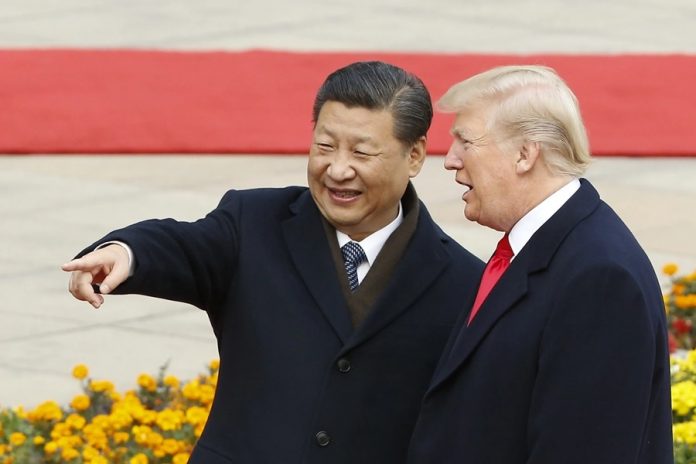
The move comes days after the meeting between U.S. President Donald Trump and Chinese President Xi Jinping in Busan, South Korea — the first direct encounter between the two leaders since 2019. During that meeting, the two sides agreed to lower trade barriers and suspend punitive measures that have weighed heavily on global markets.

Among the outcomes was Washington’s decision to reduce certain tariffs on Chinese imports, including cutting the so-called “fentanyl” tariff from around 20 percent to 10 percent and reducing overall tariffs on Chinese goods from roughly 57 percent to 47 percent. Beijing, in turn, agreed to pause new export controls on rare earths and other strategic materials for one year, while resuming large-scale soybean purchases from the United States.

These developments mark a rare thaw in a trade relationship defined by years of confrontation. Since the onset of the U.S.–China trade war, both sides have resorted to sweeping tariffs, sanctions, and export bans, each claiming the other engaged in unfair practices or posed national security risks.

Washington’s moves to restrict technology transfers, particularly in semiconductors and AI components, were met with Beijing’s own export curbs targeting rare earth minerals — elements essential to producing smartphones, electric vehicles, and military hardware. The resulting standoff rattled global supply chains and deepened economic uncertainty.

China’s latest decision to lift and suspend its export control measures is widely interpreted as a signal of goodwill following the Busan summit. Under the revised policy, Chinese exporters can now apply for licenses to ship dual-use goods to the 15 U.S. entities that had been blocked. For the 16 companies whose restrictions are temporarily suspended, domestic Chinese firms will be able to apply to conduct transactions or resume trade under regulatory approval.

These adjustments effectively ease the trade constraints that had hampered U.S. companies in key sectors, allowing for renewed commercial activity and cooperation in areas that straddle civilian and defense applications.

The Ministry of Commerce said the decision would also extend to measures introduced in March and April, when several U.S. companies were blacklisted under the unreliable entity framework. The ministry emphasized that the suspension would last for one year, suggesting that Beijing is leaving the door open to reimposing restrictions if diplomatic progress stalls.

Analysts say both sides have strong incentives for de-escalation. The Trump administration has been seeking relief for American exporters and manufacturers that faced steep costs from retaliatory tariffs, while China has been under pressure to stabilize its slowing economy and reassure investors amid weak domestic demand. The one-year suspension offers breathing space for trade-dependent industries, though experts warn it represents a tactical pause rather than a permanent settlement of the deeper geopolitical rivalry.

The U.S.–China trade war has been one of the most consequential economic confrontations in modern history. It began under President Trump’s first term when the United States levied tariffs on hundreds of billions of dollars’ worth of Chinese goods, citing unfair trade practices and intellectual property theft. China responded with its own tariffs on American exports, particularly targeting agricultural products like soybeans, wheat, and cotton.

Over time, the dispute expanded beyond tariffs into broader strategic competition over technology dominance, industrial policy, and global influence. Beijing’s control over rare earth elements became a particularly potent tool, as the minerals are indispensable to industries ranging from consumer electronics to aerospace. When China hinted at restricting their exports, markets worldwide reacted sharply, fearing disruptions in critical manufacturing chains.

President Trump described the Busan agreement as “a step toward fairness and balance,” while Chinese state media framed it as “a pragmatic reset in U.S.–China economic dialogue.”

Strategy Inc. Launches STRE: Euro-Denominated Perpetual Preferred Stock

0

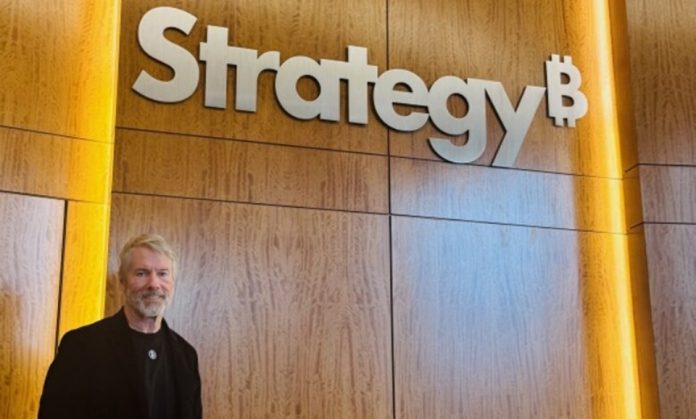
Strategy Inc. (formerly MicroStrategy, ticker: MSTR), the prominent Bitcoin treasury company led by Michael Saylor, announced a proposed initial public offering (IPO) for 3.5 million shares of its 10.00% Series A Perpetual Stream Preferred Stock (STRE).

This marks the company’s first euro-denominated security, aimed at tapping into European and global institutional capital markets to fund further Bitcoin acquisitions and general corporate purposes, including working capital.

Each share has a stated value (par value) of €100. The stock is perpetual, meaning it has no maturity date, and is non-voting. 10% annual cumulative dividend rate on the €100 stated amount, paid quarterly if declared by the board. Unpaid dividends compound at up to 18% annually.

Shares will be listed on the Euro MTF market in Luxembourg under the ticker STRE, targeting qualified institutional investors and professional clients in the European Economic Area (EEA) and the United Kingdom. Retail investors are explicitly excluded.

Net proceeds potentially up to €350 million at par will primarily support Strategy’s ongoing Bitcoin accumulation strategy, which has positioned the company as the largest corporate holder of Bitcoin currently trading closely above $103,000.

STRE ranks senior to existing STRK, STRD, and MSTR common stock but junior to STRF, STRC, and the company’s debt obligations. Strategy can redeem all shares if fewer than 25% of the original issuance remains outstanding or in cases of adverse tax events.

The redemption price equals the liquidation preference plus any accumulated unpaid dividends. In the event of a “fundamental change” (e.g., certain mergers or asset sales), holders can require Strategy to repurchase shares at the €100 stated amount plus accumulated dividends.

Liquidation Preference: Adjusts daily to the highest of:€100 (stated amount), The prior day’s closing market price, or The 10-day volume-weighted average price (VWAP). This mechanism protects investor value by linking it to market performance.

This launch follows Strategy’s Q3 2025 earnings release, where the company hinted at international expansion of its perpetual preferred stock offerings. By introducing a euro-denominated instrument, Strategy is diversifying beyond U.S. dollar-based financing (e.g., STRK and STRF) to access European liquidity, amid a strengthening dollar and Bitcoin’s rally.

The move aligns with CEO Phong Le and Chairman Michael Saylor’s emphasis on leveraging capital markets to bolster the balance sheet with digital assets, without diluting common stock. The offering is subject to market conditions and regulatory approvals, with an investor presentation featuring Saylor and Le available for review.

This development underscores Strategy’s aggressive Bitcoin treasury strategy, now extending to global investors. First €-denominated perpetual preferred stock opens European institutional liquidity, reducing reliance on USD markets and hedging against dollar strength.

Up to €350M in proceeds directly funds BTC buys, reinforcing Strategy’s position as top corporate holder ~621,000 BTC at Q3 2025 without common stock dilution. Daily-adjusted liquidation preference tied to market price or VWAP gives downside protection with equity-like exposure, appealing to yield-seeking institutions.

Higher Cost of Capital: 10% dividend potentially compounding to 18% is pricier than recent USD offerings (e.g., STRF at 8%), reflecting eurozone yield demands and BTC volatility premium. Sets template for future issuances in GBP, JPY, or CHF, enabling 24/7 global fundraising aligned with Bitcoin’s borderless nature.

Euro MTF listing targets pros only; currency fluctuation and ECB policy shifts introduce new variables vs. USD-denominated STRK/STRF. STRE strengthens Strategy’s capital stack, accelerates BTC treasury growth, and signals a maturing, multinational financing playbook—provided Bitcoin momentum holds.

Crypto Market Bloodbath; $150B+ Wipeout and $1.7B in Liquidations

0

The cryptocurrency market is in freefall as of November 5, 2025, with over $150 billion erased from the total market cap in the past 24-48 hours alone, capping off a brutal month where more than $1 trillion has vanished since early October.

This deleveraging frenzy has liquidated $1.7 billion in leveraged positions, primarily longs, affecting hundreds of thousands of traders across exchanges like Binance, HTX, and Bybit.

Bitcoin (BTC) has plunged below $100,000 for the first time since July, hitting lows around $99,600, while Ethereum (ETH) and Solana (SOL) have shed 5-10% each in the latest cascade. This isn’t an isolated dip—it’s the culmination of a structural purge, where overleveraged positions collided with thinning liquidity, amplifying a modest sell-off into a full-blown rout.

Total crypto market cap now ~$2.02T, down from $2.17T peak on Nov 3. BTC alone accounts for ~$80B of the drop. Liquidations (24h) $1.7B 327,000+ traders rekt; $1.4B in longs vs. $300M in shorts. Peaks hit $1.85B intraday.

BTC Price at $99,800 (-9.3%), broke $100K support; Z-score at 2.4 (oversold signal, seen only 6x in 10 years). ETH Price at $3,300 (-17.2%) Led altcoin bleed; $580M in ETH longs liquidated. SOL Price at $180 (-8.5%) $156M liquidated; DeFi contagion hit hard.

ETF Outflows; $1.34B (BTC) + $138M (ETH) 5 straight days of redemptions; spot demand evaporated. Fear & Greed Index 20 (Extreme Fear) 6th straight day in fear zone; sentiment at bear market lows.

What Triggered the Cascade?

Leverage Overload: Open interest (OI) ballooned to record highs in perps while spot trading lagged. Positive funding rates lured in “up only” crowds, but when BTC cracked $104K support on Nov 4, it sparked a domino effect—$1.1B liquidated yesterday alone forced more stops, creating a self-fulfilling spiral.

This echoes the $19B mega-wipeout on Oct 10 Trump’s China tariff threat, but today’s is more insidious: DeFi bad debt from Stream Finance’s $93M implosion spread $285M contagion to protocols like Morpho and Euler. Hawkish Fed signals and sticky inflation spooked risk assets.

Equities wobbled, prompting de-risking—crypto, as the beta king, got slashed first. China’s surprise tariff suspension on U.S. goods offered brief relief, but it wasn’t enough to stem ETF outflows or the $16B short pileup betting sub-$95K BTC by month-end.

DeFi & Protocol Cracks: Balancer’s $128M exploit and Berachain’s $116M drain halted chains and eroded trust. Privacy coins like DASH (+112%) and ZEC (+35%) pumped as “flight to safety” trades, but majors like ENA (-29%) and IP (-28%) got dumped on unlocks amid zero bids.

Sentiment on X: Panic, Capitulation, and Contrarian CallsX (formerly Twitter) is a warzone of memes, breakdowns, and bottom-fishing. Traders are calling this “max pain” at $72K BTC, but history shows extreme fear often marks local bottoms (e.g., 2018 winter, 2022 FTX collapse). Bearish Vibes: “The market broke me… I’m out”.

Peter Schiff predicts dot-com-level losses, but math says crypto’s $3.5T cap can’t match 2000’s $5T wipeout. A Binance insider flipped long on BTC/ETH/SOL post-crash— “NEVER WRONG!” (@CryptoHunt47045). $8B in shorts could squeeze if BTC hits $113K.

Analysts like @shanaka86 frame it as “leverage purge, not thesis funeral”: Wait for flat funding, 20-30% OI drop, and spot leadership. Spot > leverage; track stablecoin inflows and order books. “Volatility is the tax for being early. Leverage is the interest”.

This feels like the final exhale of October’s red storm—the largest monthly loss since 2018. But crypto’s resilient: Adoption (e.g., stablecoin volumes at $19.4B YTD and tech AI narratives pumping ICP +61% are intact. Trump’s rumored Miami announcement could jolt sentiment if it’s pro-crypto.

Short-term: More pain to $95K BTC if jobs data disappoints Friday. Long-term: Cleansed markets rebound hard—post-purge rallies averaged 50%+ historically.

Current Odds of a December 2025 Fed Rate Cut Falls to 63.8% 

0

As of November 5, 2025, the probability of the U.S. Federal Reserve implementing at least a 25-basis-point rate cut at its December 10 FOMC meeting has fallen to 63.8%, according to the CME FedWatch Tool.

This marks a notable decline from earlier in the fall, when expectations were consistently above 70%—and often much higher. Baseline for a Cut: The CME FedWatch Tool derives these probabilities from 30-day Fed Funds futures prices, reflecting trader expectations.

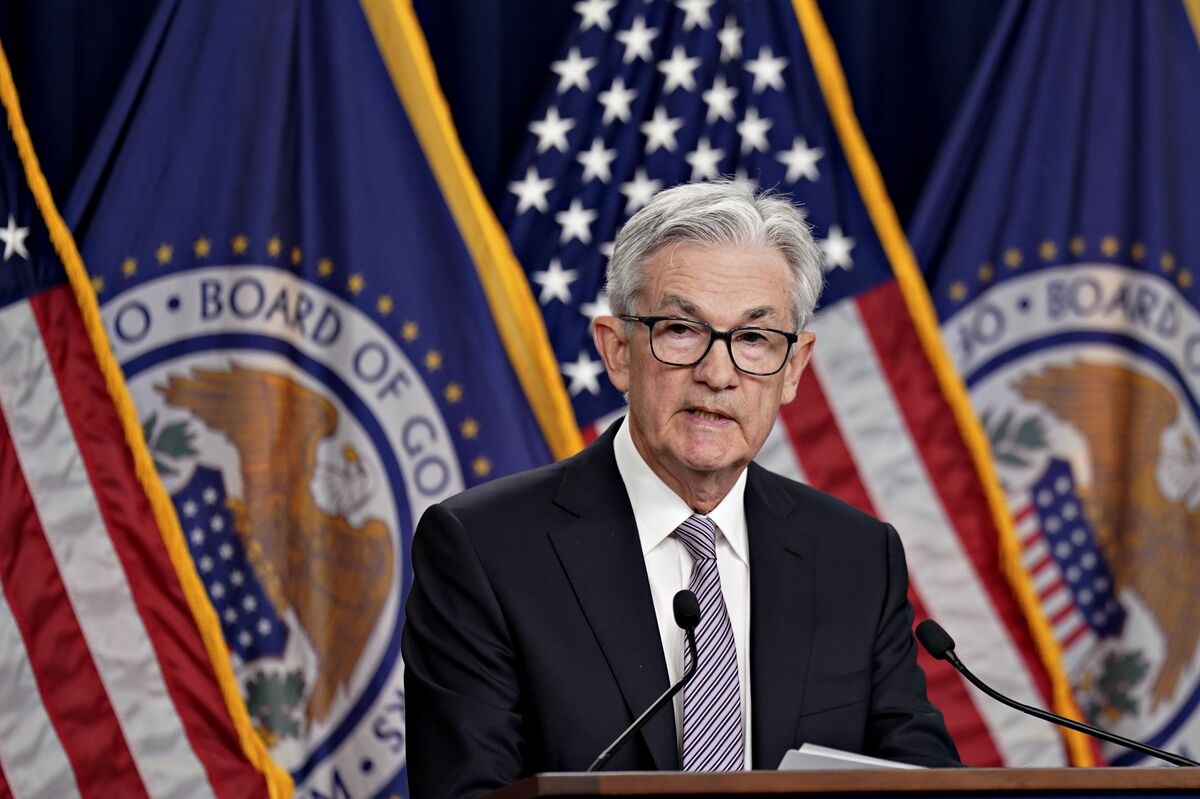
A cut would lower the target federal funds rate from its current range of 3.75%–4.00% (post-October cut) to 3.50%–3.75%. Fed Chair Jerome Powell’s October 29 comments emphasized caution, stating a December cut is “not a foregone conclusion” and highlighting a “growing chorus” among FOMC officials to pause after two consecutive cuts (September and October).

This introduced uncertainty around inflation trends and economic data. Market reactions were swift: Odds dropped to 67% immediately after Powell’s remarks, then further to 56% by afternoon. By early November, they’ve stabilized at 63.8%, with a 29% chance of rates holding steady at 3.75%–4.00%.

This pullback signals growing market caution, potentially driven by sticky inflation (e.g., PCE at 2.7% YoY) and policy risks like tariffs. If upcoming data (e.g., November jobs report) shows resilience, odds could dip further; conversely, weakening indicators might push them back above 70%.

Impact of Falling December Rate Cut Odds on the Stock Market

The recent drop in odds for a Federal Reserve rate cut at the December 10, 2025, FOMC meeting—from over 90% pre-October meeting to around 63.8% as of November 5—has introduced volatility and downward pressure on U.S. equities.

This shift, largely triggered by Fed Chair Jerome Powell’s hawkish comments on October 29 emphasizing internal divisions and caution on further easing amid sticky inflation (core PCE at 2.7% YoY), signals to markets a potentially slower pace of monetary accommodation.

Historically, reduced rate cut expectations act like a tightening of financial conditions, raising borrowing costs for companies and consumers, which can crimp corporate earnings growth and dampen risk appetite.

On October 29, the S&P 500 initially hit intraday highs above 6,920 but erased gains to close flat (-0.1%), while the Dow Jones Industrial Average fell 0.48% to 47,336. Treasury yields spiked (10-year to over 4%), reflecting repricing for fewer cuts, and the USD strengthened.

Into Early November: Markets stabilized somewhat but remained cautious. The S&P 500 dipped modestly on October 31 amid mixed earnings (e.g., Amazon up 9.6% on AWS strength, but broader sentiment soured by Fed dissenters opposing the October cut).

By November 5, the index was up ~0.5% week-to-date, buoyed by tech resilience, but the VIX (fear gauge) hovered near 20, up from 15 pre-Powell. Lower cut odds disproportionately hurt rate-sensitive sectors, as higher-for-longer yields make future cash flows less valuable and increase debt servicing costs.

Down 2-3% post-October 29; REITs like Vanguard Real Estate ETF (VNQ) fell ~4% in late October, as elevated yields (10-year at 4.09%) compete with dividend yields. Russell 2000 dropped 1.5% on Oct 29; borrowing costs hurt leveraged firms.

Autos and retail (e.g., Ford, Macy’s) slid 1-2%, as pricier loans curb spending. Minimal damage; Nasdaq’s resilience tied to earnings beats (e.g., Amazon). Banks like JPMorgan gained 0.5% on higher net interest margins from yield spikes.

Stable or up slightly; less rate-dependent, with healthcare eyeing M&A tailwinds. Fewer cuts imply tighter conditions, potentially slowing GDP growth to 1.8% in Q4 2025 (from 2.5% Q3 est.) and pressuring EPS growth from 12% to 8-9% in 2026.

Tariffs (e.g., 10-20% on imports) add inflation risks without full passthrough yet, complicating the Fed’s dual mandate.  A “no-cut” December (now 29% odds) could trigger a 1-2% S&P pullback, per JPMorgan models.

Wall of Cash Risk: ~$7T in money market funds yields ~4.5%; as cuts fade, less incentive to rotate into stocks, muting rallies. If data softens odds could rebound >70%, reigniting “risk-on.” Historical rate pause cycles post-cuts have seen S&P gains of 10-15% over 6 months if no recession.

Crypto and small caps could benefit if cuts resume, as a weaker USD boosts alternatives. Recent posts highlight caution—”Fed just killed December hopes… something’s about to break” —with yields at 4.091% and core inflation at 2.6% fueling dip-buying debates.

Overall, this repricing has shaved ~0.5-1% off major indices since late October, but earnings season 80% S&P firms beat Q3 estimates provides a buffer. Watch the November jobs data and Powell’s November 7 speech for clues—strong payrolls could push odds below 50%, risking a 3-5% correction; weakness might stabilize at 70%+ odds and support a year-end rally.

Car Repossessions Reach 16-Year High in the US

0

Car repossessions in the United States have indeed surged to their highest levels in 16 years, with data showing a sharp increase driven by economic pressures like high interest rates, soaring vehicle prices, and rising delinquencies.

This trend, which began accelerating in 2023, peaked in 2024 and shows no signs of slowing into 2025. Approaching 2009 Great Recession peak; assignments could hit 10.5 million. These figures come primarily from Cox Automotive and the Recovery Database Network (RDN) via CURepossession.

Several interconnected factors are squeezing American borrowers: High Vehicle Costs and Loan Rates: The average new car price topped $50,000 in September 2025, with monthly payments averaging $748 at 10.16% interest rates—the highest in months.

Many pandemic-era buyers overpaid for cars that have since depreciated faster than their loans, leaving them “underwater.” Auto loan delinquencies rose over 50% in the past 15 years, far outpacing other consumer debts.

Subprime borrowers those with lower credit scores are hit hardest, with 6.5%+ at 60 days late—the most in 30+ years. Stimulus-fueled buying in 2020–2022 led to record debt $1.66 trillion in auto loans. As savings dried up and inflation hit essentials like groceries and housing, priorities shifted—people pay rent first, then rack up credit card debt.

Rejection rates for auto loans reached 33.5% in February 2025, the highest on record, per the Federal Reserve Bank of New York. Long-term inflation expectations are at 30-year highs. This isn’t uniform: Millennials and Gen Xers are seeing the sharpest inquiries for repossession help, often prioritizing housing over car payments.

Spikes in repossessions have historically coincided with downturns (e.g., 2008–2009, when ~3 million occurred). Current levels suggest cooling job/wage growth but not yet a full-blown recession. However, with 46.7% of consumers expecting worse credit access in the next year, risks are rising.

Lenders recover less per vehicle recovery ratios down, hurting banks. Used car prices could flood the market, benefiting bargain hunters but pressuring dealers. Repossession agents report more confrontations, including violence, complicating enforcement.

Consumer Impact: Losing a car hits mobility hard—especially in car-dependent areas—exacerbating job loss cycles. If payments are tight:Contact Your Lender Early: Most prefer modifications (e.g., deferrals, rate reductions) over seizure, as it costs them money.

Refinance or Sell: Shop for lower rates or trade in before default. Budget Ruthlessly: Use apps like Monarch for tracking; prioritize essentials. Nonprofits like the Consumer Federation of America offer free advice; consider debt counseling.

This trend underscores broader consumer stress, but targeted relief (e.g., Fed rate cuts) could ease it. The surge in car repossessions has drawn parallels to the 2008 financial crisis, often called the Great Recession, when subprime lending and economic collapse triggered widespread defaults.

However, while today’s numbers are climbing toward 2008-2009 peaks, the scale, causes, and broader economic context differ significantly. In 2008, repossessions were part of a systemic meltdown driven by housing, affecting the entire financial system.

Now, it’s more isolated to consumer auto debt amid inflation and post-pandemic recovery, with no comparable housing bubble. Below, I’ll break it down with key comparisons based on data from sources like Cox Automotive, Fitch Ratings, and the Federal Reserve.

Current levels are the highest since 2009 but still below the absolute peak; up 16% YoY in 2024, 43% from 2022. Projections suggest potential to match or exceed 2009 if trends continue. ~2 million+ at peak (exact figures vary; tied to 4.12% delinquency rate)

2.33 million in 2024 (exceeds 2009 peak). Defaults now outpacing recession highs, with foreclosure rates ~8%. Delinquency Rates (60+ Days Late). Subprime: ~5-6%; Overall: ~3-4% (peaked at 4.12% in 2009)

Subprime rates now worse than 2008; overall rates similar but rising faster among prime borrowers (0.39% in 2025 vs. 0.35% in 2024). Debt is nearly double, amplifying the impact of defaults despite fewer originations.

Driven by $50,000+ average car prices and 10.16% interest rates—far higher than 2008’s ~5-6% rates. Repossessions exploded due to the subprime mortgage crisis, which triggered massive unemployment (peaking at 10%), housing foreclosures, and a credit freeze.

Loose lending standards flooded the market with risky auto loans, but the auto sector was secondary to real estate. Fuel prices spiked briefly (~$4/gallon), but the core issue was a full economic collapse, with GDP contracting 4.3%.

2024-2025: High vehicle prices (up 30% since 2019), elevated interest rates, and inflation (peaking at 9% in 2022) are squeezing budgets. Pandemic-era stimulus led to overbuying at inflated prices, leaving many “underwater” on loans as cars depreciated.

Subprime lending has loosened again, but it’s targeted—16.9% of financed used cars in Q3 2024. Unemployment is low (4.1%), but wage growth lags essentials like rent and groceries, hitting lower-income households hardest. No housing bubble equivalent; mortgage delinquencies remain low (0.6%).

Both eras feature “canary in the coalmine” signals from subprime borrowers, but today’s surge is more about affordability erosion than systemic banking failure. The 2008 crisis was a domino effect—auto woes compounded housing and stock market crashes, leading to a $15 trillion wealth loss and global recession.

Repossessions contributed to used-car market floods, but were dwarfed by foreclosures (2.8 million in 2008). Today, the economy is cooling (GDP growth ~2.5% in 2024) but not contracting; stock markets are booming (K-shaped recovery), and auto issues are contained to $1.66 trillion in debt vs. $12.6 trillion in mortgages.

However, bankruptcies like subprime lender Tricolor signal risks for lower-income consumers, potentially worsening if layoffs rise. In 2008, lenders initially repossessed aggressively but later hesitated due to auction losses (prices down 20-30%).

Now, similar dynamics: Lenders offer modifications to avoid repossessions, but volumes are up as relief programs end. Recovery rates are lower today due to high storage/auction costs.

Consumer Impact: Both hit mobility hard, especially in rural/car-dependent areas, fueling job loss cycles. But 2008 affected all classes; now it’s concentrated among subprime/Millennials/Gen X (46.7% expect worse credit access in 2025).

Is This the Next 2008? Unlikely on the same scale—auto lending is a fraction of the economy, and regulators learned from 2008 (e.g., Dodd-Frank). But it’s a warning: If delinquencies spread to prime borrowers or coincide with job losses, it could amplify broader stress.

Experts like JPMorgan’s Jamie Dimon call it a “cockroach” signal—early signs of cracks. Positive note: Fed rate cuts could ease payments, unlike 2008’s prolonged high rates.