DD
MM
YYYY

PAGES

DD
MM
YYYY

spot_img

PAGES

Home Blog Page 1998

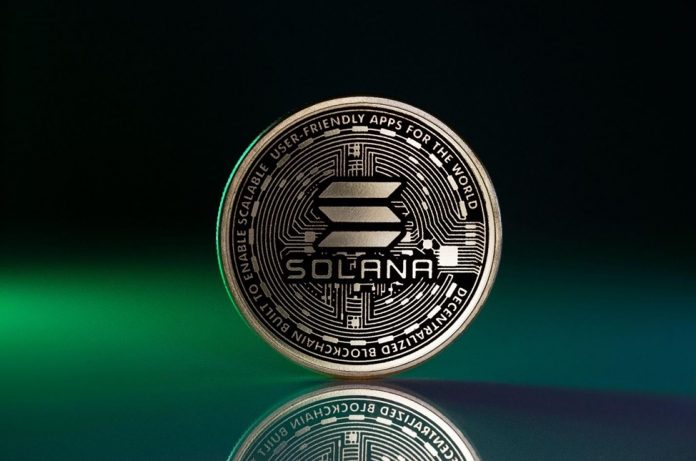
Solana Mobile Seeker Phone Set to Begin Shipment

0

Solana Mobile has announced that their Seeker phone, the next-generation Web3 smartphone, is scheduled to begin shipping in Summer 2025. This follows the device’s testing phase, which started earlier this year, as confirmed by Solana Mobile in a recent update. The Seeker, designed to enhance the Web3 experience with features like the Seed Vault Wallet and an upgraded Solana dApp Store, has already garnered significant interest, with over 140,000 pre-orders worldwide. Customers will soon be able to confirm or update their shipping addresses as the launch approaches.

Web3 refers to the next evolution of the internet, built on decentralized technologies like blockchain, aiming to give users more control, privacy, and ownership over their digital experiences. The Solana Mobile Seeker phone integrates Web3 features to enhance this vision, particularly for cryptocurrency and decentralized applications (dApps). Some Web3 devices and platforms reward users with tokens for participation. While not explicitly detailed for the Seeker, Solana Mobile’s earlier Saga phone offered perks like exclusive NFTs or token airdrops to early adopters. The Seeker might continue this trend, integrating token-based rewards into its Web3 experience.

Unlike Web2, where platforms like Google or Facebook control your identity and data, Web3 uses cryptographic keys (public and private) for self-sovereign identity. On the Seeker, this is likely tied to its Seed Vault Wallet, a secure, embedded wallet that stores your private keys directly on the device. This lets you own and manage your digital assets—like cryptocurrencies or NFTs—without relying on centralized intermediaries.

The Seed Vault Wallet is a standout feature, providing a hardware-level secure environment for managing Solana-based assets. It supports transactions, token swaps, and NFT interactions seamlessly, all while keeping your keys offline and protected from hacks. This is a step up from software wallets on typical phones, offering better security for Web3 users.

The Seeker comes with an upgraded Solana dApp Store, giving access to decentralized applications running on the Solana blockchain. These dApps can range from DeFi (decentralized finance) platforms for lending or trading, to gaming or social apps where users own their data or earn rewards. Web3 dApps differ from traditional apps by operating on peer-to-peer networks rather than centralized servers.

Web3 emphasizes user privacy by minimizing reliance on third parties that harvest data. The Seeker’s design likely includes features to prevent unauthorized access to your activity, leveraging Solana’s high-speed, low-cost blockchain for secure, private transactions without needing to trust a middleman. Web3 is about open, interconnected systems. The Seeker, built on Solana’s ecosystem, can interact with blockchain-based services—like marketplaces, metaverses, or DAOs (decentralized autonomous organizations)—natively. This means you can sign transactions, verify ownership, or join governance votes directly from the phone.

The Seed Vault acts as a “cold storage” solution embedded in the phone’s hardware. It securely stores your private keys and seed phrases, which are critical for accessing and controlling your blockchain-based assets on the Solana network (and potentially other compatible blockchains). A seed phrase is a string of 12-24 random words that serves as the master key to your wallet. If you lose your device or need to recover your wallet, this phrase restores access to all your funds and assets. The Seed Vault keeps this ultra-sensitive data safe.

Unlike software wallets (e.g., MetaMask on your browser), which are vulnerable to online hacks, the Seed Vault leverages a secure element—a tamper-resistant chip in the phone’s hardware. This is similar to what’s used for biometric data or payment systems like Google Pay, ensuring your keys stay isolated from the internet when not in use. Your private keys and seed phrase are generated and stored offline within the Seed Vault. They never leave the secure element unless explicitly needed for a transaction, reducing exposure to malware or phishing attacks.

In essence, the Seeker’s Web3 features aim to make decentralized tech as user-friendly as a smartphone app, bridging the gap between complex blockchain systems and everyday use. It’s about handing you the keys—literally and figuratively—to a more open, user-controlled internet. Anything specific about these features you’d like me to dig deeper into?


North Carolina Introduces HB92 and SB327 for 10% Funds on Bitcoin

0

North Carolina has introduced legislation to invest up to 10% of its public funds into a Bitcoin strategic reserve. This initiative is reflected in two key bills: House Bill 92 (HB 92), introduced on February 10, 2025, and Senate Bill 327 (SB327), introduced on March 18, 2025. Both bills aim to position North Carolina as a leader in cryptocurrency adoption by allocating a portion of state funds to Bitcoin. HB 92, known as the “North Carolina Digital Assets Investments Act,” was introduced by House Speaker Destin Hall, with co-sponsors Representatives Mark Brody and Steve Ross.

It authorizes the State Treasurer to invest up to 10% of public funds—including the General Fund, Highway Fund, and various special funds—into Bitcoin exchange-traded products (ETPs). The bill specifies that eligible digital assets must have a market capitalization of at least $750 billion over the past 12 months, a threshold currently met only by Bitcoin. SB327, dubbed the “Bitcoin Reserve and Investment Act,” was proposed by Republican Senators Todd Johnson, Brad Overcash, and Timothy Moffitt.

It similarly allows the State Treasurer to allocate up to 10% of public funds, including the state’s $9.5 billion general fund, to Bitcoin. This bill emphasizes a “financial innovation strategy” and includes provisions for secure storage (multi-signature cold storage), monthly audits for transparency, and restrictions on selling Bitcoin except in severe financial crises under strict conditions. It also explores Bitcoin mining as a way to build the reserve cost-effectively. These proposals align with a broader trend, as North Carolina joins over 20 U.S. states exploring similar Bitcoin reserve legislation.

Supporters argue it diversifies state assets, hedges against inflation, and fosters technological innovation. However, Bitcoin’s volatility and regulatory uncertainties remain points of debate among lawmakers. Both bills are under consideration in the North Carolina House and Senate, respectively, with their outcomes still pending. North Carolina’s proposed legislation to invest up to 10% of its public funds into a Bitcoin strategic reserve, as outlined in House Bill 92 (HB 92) and Senate Bill 327 (SB327), could have wide-ranging impacts across economic, financial, technological, and social spheres.

Investing a portion of the state’s $9.5 billion general fund (up to $950 million) and potentially up to $13.7 billion including retirement systems could diversify North Carolina’s assets. Bitcoin’s historical average annual growth rate exceeds 50% over the past decade, suggesting potential for significant returns compared to traditional investments like bonds or equities. This could bolster state revenues if Bitcoin’s value continues to rise. However, Bitcoin’s volatility—evident in its price swings from $79,107 to $83,745 recently—poses a risk of substantial losses.

Proponents argue that Bitcoin, with its fixed supply of 21 million coins, could serve as a hedge against inflation and dollar depreciation. With the U.S. dollar facing periodic devaluation, this move might protect North Carolina’s purchasing power over time. Critics counter that Bitcoin’s price volatility undermines its reliability as a stable store of value, unlike gold or other traditional hedges. If successful, the reserve could generate positive yields, reducing reliance on tax increases or budget cuts.

By integrating Bitcoin into public finance, North Carolina could position itself as a pioneer among U.S. states, attracting blockchain-related businesses, talent, and investment. SB327’s provision for Bitcoin mining could further boost local tech infrastructure and jobs, leveraging the state’s energy resources. This aligns with a national trend, as over 20 states explore similar initiatives, but it could give North Carolina a competitive edge if implemented effectively.

Secure storage (e.g., multi-signature cold storage) and monthly audits mandated by SB327 would require investment in cybersecurity and blockchain expertise. This could spur technological advancements and skill development within the state, though it also demands significant upfront costs and expertise that some experts warn governments may lack. The move could enhance Bitcoin’s legitimacy, signaling institutional confidence and potentially encouraging broader public adoption.

However, skepticism from groups like the State Employees Association of North Carolina highlights concerns over risking pension funds on a volatile asset, which could erode trust if losses occur. Transparent audits and strict oversight might mitigate these fears, but the lack of widespread understanding of cryptocurrency could fuel public unease or opposition. Success could inspire other states to follow, accelerating a domino effect of state-level Bitcoin reserves. This might pressure federal policymakers to clarify crypto regulations, reshaping the U.S. financial landscape.

The absence of a robust federal framework for cryptocurrencies could complicate North Carolina’s initiative. Legal challenges or shifts in national policy (e.g., under President Trump’s proposed national Bitcoin reserve) might disrupt the state’s plans. Bitcoin’s price, currently around $81,530, has seen dramatic fluctuations. A 10% allocation could expose North Carolina to significant financial risk, especially if a market downturn coincides with a state fiscal crisis. Managing a Bitcoin reserve requires expertise in digital asset custody, which some experts argue governments are ill-equipped to handle.

A $950 million investment (or more if retirement funds are included) could boost Bitcoin demand, potentially driving prices higher and reinforcing its status as an institutional asset. This might amplify market rallies if other states follow suit. North Carolina’s move could enhance its reputation as a forward-thinking state, aligning with global trends where nations like El Salvador have adopted Bitcoin as legal tender, though on a smaller scale.

North Carolina’s Bitcoin reserve could yield significant economic benefits, establish the state as a tech leader, and influence national crypto policy—provided risks are managed effectively. However, volatility, regulatory gaps, and public skepticism pose substantial hurdles. The outcome of HB 92 and SB327, still under legislative review, will hinge on balancing innovation with financial prudence.

Can BlockDAG’s $204 Million Momentum Decrypt the Path to a $1 Valuation and 3932% Gains?

0

The digital currency space is a landscape of constant change, where opportunities for substantial gains are often met with equally substantial risks. Within this environment, BlockDAG has captured attention, showcasing a presale that has already surpassed the $204 million mark, with over 18.7 billion coins distributed. This level of engagement signals a strong interest, and the numbers speak for themselves: early participants have witnessed a remarkable 2380% increase in the value of their holdings.

However, the potential does not end there. Projections indicate that BlockDAG could reach a valuation of $1, a figure that would translate to a 3932% return for those who acquire BDAG at its current price. This potential for significant financial gain is further bolstered by the project’s commitment to security.

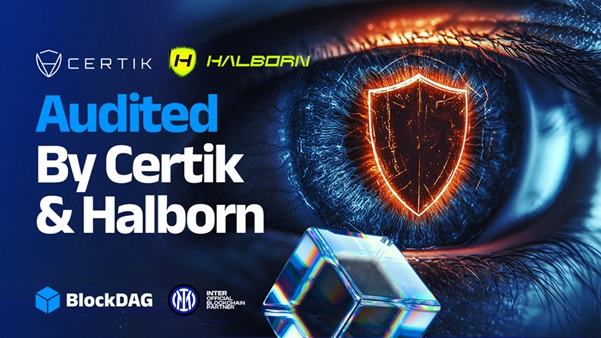
BlockDAG has undergone rigorous audits by Halborn and CertiK. This focus on robust security measures is critical in building confidence among those who participate in the digital currency market. The combination of impressive presale figures and a dedication to security positions BlockDAG as a project worthy of close examination.

BlockDAG’s Presale: A Look at the Numbers and the Reasons Behind Them

Presales in the digital currency world are known for their potential for high returns, but BlockDAG’s growth and demand are notable. The presale, structured across 27 batches, allows for increases in BDAG’s value with each phase, rewarding early participants.

The initial presale batch began at $0.001, allowing those who entered early to secure a 2380% gain as BDAG’s price reached $0.0248 in Batch 27. The demand is increasing as each batch sells out. Experts predict BDAG will reach $1, meaning those who obtain it now could see a 3932% return. This means each $1 spent now could turn into $39.32. The opportunity for maximum gains is to obtain BDAG before the price increases further.

The Importance of Security: BlockDAG’s Halborn and CertiK Audits

With the rise of cyber threats in the digital currency space, security is a major factor in assessing a project’s long-term viability. BlockDAG is undergoing audits by Halborn and CertiK. Halborn has completed an audit of BlockDAG’s smart contracts and network design, ensuring its systems are protected against vulnerabilities. The audit confirmed that BlockDAG’s infrastructure is designed to prevent hacking, ensuring secure transactions.

CertiK is conducting a review to further verify the network’s integrity. This review focuses on smart contract efficiency, security improvements, and protection against manipulation. By obtaining these security validations, BlockDAG is showing its focus on both growth and building a secure ecosystem. This level of scrutiny is not common in early-stage digital currency projects, making BDAG a notable option for those seeking high returns and security.

DAG Architecture: BlockDAG’s Scalability & Performance

BlockDAG’s Directed Acyclic Graph (DAG) technology is another factor contributing to its appeal. Unlike traditional blockchains, DAG technology allows transactions to be verified simultaneously, increasing efficiency.

This structure allows for faster speeds, lower fees, and greater scalability, making BlockDAG an alternative to traditional blockchain networks. BlockDAG’s approach ensures that the network remains efficient as adoption increases. With a focus on decentralized applications, BDAG’s technology offers an advantage in the digital currency space.

Wrapping Up

BlockDAG’s presale success, security infrastructure, and technology make it a promising digital currency option in 2024. The presale is nearing $204 million, and security audits from Halborn and CertiK are increasing confidence.

With the current price at $0.0248 and the expected rise to $1, those who purchase now could secure a 3932% return. As each batch increases BDAG’s price, the opportunity becomes more appealing. The BDAG800 promotion, offering a 400% bonus, is available, making this a lucrative entry point.

For those seeking a project that balances growth with security, BlockDAG is a strong option. With its scalability, security certifications, and growing community, BDAG is positioned for success. Obtaining it early could result in significant returns, making this presale a major opportunity.

Presale: https://purchase.blockdag.network

Website: https://blockdag.network

Telegram: https://t.me/blockDAGnetwork

Discord: https://discord.gg/Q7BxghMVyu

Coinbase with Backed Finance is Launching Tokenized Stocks on Avalanche

0

Tokenized Coinbase stock is coming to the Avalanche blockchain. Through a partnership with Backed Finance (BackedFi), Coinbase stock, represented as $bCOIN, is being brought on-chain alongside the S&P 500 index ($bCSPX). This move allows investors to gain exposure to traditional finance (TradFi) assets within the decentralized finance (DeFi) ecosystem on Avalanche, without the need for traditional brokerage accounts. Traders can invest in tokenized versions of Coinbase stock and the S&P 500 directly on Avalanche, leveraging blockchain’s 24/7 trading capabilities.

These assets can be traded on decentralized platforms like ParaSwap, with liquidity incentives offered through Pharaoh Exchange for liquidity providers. Chainlink’s Cross-Chain Interoperability Protocol (CCIP) enables swapping these tokenized assets across multiple blockchains, enhancing flexibility. This development is part of Avalanche’s broader push into real-world asset (RWA) tokenization, bridging traditional and digital finance. The $bCOIN token is fully backed 1:1 by Coinbase shares, ensuring its value reflects the real-world stock’s performance.

Tokenized stocks like $bCOIN allow users without access to traditional brokerage accounts—due to geographic, regulatory, or financial barriers—to invest in Coinbase stock via crypto wallets. This democratizes exposure to Tokenized assets. It could attract a new wave of retail investors into DeFi, especially those already familiar with crypto but not traditional markets. Integrating real-world assets (RWAs) like Coinbase stock into DeFi platforms (e.g., ParaSwap) expands the use cases for decentralized finance. Users can trade, lend, or use $bCOIN in ways not possible with traditional stocks.

This could accelerate the convergence of TradFi and DeFi, encouraging more institutions and developers to explore tokenized asset offerings on Avalanche and similar blockchains. Liquidity incentives on platforms like Pharaoh Exchange encourage users to provide liquidity for $bCOIN, potentially leading to tighter spreads and more efficient markets. Avalanche’s high throughput and low fees further enhance this. A liquid market for tokenized stocks could set a precedent for other assets (e.g., equities, bonds), making Avalanche a hub for RWA trading.

Chainlink’s CCIP enables $bCOIN to move across blockchains, increasing its utility and reach beyond Avalanche. Traders can swap it on other networks, potentially boosting its adoption. This strengthens the case for interoperable blockchain ecosystems, reducing fragmentation and fostering a more connected crypto economy. Tokenizing a publicly traded stock like Coinbase’s could draw attention from regulators (e.g., SEC in the U.S.), especially if retail investors bypass traditional securities frameworks.

Backed Finance’s 1:1 backing and compliance efforts will be key. The success or failure of $bCOIN could influence future regulatory approaches to tokenized RWAs, potentially shaping the legal landscape for blockchain-based securities. This move reinforces Avalanche’s position as a leader in RWA tokenization, leveraging its scalability and speed. It may attract more projects, developers, and capital to the network. Increased activity could drive up demand for AVAX (Avalanche’s native token), benefiting holders and validators while solidifying its competitive edge over Ethereum and other layer-1 blockchains.

As Coinbase is a major crypto exchange, tokenizing its stock might signal confidence in the crypto industry’s growth. It ties Coinbase’s performance more directly to DeFi, potentially amplifying its visibility. Positive sentiment could spill over to other crypto-related stocks or tokens, while any volatility in Coinbase’s stock might ripple through $bCOIN’s DeFi markets. Tokenized Coinbase stock on Avalanche could bridge traditional and decentralized finance, enhance liquidity, and grow the Avalanche ecosystem—while also posing regulatory and adoption challenges.

Exploring the Launch of Strategy’s New Series A Perpetual Strife Preferred Stock

0

Strategy (Nasdaq: MSTR; STRK) announced its intention to launch a new Series A Perpetual Strife Preferred Stock (STRF) offering. Subject to market and other conditions, the company plans to offer 5,000,000 shares in a public offering registered under the Securities Act of 1933. The proceeds from this offering are intended to be used for general corporate purposes, including the acquisition of additional Bitcoin and for working capital. The STRF stock will feature a fixed cumulative dividend rate of 10.00% per annum, payable quarterly starting June 30, 2025, provided the dividends are declared by Strategy’s board of directors.

If dividends remain unpaid, they will compound quarterly at an initial rate of 11% per annum, increasing by 1% each quarter up to a maximum of 18%. Each share will have an initial liquidation preference of $100, though this value may adjust daily based on market conditions. Strategy retains the option to redeem all outstanding STRF shares if the total number of shares falls below 25% of the originally issued amount or if specific tax events occur.

Additionally, holders of STRF can require the company to repurchase their shares in the event of a “fundamental change,” at a price equal to the stated amount plus any accumulated unpaid dividends. The offering is being managed by major financial institutions, including Morgan Stanley, Barclays, Citigroup, and Moelis & Company, acting as joint book-running managers.

The launch of Strategy’s new Series A Perpetual Strife Preferred Stock (STRF) carries several implications for the company, its investors, and the broader market. The proceeds are earmarked for acquiring more Bitcoin and supporting general corporate purposes. This reinforces Strategy’s ongoing strategy of heavily investing in Bitcoin as a treasury reserve asset, potentially increasing its exposure to cryptocurrency market volatility. The perpetual nature of the stock (no maturity date) provides Strategy with long-term capital without the immediate repayment obligations of debt.

However, the high dividend rate (10% annually, compounding up to 18% if unpaid) could strain cash flow if Bitcoin investments underperform or if market conditions deteriorate. The ability to redeem shares or face repurchase demands tied to specific triggers (e.g., a “fundamental change”) introduces some flexibility but also potential obligations, depending on future events. This could impact liquidity if large-scale redemptions or repurchases are triggered.

The 10% annual dividend, with the possibility of compounding at higher rates (up to 18%), offers an attractive yield compared to many traditional fixed-income investments. This could appeal to income-focused investors willing to accept the associated risks. Investors will bear significant risk tied to Strategy’s Bitcoin-heavy strategy. If Bitcoin’s value declines sharply, the company’s ability to sustain dividends or maintain the stock’s liquidation preference could be jeopardized.

The adjustable liquidation preference tied to market conditions adds further uncertainty. As a perpetual stock, STRF doesn’t offer a guaranteed return of principal, unlike bonds with a set maturity. Investors relying on redemption or repurchase triggers may face delays Mistico no payout if those conditions aren’t met. Strategy’s move underscores its bullish stance on Bitcoin, potentially influencing other corporations or institutional investors to consider similar treasury strategies. This could amplify Bitcoin’s adoption—or its volatility if sentiment shifts.

The STRF blends features of equity (perpetual, dividend-focused) and debt (fixed income-like returns, liquidation preference). Its success could inspire similar offerings, bridging traditional finance and crypto-centric strategies. Given Strategy’s stock (MSTR) already trades with a high correlation to Bitcoin, STRF’s performance may further tie the company’s fate to crypto markets, potentially amplifying volatility in both its equity and this new preferred stock.

The SEC registration and involvement of major banks like Morgan Stanley suggest compliance with current regulations, but Strategy’s Bitcoin focus might draw attention as regulators increasingly monitor crypto-related financial instruments. Launching in March 2025, amidst an evolving economic landscape (e.g., interest rates, inflation), the 10% dividend rate may reflect expectations of sustained high yields to attract capital.

The STRF launch is a bold move that doubles down on Strategy’s Bitcoin bet, offering high-reward potential for investors but with significant risks tied to cryptocurrency performance and the company’s ability to manage its obligations. Its success or failure could set a precedent for how corporations blend traditional finance with crypto strategies.