DD
MM
YYYY

PAGES

DD
MM
YYYY

spot_img

PAGES

Home Blog Page 2

Trump Issues Fresh Tuesday Evening Deadline for Iran to Reopen Strait of Hormuz or Face Strikes on Power Plants and Bridges

0

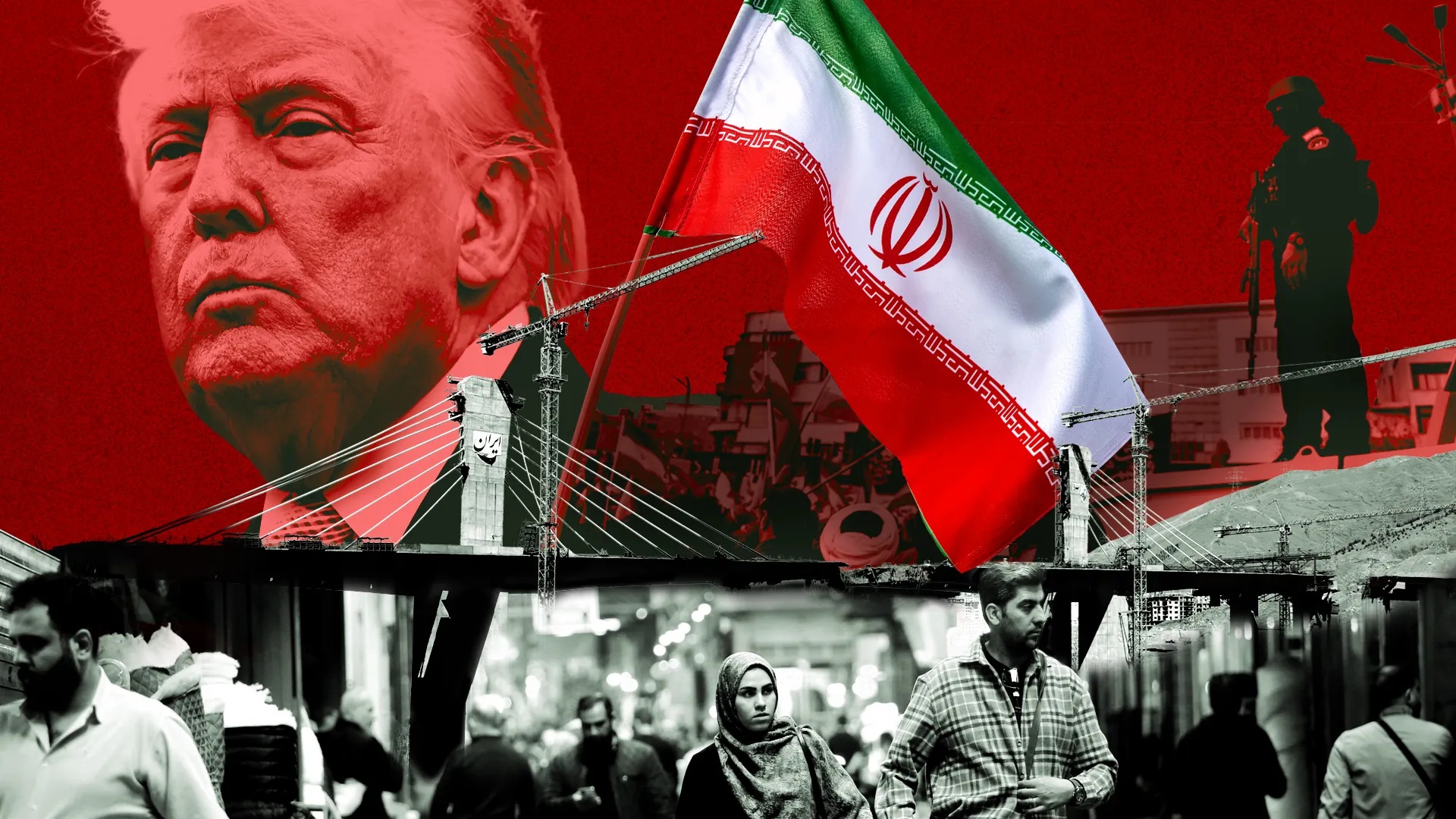
President Donald Trump has sharpened his ultimatum to Iran, declaring in a Wall Street Journal interview published Sunday that Tehran has until Tuesday evening to reopen the Strait of Hormuz — or risk American attacks that would leave the country without functioning power plants or bridges.

“If they don’t do something by Tuesday evening, they won’t have any power plants and they won’t have any bridges standing,” Trump told the Journal.

Later Sunday, the president posted on social media, without naming Iran: “Tuesday, 8:00 P.M. Eastern Time!”

In an earlier Sunday message, Trump had warned that Iran would face infrastructure attacks if the vital shipping lane remained closed by Tuesday, but he gave no specific hour.

The latest deadline comes as the U.S.-Israeli military campaign against Iran, launched on February 28, enters its sixth week with no resolution in sight. The near-total closure of the Strait of Hormuz, the narrow waterway that normally carries about one-fifth of the world’s seaborne oil and LNG, has triggered the largest oil supply shock in history, removing an estimated 12 to 15 million barrels per day and pushing crude prices near $120 a barrel.

But this is not the first time Trump has issued a stark warning to Tehran. Earlier threats have gone unheeded by Iran, and the president has so far refrained from carrying them out. That pattern has fueled growing skepticism among diplomats, analysts, and even some administration insiders that the latest deadline will produce a different outcome. Instead, many fear the conflict could simply drag on indefinitely, with each side digging in deeper.

“What if this war ends with Iran in a stronger position than when it began, the U.S. in a weaker position in the region, and Americans facing a greater threat?” asked Peter Schiff, chief economist at Euro Pacific. “To prevent that outcome, the war could drag on indefinitely. In other words, Trump may have started another forever war.”

The president is scheduled to hold a news conference in the Oval Office on Monday, following the U.S. military’s rescue of two American pilots whose aircraft were downed over Iran. The timing of the Monday appearance and the Tuesday evening deadline has heightened expectations that the administration may be preparing to escalate if Iran does not bend.

On the ground, damage from repeated missile and drone strikes has badly degraded Gulf infrastructure. Saudi Arabia, the UAE, Kuwait, and Iraq, the only OPEC+ members with significant spare capacity before the fighting began, have seen their exports slashed. Several Gulf officials have told industry contacts that even if the strait reopens immediately, restoring full production and export flows could take many months.

OPEC+ responded to the crisis on Sunday by agreeing in principle to raise output quotas by 206,000 barrels per day for May — the same modest increase it approved for April. But sources familiar with the talks described the move as largely symbolic, given the physical constraints still gripping the region.

Energy consultants called the quota adjustment “academic” while the Hormuz blockade persists.

Iran, for its part, said Saturday it would exempt Iraqi tankers from restrictions on using the strait. Shipping data on Sunday showed at least one Iraqi crude tanker had successfully transited the waterway, but few shipowners are willing to risk their vessels and crews until the security situation improves dramatically.

Trump’s increasingly blunt rhetoric, including an Easter Sunday expletive-laden post threatening “Power Plant Day, and Bridge Day, all wrapped up in one”, is believed to be a reflection of a growing frustration inside the White House that months of military pressure have not forced Tehran to yield.

Yet the absence of follow-through on earlier warnings has also raised questions about whether this latest deadline will prove any more decisive than the ones that preceded it.

For now, the global oil market remains on edge. JPMorgan warned last week that prices could spike above $150, an all-time high, if the strait stays closed into mid-May. With physical supply severely constrained and repair timelines stretching into many months, the gap between paper quotas and actual barrels on the water continues to widen.

It is not yet clear what happens next: whether Trump’s Tuesday evening deadline produces a diplomatic breakthrough, a fresh round of escalation, or simply another chapter in a lengthening conflict. What is already evident is that the war has entered a dangerous new phase where the economic pain is global.

Mark Cuban Sounds Fresh AI Risk Alarm for Corporate America’s Boardrooms as CEOs Face a Market Trap

0

Billionaire investor Mark Cuban has thrown fresh light on what may be one of the defining risks facing large public companies. His assessment borders on corporate concern about whether to dismantle legacy business models in order to become AI-native, or risk being overtaken by a new generation of AI-first challengers.

Cuban warns that for large public companies, the AI transition is fast becoming a strategic trap with no painless exit.

In a blunt assessment posted on X, the billionaire investor argued that chief executives of listed companies are caught in what he described as the “Innovator’s AI Dilemma”: dismantle legacy business models and rebuild as AI-native enterprises, or stay the course and risk being displaced by faster, leaner challengers built from the ground up around artificial intelligence.

What makes Cuban’s intervention especially significant is not merely the language but the timing. His remarks come as Wall Street is increasingly rewarding companies with credible AI transformation narratives while punishing firms seen as technologically stagnant. The result is a widening valuation divide between AI leaders and legacy incumbents, one that is beginning to influence capital allocation, M&A strategy, and executive tenure.

This is no longer a Silicon Valley debate. It is a market-wide reckoning.

“Every entrepreneur that knows how to use AI is trying to find ways to build AI native companies that completely displace incumbents,” Cuban wrote, adding that CEOs face “multiple huge” decisions if those startups gain traction and cannot be acquired.

That observation captures a broader shift in corporate competition. Unlike previous technology cycles, AI-native firms are entering markets with structurally lower costs, fewer layers of management, and dramatically shorter product-development cycles. In software, finance, healthcare, and media, startups are increasingly being built with AI at the core rather than as an add-on tool.

This raises a difficult question of how much of the existing enterprise needs to be rewritten for incumbents. Many believe the answer may be uncomfortable for many public companies.

Becoming AI-native often requires far more than deploying copilots or automating workflows. It can involve rewriting core software architecture, retraining workforces, redesigning products, and changing how revenue is generated.

That can be deeply disruptive to quarterly earnings. Cuban’s central insight is that this creates a lose-lose situation in the public market.

If management moves aggressively, short-term earnings may deteriorate under the weight of acquisitions, restructuring costs, and capital expenditure, potentially triggering a stock selloff and shareholder lawsuits. If management moves too slowly, investors may punish the company for strategic inertia as AI-native rivals gain market share.

In both scenarios, the share price comes under pressure. This is where the story becomes especially relevant for seasoned market observers. The real issue is not technology adoption alone. It is the collision between innovation cycles and public market expectations.

Listed companies live under the discipline of quarterly reporting, margin targets, and activist investor scrutiny. Radical transformation often requires sacrificing near-term profitability for long-term relevance, a trade-off that public markets do not always tolerate.

That tension is already visible in companies openly attempting AI overhauls. Amplitude, the publicly traded analytics company based in San Francisco, has become one of the clearest examples of this transition. Chief executive Spenser Skates disclosed that the company has acquired five AI startups since late 2024, elevated AI leadership internally, and deployed tools such as GitHub Copilot and Cursor across its engineering teams.

That level of transformation is capital-intensive. It also raises the stakes for investors assessing whether such spending can translate into defensible growth and margin expansion.

Cuban’s warning about lawsuits exposes another area of concern. He suggested that AI’s real impact on public companies may become visible through two waves of shareholder litigation: one against companies that “tear down” operations and hurt the stock, and another against firms that fail to adapt and allow enterprise value to erode.

This is a serious governance issue because boards may increasingly face fiduciary questions over whether they acted quickly enough, allocated capital prudently enough, or sufficiently disclosed AI-related risks to shareholders. In effect, AI is becoming not just a technology risk, but a board-level legal and governance risk.

There is also a labor and productivity dimension. Cuban has separately argued that AI’s economics remain uneven, noting that AI agents can still be expensive and unreliable at scale. In some enterprise settings, the cost of deployment can exceed $100,000 annually per high-functioning agent system.

That complicates the investment case as the question, for many incumbents, is no longer whether AI is transformative, but whether the economics of implementation justify the speed of transition. This makes Cuban’s warning more nuanced than a simple call for rapid adoption.

His message is that executives must understand the technology deeply enough to make strategic judgments, not merely outsource the issue to technology teams.

“If asking your models questions doesn’t make sense to you, you are in deep shit,” he wrote.

The bluntness aside, the implication is that AI literacy is fast becoming a core CEO competency, on par with capital allocation and risk management. The AI era may create a sharp bifurcation between companies that successfully rewire themselves for the new cycle and those that remain trapped in legacy operating models.

Asian Markets Tread Cautiously as Iran War Deadline Looms, Exposing Region’s Vulnerability to Energy Shock

0

Asian equities traded mixed on Monday as investors navigated a market increasingly dominated by geopolitical risk, oil volatility, and the prospect of a fresh escalation in the Iran war that could spill deeper into regional economies.

With several major markets, including Australia, Hong Kong, mainland China, and Taiwan, shut for public holidays, trading volumes were thin, amplifying the sensitivity of markets that remained open. Against that backdrop, every headline from Washington and Tehran carried outsized weight.

Japan’s Nikkei 225 rose 0.55% to 53,413.68, while the broader Topix ended flat at 3,644.8. South Korea’s Kospi advanced 1.36%, extending its strong run, although the Kosdaq slipped 1.5%, suggesting investors were rotating into large-cap defensives while reducing exposure to smaller growth names. India’s benchmark indices also reversed early weakness to trade higher in afternoon dealing.

The broader story, however, lies beyond the daily index moves. Markets across Asia are increasingly being forced to price a binary geopolitical outcome.

President Donald Trump’s latest ultimatum to Iran, demanding a full reopening of the Strait of Hormuz by Tuesday evening or face attacks on power plants and civilian infrastructure, has raised the risk premium across equities, commodities, and currencies. Tehran’s rejection of the demand, coupled with continued strikes on Gulf economic targets, has left investors, particularly those in Asia, bracing for another volatile stretch.

The region is the world’s largest importer of Middle Eastern crude, making it uniquely exposed to any disruption in the Strait of Hormuz, through which roughly one-fifth of global oil supply flows. That explains why even modest gains in equities should not be mistaken for confidence.

Rather, markets appear to be trading on fragile hopes of diplomacy, with reports of back-channel discussions around a possible 45-day ceasefire helping to temper immediate panic. Yet the slim odds of a deal before the Tuesday deadline continue to keep risk sentiment fragile.

“The question is whether or not a more favorable outcome can be reached without another round of exchanges that can potentially narrow the path to lower intensity conflict in the medium term,” said Homin Lin, senior macro strategist at Lombard Odier, adding that investors will be careful with trading from headline to headline.

Oil remains the key transmission channel. Although crude prices eased slightly, WTI remained above $109 per barrel and Brent near $108, levels that continue to pose inflation risks for Asia’s import-dependent economies. For markets such as Japan, South Korea, and India, this has direct implications for inflation, trade balances, and central bank policy.

The Nikkei’s advance suggests investors are still willing to buy exporters and industrial names, perhaps on expectations that any sustained energy shock may weaken the yen further and support overseas earnings.

However, this optimism remains conditional.

A further rise in oil prices would quickly begin to weigh on margins for manufacturers, airlines, logistics firms, and chemicals producers, sectors highly sensitive to imported energy costs.

South Korea’s market action offers a similarly nuanced signal. The rise in the Kospi, driven largely by heavyweight technology and industrial names, points to continued confidence in the country’s export-led large caps. But the simultaneous drop in the Kosdaq suggests more speculative domestic growth plays remain under pressure. That divergence often signals selective risk-taking rather than broad-based optimism.

Another key layer is OPEC+.

The group’s decision to raise production quotas by 206,000 barrels per day for May appears to have done little to materially calm the market, largely because war-related disruptions have constrained actual flows from parts of the Gulf. Investors appear to view the move as more symbolic than transformative.

What makes this market environment especially fragile is liquidity. With several exchanges closed for holidays, thinner volumes mean price moves can be exaggerated by relatively small trades. That raises the risk of sharper swings in equities, currencies, and oil futures as markets react headline by headline.

In effect, Asia is trading in a high-beta geopolitical regime.

The next decisive driver will likely be whether any credible diplomatic framework emerges before Tuesday’s deadline. Currently, the mixed performance across Asia’s markets captures a region caught between two competing forces: the hope of de-escalation and the growing realization that the Iran war is becoming an increasingly systemic threat to global trade, inflation, and market stability.

Inside Anthropic’s Radical Culture of Dissent, Where Staff Publicly Challenge CEO on Slack

0

At a time when many of the world’s most valuable technology companies are tightening control as they scale, Anthropic appears to be moving in the opposite direction, building a culture in which employees are encouraged to publicly challenge even the chief executive.

The unusually open internal structure was laid bare by Amol Avasare, the company’s head of growth, who said staff are actively encouraged to “just argue with Dario,” a reference to chief executive Dario Amodei, during an appearance on Lenny’s Podcast released Sunday.

Avasare described an internal Slack system that functions less like a traditional workplace messaging tool and more like an open newsroom or public research forum. Every employee, from engineers to senior executives, maintains a personal “notebook” channel visible across the company, allowing colleagues to follow projects, ideas, and disagreements in real time.

“You can go and join the Slack channel, the notebook channels of people on research, and all these other areas, and you can learn whatever you want,” Avasare said.

He added that employees are encouraged to directly challenge leadership in those channels, including the CEO himself.

In one example, Avasare recounted how an employee who took issue with a remark Amodei made during an all-hands meeting went straight to the CEO’s public Slack notebook to register the complaint.

“The person goes onto Dario’s notebook channel and just says: ‘Hey, I didn’t appreciate how you said this or that.’ And then it sparked a whole big debate,” he said. “It’s encouraged to go to leadership and disagree with them, challenge them publicly, and I think that just leads to a level of trust.”

The comments offer a revealing look inside one of the fastest-scaling companies in the artificial intelligence race. Anthropic’s growth has been extraordinary even by Silicon Valley standards. According to details shared on the same podcast, the company’s annual recurring revenue surged from about $1 billion to more than $19 billion in just 14 months, underlining the breakneck commercial adoption of its Claude models and enterprise AI tools.

That commercial momentum has been matched by investor appetite. In February, the company announced a $30 billion Series G funding round led by GIC and Coatue, pushing its valuation to roughly $380 billion and cementing its position among the world’s most valuable private technology firms.

What makes Anthropic’s internal culture particularly notable is the tension between hypergrowth and openness. Companies at this valuation level typically become more layered, more process-driven, and more risk-averse. Anthropic, at least by Avasare’s account, is trying to preserve the intellectual friction more commonly associated with academic labs and early-stage startups.

Anthropic was founded by former OpenAI researchers and has long positioned itself as a research-first company focused on AI safety and model alignment. In such environments, institutional disagreement is often seen as a safeguard rather than a threat. It is believed that encouraging staff to contest assumptions, especially those coming from the top, can help reduce blind spots in research, product design, and governance.

The approach also mirrors a broader shift among elite technology firms that increasingly view flattened hierarchies as a competitive advantage. Leaders such as Brian Chesky at Airbnb and Elon Musk at Tesla have previously championed direct communication channels that bypass traditional reporting lines. Musk famously wrote to employees that communication should travel “via the shortest path necessary to get the job done, not through the chain of command.”

But in an industry where product cycles are measured in weeks, and strategic missteps can alter market leadership, a culture that surfaces dissent early may be as much a business tool as a management philosophy.

The deeper question is whether such openness can survive scale. As headcount expands and commercial pressures intensify, preserving a culture of visible internal debate becomes harder. Yet if Anthropic succeeds, many believe it may offer a model for how frontier AI firms can remain intellectually agile even as they become corporate giants.

Beijing Rewrites E-Commerce Playbook as U.S. Tariff Shock Pushes China Toward Europe and New Markets

0

China has moved to tighten the regulatory framework around its vast e-commerce sector, issuing fresh guidance that appears aimed as much at reassuring overseas trading partners as at steering domestic growth.

The latest overhaul is emerging as part of a broader strategic recalibration as China grapples with the fallout from worsening trade tensions with the United States and intensifies its search for alternative markets.

The guidance issued Monday by several Chinese ministries and regulators comes at a delicate moment for the world’s second-largest economy. With U.S. tariff barriers continuing to squeeze Chinese exports and cross-border online sellers facing higher costs in the American market, Beijing is increasingly looking to Europe and other developed economies to absorb part of the trade flow once destined for the U.S.

That wider context makes the timing of the announcement especially telling.

Only weeks earlier, a delegation of European Union lawmakers visited Beijing for the first time in eight years, pressing Chinese officials over a flood of unsafe consumer products entering the bloc and long-running complaints about limited access for European businesses inside China.

Against that backdrop, China’s new policy framework appears to serve two purposes: to reassure foreign markets that it is willing to tighten oversight, while simultaneously opening fresh channels for Chinese goods and services to move more smoothly across borders.

“We will encourage e-commerce enterprises to establish direct procurement bases overseas, expand imports of high-quality and distinctive products and create an e-commerce ‘express lane’ for global goods to enter the Chinese market,” the statement from Chinese ministries said.

The guidance is largely tied to a push to better align domestic e-commerce development with international markets. Officials said they would establish pilot zones for cross-border e-commerce, set new standards and rules, and support platforms seeking expansion overseas. The plan also includes direct procurement bases abroad and an “express lane” for foreign goods entering China.

This is where the geopolitical and commercial calculations intersect. For much of the past decade, the United States served as a critical destination for Chinese online retailers, particularly low-cost platforms that built their business models around small-parcel exemptions and ultra-cheap logistics.

However, successive rounds of U.S. tariff actions and stricter customs treatment of Chinese shipments have sharply altered that landscape. The erosion of duty-free access for small parcels and punitive tariffs on a wide range of Chinese goods have made the American market materially less attractive. In 2025, the Trump administration ended the de minimis exemption, a longtime U.S. trade rule that has allowed goods valued under US$800 to enter the country without paying duties or taxes, and with expedited clearance. A lot of Chinese companies depended on the de minimis for export to the U.S. market.

Against that backdrop, Beijing now needs new outlets for its export-heavy digital retail ecosystem, and Europe has become the most obvious alternative.

While Brussels has tightened scrutiny, it has also undertaken reforms that, paradoxically, create a more formal and predictable route for Chinese goods and digital services. The EU’s customs overhaul is designed to crack down on unsafe products and low-value parcel abuse, but it also amounts to an institutional recognition that Chinese platforms such as Temu, Shein, and AliExpress are now deeply embedded in the European consumer market.

That predictability has become viable for Beijing. Rather than facing the volatility of abrupt U.S. tariff escalation, China may see Europe’s rules-based amendments as something it can adapt to, even if the compliance burden is higher. In effect, Brussels is not closing the door outright; it is rewriting the terms of entry.

Beijing’s response suggests it is willing to make corresponding adjustments. By emphasizing standards, fairness, and overseas procurement networks, the new rules are aimed at demonstrating that Chinese exporters can operate within stricter foreign regulatory regimes. It is also a signal to European policymakers that China is prepared to make limited concessions in order to preserve market access.

Analysts say this is less about resolving disputes than stabilizing trade flows. Chen Bo of the National University of Singapore described the move as a constructive step toward easing China-EU e-commerce tensions, even if it falls short of a comprehensive settlement.

“(This policy) actually shows the Chinese commitment to promote its e-commerce in the world, because the EU concern is quite representative. It is also the concerns from other leading or developed economies,” Chen added.

With Washington’s tariff regime increasingly looking like a long-term feature of global trade rather than a temporary measure, Beijing is recalibrating its export architecture. Europe, parts of Southeast Asia, the Middle East, and emerging digital markets are now becoming central to that strategy.

This is not merely about online shopping platforms. It is about China attempting to preserve growth in a slowing economy by redirecting one of its most dynamic sectors, cross-border e-commerce, toward markets where the political climate, though cautious, remains more negotiable than in the United States.