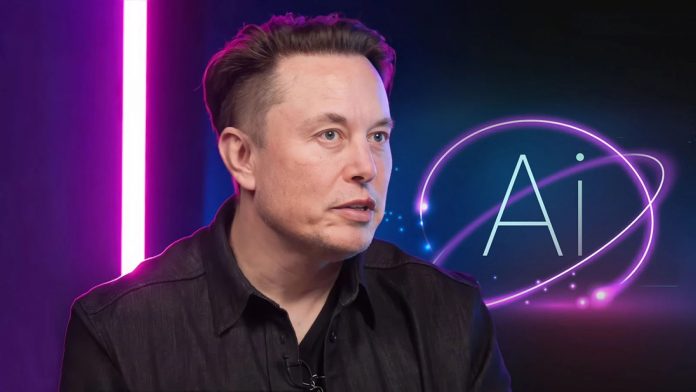
Elon Musk has effectively handed Intel a potential lifeline in its effort to become a credible contract chip manufacturer, tying the company’s unproven 14A process to one of the most ambitious and uncertain industrial bets currently in development.
The plan, outlined by Musk, would see Tesla rely on Intel’s next-generation node for chips produced at “Terafab,” a proposed AI-focused manufacturing complex in Austin. If executed, the arrangement would give Intel its first marquee external customer for a process technology that sits at the core of its turnaround strategy. The company has struggled to gain traction in foundry services, where TSMC maintains a dominant position.
Ben Bajarin, head of technology consultancy Creative Strategies, said that Intel’s 14A technology could “turn out to be a bigger deal for Intel than folks thought.”
“It’s important to have multiple partners ?as early design partners to help clean the pipe and work through needed learnings at the leading ?edge. They will definitely ?have scale, so a great first non-Intel customer,” Bajarin said.
At face value, the arrangement addresses a structural weakness in Intel’s turnaround plan. The company’s pivot into contract manufacturing has been constrained not by rhetoric but by the absence of large external clients willing to commit to unproven nodes. In that context, Musk’s endorsement carries disproportionate weight. It provides early validation for a process technology that must compete directly with the deeply entrenched ecosystem of TSMC, whose dominance rests not only on technical leadership but on long-standing relationships with high-volume customers.
Musk indicated that the move is good news for Intel shareholders.
“Given that by the time Terafab scales up, 14A will be probably fairly mature or ready for prime ?time,” Musk said. “14A seems like the ?right move, and we have ?a great relationship with Intel,” he said.
Intel’s leadership has framed the foundry push in existential terms. Chief executive Lip-Bu Tan has made clear that failure to attract outside demand could force a retreat from the business. Musk’s Terafab proposal, even in its early and loosely defined state, begins to alter that narrative. It gives Intel a development partner at the leading edge, allowing it to refine yields, test design flows, and demonstrate that its roadmap can attract non-captive demand.
Yet the strength of that signal is inseparable from the credibility of the Terafab project itself — and that is where uncertainty dominates.
Musk’s vision stretches well beyond a conventional chip fabrication facility. Terafab is positioned as a vertically integrated compute platform spanning electric vehicles, humanoid robotics, and what Musk has described as future space-based data centers, an ambition tied to SpaceX. The scale is unprecedented. Musk has suggested the facility could eventually deliver one terawatt of annual compute capacity, a figure that would exceed the current aggregate output of U.S. data infrastructure.
That projection, however, exposes a widening gap between ambition and feasibility. Industry estimates place the capital expenditure required to support such capacity in the range of $5 trillion to $13 trillion. For context, that would eclipse the cumulative global spending on semiconductor fabrication over decades. Even hyperscale cloud providers, including Amazon, Microsoft, and Google, which collectively dominate AI infrastructure investment, operate within far more incremental expansion cycles.
The absence of clarity around Terafab’s financing structure raises additional questions. It remains unclear whether Tesla, SpaceX, external partners, or some hybrid arrangement would bear the cost of fabrication equipment, which alone can run into tens of billions per facility. Nor has Musk detailed who would operate the fabs — a non-trivial issue in an industry where process expertise and yield optimization determine profitability.
The move is the latest example of Tesla’s push to incorporate vertically integrated compute into automotive manufacturing. The company has increasingly positioned itself as an AI and robotics player, with custom silicon at the core of its autonomy and training stack. Bringing chip production closer to its ecosystem could, in theory, reduce dependency on third-party suppliers and tighten control over performance optimization.
But that logic collides with capital intensity. Tesla’s decision to sharply increase spending underscores the scale of the bet, and investors have shown caution. The muted reaction in its share price suggests persistent concerns about execution discipline, particularly given Musk’s history of aggressive timelines that have often required revision.
The calculus is more straightforward for Intel, though not without risk. Even limited engagement with Tesla provides tangible benefits. Advanced process nodes require early adopters willing to co-develop designs and absorb initial inefficiencies. Tesla’s demand, spanning autonomous driving chips, robotics processors, and AI accelerators, could supply meaningful, if not industry-defining, wafer volumes.
Analysts note that Tesla’s chip consumption does not yet approach that of Nvidia or Apple, whose scale underpins the economics of leading-edge foundries. However, it is sufficiently large to matter in the context of Intel’s current position. More importantly, it signals to the market that Intel’s technology is attracting interest beyond its internal product lines — a prerequisite for winning additional clients.
There is also a geopolitical layer to the partnership. As governments push to localize semiconductor supply chains, a U.S.-based collaboration between Intel and Tesla aligns with broader industrial policy objectives. Washington has already committed significant subsidies to domestic chip production, and projects that promise to anchor advanced manufacturing onshore are likely to attract policy support, even if indirectly.
Still, the timeline remains opaque. By the time Terafab could realistically scale, Intel’s 14A process would need to be not just viable, but competitive on performance, power efficiency, and cost — metrics where TSMC has historically set the benchmark. Any slippage in Intel’s roadmap would compound the already considerable uncertainty surrounding Tesla’s plans.
In practical terms, Musk’s announcement does not resolve Intel’s foundry challenge. It only reframes it. The company now has a high-profile prospective partner, but one whose own project carries execution risk at a scale rarely seen in industrial history.
Like this:
Like Loading...