DD
MM
YYYY

PAGES

DD
MM
YYYY

spot_img

PAGES

Home Blog Page 2

“Google is Still A Huge Threat” – OpenAI CEO Sam Altman

0

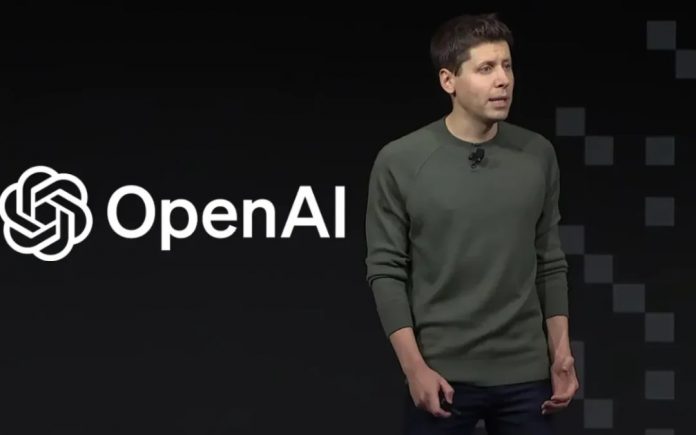
OpenAI CEO Sam Altman has reignited debate in the global tech space after acknowledging that Google is still a major threat and remains one of the most powerful competitive forces in artificial intelligence.

In a recent interview with Alex Kantrowitz, host of big technology podcast, Altman noted that despite OpenAI’s rapid growth and the widespread adoption of tools like ChatGPT, Google’s deep resources, research strength, and dominance in search and data give it a lasting edge in shaping the future of AI.

Three years ago, Google sounded a “Code Red” over ChatGPT following its launch and widespread adoption with CEO Sundar Pichai warning it could threaten the future of Search. Now, in an interesting twist of events, Altman is sounding that same alarm.

Earlier this month, the OpenAI CEO declared an internal “code red” following Google’s release of Gemini 3, a move that underscores the growing intensity of competition in the global artificial intelligence race.

In an internal memo to employees, Altman said he was declaring a “Code Red” to marshal more resources toward improving ChatGPT as competitive pressure from Google and other AI rivals intensifies. As part of the shift, he said, OpenAI will delay other initiatives, including its advertising plans. “We are at a critical time for ChatGPT,” Altman wrote.

Recall that last month, Google ushered in a new era with the launch of Gemini 3, an AI model that the tech giant claims is its most intelligent yet. This comes two years after the search giant launched the first version of Gemini to compete against OpenAI’s GPT models.

The company says Gemini 3 represents a new level of reasoning, context awareness, and multimodal understanding, the kind of intelligence that actually plans and builds responses, and adapts as it goes.

In line with the launch of Gemini 3, Google recently rolled out Gemini 3 flash, its latest model with frontier intelligence built for speed that helps everyone learn, build, and plan anything faster. With this release, the company announced that it is making Gemini 3’s next-generation intelligence accessible to everyone across Google products.

Amid Google’s Gemini 3 comeback and an increasingly fierce frontier AI model releases, Sung Cho, Managing Director at Goldman Sachs Asset Management says Google has taken the lead in the eyes of investors over OpenAI.

The tech giant is taking AI and putting it into all its products such as Search, Gmail, Maps, etc. This strategy marks a significant shift from AI being a standalone feature to becoming the backbone of how Google’s products function and interact with users.

At the center of this transformation is Gemini, Google’s flagship AI model, which now powers experiences across consumer and enterprise tools. Rather than simply responding to commands, these AI-powered products are designed to understand context, anticipate user needs, and assist with complex tasks in a more conversational and intuitive way

Interestingly, Altman also made a shocking revelation on the “Big Technology Podcast” that OpenAI has entered emergency mode multiple times in response to competitive threats and expects to continue doing so as rivals close in.

“It’s good to be paranoid and act quickly when a potential competitive threat emerges,” he said. “My guess is we’ll be doing these once maybe twice a year for a long time, and that’s part of really just making sure that we win in our space,” he added.

He admitted that during the launch of DeepSeek, there was a declaration of code red back then. Released on 20 January 2025, DeepSeek-R1 surpassed ChatGPT as the most downloaded freewareapp on the iOS App Store in the United States by 27 January.

DeepSeek’s competitive performance at relatively minimal cost had been recognized as potentially challenging the global dominance of American AI models.

OpenAI CEO Sam Altman has acknowledged that staying ahead in the fast-moving artificial intelligence race will require constant innovation, revealing that OpenAI will be consistently rolling out updates to ChatGPT to maintain its competitive edge.

According to him, the pace of progress in AI has accelerated dramatically, with major technology companies rapidly improving their models and integrating AI deeply into their products. In response, OpenAI’s strategy is no longer built around infrequent, massive releases alone, but on continuous improvements that enhance ChatGPT’s capabilities, reliability, and usefulness over time.

This comes as ChatGPT is reported to have recently hit a new milestone of $3 billion in worldwide consumer spending on mobile as of this week, according to estimates from app intelligence provider Appfigures. This figure represents the total spending on iOS and Android devices since the app’s launch in May 2023, when it first arrived, then only on iOS.

In addition, ChatGPT on Wednesday launched its own app store of sorts, which the company suggests will be monetized in some way in the future, its blog post noted.

Outlook

Looking ahead, the global AI landscape is poised to become even more competitive and fast-moving, with OpenAI and Google emerging as the two dominant forces shaping the next phase of artificial intelligence.

Altman’s repeated “code red” declarations signal that the era of comfortable leads is over; leadership in AI will now depend on speed, scale, and relentless iteration.

For OpenAI, the outlook centers on continuous innovation. By committing to frequent ChatGPT updates and temporarily shelving non-core initiatives like advertising, the company is clearly prioritizing product excellence and user experience.


OpenAI Introduces ChatGPT App Store Amid Rapid Enterprise Expansion

0

OpenAI has announced that app developers can now submit their applications for review and potential publication inside ChatGPT, marking a major step toward building a broader in-app ecosystem.

The company revealed on Wednesday that it has introduced a new app directory within ChatGPT’s tools menu, a feature that has quickly been described by users as an “app store.”

This development follows OpenAI’s October announcement that third-party apps would be integrated into its chatbot, a move aimed at significantly expanding what users can do within ChatGPT.

At the time, major platforms such as Expedia, Spotify, Zillow, and Canva confirmed integrations that allow users to access their services directly from ChatGPT conversations. With the latest update, OpenAI is now opening the platform to a wider range of developers.

According to the company, apps enhance ChatGPT conversations by adding new context and enabling users to take real-world actions, such as ordering groceries, turning outlines into slide decks, or searching for apartments all without leaving the chat interface.

OpenAI explained that its Apps SDK, which remains in beta, provides developers with tools to build new experiences for ChatGPT users. Once ready, developers can submit their apps through the OpenAI Developer platform and track their approval status. The company added that a number of approved apps are expected to begin launching within ChatGPT over the coming year.

This move represents a significant push by OpenAI to deepen engagement within ChatGPT, giving users more reasons to stay on the platform while encouraging developers to build directly into its ecosystem.

Beyond apps, OpenAI also shared strong enterprise growth figures in its State of Enterprise report. The company disclosed that it now serves more than 7 million ChatGPT workplace seats, with ChatGPT Enterprise seats growing by approximately nine times year-over-year.

Since November 2024, weekly enterprise messages have increased roughly eightfold, while the average worker is sending 30% more messages. This growth, OpenAI noted, reflects both more frequent usage and deeper, more intensive use of ChatGPT at work.

Over the past year, structured workflows such as Projects and Custom GPTs have seen a 19× year-to-date increase, signaling a shift from casual experimentation to integrated and repeatable business processes.

Survey data also highlighted productivity gains. Seventy-five percent of workers reported that AI use at work has improved either the speed or quality of their output. On average, ChatGPT enterprise users estimate they save between 40 and 60 minutes per active workday, with data science, engineering, and communications professionals saving as much as 60 to 80 minutes daily.

Coding-related usage has also expanded significantly. OpenAI reported that coding messages have increased across all job functions, and outside of engineering, IT, and research roles, coding-related messages have grown by an average of 36% over the past six months.

While early adoption of ChatGPT Enterprise was largely U.S.-based, OpenAI noted that international growth is accelerating rapidly. The United States, Germany, and Japan currently rank among the most active markets by message volume, while the United Kingdom and Germany are now among the largest enterprise markets outside the U.S. by number of customers.

Together, the expansion of third-party apps and surging enterprise adoption underscore OpenAI’s ambition to position ChatGPT as both a consumer platform and a core productivity tool for businesses worldwide.

Impact of Rising U.S. Unemployment to 4.6% on Wage Growth

0

The U.S. Bureau of Labor Statistics (BLS) released the delayed November 2025 Employment Situation report on December 16, 2025, showing the seasonally adjusted unemployment rate rose to 4.6% — up from 4.4% in September 2025.

This is the highest level since September 2021 when it was around 4.7-4.8%. +64,000 jobs added in November, but the economy lost 105,000 jobs in October largely due to federal government cuts.

A 43-day federal government shutdown disrupted data collection. No unemployment rate was calculated for October, and November figures have higher-than-usual statistical uncertainty e.g., larger standard errors due to lower response rates and methodological adjustments.

Wage growth slowed average hourly earnings up 3.5% year-over-year, the smallest since May 2021, and disparities persisted (e.g., Black workers’ unemployment at 8.3%). The labor market has shown signs of cooling throughout 2025, with little net job growth since April.

Economists note the 4.6% rate remains low historically but signals softening, potentially influenced by reduced immigration, government downsizing, and slower hiring. The next report is due January 9, 2026.

The rise in the U.S. unemployment rate to 4.6% in November 2025—the highest since September 2021—coincided with a notable slowdown in wage growth, aligning with basic economic theory: A softening labor market reduces workers’ bargaining power, easing pressure on employers to raise wages.

This slowdown occurred amid weak job growth, +64,000 in November after -105,000 in October and cooling hiring. In a tight labor market, employers compete for workers, driving faster wage increases to attract and retain talent.

As unemployment rises and job opportunities dwindle, workers have less leverage to demand higher pay, leading to moderated wage gains. Economists widely noted this dynamic in reactions to the report: “Slowing job growth is curbing wage growth”, boosting the fight against inflation but risking weaker consumer spending.

Slower wage growth helps cool inflationary pressures, as wages are a key input cost for businesses. Real wage gains adjusted for inflation are minimal—November’s 3.5% YoY was only ~0.5% above recent inflation readings—limiting purchasing power improvements.

Wage growth remains above pre-pandemic norms but has trended down throughout 2025 as the labor market cooled from post-pandemic highs. As previously noted, year-over-year wage growth slowed to 3.5% smallest since May 2021, reducing workers’ bargaining power.

This helps cool inflation, a positive for the Fed’s 2% target by lowering cost pressures on businesses, but it limits real income gains amid persistent price pressures from tariffs.

Consumer spending, accounts for ~70% of GDP. Higher unemployment erodes confidence, reduces discretionary spending especially for lower/middle-income households, and polarizes demand—affluent consumers thrive while others cut back. Retail sales were flat in recent months, risking slower growth.

Little net job creation since April points to stagnation. Reduced labor force growth from immigration curbs and boomer retirements means fewer jobs are needed to stabilize unemployment, but persistent weakness could tip into recession if hiring “cracks” further.

Sectoral effects gains concentrated in health care +46,000 and construction; losses in government -168,000 over Oct-Nov, transportation, and most private sectors. Long-term unemployment rose, and involuntary part-time work increased.

The Fed has cut rates three times in late 2025 to 3.50%-3.75%, citing labor market risks. This report reinforces downside risks to employment, but data distortions from the 43-day government shutdown led Chair Powell to urge caution. Analysts expect a pause in cuts to assess impacts, with potential for more easing if unemployment rises further toward 5%.

U.S. Inflation Set to Hit 18-Month High as Tariffs Bite, Data Gaps Cloud Outlook

0

U.S. consumer prices are expected to have risen at their fastest pace in a year and a half in November, a development that would reinforce growing concerns about affordability pressures facing American households and keep the Federal Reserve cautious on further interest rate cuts.

Economists polled by Reuters estimate that the Consumer Price Index (CPI) climbed 3.1% year-on-year in November, up from 3.0% in September and the strongest increase since May 2024. If confirmed, the data would signal that the slowdown in inflation seen earlier in the year has lost momentum, even as policymakers had hoped price pressures were easing sustainably.

The November figures, however, come with unusual complications. The Labor Department’s Bureau of Labor Statistics (BLS) will publish only year-on-year inflation rates when it releases the delayed CPI report on Tuesday, after a 43-day government shutdown disrupted data collection. Month-to-month price changes will not be available, and the October CPI report was canceled entirely because prices could not be collected retroactively.

The shutdown has already made history, with the government failing to publish an unemployment rate for October for the first time ever. While the BLS said it will release some additional price indexes that do not rely on in-person data collection, it cautioned that “the number of publishable indexes will be small,” and acknowledged it “cannot provide specific guidance to data users for navigating the missing October observations.”

As a result, economists are urging caution in interpreting the data, advising analysts and investors to focus on year-on-year trends or two-month changes rather than short-term movements.

“Downward inflation progress has stalled,” said Andy Schneider, senior U.S. economist at BNP Paribas. “This largely reflects companies in goods-producing sectors passing tariff costs through into prices.”

Tariffs imposed under President Donald Trump’s trade policy have increasingly become a central factor in the inflation narrative. While the impact was initially muted as businesses ran down inventories accumulated before the duties took effect or absorbed some of the costs themselves, economists say that strategy is nearing its limits.

“Retailers are in the middle of the process of pushing tariffs onto consumers, and had passed on about 40% of the total by September,” said Samuel Tombs, chief U.S. economist at Pantheon Macroeconomics. “We expect that proportion to climb gradually to 70% by March and then stabilize.”

That shift is expected to weigh most heavily on lower-income households, who typically have little savings to cushion higher prices and have seen slower wage growth compared with higher earners. Economists say this dynamic is amplifying the political sensitivity of inflation, which remains one of the most visible economic issues for voters.

Trump, who won the 2024 presidential election after campaigning on promises to rein in inflation, has in recent weeks offered mixed messaging, alternately dismissing affordability concerns, blaming his predecessor Joe Biden, and pledging that Americans will begin to see the benefits of his policies next year.

The November CPI could still come in below expectations, some economists caution, because the delayed data collection may have captured a period later in the month when retailers rolled out holiday discounts. That effect could show up in categories such as furniture and recreational goods.

“November CPI this year could capture a period that more heavily reflects holiday season discounts than a usual November,” said Veronica Clark, an economist at Citigroup. “If there is some abnormal weakness in November goods prices, there could be a larger rebound in these components in December.”

Core inflation, which strips out volatile food and energy prices, is expected to rise 3.0% year-on-year in November, matching September’s pace. Higher rents and goods prices are likely to keep core inflation elevated, though declines in airfares and hotel and motel rates could provide some offset.

Federal Reserve officials remain focused on inflation measures tied to the Personal Consumption Expenditures (PCE) index, which underpins the central bank’s 2% target. Those figures are also facing delays. October’s Producer Price Index report was canceled, November’s PPI is now due in mid-January, and the government has yet to announce a new release date for November’s PCE data. Both headline and core PCE inflation were well above target in September.

Against this backdrop, the Fed last week cut its benchmark interest rate by 25 basis points to a range of 3.50% to 3.75%, but signaled that further reductions are unlikely in the near term. Policymakers say they need clearer evidence that inflation is moving decisively lower and that the labor market remains on solid footing.

Fed Chair Jerome Powell was blunt about the source of recent price pressures, telling reporters that “it’s really tariffs that are causing most of the inflation overshoot.”

Some relief could eventually come from the White House’s decision to roll back duties on a limited number of goods, including beef, bananas, and coffee. Economists warn, however, that price reductions tend to lag policy changes and may not be immediately visible to consumers.

“With the tendency for firms to revisit pricing decisions at the start of the calendar year, we see the potential for another burst of goods inflation in the first quarter,” said Sara House, senior economist at Wells Fargo.

Currently, the November inflation report is expected to confirm what many households already feel: price pressures remain stubborn, policy uncertainty is high, and the path back to stable, broadly affordable prices is proving slower and more uneven than hoped.

AI Giants Go All-In on India With Free Plans as Race for Users and Data Intensifies

0

OpenAI, Google, and Perplexity are escalating an aggressive push into India, rolling out free and heavily discounted artificial intelligence services as competition for users, data, and long-term dominance intensifies.

What began as a race for scale is now also shaped by geopolitics, with executives and analysts pointing to the renewed tariff war between Washington and Beijing as a key factor accelerating the pivot toward India.

India has become the most strategically important consumer market for AI deployment. It is the world’s most populous country, the second-largest smartphone market with about 730 million devices, and one of the cheapest places to consume mobile data.

According to Reuters, Indians use an average of 21 gigabytes per month, paying about 9.2 cents per gigabyte, among the lowest rates globally. That combination of scale, affordability, and constant connectivity has made India a natural testing ground for mass-market AI adoption.

In recent months, however, India’s appeal has grown beyond demographics. Executives and analysts say American technology companies are moving faster into the country following the latest escalation in trade tensions between the United States and China, triggered earlier this year by new tariffs imposed by President Donald Trump’s administration. The renewed standoff has deepened uncertainty for U.S. firms operating in or selling to China, particularly in sensitive areas such as artificial intelligence, data, and advanced computing.

Against that backdrop, India is increasingly viewed as a safer, more open alternative for growth. It offers a vast consumer base, fewer restrictions on foreign digital services, and a government that has signaled openness to becoming a global technology hub, even as it tightens oversight in select areas.

The shift is visible in how aggressively AI companies are subsidizing access.

In November, Google began offering its Gemini AI Pro subscription — normally priced at around $400 — free for 18 months to roughly 500 million subscribers of Reliance Jio, India’s largest telecom operator. The move instantly put one of Google’s most advanced consumer AI models into the hands of a massive audience. Last week, Google expanded the push by including India among the countries eligible for its heavily discounted “AI Plus” package.

OpenAI has matched that strategy. The company made its ChatGPT Go plan free for a year in India, even though the same plan carries fees in more than 100 other countries and previously cost about $54 locally. The Go plan offers extended usage above the basic tier, and the free offer is available only in India.

Perplexity, the AI-powered search and research startup, has also joined the scramble. It made its Pro plan — priced globally at $200 a year — free for a year for users of Indian telecom operator Airtel, giving them unlimited access to its most advanced tools.

Early data shows a sharp surge in adoption. According to figures from market intelligence firm Sensor Tower compiled for Reuters, daily active users of ChatGPT in India jumped 607% year on year to 73 million as of last week, more than double the number in the United States. Gemini’s daily users in India rose 15% after the Reliance Jio offer to reach about 17 million, compared with roughly 3 million in the U.S.

India is now the largest market globally by daily users for both ChatGPT and Gemini, Sensor Tower said. Perplexity’s growth has been even more pronounced: India now accounts for more than a third of its global daily active users, up from just 7% last year.

Analysts say the immediate goal is scale, but the longer-term objective is data. India’s linguistic complexity — dozens of major languages, hundreds of dialects, and widespread code-switching — offers training material that remains underrepresented in existing AI datasets. Models trained largely on Western and Chinese data often struggle with such patterns.

Five AI analysts told Reuters that large-scale Indian usage provides a rare opportunity to refine AI systems on real-world multilingual behavior, informal speech, and region-specific context. That training is seen as vital for building models that can operate globally, especially as access to Chinese data becomes more constrained for U.S. firms amid the trade conflict.

“India helps fill structural gaps in AI training data,” said Sagar Vishnoi, co-founder of AI think tank Future Shift Labs. “The way users mix languages and interact with technology here gives models exposure they simply don’t get elsewhere.”

OpenAI’s India executive, Pragya Misra, has framed the free rollout as part of an “India-first commitment,” saying the aim is to make AI tools more accessible. Analysts note that the timing also aligns with a broader recalibration by U.S. tech firms as China becomes a more complex and politically sensitive market.

The strategy echoes earlier successes in India’s digital economy. Reliance Industries, led by billionaire Mukesh Ambani, transformed the telecom sector in 2016 by offering months of free data and voice services, rapidly building a user base that now exceeds 500 million. Similar tactics were later used in digital media, including free cricket streaming, to lock in audiences before monetization.

Usage patterns suggest Indian users are engaging deeply with AI tools. Sensor Tower data shows that 46% of ChatGPT’s monthly users in India opened the app daily in November, compared with 20% for Perplexity and 14% for Gemini.

At the same time, concerns about data use are growing, with some users reportedly opting out of sharing their data for AI training where possible, aware that free services often come with trade-offs.