DD
MM
YYYY

PAGES

DD
MM
YYYY

spot_img

PAGES

Home Blog Page 2

How VIP Holders Can Unlock 9-Hour Early Access Ahead of BlockDAG’s February 16 Launch!

0

Picture the grand opening of the decade’s most anticipated store. The line stretches around the block, excitement buzzes through the crowd, and people check their watches in nervous anticipation. Everyone knows that what waits inside could change their financial future. Then a sleek car arrives at the side entrance. A velvet rope lifts, and a select few walk straight in, holding a special pass that grants instant access.

That same moment is happening in the world of cryptocurrency with BlockDAG. The presale is officially closed, and $450 million has been secured, marking a major milestone for early participants.

For those who already hold tokens, one final chance remains to gain the ultimate advantage. This opportunity is not about buying more; it is about deciding how and when you claim. BlockDAG (BDAG) has opened an exclusive window offering Access Packs, allowing existing investors to skip the February 16 lines and claim their tokens hours ahead of the crowd.

Why Getting Ahead Matters

To see why this upgrade is so powerful, consider what is about to unfold. BlockDAG isn’t just another blockchain newcomer; it is a hybrid powerhouse. The network merges the rapid transaction capabilities of a Directed Acyclic Graph (DAG) with the robust protection of Proof-of-Work (PoW). This combination lets the system process over 10,000 transactions per second with unparalleled efficiency.

Because of this groundbreaking technology, experts are watching the $0.05 listing price with intense interest. Market analysts anticipate a surge of trading activity from the moment the network launches.

On that day, tens of thousands of users will be racing to claim tokens at the same instant. But Access Pack holders will be far ahead of that surge. Their tokens will be delivered to their wallets hours before the public release. Instead of queuing with the crowd, they start their race early on February 16, positioned perfectly for the first wave of trading action.

Choosing the Perfect Head Start

BlockDAG has launched a carefully tiered lineup of Access Packs, allowing current holders to choose precisely when they join the market on launch day. Each option is designed to fit different trading styles and risk levels, putting control directly into investors’ hands.

For those focused purely on early claiming, the Standalone Access packs provide upgraded delivery times. The Early Access pack at $99 delivers tokens to wallets 3 hours early, offering a comfortable headway. The Priority Access pack at $199 doubles that benefit, giving a 6-hour advantage before the market opens.

And for the traders who value speed above all, the Elite Access pack at $249 delivers the ultimate gain with a full 9-hour head start. That time difference is substantial. While the market counts down to launch, Elite Access holders are already settled, their tokens secured well before the first public claim.
Power Moves for Serious Investors

For holders looking to elevate beyond early access and accelerate their rewards, BlockDAG’s professional-tier bundles deliver broader financial impact. These packages blend time advantages with bonus unlock enhancements and exclusive community benefits designed for sustained gains.

The Launch Essentials pack at $999 combines 6-hour early access with permanent membership to the BlockDAG Insider Room, providing ongoing insights and early information.

The Elite Trader Pack at $2,999 builds on the 9-hour Elite Access but adds a crucial upgrade through the Accelerated Bonus Unlock, releasing bonus tokens months earlier than the default schedule. Finally, the Genesis Max Pack at $4,999 includes the full 9-hour advantage, Insider Room entry, and a condensed 6-month unlock structure. Its added layer, the Genesis Protection Program, provides enhanced account security, making it the complete solution for high-level investors who want speed, safety, and strategic control.

The Calm of Control

Beyond the financial strategy lies something more subtle but equally valuable: peace of mind. Launch days often come with excitement, but also anxiety, as thousands compete to claim and trade in real time. The Access Pack holder avoids that tension entirely.

Instead of frantic clicking and refreshing browsers on February 16, these holders sit comfortably with every token already confirmed. Their wallets are filled, their strategies are ready, and their attention is focused on market movements, not transactions.


This calm confidence feels like stepping into a premium suite while the game plays out below. It’s about command, comfort, and clarity. It’s knowing that you entered the race before anyone else realized the start signal had even sounded.

Key Points

You made the right decision by getting into BlockDAG early. The presale is complete, the $450 million milestone is achieved, and your tokens are prepared for release. But great results are built on timing, and February 16 will test every trader’s readiness. When thousands rush to claim at once, hesitation can mean a missed opportunity. There’s no reason to compete when you can already be ahead.

These Access Packs give you the power to turn launch day into a moment of control. A 3-hour or 9-hour lead removes the stress and puts strategy first. The tokens are already earned. What happens next is entirely up to you.

Website: https://blockdag.network

Telegram: https://t.me/blockDAGnetworkOfficial

Discord: https://discord.gg/Q7BxghMVyu

Polymarket is Launching New York City’s First Free Grocery Store 

0

Polymarket, the crypto-based prediction market platform that it’s launching “The Polymarket,” billed as New York City’s first free grocery store.

This is a limited-time pop-up initiative, not a permanent store. Grand opening on Thursday, February 12, 2026, at noon ET. It will run for about 5 days through Sunday, February 15, based on reports.

A physical storefront in NYC where they’ve signed a lease exact address hasn’t been publicly announced yet in the sources. Fully stocked with groceries (fresh produce, essentials, etc.), completely free—no purchase required, no sign-ups, open to all New Yorkers.

Alongside the store, Polymarket donated $1 million to Food Bank For New York City to support efforts against food insecurity across the five boroughs. The store appears to be in partnership or stocked in collaboration with the Food Bank.

This comes amid ongoing discussions around food prices and affordability in NYC including Mayor Zohran Mamdani’s past proposals for city-owned grocery stores, which Polymarket has previously run prediction markets on with low odds of happening soon.

It follows a similar but smaller-scale stunt by competitor Kalshi, which offered up to $50 in free groceries at an East Village market on February 2-3, drawing long lines. This seems to be a mix of charitable effort, community support, and clever marketing/PR for Polymarket—taking their “free markets” ethos offline in a very literal way.

This is a high-impact PR move in a competitive prediction markets space. It follows Kalshi’s smaller-scale $50 grocery giveaway, escalating into a full “free store” pop-up. By leasing a physical space, stocking it fully, and committing to ~5 days of free access with no strings attached, Polymarket differentiates itself dramatically.

It ties directly into their “free markets” branding while going offline and tangible. The $1 million donation to Food Bank For NYC amplifies perceived goodwill, turning crypto profits into visible community support.

Critics call it a “publicity stunt” or “smart marketing disguised as generosity,” but even skeptics acknowledge it could build long-term trust and loyalty, especially if it delivers real help to New Yorkers facing food insecurity.

It directly addresses hunger in a high-cost city like NYC. Open to all (no income checks, no sign-ups), it could provide immediate relief—fresh produce, essentials—for thousands during the run. Paired with the Food Bank donation, it supports broader anti-hunger efforts across boroughs.

Potential downsides: Overcrowding and chaos expected long lines like Kalshi’s event, but amplified. Rapid depletion of stock if demand surges. Risk of resale/scalping of free goods. Logistical challenges in a dense, regulated city (quality control, safety, waste).

Some view it as highlighting societal brokenness: a private crypto firm stepping in where public systems fall short. Reactions on X and Reddit are mixed—praise for “real moves” and “feeding people,” but criticism that it’s unsustainable or performative.

Short-term boon for some residents, but potential harm to nearby small grocers, bodegas, and chains. A free alternative could divert customers, squeezing already-struggling mom-and-pop stores in the area. Critics argue it might accelerate closures if it draws significant foot traffic, reducing food access options long-term once the pop-up ends.

It’s not a permanent store (just ~Feb 12-15/16), so effects are temporary—but symbolic in a city debating affordability. Political context ties explicitly to NYC Mayor Zohran Mamdani’s controversial proposal for city-run grocery stores to combat high prices.

Polymarket has run markets on that idea with low odds historically. This stunt mocks or preempts government intervention, framing private innovation as faster/more effective than public policy. Supporters see it as proof markets solve problems government can’t.

Opponents call it tone-deaf capitalism, or a way to embed politically amid regulatory risks. It could influence local sentiment—gaining allies who benefit —potentially softening future regulatory pressure on Polymarket and Kalshi.

Amid growing oversight e.g., anonymous big wins sparking insider trading concerns, this humanizes the platform. By investing in NYC community (lease, donation, physical presence), it builds “social capital” that might deter harsh crackdowns—harder to regulate a company visibly feeding locals.

It’s a clever, bold hybrid of charity, activism, and branding. It could deliver genuine short-term good while boosting Polymarket’s profile enormously—but risks backlash if logistics falter, businesses suffer, or it feels too gimmicky. Watch for updates on the exact location, crowds, and any official reactions from city officials or competitors as Feb 12 approaches.

Elon Musk Revives Promise to Literally send Dogecoin (DOGE) to Moon

0

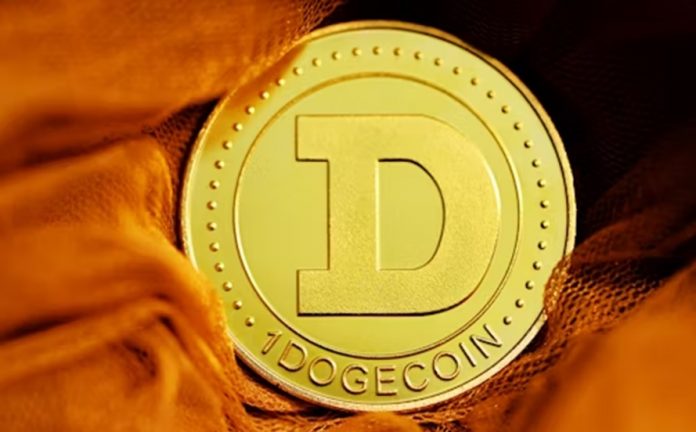
Elon Musk recently revived his long-standing and mostly tongue-in-cheek promise to literally send Dogecoin (DOGE) to the moon via SpaceX. This stems from a 2021 tweet where he said: “SpaceX is going to put a literal Dogecoin on the literal moon.”

On February 3, 2026 an X account (Tesla Owners Silicon Valley) resurfaced that old post and asked “When?” Musk replied first with “Yes” affirming a follow-up comment that “Dogecoin on the moon is inevitable,” then added “Maybe next year” — meaning potentially 2027.

This ties back to the DOGE-1 mission, a planned lunar orbiter funded entirely in Dogecoin by Geometric Energy Corporation announced years ago but repeatedly delayed. It’s more of a promotional stunt/payload idea than a core SpaceX priority, but Musk’s comments keep the meme alive.

The remark sparked some short-term buzz and a brief price bump for DOGE, though broader crypto market weakness quickly erased it in reports. It’s classic Musk: blending humor, meme culture, and actual space ambitions.

Whether a physical Dogecoin or a symbolic payload actually lands on the moon remains to be seen — SpaceX has bigger lunar plans with Starship and Artemis — but he hasn’t ruled it out. To the moon… maybe literally this time?

The remark triggered an immediate but fleeting pump, as Musk’s tweets historically move meme coins. However, broader crypto market weakness including Bitcoin and altcoins quickly reversed it, with DOGE ending the day down in many cases and trading around/under $0.11—still far from its 2021 highs.

This highlights DOGE’s sensitivity to Musk’s whims but also its vulnerability to macro trends. Meme revival: It reinforces the “to the moon” narrative that Dogecoin was built on, boosting community engagement, social media buzz, and short-term trading volume.

Posts across X show renewed excitement, jokes, and calls for DOGE to hit $1, though skeptics call it “just vibes.” This isn’t entirely new—it’s a callback to the DOGE-1 lunar orbiter project announced in 2021 by Geometric Energy Corporation (GEC).

DOGE-1 is notable as the first spacecraft mission fully funded/paid for in Dogecoin, originally slated for 2022 but repeatedly delayed. Musk’s “maybe next year” (implying potentially 2027) aligns with recent GEC updates targeting a mid-to-late 2026 launch window, possibly slipping further.

If it happens, the payload could include a symbolic/physical Dogecoin representation, making it a real-world stunt blending crypto with space. Proof of concept for crypto in space: It could demonstrate blockchain/digital assets’ utility beyond Earth, though it’s more promotional than revolutionary tech.

This keeps Dogecoin tied to his personal brand, benefiting from free publicity while reinforcing his “fun” side amid serious endeavors (Starship, Mars plans, xAI). It blurs lines between joke and reality—classic Musk style.

Dogecoin’s fanbase stays energized, potentially increasing everyday use (tips, payments on X, merch). It also attracts new retail interest in crypto via humor rather than tech specs. Repeated teases without delivery could lead to “promise fatigue.” Critics point out Musk’s history of ambitious timelines that slip and DOGE-1 has been delayed for years.

A successful 2027 lunar delivery would be historic—the first meme-funded/ meme-branded space payload—potentially elevating Dogecoin’s legitimacy as a cultural asset. It might inspire similar stunts for other tokens or boost interest in space-crypto crossovers.

If it doesn’t: It remains harmless meme fodder, with little downside beyond temporary hype cycles. SpaceX’s real priorities (Artemis support, Starship tests, Starlink) dwarf this, so it’s unlikely to derail anything major.

No major red flags here—it’s promotional, not investment advice—but it underscores how one person’s influence can sway volatile markets. This is quintessential Elon: a lighthearted nod that sparks joy, trades, and headlines without committing firmly.

It’s great for Dogecoin’s visibility in the short run, but real “moon” status for DOGE will depend more on broader adoption, market cycles, and whether DOGE-1 ever lifts off than on literal lunar placement.


33% CashRake Is Rewriting Top Online Gambling Rules: Why Spartans Is Pulling Ahead of FanDuel and Caesars

0

Traditional market giants like FanDuel and Caesars have long commanded massive audiences with deep pockets, broad offerings, and well?established digital presences. FanDuel consistently reports industry?leading revenue and a dominant share in U.S. online sports betting and iGaming.

It continues to drive billions in annual handle and monthly users, underscoring its scale and entrenched market position. Meanwhile, Caesars Entertainment blends brick?and?mortar heritage with digital expansion, eyeing diversified revenue growth through sportsbooks and enhanced AI?powered engagement tools.

Yet while these platforms have anchored the mainstream landscape, a new contender is rewriting expectations for what top online gambling can mean in a modern, crypto?infused era. Spartans is rapidly ascending from niche disruptor to focal point for bettors seeking value that transcends traditional bonus structures or loyalty tiers.

FanDuel: Steady Footing in the Online Betting Landscape

FanDuel stands as one of the most recognizable names in regulated betting. It has repeatedly led U.S. sports betting revenue and monthly active users, outpacing peers like DraftKings in key statistical categories. Its online casino operations also form a substantial portion of overall revenue, reflecting the expansive appeal of a combined sportsbook and iGaming ecosystem.

FanDuel’s technology emphasis, particularly on mobile app reliability and real?time data feeds, supports high engagement levels across diverse markets. Yet, even with strong performance metrics, the platform operates within the traditional online gambling framework: bonuses, promotions, and loyalty drivers still play a central role in user retention. FanDuel’s size provides resilience, but its innovation cadence tends to align with gradual enhancements rather than sweeping structural change.

Caesars: Legacy Meets Digital Expansion

Caesars Entertainment brings decades of gaming heritage into the digital arena, blending its physical venues with an expanding online sportsbook and casino footprint. Recent financial narratives indicate mixed performance across segments, with digital initiatives gaining traction even as analysts adjust fair value estimates in response to broader economic and operational pressures. Strategic moves, such as AI-driven dynamic pricing and personalized offers, highlight Caesars’ efforts to modernize its customer interface.

Despite these initiatives, the platform’s digital operations remain smaller in scale than leading competitors, both in market share and profitability, and face challenges from entrenched duopolies within regulated sports betting markets. While Caesars continues to leverage its omnichannel capabilities, its online presence represents incremental evolution typical of legacy operators, rather than a structural disruption in the top online gambling space.

Spartans: Changing the Math That Defines Online Gambling

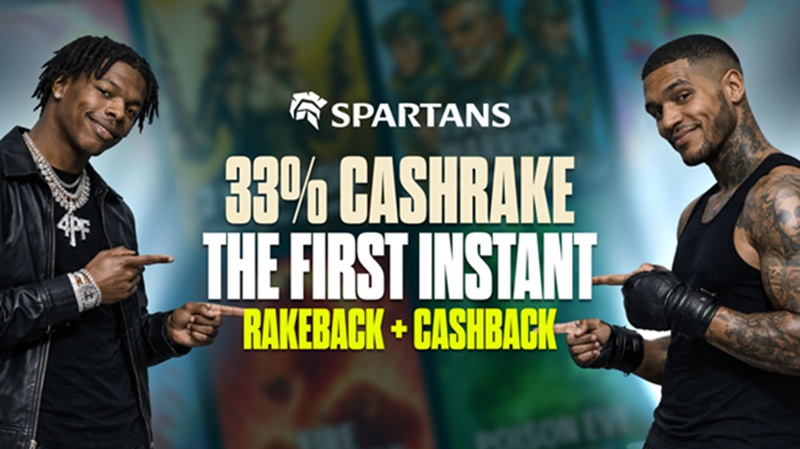
Spartans approaches top online gambling with a structural rethink rather than surface-level incentives. At the center is CashRake, a system that returns value on every wager through a clear mathematical framework. Up to 33% rakeback is generated from house edge activity, paired with up to 3% cashback on losses, ensuring that every bet contributes to a measurable return. These rewards are credited as real cash, not tokens or locked bonuses, and carry no wagering requirements, removing friction that typically delays value realization.

The system’s flexibility further differentiates the platform. Deposits may be made at any time to expand the total CashRake limit, allowing engagement and earning potential to increase proportionally with activity. Rather than relying on fixed tiers or capped thresholds, access scales dynamically, reinforcing sustained participation through structure rather than promotion.

Time sensitivity is an intentional component of the CashRake framework. Rewards must be claimed within 24 hours, preserving momentum while maintaining clarity around eligibility and redemption. Returns are immediate, parameters are explicit, and outcomes are governed by defined rules rather than discretionary adjustments.

In a market where top online gambling platforms often depend on conditional incentives and delayed value realization, Spartans integrates rewards directly into gameplay. Risk becomes more controlled, limits evolve with participation, and returns are perceived as inherent to the system. This represents a recalibration of online gambling economics, grounded in design rather than surface-level incentives.

A New Benchmark for Top Online Gambling

Across these three platforms, the contrast is stark. FanDuel and Caesars illustrate the enduring strength and challenges of legacy and mainstream operators, massive in scale but often conservative in innovation. Spartans, on the other hand, signals a future where the very economics of play are reimagined. By embedding instantaneous rewards into every interaction, Spartans challenges assumptions about value, volatility, and what top online gambling can be.

Whether the broader industry eventually converges on similar structural models or watches from the sidelines, the current momentum, driven by CashRake and a shift toward crypto?native mechanics, ensures that Spartans will remain a defining talking point for the next chapter of speculative growth and platform evolution.

Find Out More About Spartans:

Website: https://spartans.com/

Instagram: https://www.instagram.com/spartans/

Twitter/X: https://x.com/SpartansBet

YouTube: https://www.youtube.com/@SpartansBet

Fink and Ambani Urge Indians to Bet on Equities Over Gold as Financialization Deepens

0

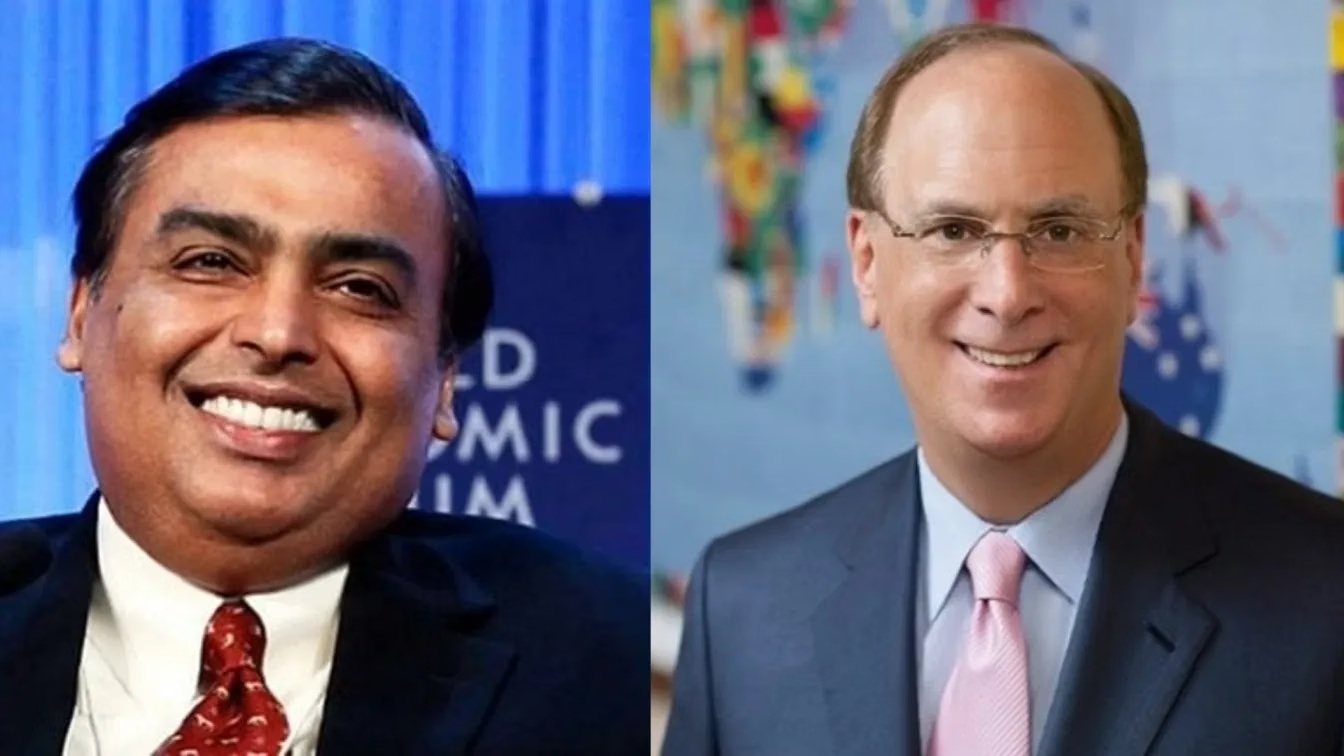
BlackRock CEO Larry Fink and Reliance Industries Chairman Mukesh Ambani are pushing a familiar but increasingly consequential argument in India’s financial discourse, that the country’s vast household savings would be better deployed in equity markets than locked away in gold.

Their intervention comes at a moment when market signals are mixed, investor sentiment is uneven, and the tension between tradition and financial modernization is once again in focus.

The remarks were made during a public fireside chat at a time when Indian equities have struggled to gain traction this year. The benchmark Nifty 50 is down nearly 2% so far, while gold has attracted attention amid heightened volatility driven by global interest rate uncertainty, geopolitical risks, and central bank buying. Against that backdrop, Ambani described domestic savings tied up in gold and silver as largely “unproductive,” arguing that money invested in equities compounds over time in ways physical assets do not.

The subtext of the conversation was not subtle. India’s household balance sheet remains heavily skewed toward physical assets, even as its capital markets mature and broaden. Gold, in particular, plays an outsized role, serving as a store of value, a hedge against inflation, and a cultural anchor that cuts across income levels. Yet for policymakers, economists, and global asset managers, that preference represents idle capital in an economy still hungry for long-term investment.

Fink’s message leaned heavily on the long view. He said the next 20 to 25 years would be an “era of India,” urging citizens to invest in their own country’s growth through capital markets rather than relying on traditional savings instruments. His confidence is rooted in macroeconomic forecasts that continue to set India apart from most major economies. The International Monetary Fund expects India to grow by 6.4% in 2026, making it the fastest-growing large economy globally. By contrast, global growth is projected at 3.3%, with economies such as Germany, the United Kingdom, and Japan expected to expand only marginally.

That growth gap underpins the broader equity argument. In Fink’s telling, those who participate in an economy’s expansion through markets tend to accumulate far more wealth than those who keep their savings idle or confined to low-yield assets. Drawing on BlackRock’s experience in the United States, he said Americans who invested in the country’s growth were far “better off than those who just kept all their money in a bank account.”

In a separate interview with The Economic Times, he went further, predicting that Indian equities could “double and triple and quadruple” over the next two decades, while adding bluntly that he does not see gold delivering comparable returns.

Ambani’s intervention carried its own weight. As chairman of India’s largest conglomerate, his remarks reflected a corporate perspective that sees deeper domestic capital markets as essential to sustaining long-term growth. For companies like Reliance, a broader and more active retail investor base can lower funding costs, reduce dependence on foreign capital, and stabilize markets during periods of global risk aversion.

There is also a clear business dimension to the push. Reliance and BlackRock partnered last year to form Jio BlackRock Asset Management, marking the U.S. firm’s re-entry into India’s mutual fund industry. The joint venture launched its first equity fund in August and had assets under management of 31.98 billion rupees, or about $353 million, across its equity funds by the end of December.

While small relative to the size of India’s mutual fund industry, the figure signals the ambitions of global asset managers who see household financialisation as one of the country’s biggest untapped opportunities.

India’s savings landscape is already changing, albeit gradually. Mutual funds have become more popular as digital platforms simplify access, and systematic investment plans allow households to invest small sums at regular intervals. Data from the Association of Mutual Funds in India shows that investments through SIPs tripled to 2.89 trillion rupees, or about $31.9 billion, in the 2025 financial year compared with 2021. That steady flow of domestic money has helped cushion Indian markets even as foreign investors have been net sellers of equities for more than a year.

Still, physical assets continue to dominate. According to Bain & Company, Indians allocated nearly 59% of their assets to gold and real estate in the 2025 financial year, down from 66% a decade earlier but still a clear majority. Bain estimates that retail investor-driven assets in the mutual fund industry could rise to 300 trillion rupees, or about $3.3 trillion, by 2035, from 45 trillion rupees in fiscal year 2025. The scale of that potential shift highlights why figures like Fink and Ambani are pressing the issue now.

Market performance adds complexity to the narrative. Over the past year, the MSCI India Index delivered a dollar return of just 2.61%, sharply lagging the MSCI Emerging Markets Index, which returned 43.67%. That underperformance has tested investor patience and reinforced the appeal of gold during periods of uncertainty.

Over a five-year horizon, however, India has told a different story, with its equity index delivering nearly twice the returns of the broader emerging markets benchmark. Supporters of equities argue that this contrast illustrates the danger of focusing too narrowly on short-term cycles.

Beyond returns, the debate has broader economic implications. Redirecting household savings from gold to equities could reduce India’s reliance on gold imports, which have long weighed on the current account. It could also provide domestic companies with a more stable source of long-term capital, strengthening the financial system and supporting infrastructure and industrial investment.

Yet cultural inertia remains a powerful force. Gold’s role in Indian households is not purely financial; it is bound up with social security, weddings, inheritance, and trust in tangible assets. Shifting that mindset will likely require more than bullish forecasts from global financiers and industrialists.

Consistent market returns, stronger investor protection, and sustained financial literacy efforts will be critical in convincing households that equities can serve as a reliable engine of wealth.