DD
MM
YYYY

PAGES

DD
MM
YYYY

spot_img

PAGES

Home Blog Page 2

Tekedia Capital Portfolio Startup, Pocket, Hits $100M ARR

0

Pocket has crossed $100 million in Annualized Run Rate. Seven months ago, the company was at $1 million. Today, more than 270,000 Pocket devices are in the hands of users around the world. By moving from $1 million to $100 million in Annualized Run Rate within seven months, Pocket has become one of the fastest growing hardware companies in recent records!

This is a remarkable demonstration of the power of entrepreneurial execution. Ideas matter, but markets reward products that solve real problems at scale. Pocket began with a simple but consequential thesis: artificial intelligence should not be confined to screens. It should understand the conversations and contexts of everyday life and transform them into useful intelligence.

That thesis is now becoming a category, and the numbers are validating it.

Tekedia Capital invested in Pocket because we saw a company working at the intersection of AI, hardware and ambient computing. We believed that as AI becomes increasingly embedded in daily life, new devices will emerge to capture context, organize knowledge and augment human capability beyond the traditional computer screen.

From shipping hundreds of thousands of devices to assembling an exceptional team, Pocket has compressed years of growth into months. Yet, despite this extraordinary milestone, the most exciting opportunity remains ahead.

At Tekedia Capital, we celebrate the Pocket team, its customers and everyone who believed in the mission from the beginning. This is what happens when innovation, an invention successfully taken to market, meets disciplined execution.

Congratulations to the entire Pocket team. The promise is evident, the trajectory is compelling, and the future is arriving. Win more markets!

Tekedia Capital >> we’re funding the future.

What Each Status Means in a Crypto Slot Deposit

0
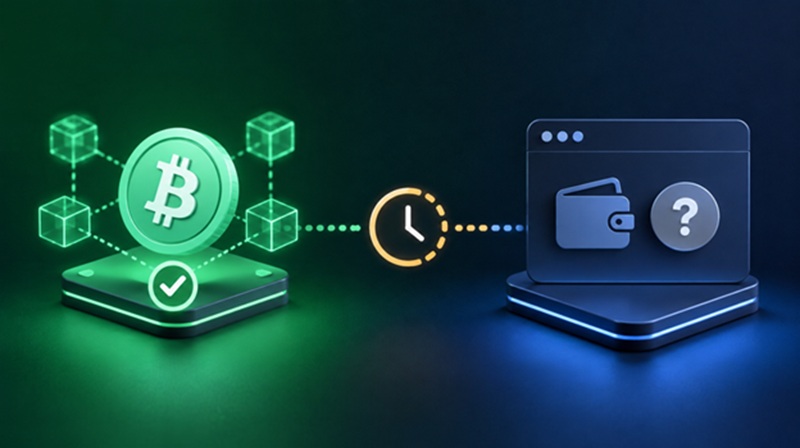
Crypto payment confirmation flow

A crypto deposit for playing slots can be confirmed on a blockchain while the receiving account still shows no usable balance. This can happen because the two labels come from different systems. “Confirmed” usually means the network has accepted the transaction into its ledger. “Credited” means the recipient has detected that transfer, matched it to the correct account, and updated an internal balance. The gap between them may be brief, but it is important to understand before you start a game.

What Each Deposit Status Proves

A crypto deposit leaves evidence in several places, rather than producing one universal status. The wallet records what the sender approved, the blockchain records what the network accepted, and the casino’s receiving account records what was detected and credited. These layers may update at different times because each one answers a different operational question. A label such as “pending” or “complete” therefore makes sense only when the reader knows which system produced it. Tracing the deposit stage by stage makes it possible to see what has already happened without assuming that every later record must have changed at the same moment.

A payment request from a casino begins before value moves. Wallet approval shows that the player has authorized a transaction, while broadcast means the signed instruction has been sent to the network. Confirmation then establishes a blockchain state, not the recipient’s internal accounting state. That boundary becomes clearer with the Bitcoin Jiggle deposit flow being explained step by step, showing how the wallet, the transfer network, and the casino’s receiving account each record a separate stage.

Jiggle Wallet can hold Bitcoin and several other assets, but the payment-link rail is currently described as Litecoin-only. The process starts with a request containing the amount, continues through wallet review and approval, and then depends on the network transfer before the destination can recognize it. A blockchain explorer may therefore show a confirmed transaction while the receiving system still needs to detect it, match its reference, and update the intended account. “Confirmed,” “detected,” and “credited” describe successive records controlled by different systems. None proves by itself that a failure has occurred or reveals an unpublished processing time.

Once their account has been credited, players can choose from a whole range of slot games, including ones that offer newer features, such as progressive jackpot slots. Before playing any, it’s worth taking the time to understand how these features work – something made easy by YouTube tutorials. Figuring out how a feature works ensures you’re playing a game you’re likely to enjoy before you spend any crypto on it.

Find the Owner of the Next Status

A useful diagnosis starts with the last state that can be verified, then identifies which system owns the next one.

Status shown What happened System owner Evidence to inspect
Request created Payment details exist Checkout Request screen
Approved or signed Transaction authorized Wallet Wallet history
Broadcast A message was sent to the network Wallet Transaction ID
Confirmed Ledger recorded it Blockchain Explorer record
Detected Recipient recognizes the transfer Destination system Deposit history
Credited Internal balance changed Account ledger Account balance
Wager eligible Game conditions met Game system Game rules


For payment operations and support teams, the practical response is to preserve the identifiers from both sides of the handoff. The transaction ID anchors the blockchain stage. The payment request, email, or account reference anchors the recipient-side matching stage. When those records are available, “pending” can be replaced with a narrower question: Is the transfer awaiting block confirmation, destination detection, account matching, or balance credit? That question directs investigation without assuming that the wallet, network, or merchant is at fault.

When a crypto deposit is confirmed but not credited, start with the owner of the latest verified status. The blockchain may already have finished its part while the destination has not yet recorded its own. Precise status language turns a vague delay into a bounded operational question, and that is the fastest route to understanding what remains unresolved.

If you are having any issues, most casino platforms have fast-acting help departments that will be able to assist you in tracking a payment and figuring out where it has got to. Before you contact them, it’s worth looking at general processing times, both on the crypto pathway you have chosen, and on the site itself. You’ll usually be able to find information about how quickly the funds should move, which can vary depending on the network you have chosen and the number of transfers currently taking place. The casino will also have its own processing estimates, so take a look at these before you get in touch with support.

If you do need to reach out to support, it may help to have the transaction ID of the deposit in question, as this will help them identify the payment on the blockchain network and troubleshoot any problems.

BlockDAG Launches Beta Stablecoin & $0.0000017 Entry, While Dogecoin & Uniswap Navigate Market Volatility

0

Crypto markets are moving fast this week, delivering mixed signals across major tokens. Traders are closely tracking the Dogecoin price today as on-chain indicators hint at a potential bottom, while the Uniswap price struggles under regulatory pressure and fee updates.

At the same time, BlockDAG (BDAG) is making headlines by rolling out its live stablecoin beta, running at 7,000 transactions per second, and seeing over $200 million in casino wagers. Priced at just $0.0000017 per BDAG, BlockDAG is capturing widespread attention from investors hunting for the best crypto to buy now.  

Rare On-Chain Signal Sparks Recovery Hopes for Dogecoin

The Dogecoin price today trades around $0.07, hovering specifically near $0.06990. While recent price action remains modest, an unusual metric has analyst circles talking. Alphractal CEO Joao Wedson noted that DOGE has dropped into a rare CVDD valuation zone, a pattern that historically aligns with major market lows. This indicator measures how long coins sit idle before moving, helping analysts pinpoint potential value zones for long-term holders.

Currently, Dogecoin maintains a market capitalization of roughly $11.95 billion alongside a 24-hour trading volume near $255.58 million. Even with this signal flashing, a price surge is not guaranteed. Traders are keeping a close eye on the $0.06871 support level alongside key resistance at $0.07127. Holding above support and breaking past resistance could confirm a bullish trend, whereas falling below $0.06871 may trigger further downside.

Downward Pressure Pushes Uniswap Toward Critical Support Levels

The Uniswap price faces significant friction, sliding over 20% in a week—specifically 20.2%—down to around $3.25. Uncertainty surrounding potential regulatory actions and protocol fee adjustments has kept buyers on the sidelines despite steady trading volume on the exchange. Technical indicators reflect this heavy selling, with the Relative Strength Index hovering near 36 to signal near-oversold conditions, while volatility sits at 27.06%.

Looking ahead, analysts project the token to fluctuate between $2.7969 and $3.705, assigning a 74% probability to further downside movement. The immediate line in the sand sits at $3.171. If bulls defend this level, UNI might find stability, but a break below could push the asset toward $2.7969. Conversely, overcoming main resistance at $3.4384 is necessary to mount a recovery back toward $3.705.

BlockDAG Rolls Out Beta Testing for Its On-Chain Stablecoin

Rather than waiting on broader market trends, BlockDAG is accelerating its ecosystem development with the official launch of its stablecoin beta. The system allows users to link their wallets, post native BDAG tokens as collateral, and mint BDUSD directly. Every transaction—from collateral deposits and token minting to repayments and withdrawals—is fully verifiable on-chain, with gas fees settled in BDAG.

This milestone complements steady network growth across multiple fronts. The network’s integrated casino and sportsbook operations have already processed over $200 million in total wagers. Meanwhile, the underlying DAG-based technology, built to handle payments and smart contracts side by side, recently received a performance upgrade to 7,000 transactions per second, expanding its capacity to handle concurrent gaming, lending, and stablecoin transactions.

BlockDAG is currently offering tokens at an entry price of $0.0000017 without requiring promo codes or multi-step processes. For context, a $100 allocation secures 5 million tokens, $500 secures 25 million tokens, $1,000 yields 50 million tokens, and $5,000 buys 250 million tokens. With an exchange and a super app planned as the next major releases, analysts forecast a significant price surge.

Final Thoughts!

Evaluating the Dogecoin price today reveals a token holding near key technical bounds between $0.06871 and $0.07127, where historical valuation metrics suggest potential upside if momentum returns. Meanwhile, the Uniswap price struggles with a 74% likelihood of visiting lower levels around $2.7969 unless it holds firmly above $3.171.

In contrast, BlockDAG continues to demonstrate clear operational progress without leaving its trajectory to chance. With BDUSD minting active, throughput reaching 7,000 TPS, and over $200 million in wagers recorded, the network offers tangible proof points while maintaining a $0.0000017 price. As launches for its exchange and super app draw closer, BlockDAG presents an appealing setup for investors identifying the best crypto to buy now before higher demand impacts bulk availability.

Presale: https://purchase.blockdag.network

Website: https://blockdag.network

Telegram: https://t.me/blockDAGnetworkOfficial

Discord: https://discord.gg/Q7BxghMVyu


Global Bond Yields Surge to Multi-Decade Highs as Debt, War and AI Borrowing Reshape Markets

0

Government bond markets are entering a more difficult era as borrowing costs across the United States, Germany, Japan, France and Britain rise to levels not seen in years, driven by swelling public debt, persistent inflation risks and geopolitical uncertainty.

The synchronized selloff is raising financing costs for governments, companies and households while putting pressure on stock markets and complicating the outlook for central banks, according to a Reuters report.

Long-term yields climbed sharply on Tuesday, with U.S. 30-year borrowing costs reaching their highest level since 2007 as oil prices rose above $90 a barrel. Investors have become concerned that the prolonged war in Iran could keep energy prices elevated, adding to inflation and weakening global economic growth.

In Japan, the 10-year government bond yield approached 3%, its highest level in three decades, as investors anticipate that the Bank of Japan could raise interest rates as early as September.

Germany’s 10-year Bund yield reached its highest level since 2011, while French 10-year borrowing costs rose to their highest since 2008. Britain’s 30-year yield approached levels last reached in May, when it hit its highest point since 1998.

Bond yields move inversely to prices, so the increases indicate substantial selling across some of the world’s most important government debt markets.

The significance extends well beyond bond investors. Government securities provide the benchmark for borrowing across the economy, meaning higher sovereign yields eventually translate into more expensive corporate financing, mortgages and other forms of credit.

The current episode is spectacular because several forces are reinforcing one another.

Developed economies are carrying historically large debt burdens at a time when governments face additional spending requirements from defense, energy security, infrastructure and other priorities. The U.S. government debt burden is approaching $40 trillion, intensifying concerns about the long-term sustainability of public finances.

At the same time, the global inflation outlook has become less predictable.

U.S. President Donald Trump’s tariffs are raising concerns about higher import costs, while the conflict in Iran has pushed energy prices higher. The combination threatens to make it more difficult for central banks to reduce interest rates without risking a renewed increase in inflation.

“We are entering an era where the inflation and interest rate outlook is more uncertain and the upside risks are greater,” said Kjersti Haugland, chief economist at DNB Carnegie.

She said the shift coincides with “the very high level of government debt in many countries, particularly Japan, the U.S., France and the UK.” That represents a fundamental change from much of the post-financial-crisis period, when weak inflation, subdued economic growth and aggressive monetary easing helped keep borrowing costs unusually low.

The new environment is becoming more characterized by competing demands for capital.

Technology companies are borrowing heavily to finance the construction of AI infrastructure, including enormous data centers and computing networks. These companies are competing with governments for funding at precisely the moment when public-sector borrowing requirements are increasing.

That dynamic could keep upward pressure on yields even if central banks eventually reduce policy rates.

U.S. Debt Market At The Center

The U.S. Treasury market remains the most important pressure point because it is the world’s largest and most influential government bond market.

The 30-year Treasury yield reached its highest level since 2007 as oil prices moved back above $90 a barrel and hopes for a rapid resolution to the Iran conflict faded.

The 10-year Treasury yield was around 4.73%, bringing the closely watched 5% threshold back into focus.

Guy Miller, chief market strategist at Zurich Insurance Group, said a sustained move above 5% could have consequences well beyond the Treasury market.

“This will be very important, not just for bond markets, but also other financial assets as any break higher is likely to undermine confidence,” Miller said.

The concern is that higher Treasury yields could begin to challenge equity valuations, particularly in technology stocks whose prices depend heavily on expectations of future earnings.

Major stock indexes, including the Nasdaq and Europe’s STOXX 600, fell on Tuesday as bond yields climbed.

The New York Federal Reserve estimates that investors are demanding around 80 basis points of additional compensation to hold 10-year U.S. government debt, close to the highest level in 12 years. That additional compensation, known as the term premium, can increase when investors become more concerned about inflation, fiscal policy, or the risk of holding longer-term bonds.

The implication weighs heavily because the rise in yields is not necessarily being driven entirely by expectations for higher short-term interest rates. Investors may also be demanding greater compensation for the risks associated with holding long-dated government debt.

Recent Treasury auctions have provided further evidence of the shift.

A 10-year Treasury auction cleared at a 4.683% yield, the highest level for such an auction in 19 years. A 30-year auction cleared at 5.216%, its highest level in 25 years.

Those yields increase the government’s cost of financing its enormous debt burden, potentially creating a feedback loop in which higher interest expenses require additional borrowing, which can put further pressure on bond markets.

U.S. public finances are also facing additional pressure from tariff-related refunds following the Supreme Court’s decision to strike down emergency tariffs imposed by Trump last year.

Japan Is Changing The Global Capital Equation

Japan represents another potentially significant source of pressure for U.S. Treasuries. Japanese government bond yields have climbed sharply, with 30-year borrowing costs moving above 4%. Higher domestic yields make Japanese securities increasingly attractive to investors who have traditionally allocated substantial amounts of capital to overseas bonds, particularly U.S. Treasuries.

Japan is the largest foreign holder of U.S. government debt.

Charu Chanana, chief investment strategist at Saxo Bank in Singapore, said higher Japanese yields could make it more difficult for Washington to rely on foreign demand to absorb its debt issuance.

Foreign holdings of U.S. Treasuries fell in June, according to Treasury Department data, with Japan, Britain and China among the countries reducing their holdings.

The shift is of concern because even a modest reduction in foreign demand can increase the amount of Treasury debt that domestic investors must absorb. It also illustrates how changes in one major bond market can quickly affect another.

As Japanese investors find higher returns at home, the traditional flow of Japanese capital into U.S. assets could weaken. That could add to upward pressure on Treasury yields at a time when the U.S. government needs to issue large amounts of debt.

Europe Faces Its Own Fiscal and Inflation Pressures

Europe is confronting a similar combination of debt, spending requirements and inflation risks. Germany’s 10-year yield reached its highest level since 2011, while French yields climbed to their highest since 2008. British 30-year yields are close to levels not seen since 1998.

Higher government spending and debt burdens have become particular concerns in France and Britain, while investors are also considering the possibility that climate-related events could increase future public spending.

Oil prices are only one component of the inflation equation.

“It’s not just oil that people are looking at, but there’s a broader inflation picture that kind of keeps the ECB hawkish,” said Benjamin Schroeder, senior rates strategist at ING.

That creates a difficult environment for the European Central Bank. If inflation remains persistent, policymakers have less room to cut interest rates aggressively, even as higher borrowing costs place greater pressure on heavily indebted governments.

A Potential Break from The Cheap-Money Era

The common thread across the major bond markets is a reassessment of risk. For years, investors operated in an environment where central banks suppressed interest rates, inflation remained relatively contained, and government debt could be financed at historically low costs.

That environment encouraged governments, corporations and households to borrow more cheaply.

The current market is questioning whether those conditions can return.

Rising government debt means bond investors have to absorb larger amounts of new issuance. AI companies are simultaneously seeking enormous sums to build data centers and computing infrastructure. Tariffs and geopolitical conflicts are introducing additional inflation risks, while energy prices remain vulnerable to further disruptions.

The result is a competition for capital that could keep long-term borrowing costs structurally higher.

That does not necessarily mean the bond selloff will continue indefinitely. Some investors are already viewing higher yields as an opportunity. Christopher Dembik, a senior investment adviser at Pictet, said he remains positioned for longer-duration bonds and does not expect the current selloff to persist.

The crucial issue is whether yields have risen far enough to attract buyers without triggering a broader loss of confidence in government debt.

For now, the market is testing that balance.

According to economists, a further rise in long-term yields would increase the cost of servicing government debt, put pressure on corporate financing and potentially reduce valuations for equities, particularly high-growth technology companies. It is also expected to restrict central banks’ ability to respond to economic weakness if inflation remains elevated.

The emerging bond-market regime therefore carries consequences far beyond fixed-income portfolios. The combination of record government borrowing, AI infrastructure spending, higher energy prices, tariffs and geopolitical risk is challenging the assumptions that defined global markets for much of the past decade.

Against that backdrop, economists warn that if the shift toward structurally higher long-term yields persists, governments, businesses and investors may have to adapt to a world in which capital is no longer exceptionally cheap and fiscal expansion carries a significantly higher price.

Trump Regulators Move to Fill Crypto Policy Void as Congress Stalls on Legislation

0

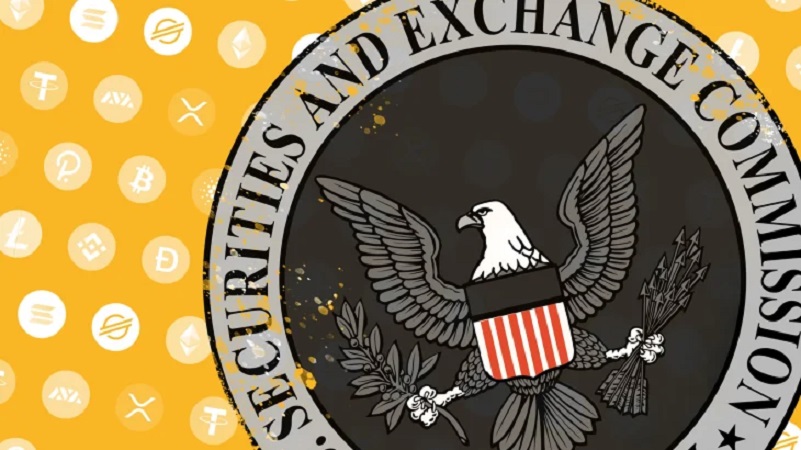
The Trump administration’s financial regulators are preparing to advance a more crypto-friendly regulatory agenda as sweeping legislation remains stalled in Congress, giving the digital asset industry a potential short-term reprieve but leaving businesses exposed to future political and legal reversals.

The Securities and Exchange Commission and Commodity Futures Trading Commission are increasingly taking the lead on rules that could determine how cryptocurrencies, token offerings and crypto derivatives are regulated in the United States.

The shift comes after years of lobbying by crypto companies and industry groups for legislation that would establish a clear legal framework for digital assets. Those efforts have stalled, leaving lawmakers with limited time to reach a deal before the next Congress takes office.

“The agencies … seemingly are ready to act, given that Congress has been unwilling or unable to do so,” said Miller Whitehouse-Levine, CEO of the Solana Policy Institute.

The SEC is working on a rule that would exempt certain token offerings from securities regulations and is expected to advance the proposal in coming weeks. The CFTC is also scheduled to discuss cryptocurrency regulation at an industry gathering this week.

The regulatory push could provide the clarity crypto companies have sought for years, but industry executives and legal experts warn that rules created by regulators do not carry the same durability as legislation enacted by Congress.

Regulatory Clarity Could Prove Temporary

The central issue is that agencies can change their policies when administrations change. The proposed Clarity Act would establish statutory definitions for which digital assets should be treated as securities and which should fall under commodities regulation. It would also determine the respective jurisdictions of the SEC and CFTC.

Without such legislation, regulators could establish a framework under existing authority, but a future administration could reverse course.

The Trump administration’s rollback of numerous financial and consumer-protection policies introduced during Joe Biden’s presidency has reinforced those concerns. A future administration could similarly dismantle or rewrite crypto policies adopted under Trump.

That possibility is significant for an industry that faced aggressive enforcement during the Biden administration under former SEC Chair Gary Gensler.

Gensler’s SEC filed lawsuits against numerous crypto companies, arguing that various digital tokens constituted securities and that the companies should have registered with the agency.

Josh Riezman, chief legal and strategy officer at crypto trading firm GSR, said the SEC and CFTC could move quickly on rules that would benefit the industry in the near term.

“But then the next administration, depending on how that shakes out, we can be looking very much like a potentially Gensler 2.0 type scenario,” he said.

That uncertainty could make companies reluctant to treat regulatory changes as permanent. It could also complicate investment decisions involving exchanges, token issuers, financial institutions and other businesses whose operations depend heavily on regulatory classifications.

Trump Has Made Crypto A Policy Priority

Trump has placed cryptocurrency at the center of his second administration’s economic agenda after courting support and campaign contributions from the crypto industry. His administration’s SEC and CFTC appointees have moved quickly to unwind several Biden-era policies and enforcement actions involving digital assets.

SEC Chair Paul Atkins has proposed broad changes to capital-markets rules aimed at accommodating cryptocurrency and blockchain technology.

At the CFTC, Chair Michael Selig approved perpetual bitcoin futures earlier this year, opening the door to broader use of highly leveraged derivatives products. Industry executives expect the agency could approve perpetual futures tied to additional cryptocurrencies.

The administration’s approach marks a significant shift from the enforcement-focused strategy that characterized much of the previous SEC regime. Industry analysts expect that shift to reduce regulatory costs and legal uncertainty, and also encourage more traditional financial institutions to expand their involvement in digital assets.

But the absence of legislation means the political durability of those changes remains uncertain.

The stalled legislation also reflects a broader political divide over how cryptocurrency should be regulated. Many Democrats support establishing a formal regulatory framework but generally want stronger protections against money laundering, fraud, conflicts of interest, and other risks associated with digital assets.

That could become more important if Democrats regain control of the House of Representatives in the November midterm elections. A change in congressional control could give Democrats greater authority to scrutinize the SEC and CFTC and challenge the direction of agency rulemaking.

The prospect of a political shift therefore creates another layer of uncertainty for regulators attempting to establish a new crypto framework. Even rules that survive an administration change could face congressional scrutiny or new legal challenges.

Wall Street Opposition Adds Another Hurdle

Crypto companies are not the only stakeholders seeking to influence the regulatory process. Traditional financial institutions and industry groups have challenged some of the Trump administration’s crypto policies, arguing that regulators are moving too quickly or creating competitive disadvantages for established financial markets.

CME Group sued the CFTC in June over the agency’s approval of perpetual cryptocurrency futures. The Securities Industry and Financial Markets Association has also urged the SEC to reconsider elements of its plans for blockchain-based stock trading.

Such disputes could result in lengthy litigation. Court challenges may delay implementation of new rules or leave them vulnerable to being overturned before they become established industry standards. That creates a potentially awkward cycle for the crypto industry: regulatory action can provide immediate clarity, but litigation and changes in political leadership can prevent that clarity from becoming durable.

However, for crypto companies, the immediate regulatory shift is still viewed as preferable to continued uncertainty.

“The agencies moving forward just shows this recognition of, we can’t just stand by and not do anything,” said Summer Mersinger, CEO of the Blockchain Association and a former Republican CFTC commissioner.

“That’s going to be really helpful and we applaud their work,” she said. “But we need something permanent.”

That distinction is likely to define the next phase of U.S. crypto policy.

The Trump administration can substantially reshape the regulatory environment through appointments, enforcement decisions and agency rulemaking. But only Congress can establish a statutory framework that is significantly harder for a subsequent administration to reverse.