DD
MM
YYYY

PAGES

DD
MM
YYYY

spot_img

PAGES

Home Blog Page 2

Tekedia Mini-MBA Begins Monday, February 9, 2026

0

Greetings from Tekedia Institute. We are pleased to share that the next edition of Tekedia Mini-MBA will commence on Monday, February 9, 2026.

If you have already registered for this edition, you should have received your login instructions via email; the instructions are also available here https://school.tekedia.com/support/support/

If you plan to join us and have not yet registered, you can still register here https://school.tekedia.com/course/mmba19/

This is going to be the best edition yet.

Tekedia Mini-MBA >> educating on the mechanics of business and careers.

US January Jobs Layoff Hits 17-Year High

0

U.S. employers announced 108,435 job cuts in January 2026, according to the latest report from Challenger, Gray & Christmas. This marks the highest January total since 2009 during the Great Recession, when cuts reached nearly 242,000.

It’s often described in headlines as a “17-year high” because 2009 was 17 years prior. Key details from the report and coverage: Year-over-year increase: Up 118% from January 2025 (49,795 cuts). Month-over-month surge: Up 205% from December 2025 (35,553 cuts). This was also the highest monthly total since October 2025.

Major drivers included large announcements from specific companies: Transportation sector led with 31,243 cuts, largely due to UPS slashing around 30,000 roles tied to reduced Amazon delivery contracts.

Technology sector saw 22,291 cuts, with Amazon announcing about 16,000 corporate positions eliminated. Healthcare and Products had 17,107 cuts, the highest for that industry since 2020.

Hiring plans also hit a record low for January, with only 5,306 announced new positions—the lowest since tracking began—highlighting corporate caution amid economic uncertainty, contract losses, cost pressures, and a shift toward efficiency including AI prioritization in some sectors.

Analysts note that many of these plans were likely finalized late in 2025, signaling pessimism about the 2026 outlook. This comes amid broader labor market signals, like rising jobless claims in recent weeks.

The impact of artificial intelligence (AI) on jobs remains a hotly debated topic in early 2026, especially amid the recent surge in U.S. layoffs. While AI is frequently cited in corporate announcements and fuels widespread anxiety, current data shows its direct role in job displacement is still limited—but growing and increasingly anticipated by employers.

U.S. employers announced 108,435 job cuts—the highest January total since 2009. AI was explicitly cited as a reason for 7,624 of those cuts, or about 7% of the month’s total. For full-year 2025, companies referenced AI in 54,836 planned layoffs roughly 4.5–5% of all announced cuts that year, per various analyses.

Since tracking began in 2023, AI has been linked to around 79,449 job cut announcements overall, equating to just 3% of tracked plans. Major examples include:Tech giants like Amazon (16,000+ corporate roles cut in early 2026 announcements, tied to efficiency and AI investments).

Other firms in tech, finance, and manufacturing pointing to AI for streamlining operations. However, experts from Challenger and others note it’s “difficult to say how big an impact AI is having specifically.” Many layoffs stem from restructuring, lost contracts, economic uncertainty, over-hiring corrections, or broader cost pressures.

Some analysts describe companies “AI-washing” reductions—blaming AI to appeal to investors—rather than proven replacements. Anticipatory cuts dominate: Surveys show most headcount reductions tied to AI are in anticipation of its potential, not current performance.

Only a small fraction stem from actual AI implementation succeeding at scale. Worker fears are rising: Employee concerns about AI-driven job loss jumped from 28% in 2024 to 40% in 2026. A Reuters/Ipsos poll found 71% of Americans worry AI could permanently replace their jobs.

Goldman Sachs and others project AI could displace 6–7% of the U.S. workforce if widely adopted, or the equivalent of hundreds of millions globally in tasks though offset by new roles.

IMF analysis indicates nearly 40% of global jobs are exposed to AI-driven change, with entry-level and certain white-collar roles (e.g., clerical/admin) most vulnerable—sometimes seeing 3.6% employment drops in high-AI-adoption areas.

Forrester forecasts AI automating 6% of U.S. jobs by 2030 ~10.4 million roles, but stresses augmentation over replacement, with over half of AI-attributed layoffs potentially reversed as companies realize operational challenges. World Economic Forum predict net job creation in some scenarios, but displacement in others, especially if adaptation lags.

Many experts emphasize AI often automates tasks within jobs rather than eliminating entire roles outright. It may boost productivity potentially adding growth, create new positions, and shift demand toward “human strengths” like creativity, empathy, and complex decision-making—combined with AI fluency.

Outlook for 2026 and Beyond

The labor market feels pressure from AI as a “tsunami” per some economists, with slowed hiring in AI-exposed sectors and record-low January hiring plans. But mass displacement hasn’t materialized yet—impacts appear gradual, sector-specific (tech, admin, entry-level hardest hit), and often overstated in headlines.

Companies rushing to cut for AI hype risk backfiring if tools underperform or talent gaps emerge. Workers in high-exposure roles especially younger or less adaptable ones face real risks, but upskilling, reskilling, and redesigning jobs around human-AI collaboration could mitigate much of it.

Overall, while not the absolute highest monthly layoffs ever far below pandemic peaks, it represents a sharp, concerning start to the year for the job market. The full Challenger report provides breakdowns by industry and is available on their site for more details.

Tether Pulls Back from Earlier Reports of Seeking Massive Capital Raise

0

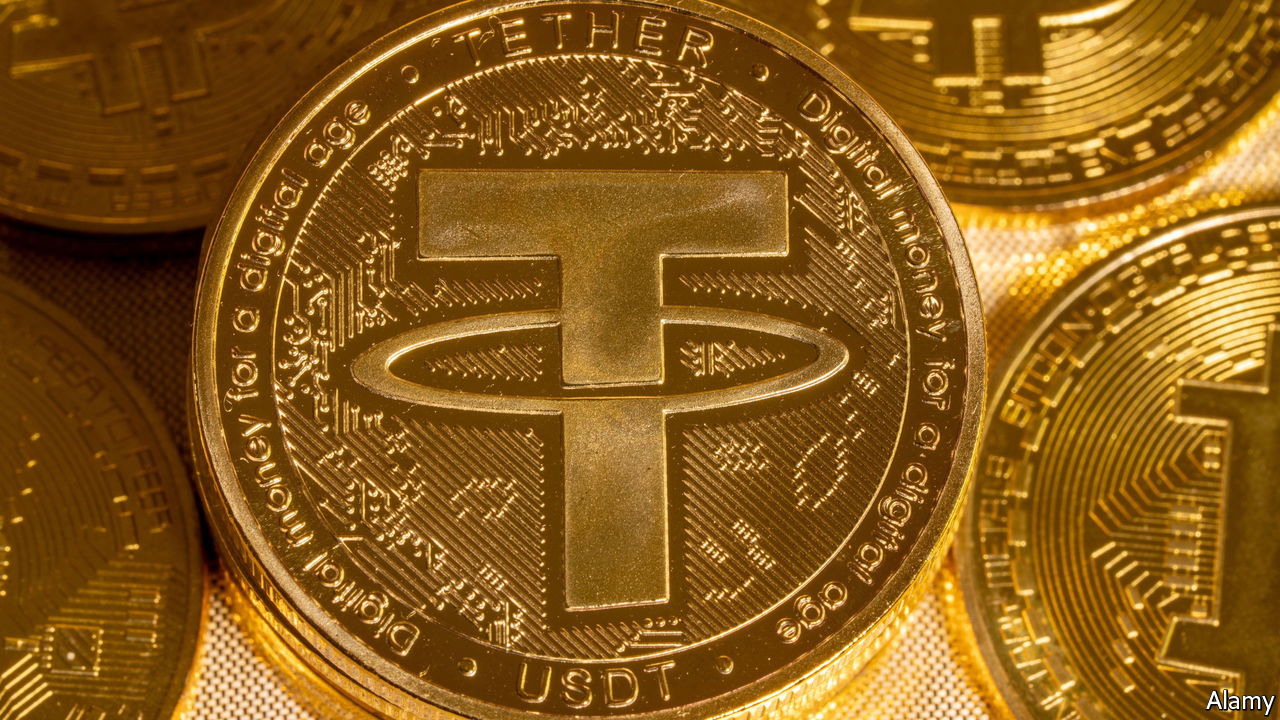
Tether has pulled back from earlier reports of seeking a massive capital raise of $15–20 billion which would have implied a valuation around $500 billion, positioning it among the world’s most valuable private companies.

Recent reports primarily from the Financial Times, echoed by outlets like Decrypt, Reuters, and others indicate investor resistance to that lofty valuation and deal size prompted advisers to discuss a much smaller round, potentially as low as $5 billion.

Tether CEO Paolo Ardoino has downplayed the original $15–20B figure as a “misconception,” describing it as a hypothetical maximum rather than a firm target or goal. He emphasized that discussions are guided by long-term alignment rather than urgency for the largest possible raise.

This shift comes amid Tether’s strong performance but also scrutiny over its reserves, regulation, and growth strategy. USDT market cap reaching $187B. Tether’s USDT stablecoin has indeed hit a record market capitalization of around $187.3 billion as of late Q4 2025 / early 2026.

According to Tether’s quarterly report and coverage from sources like The Block, USDT grew by about $12.4 billion in Q4 2025 alone—defying a broader crypto market downturn including an October 2025 liquidation cascade that hit total crypto cap hard.

USDT expanded its dominance while competitors like USDC saw flat or declining growth, driven by record user additions, strong reserves heavily in Treasuries and increased global adoption. As of early February 2026, USDT remains pegged near $1 with massive circulation volumes.

Tether co-founder in Epstein files

This refers to Brock Pierce (a co-founder of Tether alongside figures like Reeve Collins and Craig Sellars, though Pierce has been distanced from day-to-day operations for years). Newly unsealed U.S. Department of Justice documents related to Jeffrey Epstein (released in late January/early February 2026) mention Pierce extensively—reportedly over 1,800 times in some tallies across tranches.

The files highlight Epstein’s interactions with crypto figures, including: Pierce reportedly introducing Epstein to investment opportunities, such as a 2014 Coinbase Series C round where Epstein invested ~$3 million via an LLC, arranged partly through Pierce and Blockchain Capital.

Emails and communications showing Pierce’s connections to Epstein post-2008 conviction, including discussions of deals, meetings, and other networking in the crypto space.

These revelations have sparked renewed scrutiny of early crypto industry ties to Epstein also involving figures like Adam Back, Blockstream and Coinbase co-founder Fred Ehrsam, though no new criminal allegations against Pierce or others in the files have been reported in connection to these mentions.

Coverage from outlet like The New York Times, details these links, often framing them as part of Epstein’s broader efforts to invest in and network with tech/crypto after his conviction. These stories have been circulating widely in crypto media and on platforms like X in early February 2026.

Tether’s advisers have shifted discussions toward a much smaller raise ~$5B, after investor skepticism over the original $15–20B target which would have sold ~3–4% equity at a $500B valuation, rivaling SpaceX and OpenAI.

CEO Paolo Ardoino called the high-end figure a “misconception”—a hypothetical maximum, not a firm goal—and emphasized no urgency, with “significant interest” still at that valuation level but decisions guided by long-term alignment rather than size.Implications.

Investor caution on crypto valuations — Despite Tether’s profits and reserves, the market isn’t ready to assign mega-cap private valuations without more transparency, regulatory clarity, or proven diversification. This highlights ongoing skepticism toward opaque or high-risk crypto businesses.

Tether generates billions in profits from Treasuries/gold/Bitcoin holdings and doesn’t require external funds for operations. The retreat avoids dilution at a potentially “overhyped” price and preserves insider control.

Strategic pivot — Focus may shift to organic growth, partnerships like emerging-market wallets, or alternative capital uses like past bids like Juventus. It tempers hype around Tether going “public-like” via tokenized shares but keeps options open.

Alphabet Reclaims AI Leadership as Earnings Beat Fuels Optimism Amid Massive Capex Commitments

0

Alphabet Inc. has solidified its position as Wall Street’s frontrunner in the artificial intelligence race, with its fourth-quarter 2025 earnings report on Wednesday, showcasing broad-based revenue acceleration driven by AI integrations across Search, Cloud, and consumer products.

The Google parent reported quarterly revenue of $113.8 billion, up 18% year-over-year (17% in constant currency), surpassing the $111.43 billion LSEG consensus. Net income rose 30% to $34.5 billion, with earnings per share of $2.82, beating estimates of $2.63. Annual revenue exceeded $400 billion for the first time, reaching $402.8 billion, up 15% from 2024. Operating cash flow hit a record $52.4 billion in Q4, resulting in $24.6 billion of free cash flow.

During the earnings call, CEO Sundar Pichai and executives projected a more assertive outlook on AI’s company-wide impact, a departure from prior quarters’ focus on cloud-specific metrics.

“Overall, we’re seeing our AI investments and infrastructure drive revenue and growth across the board,” Pichai stated.

This confidence stems from Gemini 3’s launch in November 2025, which has propelled user engagement and monetization. The Gemini app, rivaling OpenAI’s ChatGPT, now boasts over 750 million monthly active users (MAU), up from 650 million in Q3, with “significantly higher engagement per user” post-Gemini 3. Enterprise adoption surged, with Gemini securing 8 million paying licenses across 2,800+ companies.

Pichai noted Gemini processes over 10 billion tokens per minute via direct API use, while Search revenue grew 17% to $63.1 billion, aided by 250+ AI Mode/AI Overview launches. Google Cloud emerged as the standout performer, with Q4 revenue jumping 48% to $17.7 billion—exceeding estimates of $16.2 billion—and achieving an operating margin of 30.1% (up from 17.5%).

This marked the quickest growth in over four years, fueled by enterprise demand for AI infrastructure, solutions, and core GCP products, with a $240 billion backlog.  YouTube revenue across ads and subscriptions topped $60 billion for 2025, with over 325 million paid subscriptions across consumer services.

CFO Anat Ashkenazi justified the escalated 2026 capex forecast of $175–$185 billion—nearly double 2025’s $91.4 billion and exceeding Bloomberg’s $119.5 billion estimate—as essential to meet surging AI demand and capitalize on growth opportunities. Q4 capex reached $27.9 billion, ramping for AI infrastructure, DeepMind development, cloud customer needs, and strategic bets.

This figure, while alarming investors initially (shares dropped 6% after-hours before recovering to down 1-2%), is seen by analysts as “purposeful” for sustaining leadership.

Alphabet’s trajectory contrasts sharply with OpenAI-linked peers facing valuation headwinds. Microsoft, with a 27% stake in OpenAI, has fallen over 20% since October 2025, amid concerns over OpenAI’s funding sustainability despite multi-billion-dollar deals. Oracle, with a backlog exceeding $500 billion and heavily tied to OpenAI, has tumbled 49% over the same period.

Analysts like Freedom Capital Markets’ Paul Meeks note a “narrative emerging where the market is favoring Google versus OpenAI,” as investors question OpenAI’s ability to meet commitments while incurring losses.

Synovus Trust’s Dan Morgan added: “The deals that OpenAI has with Microsoft and Oracle are highly tied to their ability to raise future funds.”

LOGO ETF’s Eric Clark noted that, “Right now, Google has the hot hand.”

Alphabet’s stock has outperformed, up 65% in 2025 and 6% year-to-date in 2026, with a market cap of over $4 trillion—trailing only Nvidia at $4.2 trillion. Since October 2025, Alphabet has jumped about 36%, while Microsoft and Oracle have declined 20.59% and 41.10% over their respective performance quarters.

This divergence stems from Alphabet’s demonstrated AI monetization—through cloud deals with Meta and Apple, and internal integrations—versus OpenAI’s funding uncertainties.

Analyst reactions have been largely positive, with several firms raising price targets. Barclays, Pivotal Research, and TD Cowen increased 12-month targets, citing AI momentum and cloud acceleration. Mizuho and Roth/MKM also hiked targets to $400 and $365, respectively, maintaining Outperform and Buy ratings.

Despite the earnings beat, shares dipped 2% premarket Thursday after an initial 6% after-hours drop, as investors weighed the $175–185 billion 2026 capex forecast—nearly double 2025’s $91.4 billion and above Bloomberg’s $119.5 billion estimate—against strong results.

CFO Anat Ashkenazi justified the spend as necessary for AI model development, cloud demand, and bets like Waymo, which incurred a $2.1 billion compensation charge in Q4. This positions Alphabet competitively with peers like Meta ($115-135B) and Microsoft (moderating from $37.5B Q4).

The shift in sentiment from OpenAI partners stems from funding risks: OpenAI’s deals with Microsoft and Oracle hinge on its ability to raise capital while incurring losses, per Synovus Trust’s Dan Morgan. Alphabet’s self-reliant AI strategy—bolstered by DeepMind, Gemini, and proprietary TPUs—contrasts with this dependency, drawing favor from analysts like Freedom Capital’s Paul Meeks.

Stock charts illustrate the divergence: Alphabet’s total return since January 2025 stands at 70.1%, with a CAGR of 70.1%, while Microsoft and Oracle have lagged. Oracle’s YTD drop of 20.65% and quarterly decline of 41.10% contrast with Alphabet’s 8.57% YTD gain.

Uranium Falls 15% – Gold and Silver Continue Massive Rally

0

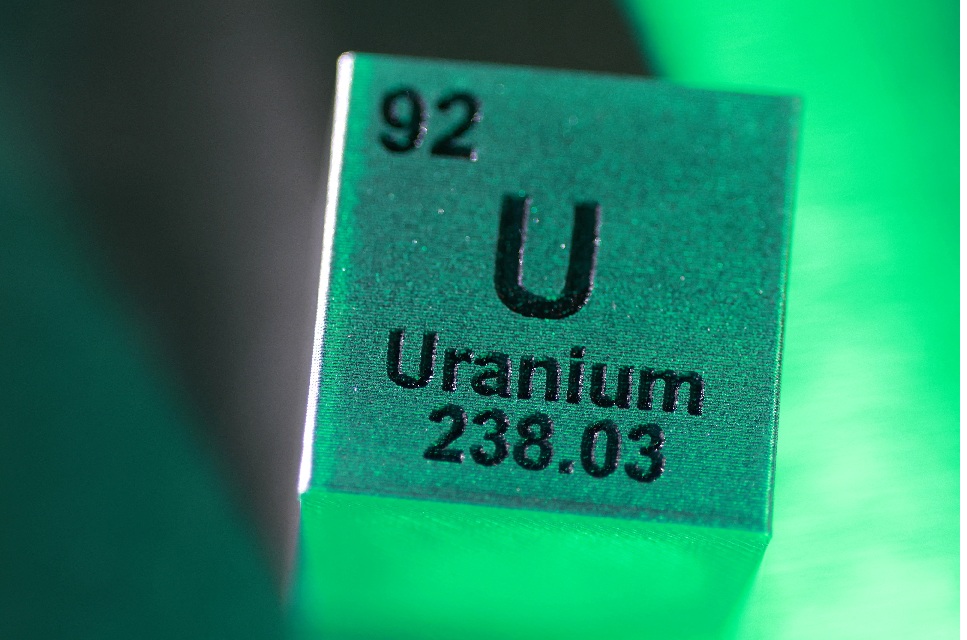
Uranium (U3O8) prices surged in late January 2026, briefly exceeding $100–$101.50 per pound (hitting levels not seen since early 2024), driven by strong buying from entities like the Sprott Physical Uranium Trust, expectations of rising nuclear demand and structural supply constraints.

However, prices have pulled back sharply in the first days of February: Futures fell around 5% overnight to $86 per pound in some reports, putting them 15% below last week’s peak. Recent quotes show levels around $85.70–$87.55 per pound like Trading Economics at $87.55 on Feb 4, down ~4.6% that day; other sources ~$85–$92 range.

This correction stems from factors like higher-than-expected supply announcements from Uzbekistan/Kazatomprom, profit-taking after the rapid run-up, and broader market dynamics including links to softer AI/tech sentiment impacting nuclear power demand expectations.

This has triggered heavy selling in uranium-related stocks, particularly on the ASX, contributing to declines in materials sectors. Meanwhile, gold and silver have experienced their own dramatic volatility around the same period: Both metals hit record highs recently (gold above $5,500–$5,600/oz, silver above $120/oz in some reports).

They then plunged sharply in a major sell-off; one of the worst in decades for precious metals, with gold dropping 9–21% from peaks to ~$4,400–$4,900/oz range in corrections, and silver falling even more steeply (15–40% from highs, to ~$70–$80/oz in lows).

Drivers included a stronger US dollar, shifts in monetary policy expectations; Fed chair nomination influencing leverage and risk sentiment, margin hikes on futures exchanges, and profit-taking after explosive gains.

The uranium drop appears more isolated to supply surprises and post-rally consolidation, while gold/silver’s moves tie into broader macro/commodity rotations.

Uranium remains in a longer-term bullish structural setup (supply deficits, nuclear renaissance), with forecasts pointing back toward $100+ later in 2026 or beyond, despite near-term weakness.

The surge in AI data centers is dramatically increasing global electricity demand, positioning nuclear power—including traditional reactors and emerging small modular reactors (SMRs)—as a key solution for reliable, clean, 24/7 baseload energy.

Explosive Demand Growth from AI Data Centers

AI workloads, particularly training and inference on large models, require massive, constant power. Data centers already consume significant electricity, and AI is accelerating this.

Global data center electricity demand rose sharply, with projections showing it could exceed 1,000 TWh by 2030 from ~460 TWh in 2024, potentially accounting for over 20% of electricity-demand growth in advanced economies.

In the US, data centers used ~183 TWh in 2024 about 4% of total electricity, expected to more than double to ~426 TWh by 2030. AI-specific demand could drive even steeper growth: Some forecasts suggest AI data center power needs surging dramatically, with global AI-related demand potentially reaching 68 GW by 2027 and much higher by 2030.

A single large AI-focused data center can consume as much power as 100,000 households, with hyperscale facilities under construction needing 20x that amount. Power shortages are already a top barrier, with analysts predicting constraints halting growth for many facilities by 2026–2027, forcing strategic shifts; building in power-rich regions or pursuing dedicated sources.

This has strained grids, leading tech giants to seek alternatives beyond intermittent renewables like solar/wind, which can’t guarantee constant supply. Nuclear provides high-capacity-factor ~92–93%, carbon-free power ideal for AI’s non-stop needs. Major deals in 2025–2026 reflect this pivot: Microsoft restarted Three Mile Island (Pennsylvania) via a long-term deal with Constellation Energy ~835 MW targeted for 2028.

Google partnered with Kairos Power for up to 500 MW of SMRs (first online ~2030) and NextEra for reopening Duane Arnold (Iowa, ~2029). Amazon invested in X-energy SMRs and deals like Talen Energy’s Susquehanna plant ~1.9 GW through 2042.

Meta announced agreements with Vistra, Oklo, and TerraPower for up to 6.6 GW by 2035, including existing plants and new SMRs—positioning it as one of the largest corporate nuclear buyers. These commitments often 10–20+ GW combined across hyperscalers support SMR development and plant extensions/revivals.

Governments and pledges to triple global nuclear capacity by 2050 align with this. Small Modular Reactors (SMRs) as the Game-Changer; SMRs typically <300 MW per unit, factory-built, scalable suit data centers perfectly: Compact footprints allow on-site or near-site deployment, reducing transmission needs.

Enhanced safety, flexibility, and faster build times compared to traditional reactors. Ideal for concentrated, gigawatt-scale loads from hyperscale campuses. Tech firms back SMR startups with pilots and regulatory progress aiming for 2026–2030 deployments.

Forecasts see SMRs playing a growing role post-2030, potentially meeting significant US data center demand. Regulatory hurdles, high upfront costs, long timelines (first commercial SMRs likely 2030+), and supply chain issues. Near-term, natural gas and renewables bridge gaps, but nuclear’s reliability makes it central long-term.

This nuclear renaissance underpins uranium demand. AI-driven power needs contribute to structural supply deficits (underinvestment in mines), pushing prices higher in early 2026 (spot ~$94–$100+/lb peaks). Even with recent corrections, the outlook remains bullish for uranium as nuclear capacity expands to fuel AI growth.

AI is catalyzing nuclear’s revival—potentially a multi-trillion-dollar opportunity—while addressing energy security, climate goals, and compute demands. If regulations evolve favorably, SMRs could transform data center power by the early 2030s.