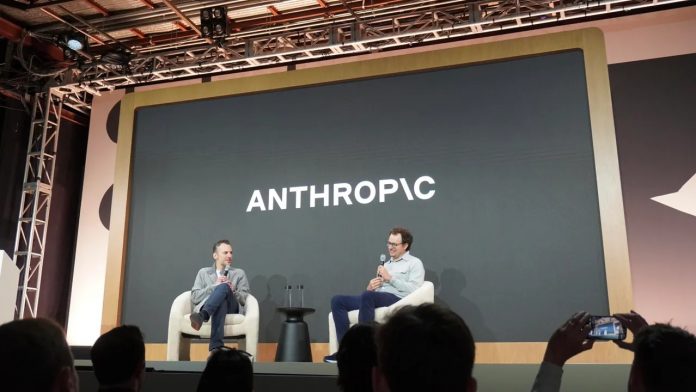
A quiet but consequential dispute between the Pentagon and artificial intelligence startup Anthropic is emerging as an early stress test of how far Silicon Valley is willing to go in accommodating U.S. military and intelligence demands as AI systems become more powerful — and more politically sensitive.
According to people familiar with the matter who spoke to Reuters, the U.S. Department of Defense is at odds with Anthropic over safeguards the company wants to preserve in its AI models, particularly restrictions that would prevent the technology from being used to autonomously target weapons or conduct domestic surveillance. The disagreement has stalled negotiations under a contract worth up to $200 million and has placed the two sides at a standstill after months of talks.
At its core, the clash reflects a deeper tension between commercial AI developers seeking to enforce ethical boundaries and a Pentagon increasingly determined to integrate cutting-edge AI into warfare, intelligence analysis, and operational planning with minimal external constraints.
Pentagon officials argue that as long as deployments comply with U.S. law, the military should be free to use commercial AI tools regardless of the usage policies set by private companies. That position is grounded in a January 9 Pentagon memo on AI strategy, which asserts broad authority to deploy advanced technologies to maintain U.S. military superiority.
Anthropic, however, has pushed back. Company representatives have raised concerns that its models could be used to surveil Americans or assist in weapons targeting without sufficient human oversight, according to sources familiar with the discussions. Those objections go beyond abstract ethical debates. They cut directly into how AI might be operationalized in real-world military and domestic-security contexts, especially as autonomous systems move closer to deployment readiness.
The Pentagon’s frustration is compounded by a practical reality that it cannot easily bypass Anthropic. The company’s models are trained with built-in safeguards designed to avoid harmful outcomes, and Anthropic engineers would likely need to modify or fine-tune those systems for military use. Without the company’s cooperation, Pentagon ambitions to fully integrate Anthropic’s technology could stall.
Anthropic, for its part, has sought to strike a careful balance. In a statement, the company said its AI is “extensively used for national security missions by the U.S. government” and that it remains in “productive discussions” with the department, which the Trump administration has controversially renamed the Department of War.
The dispute comes at a particularly sensitive moment for the San Francisco-based startup. Anthropic is preparing for an eventual public offering and has invested heavily in courting national security contracts, seeing them as both lucrative and strategically important. The company has also positioned itself as a thought leader in AI governance, seeking influence over how governments define acceptable use of powerful models.
That ambition now risks colliding with political reality. The Trump administration has signaled a more aggressive posture on national security technology, emphasizing speed, dominance, and flexibility over restraint. In that environment, corporate efforts to impose limits on military use can be framed as obstruction rather than responsibility.
Anthropic’s stance is shaped by its leadership. CEO Dario Amodei has been explicit about where he believes lines should be drawn. Writing on his personal blog this week, Amodei argued that AI should support national defense “in all ways except those which would make us more like our autocratic adversaries.” The remark encapsulates the company’s fear that unchecked AI deployment could erode democratic norms, even when pursued in the name of security.
Those concerns have been sharpened by recent domestic events. Amodei was among Anthropic’s co-founders who publicly condemned the fatal shootings of U.S. citizens protesting immigration enforcement actions in Minneapolis, calling the deaths a “horror.” That episode has amplified anxiety within parts of Silicon Valley about government use of AI tools in contexts that could enable or legitimize violence against civilians.
The Pentagon’s dispute with Anthropic is also notable for what it signals about the broader AI landscape. Anthropic is one of several major developers awarded Pentagon contracts last year, alongside Google, Elon Musk’s xAI, and OpenAI. Yet not all AI companies approach military engagement the same way. Some are more willing to defer to government judgment, while others, like Anthropic, are attempting to hard-code ethical limits into their technology.
Currently, it is not clear if that approach is sustainable. But as AI systems become more central to defense planning, intelligence analysis, and battlefield decision-making, the leverage is expected to increasingly shift toward the government, which controls contracts, classification access, and long-term deployment opportunities.
Still, the current standoff suggests the outcome is not predetermined. The Pentagon’s need for state-of-the-art AI gives companies like Anthropic bargaining power, at least for now. The disagreement also highlights an unresolved question that will shape U.S. military AI policy for years: who ultimately decides how autonomous systems are used — elected governments, military planners, or the private companies that build the technology?
Some believe the answer could determine not only the future of Anthropic’s Pentagon business, but also its credibility as a company that claims it can pursue scale, profit, and national security relevance without abandoning its ethical red lines.