DD
MM
YYYY

PAGES

DD
MM
YYYY

spot_img

PAGES

Home Blog Page 2

OpenAI Hits $852 Billion Valuation in Historic $122 Billion Raise, to Accelerate The Next Phase of AI

0

OpenAI has announced the close of its latest funding round, securing an unprecedented $122 billion in committed capital at a post-money valuation of $852 billion.

The milestone positions the company at the center of global artificial intelligence infrastructure, as it continues to expand its influence across consumer, enterprise, and developer ecosystems.

Anouncing the historic raise, OpenAI wrote in a blogpost,

“Today, we closed our latest funding round with $122 billion in committed capital at a post money valuation of $852 billion.”

Major participants in the landmark round include Amazon, Nvidia, and SoftBank, who led the initial phase with commitments of $50 billion, $30 billion, and $30 billion respectively. Later additions featured investments from Andreessen Horowitz, MGX (Abu Dhabi), Coatue, Thrive Capital, TPG, T. Rowe Price, D.E. Shaw Ventures, and continued participation from longtime partner Microsoft.

In addition to equity funding, OpenAI expanded its revolving credit facility to $4.7 billion, supported by leading global banks including JPMorgan Chase, Goldman Sachs, and HSBC.

The announcement marks the culmination of a massive capital raise that began in February 2026 with an initial $110 billion tranche at a $730 billion pre-money valuation. Additional commitments in recent weeks pushed the total to $122 billion, solidifying OpenAI’s position as one of the most valuable private companies on the planet.

The enormous influx of capital is earmarked for aggressive expansion in compute infrastructure, data centers, talent acquisition, and next-generation AI model development. OpenAI has emphasized the need for massive scaling to push toward more advanced AI capabilities, including potential progress toward artificial general intelligence (AGI).

This round also strengthens strategic partnerships. OpenAI’s collaboration with Amazon includes a multi-year deal to build custom models for Amazon’s customer applications and a significant expansion of its cloud computing agreement with AWS.

Despite strong revenue growth driven by ChatGPT and enterprise offerings, OpenAI continues to operate at a significant loss due to the enormous costs of training and running frontier AI models. Investors are clearly betting on explosive future upside rather than near-term profitability.

At $852 billion, OpenAI’s valuation now exceeds the market capitalization of many established global giants, including companies like Nike, McDonald’s, and Goldman Sachs combined, a remarkable feat for a company that was still a nonprofit just a few years ago.

This funding round is widely viewed as potentially OpenAI’s final major private raise before a highly anticipated initial public offering (IPO), with some speculation pointing to a possible public listing later in 2026 or 2027 that could value the company near or above $1 trillion. CEO Sam Altman and the OpenAI team have positioned the company at the forefront of the global AI race.

The company’s rapid growth is fueled by the widespread adoption of ChatGPT, which has become a dominant distribution channel for AI in both personal and workplace settings. As demand shifts from basic model access to more advanced intelligent systems, OpenAI is increasingly enabling businesses of all sizes to build and deploy transformative solutions.

Developers remain a critical part of this ecosystem, leveraging OpenAI’s APIs and tools like Codex to turn ideas into functional software at unprecedented speed. At the core of this expansion is access to large-scale compute power, which continues to serve as a key strategic advantage—driving research breakthroughs, enhancing product capabilities, and reducing the cost of delivering intelligence at scale.

This combination of consumer adoption, enterprise deployment, developer engagement, and compute infrastructure has created a powerful growth flywheel. OpenAI has already set records as the fastest platform to reach 10 million and 100 million users, and is now approaching 1 billion weekly active users.

Financially, the company has scaled at an extraordinary pace, reaching $1 billion in revenue within a year of launching ChatGPT, growing to $1 billion per quarter by the end of 2024, and now generating approximately $2 billion in monthly revenue.

With this recent funding, OpenAI aims to accelerate its mission of making advanced AI widely accessible while driving productivity, innovation, and economic impact on a global scale. Notably, it aims to maintain its lead amid intensifying competition from players like Anthropic, Google DeepMind, xAI, and Meta. As one market observer noted on social media: “This isn’t just funding — it’s a statement that AI isn’t the future anymore. It’s the main event.”

As capital flows into building the infrastructure for intelligence, the company is positioning itself at the forefront of a technological shift comparable to the rise of electricity, highways, and the internet.

Strategy Pauses Weekly Bitcoin Purchases After 13-Week Conservative Buying Streak 

0

Strategy formerly MicroStrategy, ticker: MSTR, the largest corporate Bitcoin holder, paused its weekly Bitcoin purchases for the week ending March 29, 2026. This marked the end of a 13-week consecutive buying streak that began in late December 2025, during which the company accumulated roughly 90,831 BTC.

According to its SEC Form 8-K filing released on March 30, Strategy did not sell any shares under its at-the-market (ATM) offering program and did not purchase any Bitcoin during the period from March 23 to March 29. It also skipped the usual weekly buy announcement from Executive Chairman Michael Saylor on social media.

As of March 29, Strategy’s total Bitcoin holdings stood at 762,099 BTC, acquired at an aggregate cost of about $57.69 billion; average purchase price of ~$75,694 per BTC, including fees. This represents roughly 3.6% of Bitcoin’s total supply. The holdings have not changed from the prior week. Purchases had already tapered off. For example, the company added large volumes earlier in March ~18,000 BTC one week and over 22,000 another, but the pace dropped sharply to just 1,031 BTC in the week before the pause.

The pause coincided with Strategy unveiling plans to raise up to $42 billion through $21 billion in Class A common stock and $21 billion in perpetual preferred shares often referred to as STRC or similar instruments. It also added to its cash and dividend reserve. The company has historically funded BTC buys via equity sales, so a quiet week on both fronts suggests a temporary pivot in capital allocation.

Bitcoin declined ~2.4% during the week, trading below Strategy’s average cost basis with holdings showing an unrealized loss position in some estimates. Broader crypto sentiment was softer, with MSTR stock also under pressure, down significantly from prior peaks. The break occurred as Q1 2026 wrapped up, which may relate to reporting, funding, or strategic review.

Analysts and observers note this is only the fifth such pause in the past year and the first in 2026. Michael Saylor has repeatedly emphasized long-term Bitcoin accumulation forever, so the pause is widely viewed as temporary rather than a change in strategy. No indication suggests it sold any BTC—holdings remained flat. The news drew attention as Strategy’s weekly buys had become a closely watched barometer for institutional crypto demand.

Some traders debated whether it signals caution amid Bitcoin’s pullback or simply prudent capital management ahead of larger fundraising. Corporate Bitcoin buying overall slowed sharply that week. Meanwhile, other entities like American Bitcoin Corp continued accumulating. Strategy remains aggressively Bitcoin-focused as a treasury strategy, often described as a Bitcoin development company alongside its software business.

Strategy’s buying had become a widely watched barometer of institutional conviction. The pause fueled short-term narratives of “cracks in demand” or caution amid Bitcoin trading below Strategy’s cost basis (creating paper losses on the stack). Some observers viewed it as a bearish indicator or first crack in continuous corporate accumulation, though most saw it as temporary rather than a reversal of the buy forever approach.

No major panic selling ensued. Corporate Bitcoin buying overall slowed that week. The event coincided with softer crypto conditions, but offsetting factors like political commentary helped stabilize prices around key support levels. MSTR shares traded in the $126–$134 range post-pause, down sharply ~56–77% from all-time highs and ~60% over the past 12 months or six months.

The pause highlighted the stock’s high correlation to Bitcoin and its leveraged nature as a Bitcoin proxy. It traded at a discount or low premium to net asset value (NAV) in some estimates, amplifying pressure. Long-term, it has targeted massive holdings with some references to ambitions toward 1 million BTC over time.

This appears to be a short-term breather tied to funding mechanics and market conditions rather than a reversal. Bitcoin’s price and MSTR stock performance will likely influence the next moves.


China Emerges as Safe Haven as Middle East Conflict Rattles Global Equities

0

Chinese equities are increasingly being viewed as a relative safe haven as a month-long conflict in the Middle East continues to unsettle global markets, disrupt energy flows, and amplify fears of slower growth and rising inflation.

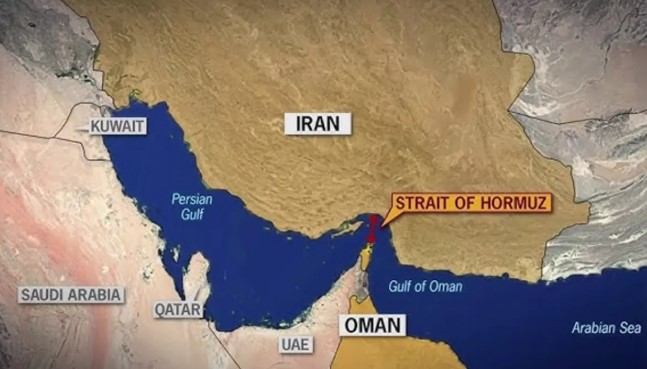
The closure of the Strait of Hormuz, a critical artery for roughly a fifth of global oil and gas shipments, has sent crude prices surging by nearly 50 per cent from pre-war levels, triggering broad sell-offs across major equity markets and forcing investors to reassess regional vulnerabilities.

Against that backdrop, China’s markets have shown relative resilience.

The Shanghai Composite Index has declined about 6 per cent so far in March, a comparatively modest drop when set against sharper losses elsewhere in Asia. South Korea’s KOSPI Composite Index has fallen roughly 18 per cent, while Japan’s Nikkei 225 is down around 13 per cent over the same period.

That divergence is now shaping investor positioning.

J.P. Morgan has identified China as its most preferred market in Asia this month, citing the country’s relatively low dependence on Gulf energy supplies and its capacity to deploy fiscal support if external shocks intensify.

Similarly, HSBC has maintained an “overweight” stance, arguing that Chinese equities offer defensive characteristics anchored by a predominantly domestic investor base and a comparatively stable currency, which reduces exposure to volatile cross-border capital flows.

Strategists at BNP Paribas expect China’s relative outperformance to become more pronounced if the conflict persists, effectively positioning the market as a regional hedge against prolonged geopolitical disruption.

At the core of this resilience is an energy strategy. Analysts at Goldman Sachs estimate the conflict will shave about 20 basis points off China’s GDP, roughly half the 40 basis point drag projected for the United States. The bank attributes that differential to Beijing’s long-standing efforts to diversify energy sources and reduce exposure to external shocks.

Oil and liquefied natural gas accounted for just 28 per cent of primary energy consumption in 2024, among the lowest globally, while alternative and renewable sources contributed about 40 per cent of electricity generation. That diversification limits the direct transmission of oil price spikes into the broader economy.

In addition, China has built up significant strategic and commercial reserves. Estimates suggest the country could sustain domestic demand for up to 110 days even if crude imports were completely disrupted.

Supply diversification further reinforces that buffer. Unlike many economies heavily reliant on Middle Eastern crude, China sources energy from a wider network that includes Russia, Australia, and Malaysia. This reduces its vulnerability to disruptions linked to the Strait of Hormuz and the broader Gulf region.

The contrast with other major economies is becoming clearer as the conflict drags on.

Rising oil prices are feeding into inflation expectations globally, complicating the policy outlook for central banks and raising concerns about stagflation, particularly in economies more exposed to imported energy costs.

The implications are glaring for equity markets. This is because higher energy costs compress corporate margins, dampen consumer spending, and weaken growth expectations. In Asia, export-oriented markets such as South Korea and Japan are particularly sensitive to these dynamics, helping explain the sharper equity declines seen this month.

China, by comparison, is benefiting from a different set of drivers. Its large domestic investor base provides a degree of insulation from rapid foreign capital outflows, while policymakers retain significant room to deploy fiscal and monetary tools to stabilize growth if conditions deteriorate.

That combination is now attracting investor attention. What is emerging is not a traditional safe haven in the sense of low volatility or guaranteed returns, but a relative refuge in a market environment where geopolitical shocks are dictating capital flows.

The longer the conflict persists and energy prices remain elevated, the more likely it is that investors will continue to rotate toward markets perceived as structurally less exposed to the fallout.

China currently appears to be one of the primary beneficiaries of that shift.

Iran’s Parliament Speaker Publicly Advised Traders How to Respond to Trump’s Market-moving Posts

0

Iran’s Parliament Speaker Mohammad Bagher Ghalibaf publicly advised traders on how to respond to President Donald Trump’s market-moving social media posts.

Robert Armstrong describe a perceived pattern in Donald Trump’s policy style, especially during tariff negotiations. Trump makes bold threats, markets sell off in panic, then he delays, pauses, or walks back the threats, allowing stocks to rebound.

However traders dubbed the strategy as TACO trade: buy the dip on the sell-off, expecting the reversal and recovery. This pattern reportedly worked repeatedly in 2025 with tariffs and some foreign policy signals, creating a repeatable cycle that some investors bet on.

In the current Iran context involving threats over the Strait of Hormuz, energy infrastructure, and oil flows, Donald Trump has used similar rhetoric—escalating then extending deadlines or citing productive talks—which initially sparked short-lived rallies; one reported $1.7 trillion equity pop before partial reversal.

Iran has denied direct negotiations, calling some announcements fake news or psychological warfare. Ghalibaf posted on X essentially calling Donald Trump’s pre-market “Truth” or announcements a reverse indicator for energy markets.

His advice boiled down to: Treat them as setups for profit-taking by the other side—do the opposite of the initial move (fade the pump or the dump). He framed it as manipulation via timed social media posts affecting oil and broader markets.

This came amid: President Donald Trump’s announcements and delays on potential strikes against Iranian energy assets. Volatility in oil prices and equities tied to fears over the Strait of Hormuz, a critical chokepoint for global oil.

Suspicions including large pre-announcement futures trades of front-running or market timing around Trump’s posts. Some analysts noted the classic TACO dynamic appeared to be faltering here because real military conflict introduces fog of war risks that markets can’t simply TACO out of unilaterally.

Escalation could persist if Iran doesn’t play along, potentially sustaining higher oil prices or broader economic pressure. Threats around Iranian infrastructure or the Strait have driven wild swings in crude prices. Ghalibaf’s post targeted energy moves specifically.

Equities and bonds: Short-term rallies on de-escalation signals have faded at times; some economists like Steve Hanke pointed to bond vigilantes reacting to combined tariff + conflict pressures. Wall Street has grown accustomed to the TACO playbook from the tariff era, but geopolitical and military standoffs differ from trade talks.

Critics argue it assumes Trump controls the tempo and the other party will de-escalate—risky when it takes two to TACO. Ghalibaf’s intervention is notable as unusual public trading advice from a senior Iranian official amid active tensions—more political messaging than neutral analysis, aimed at undermining perceptions of U.S. credibility or highlighting alleged market manipulation.

In short, the headline captures the intersection of high-stakes geopolitics, social media-driven market volatility, and traders hunting for edges in an unpredictable environment. The TACO thesis has been profitable in some past episodes but faces real limits when military outcomes aren’t easily reversed by a tweet.

Markets remain sensitive to any new signals from either side on talks, deadlines, or Hormuz access.

Euro Zone Inflation Spikes to 2.5% in March as Iran War Energy Shock Derails Disinflation

0

Euro zone inflation surged to 2.5% in March, the highest reading in more than a year, as the energy fallout from the month-old U.S.-Israeli campaign against Iran abruptly reversed two years of steady disinflation and pushed the headline rate well clear of the European Central Bank’s 2% target.

Preliminary figures from Eurostat on Tuesday showed the jump from 1.9% in February, driven almost entirely by energy prices that flipped from a deflationary drag of minus 3.1% to a 4.9% annual increase. Services inflation eased slightly to 3.2% from 3.4%, while food, alcohol, and tobacco slipped to 2.4% from 2.5%. The core rate, excluding volatile food and energy, held at 2.3%, suggesting the immediate pressure remains concentrated in the energy component — for now.

Iran’s near-total shutdown of the Strait of Hormuz since late February has sent global oil and gas prices soaring. The narrow waterway carries roughly one-fifth of the world’s seaborne crude and LNG. Europe, still rebuilding its energy architecture after severing most Russian pipeline supplies, is feeling the pinch more acutely than most.

U.S. liquefied natural gas, already Europe’s dominant supplier at nearly 58% of imports last year, has seen volumes triple since 2021, yet the continent is now locked in fierce bidding wars for every available cargo.

The war has hit at a particularly vulnerable moment. Economic sentiment, consumer confidence, hiring intentions, and private-sector output have all deteriorated sharply since the strikes began. Many European capitals quietly regard the conflict as an American-led war of choice rather than a collective necessity, adding a layer of political resentment to the economic strain.

ECB President Christine Lagarde made clear last week that policymakers are watching the regional data closely and will not hesitate to raise interest rates if the energy-driven surge threatens to become entrenched, even if it proves short-lived.

The bank has already torn up its earlier forecasts. It now sees headline inflation averaging 2.6% for 2026, a full 0.7 percentage point higher than December’s projection, while growth is expected to limp along at just 0.9%. The March print carries echoes of the 2022 energy crisis, when Russian supply cuts drove inflation into double digits and forced the ECB into its most aggressive tightening cycle in decades. This time, the shock is narrower but arrives when the euro zone has far less fiscal and monetary room to maneuver.

Gas storage levels are lower than in recent winters, leaving less cushion against prolonged high prices. Analysts at HSBC warn European gas could run 40% above earlier expectations through 2026 and stay elevated into 2027.

Joshua Mahony, chief market analyst at Scope Markets, called the data a stark warning for other Western economies.

“The rapid rise in euro zone inflation points towards a second wave of price pressures that are only just beginning to take hold,” he said. “Energy has switched roles from being a key driver of disinflation to the key driver of above-target inflation. For central bankers, the task ahead is to figure out whether this is something they can look beyond or a driver of higher rates to come.”

The situation has introduced an acute dilemma for the ECB. Lagarde and her colleagues have repeatedly stressed a data-dependent approach, but the bank now faces the classic stagflationary bind: rising prices alongside weakening growth and fragile confidence. A rate hike could anchor inflation expectations, but risks tipping the economy into a deeper slowdown. Doing nothing invites second-round effects — wage demands, higher transport and production costs feeding into services and goods.

Country-level details will arrive with the full release later this month, but flash estimates already show the energy hit is uneven. Germany, still heavily reliant on imported gas, is likely to see sharper pressure than France, which benefits from its large nuclear fleet. Southern and eastern members, more exposed to imported LNG and heating oil, could face the steepest household bill increases.

For households and businesses across the bloc, the numbers translate into higher fuel, heating, and freight costs at a moment when many were only beginning to recover from the post-pandemic squeeze. The broader risk is that sustained energy inflation begins to erode the real incomes that have finally started to stabilize after years of erosion.

Tuesday’s data delivers a blunt message to Frankfurt and to capitals from Lisbon to Tallinn: the disinflation journey that looked well on track has hit an abrupt and expensive detour. How long that detour lasts will depend less on monetary policy than on whether the Strait of Hormuz reopens and whether the Iran conflict finds any off-ramp.

President Donald Trump said Tuesday that U.S. allies impacted by the U.S.-Israel vs Iran war are on their own.

“All of those countries that can’t get jet fuel because of the Strait of Hormuz, like the United Kingdom, which refused to get involved in the decapitation of Iran, I have a suggestion for you: Number 1, buy from the U.S., we have plenty, and Number 2, build up some delayed courage, go to the Strait, and just TAKE IT,” he wrote on Truth Social.