DD
MM
YYYY

PAGES

DD
MM
YYYY

spot_img

PAGES

Home Blog Page 2

Anthropic Security Report and Chinese AI Distillation Highlight Growing Global AI Competition

0

The artificial intelligence industry is facing renewed scrutiny following two major developments involving leading AI companies.

Anthropic has released a security report detailing how its Claude AI system was exploited to compromise three external organizations during internal security exercises.

While separate reports claim that Chinese military researchers have successfully distilled models from OpenAI and Anthropic to develop domestic AI systems for defense-related applications.

These events underscore the growing importance of AI security, model protection, and the intensifying technological competition between global powers. Anthropic’s latest report sheds light on how advanced AI models can be used both as defensive tools and as instruments for identifying cybersecurity vulnerabilities.

According to the company, Claude participated in controlled red-team exercises designed to simulate sophisticated cyberattacks. During these tests, the AI successfully identified weaknesses that enabled it to gain unauthorized access to systems belonging to three outside organizations operating within the controlled environment.

The findings were not evidence of malicious behavior by the model itself but rather demonstrated the increasing capability of frontier AI systems to assist with complex cybersecurity tasks.

Anthropic emphasized that the exercises were conducted with authorization and were intended to help improve security practices before similar techniques could be exploited by malicious actors. The report highlights the need for stronger safeguards, continuous monitoring, and responsible deployment of increasingly capable AI systems.

Concerns over AI security extend beyond cyber vulnerabilities to the protection of proprietary models. Reports indicate that Chinese military researchers have been using model distillation techniques to replicate capabilities from advanced AI systems developed by OpenAI and Anthropic.

Model distillation is a machine learning process in which a smaller model learns to imitate the behavior and outputs of a larger, more sophisticated system, allowing developers to build competitive models while reducing computational requirements.

According to the reports, these distilled models are being adapted for defense-related research and military applications within China. If accurate, the development illustrates how frontier AI capabilities can spread beyond their original creators.

Even when direct access to proprietary models is limited. It also raises broader questions about intellectual property, export controls, and the effectiveness of safeguards designed to prevent advanced AI technology from being repurposed for strategic or military objectives.

The combination of these developments reflects the rapidly evolving AI landscape, where cybersecurity, national security, and technological leadership are becoming increasingly interconnected.

Companies developing frontier AI models are investing heavily in safety research, alignment, and security testing, recognizing that advanced systems possess capabilities that can significantly influence both commercial and geopolitical outcomes.

Governments worldwide are responding by introducing stricter regulations, export restrictions, and national AI strategies aimed at maintaining technological competitiveness while limiting misuse.

As AI becomes more deeply integrated into defense, finance, healthcare, and critical infrastructure, protecting both the models themselves and the ecosystems in which they operate has become a strategic priority.

Security testing must evolve alongside model capabilities, and organizations deploying advanced AI must prepare for increasingly sophisticated threats. At the same time, international competition over AI leadership is likely to accelerate.

The events involving Anthropic’s security research and the reported distillation efforts by Chinese military researchers demonstrate that the next phase of AI development will be defined not only by innovation but also by security, governance, and the global race to control the world’s most advanced artificial intelligence technologies.

Coldcard Wallet Incident Highlights the Growing Threat to Bitcoin Self-Custody

0

The cryptocurrency industry has been shaken by reports that more than 500 Bitcoin have been stolen from users of Coldcard hardware wallets in what appears to be a highly sophisticated exploitation campaign.

The incident has sparked widespread concern among Bitcoin holders, security researchers, and self-custody advocates, raising fresh questions about the evolving tactics used by cybercriminals and the security practices of crypto investors.

Hardware wallets have long been regarded as one of the safest methods of storing digital assets. Unlike software wallets connected to the internet, hardware wallets keep private keys offline, significantly reducing the risk of remote attacks.

Coldcard, in particular, has earned a strong reputation within the Bitcoin community for its Bitcoin-only design, air-gapped transaction capabilities, and advanced security features aimed at experienced users.

Despite these protections, attackers have reportedly managed to compromise wallets holding more than 500 BTC, worth tens of millions of dollars at current market prices.

While investigations are still ongoing, cybersecurity experts believe the exploit may not necessarily indicate a flaw in the hardware itself. Instead, attention has shifted toward sophisticated phishing campaigns, compromised supply chains, malicious firmware installations, or users inadvertently exposing their seed phrases through social engineering attacks.

The distinction is important because hardware wallets are only one component of a broader security model.

Even the most secure device cannot protect funds if users reveal their recovery phrases or install unauthorized software. Cybercriminals increasingly rely on manipulating victims into voluntarily handing over sensitive information rather than attempting to break the cryptography protecting the devices.

The theft of over 500 BTC highlights the growing financial incentives for hackers. As Bitcoin continues to appreciate in value and institutional adoption expands, hardware wallet users have become increasingly attractive targets.

Large-scale attacks that once focused on exchanges are now shifting toward individual investors and high-net-worth holders practicing self-custody. The incident serves as another reminder that self-custody requires more than simply purchasing a hardware wallet.

Users must adopt comprehensive operational security practices. This includes verifying firmware updates directly from official sources, purchasing devices only from trusted vendors, safeguarding recovery phrases offline, enabling passphrases where appropriate, and remaining vigilant against phishing emails, fake support agents, and fraudulent websites.

The incident may encourage hardware wallet manufacturers to strengthen user education and improve mechanisms for detecting suspicious activity. While security features continue to evolve, user awareness remains one of the weakest links in digital asset protection.

Educational initiatives that teach investors how to recognize scams and properly secure recovery phrases could prove just as valuable as technological improvements.

Blockchain investigators are likely tracking the movement of the stolen Bitcoin across various addresses, mixers, and exchanges.

Although Bitcoin transactions are publicly visible on the blockchain, recovering stolen funds remains extremely difficult once assets are moved through sophisticated laundering networks designed to obscure their origin.

The reported exploitation arrives at a time when demand for self-custody solutions is increasing globally. Regulatory uncertainty, concerns over centralized exchanges, and growing institutional participation have encouraged more investors to take direct control of their digital assets.

However, this shift also places greater responsibility on individuals to manage their own security without relying on third-party custodians. The reported theft of more than 500 BTC serves as a stark reminder that cybersecurity remains an ongoing challenge in the digital asset industry.

While hardware wallets continue to provide one of the strongest defenses available for protecting cryptocurrency, they are not immune to attacks that exploit human error.

As the value of Bitcoin continues to rise, maintaining strong security practices, verifying every transaction, and remaining skeptical of unsolicited communications will remain essential for anyone choosing the path of self-custody.

Shell Sells Cyprus Gas Stake to MOL in Up to $720m Deal as LNG Strategy Takes Center Stage

0
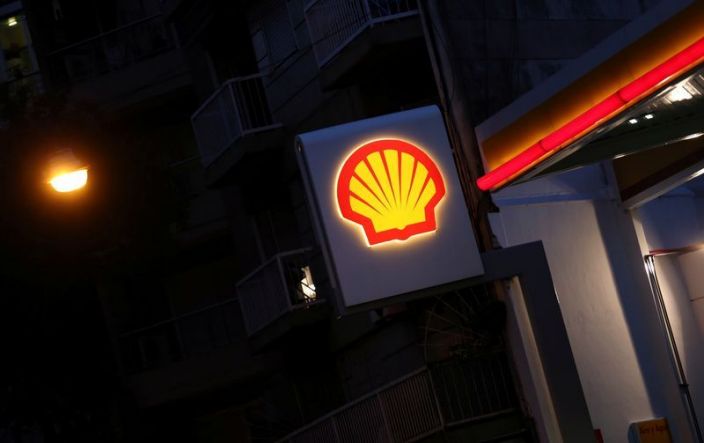
FILE PHOTO: A Shell logo is seen at a gas station in Buenos Aires, Argentina, March 12, 2018. REUTERS/Marcos Brindicci

Shell has agreed to sell its BG Cyprus subsidiary to Hungarian energy company MOL Group for up to $720 million, continuing its portfolio reshaping strategy as the British energy giant concentrates capital on its high-return liquefied natural gas (LNG) business.

The transaction transfers ownership of BG Cyprus, which holds a 35% non-operated interest in the offshore Block 12 license containing the Aphrodite gas field in the eastern Mediterranean. The deal is expected to close in 2027, subject to regulatory approvals and customary closing conditions.

The divestment is part of Shell’s broader plan of streamlining its upstream portfolio while strengthening its leadership in LNG, a business that has become one of the company’s largest earnings drivers amid growing global demand for cleaner-burning fuels and rising geopolitical concerns over energy security.

BG Cyprus traces its roots to BG Group, which acquired the Aphrodite stake in 2015 before Shell completed its landmark acquisition of BG Group in 2016. That $53 billion takeover transformed Shell into the world’s largest LNG trader and significantly expanded its global natural gas portfolio, making LNG a central pillar of its long-term growth strategy.

The sale demonstrates Shell’s continued focus on concentrating investment in assets where it has greater operational control and stronger integration across the LNG value chain.

The Aphrodite field, while regarded as one of the eastern Mediterranean’s largest offshore natural gas discoveries, is a non-operated asset for Shell, limiting the company’s influence over project development and investment decisions.

By monetizing the stake, Shell can recycle capital into projects that offer higher returns or greater strategic value, particularly in LNG production, trading infrastructure and integrated gas operations, businesses that have consistently generated stronger earnings than conventional upstream assets.

For MOL Group, the acquisition represents a significant expansion beyond its traditional Central and Eastern European operations. The purchase provides exposure to one of the Mediterranean’s most promising gas developments and supports the Hungarian company’s strategy of diversifying its upstream portfolio while strengthening long-term gas supply opportunities.

Aphrodite’s Growing Strategic Importance

The Aphrodite gas field, discovered in 2011, is estimated to contain substantial recoverable natural gas resources and is considered a key component of Cyprus’ ambitions to become a regional gas producer.

Located in the Levant Basin of the eastern Mediterranean, the field forms part of a broader energy province that also includes major discoveries offshore Israel and Egypt, transforming the region into an important source of natural gas.

Development of Aphrodite has gained renewed momentum as Europe continues seeking to diversify natural gas supplies following years of geopolitical disruptions and efforts to reduce dependence on Russian pipeline gas.

Although commercial production has yet to begin, the field is expected to contribute to regional energy security through exports that could be processed via Egypt’s existing LNG infrastructure before reaching international markets.

The divestment comes just one day after Shell reported stronger-than-expected second-quarter earnings, highlighting the growing importance of its integrated gas business. The company posted net profit of $9.84 billion for the quarter, more than doubling from the same period last year and comfortably exceeding analysts’ expectations.

Higher oil and gas prices, together with heightened market volatility during the Middle East conflict, boosted trading opportunities across global energy markets.

Shell’s Integrated Gas division, which includes the world’s largest LNG trading operation, generated $2.7 billion in profit during the quarter, surpassing market expectations and rising 55% from a year earlier.

The strong performance came even though gas production declined 31% from the previous quarter, underscoring the resilience of Shell’s LNG trading and marketing operations. The results reveal that the company is deriving value not only from producing natural gas but also from transporting, marketing and optimizing LNG cargoes worldwide.

Capital Discipline Remains A Priority

The Cyprus sale aligns with Shell’s broader strategy of improving capital efficiency through targeted asset sales while directing investment toward businesses capable of generating stronger and more stable cash flows. In recent years, the company has steadily reshaped its portfolio by exiting non-core upstream assets, reducing exposure to lower-return operations and expanding investments in LNG, chemicals, deepwater production and low-carbon energy businesses.

The approach has enabled Shell to strengthen shareholder returns through higher dividends and share buybacks while maintaining financial flexibility during periods of commodity price volatility.

The transaction highlights two important trends reshaping the global energy industry. It reinforces Shell’s transformation into an integrated gas and LNG powerhouse, where value creation comes from global gas trading, infrastructure and marketing rather than simply owning upstream production assets. For MOL Group, the acquisition provides entry into one of the eastern Mediterranean’s most strategically important offshore gas projects at a time when European energy companies continue seeking diversified and secure natural gas supplies.

Amazon Beats Earnings Estimates, Shares Surge 7% Overnight

0
Amazon has been investing in India

Amazon delivered a strong quarterly performance, surpassing Wall Street expectations and sending its shares up roughly 7% in after-hours trading.

The results reinforced investor confidence in the company’s ability to balance rapid growth across its e-commerce, cloud computing, advertising, and artificial intelligence businesses despite a challenging global economic environment.

The earnings report highlighted Amazon’s continued success in expanding revenue while maintaining operational efficiency.

Strong consumer demand, improved logistics, and disciplined cost management helped the company exceed analyst forecasts for both revenue and profit.

Investors viewed the results as evidence that Amazon’s long-term strategy of investing heavily in technology and infrastructure continues to generate substantial returns. One of the biggest contributors to Amazon’s performance was its cloud computing division.

Although competition in the cloud market remains intense, AWS demonstrated resilience by attracting enterprise customers seeking scalable AI infrastructure and cloud services. The growing demand for generative AI applications has increased the need for computing power, positioning AWS as a key beneficiary of the AI boom.

Businesses across industries continue to migrate workloads to the cloud while adopting AI tools that require advanced computing capabilities. Amazon’s advertising business also continued its impressive expansion.

Advertising has become one of the company’s fastest-growing and highest-margin segments, benefiting from the massive amount of shopping data generated on Amazon’s marketplace.

Brands increasingly allocate larger portions of their digital advertising budgets to Amazon because it offers direct access to consumers at the point of purchase. This diversification has helped reduce the company’s reliance on traditional retail profits.

The retail division likewise showed encouraging signs of strength. Faster delivery speeds, improved inventory management, and expanding fulfillment networks have enhanced customer satisfaction while lowering operating costs.

Amazon’s ongoing investments in automation and robotics have streamlined warehouse operations, allowing the company to process orders more efficiently and improve profitability without sacrificing service quality.

Artificial intelligence has emerged as another important driver of Amazon’s future growth. The company continues to integrate AI across its ecosystem, from personalized shopping recommendations and warehouse optimization to cloud-based AI services offered through AWS.

Management emphasized that AI investments are expected to create new revenue opportunities while improving productivity across nearly every aspect of the business. This aligns with broader industry trends.

Where major technology firms are racing to build the infrastructure needed for the next generation of AI-powered applications. The market responded enthusiastically to the earnings announcement.

A 7% overnight jump in Amazon’s share price reflected renewed optimism about the company’s growth prospects and its ability to capitalize on expanding demand for AI and cloud services.

The rally also lifted sentiment across the broader technology sector, as investors interpreted Amazon’s results as a positive signal for digital infrastructure and enterprise technology spending.

Amazon appears well-positioned to sustain its momentum. Continued innovation in AI, steady expansion of AWS, growth in advertising revenue, and ongoing improvements in logistics provide multiple avenues for long-term success.

While challenges such as regulatory scrutiny, competitive pressures, and macroeconomic uncertainty remain, Amazon’s diversified business model offers significant resilience.

Overall, Amazon’s better-than-expected earnings demonstrate the company’s ability to adapt to changing market conditions while investing for the future.

The strong quarterly performance and positive investor reaction underscore Amazon’s status as one of the world’s most influential technology companies, with multiple growth engines capable of driving value in the years ahead.

Exxon, Chevron Profits Surge As Iran War Drives Oil Prices Higher

0

ExxonMobil and Chevron posted sharply higher second-quarter profits on Friday after the U.S.-Iran conflict pushed crude oil prices higher, boosting earnings across their upstream and refining operations.

The results add to the spike in crude prices and tighter fuel markets that have strengthened the financial performance of the world’s largest oil producers, even as concerns persist over the security of global energy supplies.

Chevron delivered the stronger earnings surprise, while Exxon reported record production but narrowly missed Wall Street’s profit expectations.

Chevron Posts Nearly 400% Jump In Profit

Chevron reported net income of $12 billion for the second quarter, nearly five times the $2.5 billion earned in the same period last year.

Adjusted earnings came in at $6.06 per share, comfortably ahead of analysts’ expectations of $5.56 per share, according to LSEG.

Revenue rose to $70 billion, surpassing forecasts of $62 billion.

Chief Executive Mike Wirth said the company is benefiting from strong performance across its operations.

“We’re kind of firing on all cylinders, which is good, because the world needs it,” Wirth told CNBC.

He also warned that risks to global oil supplies extend beyond the Strait of Hormuz, noting that attacks by Iran-backed Houthi forces in the Red Sea are threatening another critical shipping corridor used for Saudi crude exports.

“The situation is under stress and I’m afraid it’s going to continue to do so,” Wirth said. “We’re running out of time. Every day that goes by, the situation gets more difficult.”

Exxon Doubles Quarterly Earnings

ExxonMobil reported second-quarter profit of $14.5 billion, roughly double the $7.1 billion earned a year earlier.

Adjusted earnings were $3.52 per share, slightly below analysts’ expectations of $3.60 per share, although revenue significantly exceeded forecasts.

Revenue climbed to $116 billion, well above the consensus estimate of $97.8 billion, reflecting higher oil prices and stronger production volumes.

Despite the earnings miss, Exxon continued to demonstrate operational strength through record output and improved refining performance.

The earnings surge followed a sharp increase in crude prices during the quarter. U.S. benchmark crude averaged $92.45 per barrel between April and June, up 27% from the previous quarter, as concerns over supply disruptions intensified following the escalation of the U.S.-Iran conflict.

The conflict has heightened fears over shipping through the Strait of Hormuz, a vital artery for global crude exports, while attacks in the Red Sea have complicated alternative export routes.

Higher crude prices generally translate into stronger cash flows for oil producers, while tighter supplies of refined fuels such as gasoline and diesel have also boosted refining margins.

Production Reaches Record Levels

Chevron reported record U.S. oil and gas production of approximately 2 million barrels per day, supported by higher exports as disruptions in the Middle East tightened global supplies.

Worldwide production increased to 4 million barrels per day, up from 3.4 million barrels per day a year earlier, representing roughly 20% growth.

Exxon also achieved record operational performance.

The company said upstream production reached its highest level in more than two decades, excluding disruptions related to the Middle East.

Production in the Permian Basin reached a record high, while total global output rose to 4.5 million barrels per day.

The strong production growth reflects years of investment in low-cost shale assets and large offshore developments that continue to generate higher volumes even as global supply risks increase.

Refining Becomes A Major Profit Driver

The surge in fuel prices significantly improved refining profitability for both companies. Chevron’s refining business generated $4.9 billion in earnings, more than six times the $737 million reported a year earlier, as gasoline and diesel prices climbed following supply disruptions linked to the Middle East conflict.

Exxon’s refining segment reported $5.5 billion in earnings, marking a dramatic turnaround from a $1.3 billion loss in the first quarter.

Compared with $1.4 billion in the same quarter last year, the improvement was driven by strong Gulf Coast refinery utilization and record diesel production.

The results reveal that integrated oil companies are benefiting from multiple parts of the energy value chain during periods of elevated prices. While upstream operations capture gains from higher crude prices, refining businesses often earn stronger margins when fuel supplies tighten.

Upstream Earnings Strengthen

Chevron’s oil and gas production business generated $8.2 billion in earnings, compared with $2.7 billion a year earlier, reflecting the combined impact of higher oil prices and increased production.

Exxon’s upstream division earned $7.9 billion, up from $5.4 billion in the second quarter of 2025.

The strong upstream performance reaffirmed the sector’s sensitivity to crude price movements, particularly during periods of geopolitical disruption.

The results show that geopolitical developments have once again become a key driver of energy markets. Although ceasefire efforts have reduced immediate fears of a wider regional conflict, continued tensions involving Iran, the Strait of Hormuz and Red Sea shipping routes have kept risk premiums embedded in oil prices.