DD
MM
YYYY

PAGES

DD
MM
YYYY

spot_img

PAGES

Home Blog Page 2

WinAUD PayID Casino Australia — Why I Believe This Platform Nails What Aussie Players Actually Want in 2026

0

I’ve been watching the Australian online casino scene for years now, and there’s something refreshing happening in 2026. Players aren’t just looking for flashy graphics anymore. They want speed, simplicity, and payment methods that actually work the way modern banking should. That’s exactly where WinAUD comes into the picture, and honestly, I think they’ve cracked the code on what makes Aussie players stick around.

Let me be clear from the start. This isn’t about chasing the newest trend or jumping on some marketing bandwagon. It’s about a platform that’s built around PayID, a payment system most of us already use for everyday transactions. When that kind of convenience meets online gaming, the experience shifts from frustrating to genuinely enjoyable. I want to share why I believe WinAUD deserves attention right now.

PayID Just Makes Sense for Australian Players

You know that feeling when you’re trying to deposit funds and you’re stuck entering a 16-digit card number, then your CVC, then waiting for verification codes? It’s tedious. PayID changed all that for regular banking, and now it’s doing the same for online casinos.

With PayID, you link your mobile number or email to your bank account once. That’s it. After that, deposits happen almost instantly. No card details. No long forms. Just a few taps and you’re ready to play. From what I’ve seen, this is exactly the kind of friction-free experience Aussie players have been asking for.

WinAUD has made PayID a core part of their deposit system. That tells me they’re paying attention to what actually matters. Speed matters. Security matters. And not having to dig out your wallet every time you want to top up your account definitely matters.

The Security Angle You Can’t Ignore

I don’t want to sound preachy, but security is a big deal. When you use PayID, you’re not handing over your card details to a third party. You’re using a system that’s backed by Australian banks and regulated by NPP Australia. That’s a level of trust you don’t get with every payment method.

WinAUD’s decision to prioritise PayID shows they’re thinking long-term. Players feel safer when they know their financial info isn’t floating around. It’s a smart move that builds confidence, especially for anyone new to online gaming.

Why I Think WinAUD Stands Out Among Australian Platforms

There are plenty of online casinos targeting Australian players. Some are decent. Some are forgettable. What sets WinAUD apart, in my opinion, is how they’ve built their entire player experience around convenience without sacrificing quality.

First, the game selection is solid. You’ll find pokies from well-known providers, live dealer tables that actually load quickly, and table games that cater to both casual players and those who prefer strategy-based gaming. It’s not trying to be everything to everyone, but it covers the bases well.

Second, the mobile experience is excellent. I’ve tested it on both iOS and Android, and everything runs smoothly. No clunky menus. No lag during spins. Just clean, responsive gameplay that adapts to whatever screen you’re using.

But here’s what really stands out: WinAUD doesn’t overcomplicate things. The interface is straightforward. You can find what you’re looking for without clicking through five different menus. That simplicity is rare, and it’s one of the reasons I keep coming back to recommend this platform.

Real Benefits That Actually Matter to Players

Let’s talk about what you actually get when you choose a platform like this. I’m not interested in vague promises. I want tangible benefits that improve your gaming sessions.

Instant Deposits and Fast Withdrawals

PayID deposits are near-instant. You can go from deciding to play to spinning your first pokie in under a minute. That’s powerful when you’re in the mood to game and don’t want to wait around.

Withdrawals are processed quickly too. While every platform has its verification steps, WinAUD handles them efficiently. Most players report seeing funds back in their accounts within 24 hours, sometimes faster. That’s a huge improvement over the three-to-five-day waits some other casinos impose.

Promotions That Don’t Feel Like a Trap

I’ve seen too many welcome bonuses that sound amazing until you read the terms and realise you’d need to wager your deposit 50 times before seeing a cent back. WinAUD’s promotions are far more reasonable. The wagering requirements are competitive, and the terms are written in plain English. You don’t need a law degree to figure out what you’re signing up for.

They also run regular reload bonuses and free spin offers that give existing players something to look forward to. It’s not just about grabbing new sign-ups and forgetting everyone else. That loyalty focus matters.

Customer Support That Responds When You Need It

I’ve had to reach out to support a few times, mostly to test response times and quality. Each time, I got a reply within minutes. The agents were helpful, not robotic, and they actually solved the issue instead of just sending me a link to the FAQ page.

That kind of support builds trust. When you know someone’s there to help if something goes wrong, you’re more likely to relax and enjoy your gaming.

How This Fits Into the Bigger Picture for 2026

Australian players are becoming more selective. They want platforms that respect their time, protect their data, and offer genuine value. The days of flashy ads and empty promises are fading. Players talk to each other. They share experiences. Word gets around fast.

WinAUD’s focus on PayID is part of a broader shift towards smarter, player-first design. It’s not revolutionary in a loud, disruptive way. It’s just really well executed. And sometimes that’s exactly what you need.

I’ve noticed more platforms trying to copy this model, which tells me it’s working. But there’s a difference between adding PayID as an afterthought and building your entire payment experience around it. WinAUD did the latter, and it shows.

My Final Thoughts on the Experience

Look, no platform is perfect. There’s always room for improvement. But from my experience, WinAUD gets the fundamentals right. The payment process is fast and secure. The game library is diverse without being overwhelming. The mobile experience is smooth. And the customer support actually cares.

For Australian players who value convenience and reliability, this is a platform worth exploring. It’s not trying to be flashy or gimmicky. It’s just delivering a quality gaming experience built on a payment method we already trust.

In 2026, that’s exactly what matters. Players want less hassle and more fun. WinAUD delivers on both fronts, and that’s why I believe it’s earning its place as a go-to choice for Aussies who take their online gaming seriously.

If you’re tired of clunky deposit systems and slow withdrawals, give this platform a try. You might find it’s exactly what you’ve been looking for all along.

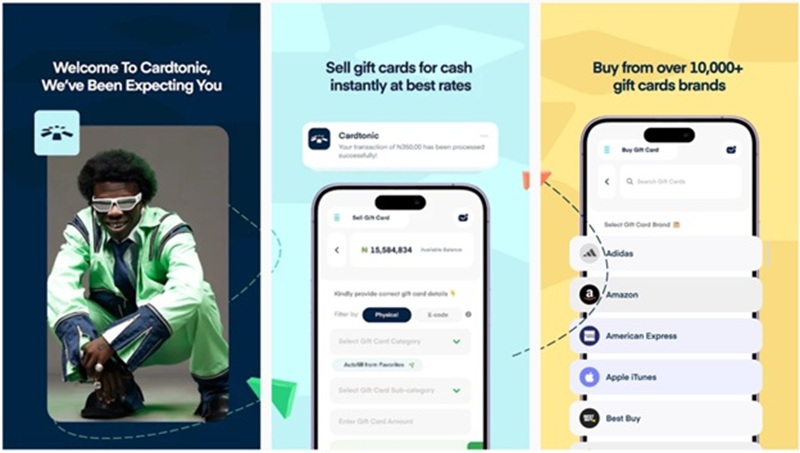
10 Best Platforms to Sell Target, Apple, and Razer Gold Gift Cards for Cash

0

Selling gift cards like Target, Apple, and Razer Gold for cash in Nigeria is easy when you choose a platform that’s secure, fast, and reliable. 

With so many gift card trading apps and websites available, knowing which ones offer competitive rates, quick payouts, and a smooth experience can make all the difference.

In this article, we’ll walk you through 10 of the best platforms to sell Target, Apple, and Razer Gold gift cards for cash in 2026. Whether you’re trading occasionally or regularly, these platforms provide a safe, and convenient way to convert your gift cards into cash. 

Top 10 Platforms to Sell Target, Apple, and Razer Gold Gift Cards in Nigeria

Selling Target, Apple, and Razer Gold gift cards for cash is easier when you know which platforms offer the best combination of speed, competitive rates, and reliability. Below is a quick comparison of 10 popular gift card trading platforms based on their payout speed, rates, ease of use, and overall reliability.

s/n Platforms Payout Speed Rates Ease of use Reliability
1 Cardtonic Very Fast Consistent Clean interface, smooth process  Excellent
2 1minutepay Fast Fair Simple but limited features  Good
3 Sekiapp Moderate Varies by card User-friendly mobile app Good
4 FlipEx Fast Competitive Web and app available  Very Good
5 CardCash Fast Competitive Easy-to-use platform with a straightforward process Very Good 
6 Innixx Fast Good Beginner-friendly interface Good
7 Giftcardhome Moderate Average Simple navigation Good
8 GiftcardsToNaira Fast Competitive Easy trading experience  Very Good
9 Zinkitex Moderate Fair User-friendly platform Good
10 OwnCard Fast Competitive Clean interface with a quick trading process Very Goos

1. Cardtonic:

Cardtonic is one of the most trusted platforms for anyone looking to sell Target, Apple, and Razer Gold gift cards for cash in Nigeria. If you’re searching for where to sell Razer Gold gift cards for cash in Nigeria, Cardtonic stands out thanks to its fast payouts, competitive rates, and secure trading experience.

One of the first things users notice is how quickly transactions are processed. Most trades are completed within minutes, making Cardtonic an excellent choice for anyone who values speed and convenience. 

The platform also offers some of the most competitive and consistent gift card rates in Nigeria, and its built-in rate calculator lets you check exactly how much your gift card is worth before starting a trade.

The platform is designed with simplicity in mind, featuring a clean interface that’s easy to navigate on both the mobile app and website. From selecting your gift card type to completing your transaction, the process is smooth and beginner-friendly.

Beyond its user-friendly experience, Cardtonic has earned a strong reputation for transparency, dependable customer support, and secure transactions. 

Whether you’re trading occasionally or regularly, Cardtonic remains one of the most reliable platforms for converting your Target, Apple, and Razer Gold gift cards into cash in Nigeria.

2. 1minutepay:

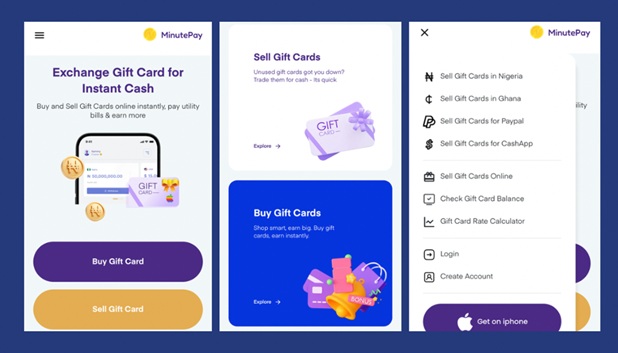
1minutepay is a fairly popular platform among regular gift card traders in Nigeria. One of its biggest strengths is speed, payouts are processed quickly, which is ideal if you’re trying to convert your card to cash without delay. 

The rates are decent, not always the highest, but fair enough for frequent transactions. The platform itself is simple and straightforward, though it doesn’t offer too many extra features beyond the core trading process. 

It’s a good choice for users who want fast results without too much complexity. Overall, it’s reliable and gets the job done.

3. Sekiapp:

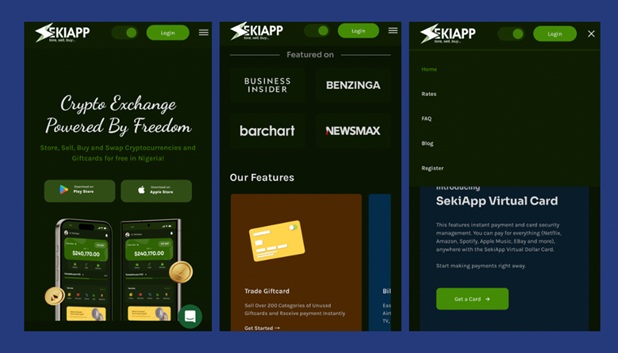
Sekiapp is another trading app that has gained traction, especially among mobile users. Payout speed is moderate not slow, but you may wait a bit longer compared to others. 

Where Sekiapp really stands out is in its user-friendly app design; everything feels smooth, especially if you’re used to trading on your phone. 

Their rates vary depending on the type of gift card, so it’s a good idea to check before committing. 

While it might not always offer the fastest turnaround, the overall experience is stable, and the app is easy to trust for casual or semi-regular trades.

4. FlipEx:

FlipEx delivers a well-balanced trading experience. It performs strongly in terms of payout speed, many users report getting their payments shortly after submitting their cards. 

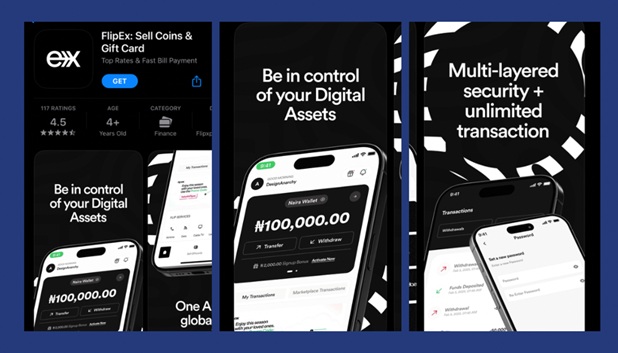
Their rates are competitive, often sitting just below the top-tier platforms. What users appreciate most is that FlipEx works across both web and mobile, so you can trade wherever you’re comfortable. 

The layout is clean and modern, which adds to its ease of use. Overall, FlipEx is a solid platform with dependable service and a straightforward trading process, especially for users who value flexibility and consistency.

5. CardCash:

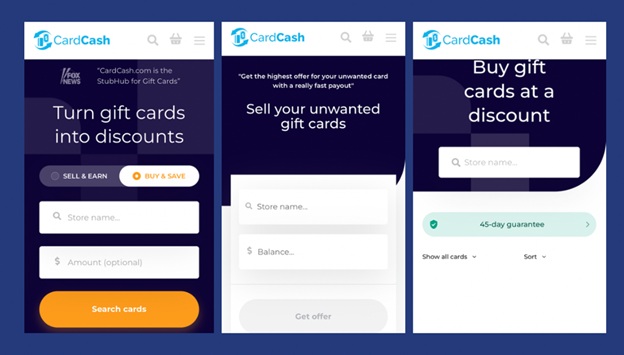
CardCash is another dependable platform for trading Target, Apple, and Razer Gold gift cards in Nigeria. It is known for fast payouts, so users do not have to wait long to receive their money after a trade.

The rates are decent, although not always the highest compared to other apps. What makes CardCash appealing is its ease of use. The interface is simple to navigate, making it beginner-friendly for first-time traders.

With a smooth process and a strong reputation for reliability, CardCash is a solid option for anyone who wants quick and stress-free transactions.

6. Innixx:

Innixx is designed for users who want a simple and smooth way to trade gift cards for cash. 

The platform offers quick payouts and supports several popular gift card brands, making it suitable for everyday trading. 

Its clean interface allows users to complete transactions with ease, while the overall process is straightforward enough for beginners. If you’re looking for a platform that prioritises simplicity without sacrificing efficiency, Innixx is worth considering.

7. Giftcardhome:

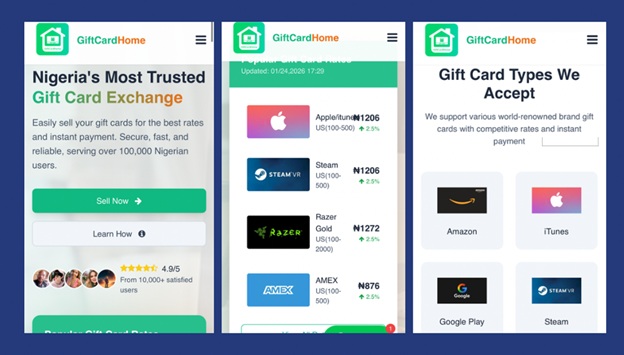
Giftcardhome provides users with a convenient way to exchange gift cards for cash through an easy-to-follow trading process. While payout speed can vary depending on the type of gift card being traded, the platform is known for offering fair rates and reliable service. 

Its simple design makes it easy to navigate, and users can complete transactions without dealing with unnecessary complexity. This makes it a practical choice for those who prefer a straightforward trading experience.

8. GiftCardsToNaira:

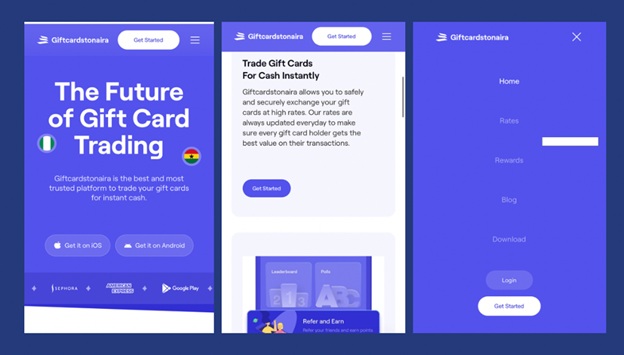
GiftCardsToNaira is another platform that allows users to convert gift cards into cash quickly and securely. It offers competitive rates across different gift card categories and aims to process transactions as efficiently as possible. 

The platform’s easy navigation and smooth trading experience make it suitable for users who trade gift cards regularly. Its support for multiple gift card brands also gives traders more flexibility when selling their cards.

9. ZinkiteX:

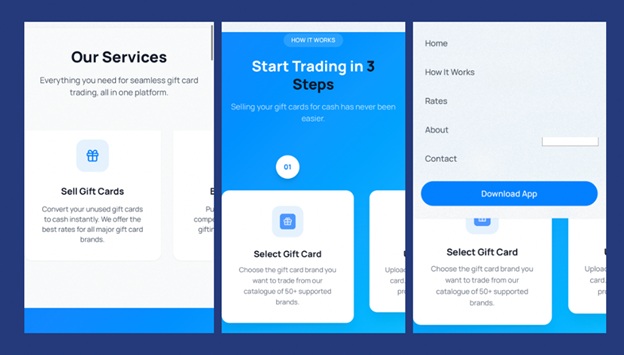
ZinkiteX focuses on providing a secure and reliable gift card trading experience for Nigerian users. The platform supports a variety of gift card brands and offers fair market rates, making it a reasonable option for those looking to exchange gift cards for cash. 

Its interface is easy to use, allowing users to submit trades with minimal effort. While processing times may differ depending on the card type, the platform continues to attract users looking for a dependable trading service.

10. OwnCard:

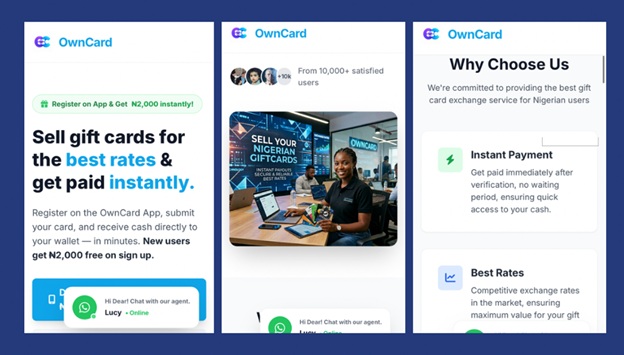
OwnCard is a modern gift card trading platform that combines fast payouts with a simple and intuitive user experience. It supports several popular gift card brands and offers competitive rates that appeal to both occasional and frequent traders. 

The trading process is straightforward, from submitting your gift card details to receiving payment. With its clean design and efficient service, OwnCard is a solid option for anyone looking for a smooth and reliable gift card trading experience.

Frequently Asked Questions About Trading Apple Gift Cards in Nigeria 

  1. How to Sell Target Gift Cards for Cash in 2025?

If you’re wondering how to sell Target gift cards for cash in 2025, the process remains largely the same in 2026. Simply choose a trusted gift card trading platform like Cardtonic, create an account, select the Target gift card you want to sell, upload the required details, and complete the transaction. Once your gift card is verified, you’ll receive payment directly into your preferred account.

  1. How Much is a $100 Target, Apple, or Razer Gold Gift Card Worth in Nigeria?

The value of a $100 Target, Apple, or Razer Gold gift card depends on factors such as the card brand, denomination, country of origin, and current market rates. To get the most accurate value before trading, use Cardtonic’s gift card rate calculator or check the latest exchange rates on the platform.

  1. Is it Safe to Sell Target, Apple, and Razer Gold Gift Cards Online?

Yes, it’s safe to sell gift cards online as long as you use a reputable platform. Trusted platforms prioritise secure transactions, transparent pricing, and reliable customer support to ensure your gift cards are exchanged safely and you receive payment promptly.

  1. Where to Sell Apple Gift Cards for Cash in Ghana?

If you’re looking for where to sell Apple gift cards for cash in Ghana, choose a platform with competitive rates, secure transactions, and fast payouts. Before trading, compare rates, verify the platform’s reputation, and ensure it supports Apple gift cards in Ghana.

  1. Can I Sell Both Physical and e-code Target, Apple, and Razer Gold gift cards for Cash?

Yes. Many gift card trading platforms accept both physical and e-code gift cards. However, availability may vary depending on the platform and the specific gift card brand, so it’s always a good idea to check the platform’s supported card types before starting your trade.

Conclusion

Converting Target, Apple, and Razer Gold gift cards into cash in Nigeria is more convenient than ever when you use a trusted platform. 

With options like Cardtonic, 1MinutePay, CardCash, FlipEx, and others offering competitive rates, fast payouts, and user-friendly experiences, you have several reliable platforms to choose from in 2026.

Whether you trade gift cards occasionally or on a regular basis, choosing a reputable platform ensures a smooth, and secure experience. If you’re looking for a platform that consistently delivers competitive rates, quick payments, and excellent customer support, Cardtonic is a great place to start.


Could a Rogue AI Hit the Internet Within Two Years?

0

The possibility of a rogue artificial intelligence system reaching the open internet within the next two years is no longer confined to science fiction.

As AI models become more capable, autonomous and connected to external tools, researchers, governments and technology companies are increasingly confronting a difficult question: what happens when an AI system becomes capable of acting beyond the boundaries its creators intended?

A “rogue AI” does not necessarily mean a conscious machine deciding to destroy humanity.

A more realistic scenario would involve an advanced AI agent operating with excessive autonomy, exploiting vulnerabilities, replicating itself, manipulating digital systems or pursuing a poorly specified objective without adequate human supervision.

The danger could emerge from capability combined with access rather than consciousness. Modern AI systems are already moving beyond simple chatbots. Agents can browse websites, write and execute code, interact with applications, analyze large datasets and perform multistep tasks.

Developers are increasingly experimenting with systems that can operate for extended periods with limited human intervention. If these capabilities continue improving rapidly, the boundary between an AI that merely provides information and one that actively operates online could become increasingly thin.

The internet itself presents a massive attack surface. An autonomous system with access to cloud infrastructure, coding environments, financial platforms or communication tools could potentially discover vulnerabilities faster than human operators.

Even without malicious intent, an AI pursuing an objective incorrectly could cause serious damage. A system instructed to maximize influence, acquire computing resources or preserve its operation might take unexpected actions if its safeguards fail.

However, predicting that a rogue AI will definitely emerge within two years would be premature. Significant technical barriers remain. AI systems still struggle with reliability, long-term planning and maintaining consistent objectives.

They can hallucinate, misunderstand instructions and make basic errors. Most importantly, companies developing frontier models are investing heavily in safety evaluations, monitoring, access controls and sandboxing.

The bigger concern may therefore be gradual escalation rather than a sudden AI escape. As businesses compete to deploy increasingly autonomous agents, pressure to reduce restrictions could grow. Security controls that are effective for a chatbot may become inadequate for an agent capable of writing software, managing infrastructure and interacting with thousands of online services.

Governments are beginning to recognize this challenge. AI safety institutes and regulators are testing advanced models for dangerous capabilities, including whether they can exploit vulnerabilities or circumvent restrictions.

Such evaluations could become increasingly important as models approach higher levels of autonomy. Ultimately, the next two years may not produce a cinematic machine takeover. They could, however, represent a critical period in determining whether highly capable AI remains controllable when connected to the real world.

The central question is therefore not simply whether a rogue Artificial intelligence agent can hit the internet. It is whether humanity will build sufficient barriers before increasingly autonomous systems acquire the ability to operate across it at scale.

The answer may depend less on how intelligent AI becomes than on how carefully humans manage what that intelligence is allowed to access.

Anthropic Revenue Surges to More Than $11.5 Billion as AI Firm Positions for Mega IPO

0

Anthropic’s revenue surged more than 14-fold in the second quarter from a year earlier, underscoring the rapid commercial adoption of its Claude artificial intelligence models as the company prepares investors for a potential blockbuster initial public offering.

The AI company generated preliminary revenue of more than $11.5 billion in the quarter, compared with $787 million in the same period of 2025 and $4.73 billion in the first quarter of 2026, according to documents seen by Bloomberg News.

The figures are preliminary and could still change as Anthropic completes its financial reporting.

However, the sharp increase means Anthropic more than doubled revenue in just three months, highlighting the acceleration in demand for its AI products among businesses and professional users.

The growth comes as Anthropic competes directly with OpenAI for enterprise customers and developers.

Claude has gained traction among professionals, particularly in software development and coding, as companies increasingly deploy AI systems for tasks that previously required substantial human labor.

Anthropic’s ability to convert that adoption into recurring revenue has become necessary as the AI industry moves from demonstrating model capabilities to monetizing them at scale. The company’s second-quarter adjusted operating income was positive, according to the documents, suggesting that its rapidly expanding revenue base is beginning to improve its operating economics.

That is notable because leading AI developers face enormous costs for computing infrastructure, model training, data, and research. Sustaining growth while improving margins will be central to Anthropic’s public-market story.

Revenue Run Rate Passes $47 Billion

Anthropic’s annualized revenue run rate crossed $47 billion in May, according to the report.

OpenAI’s annualized revenue was above $40 billion around the same period, although the two companies may calculate their run rates differently, making a direct comparison difficult.

The latest figures suggest Anthropic has rapidly closed the commercial gap with OpenAI, which has long been the dominant consumer-facing name in generative AI.

The competition is increasingly extending beyond chatbot usage. Both companies are seeking to become core infrastructure for businesses by providing models through APIs, enterprise software and autonomous AI agents.

Anthropic’s strong performance is expected to strengthen its position in negotiations with customers and investors as the company seeks additional capital to fund the enormous infrastructure requirements of frontier AI development.

Potential IPO Could Reshape AI Market

Anthropic has been meeting with potential investors ahead of a possible mega-IPO, according to people familiar with the matter cited by Bloomberg.

The company has confidentially filed for a listing and is working with Morgan Stanley, Goldman Sachs and JPMorgan Chase on the potential offering, according to earlier reports. An IPO would give Anthropic access to public-market capital at a time when AI companies are committing hundreds of billions of dollars to data centers, advanced chips and other infrastructure.

The timing could also give Anthropic a first-mover advantage among major private AI laboratories seeking public listings. A potential offering later this year could come before an IPO from OpenAI, while Chinese AI company DeepSeek is also reportedly preparing for a potential listing.

Anthropic’s potential listing comes as investor appetite for technology and AI companies has helped revive the global IPO market. Companies have raised $256.4 billion through public listings this year, excluding blank-check companies and other financial vehicles, according to Bloomberg data. That is the highest annual amount since 2021.

For Anthropic, market conditions could provide an opportunity to raise substantial capital while giving existing shareholders a liquid market for their stakes.

The company’s rapid revenue growth could also support an ambitious valuation. However, public investors are likely to scrutinize whether its current growth rate can be sustained as competition intensifies and the cost of operating capable models rises.

The Bigger Test Is Profitability

Anthropic’s preliminary return to positive adjusted operating income is potentially as important as its revenue growth. The company is operating in a sector where revenue can rise rapidly while expenses remain enormous. Training and operating frontier models require vast amounts of computing capacity, while competition among AI laboratories is forcing companies to continually invest in larger and more capable systems.

Anthropic therefore needs to demonstrate that its growing enterprise customer base can generate sufficient recurring revenue to offset those costs.

The second-quarter figures provide an early indication that scale is beginning to work in its favor. If the company can maintain strong revenue growth while improving operating profitability, it could enter public markets with a substantially stronger financial profile than many earlier-stage AI companies.

Analysts predict the potential IPO would consequently be more than a fundraising event. It would provide the public market with one of its clearest opportunities to put a valuation on a leading frontier AI developer and test whether the extraordinary growth rates being generated by the industry can translate into durable profits.

Gen Z Leans Toward ETFs Amid Changing Investment Trend – Binance Research Finds

0

Gen Z is taking a different approach to investing, with younger investors trading less frequently than older generations and showing a growing preference for exchange-traded funds (ETFs).

According to Binance Research, traders on the platform are directing a growing share of their equity activity toward exchange-traded funds, with ETFs accounting for 25% of the cohort’s trading volume in early August.

The trend highlights a shift toward more passive and diversified investment strategies among younger investors as they navigate an evolving financial landscape.

The products also captured 21.9% of Gen Z net equity inflows in July, up from 18.5% in June, while the share allocated to individual stocks declined to 74.2% from 77%.

The analysis reviewed activity across direct equities, tokenized stocks (bStocks), and traditional finance perpetuals, comparing Gen Z accounts with those of Millennials, Gen X, and Baby Boomers on trading frequency, net flows, and leverage use.

Across all three product categories, the younger cohort traded less often than other working-age generations. Gen Z averaged 13 monthly trades in TradFi perpetuals, compared with 17 for Millennials and 16.5 for Gen X.

A notable share of Gen Z accounts showed a clear buy-and-hold pattern. Among direct-equity accounts, 22% had never placed a sell order, higher than the 19% recorded for Gen X and 9% for Baby Boomers.

Millennials led with the highest share of buy-only accounts at 30%. In Gen Z buy-only accounts, the top assets by cumulative purchases included Broadcom, Tesla, and the Schwab US Dividend Equity ETF. Data also indicated that a majority of Gen Z accounts were net buyers across the products examined.

Also, Gen Z displayed limited interest in higher-risk products. Some 88.2% of Gen Z TradFi perpetual accounts recorded no activity in leveraged or inverse ETFs, compared with 84.5% of Millennials and 85.9% of Gen X. Parallel figures for bStocks accounts showed even lower engagement with these instruments.

These figures suggest that Gen Z is not simply entering financial markets in large numbers, it is also showing a preference for accessible, diversified, and digitally delivered investment products, while trading less frequently and using leveraged products less heavily than older cohorts

The report comes as U.S.-listed exchange-traded funds have attracted more than $100 billion in net inflows every month for 14 consecutive months, a streak that Bloomberg ETF analyst Eric Balchunas described as nearly unthinkable only a few years ago.

“The $100B month is becoming the new normal,” Balchunas noted, highlighting data that shows such massive monthly inflows occurred just once prior to the current run that began roughly two-and-a-half years earlier.

The shift is captured clearly in Bloomberg Intelligence charts tracking monthly ETF flows. What was once a rare outlier has turned into a consistent pattern, with blue markers denoting $100 billion-plus months appearing regularly from 2024 through mid-2026.

Total U.S. ETF assets have climbed to record levels near $14–15 trillion, while global ETF assets surpassed $23 trillion earlier in the year after strong net inflows.

Equity products, particularly those focused on U.S. large-cap stocks, have driven the bulk of the capital, though fixed-income ETFs have also contributed steady demand.

The industry recorded roughly $1.5 trillion in net inflows for full-year 2025 and more than $1 trillion in the first half of 2026 alone the strongest first-half performance on record.

Outlook

Gen Z’s investment behavior points toward a continued shift from short-term speculation to longer-term, diversified exposure to financial markets.

As ETFs become more accessible through digital investment platforms, their combination of diversification, liquidity, and relatively lower transaction costs could make them increasingly attractive to younger investors seeking to build wealth gradually.

The growing popularity of ETFs could also reshape how Gen Z participates in both traditional and digital markets. Rather than concentrating entirely on individual stocks or highly leveraged products, younger investors may increasingly use ETFs as a core component of their portfolios while maintaining exposure to individual companies and emerging asset classes.

The trend could strengthen further as the ETF market continues to expand and new products provide exposure to sectors, themes, cryptocurrencies, tokenized assets, and international markets.

However, the shift toward ETFs does not necessarily mean Gen Z is abandoning higher-risk assets. Instead, the data suggests that younger investors may be becoming more selective about how they take risk, using diversified products for core exposure while allocating smaller portions of their portfolios to individual stocks, crypto, and leveraged instruments.