DD
MM
YYYY

PAGES

DD
MM
YYYY

spot_img

PAGES

Home Blog Page 2

Stellantis CEO Warns EU Auto Policy Shift Risks Investment Freeze and Weakens Europe’s Industrial Ambitions

0

Stellantis CEO Antonio Filosa has issued a blunt warning that the European Union’s latest package of measures for the auto industry could undermine long-term investment in the region, deepening uncertainty for manufacturers already under pressure from weak demand, high costs, and intensifying global competition.

Speaking to the Financial Times in an interview published on Saturday, Filosa said the proposals unveiled by the European Commission earlier this week lack the urgency and coherence needed to revive growth in Europe’s automotive sector, which remains one of the bloc’s most strategically important industries.

“There are none of the urgent measures needed to return the European automotive sector to growth,” Filosa said. “Without growth, it becomes very difficult to think about investing more.”

The Commission’s plan, announced on Tuesday, includes a controversial shift on climate policy by effectively dropping the EU’s planned ban on the sale of new combustion-engine cars from 2035.

The move has exposed deep divisions within the industry and among policymakers. While some automakers and member states argue that easing the rule offers breathing space amid slowing electric vehicle adoption and infrastructure gaps, others fear it dilutes regulatory clarity and weakens Europe’s credibility in the global transition to cleaner transport.

For Stellantis, which operates 14 brands including Peugeot, Fiat, Opel, Citroën, Jeep, and Alfa Romeo, the concern goes beyond the fate of internal combustion engines. Filosa framed the issue as one of strategic certainty and industrial confidence, arguing that frequent policy shifts make it harder for companies to commit capital to European factories, suppliers, and innovation hubs.

He said that without sustained and predictable investment, Europe risks losing its ability to build a resilient automotive supply chain, something he linked directly to employment, competitiveness, and security.

“Without additional investments, it becomes very difficult to build the resilient supply chain that is vital for European jobs, European prosperity and European security,” Filosa told the FT.

In an official statement released after the Commission’s announcement, Stellantis said the proposals failed to tackle several structural challenges facing the sector. The company pointed to the absence of a clear and comprehensive roadmap for light commercial vehicles, a segment that underpins logistics, trades, and small businesses across the continent. It also criticized the lack of flexibility around the EU’s 2030 emissions targets for passenger cars, which it said do not adequately reflect market realities or consumer affordability concerns.

The criticism comes at a delicate moment for Europe’s car industry. Automakers are grappling with slowing vehicle sales, stubbornly high energy and labor costs, and fierce competition from Chinese electric vehicle manufacturers, many of which benefit from lower production costs and strong state backing. At the same time, European manufacturers are being asked to fund multiple transitions at once: electrification, software-driven vehicles, autonomous technologies, and ever-stricter environmental and safety standards.

Industry executives have repeatedly argued that regulation alone cannot drive the transition. They have called for stronger demand-side measures, including purchase incentives, accelerated deployment of charging infrastructure, and policies to lower the cost of energy and raw materials. Without such support, they warn, consumers will delay purchases and manufacturers will struggle to justify large-scale investments.

The contrast with other regions has become increasingly stark. In the United States, the Inflation Reduction Act has unlocked billions of dollars in subsidies and tax credits for electric vehicles, batteries, and clean manufacturing, attracting major investment from global automakers and suppliers. Filosa’s remarks echo a growing concern among European executives that capital could increasingly flow to markets offering clearer incentives and more stable policy frameworks.

While the Commission has argued that its revised approach aims to balance climate goals with industrial competitiveness, Stellantis’ response highlights fears that the package delivers neither decisively. Easing the 2035 combustion-engine deadline may reduce near-term pressure, but Filosa suggested that without a credible growth strategy, it risks prolonging uncertainty rather than resolving it.

As Brussels continues to refine its industrial and climate agenda, the warning from one of Europe’s largest automakers points to the stakes. For companies like Stellantis, the challenge is not only adapting to new technologies, but deciding whether Europe remains a place where long-term automotive investment makes economic and strategic sense.

Google, Apple Warn Visa Workers Against International Travel Amid U.S. Embassy Delays and Trump Administration Crackdown

0

Google and Apple have advised employees on visas not to travel outside the United States, as significant delays at U.S. embassies and consulates threaten to leave workers stranded abroad for months.

Internal memos reviewed by Business Insider reveal that these warnings come amid an ongoing Trump administration-led immigration crackdown, which has tightened scrutiny on H-1B visa holders and other non-immigrant workers.

The advisories come at a time when routine visa processing has become increasingly unpredictable. In a Thursday memo from BAL Immigration Law, which represents Google, staff were cautioned that “some U.S. Embassies and Consulates are experiencing significant visa stamping appointment delays, currently reported as up to 12 months.” Employees needing visa stamps to re-enter the U.S. were urged to avoid international travel, as delays could result in “an extended stay outside the U.S.”

Apple issued a similar warning through its counsel, Fragomen, last week. The memo emphasized that employees without a valid H-1B visa stamp should refrain from traveling internationally. For those who cannot postpone travel, employees were advised to consult Apple’s immigration team and Fragomen beforehand to assess risks.

The delays affect multiple visa categories, including H-1B for skilled workers, H-4 for dependents, F for students, J for exchange visitors, and M visas for vocational trainees. Google’s lawyers noted that these categories are particularly impacted by appointment backlogs, which have worsened due to enhanced social media screening requirements introduced by the Trump administration. The U.S. Department of State confirmed that it is now conducting “online presence reviews for applicants” and said appointment availability may change as resources are allocated. Expedited processing is available only in select cases.

The warnings coincide with a period of heightened immigration scrutiny. Under President Trump, the administration has implemented a sweeping crackdown on nonimmigrant visas, increasing vetting and imposing additional requirements on H-1B applicants. Earlier this year, a $100,000 fee was levied on new H-1B visas, adding to the financial and procedural burdens faced by foreign workers. Critics argue that the policies have made it harder for U.S. companies to hire and retain skilled international talent.

Visa delays are being reported across regions. Appointments have been postponed in countries including India, Ireland, and Vietnam, with some applicants waiting months for rescheduled dates, according to immigration firms. For employees already outside the U.S., the situation is particularly precarious, as delays may prevent timely re-entry, leaving workers in legal limbo.

Immigration experts emphasize that even workers with valid visas could be affected if consulates cancel or postpone appointments for renewals.

“If travel isn’t essential right now, better to stay put,” said Jason Finkelman, an immigration attorney specializing in employment and family visas. “Enhanced vetting and unpredictable consular scheduling mean even routine trips can result in prolonged stays abroad.”

The H-1B program, which caps new visas at 85,000 annually, remains a core pipeline for U.S. tech companies seeking skilled workers. Alphabet, Google’s parent company, filed 5,537 H-1B applications in the 2024 fiscal year, while Apple applied for 3,880, according to U.S. Department of Labor and USCIS data analyzed by Business Insider. The stricter immigration environment has compounded challenges for companies reliant on global talent, forcing major tech firms to reconsider international travel for employees on critical visas.

Potential Impacts on U.S. Tech Sector Hiring and Project Timelines

The ongoing visa delays could have far-reaching consequences for the U.S. tech sector. Companies like Google, Apple, Amazon, Microsoft, and Meta depend heavily on H-1B workers to fill highly specialized roles, ranging from software engineering and AI development to cybersecurity and cloud infrastructure. Prolonged absences of key employees due to visa delays risk disrupting project timelines, delaying product launches, and slowing innovation pipelines.

Some firms are expected to face difficulty meeting contractual obligations for projects dependent on international talent. Startups and smaller tech companies, which often rely almost entirely on foreign specialists, are particularly vulnerable. Delays in onboarding H-1B workers can also create talent gaps at critical junctures, forcing companies to reallocate existing employees, outsource work, or even postpone expansion plans.

Long-term effects could extend to hiring strategies. The combination of extended processing times and heightened scrutiny may discourage highly skilled professionals from accepting U.S. offers, prompting tech firms to explore alternatives such as remote work, offshoring, or relocation to countries with more predictable visa policies. These adjustments could have lasting implications for the competitiveness of the U.S. technology industry in the global market.

The Praise and Abundance in AI Bubbles

1

Everyone is talking about AI bubbles. But I think AI bubbles are not the real issue. In every major technological era, bubbles happen. They are not anomalies; they are features of progress.

In a seminal paper I wrote in Harvard Business Review, I tracked gross world product (GWP) across two millennia and arrived at a simple conclusion: societies move from invention to innovation eras only when property rights are established at scale. When innovators are confident they can design, own, and profit from their ideas and outcomes, they begin to take real risks.

In the 13th century, some of the wealthiest merchants in society were unwilling to fund chemists and inventors to commercialize their discoveries, not because the ideas lacked promise, but because there were limited mechanisms to protect and appropriate the value of the outcomes. Without enforceable rights, invention remained largely academic.

By the 18th century, however, systems of patents, contracts, and legal protections became standardized. And with that, the game changed. Innovation moved from curiosity to commerce. Capitalist ambition, yes, even greed, entered the system, and a contest began: who would win, and who would go home. Out of that contest, progress was born.

History is clear:

  • As Intel rose, Fairchild and Shockley Semiconductor faded.
  • As GM, Ford, and Chrysler ascended, dozens of Detroit automakers went bankrupt.
  • As Microsoft dominated, WordPerfect, Lotus, and many productivity tools disappeared.
  • As the world converged on iPhone, Samsung Galaxy, and Google Pixel, countless phone brands went under.
  • In the world of EV champions like Tesla or BYD, more than 200 EV startups have gone bankrupt.
  • In Nigeria, finance house and banking licenses were once issued like candy in 1990s, and most failed. Yet from that same cohort emerged four of today’s five leading financial institutions.

That is creative destruction at work. And that is exactly what will happen in AI. So, do not obsess over the bubble. The bigger bubble is not participating at all. If you sit out, your future is already priced at zero. If you try, you at least give yourself a chance to be among the winners. Yes, there will be an AI bubble. And yes, many will fall. But post-bubble, a new order will emerge with stronger firms, new business models, and fresh economic possibilities.

Relax and ask: what is not a bubble today? Even in America, college graduates struggle to secure decent entry-level jobs. In Nigeria, the university bubble has been around for more than a decade. Yet people do not stop going to school. Why? Because even after bubbles burst, society still advances. From the miry clay, new futures rise.

Indeed, the real question is not whether a bubble exists, but whether you will be on the positive side of what comes after, since there is abundance in bubble, and we must not blindly fear it because it is part of the game!

Forget AI Bubble, this is The Real Bubble We Ignore

As a student trying to understand the architecture of American business, I attended many of McKinsey’s advanced technical degree career sessions, starting at my first year in Johns Hopkins University. I was not looking for a job as I was very early in my studies. But those sessions became a kind of free MBA, learning from some of the sharpest minds in consulting and business.

One format I particularly enjoyed was the group case study. Students were clustered into teams and given a business problem to solve. Almost always, someone with physics or engineering background would begin by declaring a “trillion-dollar market opportunity.” And almost always, the McKinsey partners would shut that down: “The U.S. economy is not organized in trillions of dollars. It is organized in billions.”

Back then, they were right. It was a mistake to describe sectors like education, healthcare, or retail in trillions. Those markets lived in the billions. But fast forward two decades; today, a single company is worth nearly $4.5 trillion.

What changed? We moved from linear growth to exponential growth. When Elon Musk signs compensation packages tied to $8.5 trillion in Tesla valuation, he is not assuming the U.S. economy will remain at $30 trillion. Implicitly, he is betting that the economic base itself will expand, perhaps toward $100 trillion, powered by AI, robotics, and new productivity engines.

Good People, look at Bitcoin. It started at less than a cent. Today, it trades around $87,000. Call it a bubble if you like, but if you entered at $1, are you not better off?

The challenge with AI is that participation itself is becoming gated. When governments begin to underwrite massive investments, as suggested by recent OpenAI-related leaks and U.S. support mechanisms, only a few players can truly compete. China is doing the same, backing its champions. For everyone else, the barriers rise.

If these bets pay off, in a decade we may be talking about double-digit trillions of dollars in company valuations. But the distribution of opportunity will be uneven, and many communities could be left behind.

Let’s go back to history: In the 1970s, General Motors employed about one million people to generate roughly $65 billion in annual revenue. GM now uses 162,000 people to generate about $200 billion. Today, Alphabet, Google’s parent company, employs about 200,000 people to generate close to $400 billion. Did you notice the productivity vector?

Period. No one is really talking about the bubble of opportunity, on who gets access to these exponential engines, and who does not. And to me, that is the real bubble, and not what happens to AI companies!

Musk’s Fortune Explodes to $749bn After Court Restores Tesla Pay Deal, Cementing His Grip on Corporate Wealth History

0

Elon Musk’s net worth has surged to an estimated $749 billion, putting him within striking distance of the $1 trillion threshold even before the separate $1 trillion pay package Tesla shareholders approved earlier this year.

The dramatic jump followed a landmark ruling by the Delaware Supreme Court on Friday, which reinstated Tesla stock options now valued at about $139 billion that had been voided by a lower court in 2024, according to Forbes’ billionaires index.

The ruling restored Musk’s 2018 CEO compensation plan, a milestone-based package that was initially valued at about $56 billion when it was granted but ballooned in value as Tesla’s share price soared. The court said rescinding the pay plan outright was an excessive remedy and unfair to Musk, effectively ending a years-long shareholder lawsuit that had cast uncertainty over one of the largest executive pay deals in corporate history.

But the significance of the decision goes far beyond the revived options themselves. It highlights just how close Musk already is to becoming the world’s first trillionaire based on existing assets alone, without factoring in the eye-watering future compensation Tesla has put on the table.

Musk’s wealth trajectory over the past decade has been unlike anything seen before. As recently as 2012, his net worth was estimated at under $10 billion, largely tied to his stakes in Tesla and SpaceX. Tesla’s rise from a niche electric vehicle maker into one of the world’s most valuable companies fundamentally altered that picture. Between 2019 and 2021, as Tesla shares surged more than tenfold, Musk vaulted past Jeff Bezos to become the world’s richest person, a position he has since cemented with a widening lead.

Tesla remains the single largest contributor to Musk’s fortune. His roughly 13% stake in the company, combined with stock options from the reinstated 2018 plan, accounts for several hundred billion dollars of his net worth. Even during periods of volatility in Tesla’s share price, Musk has retained enormous paper gains, underscoring how deeply his personal wealth is leveraged to the company’s equity performance.

SpaceX has emerged as the second major engine of Musk’s financial ascent. Valued privately at about $800 billion in recent funding rounds, the rocket and satellite company has become the most valuable private aerospace firm in the world. Reports early this month that SpaceX is edging closer to an initial public offering pushed Musk’s net worth past $600 billion for the first time, even before the Delaware ruling was handed down. A public listing of SpaceX, even a partial one, could unlock tens or hundreds of billions of dollars in additional value for Musk.

Beyond Tesla and SpaceX, Musk controls or holds significant stakes in xAI, Neuralink, and The Boring Company. While these ventures are smaller in valuation today, investors increasingly view them as long-term options on artificial intelligence, brain-computer interfaces, and next-generation infrastructure. In particular, xAI has benefited from the broader AI investment frenzy, adding yet another growth lever to Musk’s already sprawling empire.

Taken together, these assets mean Musk is already approaching the $1 trillion net worth milestone on paper, even without counting the new compensation framework Tesla shareholders approved in November. That plan, described as the largest corporate pay package ever proposed, could ultimately be worth around $1 trillion if Tesla hits a series of extremely ambitious market capitalization, revenue, and operational targets over the coming years. Importantly, those targets are additive, meaning they sit on top of Musk’s existing equity and wealth rather than replacing it.

In effect, the approved package positions Musk to potentially move far beyond the trillion-dollar mark if Tesla succeeds in executing his vision of transforming the company into a dominant force in artificial intelligence, robotics, and autonomous systems. Investors who backed the plan signaled that they see Musk not merely as an automaker CEO, but as the architect of a platform company whose future value could dwarf today’s valuations.

The Delaware Supreme Court’s decision also carries broader implications for Musk’s financial future. By rejecting the rescission of a shareholder-approved pay package, the ruling strengthens Musk’s hand in defending unconventional compensation structures tied to long-term performance. It also reassures markets that the legal risks surrounding his past pay have largely been cleared, removing a major overhang from Tesla’s governance narrative.

However, critics continue to argue that Musk’s wealth concentration and influence pose risks to corporate accountability and market stability. But supporters counter that his fortune is the product of extraordinary value creation, pointing to Tesla’s transformation of the global auto industry and SpaceX’s dominance in commercial spaceflight.

What is no longer in dispute is the scale of Musk’s financial ascent. With a net worth now pushing $750 billion, multiple high-growth assets still private, and a separate $1 trillion pay framework waiting in the wings, Musk stands closer than anyone in modern history to crossing the trillionaire threshold. This milestone once seemed implausible, but now looks increasingly within reach.

CAF to Switch Africa Cup of Nations to Four-Year Cycle in Major Calendar and Revenue Overhaul

0

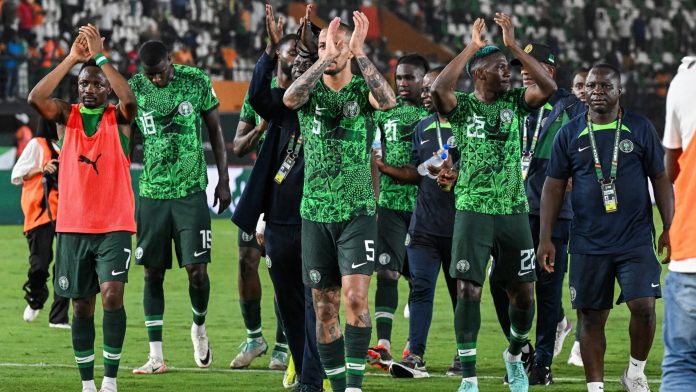
The Africa Cup of Nations (AFCON) will in future be staged every four years rather than every two, a landmark shift announced on Saturday by the Confederation of African Football (CAF) that reshapes the continent’s flagship tournament, its finances, and its long-running tensions with the global football calendar.

The decision has been widely welcomed across the football world, particularly in Europe, where coaches and clubs have long complained about losing key African players in the middle of domestic seasons.

The decision, announced on Saturday by CAF president Patrice Motsepe after an executive committee meeting in Rabat, Morocco, represents a major recalibration of African football’s calendar and commercial strategy. It also brings long-awaited relief to a dispute that has simmered for decades between African national teams and European clubs.

Under the new framework, the next AFCON will still hold in 2027, co-hosted by Kenya, Tanzania, and Uganda, followed by another edition in 2028. From then on, the tournament will be staged every four years. To avoid a long gap in competitive fixtures and revenue, CAF plans to introduce an African Nations League from 2029, to be played annually.

For European clubs, the shift addresses a recurring source of tension. AFCON has traditionally been held during the European season, often in January and February, forcing clubs to release African players at crucial points in league campaigns, cup competitions, and continental tournaments. Managers have regularly complained that the timing disrupts squad planning and competitive balance, especially for clubs heavily reliant on African talent.

This has made AFCON a frequent flashpoint between clubs and national federations. While European Championships and the World Cup are played during the off-season, African players have often had to choose between club commitments and national duty at moments when their teams needed them most.

The new four-year cycle is expected to ease those pressures. By moving away from a congested and unpredictable schedule, CAF is signaling a willingness to align more closely with the global football calendar.

Motsepe said the reform was driven in large part by concern for players caught in the middle.

“It is in the interests of the teams, clubs and players,” he said. “I can’t have players leaving their clubs in Europe in the mid-season. It’s wrong. We’ve got a duty to the players. We know how frustrating it is for the players when their club says they are needed but they are also needed for the country. It’s unfair to the players.”

Coaches in Europe have quietly welcomed the announcement, seeing it as a step toward greater stability and fairness. Over the years, several high-profile managers have voiced frustration about losing players to AFCON during decisive stretches of the season, sometimes affecting title races or relegation battles. While few clubs openly oppose the tournament, many have argued that Africa’s flagship competition should not place its players at a structural disadvantage compared with their counterparts from Europe or South America.

The timing of AFCON has been a long-standing challenge even within Africa. CAF attempted to resolve the issue by shifting the tournament to mid-year from 2019, but climate conditions and scheduling conflicts repeatedly forced reversals. The 2022 edition in Cameroon and the 2024 tournament in the Ivory Coast were both held at the start of the year, reigniting club-versus-country tensions. This year’s tournament in Morocco was itself moved back by six months after FIFA introduced an expanded Club World Cup in June and July.

Financial considerations also played a central role in the decision. AFCON accounts for an estimated 80% of CAF’s revenue, making it the confederation’s single most important commercial asset. That dependence previously made CAF resistant to proposals, including from FIFA president Gianni Infantino, to reduce the tournament’s frequency. The introduction of an African Nations League is intended to plug that revenue gap by creating a new, regular source of broadcast and sponsorship income.

“Historically the Nations Cup was the prime resource for us, but now we will get financial resources every year,” Motsepe said. “It is an exciting new structure which will contribute to sustainable financial independence and ensure more synchronization with the FIFA calendar.”

CAF has also sweetened the immediate transition with increased prize money. The winners of the ongoing tournament in Morocco will earn $10 million, up from $7 million awarded to the Ivory Coast at the last edition, signaling an effort to keep AFCON commercially attractive even as its frequency changes.

While some purists may worry that a four-year cycle could dilute the tournament’s presence, many stakeholders see the reform as overdue. It promises fewer mid-season disruptions for European clubs and coaches, while for players, it offers relief from having to navigate conflicting loyalties.