DD
MM
YYYY

PAGES

DD
MM
YYYY

spot_img

PAGES

Home Blog Page 20

Microsoft rolls out Maia 200 AI chip as it deepens bid to cut costs and loosen Nvidia’s grip on cloud computing

0

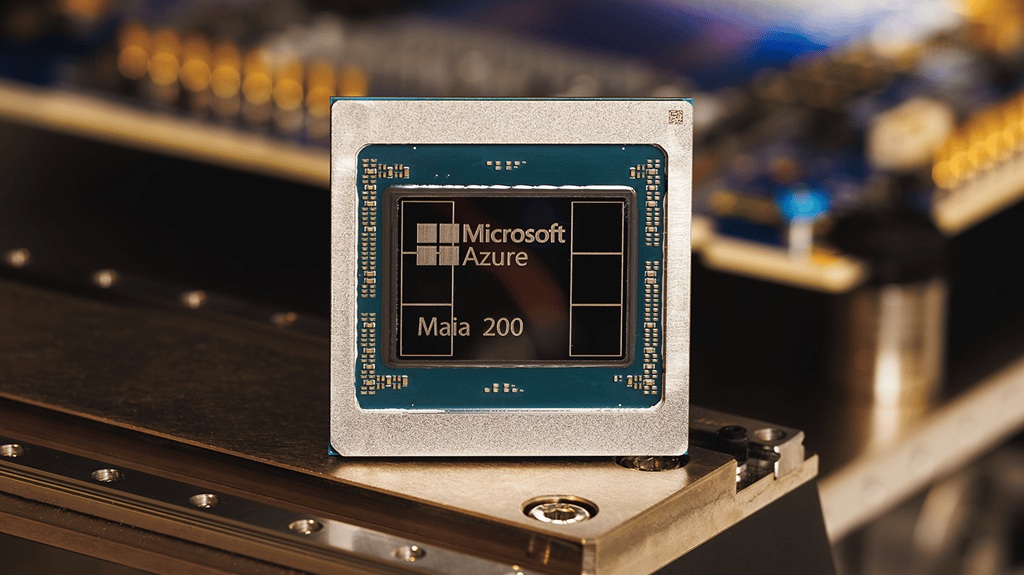
Microsoft Corp. has begun deploying its second-generation artificial intelligence chip, Maia 200, marking a major step in the company’s long-term effort to build its own AI hardware, rein in soaring computing costs, and reduce dependence on Nvidia’s dominant processors.

The Maia 200 chip, produced by Taiwan Semiconductor Manufacturing Co., is now being deployed in Microsoft data centers in Iowa, with further rollouts planned for the Phoenix area. Microsoft has invited developers to begin using the chip’s control software, though it has not said when Azure cloud customers will be able to directly access Maia-powered servers.

Some of the earliest Maia 200 units will be allocated to Microsoft’s superintelligence team, where they will generate data to help improve the next generation of AI models, according to cloud and AI chief Scott Guthrie. The chips will also power Microsoft’s Copilot assistant for businesses and support AI models, including OpenAI’s latest systems, that the company offers to enterprise customers through Azure.

At one level, Maia 200 is about performance and efficiency. Microsoft says the chip outperforms comparable offerings from Google and Amazon Web Services on certain AI tasks, particularly inference, the process of running trained models to generate answers. Guthrie described Maia 200 as “the most efficient inference system Microsoft has ever deployed,” a pointed claim at a time when power consumption has become one of the biggest constraints on AI expansion.

But at a strategic level, Maia 200 reflects a much broader shift across Big Tech. As AI workloads explode, the cost of buying and running Nvidia’s industry-leading GPUs has become a central concern. Demand continues to outstrip supply, prices remain high, and access to the most advanced chips has become a competitive differentiator. Designing custom chips gives hyperscalers more control over costs, performance, and supply chains, while allowing tighter integration with their own software and data center architectures.

Microsoft is not the only Big Tech company toeing this path. Amazon has spent years developing its own processors, including Trainium chips for AI training and Inferentia chips for inference, which it markets as lower-cost alternatives to Nvidia hardware for certain workloads on AWS. Google has long relied on its Tensor Processing Units, or TPUs, which are deeply embedded in its data centers and underpin many of its AI services, including search and generative models.

Meta Platforms has also joined the push, developing its own in-house AI accelerator, known as MTIA, to support recommendation systems and generative AI workloads across Facebook, Instagram, and other services. Apple, while focused more on on-device intelligence than data centers, has built its Neural Engine into iPhones, iPads, and Macs, giving it tight control over how AI features run on its hardware.

Together, these efforts point to a clear trend: AI has become too central, too expensive, and too power-hungry for the largest technology firms to outsource entirely to third-party chipmakers.

Microsoft’s late start in custom silicon compared with Amazon and Google has not diminished its ambitions. The company says it is already designing Maia 300, the next generation of its AI chip, indicating a long-term roadmap rather than a one-off experiment. It also has a fallback option through its close partnership with OpenAI, which is exploring its own chip designs, potentially giving Microsoft access to alternative architectures if needed.

Analysts say energy efficiency is now as important as raw computing power. AI data centers consume vast amounts of electricity, and in many regions, new power generation and grid capacity are not keeping pace. Gartner analyst Chirag Dekate said projects like Maia are becoming essential as power constraints tighten.

“You don’t engage in this sort of investment if you’re just doing one or two stunt activities,” he said. “This is a multigeneration, strategic investment.”

For Microsoft, the implications extend beyond cost savings. Custom chips strengthen its negotiating position with suppliers, reduce exposure to supply shortages, and allow it to tailor hardware more precisely to workloads such as Copilot, Azure AI services, and OpenAI models. Over time, that could translate into more predictable pricing and performance for enterprise customers, a key advantage as businesses scale AI across operations.

Maia 200 does not mean Microsoft is abandoning Nvidia. GPUs will remain critical, especially for the most demanding training tasks. Instead, the chip represents a hedge and a pressure valve, part of a diversified hardware strategy designed to keep AI growth economically viable.

The deployment of Maia 200 reinforces a clear message: Microsoft is no longer content to be just a buyer of AI hardware. It wants to shape the economics of AI computing itself, even as competition intensifies and the cost of staying at the cutting edge continues to rise.

Investors Are Watching for Updates on AI Investments and Spending Trends

0

This week kicks off the peak of Q4 2025 earnings season, with a heavy focus on Big Tech and the “Magnificent 7” stocks driving much of the attention. Investors are particularly watching for updates on AI investments, consumer spending trends, and forward guidance amid ongoing economic uncertainties.

Smaller but notable names like SoFi Technologies (SOFI), Brown & Brown (BRO), W.R. Berkley (WRB), and Ryanair (RYAAY).
Tuesday, January 27: Microsoft (MSFT) and Alphabet (GOOGL/GOOG) – expect scrutiny on cloud growth, AI initiatives, and ad revenue.
Wednesday, January 28: Meta Platforms (META), Tesla (TSLA), and potentially others like Boeing or IBM.

Tesla’s report could highlight EV demand and robotaxi progress, while Meta focuses on metaverse and ad metrics. Thursday, January 29: Apple (AAPL) and possibly Amazon (AMZN) – key themes include iPhone sales, services revenue for Apple, and e-commerce/AWS performance for Amazon.

Friday, January 30: Wrap-up with reports from companies like Chevron or Caterpillar, though less tech-heavy. Overall, S&P 500 earnings are projected to grow over 15% in 2026, and this week’s results could set the tone for broader market sentiment.

Other reports throughout the week include financials like Visa and chipmakers like AMD, adding to the mix. The Federal Open Market Committee (FOMC) meeting is scheduled for January 27-28, with the policy decision and statement released at 2:00 PM ET on January 28, followed by Chair Powell’s press conference.

Current market pricing via the CME FedWatch Tool shows a high probability of the fed funds rate holding steady at 3.50%-3.75% – estimates range from 88% to 96%, which is in line with your 99% figure, variations depend on the exact data snapshot and source.

A small minority prices in a 25 basis point cut, but no hike is expected. This reflects stable inflation data and a resilient jobs market, though any surprises in the dot plot or economic projections could move bonds and stocks.

The Non-Farm Payrolls (NFP) report, officially the U.S. Employment Situation Summary from the Bureau of Labor Statistics (BLS), is one of the most market-moving economic releases each month. It measures the change in the number of paid U.S. workers during the prior month excluding farm workers, private household employees, and non-profits, along with the unemployment rate, average hourly earnings, and other labor details.

Why NFP Has Such a Big Impact

NFP is a key gauge of U.S. economic health and labor market strength. Markets react strongly because: It influences Federal Reserve policy — Strong job growth (high NFP) can signal overheating/inflation risks, potentially delaying rate cuts or supporting hikes. Weak numbers suggest cooling, boosting cut expectations.

It affects interest rate-sensitive assets — Bonds (yields often rise on strong data, fall on weak), stocks (risk-on/risk-off shifts), and the U.S. dollar (strong data strengthens USD via higher rates; weak weakens it). Volatility spikes around the release typically the first Friday at 8:30 AM ET, with whipsaws common as traders digest the headline figure, revisions, unemployment rate, and wages which tie into inflation.

In the context of the current busy week with major earnings and the January 27-28 FOMC meeting: The most recent NFP was released January 9, 2026 for December 2025 data, showing modest job gains around 50K-66K various sources report slight variations, e.g., consensus ~66K, actual close to expectations or slightly below in some reads.

This followed softer prior months and reflected a resilient but moderating labor market post-rate adjustments. The next NFP for January 2026 is scheduled for Friday, February 6, 2026, at 8:30 AM ET — not this week.

However, the lingering effects of the January 9 release are still relevant: It showed average hourly earnings up modestly ~0.3% MoM, unemployment steady/edge lower, and overall a picture of cooling but not collapsing demand. This helped reinforce market pricing for the current FOMC to hold rates steady (high probability, as noted).

Fed decision this week: With the January FOMC underway, officials likely viewed the recent December NFP as supportive of a “higher for longer” stance — not hot enough to force hikes, not weak enough to demand immediate easing. Any hawkish/dovish Powell comments Wednesday could amplify echoes of that jobs data.

Earnings overlap: Strong labor (implying solid consumer spending) can boost cyclical/tech stocks in reports while weak signals hurt. The recent NFP’s moderation may temper enthusiasm if companies cite hiring slowdowns.

Broader market reaction: USD pairs, Treasuries, and equity futures often see pre-FOMC positioning influenced by recent jobs strength. A “Goldilocks” jobs print not too hot/weak tends to support equities by keeping soft-landing hopes alive.

U.S. SEC Dismisses Lawsuit Against the Winklevoss Twins 

0
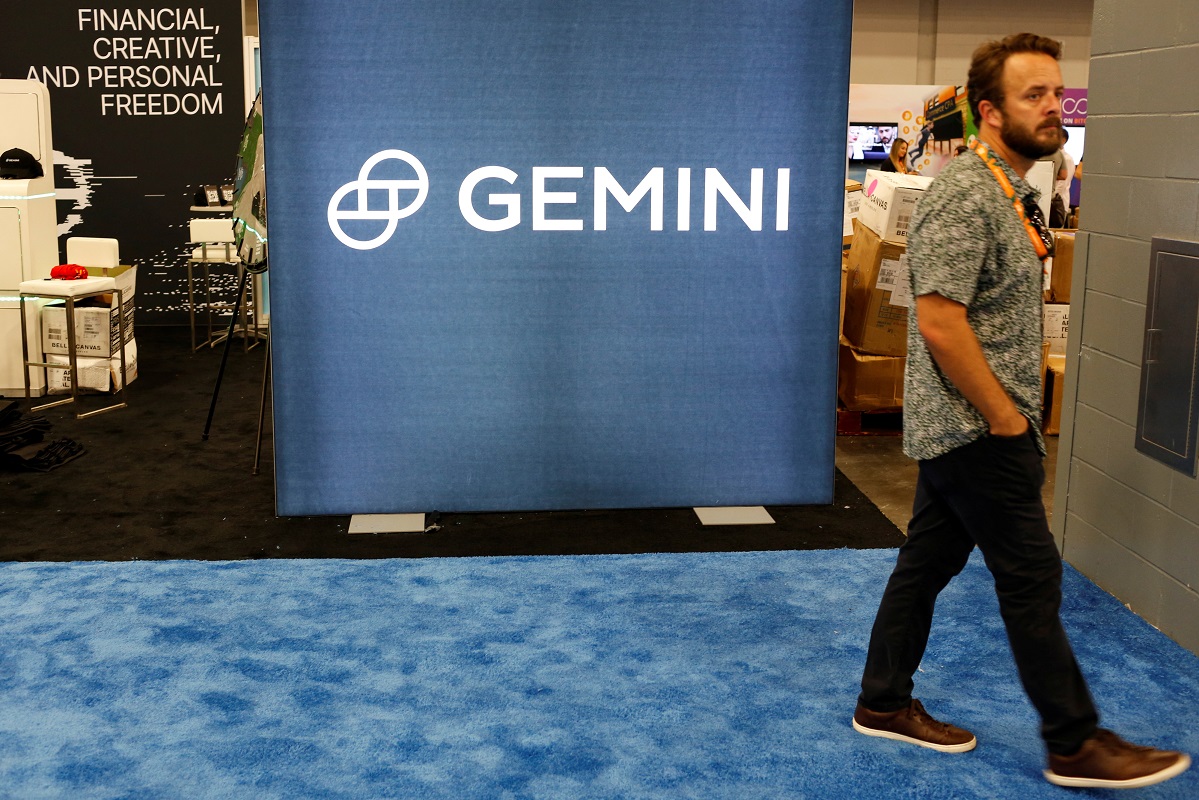
A man walks past the logo of Gemini Trust, a digital currency exchange and custodian, during the Bitcoin Conference 2022 in Miami Beach, Florida, U.S. April 6, 2022. REUTERS/Marco Bello/Files

The U.S. Securities and Exchange Commission (SEC) has recently dismissed its lawsuit against Gemini, the cryptocurrency exchange founded by billionaire twins Cameron and Tyler Winklevoss.

The SEC originally filed the enforcement action in January 2023, accusing Gemini of illegally offering unregistered securities through its now-defunct Gemini Earn lending program. The product allowed users to earn interest on their crypto assets by lending them out, but it collapsed amid the broader crypto downturn in late 2022, particularly tied to issues at partner Genesis which led to frozen funds and bankruptcy proceedings.

Gemini and affected users reached settlements, including a 2024 agreement with the New York Attorney General. Investors in Gemini Earn ultimately recovered 100% of their assets through the Genesis bankruptcy resolution process.

On January 23, 2026, the SEC and Gemini filed a joint stipulation/motion in federal court in Manhattan to dismiss the case with prejudice meaning it cannot be refiled. The court approved or the dismissal proceeded based on this.

This move is part of a broader shift in SEC crypto enforcement actions in 2026, with multiple cases reportedly paused, penalties reduced, or dismissed outright—Gemini being at least the eighth such instance mentioned in reports.

It’s widely seen as a win for the Winklevoss twins and the crypto industry, signaling a more favorable regulatory environment especially post-2024 U.S. election changes and pro-crypto influences. The dismissal does not indicate the SEC’s changed stance on the underlying issues in other cases, as the agency noted in statements.

The dismissal of the SEC’s lawsuit against Gemini and by extension the Winklevoss twins carries several significant implications across regulatory, industry, and market dimensions.  For Gemini and the Winklevoss TwinsLegal closure and reduced risk: The case was dismissed with prejudice, meaning the SEC cannot refile the same claims.

This removes a major overhang that had lingered since January 2023, allowing Gemini to operate with greater certainty and potentially refocus on growth without ongoing litigation costs or reputational drag.

Strong vindication on investor protection: The primary justification cited in the joint filing was that Gemini Earn users recovered 100% of their assets in-kind where possible through the Genesis bankruptcy process. This outcome strengthens Gemini’s narrative that it prioritized user restitution, even as the program itself collapsed due to Genesis’s issues.

Gemini can now more aggressively pursue expansion like new products, international growth, or partnerships without the shadow of potential SEC penalties or restrictions tied to the Earn program.

This is reportedly one of several at least the eighth mentioned in reports crypto enforcement actions paused, settled with reduced penalties, or fully dismissed in recent months.

It reflects a broader de-escalation in aggressive “regulation by enforcement” under the current environment—possibly influenced by post-2024 political shifts, pro-crypto appointees/influences, and a focus on cases where investors have already been made whole.

Precedent for crypto lending/yield products: While the dismissal doesn’t formally change the SEC’s view that many staking/lending offerings qualify as unregistered securities, it shows that full investor recovery can lead to case closure rather than prolonged battles.

This may encourage platforms to prioritize restitution in future disputes and could reduce fear around similar (compliant) yield products. The crypto sector views this as a regulatory win, contributing to improved market confidence.

It closes a chapter from the 2022 FTX and Genesis fallout era and aligns with a more pragmatic enforcement stance. The dismissal includes no penalties, admissions, or ongoing monitoring for Gemini unlike some prior settlements. This avoids setting a costly precedent.

The SEC has explicitly noted this doesn’t signal a blanket policy change—enforcement in areas like unregistered securities offerings continues elsewhere (e.g., ongoing actions against other platforms). Gemini-linked equities or related tokens saw minor movements (some dips on the news day, but overall neutral-to-positive context).

Broader crypto prices benefit from reduced regulatory fear. This is a clear win for Gemini and a symbolic step toward a more balanced U.S. crypto regulatory landscape in 2026, emphasizing outcomes (like full recoveries) over punitive actions in resolved matters.

It doesn’t overhaul securities law for crypto but eases pressure on one high-profile player and hints at a less adversarial era ahead.


U.S Housing Market Shows Signs of Shifting Toward more Balanced Inventory

0
A detached three-bedroom apartments are pictured at Haggai Estate, Redeption Camp on Lagos Ibadan highway in Ogun State, southwest Nigeria on August, 30, 2012. The high cost of living and the massive urbanization of Lagos, the largest city and the economic capital of Nigeria, has engineered a migration of residents mostly middle class and the poor to neighbouring towns in Ogun State, both in southwest part of the country in search of cheap accommodations. Estate developers are quick in exploiting the high cost and scarcity of accommodation leading to emerging new towns, modern estates to accommodate the spillover in Lagos. AFP PHOTO/PIUS UTOMI EKPEI (Photo credit should read PIUS UTOMI EKPEI/AFP/GettyImages)

The US housing market in early 2026 shows signs of shifting toward more balance after years of low inventory and high competition.

Housing inventory has been rising significantly. Active listings grew notably through 2025, with reports indicating year-over-year increases around 12% in some monthly comparisons to late 2024, and higher peaks earlier in 2025.

While not necessarily at all-time historical records in absolute terms compared to pre-2008 levels, inventory has reached multi-year highs since at least 2017 in many metrics, providing more options for buyers and cooling the frantic pace of recent years.

Total active listings approached or exceeded levels like 1.3 million in some aggregates by late 2025. This has contributed to a “buyer’s market” feel in many areas, with homes taking longer to sell and sellers often accepting lower offers.

This increase stems from factors like more homeowners listing properties perhaps due to life changes or rate expectations, slower sales volumes— 2025 saw some of the lowest annual home sales in decades, and modest new construction.

30-year fixed mortgage rates, however, have shown upward pressure recently. As of late January 2026: Weekly averages from Freddie Mac stood at 6.09% as of January 22, up slightly from 6.06% the prior week. Other sources report daily/national averages around 6.00%–6.20% some tracking 6.20% on January 26, with small week-to-week increases of 0.09% or so in places.

This follows a dip to three-year lows around mid-January near or just above 6%, but rates have edged back up modestly, likely influenced by economic data, inflation signals, and anticipation around Federal Reserve actions.

These “local highs” refer to short-term peaks relative to the recent downward trend from higher levels in 2023–2024, rather than absolute historical spikes. Rates remain in the mid-6% range overall, a level many forecasts expect to persist through much of 2026 with only gradual declines possible.

The combination of rising inventory and stubbornly elevated mortgage rates creates a more normalized but still challenging market for buyers. Sales remain subdued, prices are relatively flat or growing slowly with some forecasts for ~1–2% annual increases in 2026, and the market feels like it’s in a “reset” phase compared to the pandemic-era frenzy.

The combination of rising housing inventory reaching multi-year highs in many metrics and 30-year fixed mortgage rates edging up to local and short-term highs around 6.09–6.20% per Freddie Mac as of late January 2026, after dipping near three-year lows has several key implications for the US housing market in early 2026.

Overall, this points to a gradual “reset” or rebalancing after years of extreme tightness, though challenges like affordability persist. Higher inventory means homes sit longer on the market increasing days on market, giving buyers leverage for concessions like price reductions, closing cost help, or repairs.

This is shifting some areas toward a more buyer-friendly environment, especially in regions with sharp inventory gains. Slightly higher borrowing costs in the short term: The recent uptick in rates from ~6.06% to 6.09% week-over-week, with some daily averages at 6.20% makes monthly payments a bit more expensive than the recent dip, potentially sidelining marginal buyers.

However, rates remain well below 2023–2024 peaks and near three-year lows overall, still qualifying more people than in prior high-rate periods. Forecasts suggest modest home price growth ~1–2% in 2026 per sources like Redfin and Zillow, with income growth potentially outpacing it.

Combined with rising supply, this could ease the “lock-in” effect where owners with low-rate mortgages hesitate to sell and move. Early 2026 shows signs of returning demand as rates stabilize near 6%, but buyers may benefit from waiting if inventory continues building—though waiting risks missing potential further rate declines or price stabilization.

More listings dilute competition among sellers, leading to longer time on market and more price negotiations or cuts. This cools the seller’s market frenzy of recent years but doesn’t signal a crash—prices are mostly flat to slightly up.

Potential relief from lock-in: If rates trend lower through 2026, many forecasts average ~6.3% for the year, with possible dips to mid-5% by year-end under optimistic scenarios, more owners with sub-5% mortgages may list, further boosting inventory and normalizing the market.

Opportunity in a recovering market: Sales volumes could rise, some predictions see 10–14% increases in transactions, especially if policy changes around GSEs or federal proposals or economic factors encourage movement.

2026 is widely described as a “Great Housing Reset” or transition year—moving from pandemic-era extremes (low inventory, bidding wars) to more normal conditions. Sales remain subdued compared to historical averages, but rising listings and steady not crashing prices signal stabilization rather than downturn.

Persistent affordability hurdles: Even with these trends, high rates keep payments elevated for many, especially first-time buyers average age still high at ~40. New construction and policy tweaks could help long-term, but 2026 likely sees gradual improvement rather than dramatic relief.

Regional variations matter: Inventory surges are uneven—stronger in some metros, slower elsewhere—so local conditions drive outcomes more than national averages. Rate movements link to Fed policy, inflation, and broader data. Any “spike” here appears modest and temporary, with most outlooks expecting gradual easing or stability around 6% rather than sharp rises.

This dynamic supports a healthier, less overheated market in 2026—better for long-term sustainability—but it doesn’t flip to a full buyer’s paradise or solve affordability overnight. If you’re following this for buying and selling decisions, local conditions vary widely—Sun Belt areas have seen sharper inventory jumps, for instance.

OpenAI’s AI Ambitions Fuel Skyrocketing Costs with Projected $40bn Loss by 2028, Raising Sustainability Questions

0

OpenAI, the firm behind ChatGPT and one of the most influential AI labs in the world, finds itself at a critical crossroads. Its early lead in generative AI, which Microsoft CEO Satya Nadella has described as a two-year uncontested advantage, allowed the company to define the modern conversational AI market and attract unprecedented attention from investors, governments, and enterprises.

Yet that head start is now colliding with the financial realities of maintaining dominance in an increasingly competitive and capital-intensive field.

Reports suggest that OpenAI is burning through cash at an extraordinary rate, with projections indicating a potential $14 billion loss in 2026 and up to $40 billion by 2028. The company’s aggressive spending stems from multiple factors, including infrastructure expansion, large-scale model training, hiring top-tier research talent, and compute-intensive operations.

Analysts say these outlays are intended not only to sustain the current ChatGPT product but also to secure long-term technological superiority over competitors such as Google DeepMind, Anthropic, and Cohere, who are racing to close the gap.

Financial pressures are compounded by a host of strategic and operational challenges. OpenAI has faced backlash from users over the integration of advertisements into ChatGPT, a move that has been seen as a departure from the frictionless experience that fueled its early growth. Legal disputes, most notably with Elon Musk over OpenAI’s for-profit restructure and alleged “ill-gotten gains,” have added further uncertainty.

Meanwhile, sourcing high-quality training data remains a bottleneck for scaling future AI models, forcing OpenAI to explore costly licensing agreements and synthetic datasets.

Revenue generation has kept pace to some degree, with estimates suggesting annual income of up to $13 billion from ChatGPT subscriptions, enterprise API access, and other services. However, expenses are escalating rapidly. Computing costs alone are reportedly around $1.4 billion annually, with expectations that these will continue to rise as models grow larger and more sophisticated.

It remains unclear whether the introduction of ads and other monetization strategies can close the widening gap between revenue and operational costs.

CEO Sam Altman has publicly dismissed concerns about an AI spending “bubble,” emphasizing that OpenAI’s revenue is growing steeply and that demand for its consumer and enterprise products continues to surge. Altman has also highlighted ambitions beyond software, including hardware developments and broader ecosystem expansion. Perhaps most notably, he projects that OpenAI’s revenue could reach $100 billion by 2027—a figure that some analysts consider overly optimistic given the scale of projected losses and the competitive environment.

Skeptics have raised an alarm about the firm’s liquidity and sustainability. Tom’s Hardware reported that OpenAI could run out of cash by mid-2027 without additional investment, while economists such as Sebastian Mallaby from the Council on Foreign Relations argue that relying on “overvalued shares” or other financial maneuvers may not be sufficient to navigate the projected multi-billion-dollar deficits.

It is against this backdrop that analysts believe that OpenAI’s $8 billion operational loss in 2025 could swell to $40 billion by 2028, raising urgent questions about funding, cost control, and strategic prioritization.

The situation underscores a broader tension in the AI sector: scale and leadership come at a price. OpenAI may need another round of major fundraising to sustain operations and maintain its competitive edge. Yet investor sentiment, while still strong, is beginning to weigh profitability alongside growth and market influence. This means demonstrating a credible path to long-term profitability is becoming for the firm just as critical as model performance or product innovation.

OpenAI’s predicament also illustrates the broader challenge for the AI industry that chasing technological supremacy requires enormous investment in infrastructure, talent, and data, and even early leaders are not immune to financial strain. The firm’s ability to continue leading the AI revolution will depend not only on innovation but also on its capacity to balance ambition with sustainability, manage operational risk, and secure investor confidence amid unprecedented expenditures.

In short, OpenAI’s story is no longer just about building the next generation of AI—it is also about proving that the business behind it can survive the staggering costs required to stay at the frontier.