DD
MM
YYYY

PAGES

DD
MM
YYYY

spot_img

PAGES

Home Blog Page 200

Microsoft Apologizes, Moves to Settle ACCC Lawsuit Over Misleading Subscription Practices in Australia

0

Microsoft is seeking to defuse tensions with Australian regulators after being accused of misleading millions of customers over subscription pricing.

The company has expressed regret over its handling of Microsoft 365 renewals and has begun issuing refunds and apology emails, in a move that could shape the outcome of an ongoing legal dispute with Canberra’s competition watchdog.

The Australian Competition and Consumer Commission (ACCC) last week filed a lawsuit against Microsoft, alleging that the tech giant misled about 2.7 million Australian users by steering them toward more expensive Microsoft 365 plans bundled with its AI assistant, Copilot. The regulator claimed the company failed to clearly communicate the existence of cheaper, non-AI versions of the same services.

In response, Microsoft has begun sending apology messages to millions of Australian subscribers, acknowledging that it “could have been clearer” about the availability of cheaper alternatives. The emails are being sent to customers who renewed Microsoft 365 Personal and Family plans in 2024 without being informed about the lower-cost options.

“In hindsight, we could have been clearer about the availability of a non-AI-enabled offering with subscribers, not just to those who opted to cancel their subscription,” Microsoft said.

The company has now offered refunds to subscribers who paid for the more expensive AI-enabled plans after November 2024. These customers can choose to remain on their current plan, which includes Copilot, or downgrade to the Microsoft 365 Personal or Family Classic options and receive compensation for the difference.

The ACCC’s lawsuit alleges that Microsoft effectively cornered users into upgrading by giving them limited choices at renewal. When subscribers attempted to cancel, the company offered what appeared to be a middle ground—keeping their old plan under a new name, but at the same higher rate. According to the regulator, this strategy violated Australia’s consumer protection laws by creating the impression that cheaper plans were unavailable.

In its statement, Microsoft said it has operated in Australia “with trust and transparency for more than 40 years” and admitted it fell short of those standards in this instance.

The ACCC’s Chair, Gina Cass-Gottlieb, stated that the regulator is reviewing Microsoft’s remediation efforts but stressed that the case will continue until a formal resolution is reached. If found guilty, Microsoft could face a fine of up to 30 percent of its annual turnover during the period of the violation, one of the harshest penalties available under Australian consumer law.

The case is the latest example of global regulators tightening scrutiny on tech firms’ business practices amid the rapid commercialization of artificial intelligence. Similar investigations have been launched in the European Union and the United States over AI-related pricing, transparency, and consumer consent.

Microsoft’s efforts to resolve the issue suggest an attempt to contain the damage before it escalates further. However, it is believed that even if the company avoids a financial penalty, the episode underscores the growing regulatory skepticism toward bundling AI features into core software products—particularly when doing so leads to higher costs for consumers without clear disclosure.
OpenAI CEO Pushes for Expanded U.S. Chips Act Credit to Strengthen AI Leadership

0

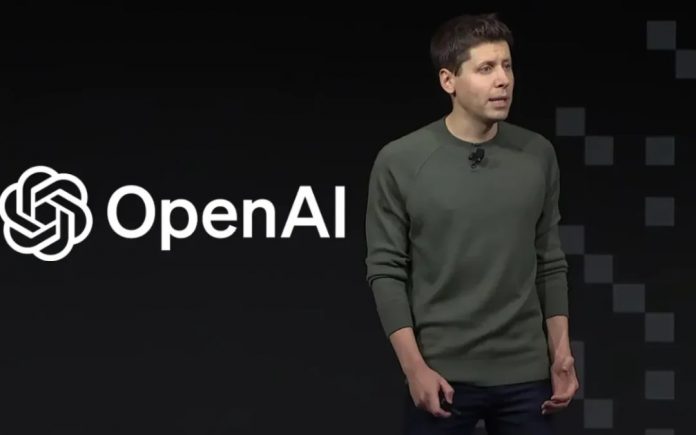
OpenAI CEO Sam Altman on Friday reiterated the company’s call for the U.S. government to expand eligibility under the Advanced Manufacturing Investment Credit (AMIC), part of the Chips Act, to include AI server production, AI data centers, and grid components.

The move comes as the U.S. accelerates efforts to secure its global leadership in artificial intelligence and maintain competitiveness in high-tech manufacturing.

Altman’s remarks follow an October 27 letter from OpenAI Chief Global Affairs Officer Chris Lehane to Michael Kratsios, Director of the White House Office of Science and Technology Policy, in which Lehane formally requested the expansion.

The AMIC is a federal tax incentive designed to stimulate domestic semiconductor production, providing financial support to companies that invest in U.S.-based fabrication facilities and related high-tech infrastructure. Expanding the credit to cover AI hardware could reduce costs and accelerate the deployment of critical AI infrastructure across the country.

In his post on X, Altman emphasized the broader industrial impact of such policies, saying, “We think U.S. re-industrialization across the entire stack — fabs, turbines, transformers, steel, and much more — will help everyone in our industry, and other industries (including us).”

He clarified that the tax credit is “super different than loan guarantees to OpenAI,” noting that while the company has previously discussed federal loan guarantees to spur chip factory construction, no such support has been sought for AI data centers.

OpenAI has committed to investing $1.4 trillion in computational resources over the next eight years to support its AI models, including the widely used ChatGPT. The company’s investment underlines the massive scale of infrastructure required to sustain AI development, particularly as demand for AI services continues to surge. Other leading tech firms have similarly announced plans to expand their data centers and chip development programs, reflecting the rapid growth of AI applications in sectors ranging from enterprise software to generative AI.

However, White House AI and crypto czar David Sacks has made it clear that there will be no federal bailout for AI companies, signaling that any government support would need to operate within existing frameworks like the AMIC. The call for direct federal subsidies for AI comes as the Trump administration dismantles existing tax credit initiatives, especially on green energy, although tax incentives have been touted as key in enabling large-scale private investment in advanced manufacturing.

Thus, expanding the AMIC to AI-related hardware will help to strengthen U.S. competitiveness against countries like China, where governments are actively investing in semiconductor and AI capabilities. OpenAI aims to not only accelerate its own AI deployment but also contribute to the wider U.S. industrial base, fostering economic growth and technological leadership by reducing costs for domestic AI hardware.

This push comes amid a broader national debate on how to ensure that U.S. technological leadership is sustained in the face of global competition. The potential expansion of the AMIC would align AI infrastructure development with broader economic policy objectives, potentially influencing investment decisions across the sector while supporting the government’s stated goal of reinforcing domestic manufacturing.

US Spot Bitcoin ETFs Snap Six-Day Outflow Streak with $240M Inflows

0

US spot bitcoin exchange-traded funds (ETFs) recorded net inflows of approximately $240 million, marking the first positive day since October 28 and ending a six-day streak of outflows totaling nearly $1.4 billion.

This rebound signals renewed institutional interest amid bitcoin’s price hovering around $100,000, following a broader market correction. $239.9–$240 million minor variations across trackers like Farside Investors and SoSoValue.

All major providers saw positive or flat activity, with Grayscale’s GBTC remaining neutral. Trading Volume: ETFs traded over $4.77 billion in shares on the day.

The inflows coincide with bitcoin dipping below $100,000 for the first time in three months, amid $1 trillion in broader crypto market losses and over 339,000 trader liquidations. Historically, such outflow streaks have preceded market bottoms.

BlackRock’s IBIT alone captured nearly half of the total, underscoring its dominance—now managing over $100 billion in assets alongside Fidelity.Broader ImplicationsThis influx absorbs more than five days of typical global ETF issuance and suggests large allocators view sub-$100,000 bitcoin prices as buying opportunities rather than a regime shift.

However, analysts caution it doesn’t guarantee an immediate rebound; persistent pressures like the US government shutdown ongoing since October 1 could test support. Ethereum spot ETFs also turned positive with $12.5 million in inflows, ending their own six-day outflow run.

Historical Trends in US Spot Bitcoin ETF Outflows

Since their launch on January 11, 2024, US spot Bitcoin ETFs have experienced significant volatility in flows, with net inflows dominating early on but periodic outflows reflecting market corrections, profit-taking, and macroeconomic pressures.

Cumulative net inflows have reached approximately $60.3 billion as of early November 2025, representing about 6.72% of Bitcoin’s total supply. However, outflows have often clustered into streaks, typically coinciding with Bitcoin price declines and serving as indicators of short-term bottoms or consolidation phases.

These streaks have never exceeded eight consecutive days, and they’ve historically preceded rebounds, with only 0.5% of total AUM lost during major drawdowns. Outflows are driven by factors like Grayscale’s GBTC fee arbitrage (early 2024), broader crypto sell-offs, and external events such as the US government shutdown starting October 1, 2025, which eroded liquidity and confidence.

Despite outflows, institutional retention remains high—e.g., during the recent 20% BTC drawdown, only $1 billion exited amid $139 billion AUM.

BlackRock IBIT ends 31-day inflow streak; largest single-day -0.43. BTC correction amid volatility. Cumulative inflows still +44.35B since launch. Second-largest single-day; Fidelity/ARK led BTC dip; ETH ETFs also -0.15, Followed ETH’s 20-day inflow end.

US gov’t shutdown (since Oct 1); market -20%. BTC below $100K (3-month low). Second-worst streak; $2B+ incl. ETH; Solana ETFs +0.32B contrast. Post-Jan ATH correction; April monthly –

Outflow streaks occur roughly every 2–3 months, lasting 2–8 days, with totals rarely exceeding $3B. The longest (8 days, Feb 2025) aligned with a local bottom, similar to the 2018–2019 shutdown. Shorter bursts (e.g., 4 days in Jan 2024) were milder, often GBTC-specific.

Despite ~$10–15B in total outflows across periods, net inflows outpace at $60B+, with 2025 YTD at $14.8B surpassing 2024’s pace post-rally. Q1 2024 saw +$12.1B inflows, but Q2 shifted negative.

Outflows lag BTC peaks by 1–4 weeks (e.g., Jan 2025 ATH ? Feb–Apr outflows). They amplify downside (BTC -10–20%) but signal buys—99.5% AUM retention during corrections. External factors like shutdowns (Oct–Nov 2025) or model portfolio shifts (Mar 2025) exacerbate.

GBTC drove early outflows $14.7B in Q1 2024 due to fees; IBIT/FBTC now lead inflows but saw spikes (IBIT -0.43B in May 2025). BlackRock’s IBIT dominates AUM (> $100B).

US spot Bitcoin ETFs have experienced significant volatility in flows, with net inflows dominating early on but periodic outflows reflecting market corrections, profit-taking, and macroeconomic pressures.

Cumulative net inflows have reached approximately $60.3 billion as of early November 2025, representing about 6.72% of Bitcoin’s total supply. However, outflows have often clustered into streaks, typically coinciding with Bitcoin price declines and serving as indicators of short-term bottoms or consolidation phases.

These streaks have never exceeded eight consecutive days, and they’ve historically preceded rebounds, with only 0.5% of total AUM lost during major drawdowns. Outflows are driven by factors like Grayscale’s GBTC fee arbitrage, broader crypto sell-offs, and external events such as the US government shutdown starting October 1, 2025, which eroded liquidity and confidence.

Despite outflows, institutional retention remains high—e.g., during the recent 20% BTC drawdown, only $1 billion exited amid $139 billion AUM. November 2025’s net remains negative despite the streak’s end.

NEAR Protocol’s Q3 2025 Performance

0

The NEAR Protocol (NEAR), positioned as an AI-native blockchain, has indeed seen a notable rebound, driven by heightened ecosystem activity.

This positions NEAR at #32–#48 among cryptocurrencies, with live prices around $2.67 USD and circulating supply of ~1.28B tokens. Recent surges (e.g., +20–38% in early November) have pushed it toward $3.6B amid broader AI-blockchain hype.

NEAR’s DEXs (e.g., Ref Finance) benefited from a broader DeFi boom, with global DEX volumes hitting records like $1.36T in October 2025. NEAR-specific on-chain trading doubled daily ATH to $200M in early November, fueled by intents-based liquidity tools.

NEAR’s stablecoin ecosystem (e.g., USN, bridged USDC/USDT) grew in tandem with DeFi expansion. This mirrors a 2–10x global stablecoin surge since 2020, with non-USD variants up 30% due to USD volatility from U.S. tariff policies.

What Drove This Growth?

The 533% QoQ surge reflects NEAR’s shift toward “intents” user-friendly transaction abstractions, which slashed friction in DeFi trading. This led to record on-chain activity, including Zcash integration for privacy-enhanced swaps and a rotation into AI-infra tokens like NEAR amid Bitcoin/Ethereum slumps.

Stablecoin Momentum: The 28% jump supports NEAR’s role as a high-throughput L1 for AI agents and dApps. Stablecoins on NEAR enable seamless cross-Web2/Web3 interactions, with total issuance nearing institutional thresholds (e.g., USDC at $61B globally). This ties into NEAR’s founders’ AI roots—co-authoring the transformer paper behind modern LLMs.

Despite macro headwinds (e.g., $500B+ drain from global bank reserves since July), NEAR’s +24% QoQ outpaced the crypto market’s -8.8% dip. AI narratives, developer incentives, and integrations like Halliday reducing onboarding to <60 seconds amplified adoption.

NEAR’s trajectory suggests continued upside if DeFi volumes sustain projections: spot DEXs at $1.3T+ in Q4. Price forecasts for late 2025 hover at $1.90–$2.30, but volatility looms from regulatory shifts (e.g., U.S. GENIUS Act for stablecoins) and competition from Solana/Tron DEXs.

NEAR Intents: A User-Centric Transaction ModelNEAR Intents is a declarative transaction paradigm that lets users state what they want to achieve (e.g., “swap 10 USDC for the best-priced ETH”) instead of how to achieve it (writing a multi-step script across DEXs, bridges, etc.).

The network’s solvers compete to fulfill the intent in a single, atomic, gasless (for the user) transaction. Think of it as Uber for blockchain actions: you say “take me from A to B”, and specialized solvers figure out the optimal route, gas, and execution path.

Users sign a high-level intent ? Solvers race to deliver the best outcome ? The winning solution is executed atomically on-chain. User creates a signed message: I want to swap X ? Y with min output Z. No gas, no account needed upfront.

Intent Pool; Intent is posted to an on-chain or off-chain mempool like a job board. Specialized bots (solvers) scan intents and build execution paths using DEXs, bridges, lending, etc. Solvers submit bundled transactions via account abstraction that fulfill the intent.

Atomic Execution; The best solution (by user-defined criteria: price, speed, etc.) is selected and executed in one block. User pays the solver in the output asset (e.g., ETH), not NEAR gas.

Users don’t need a NEAR account. Intents are signed with any key (EOA, passkey, MPC). NEAR can sign transactions for other chains (EVM, BTC, Solana) via MPC-TSS. Enables cross-chain in one intent. Open market of solvers (like 1inch Fusion or CoW Swap) but native to L1.

Solvers front gas; users pay in target asset. Intents can route through Zcash shielded pools or Nightshade sharding for MEV protection. Solver bridges via Rainbow Bridge, swaps on Ref Finance, delivers NEAR.

Solver checks Ref, Burrow Swap, Trisolaris ? picks optimal path. AI agent signs intent; solver executes on approval signal. User writes script (approve ? swap ? bridge). User signs one message. Multi-step, high failure rate. Atomic, all-or-nothing. Pays gas in native token. Pays in output asset.

Elon Musk Says Tesla’s Optimus Robots Could Eliminate Poverty, Transform Global Economy

0

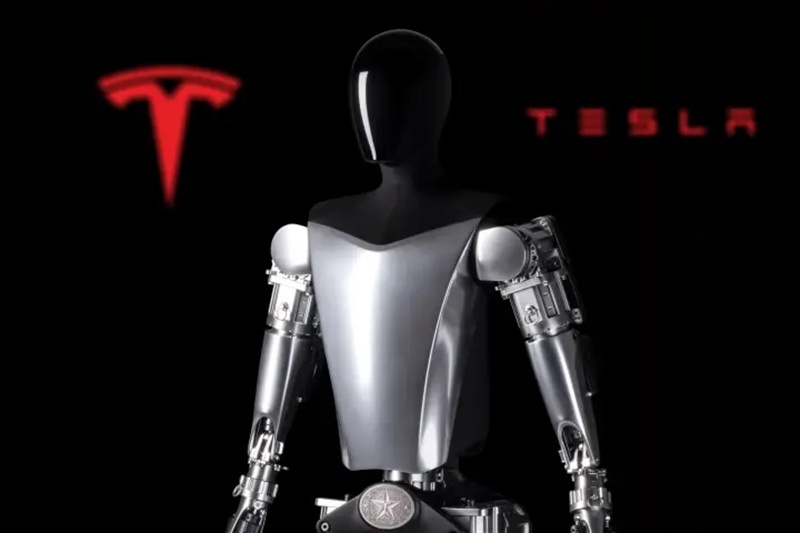
Tesla CEO Elon Musk has laid out an ambitious vision for the company’s humanoid Optimus robots, predicting they could reshape the global economy and drastically reduce human labor needs — even potentially eliminating poverty.

Speaking at Tesla’s annual shareholder meeting on Thursday, Musk tied the futuristic robot initiative to the ambitious targets behind his recently approved $1 trillion pay package.

Musk painted a picture of a future in which Optimus robots operate continuously, multiplying human productivity many times over.

“There’s a limit to much how much AI can do in terms of enhancing the productivity of humans, but there is not really a limit to AI that is embodied,” he said, emphasizing the potential of physical AI to outperform humans in labor-intensive tasks.

He predicted that each Optimus robot could achieve five times the productivity of a human worker per year, operating 24/7.

While the robots are still in the design stage and Tesla has faced challenges perfecting their dexterity — particularly their hands — Musk outlined a broader economic vision. He suggested that Optimus could help solve societal problems such as poverty and incarceration. Instead of traditional prisons, Musk said robots could “follow you around and stop you from doing crime.” He claimed Optimus could make working optional, envisioning a “benign scenario” in which society enjoys universal high income and access to products and services without traditional labor.

The shareholder meeting underscored the financial stakes tied to this vision. Musk’s historic pay package, approved with more than 75% support, ties payouts to achieving extraordinary corporate milestones, including the sale of one million Optimus robots over the next decade. The compensation structure is intended by Tesla’s board to keep Musk focused on executing his ambitious plans while aligning his financial incentives with shareholder value.

Musk also framed Optimus within a broader narrative of “sustainable abundance,” a central theme in Tesla’s Master Plan Part IV. He argued that AI and robotics are essential to preventing economic crises, suggesting that these technologies could boost the global economy by a factor of 10 or even 100.

“I came to the conclusion that the only way that the only way to get us out of the debt crisis and to prevent America from going bankrupt is AI and robotics,” Musk said.

In Musk’s vision, the future robotic economy also presents significant social and economic disruption. He acknowledged that while automation could create abundance, the transition may entail considerable trauma. Musk emphasized that robots would replace most jobs, making work optional in a society where AI and automation provide the essentials.

The concept of robots enabling universal basic income aligns Musk with other tech leaders who have explored similar ideas. Sam Altman, CEO of OpenAI, conducted a basic income pilot in 2024, while Facebook cofounder Chris Hughes and eBay founder Pierre Omidyar have publicly advocated for a universal basic income as a response to technological disruption.

Despite the bold claims, Optimus remains a production challenge. Tesla has staged public demonstrations showing robots handing out candy, performing martial arts routines with celebrities, and dancing at shareholder events, but mass production is still years away. Musk projects that once Optimus reaches volume production, it could be sold for $20,000 to $30,000 per unit.

Musk’s vision merges radical technological ambition with social and economic theory, positioning Tesla’s humanoid robots as both a driver of corporate growth and a potential engine for global prosperity. Achieving the Optimus sales targets could unlock Musk’s trillion-dollar compensation package and cement the company’s leadership in robotics and AI, while failure could underline the immense challenge of realizing such sweeping societal change.

This marks a dramatic moment in Tesla’s push beyond electric vehicles, as the company bets that humanoid robots, long considered a sci-fi dream, could soon become a transformative economic force.