DD
MM
YYYY

PAGES

DD
MM
YYYY

spot_img

PAGES

Home Blog Page 205

The World Is a Marketplace: The Elon Musk’s $1 Trillion Mandate

0

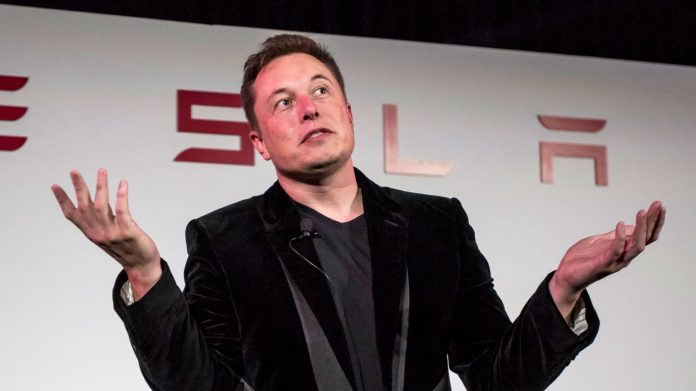
Good People, what a promised payday! More than 75% of Tesla’s investors have approved Elon Musk’s record-setting $1 trillion pay package at the company’s annual shareholder meeting. The board had first unveiled the audacious compensation structure last September, and Musk, in his typical high-stakes style, hinted he might exit if the plan was rejected. The message was clear: approve the plan, or lose the man. The shareholders voted “YES,” and the billionaire sent out a note of gratitude: “I’d like to give a heartfelt thanks to everyone who supported the shareholder votes…I super appreciate it.”

Now, let’s pause. Yes, that’s an extraordinary amount of money for one man, but do not focus on the amount; focus on what must happen for that number to materialize. That $1 trillion is not a gift, it is a performance-linked aspiration. If Musk executes, Tesla’s shareholders will see zeros multiply in their portfolios. The beauty of such a deal is that it aligns ambition with delivery: if he wins, everyone wins.

But beyond Wall Street, something deeper is at play. Musk understands an ancient Igbo truth: “uwa bu ahia” [the world is a marketplace]. Every innovation he builds, from Tesla to SpaceX to Neuralink, is simply an expansion of his market stall in that global bazaar. And to unlock this trillion-dollar cheque, he will deploy every entrepreneurial weapon in his arsenal to capture our collective attention, money, and imagination. Because when the world is a market, every human becomes a potential customer. Build for them, and prosperity will come through enterprise. QED.

Musk, we need you in Abia State Nigeria to teach us something. In the Igbo Nation, traders say, “welcome to my market,” affirming that their world is their marketplace, literally. Tesla is your market, and Tesla is your world. And with $1 trillion on the line, you must now trade with all of humanity. The world is indeed your market, Elon, and in the “uwa bu ahia” philosophy, you must TRADE in Abia State. What do you need from us? You are the best TRADER of the 21st century and you must have your “market” in Abia.

Tesla Shareholders Approve Musk’s New $1 Trillion Pay Deal

0

Tesla shareholders have approved a new compensation package for CEO Elon Musk worth up to $1 trillion, marking one of the largest pay deals in corporate history.

The approval came during the company’s general meeting in Austin, Texas, where Tesla said the package passed with over 75% support from shareholders.

“I’d like to give a heartfelt thanks to everyone who supported the shareholder votes,” Musk said at the meeting. “I super appreciate it.”

The latest pay deal, unveiled in early September, grants Musk 12 tranches of stock options linked to aggressive performance targets. The package’s size and structure have raised eyebrows across corporate and financial circles, given its scale and the controversies surrounding Musk’s previous compensation. Tesla’s stock climbed 2% after the vote results were announced.

Before the new plan’s approval, Musk held about a 13% stake in Tesla, having sold shares over the past two years. Despite this, he has long argued that he has not received any direct salary or bonuses from the company in years. His 2018 pay package, worth roughly $50 billion at the time, remains entangled in a Delaware court case, where shareholders argued that Tesla’s board failed to properly disclose critical details of the deal. A Delaware judge sided with the plaintiffs earlier this year, and the case is currently before the Delaware Supreme Court on appeal.

Given that controversy — and the backlash from some major investors over the earlier $50 billion plan — many believe Tesla’s new $1 trillion deal could also trigger fresh legal challenges. Some analysts believe that shareholders who voted against the plan or abstained could pursue new lawsuits, questioning whether the company has adequately addressed the concerns raised in the Delaware case.

This week, Norway’s $1.9 trillion sovereign wealth fund, one of Tesla’s major institutional investors with a 1.2% stake, voted against the new compensation package. The fund cited the “total size of the award, dilution, and lack of mitigation of key person risk” as reasons for its opposition. However, Tesla’s board and other shareholders maintained that the deal was essential to keep Musk focused on Tesla’s growth, especially amid his expanding involvement in ventures like SpaceX, xAI, and X.

Tesla chair Robyn Denholm defended the package, saying it was necessary to retain Musk and ensure he continues to lead Tesla through its ambitious transition into artificial intelligence, robotics, and energy solutions. Musk himself previously warned that he would develop advanced AI and robotics products outside of Tesla if he didn’t secure at least a 20% voting share — a level of control the new package effectively grants him.

Beyond the compensation vote, Tesla shareholders also reelected three directors — Ira Ehrenpreis, Joe Gebbia, and Kathleen Wilson-Thompson — who were up for election this year. They further approved a proposal for Tesla to invest in Musk’s AI startup, xAI, though the company noted a large number of abstentions and said the board would review the decision in more detail.

In a presentation after the meeting, Musk announced that Tesla plans to build a one-million-unit Optimus humanoid robot production line at its Fremont, California, facility and expand to a 10 million-unit line at Giga Texas in Austin. He also confirmed that production of Tesla’s long-awaited Cybercab robotaxi would begin in April 2026, with Miami, Dallas, Phoenix, and Las Vegas among the first test cities for the service.

Musk additionally revealed that the long-delayed new Tesla Roadster will be officially unveiled on April 1, 2026, with production expected to start 12 to 18 months later.

While the new compensation package signals shareholders’ continued confidence in Musk’s leadership, it also rekindles debate over corporate governance and executive pay — particularly given Tesla’s uneven profitability and rising competition in the electric vehicle market. Legal experts suggest that even with majority backing, the unprecedented scale of Musk’s reward is likely to face renewed scrutiny in court.

MPA Sends Meta ‘Cease-and-Desist’ Letter Over Use of ‘PG-13’ Label on Instagram Teen Accounts

0

The Motion Picture Association (MPA) has sent a cease-and-desist letter to Meta Platforms, demanding that the company stop using the term “PG-13” to describe content filters on teen Instagram accounts, in what has become the latest flare-up in a wave of legal warnings sweeping across the tech and entertainment industries.

According to The Wall Street Journal, the MPA objected to Meta’s announcement last month that teen accounts on Instagram would, by default, only see content aligned with PG-13 movie rating standards. The association called Meta’s language “literally false and highly misleading,” saying the company’s content moderation system, which relies heavily on artificial intelligence, could not be compared to the film industry’s manually curated rating system.

“The MPA has worked for decades to earn the public’s trust in its rating system,” the letter stated. “Any dissatisfaction with Meta’s automated classification will inevitably cause the public to question the integrity of the MPA’s rating system.”

Meta responded that it had not claimed official certification or endorsement from the MPA, arguing instead that its teen settings are merely “guided by PG-13 principles”. The company also said its use of the term falls under fair use, adding that the goal is to give parents and teens a clear sense of what type of content may appear in their feeds.

A Growing Wave of Cease-and-Desist Letters

The MPA’s action comes amid what many have called a “cease-and-desist season”, as the expansion of AI training and content moderation technologies fuels new disputes over copyright, branding, and data use.

In the past year, major media and entertainment companies have ramped up legal warnings against tech firms they accuse of overstepping intellectual property boundaries in the race to train large AI models or adopt creative industry terminology.

In January, The New York Times filed a lawsuit against OpenAI and Microsoft, accusing them of “massive copyright infringement” by allegedly using millions of its news articles to train ChatGPT and other AI products without permission. The Times had earlier sent cease-and-desist letters to both companies before pursuing legal action.

Similarly, in April, Getty Images sent a cease-and-desist letter to Stability AI, alleging that the company scraped millions of copyrighted photos from its library to train the Stable Diffusion image generator. The dispute eventually escalated into a full-fledged lawsuit in the U.K., with Getty accusing Stability AI of “blatant theft.”

Music labels have also joined the fray. Earlier this year, Universal Music Group (UMG) and Sony Music Entertainment sent cease-and-desist letters to several AI startups, including Sunno and Udio, over alleged use of copyrighted music in training data. The Recording Industry Association of America (RIAA) warned that AI models cloning artists’ voices or styles without authorization would face legal action.

It is believed that the MPA’s move against Meta reflects broader anxieties about authenticity and control as AI systems increasingly blur the boundaries between creative labeling, moderation, and certification. While Meta’s use of “PG-13” appears minor compared to large-scale copyright disputes, it strikes at a symbolic issue — who gets to define what’s “safe” or “appropriate” in the digital era.

The MPA’s film ratings, introduced in 1968, have long served as the U.S. standard for movie classification, influencing global media regulation. Meta’s use of “PG-13” in a digital context — one driven by automated AI moderation — is seen from a legal point of view to represent an unprecedented overlap between cinematic and social media governance.

The confrontation adds to a growing list of content-related controversies as Meta navigates the complex intersection of AI moderation, youth safety, and branding. However, for the MPA, it’s a defensive line drawn to preserve a half-century-old system in an era when artificial intelligence increasingly challenges traditional cultural gatekeepers.

Chainlink and FTSE Russell Partnership Will Bring Global Indices Onchain

0

Chainlink has announced a major collaboration with FTSE Russell a subsidiary of the London Stock Exchange Group and provider of the popular Russell indices to publish key global financial benchmarks on blockchain for the first time.

This partnership, revealed on November 3, 2025, leverages Chainlink’s DataLink service—an institutional-grade tool that enables secure, standardized data publishing from traditional finance (TradFi) to onchain ecosystems.

It’s a significant step toward bridging the gap between legacy markets and decentralized finance (DeFi), potentially unlocking trillions in tokenized assets and new regulated products.

Data from major benchmarks including the Russell 1000 (large-cap U.S. stocks), Russell 2000 (small-cap U.S. stocks), Russell 3000 (broad U.S. market), FTSE 100 (U.K. blue-chip stocks), WMR FX benchmarks (foreign exchange rates), FTSE DAR digital asset prices, and FTSE digital asset indices will be made available.

These indices collectively benchmark over $18 trillion in assets under management (AUM) globally. FTSE Russell feeds its data via standard APIs like REST or WebSocket into DataLink, which then distributes it to Chainlink oracle nodes.

This makes the data tamper-proof, verifiable, and accessible across 60+ public and private blockchains—without requiring FTSE Russell to build custom blockchain infrastructure. Smart contracts can now directly reference these trusted feeds for applications like tokenized funds, ETFs, derivatives, and DeFi protocols.

This is FTSE Russell’s first foray into onchain data publishing, joining over 2,000 Chainlink-powered applications used by banks, asset managers, and protocols. It enhances trust in onchain benchmarks, enabling institutions to create compliant products while reducing settlement times and costs.

As Sergey Nazarov, Chainlink co-founder, noted: “FTSE Russell bringing its trusted benchmarks to blockchains via Chainlink is a landmark moment for the industry.” This move signals accelerating TradFi integration with blockchain, following similar efforts like JPMorgan’s tokenized private equity on its Kinexys platform and BlackRock’s tokenized money market funds.

For Chainlink (LINK), it boosts oracle demand and utility, potentially driving token value as more data flows onchain—Chainlink has already secured nearly $100 billion in DeFi total value locked (TVL) and enabled $25 trillion in transactions.

On X (formerly Twitter), the news has sparked excitement, with users highlighting its role in “index-based DeFi use cases” and “unlocking institutional finance.”

The Russell 1000 Index is a market-capitalization-weighted stock market index that measures the performance of the 1,000 largest publicly traded companies in the United States by total market cap.

It is widely regarded as a key benchmark for large-cap U.S. equities and is part of the broader Russell 3000 Index family, maintained by FTSE Russell (a subsidiary of the London Stock Exchange Group).

Top 1,000 companies from the Russell 3000, ranked by total market capitalization. Includes both growth and value stocks across all sectors. Represents large-cap segment though the smallest members may overlap with mid-cap in other indices.

Russell 1000 has twice as many stocks ? broader coverage. S&P 500 is more concentrated (top 10 = ~35% of index). Russell uses objective rules; S&P uses a selection committee.

Institutional Standard Tracks $10+ trillion in assets benchmarked to Russell indices. FTSE Russell partnered with Chainlink to publish Russell 1000 data onchain via Chainlink DataLink.

Enables smart contracts to reference real-time Russell 1000 levels for: Tokenized index funds. High trading volume as index funds rebalance ? known as the “Russell Reconstitution Effect”

The Russell 1000 is the gold standard for tracking America’s largest companies—and now, thanks to Chainlink, it’s available on blockchain, opening the door to institutional-grade DeFi, tokenized real-world assets (RWAs), and smart contract automation at scale.

OpenAI Eyes Cloud Market in Strategic Shift as Sam Altman Hints at New ‘AI Cloud’ Venture

0

OpenAI may be preparing to enter one of the most competitive and capital-intensive sectors in technology — cloud computing.

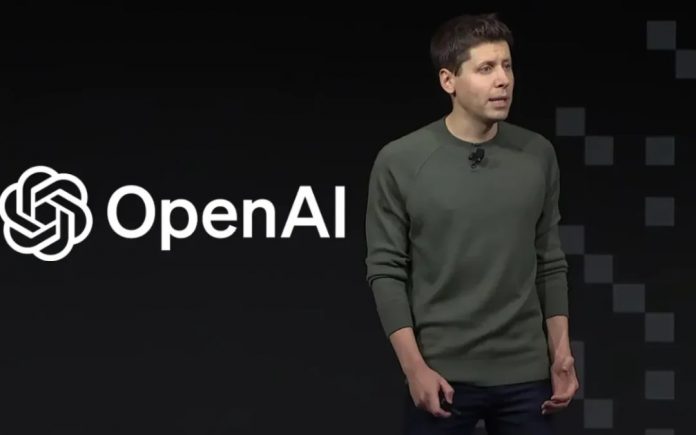
In a post on X on Thursday, CEO Sam Altman suggested the company could soon sell computing capacity directly to businesses and individuals, a move that would put it in direct competition with industry giants like Amazon Web Services (AWS), Microsoft Azure, and Google Cloud.

“We are also looking at ways to more directly sell compute capacity to other companies (and people); we are pretty sure the world is going to need a lot of ‘AI cloud,’ and we are excited to offer this,” Altman wrote.

The statement marks one of the clearest indications yet that OpenAI intends to transform its infrastructure operations into a standalone business line. The shift comes at a time when global demand for high-performance computing power has skyrocketed, driven by the explosion of generative AI tools and large language models that require vast GPU clusters to train and deploy.

OpenAI’s potential entry into the cloud market represents a dramatic expansion of its business model beyond software products like ChatGPT and API services. OpenAI could begin renting access to its advanced computing clusters to developers, research institutions, and enterprises — similar to how Amazon, Google, and Microsoft turned their in-house infrastructure into revenue-generating cloud platforms.

This move would also offer OpenAI a strategic way to offset the extraordinary costs of building and maintaining its growing AI infrastructure. Analysts estimate the company has committed to more than $1 trillion in spending on chips, data centers, and high-speed networking equipment through multi-year partnerships with Nvidia, AMD, and other suppliers.

It is believed that if you’re going to spend over $1 trillion on AI chips, networking gear, and huge data centers, one way to get a relatively quick return on that is by renting out these computing resources to other companies.

While OpenAI has long relied on Microsoft’s Azure for most of its cloud hosting — and in turn powers some of Microsoft’s own AI offerings — the prospect of it becoming a direct cloud vendor introduces a complex dynamic between the two partners. Microsoft owns nearly half of OpenAI’s for-profit arm and has invested over $13 billion since 2019.

Signals Were Already There

Hints of this direction surfaced months earlier. OpenAI’s Chief Financial Officer, Sarah Friar, suggested in September that the company might seek greater control over how its technology and infrastructure are monetized. “Cloud providers have been learning on our dime,” Friar reportedly said during a closed-door investor meeting, arguing that OpenAI needs to capture more of the value its innovations generate for partner platforms.

That sentiment reflects growing tension within the AI ecosystem, as foundational model developers like OpenAI, Anthropic, and Mistral increasingly depend on — yet compete with — the same hyperscale cloud operators that provide their computing backbone.

If OpenAI follows through with its “AI cloud” plan, it will enter a market dominated by AWS, which commands roughly one-third of global cloud revenue, followed by Microsoft Azure and Google Cloud. Each already offers specialized AI infrastructure — from Nvidia H100 GPU clusters to pre-built AI services — giving them a significant head start.

However, OpenAI’s reputation as the creator of ChatGPT, combined with its direct access to cutting-edge AI models, is expected to attract smaller companies and startups seeking purpose-built infrastructure optimized for large language model (LLM) workloads. The company might leverage its existing APIs and model integrations to create a vertically integrated ecosystem where developers can both build and deploy AI systems on OpenAI’s own cloud.

The Financial Pressure Behind the Move

Altman’s post also seemed aimed at addressing a growing question among investors: how OpenAI intends to fund its massive infrastructure expansion and sustain profitability amid surging operational costs. Unlike Microsoft, Amazon, or Google, OpenAI doesn’t yet operate a major cloud business capable of generating steady, large-scale revenue.

That gap is what makes this potential expansion so crucial. OpenAI could unlock a new and recurring revenue stream — one that aligns with its trillion-dollar hardware investments by transforming itself into a cloud service provider.

In contrast, other major tech firms like Meta are grappling with similar infrastructure spending but lack an equivalent revenue model. Meta’s heavy investment in AI and data centers has sparked concerns among investors, given its absence of a commercial cloud platform to monetize those assets.

If realized, OpenAI’s move into the cloud market would mark a major turning point in its evolution from a research-driven lab into a fully-fledged tech conglomerate. But it would also test the company’s ability to balance innovation with business pragmatism — especially as competition intensifies and the economics of AI infrastructure become increasingly complex.